What next for US/China trade wars?
A market briefing from January 2019 covering the US-China trade war, where a US delegation extended its Beijing stay as Trump pushes for a deal. Also covers Brexit uncertainty, crude oil rebounding to $50 a barrel, Apple's earnings downgrade, and upcoming Fed minutes expected to have muted impact after Powell's dovish speech.
Chapters
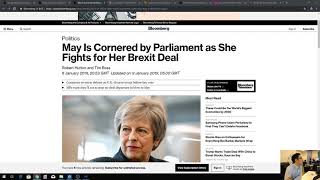
Okay, very good morning, Wednesday, 9th of January. Hope you are well. We are going to cover a couple things. We've got trade war updates, what's happened with Brexit, Theresa May losing another vote yesterday. We're gonna have a look at what to expect from the FOMC minutes, which are coming out this evening, and then a few other thoughts for the, the session ahead. I'm just starting off though, looking at the I've got the S&P 500 here as my initial chart to open things up. And a couple things really looking at here, and it will start to lead into the first story we're going to look at. And this was kind of Friday's pretty aggressive rally that we had after the quite significant change in direction of Federal Reserve communication from Jerome Powell. Sounding a little bit more flexible to the idea of responding to what has been a kind of negative developments in terms of market pricing and just negativity overall from a sentiment perspective. And since those comments, obviously monetary policy being the real key underlying driver of market direction, the equity market has responded in kind. And I think all three major indices on Friday finishing up you know, in excess of 2.5%, 3%, and we've kind of continued that. Now yesterday leads us on to then the kind of where we're at at the moment, and this is now a removal, at least in the short term, from the Fed until later this evening when we get the minutes, and it's very much a focus back onto the US and China trade war. Now yesterday actually we did see a bit of a momentary dip when some of the headlines that were circulating was actually the delegation of the US that were in China from Monday and Tuesday were going to delay their departure and stay for continued talks for another day. And actually, I think Piers was talking about this at the time, and I definitely agreed, is that although the market did, whether coincident or not, move lower at the time, I would see that more as a net positive than negative, given the fact that there's commitment both sides to get some something done. That then leads us into, um, the headline from this morning, and this is a source report coming out of Bloomberg, and the sources are suggesting that Trump wants a trade deal with China to boost the stock market. I think that's probably the least surprising source that you'll hear, but it goes some way to start to understand the kind of, uh, the tactical approach, if you like, of Donald Trump. He obviously gave a key speech yesterday, particularly on the border wall, if you can call it that. A national address, which is typically a scenario left for much bigger events than talking about what he did yesterday, because in effect he said absolutely nothing new. But this is Donald Trump, and this is the the art of leveraging the media for your political kind of narrative. And so, you know, he kind of served that purpose. And now the comments come out about, you know, lo and behold, sources to try and, you know, just alleviate what has been at the core really of the market sell-off at the end of last year, which is growing concerns about the escalating trade war and its ramifications for global growth. Growth going forward. So just a couple of lines here of what they've been saying. President Trump is increasingly eager to strike a deal with China soon in an effort to perk up financial markets having slumped, according to, of course, undisclosed people close to the discussions. Talks between mid-level US and Chinese officials in Beijing have concluded. I did see a few tweets first thing when I came in this morning saying that they have now finished. And that there's going to be potentially some comments from the various officials coming out shortly. So I definitely think that's something worth keeping an eye out for. I would probably anticipate the type of commentary to be along the lines of, we've made some progress, we will continue dialogue, we've had some positive exchanges, something along those lines. So would I look for a real big pop in equity prices and, you know, extreme risk on, on the back of that? Probably not. There's still a lot more talks to go. I think the bigger trade could be that they end talks. And if they were to come out, just given all these positive types of headlines that we're hearing here, like in Bloomberg this morning, if they came out and said after 3 days of talks we cannot see eye to eye and they kind of reignite the confrontation, I think that's the bit, the better trade. Because if you look at the equity markets, certainly looking at the S&P here, then there's room for another move lower because we've kind of built in this progression of talks in a positive manner. So Trump obviously hitting his favorite format, Twitter, yesterday, talking up that, you know, talks with China are going very well and so on and so forth. So he's kind of talking that up, and he's kind of still also appeasing the masses by the kind of key issue of immigration and that border wall. So business as usual, you could say. Other things that we're looking out for then, talking of US and China and, and the trade war, then you've got to bring into the equation WTI crude, because obviously after the collapse of crude oil prices from the beginning of October to the low that was seen at the end of last year, we have seen a a really quite powerful bounce from those depressed levels at around the $42 handle back to a $50 mark. Now obviously progression on a trade war certainly helps then the demand side of the equation. We know that the Saudis have been pretty aggressive already to cut back on production, also as part of their deal with OPEC Plus that kind of 1.2 million barrels per day removal as they agree to propel prices higher by subtracting some of the supply out of the market in combination with some positive noises between the US and China is enough reason then for us to reclaim a $50 handle for the time being. I would say you've kind of got your bang for your buck, I think, on the supply side because the Americans are still pumping near on record levels. I think if you were to get a further response in crude to levels which on the upside, which is much more critical, comes around the $55 handle, just short of that, because you start to encapsulate the peak of the 2016 and early part of 2017 highs. You can see kind of with these circles here just highlighting the technical relevance of that point. If we're to get up to there, I think you've just got to see some more um, progression on those talks. Remember, from a timeline point of view, there is a, a countdown, if you like, because it was the 1st of December. Of course, if we go back onto an S&P chart here, I've got this circle. This is when the trade truce was put in place. Obviously there was a lot of other things going on at that time fundamentally. There was also that technical resistance. There was the Fibonacci retracement from the all-time high to the— to, I think it was the low here at the time, which was the October low. There was also the trend line from the kind of triple test at that level here. So there was reason, many reasons for that downtick, but that was when the trade truce came in. And so we've— we fell about, I think this was 8% since that point. So hence the reason why Trump is so mindful of trying to manage that, that situation. And certainly helping that S&P move undoubtedly has been the Fed's turn to a more, slightly more dovish stance, for sure. What are China doing? Well, I think, I still think that risks on the trade war for the moment, for me, are remain contained, although it's a significant risk for financial markets. I think these types of comments that we're seeing on Bloomberg, I think, are absolutely what Trump is— will do when push comes to shove. He will change the rhetoric. Not only that though, and important I think, is China. And since November, they've been going through a whole series of different ways in order to support and prop up their economy, from changing regulatory rules from talking about potential income tax cuts to— we heard on Monday they're going to do a new huge-scale railway network project in excess of $100 billion. They cut the reserve requirement ratio, you know. So China are in that mindset of the ECB a few years ago of, look, we're going to do whatever it takes. And as long as they're committed to that, and if the Fed start backing off, then I think that does change the game a little bit for what has been an awfully negative end to 2018. Now, one of the things is if China's gonna start, you know, again opening the wallet and spending money in order to prop up the economy, well, they've got to think about how's that going to impact their balance sheet. And China have come out— this is part of their— the beginning of the year, essentially, they have what's called the real power in China is contained by what's called the Politburo, and they have their meetings and they basically outline what it is, is the agenda for the country for the year going forward. And China to propose a wider 2019 fiscal deficit amid this slowdown. Now, that might sound bad, but actually it's the, the wideness of that fiscal deficit was not as much as some analysts had anticipated. Actually anticipated. But the interesting thing here is, is that the finance ministry in China is set to propose a small increase in the targeted budget deficit for this year as officials seek to balance support for the economy whilst also needing to keep control of debt levels. If you actually read these articles though, such is— if you pay for a good accountant, you can always find a way around these things. There's lots of other means where they can actually provide liquidity without negatively impacting their, their, their balance sheet. As determined here, off-sheet or off-balance sheet lending could be used to stimulate growth. So net-net, the point being is that, you know, China doing what it's— what it has to do. I think I can't help but feel the market is certainly so bearish. I'm not quite that bearish at this point. I'm not saying I'm thinking the S&P is going to go to the moon and back and we're going to hit all-time highs again. I just think that the move that has been happening is warranted, at least all things being equal. Moving on, let's have a look at the pound. And well, first of all, let's just jump to this one before we start looking at Theresa's picture. And this was last night, and We've had senior Conservatives signaled that they are not prepared to support a no-deal Brexit as they inflicted a defeat on the government in Parliament last night. MPs backed an amendment to the Finance Bill which would limit the scope for tax changes following a no-deal unless authorized by MPs. So there seemingly is enough political will cross-party for that of evading a no-deal, just giving the well-known economic consequence of such action. So having a look at cable this morning, it's a little bit higher, more byproduct, I guess, of dollar weakness. The Dixie is trading down about 0.2%. Look at the pound here. Let's just quickly switch this down. Yeah, there's been a little bit of a move here. Since really Europe has come into the market. I'm just checking my Twitter feed, 'cause there's been a decent move here more recently. Robert Peston saying, "If Labour votes with Tory rebels to vote down business motion, then Parliament would take control of the meaningful vote debate from the government and decide that the debate could be much longer or shorter than PM May wants." So, the point being is that certainly the vote that happened last night, I would say, is a net positive for Sterling, because any way in which Parliament can have a say to go against then Theresa May, what I think is an idle threat of, you know, there is a possibility of a no deal, I think that's just her posturing in order to frighten MPs to back her deal. I think that there's political will, as I say, enough so cross-party, that that will be avoided. And what happened with the Finance Bill amendment last night makes that more likely. So a little bit of a more positive sterling response, cables of about 50 pips. A few things to be aware of here. I did see this graphic, and this is the betting markets. So I know Sam will have a close eye on this, and this is looking at the percentage. Basically, is there going to be a no deal. And you can see that, you know, there were periods of which when this was awfully high, but what's happening now is the market's shifting towards really the reality that come the 29th of March 2019, which is when Article 50 is due to expire, if you like, and the UK is to leave the EU, and if nothing is is agreed than with a no deal. What's the chances of that happening, and what's the chances of Article 50 being extended? And actually, you can see here, and as has been the talk, more and more people saying that the likelihood is Article 50 is going to be extended. Now, I'm going to put my neck on the line, and I'm going to say it today: I think Article 50 will be extended. I do not think it's going to go, and we're going to— we're not going to move into transition. And I don't think Theresa May's deal, definitely at the first hearing, is going to be accepted. So a couple of points around that that we would need to be aware of. So some Conservative MPs have suggested delaying the date of departure if the Prime Minister's Brexit deal is defeated in Parliament next week. So just to confirm, That vote then is happening on the 15th, so Tuesday next week. Now, does the UK need more time? Well, let's just have a quick look at things. If Theresa May defies expectations and her deal goes through— that, that is not what is widely expected by the market— then from Wednesday, that'll be the day after, they'll have effectively 79 days to March 29th and Parliament is due to be sitting for 43 of those days. The government is committed to passing 7 Brexit-related bills covering trade, agriculture, fisheries, healthcare, immigration, financial services, and the Withdrawal Act. They've got to do that in 43 days. That's if her current proposal goes through, which is unlikely, which then means the government needs to come back and say what they need to do in the next 21 days, which obviously shortens that timeline again considerably. So another thing to be aware of is, according to government estimates, nearly 600 statutory instruments, or pieces of secondary legislation that involve less scrutiny, are also required to happen before March 29th. Point being here is, whilst Theresa May is kind of trying to just survive, and all of these, these kind of amendments from particularly Labour-led are just providing more and more obstacles to deal in the short term without going through this actual legislative line-by-line pieces that need to be resolved. It just means for me that the prospect of this all being done in the next coming weeks is increasingly unlikely, meaning that Article 50 in essence, will have to be extended. Would a majority of MPs stomach a delay? Well, one of the things here is not just would MPs in Britain, but would Europe as well? Well, in Britain, what would need to happen is the House of Commons could potentially accept an extension to Article 50, but it would need to be on what terms? Is it on the back of May's deal and they need just more time to discuss those things just mentioned? Is it to do with a second referendum or even a no-deal Brexit with proper contingency planning? Now, diplomats in the European Council of EU leaders are unlikely to have any problem with a request for a short extension of a few weeks or months if Britain needs time to pass legislation. But obviously there's a risk there. They don't want to send a signal that they're being a light touch and so on and so forth. Similarly, most countries are also open to Britain seeking more time for an election or referendum, according to one EU ambassador. But think of it from a different angle if you're Theresa May, 'cause some of the question is, well, if it's inevitable, why isn't she just looking to secure that now to eliminate any uncertainty? Well, the problem is, is that in practical terms, even if May is able to win the meaningful vote on her Brexit deal, wouldn't you think that she would still want the threat of a March deadline looming over Westminster? Without such a deadline, it could potentially be harder to force through the clutch of bills required before Brexit Day and to fend off wrecking amendments. So, dangerous game, of course, but I I think a logical one. She'll want to just push it all the way up to the last moment to try and stop what happened last night happening again and again and again. So much to come. The point being here is that I think what is occurring is sterling positive. If Article 50 gets extended, you might think, well, that's not good. Why haven't they made a decision? Why aren't we progressing? There must be problems. But actually, the way that market is reacting, so from a pound perspective, is that just the risk of a no deal and also this kind of looming cliff-edge type scenarios which we've been in before, that tends to then see, uh, almost like a pressure cooker of uncertainty with the big risks that could come on the back of that. And once that is removed, you get quite a decent relief kind of rally in the market. Now that leads us then on to something else, which is, well, if we were going to have things like a second referendum— and this was, this was a, um, a screenshot that I was sharing with a few people in a lecture just the other day— and this is the Institute for Government, which basically looks to kind of break down and make sense for, for people like you and I what exactly is going on, because it is a highly complex situation. And this is just a snapshot about if there were going to be things like a second referendum on Brexit. Well, this is the type of timelines that you're talking about, a minimum of 21 weeks in order to go through the legislation and campaigning periods as per the structure here you can see. And using the e-referendum of 2016 as a reference point, Well, it took about a year to set up. The only problem is you'd probably be much more likely to be on the shorter timeframe because another technicality here is that there's an election of new European Parliament happening. And so basically new legislation needs to happen legally by the end of June, essentially. So that's the type of timelines that you could be looking at if there were to be an extension. All I'm saying is it doesn't really rectify what's going to happen, but kicking the can down the road just means that the markets can restore at least some short-term, uh, confidence in that sense. All right, a few other things just to wrap things up. This is Apple overnight, obviously fell 8.5% after market a few days ago after they slashed their sales outlook for the first time in in many years. Well, I think it comes as no surprise then that Apple overnight in Japanese press, it's been reported they've reduced planned production for 3 new iPhone models by 10% for Q1. So the bad news keeps coming, but I would say that this is priced in now. You know, one thing that was quite interesting is if you look at the US equity performance from yesterday, all 3 major indices including the NASDAQ finished in positive territory. And that comes after Samsung, obviously the tech giant, overnight in the Asia Pacific session reported equally negative comments as to what Apple did. But the market's already factored that in now. So, so just be aware of, is this gonna move Apple today? I'd say probably unlikely not. I'd say the trade war, given now that those talks have concluded, is is the main real key deciding factor for daily sentiment that really you've got to monitor. Then at the end of today, uh, later on this evening, 7 o'clock London, you're going to get the Fed minutes. Now I do think quite strongly that the importance of these minutes has diminished significantly just given the fact that Jerome Powell spoke on Friday and rendering these minutes basically redundant to some extent, because he said that the central bank in the US is prepared to adjust policy quickly. That kind of idea of being more flexible to external market conditions, so the trade war, Brexit, so on. That he also talked about the balance sheet and moved the language slightly away from being on autopilot for quantitative tightening, which again was a dovish signal. Few things though that I think you could look for if you're gonna stick around tonight, because I think there could be some interesting elements. I just think it's lost a little bit of its bang for its buck when it comes out tonight because of the— how recent those comments were from Powell. So I've broken this down into really 4 key points just to keep it short and concise. Point 1 is is from the minutes, what's the level of solidarity amongst the officials? There's obviously been a, an incredible amount of market movement, various different macro stories going on. How confident or how comfortable are they on a consensus? One would think when we have these types of market conditions that there starts to become an increasing divide between those then who are a little bit more hawkish and a little bit more dovish on their assessment of, of current conditions. Two then is, if you remember, um, one thing that we were potentially looking for when the statement came out was that long-standing call for further gradual increases might have been changed. Instead, officials merely tweaked the language to say for some further gradual increases were still in their outlook, because if you remember people were thinking, well, could this be December hike, one and done, nothing in 2019? If so, they'll drop that phrase. But in fact, they kept it. How close was that decision— discussion on that point? Point 3 is then hoping for more information on what specific policy risks are seen as the most prominent. Is it the trade war? Is it the slowdown in China? Is it the political risks in the UK and Europe? Which one is it? Do they give a hierarchy? Are they talking about something more and something less, which will ascertain then a hierarchy of their greatest fears, if you like? And then 4, economists will also welcome any signal on what officials plan to do with the Fed's balance sheet. And that's that final area which I suggested. So I think you just need to, to keep an eye on it. I think it's probably worth tuning in for the squawk. We'll obviously be running and covering in full, but I think the actual move you might get out of it, um, given Powell's speech, is much less than it could have been. Okay, quick skim over what else is there today. Well, the morning is particularly quiet, so I would just be kind of prudent in potentially looking for this afternoon to yield potentially the best opportunities particularly when the president wakes up and start hearing updates on that discussion with China. Otherwise, anyone trading the CAD currency, you've got the Bank of Canada interest rate decision. Although surveyed analysts, the consensus is for a hold in their interest rate, typically the currency locally is highly sensitive to their rate decision and accompanying statement. So that could be something to watch if you're in the FX market. Otherwise, oil inventory numbers, um, will provide some short-term volatility for sure. What I'll do is I'll pop the API numbers into the chat room after I finish this briefing so you can get the latest numbers that we had last night. And then you've got the minutes at 7. One thing I just want to draw your attention to though here— let me make this a bit bigger— is that there is a whole host of central bank speakers today. Predominantly fed lead, this being Bostik, Evans, Rosengren. So this is quite important because if anything, these guys are talking on point right now, whereas the minutes are effectively, what, over 2 weeks old. So actually, I think again, these are definitely worth noting down to build into your timing if you're going to deploy any strategies to All right, gonna leave it at that and wish you guys a good day. I'll see you in the chat room. Thanks very much.
More from Anthony


Inside the Biggest Banking Stories You Need to Know This Week (Anthropic, Diageo, Private Credit)


Inside the Biggest M&A Deals You Need to Know This Week (UniCredit, GameStop, eBay, Eli Lilly)







AI Breakthrough or Hype? Anthropic’s Claude Mythos, Tim Cook Steps Down & LIV Golf Collapse