What the latest Brexit options mean for markets
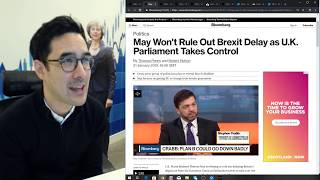
Anthony Cheung covers global macro headwinds, China's weakest GDP since 2009 at 6.4%, and the Brexit parliamentary votes coming Tuesday and January 29. Goldman Sachs forecasts the pound could reach 1.36 USD by year-end as no-deal risk fades, while amendments from Reeves, Cooper, and Benn could force an extension or second referendum.
Chapters
Good morning, Tuesday, 22nd of January. Hope you are well. A couple things we're going to cover this morning. Obviously, a welcome back to any of our US followers. I know there's a few in Trading Live and on, online on YouTube, so I hope you had a good long weekend. A bit of a recap then of general global market updates. We've had an update from the IMF and we've had some data out of China for those who missed it. Yesterday. So a bit of a recap, and then we're going to have a look at, of course, Brexit. What's the update? What happened in some of the parliamentary speeches? And where do we go from here? And the timeline. And we'll also look at some, some subsequent charts as well to have a look at the pound, US equities, and oil, just given the concerns still in regards to global growth conditions. So I guess kicking things off then As you can see the screen I'm sharing, I've got China's economy slows to the weakest pace since 2009. So again, something we covered yesterday, but a quick overview. We had Chinese GDP, it was a minor miss, printing at 6.4%, I believe it was, on a year-on-year basis. Although that sounds quite dramatic from a statistical point of view, obviously we've not been at these levels since the kind of depths of the financial crisis. This is what actually what it looks like on a longer time frame so that you can see just where we are to where we have been. But you can see that psychologically important just above the 6% level. If that were to be breached, and you know, that puts us back down to levels not seen since the early '90s. So, you know, it would be a huge significance at that point. But China know this, and as we've seen and talked about many times before. They've been incredibly active in various different ways, whether centrally via the government in fiscal measures or via kind of various tactics deployed by the central bank, the PBOC. And that has kind of stabilized conditions at the moment. And this is what we saw alongside that GDP, which was the fact industrial output, fixed asset investment, the retail sales were all relatively steady, if not actually seeing minor improvements. Now, one thing that, that has led to, and it's getting a couple of headlines this morning, is, is this, and this was something which came out yesterday, and this is the IMF have flagged trade war threat and warns of a global economic slowdown. So they basically made some revisions, they've looked at the fact that trade wars, financial market volatility further undermine the investment climate. And so therefore, as a net result, global growth expectations have had to have been revised lower. Now, although US index futures and, you know, slightly lower this morning, I mean, I wouldn't really draw too many conclusions out of this type of commentary. I think this is just news agencies looking for to curve fit a piece of news to just generally a slightly weaker market this morning. The IMF revising their growth forecast. The actual numbers here were for the biggest downgrades have been in advanced economies where growth was set to drop from 3.0— 2.3% 2018 to 2% in 2019 and 1.7% in 2020. Point being is, you know, everyone's aware of the slowdown that's been happening. I think to a large extent a lot of this has been priced in, and so I don't really find this particularly surprising. Surprising at all, but certainly is one of the main headlines that, you know, if you're watching Bloomberg TV, that they're kind of pinning a slight moderate risk off this morning. On that front, obviously trade wars is pivotal to the discussion about global growth prospects, although we are coming late cycle of the— or the late part of the economic cycle, and so we can expect a slowdown in time. How quickly we get to that point, obviously a lot is hinged upon the outcome of trade war discussions. Now, Donald Trump has been kind of, I guess, tweeting more so about the government shutdown, taking care of domestic issues first. It's been quite quiet on the trade front. However, he did tweet, took the time out of his bank holiday yesterday to tweet that China posts slowest economic numbers since 1990 due to US trade tensions and new policies. Makes so much more sense for China finally to do a real deal and stop playing around. Then also overnight you've had— this has been an ongoing situation, but the United States have informed the Canadian government that it plans to proceed with the formal request to extradite that Huawei chief financial officer on allegations of violation of US sanctions against Iran. So it's kind of a two-jab move from Trump to try and put the, you know, the aggressor back on the front foot in these negotiations, which otherwise have been quite passive. And actually, it looked like we were making some positive developments, and he's kind of put the ball back in their court now. So yeah, that's something which certainly brings about then a necessity for an intraday trader to just keep your ears open to the, uh, the Squawk coverage. And if you're looking at Twitter for any accompanying updates as to, a, how China respond and, and how the markets interpret these latest messages from the, from the president, because these are obviously quite key to ascertaining intraday sentiment. So yeah, that's the kind of, uh, the global update. One thing that you've probably also noticed is at the moment you've got something called the World Economic Forum happening in Davos. So, you know, whilst everyone's feeling— households are feeling the squeeze at the moment, all of the bankers and politicians find themselves in a lovely 5-star resort in Davos having lobster and crack crab for supper while they talk about how to fix the world's problems. But one of the points I wanted to make here was that the World Economic Conference, then, given the seniority of the officials that attend, is actually quite normally an interesting event. I was reading some things a few days ago saying that they rightly called a lot of the market sell-off that we saw in February and then also at the end of last year. The point being though that this particular Davos conference is quite starkly different because of the dropouts. Now, they've dropped out because, you know, if you remember, this time last year was when Trump was a keynote speaker, arms open, red cap on, saying America is open for business. And that was when, you know, things were booming, all-time highs in US equities. You know, bit of a different vibe this time round, 12 months later. And Donald Trump, he is not attending because he's having to deal with the US government shutdown. Theresa May obviously has got a lot on her plate at the moment, but I must say Theresa has taken the time out. I just want to say I really appreciate her stopping by for the briefing this morning, but she's obviously got things to deal with herself. Emmanuel Macron's got his own issues as well. So there's been a lot of basically cancellations of heads of state, which has meant there's quite a different complexion to this meeting. And so I wouldn't be looking at this. What you're going to get is a hell of a lot of coverage on Bloomberg and CNBC and Reuters about Davos stuff. How much of that is genuinely going to move the market from an intraday perspective? I'd say very little would be my best guess. You can, if you are being super prudent, go onto the Davos website. You basically go to the media section and you can get a full chronological order of every event or speech happening at all the different conference platforms and then who is speaking and on what subject. So if you were going to scour through there as a part of practice, just in case there is anyone potentially interesting. I did have a look at the weekend, and as I say, most of the big guns are not even there, so not expecting too much to come of that event. Quick look then on these discussions of kind of global growth. I mean, this is the US equity chart. We've had this marked up for a while, and this is kind of not changed since yesterday. So still got that key ellipse around where those— that technical sweet spot which we broke at the end of last week. We managed to squeeze higher And now we're in a bit of a hiatus as we wait for the next kind of potential turn here off the cues being, you know, potentially a trade war update, the government shutdown when it comes to the US. Obviously Brexit updates still are driving kind of macro theme at the moment, but not so much read across into this asset as yet. I would say from a US equity point of view, the only time of which it really becomes a pressing issue, that being Brexit. Brexit, as if this becomes a serious chance of a no deal. But as we know, that's looking increasingly unlikely, as we'll discuss in a second. So I guess you've got a bit of a range forming here. We're still in the midst of earnings season, but this week is pretty quiet. There's IBM aftermarket today, and then you've got, I think, Procter Gamble tomorrow, a couple of other larger names, but no one really huge. Um, not until then. The bulk of S&P companies comes out next week. So I guess looking, uh, really from back to around this area here, back to the ellipse, which would be the 50% retracement of that entire all-time high DEX sell-off with that trend channel area and the 50 DMA. And then on the upside, up towards, um, the— I think it was the 10th, the 12th of December high. And then clustered up there you've got them around the 2700 handle as well. So, um, oil though, I was just looking at this morning, uh, it's just kind of— this is WTI crude just fizzling out a little bit overnight in the Asia-Pac session, just a slightly negative Asian session. Uh, again, all the news agencies looking at this IMF downgrade to global growth, which kind of just hammers it home about the a kind of pessimistic outlook going forward. And, and certainly that's to dampen, um, the kind of demand side of the, the crude equation. And we've kind of just drifted down, nothing really that spectacular. And we just found a bit of a hiatus here around what was the, uh, high seen on the 11th. And you can see here, just technically around that point at the moment I guess you've got to wait really until the US come in to see anything a little bit more meaningful from an energy inventory point of view. Don't forget it was a US holiday on Monday, meaning then that the, the APIs and the DOEs will be pushed back a day until we get those updates. But yeah, if any break below here, it wouldn't be too surprising to see a bit of a pullback lower down to that kind of $53.09 area. I mean, it's been such a steep incline for crude oil. Let's just quickly see if there's any, uh, any trend lines. I know Sam will be on my back for putting too many trend lines on if, uh, he's the technical guru, of course. But yeah, I mean, around this area could be quite interesting depending on timing if we get around here. Which would also coincide around the 53 handle at that point. Okay, a few other headlines then, obviously dominated by the, the Brexit issue. First thing, let's just have a look at the chart this morning, sitting around at 129 in the futures. Pretty choppy, you can see from some of the price activity. So I guess you've got to be You know, one thing that I do find at the moment, even for myself, where my predominant role is supposed to be the guy that knows what's going on and explaining it to, to you guys, but it's becoming increasingly complex about the potential outcomes for Brexit. What I'm going to do is read through a couple of key points to kind of break it down to where we're at, what the options are, and the timings, because I think that's probably the best way to approach it from a trading point of view. But I guess here it's just about— there's a, there's a high volume of Brexit-related news, and if you're looking at things like Twitter, it's just non-stop relentless. But it does almost become saturated, if you like, and I think traders start to lose a bit of interest. And unless it's something very meaningful, i.e. A radical change from what's really priced in or expected, then there's a bit of a chance you get caught up in some of the ensuing price movement of just really this kind of false breakouts and little blips in price activity. So it's just to be careful of that. As I'm going to discuss in a second, it's really next Tuesday is the biggest kind of near-term date because that's when we're going to have the next kind of round of then votes on what's going to happen from here forward. Looking on the broader picture, a couple of things to be aware of from here. I guess you've got this kind of area we've kind of marked out as a support point in some of the recent activity through the month of January. So I do think that's quite an interesting area on the downside, 128.66. Sam was looking at this yesterday in the the weekly strategy report. And then looking on the upside, you've got those highs that were seen just last week, and then some corresponding trend lines to also be aware of from going back to Q4 of last year. And then the price movements with the bounce that we've had when we had the meaningful vote here, and it's kind of— then we've seen the acceleration of a pound recovery on the back of Well, does this mean that inevitably Article 50 gets extended? So here's the headlines from this morning: Labour calls for vote that could spark a second referendum. So let me just read through a couple of different things here and why this headline is getting called for. We've then got here, which is: May won't rule out Brexit delay as UK Parliament takes control of some of the other things. So Theresa May said yesterday she was focused on altering the backstop, but that came under high criticism from the opposition leader Jeremy Corbyn, who was just saying that basically the PM is in denial about the level of opposition. And obviously this comes after her initial plan, voted in Parliament, lost by a resounding majority of 230. Now, among the MPs' amendments are plans to prevent a no-deal Brexit and to extend the deadline for leaving the EU. MPs are due to vote on a modified version of Mrs. May's deal on the 29th of January, so that's a week today, next Tuesday. Now, this is kind of the nuance then of UK Parliament is that basically the government can put forward a proposal, but then it can be then countered by opposition with slight little tweaks, nip and tucks, amendments to then what they see would be a better approach. And essentially everything can be put forward, and it's actually up to the House Speaker to choose then which ones should be voted upon, which is why you see so much press conference about Bercow and how he's so influential, and is he siding with Remain, and so on and so forth, because really there's a lot of power in his hands now, even though he should of course be impartial. So a couple of things here: MPs are deciding whether they should hold a further referendum on whatever Brexit plan is approved by the House of Commons. Now, Mr. Corbyn said that amendment allowed MPs to end this Brexit deadlock and prevent the chaos of leaving the EU without a deal. But obviously the Prime Minister is warning that if you were to have an EU referendum, another round of voting to the public, then essentially what you're going to do is threaten social cohesion in the UK, and this would be against the democratic will of the people, and so on. Now, among other plans being put forward by MPs— and you'll see that there's a very common theme here which leads to this belief that Article 50 will be extended. Now, one is an amendment by Labour MP Rachel Reeves aimed at preventing a no-deal Brexit by requiring the Prime Minister to seek an extension to Article 50 deadline. The next is a bill from Labour's Yvette Cooper with the backing of remaining Tory MPs which also directs the Prime Minister to seek a deadline extension if a Brexit deal is not agreed by the 26th of February. And then an amendment by Labour MP Hilary Benn, which asks MPs to take a non-binding vote on 4 options: reconsidering May's deal, leaving the EU with no deal, and seeking to renegotiate the deal, or holding another referendum. Now, interesting thing here is some ministers are reportedly backing proposals to block a no-deal Brexit. I mean, that's one of the main things another key reason why the pound has recovered quite, quite aggressively, and we're trading back at 1.29 handle, is this almost elimination of the prospect of a no deal, which is obviously the worst possible economic consequence that would need to be factored into the pound. Now the reason for that is because the Independent, the Times, they've all been reporting recently that dozens of MPs could quit unless they're allowed a free vote on that specific issue. The papers have said the Work and Pensions Secretary, which is Amber Rudd, has warned that Mrs. May, she could face up to 40 ministers resigning. So, you know, it's kind of, are they trying to force— this is that whole newspaper push that they've had about the MPs taking back Parliament, taking control off of the Prime Minister to avert that situation. So that's kind of how the land lies at the moment. One thing that Sam mentioned in the strategy that I didn't mention in the briefing yesterday, and this came out at the weekend, but I thought I would just talk about it. This is a couple of the big banks and what they think about the issues we've talked about, one being global growth, concerns about the future, and therefore net earnings season. And this one, which is Goldman Sachs, and their view about the British pound. Now let me just switch my screen over to here. This is then Goldman says the pound will rise against all G10 peers this year. The pound may advance as the risk of a no-deal Brexit has been declining, is what they're going for. They said that we would read the developments over the last week, so last week is pointing toward a later or softer Brexit, or potentially no Brexit at all, is their call. Um, an actual survey by Bloomberg— they conduct these quite regularly— so this is looking more kind of medium term, if you like. This is when they survey a number of banks to get their average kind of estimate, and that is by the end of this year Cable will be trading a 136 handle. Now let's just remind ourselves on the daily continuation chart, where is 136? Well, the average estimate on the street is that the pound is going to move itself all the way back up to here, so a move of a good 6-7 points. So the base case scenario is that just given the complexity of these issues that ultimately the can does get kicked down the road, uh, and it leads us then to a— ultimately down the route of a softer Brexit. Um, so yeah, I mean, I just thought I'd mention that from a bank point of view because the other one I saw this morning was JP Morgan have come out with their own note, and it's almost, um, and it's quite interesting actually. Sam is a big believer of this. He almost feels that quite often when he reads so many negative headlines, that it's almost a buying opportunity. It's almost as if— there's an old saying in markets that when the dovish, or when the bear turns bullish, you know, that's the time to sell. It's kind of that idea that then when the last possible person then joins the herd that's been running away with this overall mentality, you know, then you've hit the top. And it's almost the opposite at the moment with all this negativity. Now, have we almost, you know, come to this bottom? And pricing is a very important thing. How markets are positioned and what is, um, general investors' expectations. Now, what JP Morgan are saying is that earnings season is likely to be ugly, but that may not be taken badly by the equity market because it's already anticipating negative news. And we've already had that from a couple of banks that reporting— JP Morgan themselves. Let's not forget here that this is JP Morgan's analysts saying people expect bad news, don't worry about it, after they themselves had incredibly disappointing earnings. So this is the thing about sell-side institutions, you do need to take it with a bit of a pinch of salt. But I do get what he's saying, and, and as we've kind of discussed before with the equity bounce that we have seen since the year's gone underway, it has been strong and it has been supported by some really really important factors like the dovish Fed and the kind of positive— although that's questionable now— developments on the trade war situation. But obviously there's some huge tail risks to consider going forward. All right, last thing is let's just have a review of the calendar. What have we got on the docket for today? So let me just blow this up a bit bigger so you can see everything clearly. We've got some UK numbers coming out at 9:30. Now, if you've been trading last couple of weeks, you'll know that the longevity of any reaction on UK data is incredibly short-lived, just because of the inherent nature of the bigger picture being a focus on Brexit. So average weekly earnings data would be interesting in any normal circumstance, but the, the expectation here is it's going to remain unchanged. Uh, fairly tight ranges, so not really expecting a great deal out of that. I prefer to err on the side of caution, stay out of any type of noise, and then just await any potential updates on Brexit. It'd probably be more prudent. Otherwise, the US coming back to market— or before I get to that, you've got German ZEW Again, could be worth monitoring just to see how severe this is. The difference between obviously ZEW and IFO— ZEW is the measurement of forward-looking 6-month ahead expectations from economists and analysts. IFO is companies. The market's more concerned about companies than it is analysts, but quite a good barometer, I guess, of, of how they foresee conditions going forward. Unlikely, I'd say, though, to be market moving for European assets. Um, moving into the US session, obviously US return, as I said, I think that's where, you know, things will start to liven up potentially a little bit more. From a data point of view, I think two significant existing home sales, um, and then, well, on here actually you've got the API still scheduled, so I'll have to double-check that whether it's been moved or not because of the holiday. Mark Carney, they've got scheduled here, is speaking at Davos. I'll try and find a time of which that is happening. That could be potentially interesting, not so much about anything really too much to do with specifics about inflation or jobs or anything of that nature. This is more to do with what's his view about the risks surrounding Brexit and where does he currently see it at the moment and its impact consequently on the economy and as a net result Bank of England monetary policy. But we know that he has to play his cards pretty close to his chest. So although I think it'd be worth monitoring, I highly doubt he's going to say anything really too market-moving. But the one thing that you have seen in the ECB, we saw last week, is that despite them having a definitive line communicated from their recent press conference and so on, Draghi has started to sound a little bit more dovish. Do we get something similar with Mark Carney? But it's such a, such a difficult thing to judge for him at the moment given the uncertainties around Brexit. So So I think he's just going to play, play his hand pretty straight. But I'll keep you updated in the chat what time that happens. All right, that's it. Let you guys get on. Good luck for the session ahead. Any questions you have, just feel free to reach out on Trading Live. So for myself and from Teresa, wish her a good day as well. Have a good session ahead.
More from Anthony


Inside the Biggest Banking Stories You Need to Know This Week (Anthropic, Diageo, Private Credit)


Inside the Biggest M&A Deals You Need to Know This Week (UniCredit, GameStop, eBay, Eli Lilly)







AI Breakthrough or Hype? Anthropic’s Claude Mythos, Tim Cook Steps Down & LIV Golf Collapse