What To Expect From The EU Summit
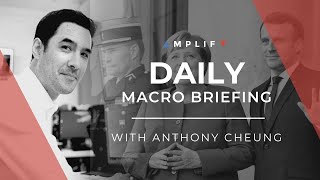
Angela Merkel and Emmanuel Macron are pushing a 750 billion euro recovery fund at the EU summit in Brussels, but the Netherlands, Austria, Denmark, and Sweden oppose it. No deal expected this weekend, but likely by month-end. The euro and European equities could swing sharply depending on the outcome.
Chapters
Okay, very good morning to you. It is Friday the 17th of July. Hope you're doing well, hope you've had a great week so far, and we've still got one of the main events still to come, that being the EU Leaders Summit happening in Brussels, and it starts around now actually. I'm filming this just after 7 AM in London. And that's going to go on for 2 days, and that's going to really form the main bulk of the discussion for the briefing this morning. But before I get into that, let's just have a quick look at the charts and how things are performing at the European Open at present. And it's a pretty flat open overall after what was a slight negative session seen in the overnight Asia-Pacific session. It does come after a slightly softer close on Wall Street as well. But this morning, the currency markets are pretty flat. That's reflected both in major pairs. The Dixie's basically unchanged. Gold, oil flat at the moment. Uh, gold hugging close to proximity to that $1,800 level in the futures. Oil still, uh, very close to that key $41 level, uh, trading at $40.74. T-notes unchanged, trading at 139.15. And equity index futures both in Europe and in the US, just slightly positive. But, um, you know, just looking at things like the S&P, it's been a relatively quiet period after what was quite a bumpy start to the week after the back of this sell-off that we had on the, the Californian situation, uh, of course with that rollback of the reopening process with the pickups that we've had in the Sunbelt kind of states with COVID-19. Then we had that Moderna news and the gap up, and that really has formed then the base for supporting the current range of which we're trading. And yesterday was relatively narrow, only about a 12-13 point range that we were trading, which is a far difference from where we were from the range of the price activity we had of, you know, close to 100 points when we take the beginning of the week and that California news into consideration. So overall Things have been relatively quiet. Looking elsewhere, we're going to focus really on the, the euro, European-denominated assets, because that's really going to be the, the main focal point for today. So let's get straight into that story and what, what are we to expect from this leaders meeting as they discuss this €750 billion European-wide recovery fund. So a couple things, and I'm going to run you through what it is that's going on, what can we expect, what is expected from the timeline of when and what might happen, and more importantly, as far as today is concerned, how might you look to trade this type of news and the consequent reaction that we can see in a bullish bearish scenario. So starting off then here, Angela Merkel and French President Macron have been really the two key players to try and drive this home, which has been generally quite unusual activity overall in the general political context, given the fact that Germany tends to be generally more fiscally prudent. But she's really put her, her weight behind trying to really cultivate and secure the economic recovery in the Eurozone. And Merkel and Macron obviously are kind of the double-headed heartbeat of, um, or the heart of Eurozone kind of quest for this and obviously coming up against the Frugal Four opposition that we've had. So at the moment, what have we seen? Well, ever since Merkel and Macron basically put together their, their plan, it's helped trigger the rally ever since really May. They're talking about a deal now at the end of the month rather at the start of the week. So I think that's already quite an important thing to take away from What to expect from today, the two major forces behind this deal being done, Merkel and Macron, have said that don't expect anything to happen basically by the end of this weekend. We're talking more about the end of the month. So I think that then you need to taper in a little bit your expectations about looking for a singular one-and-done headline that something's going to happen today. Obviously, if that did happen, that's a massive positive, and I'd be expecting both euro and the DAX to shoot higher fairly aggressively if that did materialize. But it's unlikely to be the case. So here you can see the German-French proposal on the EU recovery fund and just how Europe and European equities have responded very forcefully to that. I mean, the blue line is the Euro Stoxx 50, the largest 50 companies listed in mainland Europe. The black line is the S&P 500 by comparison. You can see here it's not that the S&P hasn't managed to put in some further solid gains over the last couple of months. I mean, it is up, let's say, 12%, but comparative to Europe, Europe's up more like 27%. So stark outperformance here in European equities against its global peers since mid-May. Interestingly as well, Bank of America put out a regular global fund manager survey and Europe is the most favored, um, with the hedge fund community at the moment. Uh, looking at the July 20 Global Fund Manager Survey, Eurozone tops that by quite a clear distance. The absolute opposite, and obviously as you guys have probably been reading from the likes of Warren Buffett, having a bit of a tough time in the short term at least because value-related, i.e., growth stocks have been the most hardest hit banks as well, subject to some difficulties just given the low interest rate environment. And the fact that rates are going to go nowhere for the next 2 years or so has put them under some considerable pressure, albeit there has been some sweet spots in some of the big banks reporting, particularly on the investment banking side this week. So what are we to expect then? A few different things. Um, the actual numbers here with the fund manager getting more upbeat with the eurozone. Allocations to euro area stocks jumped 9 percentage points in the most recent report from Bank of America to a net 16% now overweight. So the EU, the most favored region. But really, all eyes now are on the delivery of the, the actual details, because that's yet to really be confirmed with this recovery fund. Everyone has been talking about €750 billion it might not necessarily be that large. And it's not just about size, it's about here disbursement, conditionality, grants, and loans— each one of these specific categories, if you like, or components that would mean the details of a deal, the terms. You know, there's a kind of a famous phrase, isn't it? It's not about the end number, it's about the terms that make a deal. It's kind of a phrase that could be used here. And so a few things to be aware of then. This table is via The Economist at ING, and they've broken it down, and I'll explain this into a nice digestible format. The main thing that they're saying for this weekend is that a political agreement on the basic principles on the European Recovery Fund is, is feasible, although the final stamp of approval may need another round of negotiations. And that will involve a lot of horse trading, including negotiations on the European budget. But remember, this would be in fitting that view then with what Merkel and Macron have said about don't expect a final conclusion this weekend, expect that at the end of the month as a more of a self-imposed deadline. A deal now would be huge if that did materialize. Then effectively what we'd be looking at— let me just transition my screen. You know, I've already this morning kind of been looking at the euro and thinking about, okay, so in this scenario then that they come out and they say, look, we've struck a deal now, this is the size, this is disbursement, it's going to be in grants and not loans. So it's all kind of the most positive outcome. The euro, you know, in terms of upside levels, you've got the double top from the Asia-Pacific session, which was also the low point that we traded back earlier in the midweek. Anything of a break above there, you've got the pivot level and that candlestick wick low that was seen yesterday afternoon. Any further push above, I'd probably be looking then up towards, um, the kind of 114.30 type area to capture some of the, the midweek highs that we were printing, and then a further push above up towards the R1 and then the, the high that we had in yesterday's session in the afternoon amid some of the kind of post-ECB price movement that we saw. On the flip side though, any complete breakdown of these talks, then it's always prudent to map out what the downside key levels look like. And so you've got the, the low that we've seen just looking into the late session in the US yesterday. You've you then got that low that we printed back on the 14th in the European afternoon, and then that S1 level, and also some of the respected highs that we were seeing beginning of the week would come in down at around 113.66 type area. So there's definitely scope for, for decent movement today depending on what is said. However, I would kind of put in the caveat that it's a 2-day meeting. So to think that you're going to get any real tangible signs of progress today might be slightly wishful thinking. It might be the case that this will roll into the second day, and it's actually— we get the details then of where really their heads are at over the weekend. And consequently, perhaps you get a bit of a market gap in European assets Sunday night going in for next week, depending on the outcome of their 2-day discussions. Because remember, they're discussing this as well, not just through today but also tomorrow. So back to that table that I was going to talk you through. And so one of the things here is that could there be a lack of real progression? Well, I think the main thing is, as long as there's signs of progress, we don't necessarily have to see a done deal today to see potentially a net positive euro response. All we've got to be seeing is that they're making progress on some of the most contested issues. That in itself would be deemed as, as positive. Now, ING break this down then into kind of 4 key areas in terms of the deal, and then we're looking at the, the kind of differences in regards to proposals that have been brought forward. So the council proposal is this main base one, which one has been discussed most in the press, which is at $750 billion. You've then got the Franco-German proposal, which is looking at a smaller total value, with a compromise though being that this is all entirely in grants, um, and which I'm going to talk through in a second. They're obviously the, the strongest opponents are going to be looking at a far smaller number, and in terms of disbursements, rather than having an overall majority, they would want complete unanimity, unanimous vote in terms of distribution of these funds, and it would be on strict reform package conditions. And these would not be just handout grants, these would in fact be loans that would need to be repaid. So that would be the most stringent Frugal Four approach. And then there's this kind of middle ground possible compromise, which would be a number somewhere in the middle and conditionality and a somewhat 50/50 split. Between people receiving money with no strings attached to those then akin to loans. So just talking these through a little bit more line by line, uh, the size one I think is, is pretty self-explanatory. Obviously, uh, the more frugal-minded will want a smaller value. The more positive for markets would be a bigger value because that would be more tied towards greater stimulus to try and promote then economic growth in future. The disbursement one is basically the European Commission proposed a qualified majority vote to block disbursements, while the Frugal Four want some sort of unanimous conditionality. A possible compromise on disbursement could be that the fund starts with grants and maintains the speeds of disbursement with annual reviews, which could determine the mix between grants and loans based on reform conditions. Another possible compromise could be a model where disbursements from the funds start as loans but are turned into grants if conditions are met. Now, for anyone who traded through the 2011-2012 sovereign crisis, this will sound awfully familiar. This kind of sounds a little bit like the Troika, which was like the ECB, the EU, the IMF, and when they were giving bailout funds to the likes of Ireland, Greece, and Portugal This is one of the things it was about, making sure that those countries implemented pretty onerous and effective austerity measures in order then that this money was being used in the correct fashion. So here they're kind of intonating perhaps then around a similar type of pathway, that being that, look, we will start with loans, and as long as you are implementing this in the correct fashion, then we could maybe look to then switch that to grants in future, dependent that you meet the first criteria. So it's kind of like providing the carrot, if you like, that if you perform here, then we'll issue some more money there. So that's quite an interesting point to monitor, the grant versus loan situation. In the counter proposal by the Frugal Four, only loans were mentioned, as the opposition to grants is, is pretty substantial. The Dutch PM, one of the main speakers or the person who's been very vocal of the Frugal Four, has indicated the grants are possible under very strict conditions though. So a compromise here might be, as the box has got down at the bottom, let's just do a 50/50 split. But then it goes back to the disbursement and how actually is the conditionality around that split, as we've just discussed. Discussed. So yeah, that's the basic crux of the matter. These are the main points of which the decision-making is hinged upon. So it's almost like a— it's almost like a bingo board, and you can tick off then of what composition does this agreement become, and that will dictate then how positive or not the reaction is likely to be in markets on the back of this. But once again, I would say that there's kind of a couple of scenarios. Intraday, there is a complete breakdown in talks, very unlikely to happen. We've already kind of broken past that point already, so I'd see that as very low probability. That would be a massive negative for prices. The other extreme scenario would be they've done a deal and actually it's the Council proposal, or it's the— it's, it's one that's a possible cut, even a possible compromise where they've come off a little bit in the size it's even, um, comes down a little bit on the grant split and it's more 50/50, if they just agree that outright, that's a positive and a pretty aggressive one in the short term. The likelihood here is it's going to roll into Saturday, and I think you need to just be aware. I'll write it about it in my macro menu on a Sunday, where are we at. But the likelihood is, as long as they've made some tentative signs around these contentious issues, we could be in for a positive response. All right, some more practical points that might be useful on this. I tweeted this last night. This is the link for the full agenda for the meeting today and tomorrow. So you've got the full timetable here, and if you click on that live streaming section, you can actually get the definitive links so that you can click on and actually follow everything live. So again, this is the, this is the ways and means of trying to just get the latest information as quickly as possible. All right, moving off that, quickly run you through a few other headlines. Um, US has reported more than 70,000 new cases in a day for the first time now with COVID-19. Um, again, I would say markets are comfortable with this, albeit it's a fairly worrying statistic from a health point of view. Um, I think that really over the weekend I can't really see too much at this point that's really going to act as too much of a negative catalyst. Now that California is out the bag and they've kind of slowed down their opening of their state, then I think if Texas and other areas, Florida, follow suit, I don't think it's going to have potentially too much of a negative reaction, uh, given that the markets have already kind of semi-prepared for that. And this number if it goes further north, as long as it's in a relative controlled fashion, if we go to 72,000 to 75,000 to 78,000 to 80,000, I don't think the markets are going to be too spooked by that at this point. So, um, yeah, the— on the order of the hierarchy of things on the intraday, I'd say the COVID information has dropped a little bit off the, the top headline billing. A few other things to be aware of Netflix, I mean, I normally say they're not a particularly big company, but their market cap is in excess, in excess of $200 billion these days. So they are fairly sizable, but they're quite followed given the fact that they're one of the kind of so-called FANG names. And so they tend to be highly sensitive to just generally risk sentiment. But a couple of interesting numbers that they had because their shares were down as much as 15% in aftermarket trade last night. I think I last checked this morning, they're down about 9%. Some of the main things that people look at, or the main number that really excites and dictates the price reaction in earnings for Netflix, is their new subscriber rate. And they signed up 2.5 million new subscribers in the third quarter. That was half what was expected. Analysts were expecting on the street 5 million, so it was quite a big disappointment. It's a big reversal, of course, what we've had in Q1 and Q2, which is these massive monster spikes in new registrations, mainly down to the pandemic. And obviously people being at home more, and that saw an immediate spike in new subscription rates. The company has come out and, you know, sensibly warned, but obviously it's one of those, isn't it, where if you heighten the bar of someone's expectations, so much that they constantly expect more and more. And that's kind of what tends to happen with these types of more momentum sentiment-based stocks like Netflix, is that even though it's unrealistic to expect a continuation of 10 million new quarterly subscribers every quarter, that's kind of built into price. And so anything shy of that is just a disappointment. So the company was a little bit tepid with their outlook. They warned that a new surge in customers is very hard to maintain. It's probably probably the more prudent thing to do. Let's not forget, in context, their shares are up about 60% on the year, so a little trimming off the top of 10%, I mean, they're still massively outperforming against the broader benchmark, the S&P. The other thing here that was, I guess, a question point for some analysts was about the fact of, are they going to run out of new content? Obviously, Netflix churns out new content on a frequent basis. And the fact that we've had a global pandemic would have put a halt to that for at least a multi-month period. But they came out and said that basically they already have their full programming in place for this year and the first half of 2021. So that did alleviate some concerns to a certain degree. Elsewhere, oil markets. We've been watching this and talking about it all week. We're actually set to eke out a very modest gain for, for the week. But given the fact that we've had that important JMMC meeting, we've actually tapered by circa 1.5, nearly 2 million barrels per day of the stringency of that oil cut. And yet markets haven't responded negatively. I still feel fundamentally medium term now that's quite a bullish signal. So even though we're not rocketing up to the upside, we haven't really yet forcefully broken that 41 handle yet that we've been looking technically in the futures. I still think that although this is modest, the fact that it hasn't sold off this week given some of the things that have been occurring, I think it still is a net positive. Elsewhere, this isn't really market moving. I wouldn't consider this for a strategy in the pound today. But what I would say is that this is quite interesting, and it is the growing chorus of Main Street— Wall Street banks, I should say— and what they're thinking about the potential next timing and of what course of action the Bank of England might do. And so Goldman Sachs have said that the MPC may signal in August that interest rates could turn negative. Bank of America, they expect them to actually cut the benchmark rate to 0 from 0.1 as unemployment worsens, the inflation outlook weakens. And the main crux of why— what I'm looking at here is markets. So what we're looking at here is short-term interest rate futures, and they give us a good insight as to market thinking of where they're currently priced for interest rates in the short term, but in the future, the most likely to be. And as you can see The contracts are pricing out that more and more people have become of the belief— so going left beginning of May to right where we are at the moment— of the anticipation that interest rates will inevitably go negative. And timings-wise, if you look at the contract months, by the spring of next year. So there is a growing belief that that's somewhat inevitable, and the kind of— it's a triple risk threat for the UK economy. That being then that there's risks of rising virus cases as we continue to go through this reopening of the economy. There's the phasing out of things like the furlough scheme and so on that's been propping up a large degree of, of confidence, but also obviously salaries for people who we don't know yet whether or not their job will be there when they go back to work. Work. Um, so the unwinding of some of the fiscal intervention that's had to be necessary on the pandemic. And then there's Brexit, which is a tangible risk event. Of course, it's not yet a done deal. As much as we might sit here and think that ultimately it's not in either side's interest to not strike a deal, there is still risk of that because the art of negotiation is you wouldn't really want to cut a deal right till the last possible moment. And and so therefore intrinsically the risk factor needs to be priced in. And that in itself, then all of these things are all coming over the course of the next 6 months, which means then the likelihood is markets are reflecting this, are pricing in the potential for another rate move, and banks are continuing to, to move towards that line of thinking. All right, so that, that's it. Let's have a look at the, uh, the calendar. So The CPI numbers are final coming out of the euro area, so, or eurozone. I wouldn't, wouldn't be too bothered by that. Definitely 100% be more interested in the EU summit meeting and any headlines that come out of that. General rule of thumb here is that if you are prudently tracking the timings of these different arrivals, roundtables, and press conferences, look out for any European journalist commentary on Twitter in between the periods of those meetings, because that's when sometimes you get sources and leaks and things of that nature. Otherwise, in the afternoon, US housing starts, building permits. You've also got the preliminary University of Michigan number. Speaker-wise, Yserizde Guindos at 9:30, and Bank of England Governor speaks again, but at a citizens panel open forum. I don't think he's— he's unlikely to say anything. There's two greater magnitude, but always worth keeping half an ear open when the governor speaks. That'll be 11 AM. Um, equity-wise, you do have the options expiries across the various different, uh, indices this morning. FTSE 10:15, Euro Stoxx 11, DAX 12, US at the market open. And in terms of US major equity earnings, nothing from an index trader's point of view that you'd need to be worried about on a single-stop basis. BlackRock, State Street, some of the bigger names. All right guys, that is it. Don't forget to subscribe to the YouTube channel if you're watching it on there. We've got new content coming from Eddie and Sam of course this weekend as per normal. And I wish you guys a great weekend. Let's hope that the EU summit provides a couple of headlines that will create a bit of movement to see off the end of the week. All right, take care.
More from Anthony


Inside the Biggest Banking Stories You Need to Know This Week (Anthropic, Diageo, Private Credit)


Inside the Biggest M&A Deals You Need to Know This Week (UniCredit, GameStop, eBay, Eli Lilly)







AI Breakthrough or Hype? Anthropic’s Claude Mythos, Tim Cook Steps Down & LIV Golf Collapse