What to expect from the FOMC tonight
In this live market commentary recorded on December 19, 2018, the presenter walks traders through the key drivers shaping market expectations ahead of the Federal Open Market Committee (FOMC) meeting that evening. He begins by highlighting the S&P 500’s technical support around the year‑to‑date low (≈2,500) and explains how a break of that level could trigger rapid downside moves. He then notes FedEx’s profit‑forecast cut as a bellwether for broader economic risk appetite. The discussion shifts to crude‑oil dynamics: a breach of the $50 per‑barrel support, a slide toward $40‑$42, and the implications for the Permian Basin’s break‑even range ($32‑$47) and U.S. shale producers. Saudi Arabia’s fiscal pressures, oil‑revenue expectations, and the need for further production cuts are examined. The core of the briefing focuses on the Fed: federal‑funds futures show a 71.5 % probability of a 25‑bp hike, with a rising chance of “one‑and‑done” policy. The presenter explains the Fed’s reaction function (employment and inflation) and introduces the emerging financial‑stability metric (Bloomberg US Financial Conditions Index) that may temper hawkishness. He assesses political pressure from President Trump, the potential for the Fed to appear responsive to market moves, and outlines a five‑point expected Fed stance – a modest hike combined with dovish language on future policy, balance‑sheet plans, and external risks. Additional market context includes a brief on US‑China trade‑talks, a positive surprise in Italy’s BTP futures driven by an EU budget deal, and a quick preview of the day’s economic calendar (UK CPI, US housing, Canadian data). The presenter offers practical trading advice: trade only on extreme moves in CPI, watch oil and equity volatility, and stay ready for the Fed’s evening announcement and press conference. The overall tone is analytical and cautionary, aimed at intraday traders preparing for heightened volatility.
Chapters
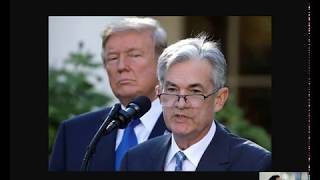
Okay, good morning, Wednesday the 19th of December. Hope everyone is well. The day has arrived, the final big trading day really of the year. We're going to run into Christmas, so it's a little bit like Christmas come early if you're an intraday trader, because all attention will be squarely on the Fed this evening, and the outcome of their decisions could well be pivotal for whether or not Santa Claus finally emerges for the equity bulls, or whether we get a continuation of what has been occurring over the last couple of days, which has been kind of souring sentiment. Now, great photo I saw this morning is this one. This is what it comes down to as part of the narrative, is you've got the, the newly coined in the press this morning, or named the blind amphibian, i.e., Donald Trump. If you don't get that, we'll certainly see the headlines later on this morning lurking in the background with the laser beam stare in the back of our man Jay Powell's head of is he going to hike and how many hikes are coming. And so the pressure is squarely on now the Fed as to the next kind of pivot point of where we go from here. Going back to the charts and Uh, I just want to have a look at the S&P 500 because we are at an incredibly important area technically, which kind of ramps up then the importance of the event even further. Because one would imagine that should this technical support point here, which has been tested, which is the year-to-date low that was printed in the initial sell-off in February be broken, then the bets are there's probably large stops sitting underneath here and we'll get a pretty quick and rapid run to the downside. Uh, psychologically, obviously the 2500 handle would be a target. You can see that was the previous area of consolidation when we were originally moving up to the record territory before the corporate tax cuts really kicked in to elevate prices into late 2017-18. But certainly even that could give way given the outcomes if it was hawkish tonight, and obviously the trade wars and other things that we're going to discuss in a second. So, you know, really quite critical technical points of support now for the S&P. And, and last night we obviously tried to recover, but then after market we saw some further information from the corporate space, and FedEx came out, slashed their profit outlook. Now, FedEx is not— don't get me wrong— a particularly large company, but it's by default what it does that is often seen as a bit of a bellwether for general economic prosperity, or at least confidence in the outlook, i.e., the more people are using that service, the more kind of transactions there are, the more deliveries are taking place. So people often look at it as a general read across for economic kind of risk appetite in that sense. And they were— they slashed their profit forecast last night, which just adds further fuel to the flame, so to speak. The other thing, of course, before we get our teeth stuck into the Fed and what we're looking for is oil prices. Now, you know, oil's been something we've been looking at for a, for a long period of time. There was a period of probably best part of 2.5, 3 weeks of consolidation where we originally bounced on support at the psychologically important $50 handle. You then had OPEC come in, OPEC+ did their part, they cut by an amount of 1.2 million, but kind of, we've kind of stuck to our guns and we've said that, you know, there's just still far too much supply in the market and that the the OPEC+ cut really is not meaningful enough to really counteract this situation. And with the overall growing negativity on the global growth story, we did feel that ultimately oil's got to give. And when that 50 broke, that we'd get a pretty substantial run lower. And, and that materialized yesterday. And you saw that where, you know, quite quickly, just given the importance of that area of support around the 50 mark, when such a significant area gives way, then, you know, you quickly get a move of $4, $5 in oil. It's not, not unheard of. And so, you know, these circles here that I've got on my, my crude chart, the, the bottom two, I've actually had those on there for the last 3 weeks. They've not moved at all. And, you know, this is just purely when you get these big gaps in price when the market can really run lower. It's about just looking for where would be technically the sound point of the fast money move to get out of that short. And, and obviously the, the 45, 79, 80 level we'd already had marked up, that's the kind of nearest point of where we were previously in the summer of '17, and the price has respected that thus far. If we're to break that and I don't really see any reason why we don't go down again to $42. But we're going to discuss this in a bit more detail because, well, let's, let's jump to it now before we get into the Fed and just talk oil for, for 5 minutes because this is what people are talking about. And, and now we have breached $50 more substantially. As we go lower, what you'll start to hear more of is this type of headline where oil plunge is threatening— let me transition— threatening to leave even parts of the Permian underwater. Now, this is particularly critical because the, the Permian Basin in Midland, Texas, is the biggest area for shale production in North America. And the chart here, which is WTI Midland prices, is tracking of that particular region and it's now trading below $40. So again, this isn't the WTI futures contract we were just looking at, this is a more specific for that regional area, and it declined 6% yesterday. But at $40, this then becomes quite a worrying chart for these producers because of, as we discussed before, their credit spreads will start blowing out, and then what the market is worried about, and the reason for this kind of downside pressure, is that, don't forget, US oil production is expected to increase a further 1.2 million next year. As far as US government forecasts are concerned, the Permian leading this growth in the US, we're going to be pumping 12.06 million next year. That's what's anticipated. So hence the reason why they're, they're ramping it up. But global growth, as we've seen through indicators like the inversion of the yield curve that's happening, um, then economic growth prospects are diminishing rapidly as per the equity sell-off repricing for this. And yet US crude is set to breach 12 million for the first time ever, and we've not even talked about all the other nations which are pumping up at near record levels as well. The main thing here then starts to become, you know, what's the break-even for the shale industry? And there were some good stats here looking at the various counties within the region of the Permian Midland, and it was talking about there's an average range depending on site and well of between $32 to $47. And for a top quartile of wells make money at $31, while the bottom quartile around $65. So you're looking at an averaging out of about $40. So for me, I still think there's a little room for downside to the $42 before then it's more crisis time. Not just for Saudi, which I'll talk about in a second, but for the Americans. And then you'll start to see quite a radical shift in Trump rhetoric. Because he'll be fearful of large-scale unemployment and layoffs on the back of then defaulting on credit obligations, if you like, from a lot of the, the big energy companies that have had to borrow in order to create such a phenomenal rise in a short period of time production in North America. Talking of Saudi, you know what, if it was— I'd love to be a fly on the wall in the Saudi palaces at the moment, especially yesterday when oil ran down another $4 or $5. They must be sweating by the bucketload. Not only this, you've got to put this in context. Ever since the Khashoggi death, you know, they've been under immense political pressure globally, and this is a country that is highly now dependent on foreign investment in order to deliver and implement its Vision of 2030. And this has radically kind of backfired on them from a PR point of view. Not only that, not sure if you were tracking the Saudi news from yesterday, but you had the Saudi King Salman say that his country will continue paying public sector cost of living allowances for citizens and will boost spending to stimulate growth. Even as Saudi Arabia toils to close its deficit, which yet again the kingdom forecasts a 6th consecutive budget deficit in a row. So a couple of the points here, there's some really interesting tweets. This guy, Avié Blas, is the head of commodities at Bloomberg, and he makes some interesting points here. If oil prices don't go higher and/or production rises, Saudi Arabia will need to take on further debt, spend its petrodollar reserves, and at some point introduce again austerity as it did a few years ago. Saudi Arabia is anticipating fiscal oil revenues for next year of circa $177 billion. That's more than this year's $162 billion. In fact, that revenue number would be the highest since 2014. Remember when oil was trading north of $100? That means the kingdom is expecting much higher prices for next year. And so, you know, the, the type of levels that they reckon they're gonna get from revenue from oil, as I said, I mean, just let's just have a flick back to the oil chart here. I mean, going back to 2014, oil's got to be tracking up at the I mean, let's have a look. 2014, oil was trading— there you go— this area here, north of $100 to $110. Push the price of oil from $50 to $110. You tell me what's got to happen to force the price that high. We're not talking about supply cuts to create that type of move into an economy where demand is falling. So I'm not going to get too conspiracy theory about it all, but that's some pretty ambitious— and for me, that is doomed to fail as a forecast. And that just really ramps up the, the pressures on the Saudis to really deliver at this point. So they've got to start ramping up and pushing for more aggressive cuts, at least in the short term. The other thing, of course, just wrapping up with the oil and energy headlines that we've had, Just to add further to the, the current state of play, to the downside pressures in crude, you had the API inventories last night and we had a build of 3.45 million. This was the opposite of what was anticipated, which was a drawdown. In fact, then it's a 6 million swing against that expectation. Builds in cushion and gasoline as well. So just to add to the situation and further weight to to the price action, bearish data from last night, which did see a slight move lower when the data came out. So yeah, that's the situation with crude at the moment. But let's jump straight to the Fed. There's obviously much anticipation around this event, and there's a couple of things I want to run through that hopefully can make a bit more sense of what we're looking out for, uh, this evening. And that is looking at firstly a chart of the rapid change in expectations here. If I make this a bit bigger— of the blue line, the blue line, as you can see here, is federal funds futures implied odds of a rate increase after December rise. So you've got here the different lines are indicative of, are the Fed going to do no more rate increases, one more, two more, three more? So this is contingent that they deliver the hike tonight. But then what do they do thereafter? And the most dramatic shift here has been the rise of the dark, the navy line, where you've gone from basically a sub-10% expectation of one and done, so that has got as high as over 40%. So there's been a meaningful shift here, just given the persistent weakness in equities, the kind of short-lived nature of the trade truce. And so the elevated risk of a trade war going into 2019, an unresolved Brexit, you know, falling at the seams in Europe with Italy and France under fiscal stress— all of these factors have kind of really elevated then the uncertainty surrounding what the Fed are going to do in the future. So one thing is, let's have a look then and provide a bit of a backdrop to what it is that Federal Reserve members would have been looking at and discussing amongst each other in order to come up with their conclusion of the best course of action for this evening. Now, this chap, Tim— I'm gonna butcher his surname— but this chap is an economist who I just so happened to come across this morning, but I read his work and I thought he's absolutely on the button. He works at the Oregon State University in America, so by no means a, a significant player in the market, but I think he addresses the points quite nicely. And so just talking through his assessment, because I think it will make the picture a bit more clear, and that is, let's talk about the case for the reason why the Fed might act to hike interest rates. Recent data remains largely consistent with the Fed's outlook. So he's looking at a couple of different things here. Industrial production continues to gain. This is looking at the dispersion of industrial production declines across sectors. He also adds that households continue to spend at a healthy rate. So this is looking at the retail sales ex-auto, gas, and building materials. Even jobless claims which is a boogeyman of the bears, tumbled, i.e., less people claiming benefits and pulling the 4-week moving average lower. So again, they can— a persistently good employment picture. Even core inflation has firmed. This is backward looking, of course. This is one of the key elements where the Fed might be more uncertain given the dramatic drop in oil. But all of these then have meant that the Atlanta Fed, which is one of the main trackers of which the market look at, which is basically a GDP model which takes the inputs of all economic data in the US to ascertain then forward-looking growth expectations, and that is the economic growth in the US will remain at 3% in the fourth quarter. Now if we look at economic growth in the US, 3% is a bit of a slowdown from the most elevated period that we had and the reaction effect of the fiscal measures that Trump put in at the end of 2017. But 3%, you can see here, is still a decent level, and a level of which is a growing, expanding economy that requires policy tightening. And so these all the reasons then for the fact that ultimately it was the right decision in that respect then, and that the case for a rate hike seems relatively straightforward in the here and now. Now, what does that look like in a priced-in perspective? Well, the markets agree with this assessment. This is the federal funds rate futures, which is the short end of the curve, most then highly sensitive to interest rate expectations. And as you can see here, a rate hike of 25 basis points is priced by the market at 71.5%. So that's still very much the base case scenario. Don't get me wrong, even right now we can jump in and say the Fed could not hike tonight, but as we're going to discuss, I think that is incredibly low probability. By the numbers, of course, you could suggest, well, there's a nearly 30% chance of that happening. Yeah, that's by the statistics. I think the Fed will would lose such credib— such amount of credibility would be lost by such a radical shift of monetary policy that I think that they would definitely not risk that. Not only that, can you imagine Donald Trump and what he would be like if the Fed chose not to hike rates? They would be seen as the, the kind of servant of Donald Trump, and therefore anytime Trump wants something, the market, they're going to expect the Fed then to deliver, which they would definitely not want to be in that situation. And so I think it's an incredibly low probability. Of course, could happen, but I'd assign it— for me, I think the chance of a debt hike is more than markets are priced. I think it's, it's close to a done deal. Going back then, This then highlights a couple of interesting points, and this is the financial stability metric. Now, this is the, the kind of reaction function is the first thing. This is something if you're new to monetary policy, this is kind of now going into the terminology that's used. So to get you up to speed, what the market looks at is when the— when we're trying to assess of what part of the economy is it that the Fed are focused on, because that means that we can be more precise then at what economic indicators do we put greater weight to, i.e., the reason why only a few, not the many, are important market-moving data points. We classify this as the Fed's reaction function, i.e., what is it the Fed are telling you via their communication and speeches that they are looking at as a reaction effect then to equate to a policy change. Now we know that the reaction function of the Fed is employment and inflation. It's been that for, for a long time. And on those measures then, again, it makes the case, as we've just discussed in those previous charts, a fairly straightforward one that they should hike rates. The area now that we're looking for clarity today, and I think the one of which the Fed and Powell will use quite skillfully to convey this dovish element is this area about financial stability metric. This is kind of the new thing that I think will grow a lot within the communication strategy, and this is about the fact that they've never made it explicit, and we don't know how it might apply in the current situation. Now, This is about then talking about financial market stability. Now let me jump to this graphic, and this is one, uh, indicative of Bloomberg US Financial Conditions Index. So it's an index measurement looking at how financial conditions essentially have tightened and how this will subsequently affect the FOMC's growth outlook. And as you can see, through November And certainly the beginning of December, this is quite radically dipped into negative territory. Otherwise then, reflecting the fact that economic conditions and confidence over the future is, is becoming worse in that sense. This obviously then is going to open up the prospect that the key thing we're going to look for is the trajectory of the green line, i.e., the composition on a median basis of each of the yellow dots, each Fed member's average case of where interest rates will be over time. I.e., has the curve become more shallow and by how much, and where do interest rates peak? Now, one could say, well, why don't the Fed just opt to skip the month and just come back in January? Why not just see how the market settles? Let's just not hike rates. Let's just wait it out. And let's just come back and, and reassess. The problem is here, obviously, the Fed like to move historically when they allowed more opportunity to unveil greater detail on a press conference and so on. Not forgetting though, the Fed do move to a rolling press conference format with every meeting though from next year. So that's quite an interesting difference. But one key thing here is that the Fed, you've often heard this terminology that the Fed is data dependent. Well, guess what? Equity prices are also data, and so hence this is quite a key risk to the rate call for today. For those then priced at the 30% on the other side is, well, surely then, aside from the natural reaction function of employment and inflation, the Fed have got to take into account the equity price data and the fact that we've moved substantially lower in just a short period of time, and we're kind of looking at quite precarious levels where we could come in under further pressure. So these are key things which the Fed are going to have to, to weigh up. The other thing then going forward is here is President Trump has obviously added further pressure to the situation. This was that now infamous tweet that he was suggesting about, um, we got a strong dollar, there's no inflation, there's lots of external risks, China's slowing, Paris is burning, you name it. The Fed should not hike rates. Now, will the Fed listen to him? I've kind of said this before, no. But it's not a case of the Fed listening to Trump, is do the Fed feel that actually a no rate hike is the best course of action? And if so, it just happens to fit with what Trump wants. That does though come with further issues down the line. So if we start looking at this in, in a bit more detail, this article suggests there's two problems, and I totally agree. The first is that skipping the rate hike today in light of the data and forecasts, as I said, could appear to be caving in to the president's demands. And although that could delay the basis of an equity sell-off What it might mean then is it creates its own problem in the appearance that Powell is put on the stock market focus rather than Powell making his assessments more broadly on the economy. So therefore, the Fed almost becomes a slave to market activity, which is a really bad situation to be in. And central bankers are very much aware from previous years gone by that they do not want to be seen just reacting to every sell-off in the market. As you can imagine, they quickly run out of ammunition. The second problem here is one that's driving uncertainty on Wall Street, is Trump himself. Anywhere you turn, there's potential crisis attributable to Trump's chaotic policy approach. Now, a couple of key things here is trade wars, obviously, There's a threat of a government shutdown over the border wall, which is just this weekend. You've also got, as you can imagine, as we get closer towards the end of his presidential term, then what's gonna happen here, he's gonna look to deflect attention off himself where the Democrats have said to bring more investigations into Trump and his family, which is gonna mean all the more distractions and noise coming out of Capitol Hill. So all the more that happens then, then all the more there's going to be kind of uncertainty about Trump, and also Trump almost weaponizing uncertainty, driving down equity prices, which in turn then induces the Fed to do what Trump wants in order to counteract any impending excessive downturn in markets. So yeah, there's a lot for the Fed to kind of navigate here. In summary though, the reason why I like this article so much is that they there's two portions here that I quite neatly surmise everything. And this is a 5-point plan of what to expect is the most likely approach, because I completely agree with the assessment. One, they hike to push rates at the edge of the lower range of neutral estimates. So it allows the Fed to follow the data and push back on the notion that markets and Trump are driving policy. I think that's a critical line for them to remain credible and for them to maintain control about them in the future. If they are to change and become ever more dovish, if the market continues to sell off, the market will respond to them. It's very important that that's maintained. So I think a hike and they'll look to want to push back on this idea about them being susceptible to being led by the president. Drop the further gradual increase phrasing. I think this is quite important then to show the market that actually we're getting to the, to the area of which we feel is the neutral rate. Calm fears then that there's going to be multiple rate hikes. This then by default should be reflective in the dot plot matrix. 3, emphasize in the statement that they are 'Vigilantly monitoring financial, economic, and political developments around the world.' So start to add in this idea about the other external elements that you're monitoring. By just indicating that that is the case, then we know that these on the balance are more downside risks. So by you saying this is already another dovish signal. Then you can release your forecasts which are on the balance net-net more dovish than the September version. This may include a reduction in the estimate of longer-run unemployment. This could also acknowledge that persistently low inflation implies the economy can run at a lower unemployment rate. I.e., this idea of a classical economic theory of a tightening labor force translating directly into inflationary conditions actually could not be the case. You can have low unemployment and relatively low inflation. And then, unlike September when Powell emphasized the forecast in his press conference, he will indirectly say to ignore the forecast and recognize that they will remain unnecessarily hawkish. So the point being here is, other than the rate hike itself, the other 4 points all mentioned here would be dovish. So basically, you adopt the strategy and a leaf out of the Janet Yellen textbook and you hike. But apart from the actual rise in interest rates, everything else is dovish that you surround it in. And that means then you can tighten, which the economy, we've argued, is warranted at least one more time. But then you can alleviate the uncertainty that you then are saying to the market you are willing to change course. If necessary. That could just be enough then to, to alleviate these fears that have been almost escalating and providing this additional weight to the equity markets. Not forgetting that you have the press conference with Powell, and this will be really important as well. And I think these are some excellent questions that I think for sure will come his way, and this is going to provide also some potential opportunity to trade in the second half of the event Just picking out a few of the key ones that I think are probably most likely. Definitely number one, he won't— Powell will not answer questions about Trump's pressure on the Fed. This is kind of like asking Carney about Brexit. Carney will talk about the economic situation. He won't directly comment on Brexit. Powell will not comment on the Fed. What Trump wants, what Trump says, so on. I think get that clear right from the off. Two, what is the information content of the equity market decline? How does it, or does it in fact, impact the growth forecast? How much of this influence of their decision-making is derived from the equity stock market sell-off? That could be quite telling for that reaction function going forward. Another big thing obviously everyone's been talking about is the further forward-looking inversion of the yield curve and the impending recession. So that yield curve now being flatter at this part of the cycle, how does the Fed interpret that? That could be quite telling for us to know about their future actions. Um, other things that I think are quite nice— what will trigger the committee to reassess the pace at which the Fed is winding down the balance sheet? So what would need to happen? And that kind of leads us on to question 9. What's the greatest external risk currently concerning the Fed? Hard Brexit, trade wars, so on and so forth. So yeah, really good summary here. I'll share this link after I finish so you can have a good read for yourself. So that kind of encompasses everything I really wanted to go over with the FOMC. As far as markets are concerned, I'm going to be here all evening, so I'll probably stick around for the full press conference as well. So I'll be in the live chat room helping provide my, my two pence to hopefully help out and navigate the volatility, which I'm sure will be coming. But the idea here is that essentially markets are in a fairly fragile state from a sentiment point of view. This is, this is globally and across asset. So many external risks that are happening. This, this growth forecast, which looked so rosy only 10, 12 months ago, has deteriorated so rapidly now. It's kind of up to the Fed then to help restore some confidence and calm, uh, and stabilize this sell-off. And so the market is anticipating them to hike but sound dovish in all other senses. Um, that being said, there are a couple of other things that I need to cover to that could also help that are outside of the Fed, and this is one. Lo and behold, such is Trump's savviness for using the media, and I've gotta give him credit, his timing is almost impeccable, is all of a sudden you start hearing probably the most diplomatic comments about China the US have made in such a long time on the day of the Fed event, of course. And this is that China and US talk on trade ahead of January negotiations. The point being here, these are comments led by the Treasury Secretary Steven Mnuchin, and it's talking about the China and the US have held vice ministerial level talks today to discuss the ongoing trade dispute as they move closer to face-to-face meetings happening in January. Now Let me just read you what Mnuchin said. He said, we are in the process of confirming the logistics of several meetings, and we are determined to make sure that we use the time wisely to try to resolve this. We expect there'll be meetings in January, he said. But importantly, the point of this is previously the administration had put no specific timing on talks, and obviously the market did get a little bit spooked. And what has initiated some of this latest round of equity selling has been the idea that the trade truce broke down so quickly. But now, given the, the depths of the sell-off, the administration has changed tact once again, and they're, they're bringing forward now telephone conversations, trying to again convey to the market that we are trying to progress and make meaningful progression or distance covered in these trade talks. Mnuchin went on to say, and I think this kind of summarizes it, "I don't think there is a question of there is a win for them and a win for us. I think that there could be a win for both in the sense that they have a large growing middle class that wants US goods, and I think there's an economic outcome that's good for the both of us." So a far cry from the bully boy tactics that the US have been adopting This is much more an even, balanced, measured approach, which certainly again would help in what is a negative sentiment at the moment. Because this isn't just about the Fed. An alleviation in trade tensions certainly could be again the silver bullet that could help mitigate this downturn that we're in at the moment. A quick look elsewhere. There's also been some fairly positive developments in, in across the pond in Europe. Let me just bring over quickly a chart that you can see here. This is a chart of the BTP future, and you can see here BTP's big jump this morning, and that's a, that's a decent pop in price action as far as the fixed income market is concerned. If we start blowing out the chart a little bit on a wider perspective, you can see BTPs have seen a really nice rally throughout the month of December, and certainly here puts us up at the highest levels we've been in a long time. So why are people so bullish Italy? And you can see here, if we're looking at the major currency pairs in the top left, the euro is in a much more bullish start to the day. We're up about 50 pips comparative to cable, up, uh, only about 16. So definite euro strength emanating a little bit from this story. And that's because Italy sees peace deal with the EU as commission meets on its budget. So the populist government is betting the European Commission will ratify an informal deal today to avoid sanctions over its spending plans. On the eve of the commissioners' meeting in Brussels, this was last night, a spokeswoman for the Rome Treasury, who asked not to be named, said the government has a technical agreement with EU officials which still needs to be approved. But obviously financial markets move on future expectations, and hence they've already jumped to the conclusion now that this is going to get signed later on today. Now, to get this over the line, the details here are that Italy cut its deficit target for next year to 2.04% of GDP and shaved about €4 billion off its spending plans in order to persuade the EU not to start its sanction procedure. This was against the initial plans from Rome of deficit of 2.4%. The deal is set to be officially announced Wednesday, so of course looking for confirmation of this. The EU is due to explain the result of its discussions around midday after the commissioners— commissioners, excuse me— are set to be meeting in Brussels. Once the deal is formalized, the government will face a year-end deadline to get the bill through parliamentary approval. The budget bill is expected to be debated by the Senate from Thursday, with approval now needing both the upper house and the lower house. So short-term positivity coming off this, but as just explained, there are a couple of domestic procedural hurdles to go through in order for the bill to get signed off, uh, in the Senate and the upper and lower house and so on and so forth. So a few potential barriers to come, but at the moment Looking good. Okay, that's, that's it. I mean, that's pretty much up to speed then with everything you need to look out for. Just a quick review of the session ahead and a few final, uh, kind of words of advice. Coming up at 9:30 then shortly, you've got UK CPI data. Again, any reaction to this, I'd say you need to manage accordingly. Only if we get real extremes breaching the analyst range, of which is pretty wide-reaching actually. You've got a CPI estimate range here, although expectations year-on-year is 2.3, you've got a low estimate of 1.9, a high of 2.5. So again, with, you know, risks and, and an overwhelming focus on Brexit rather than the data points, I think don't get caught out with a number too close to the median. Only really look to execute maybe a short trade if and only if we get to the, the extremities of this range or indeed breach it, where you see a much more sharper move in reaction. So CPI, RPI, PPI is all coming out shortly. Then into the afternoon, you got some Canadian data which will be influential if you're trading the loonie, for the live guys in the FX room. Otherwise, US housing data, all infantry numbers will recap again Uh, but the main point is, is it might be the case that markets, um, will start to consolidate just given the gravity and importance of this evening's decision. No one's really going to be wanting to throw around their money, uh, and, and get into trades unnecessarily. More so wanting to hold back, um, be armed and ready for what undoubtedly is going to be probably something which not only is going to move financial markets this evening but will probably feed through into the Asia-Pacific session and undoubtedly will still be trading the reaction to it come Thursday. That being then either a continuation of where we are or have the Fed done enough to kind of save the day for the time being and then we kind of go into Christmas. So again, 7 o'clock the initial announcement, the summary of economic projections. Jerome Powell then takes the stage for the statement and press conference coming at 7:30. So we'll be here to cover that in full. Okay, that's it. Thank you very much, guys. I hope that was, uh, useful for the Fed Insight. I'll share that link of that article. I do suggest a read of that to get you fully up to speed. But again, just be realistic about your expectations for this morning and afternoon because the real action is going to happen later on this evening. So good luck.
More from Anthony


Inside the Biggest Banking Stories You Need to Know This Week (Anthropic, Diageo, Private Credit)


Inside the Biggest M&A Deals You Need to Know This Week (UniCredit, GameStop, eBay, Eli Lilly)







AI Breakthrough or Hype? Anthropic’s Claude Mythos, Tim Cook Steps Down & LIV Golf Collapse