What to expect from the week ahead from the Head of Trading
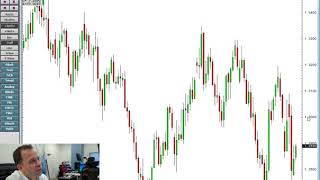
The Head of Trading breaks down the week of November 19, 2018: GBP/USD faces record-high volatility from Brexit uncertainty and Theresa May's Brussels trip. Oil prices have fallen sharply amid Saudi-Russia-US production-cut talks ahead of the OPEC meeting. Watch the S&P 500 for a possible reverse head-and-shoulders pattern, though trade-war risk remains a concern.
Chapters
Okay, good morning guys, welcome. 19th of November, let's get this briefing started here from the Amplify Trading floor. So looking at the week ahead, we're going to be obviously talking about this market I'm showing you right here, which is the value of the pound versus the dollar. Give you a quick update on Brexit as that will be, of course, inevitably the dominant theme for the week ahead for sure. So we'll have a look at how Brexit has impacted the pound here that we're looking at on the screen, of course, but actually how, how this is kind of playing out in the UK equity space as well, because there's definitely some winners and losers out of this Brexit uncertainty and Brexit risk. Citigroup, you know, Sam North here at the office has found, unearthed Citigroup's clever new investment strategy that I'm going to be covering during this briefing. But I'm conscious that here in the UK we are obviously just deluged with Brexit-related headlines, Brexit-related— the media storm around this. And I do want to try and look at and just open your eyes to the fact there is other stuff happening. So we want to look out and see what's going on. We had a an APEC summit over the weekend, and this is relevant for the US-China relationship and therefore the trade war risk. So we'll just give you an update on that. Also, I want to have a look at crude oil as we're heading in towards the end of November and we're approaching an OPEC meeting. Oil's been one of the big movers. If I just very quickly show you on the chart, you can see what I mean when I say oil's been one of the big movers in recent weeks. Months. So an update here, CampTag down at $57. Is this the bottom? Is it not? So plenty to talk about and lots of interest and intrigue ahead of us as we try and navigate through markets this week. So I want to go back to the pound and let's obviously just start with Brexit. We've kind of bored you to death with this stuff, but it is, you know, without doubt one of the most sort of politically defining moments, politically defining moments of our lives. That would not be too dramatic a description. So of course it's going to be important. So here's what's going on. If I transition my screenshot, here's Theresa again, just trying to— well, over the weekend she did it, obviously did her bit of trying to promote her deal that she's managed to get drafted. Over the weekend, her kind of line has gone from one of— and I quote— 'A change of leadership at this point isn't going to make the negotiations any easier.' So Theresa May is about to set off to Brussels this week to just iron out the last finer little details of this draft agreement that kind of hit the news— hit the headlines last week. So she's going to be off in Brussels, which kind of leaves leaving, let's say, Westminster unattended, whilst the cat's away. We'll have to see how these kind of Brexiteers who've been circling and threatening— it'll be interesting to see how things develop. Now, just on her position as prime minister, of course. So one of the risks in front of us in the next few weeks, and perhaps the risk this week, is, is there going to be a vote of no confidence? So is Theresa May going to be ousted internally from within the Conservative Party via a vote of no confidence? We're led to believe that 25 Conservative MPs have issued letters of no confidence to the chairman of the 1922 Committee. They need 48 letters to be able to go ahead and trigger a vote. At the moment, the chairman of that 1922 Committee of backbenchers, of Conservative backbenchers, actually said over the weekend and he doesn't think actually they would win it. Or let's put it the other way around, he thinks actually Theresa May may well win a confidence vote because the confidence vote takes place amongst the Conservative Party MPs and it's 50% plus one MPs need to vote against Theresa May for her to then be removed and a leadership battle begin. So actually, I mean, I would say perhaps the The idea we're going to have a vote of no confidence and a leadership race within Conservative Party are perhaps small. It would take, I would suggest, Michael Gove, perhaps that type of person, to resign from the cabinet this week. You know, that pretty much held things together just about last week as Gove decided to stay. His angle was that he wanted to stay within the cabinet to try and this week get this draft agreement renegotiated. And if that can't happen, then maybe Gove resigns as well, and then maybe that tips the balance towards a no-confidence vote. But the idea that they're going to get this draft agreement renegotiated, I would suggest, is almost fantasyland, because Europe have absolutely zero appetite to reopen the negotiations on this. Absolutely zero. So it'll be interesting from that point of view. But certainly Gove, keep your ear to the ground on Gove news. Is he going to stay in the cabinet? He is so far. He didn't take the Brexit Secretary role that was offered to him, which was quite telling, I think. He remains as Environment Secretary, and that just suggests he's staying for now. But whether he stays to the end of the week. We'll, we'll see. So that's one thing then, of course. Um, is there a vote of no confidence? Does it get triggered this week? Probably not, in my view. Then we, of course, um, well, Theresa May is going to be off in Brussels negotiating the finer points. Now, this deal, you do realize, this draft document that's 500 and— I can't remember the figure now— 585 pages long, I think it is. Um, most of that is the withdrawal treaty which is legally binding. Um, there's actually only 8 pages of this document that is the Joint Commitment to a Future, um, Arrangement. So this is talking about what does the economic trade deal look like once we've left. And this is just an 8-page, very, very, very top-level, non-legally binding joint commitment that maybe this is the kind of direction we might head in when we're trying to negotiate the trade agreement once we've left. Now, the headline I'm showing you here is Barnier proposes extending Brexit transition to 2022. So at the moment, of course, the transition period lasts from March 2019 through to December 2020. So that is— what is that— 21-month period. in order to negotiate a trade agreement, essentially not far off starting from scratch. They've got an 8-page, very loose, uh, the most top level it can possibly be, uh, outline. That's the starting point. So they've got 21 months to negotiate this. I, I do think that is not enough time given the evidence. Remember, go back to 2016, or let's say go back to March 2017. We issued the letter that triggered Article 50 and we left. And the idea at that point was in 2 years' time we'd have agreed the full economic trade arrangement and we'd leave. Of course, we are— here we are 2 years later, we haven't even started pretty much that negotiation. So I would say the idea we're going to get it done by the end of 2020 is fantasy. Now the problem Theresa May's got is is that the hard Brexiteer faction of the Conservative Party don't want a transition period, never mind one that's going to get extended potentially by another 2 years. I mean, at the moment— and this is something that needs to be agreed this week— at the moment, there's a loose idea that the transition period could get extended, if agreed by both parties, by maybe 'a few months' was Theresa May's line. I'm talking a few weeks back now. Theresa May's line was, yeah, we could open the door to extending the transition period maybe by a few months if it's needed. Now here's Barnier saying 2 years. The Brexiteers are not gonna like this one. And this will involve, of course, an extension of the period where the UK are in the EU but without any say, without any votes, and will be paying into the EU $10 to $15 billion a year contributions whilst having absolutely zero influence at the table. So the Brexiteers in Westminster are not going to like the news from Barnier over the weekend. And it just makes Theresa May's job this week just that little bit harder. So this will be a critical focal point. You know, how— by how long will this transition period potentially get extended? And how long will our limbo last? So Theresa May over in Brussels. Others— if we just have a look at the pound, I'm going to switch back to the chart here. You know what's happened? I mean, last week was quite dramatic. I'm going to go to a 60-minute chart and lots of volatility. And actually, if you look at the implied volatility, both on a 1-month and a 3-month basis for the value of the pound, then actually we're at the highest levels now seen since we voted to leave the EU. So since June 2016, the Brexit vote itself, this is now the highest volatility we've seen on a 1-month and 3-month basis. The problem with that is if you're looking to hedge yourself against exchange rate risk, it's getting a whole load more expensive. If you want to buy put options against the pound or to protect yourself against the pound falling in value, Well, the cost of these put options, the premiums you have to pay, are rising and rising and rising to the point now where there's potentially people going to start looking at the cost of hedging and saying, you know what, it's just not worth it. So that's something to bear in mind whilst we look at the pound here and we're kind of— this is our focal point from a trading perspective. Of course, there's a lot of people that get impacted by the pound's value. It's not just traders and investors, obviously. You know, what about the huge number of companies in the UK economy that are buying components, let's say, from European suppliers, buying components from suppliers outside of the EU? You know, as the pound's value drops, these imported goods are getting more and more and more expensive. Also, of course, outside of the pound's value, if we just talk about I'm going to bring in Sam North's discovery this morning because Citigroup have got a great, great new strategy for investing, um, that the strategy for Brexit risk. Um, I'm just going to transition my screenshot. Here it is. Citi have come up with their, their new strategy is called TOWIE, and this is based on the, um, the, the smash hit, uh, The Only Way Is Essex. Now, if anybody listening to this knows what I'm talking about, then shame on you. Sam North's favorite TV program ever, and that's a direct quote. But Citigroup have changed this to 'The only way is equities.' So here they're looking to introduce the idea, and it's definitely not a new one, and I'm about to rubbish their idea in a second. But this is the idea that when the pound drops in value, if I transition back to that cable chart. Well, I just talked about that's bad news for importers, right? But what about exporters? Well, here it's obviously good news. So as UK companies are exporting goods out of the UK, a weak pound is very positive for those businesses. Now, when you take a look at the FTSE 100, about three-quarters of the FTSE 100's sales and profits are directly attributable to sales outside of the UK. So that FTSE 100 index is just packed full of giant, you know, miners and oil companies and so on. So actually, Citigroup's idea here, whilst on the face of it makes sense— so they're saying buy UK equities because essentially if the pound does collapse— and let me show you on this chart, currently analysts right now, and this is the problem, and why are premiums on options so expensive? It's because demand has been so high. Let me show you something right now. Let me just get my little rectangle drawing thing out. Right now, people are saying— oh, these are, these are respected FX analysts in the city. They're basically saying that what could happen is the cable could launch up to around about 1.40 off the back of Theresa May somehow getting this deal through Parliament. And we move towards March 2019, we exit the EU into this transition period. Theresa May's at the helm and we start negotiating the economic deal. All right, here that kind of soft Brexit outcome would launch the pound higher, maybe up to 140. However, if Theresa May gets kicked out, if the draft bill gets voted down in Parliament, if we get, I don't know, a general election, all the rest of it, then the risks ramp higher. And here they're saying we could get a move down towards the 115 handle. Or we kind of muddle through. And really what's been happening over the last few months, we kind of muddle through. We're not quite sure which of those extreme binary outcomes are going to happen. And so we're kind of wedged and stuck in the middle here around about the 130 handle with a lot of volatility. So you've got huge potential movement either way here. We just don't know which way it's going to go. Now, if the pound collapses, Well, then actually UK exporters, this is great news. So Citigroup are saying, right, buy the FTSE 100 because ultimately these guys are going to be benefiting from a cheap pound. Yes, the economic uncertainty is still there, but the cheap pound, if it does fall dramatically, would offset that. However, what I would like to say is that is fine buying the FTSE 100. Yeah, I get it. Most of the companies in that index, yes, are reliant on international revenue. But it's definitely not all of them. If you check out some of the movement we saw last week, here's, uh, here's Persimmon. This is a one of the big UK home builders, FTSE 100 company. Massive sell-off at the end of last week, biggest down day they'd had for years. And this is so that the UK home builders are really suffering here as this continued kind of weak economic outlook and uncertainty around Brexit is having a a further negative impact on the UK housing market. What about the banks? They're having a shocker as well. RBS, massive downside at the end of last week, tracking back down towards £2 here. This is the lowest they've been. This is the lowest the RBS share price has been since 2016. So look, these are massive FTSE 100 companies and they're having a terrible time. So home builders, UK banks, avoid. Yes, all right, the big mining stocks, the energy companies, fine, that makes sense where a cheap pound may well help those businesses. So I think being selective here amongst the FTSE 100 will help you avoid some of the, the banana skins that— so you're going to get winners and losers, obviously. So as we go through this week, Brexit headline risk top of the agenda. We saw that from last week. You'll be used to this, you know, any kind of tweets from the likes of Laura Koonsberg, for example, any updates from Theresa May. She's expected to potentially be talking. We're not sure yet, it hasn't been confirmed, but 10 past 11 AM this morning, we're expecting maybe some more comments from Theresa May, but she's going to be off to Brussels. What happens with the 1922 Committee? You know, we're going to get updates, I'm sure, as more letters of no confidence are received. Are they going to get near that 48 magic number? What's going to happen on the Labour side? Labour over the weekend have been saying that Let's have a general election. We would win this general election. This would give us time to renegotiate the deal. So actually, Labour are pretty much saying, actually, we're not gonna run on a mandate of no Brexit. They're gonna run on the mandate, if there were a general election, that we're gonna renegotiate the deal, um, even though we've literally got like 3 months left. Apparently that's enough time. When the people the other side of the negotiating table have said they have zero interest in negotiating any further. So I'm not quite sure how that one works out. But these are the runners and the players, all right, as we go through this week. Right, let's talk about something else. I don't know about you, but Brexit fatigue would be an understatement. So let's talk about— and I'm going to transition my screenshot. Let's go back to the charts. Let's have a look at the S&P here. So what's going on? This is a daily chart. Obviously, we had the big fallout start of October. Ever since then, it's been quite volatile. We've had these moves to, to the upside as stocks have tried to rebound. Currently, the low is down here at the 2600 handle. And actually, what we've got quite nicely here is it's almost like a reverse head and shoulders going on at this point where you're Your neckline of the two kind of red boxes I've drawn up here with your, your head down here, you kind of got a couple of shoulders kind of thing going on here. So actually, this week's quite pivotal, I'd say. Do we rally back towards 2800 and above and retest the neckline and maybe then complete this head and shoulders, which maybe gives us the idea of a Santa rally into year end? Traditionally, December, of course, is a very positive month for US equities. So we might get a completion of the head and reverse head and shoulders, I should call it, which would need a move up above 2800, a break of the neckline and a move up towards the, the high of the year. I, I'm, I'm skeptical that that will happen. My prediction would be actually the opposite. I don't think this reverse head and shoulders will complete. I in fact believe that There's more downside risks. So one of the reasons behind that is the news over the weekend about— from the Asian— oh, sorry, the APEC summit over the weekend. This was the 29th summit of sort of Asian Pacific, Pacific countries getting together, and the Pacific Rim, let's say. And they've done this for the last 29 years. Every year for the last 28 years, they've issued a joint communiqué, which is often what happens at these kind of big summits. They issue a joint statement with, I don't know, summarizing the stuff they talked about. It normally doesn't contain any kind of official agreements, but it's just an overview. This is the kind of direction we want to be going in as a group of countries. So over the weekend, It was the first time ever in the history of this summit that they failed to issue a joint communiqué. Such was the disagreement amongst— well, primarily between China and America, of course, around the trade situation. So this doesn't bode too well when we have a G20 summit coming up at the end of the month in Argentina. Well, we kind of been pinning our hopes on that event to be the moment where the door is unlocked to some kind of progress, positive progress between the US and China, you know, to try and steer this trade war back into a positive direction and have some kind of agreement or outline of an agreement that could potentially be made and things can move forwards without Trump threatening to put tariffs on, on everything. So this kind of— the fact they failed to issue a joint communiqué over the weekend, I would say, reduces the chances of Trump and Xi Jinping in Argentina making any progress. So I'd say if you, if you want to call it trade war risk, has slightly ticked higher over the weekend because of this. However, you wouldn't really notice that in when you're looking at the S&P here on the daily chart. We do have a green candle. Up around the top end of last week's ranges. However, you— if you want to see, uh, Australian markets suffered overnight. Australia, one of the most sensitive economies to China, and so as a result of this, Australian markets were down. But as we start this week, I'll zoom in, US markets are kind of on the front-ish foot. So as I said, up around the kind of high points that we saw, um, you know, let's say back here on the 13th of November. Um, then we've got a slight resistance we're just testing before we get up to that 13th of November high. You've got this double top here coming in from both the 14th and then the 16th, so that's what we're testing right now. But as you can see, a slight positive vibe as we begin this week. Um, other stuff on the kind of headlines, um, you know, stuff like this kind of grabbed the attention. The oil price is now controlled by just 3 men. So bin Salman in Saudi, Trump in the US, Putin in Russia. And of course, this makes sense given that these are easily the 3 biggest oil-producing nations on the planet. Right now you've got the US pumping and increasing production to record levels. You've got Russia and Saudi pumping at record levels, but Saudi Arabia particularly now starting to voice their concern about this chart. The concern being the price of oil has dropped very sharply. You've got like a 26% collapse here in the last 6 weeks. So this is now Saudi talking up the idea, right, let's cut production. First it started out at 500,000 barrels a day cut, then they started talking about a million barrels a day cut. The market didn't really still rebound, so they started talking about 1.4 million barrel a day cut. The problem is the more they talk about cuts, the more flak they're going to get from Donald Trump, who does not want production cuts. He wants a cheap oil price. So the US are going to carry on increasing production. So Saudi now want to try and convince Russia, but Putin's not that interested. But this is their task. They've got to try and convince Russia, look, this price drop is hurting. Let's do something about it. Let's get together and agree before the OPEC meeting starts in December. Can we form some kind of arrangement where we get Saudi and Russia cutting production in order to massage prices back higher? So keep your eye out for news flow on this as we go through this week and indeed next week. These headlines will become more important as we approach crunch time, which is the OPEC meeting at the start of December. As it stands at the moment, a green candle today. So we have got 4 green candles in a row here. This thing is trying to bounce, but it's making hard work of it. I'll just remind you of that key price, the $55 handle. So important. Tested last week. This was the start of 2017 kind of top. We had good support once we've broken that one year ago this week. And we tested it and it held. And we really need to see this hold firm. We need to see them— the bulls technically need to move back above $58. Okay, that was a key low, uh, February earlier this year. That was the low of the year until we broke it last week. So we need to move back above $58 to stabilize things, maybe then a launch and a test of $60. That's what needs to happen this week. If we are to see an end to this phenomenally steep drop. However, it could go the other way. Any moves back towards $55, any move, any kind of talk that Saudi are, all right, fine, we won't cut production by 1.4 million barrels a day. You know, there's not enough kind of non-OPEC interest in it. All right. Well, we'll talk about 500,000 barrels again. Or if there's any kind of doubt that any cut will happen, then prices will start to come under pressure again. And any— I'd say another test of $55 and we're probably going to break it. One test, fine, and it held. I think if we get back down there this week, oil's possibly in trouble for a break of $55, and then we're going to start to talk about $50. And who knows, you know, the double bottom— what, the 2017 low down at around $42— is obviously an interesting technical level. But I'd say we stabilize and stay above $55 this week. We have a go at testing and breaking $58. Would be my preference. Right, talking about this week, let's finish off the briefing by reviewing what's going to be happening, what is on the agenda other than all the Brexit shenanigans. Here's a little summary. The one thing about this week from a US data perspective, because the other thing obviously that's driving markets is the Fed and US rate hikes, and we're moving towards December Of course, this is the meeting that the Fed are expected to hike for the fourth time this year. We're not going to get too much update on this this week because most of the US data— in fact, all of the US data is, is non-tier one. So we don't have any important US data to go off to give us more ammunition on that kind of Fed rate hike expectation front. That's one thing to say. Obviously, Brexit is going to be with us. Oil headlines are going to be important. But other than that, it's a quieter week. We do have the Fed's Williams talking today. The US data is insignificant. Going into tomorrow, we get some German PPI figures. We'll get OPEC, some OPEC meetings beginning. This isn't the official one, that's coming at the start of December. UK inflation data is going to be important. Certainly the chances of the Bank of England hiking rates have just gone to zero now. I mean, go back a few months and some in the market were thinking November rate hike, which was quite frankly ludicrous. But chances of a UK hike now are just, just forget about it. But that inflation print, we'll see just how damaging, you know, if we do get upside inflation, then that'll be bad news economically as we get uncertainty. You know, you're getting that stagflation idea resurface. And we got an econ finance ministers meeting, so of course this is Brexit stuff going on here. That'll be important. US data on the housing front, not particularly interesting at this point. ECB's Weidmann talking, Bank of England Wilkins, and so on. Into Wednesday, um, and durable goods and jobless claims and existing home sales. Of course, the weekly Department of Energy numbers are going to be the most important data that day. Into Friday, Spanish bond auction would be another kind of measure of contagion from the fallout from this Italian budget deficit saga. Keep an eye on Spanish yields at this— in this auction, any hint of contagion there. And we've got some ECB minutes, Bank of England speakers again. Um, and of course we're into Thanksgiving, and this is the big reason why we're not going to really get much update on the Fed side is because back end of this week, US is on shutdown. So Thanksgiving is on the Thursday itself, all markets closed. Uh, on the Friday we will have markets open, but volumes will be fantastically low. However, we do get a couple of interesting, uh, flash PMI readings from the US on that Friday session in low-volume markets, which might spark a bit of volatility. We'll have to wait and see. But we do have some, you know, the most interesting day of the week from the data point of view is Friday. All the flash PMI readings from Europe as well as the US there. But do bear in mind it is Thanksgiving week. We're going to get some Black Friday retail bonanza. This is the day where pretty much Amazon sell— I can't forget, I forget the numbers, but I'll tell you before the end of the week. But it's like ridiculous portion of their annual sales get done just on one day. So it's the biggest shopping day of the entire year for this planet. So we'll be tracking that and keeping an eye on that. It's always a good litmus test for general economic, economic health. Right, that's it for the briefing. Enjoy the week and keep your ear to the ground. Brexit all the way. All right, thanks guys.
More from Anthony


Inside the Biggest Banking Stories You Need to Know This Week (Anthropic, Diageo, Private Credit)


Inside the Biggest M&A Deals You Need to Know This Week (UniCredit, GameStop, eBay, Eli Lilly)







AI Breakthrough or Hype? Anthropic’s Claude Mythos, Tim Cook Steps Down & LIV Golf Collapse