What to expect from Theresa May's speech
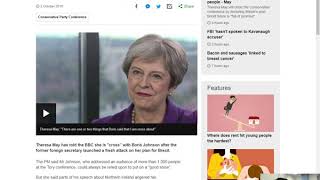
In this October 3, 2018 market briefing, the presenter walks through a wide‑range of macro‑economic and political developments that could shape FX, equity and commodity markets that day. The core of the analysis is Italy’s last‑minute budget concession – a reduction of the 2019 deficit target from 2.4 % to 2.2 % of GDP and a further cut to 2 % for the next two years – and how the move instantly eased euro‑related risk, narrowed the Italian‑German 10‑year spread and sparked a modest risk‑on bias. The speaker links the bond‑spread dynamics to euro‑direction, noting the ECB’s upcoming policy decisions and the contagion risk of a renewed Italian crisis. The briefing then shifts to the UK Conservative Party conference, dissecting the political tug‑of‑war between Theresa May, the DUP, Boris Johnson and the Northern‑Ireland backstop. The presenter forecasts May’s speech timing, possible market reactions (limited downside for sterling unless a hard‑Brexit line is taken), and references past conference‑driven pound moves. A quick macro calendar follows: UK services PMI (9:30 GMT), US ADP employment (13:15), ISM non‑manufacturing (15:00) and DOE oil data (15:30). The presenter also touches on emerging‑market stress – Turkish inflation spiking to 24.5 %, the Indian rupee hitting a record low, Brazil’s election uncertainty and China’s weak Caixin PMI – and notes that oil inventory numbers were largely muted while gold’s recent technical breakout offered short‑term trading opportunities. The overall tone is analytical with a cautious‑optimistic bias toward risk‑on moves, while warning traders to book profits early around the high‑impact events.
Chapters
Good morning, Wednesday, 3rd of October. Hope you're well. In the briefing underway where we're going to discuss a couple things, a bit of an update on Italy, uh, what a difference 24 hours makes in regard to the euro currency and European equity indices making a bit of a bounce on the back of a concession on behalf of the coalition government. We'll go into a bit more detail on what exactly the details are, what on that. We've also got Theresa May's speech, so what is she going to say? How's the market going to react? We can have a quick discussion on that. And then also there's a couple of things on the emerging market scene, I think, to be aware of, from Turkey through to India and then Brazil with the elections looming this weekend. So that's what we're going to cover. First off though, just looking at the cross-asset kind of movement to ascertain a little bit of the market sentiment for the open. And one of the most noticeable things here that was different from this time yesterday is that we've got a kind of mild risk-on atmosphere. Euro here, top left, has, has caught a bid from overnight. And if you look at the euro currency then, just looking on a slightly longer time frame to encapsulate the last week or so, you can see we broke higher here in the overnight session after then reversing the weakness that was seen at the market open. So this was yesterday. If I just sort of highlight the area here, this was when there was a continuation of the panic about the, the kind of budget deficit figures put forward by Italy at the end of last week. And yesterday morning I was kind of talking about the weakness in the Italian equity market, the 4-year high in Italian 10-year yields, the bust of 3.1% in a 7-year yield. Well, all of that's reversed, and as such, then all of that move's been taken back pretty much to the tick. Um, interested to see how the price responds at around where the euro is trading at the moment. You can see here, that was the point on prior occasions which has held up with some significance on, uh, on occasions as support or close to it, and then also on the recovery yesterday before we, you know, more aggressively broke through overnight. And here we are having a retest back to that area now. So Will that provide a bit of a floor just given the slight turn of events that we've had? Likewise then, the yen a little weaker, gold still elevated, but exiting that out, European stock futures, the DAX a little lower, but the Euro Stoxx has recovered somewhat as well from the losses that were seen yesterday, and bunds have gapped lower, down about 20 ticks at this present point. So what is that story? Well, Italy may offer concessions to the EU on 2019 deficit. So what, what's happened here was it was that 2.4% goal for 3 years on the deficit that kind of, as Bloomberg's saying here, rattled markets. What they're saying here is that, well, they're not going to change, they're going to maintain their plan for a shortfall of 2.4% of GDP for 2019, but they're going to reduce the targeted gap to 2.2%. And 2% for the following 2 years. So talking about then 2020, 2021, and that is a tightening up then of this deficit target from what they were saying just a day ago would be 2.4% consistent across the 3 years. So they're now saying that will be maintained for next year but then narrow over the following 2 years. Um, for me I know I was kind of talking a little bit about this point yesterday. I did feel there was somewhat inevitability about Italy's coalition government taking their foot off the pedal once the market started to really react negatively to this, because in my mind I kind of felt that politically Di Maio and Salvini have kind of proved their point. They fought the corner of the regulièrement italien, or régulièrement italien, in a sense of fueling the populist sentiment, but then also showing the flexibility to respond to market conditions and appease then the EU kind of paymasters. It's kind of a win-win in that scenario. At the end of the day, as far as the government's coalition perception is domestically, you know, it's positive. I mean, look at these guys, they're fighting Europe for us, but yet they do concede and kind of in a Trump-esque tactic, you push it— the aggressive envelope— quite far to start with, and you end up getting a bit of a compromise on the side of the EU here. And then you kind of kept your voting electorate happy. Um, with this, you know, this is a chart that kind of supports that argument, and this is looking at the Italian-German 10-year spread. So this is that bond spread that we look at. The 10-year is kind of the benchmark maturity. And yesterday, I think it— we saw like a 300 basis point move, which we haven't seen in a long time. You can see here this aggressive spike as Italian yields have elevated, Germany remaining stable, and hence the spread widening. But what you can see here is that, well, actually, confidence in the government is the highest it's been. Actually right now. And so, you know, the— as much as it can be criticized from an economic point of view, let's not detract from the strength of the populist sentiment in a lot of these nations. And they're kind of standing up to the EU, certainly is capturing some of that. Other things to have a look at though is that this has been quite a nice correlation, or inverse that is, between monitoring of these spreads, so i.e., Italian yields, to try and ascertain the feeling for, in the FX market, euro direction. Because if you think about the ECB, for example, and their winding down of QE and the interest rate hike to come in the autumn of 2019, you know, a lot of the things that they're going to be monitoring are, you know, these kind of Italian political developments could be quite influential for their plans and And so in the short term, a crash, if you like, in Italy certainly carries inherent contagion risks for the wider euro area. And hence the euro and its responsiveness in a negative correlation to the Italian yields has been quite, quite clean, if you like, quite tight in that correlation. And so it is something I think you do need to be aware of, and you need to, uh, in the back of your mind, even as an FX trader, this is why we use the bond market as a bit of an indicator for risk appetite, which can quite directly translate then into how influential and direction, at least on a bias, the euro could have going forward. Following these latest more positive developments though on the, the somewhat concession from the Italian government, this is the 7-year— remember I was talking about this yesterday the Italian 7-year bond yield, given that this is the kind of the average maturity of the debt that they hold. And 3.1% on the longer time frame was kind of the critical level, which we did briefly cross that threshold. But quite importantly, from a, from a risk appetite point of view, we've dropped back below 3%, and hence consequently we've got a little bit of moderate, I would call it, risk-on atmosphere to the open. Going forward, obviously Italy is gonna have to be tracked quite closely. And, you know, a lot of the reasoning of why this discussion on the, the budget deficit has come about right now is because if, as you look on this particular infographic or table, you can see the second date, October 15th, Italy submits its 2019 budget or draft budgetary plan to the EU Commission. So hence the discussions that are going on now being put forward. This is with, uh, Tria talking to the European officials as the kind of go-between to how would they respond to this 2.4%. Europe said they'd be very unhappy, and so they're just looking to basically refine that before the draft submission takes place, uh, in about 12 days' time. Following on from this then, other key milestones to look out for from Italy are going to be Sovereign ratings. So the current ranking at S&P, which is the biggest rating agency of the, the three majors, is currently BBB Outlook Stable. Now, rating agencies were a really big deal back in the midst of the sovereign crisis several years ago, not so much nowadays, but rating agencies' commentary specifically for Italy is becoming increasingly more important. Why? Because they're having to update and change their forecasting models to re-input the new information that the budget that this new coalition government is putting in, which obviously is very ambitious on a, on a more higher borrowing and spending front. And so the question marks here are not so much, I think, threats of substantial downgrades, but the kind of commentary of could that come in the future, depending on the numbers that are put forward by the coalition government. You've got Moody's to follow at the end of the month. So you're going to hear from two of the major rating agencies in the next couple of weeks. Growth data would be interesting as well. That's happening in October. And then we go through the various other things as we go through the year before year-end, the approval of the Italian 2019 budget, before we go into that year in itself. So always good to know. The timetable is for these events to get a bit of an idea of the ebb and flow of the news cycle, if you like. Okay, moving on. It's, uh, the main day, if you like, for the Conservative Party conference. You had the Boris Johnson show yesterday, and, um, you know, kind of his, his main arch rival for potentially if they were to run for PM Anthony Cheung was left short-falled in the auditorium, and Boris Johnson had a crowd, I think, of about 1,500 people, being coined in the press as barnstorming performance. I'm going to talk a little bit about that and also what to expect going forward and some of the broader ramifications here of what the the speech might contain. Now, one of the things that the BBC are running this morning is Theresa May on why Boris Johnson's speech made her cross. And the thing that she's isolating here is the particular commentary that Boris made about the Northern Irish Agreement, because he wanted to tear up the guarantee to the people of Northern Ireland. Northern Ireland is part of the UK, is what Theresa May has said. So the whole crux of this Brexit kind of stalemate really has been on the issue of the Northern Irish border. Now, Theresa May is likely to insist today that she will not allow any Brexit deal to split mainland Britain from Northern Ireland. Now, this is really crucial because this is in spite of growing fears among Ulster Unionists that her latest compromise to offer Brussels will put a border in the Irish Sea. So the key detail here is that Theresa May's government is propped up by the seats of the DUP, this being the byproduct of the hung parliament situation from a year ago, where she now relies on that unionist party to support her in government as a working majority. Now, what their mainstay is as a DUP party is that they are absolutely part of Britain and will want no other, you know, border put in place to make it any different. So no exceptional rules. And Theresa May is at risk then if she goes through and tries to break the deadlock in Brussels by accepting that Northern Ireland should remain part of the EU single market as a backstop guarantee against any return to a hard border in Ireland. The DUP are opposed to this. So what Theresa May has been trying to do with Arlene Foster last night, apparently, is get her on side that, look, we need to get a deal done, we need to provide this backstop guarantee for EU to accept our proposals of the Chequers Plan. The whole point, Theresa May is saying, this is purely a caveat in legal terms. We are never going to get to the point of needing the backstop. That's how she's trying to quell the fears of Arlene Foster. The problem is with Boris Johnson is— I kind of call this the Nigel Farage kind of mantra— is that it's very easy to talk a big game when you're not responsible for anything. I.e., Nigel Farage can say all these things, but if he was in power, you know, it's very different when you're trying to then negotiate. Easier said than done in that sense. Boris Johnson's the same thing. Boris Johnson yesterday is intimating that he wants to tear up the guarantee to the people of Northern Ireland. Well, if you did that, well, kiss goodbye to the DUP supporting you, and therefore what would you have? You would have to have new elections. Now, new elections, if Boris Johnson was to come in, is a problem. Because new elections, it would be incredibly messy because we are absolutely in no better or clearer position as to pushing towards one political direction or the other. I.e., this is a collection of the latest poll of polls, so this tracks here every single poll as and when it comes out. As you can see here, the latest poll, the Labour Party are 5% ahead. and this would be absolute crisis for the Conservative Party. Jeremy Corbyn becomes Prime Minister. Not only this though, the point being, I think that would be unlikely. You'd just have a hung Parliament situation again, and, you know, it would not bring about any further solutions. So, you know, Boris Johnson, with the best will in the world, trying to cajole the sentiment for doing what's right for Britain and its people, and the democratic vote of leaving the EU, I'm sorry Boris, but you can't execute that plan. It's just words. So yeah, I actually think that, you know, this speech, which if you look on the conference party agenda which is coming up, her slot for the Prime Minister— so she bookends the conference with her major keynote speech— so she's speaking The event begins at 10, finishes at 12:30. Her speech normally lasts about an hour, so in terms of her actually taking the podium, I would suggest that this is going to happen at about 11:30 AM. Now, a couple things to note here. I did show you yesterday a couple of graphics about the market's reaction to the party conferences over the last 2 years. 2016, there was a Sterling flash crash where the pound dropped 8% overnight. This was slightly algorithmic driven during an illiquid time in an Asian holiday, actually. So it's a little bit of a tenuous link. But last year, obviously, there was the, the coughing fit and the loss of voice, the P45, the full monty. And obviously the pound weakened, and it led to fears of her health and her impending resignation, which obviously didn't materialize. But in the short term, the pound saw some large downward movement. So historically, this has been a market-moving event. Two things to be aware of here. One is reportedly she's not feeling very well, which doesn't bode well for those that were hoping that we're not going to get a repeat, the kind of the Theresa May faithful, because apparently she's got a cold. But number two, I think, I think she's going to put in a strong performance today, is my view. I was kind of talking about this when she gave a speech 2 weeks ago. You'll remember she came out amid all this challenging of her Tory leadership, and she delivered a very quite powerful statement after the collapse of the Salzburg meeting. Because she came out of that without securing a deal, but she started saying things like, "We're prepared for a no deal. We will challenge the EU and do the best for the people of Britain." This type of wordplay, I think, has all been purposefully put into place in order to counteract that of the rising kind of movements from the likes of Jacob Rees-Mogg and Boris Johnson, and also to get the rest of the Tory mainstream back online and backing her. And one of the important things yesterday was that the pound, don't forget, popped higher when Boris Johnson spoke. Because right at the very end of his speech, Boris knows as well that this isn't the ideal time to strike. What this is an ideal time is to maneuver in place. But he finished his speech and we saw a 25-pip spike in the pound because he still backs the Prime Minister. He just doesn't agree with the Chequers plan. So, you know, he's still sitting on the sidelines. He's a, he's a wily old fox. He knows that now is not the time because of the reasons I've just said. You disrupt it, DUP, new election. But that's not going to do Boris any favors. So let's just wait, wait it out is the strategy. That's certainly been Jeremy Corbyn's strategy. So just going back to look at the pound, the speech which Theresa May gave that I described post-Salzburg actually created quite a lot of downward movement for the pound because it heightens the prospects in short-term investors' minds that she could push Europe quite far, and this idea of a no deal starts to increase, and typically that's a negative for the pound. However, just given where we reside in sterling at the moment, I actually think that a lot of that hard talk has now been priced in and is largely to be expected. So yeah, I'm, I'm not expecting fireworks from Theresa May today, but I am expecting some movement. If she does talk up quite a tough line, I think the obvious move would be downside pressure. But I honestly don't think the pound's going to fall through the floor because of what she said just 2 weeks ago, because I think now markets have become a little bit more prepared for the political line she's about to deploy in this sense. If she starts making some noises about further concessions to Europe to kind of get the ball rolling, that could create, at least in the short term, a little bit of an uptick in sterling currency. But if we're looking at ranges, then on the downside, really just looking at yesterday's range, I think the 130 handle. On the upside, if it's something more positive, I'd kind of be looking up more to the area of the R1, the 131 handle. So playing that kind of range here from 129.84 to what really is the weekly range, if anything. So again, I'm not looking for 150-200 pip tick potential moves today. It's not my baseline scenario. For that to happen, something quite surprising has got to happen. Let's just say Theresa May goes, do you know what, I've had enough, I resign. That is incredibly unlikely. If that was to happen though, well then, yeah, that's when you get your 200, your 250, 300 pip move and we smash through the August low very quickly. We get down to test it at least because the political uncertainty that would come up of that— Boris Johnson now following his speech yesterday is the most likely candidate now to replace her, hard Brexit back on the table, at least in the short term. Yeah, the pound would come under an assault very quickly, but I can tell you now that's very unlikely to happen. One other thing to be aware of, uh, from a calendar perspective, you do have UK Services PMI coming out at 9:30. So one thing, obviously the Service PMI is the most important of the suite of PMI data that we see from the UK, given the composition of its economic contribution to our country's growth. However, just be sensible. If it is an outlying number, the market, yes, is going to move, but it will be a fast money move and probably that only, because the market's not going to want to— or any trader is not going to want to sit in a position for longer than necessary knowing there's the looming speech from Theresa May. And obviously there's always a risk of a leak coming out and a tweet and so on and so forth ahead of such a key speech. So if you're going to trade it, if there is an opportunity to do so, I would just say be fairly sensible and be prudent about booking your profit fairly early and then just waiting for the speech to come out thereafter. Okay, a few other things I just want to touch upon and then we'll wrap things up. So just quickly, we did have the API crude oil inventory data, of course, last night. The overall move here has been fairly short, short-lived. The data wasn't anything massively surprising. Um, very tiny downtick at the time, but you know, my, my point here is that I think inventory levels at this point in time are a bit of a moot point. They come out, they create volatility in the short term over a 1-hour period, let's say, and then the market returns back to the bigger picture, which is oil markets are going higher right now for the supply risks we talked about, for the economic growth demand risks we talked well, demand side of the equation we talked about with US growth and global growth yesterday. You know, there's a lot more going on, bigger picture, than I think that these inventory levels really capture that much of the attention. Nonetheless, the crude API number was a build just shy of a million, so not too far from expectations. Cushing was a build, that's pretty punchy, 2 million, hence the reason why you saw a little bit of a drop last night, but somewhat counteracted by gasoline was a draw of 1.7 until it's a draw of 1.2 million. So not going to talk any more about this. We'll, we'll recover this close to the time of the DOE. The other thing I just quickly wanted to mention, um, was although the emerging markets has kind of dropped off the scene a little bit because we've been sidetracked by Italy, um, momentarily this week, just be aware of what's happening in the EMs is still ongoing. So you just had Turkish inflation come out this morning and check out that jump in Turkish inflation. It just shot up to 24.5% from 17.9%. So let's just check that out. I mean, check out the rise we've had in the last 3 readings. It's gone from pretty constant for the last 10 years around, let's say, 10%. And it's just rocketed to 25. If we look on a max, well, we got a long way to go. I mean, look, in Turkey you've only got to go back, you know, 30, 40 years and we were knocking way higher than this. But, you know, these are, these are numbers which are going to require further response, are going to keep the pressure on the Turkish economy going forward and its administration and their policies. So the Turkish risk hasn't gone away. Alongside this, the rupee, Indian rupee, touches a new record low. And this comes despite Modi's bid to boost the currency. So the Indian rupee has weakened to a fresh record low against the dollar overnight. Also, you've got Brazilian presidential and parliamentary elections happening on Sunday. And if you follow Brazilian politics, it's a really messy scene there at the moment. So although the markets have kind of turned away from the EMs for a short time, do be aware that the situation is not improving. Chinese PMI data that we had from the manufacturing PMI at the weekend, which I think the private Caixin reading was the weakest since May of 2017. So sentiment is decreasing forward-looking in China. Currency markets in these EMs are weakening to points of record low territory. This issue hasn't gone away. It's just that the markets are deciding to look at other things for the moment. How long will it be? And will the Brazilian election, if it turns out to be another destabilizing event, be a new catalyst to bring the EMs back into focus at the beginning of next week? That will be very interesting to see if that does occur or not. Okay, finally, quick run-through of the calendar. This is the kind of day I like. Lots of things going on, lots of things to get your teeth into that might inspire a bit of market movement. So this morning, the UK service PMI coming out at 9:30. That will be one to look out for, for any FX traders. But as I said, be mindful of your time frames of execution. Then going forward, the buildup to nonfarm payrolls due on Friday commences. You You've got ADP National Employment, that'll be at 1:15. I'll remind you at the time, but always be super vigilant for the revision to this data, often a few seconds delayed, but can be— can mitigate the initial spike in price movement. But ADP often then sets the scene for NFP. So that's 1:15. And then you get the employment constituents coming in from the non-manufacturing ISM reading later at 3 o'clock. Crude figures at 3:30. And then check out the speaker slate. Lovely jubbly. That's what I say when I see this. Lots of speakers. The problem is they're from the Fed. And I think for me, the Fed is a little bit, a little bit boring at the moment because of the Fed. We kind of know what their situation is. Jerome Powell spoke yesterday. They've had their most recent interest rate decision. They've set forth their latest summary of economic projections. Even though some of these guys and girls are voters and they are talking about the US economic outlook in some speeches, they do warrant monitoring. Am I expecting any great changes here? No, probably not. But nonetheless, you know, I would say just be aware if you're going to impart a trade at a specific point in time. It's just worth being vigilant that these people are speaking. The cluster of them, though, if you're trading UK European market hours, is going to be later on this evening. So you might miss those anyway. And then Theresa May, just to remind you, her slot is from 10 to 12:30. We're anticipating her to take the podium at around 11:30. Finally, a quick word on gold. Because gold was interesting yesterday. These are, these are a lot of markups that I had from when the market was moving, and I know there was some excellent trades by some of you guys in the trading live room with gold yesterday as it broke higher. I think Michael, you had it from pivot all the way riding the move up, so that was an excellent trade. But one of the things here was that when the market was coming up to the previous high of the day, you could see that that previous high at the time was such a critical level for near-term price action. And when we broke that, the market ran higher very quickly to the next point of interest. On a subsequent break there, it moved higher again. Now, at the time, there wasn't really any new fundamental news or drastic change in development in sentiment, but this, this is just the nature of how the gold markets can move. Whether it was an unwinding of a position. Order flow certainly can be quite chunky in size when some of the bigger players in the market start shifting around their positions in that sense. And with the technical breaches can mean you get quite wild price swings. The main thing in this situation to do, and like I was talking to some of the guys yesterday with the oil numbers and inventories when they come out, is just start plotting ahead of time is where do you think the market could get to when it's moving quite rapidly like this. Because typically when people and speculators trading these fast money moves are chasing the momentum, they want to look for the kind of best point of exit. And as here, you, you could have caught that on quite a few occasions. And I know there was opportunity to re-enter the market to, to follow that move higher, up to the point where it did start to look a little bit exhausted around this kind of final X target. These, these subsequent highs here. I mean, you can see where the market kind of found its high going all the way back to the 6th. So, you know, it's quite technically led when there's a momentum-based move as to when then those who are looking to encapsulate on short-term price movement want to get out of the market. And so I wouldn't be expecting this all the time in gold, but that's definitely the approach when that type of situation tends to old. Okay, that's it. Gone 9 o'clock now. I'll leave you to it. UK data coming up half an hour. Theresa May, 11:30. US data this afternoon: ADP 1:15, ISM 3 o'clock, DOE 3:30. Have a good one.
More from Anthony


Inside the Biggest Banking Stories You Need to Know This Week (Anthropic, Diageo, Private Credit)


Inside the Biggest M&A Deals You Need to Know This Week (UniCredit, GameStop, eBay, Eli Lilly)







AI Breakthrough or Hype? Anthropic’s Claude Mythos, Tim Cook Steps Down & LIV Golf Collapse