What to expect from US non-farm payrolls
Anthony Cheung breaks down what to watch in today's US non-farm payroll report. Hurricane Florence could distort the numbers, but strong ADP data and wage growth expectations suggest the jobs report could lift the dollar and Treasury yields, potentially pressuring tech stocks further.
Chapters
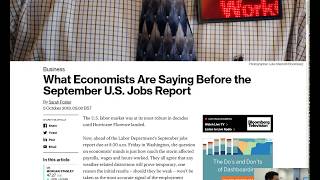
Okay, very good morning, Friday 5th of October. I hope everyone is well. Overview of what we're going to cover: quick look at the weakness that we saw in US equity markets yesterday, some quite meaningful moves. The S&P 500, biggest drop since June, to put it in some context. So it's been a couple of months since we saw the type of sell-off that we did. I won't go into that into too great a detail for the reasons we discussed in the briefing. I think we covered it in full yesterday, but certainly some, some tech focus. And then elsewhere, we've had a little bit of a pop in the pound this morning. You've probably seen that came shortly after 7 AM this morning. So just as I got in, I remember there was a headline came out one of the terminals and on Twitter talking about some positive possible developments in regards to Brexit, and it fired up the pound this morning, which broke its overnight Asia-Pac high. And then we're going to have a talk about non-farm payrolls, what to expect, and a few things to, to think about. So kicking off overall this morning, the, the general, I'd say, feel in the market from a sentiment point of view is, it's pretty flat. There's not really too much in the way of anything that would scream out to be overtly risk-on or off in that sense, and that's quite typical A, given the fact that you had a decent kind of sell-off yesterday in the equity market, you've had that yield kind of focus and push in the Treasury market in the last day or two. And so the market's kind of just pausing for breath ahead of, you know, still kind of classically the kind of guaranteed volatility associated with the payrolls release. So possibility, as per usual, things might remain relatively quiet this this morning as participants kind of sit on their hands and wait for that report. Quick look then at one of the things that obviously Bloomberg have been talking about a lot this morning, and that's the, the movement in the equity market from yesterday. You can see here, this is the, the heat map broken down by its sector kind of areas, and you can see technology here and the associated size of the block is equivalent to the size of the company. Obviously Amazon, Apple being huge in their respective sectors. But what you can see here is that Amazon, Apple, Microsoft, Facebook, Google all down quite sharply. And this comes after some of the reports that were emanating from Bloomberg's own kind of exposé, um, talking about Beijing had hacked American computer networks using a microchip built by its spies. This came as well with the Vice President Mike Pence criticizing China across economic, commercial, and diplomatic fronts. The latter, I think, is unsurprising. We've got the midterms looming in just a matter of weeks now, so Pence is going to talk a tough game against China. The former, the Bloomberg story, the reason, you know, you've just got to be a little bit objective and stand out of the moment, if you like, and it's Bloomberg who broke this story. So of course it's Bloomberg that are explaining every single move on the back of their own news article. It's kind of just to validate the authority that they have or the use of their news. So yes, this has drawn attention. I'm not denying that. But I think for the reasons discussed yesterday, there's a lot more going on in the kind of yield movement, the kind of the positivity. I was reading some comments actually somewhere this morning. About what Jerome Powell said, and I haven't gone through his speech word for word, but I saw a summary of some of the words he was using, and it's quite frightening how optimistic he is. Here it is. He said earlier this week, I am, quote, very happy, remarkably positive, extraordinary, particularly bright. You know, I haven't heard a Federal Reserve member talking like that in, in quite some time, and hence the reason why the markets had this kind of interesting move in the last couple of days. But the kind of sell-off in the tech sector, what it has led to— and Google was probably the biggest casualty here because not only because of this story that Bloomberg were talking with the hacking of these American companies by the Chinese, but also the Department of Justice is considering a Google antitrust investigation. So more kind of headaches for Google after, you'll remember, back in the middle of this year in summer, Google was— or Europe hit Google with a record $5 billion antitrust fine. So more kind of headaches on the regulatory front for them. One thing that has been happening though overnight in Asia, just to quickly touch upon, is has brought about some concerns of the Chinese-related tech names. Now this isn't, you know, Lenovo was a name that's been kind of singled out because their shares dropped the most basically in a decade. Now Lenovo wasn't kind of named in that sense, but the company could be particularly vulnerable because it generated more than 30% of its revenue from North America and 75% from outside China in the most recent fiscal year. So not only Lenovo, but ZTE Corp, that kind of giant Chinese communications company, they fell 11% in Hong Kong trade. The Taiwan lens maker Largan Precision, which is an Apple supplier, fell close to 7% overnight. Other technology names associated in China fell about 10%. So this is kind of the reverberation, if you like, of what could happen as a retaliation from if this story was to be true and how the US might respond then to the goods and the tech sector in China. So that's what you, you know, explaining some of this reason. for the weakness. Obviously one of the big movers yesterday was the NASDAQ, and if on a percentage basis it closed down, I think it was over 2%. So been a while since we had that kind of movement. And this was a— I can see a trend channel that Sam presumably was talking about, given his more kind of technical view of the market. He's always got a close eye on these things. And you can see here possibly a key level to look out for as we go through the session today. Given that we're right at the lower bound extremity of that, that price point. We did reach it yesterday. The point is we didn't close below it. So, you know, this, this, this channel is still in play at the moment. And the NASDAQ definitely was the leader of the equity weakness, uh, just given some of the stories that were doing the rounds pre-market yesterday. What was interesting at the time, uh, the guys obviously on Trading Live, you probably heard me commenting was the kind of synchronized break you were looking at for technical levels in the associated US indices with some of the risk kind of barometer in the yen. When they all broke, that was when you saw real heavy selling pressure coming to some of these indices. But technically today, definitely would be keeping an eye out on the NASDAQ, uh, around those levels. Could be very interesting. What could be a catalyst to break on the downside here? Sure, micro-level news about tech companies could be one. But actually, you know, just imagine if we get a, a really robust jobs report from the States with really high wage growth. That's only going to stoke the fire of the moves that we've seen. We'll get another renewed bid into the dollar, into yields. Equity markets probably will come under some more pressure again. That could be a potential scenario that could unfold. But granted, the jobs data would need to come out in the correct fashion as just described. Just a quick another look just to add some context, I guess, to the bigger, broader picture. This is an updated chart of the tailwinds coming from the ongoing US-China trade tariff talk. Now, as we discussed right on Monday's briefing, you know, it was Chinese Golden Week. It was highly unlikely we were going to hear anything from China this week, and that's definitely proven to be the case. But certainly once China comes back online next week, just given as well some of the movement in the Chinese equity market and the tech space last night, it's definitely going to be interesting to see how they respond when they reopen. But as you can see here, the purple line, the Shanghai Composite Index, has come off its lows, but still, you know, sharp underperformance comparative to the gains that we're looking at, just shy of the 10% margin for the S&P 500 year to date. We're still down 15, um, after getting close to that kind of, uh, bear market territory, if you like, for the Chinese indices. Okay, a few other things quickly to touch upon, um, and then we'll talk payrolls. These next two stories, I would say, would not be a contemplation if I was thinking about trade strategies for today. But I just wanted to bring them to your attention to keep you up to speed with the news. German factory orders rebounded in August on surging export demand for investment goods, suggesting, you know, still some positive movements developing in the German economy, which obviously is crucial for performance in the eurozone. Now, German factory orders— factory orders in the US yesterday definitely was a catalyst given it was a little bit stronger, but coming on the coattails of the awesome data we've had out of the US this week that was the trigger point for fueling fears of higher, faster rates in the US, and subsequently stocks broke lower. Are we going to get a same situation with German factory orders? I think absolutely not. I think everything needs to be taken in context in that sense, and German factory orders are incredibly a volatile data set actually when you look at the numbers. So yes, this was good. Would I be buying the euro and anything like that on the back of this number? No, I wouldn't. Is, is a long story short. Another interesting headline I saw this morning, um, given the tightness of the labor force in the UK, um, what we have really yet to see despite the phenomenally strong employment scene in Britain is a meaningful pickup in wages. But latest analysis has shown that people beginning new jobs in Britain enjoyed the biggest jump in highest starting pay in over 3 years in September. However, the kind of caveat to this is slowing demand for staff ahead of Brexit could make the boost to wage growth short-lived. This is kind of maybe important more for the bigger picture of the UK economy. I guess same thing with every piece of economic data with the UK, hard to see clarity over the medium term given this uncertainty surrounding Brexit, but People's wages have picked up according to these latest measures from the Recruitment and Employment Confederation, which is this REC. On that note, talking Brexit, this was the headline that I referred to earlier that prompted the pound to spike up to 1.31 in the futures this morning. EU Brexit negotiators believe divorce deal with Britain is very close, according to EU diplomatic sources. I mean, if there's no other source comments today, I think Theresa May has had an absolute winner this week. She's gone into the Tory Party conference. She's not really surprised me, but she's managed to strike the right tone, I feel, take a little bit of control back to the situation domestically. And then she can also, if she can come back and say, well, look, EU are now pandering, they're saying we're getting close to a deal, this is all She's had a good week for the first time I think I can remember in a long time. So fair play to her, may she have a nice weekend for once. But from a trading point of view, I think you do need to be aware that just because the EU— and don't forget, this is sources, so this isn't official above-the-line kind of commentary— just because a source is positive now and the pound's popped higher this morning. You know the score now with these Brexit-related commentary. It's a seesaw battle. And, you know, this is— this to me looks like potentially a Reuters source, which means that then what are Bloomberg thinking this morning? I.e., are they going to drop their own bombshell, which inevitably they usually take the other side of the argument, and they'll find something critical to say that there's still a roadblock to to these discussions would not be surprising in the slightest. Just having a look here at cable, I guess that's quite an interesting level, the R1 today. You've got the R1 here, you've got these previous highs right at the end of last week. They've got support point from the fall that we had back on the 21st, and then some areas of, of interest when we were on the ascent at the early part of September. So possibly an upside level to have a look at. If the wage data disappoints and payrolls are a disappointment, I think there's maybe a bit of room for downside in the dollar, and then potentially you might get a further reprieve for the pound. I mean, if we can break above that R1, that might open up a little move up. I'd be looking around 3143 if those conditions were to unfold. You can see here these kind of levels of significance, then I'd be looking at as a potential target short of the too, if that were the case. All right, let's have a look at payrolls. What's the deal? What's going on? First off, I did send this out to you this morning. I'll give you the general flavor though. You want to save some time than reading the article. Uh, what are the big investment banks and economists saying about payrolls today? Well, there is one thing to be aware of, and that is that the question mark is how much the storm affected payrolls. I.e., we had Hurricane Florence, of course, and so has the storm affected payrolls, wages, and hours worked? They all agree that any weather-related distortions, though, will prove temporary on reason the initial results should they be weak. So one of the things you're saying here is— let me just jump to actual payrolls. So if you look at payrolls here, this is a chart of the last 12 readings, and this does actually encapsulate here, um, some of the weather conditions that were in play in kind of Q3. If you go back on this chart further, You remember you had Hurricane Harvey, you had Hurricane Irma, and these are all were reasons for a depressed and as far as a monetary policy member discounted month because you could write it off to a one-off distortion where the results are expected to bounce back. And so as they did here. So there is a possibility today. Well, let me talk you through first what we've had from payrolls. Because the expectation is, is that overall the employment situation in the US is pretty good. Actually, it's very strong. ADP, which is seen as the highest kind of weighted precursor to non-farm because it's the private businesses in the US, they hired around 230,000 workers, and this was far exceeding market expectations. Not only was it the highest reading in 7 months, it was way above expectations of 185,000, and you had a revision upward to the previous figure. So as you can see here, solid print for ADP, which a lot of people, as I said, put a lot of weight on as a precursor. Not only that, the manufacturing sector— well, US manufacturing PMI reading pointed to the strongest growth in factory activity in 4 months. Sharp rises in output, new orders, And I think when you start breaking down the actual figures, the employment situation here was also pretty robust. Then you look at the non-manufacturing sector and guess what? It gets even better for the US economy. 61.6 is record for this piece of data. Never been here before. That's how positive, uh, things are at the moment in the States. From an employment point of view, so remember this is the headline kind of index composite figure, but these are basically a breakdown then of its constituent parts as far as ISM is calculated. And the one that we're concerned about is, well, how was employment for the non-manufacturing sector? And guess what, that came in at 62.4, up from 56.7. And again, I've— I don't think I've ever in my 12-odd years seen an increase of that magnitude. That is punchy, to put it mildly. So you've had really strong growth data— I mean, growth data, but economic data, but jobs data. So I would say on balance, people would be on this data alone tipping their kind of hat towards potentially we're going to get an upside surprise. The caveat, of course, though, is what I've just mentioned. This particular period is for September, so does include the storm. So although the underlying conditions— what I'm saying— are positive, the number headline change in non-farm payrolls might be depressed purely because of the weather. That means though, if we get a low number, let's say the headline change in non-farm, on the data alone you might think the median expectation I think is for 180 or 185. You might think the market's more positioned for 200. Take into account though, if we get, let's say, a 75,000 reading, so really low, like a big disappointment, I think the markets won't react to that too aggressively. I think you'll get a very quick sharp move, but the market will be happy to go, do you know what, it's just the hurricane, so we can write off a poor figure. So I think, I actually think the headline figure is a bit of a moot point today. I think even if it's weak, the market will discount it. What is of course always and forever, in the near term at least, will be important is this average hourly earnings. Now this is what the market's more concerned about. Now I think the balance of of market direction for the rest of the afternoon post the data is really going to be derived from how strong or not this piece of information is. And so after you get the initial seesaw reaction, the kind of HFTs hitting the headline, then I'm going to be more interested about where does this figure come in. Now from an expectation point of view, average hourly earnings, let's have a look on the calendar here, month on month is expected to show a slight decrease. We've got a range though of 0.1 to 0.6. I mean, that's— 0.1 puts us back to 3 months ago. 0.6, well, look, when were we last at 0.6 in wage growth? There's someone on Wall Street, one research house that's looking for the highest wage growth in the US since pre-financial crisis, 2008. 7. If that happens, I would, you know, if we start punching at 0.6 and 0.7, I'd be looking to short equities, long dollar, short T-notes, I think, in that type of situation. Because just look at where we are, look at the kind of band of where we've been restricted in wage growth. But just given the kind of feeling and sentiment this week has been quite yield-focused. If we got an explosion in wage growth all of a sudden, then I think you'll get a nice move in the market in that respect. And quite the opposite, let's say we get a 0.1 or 0 reading. I think just given the hype up about the kind of heightened tightening or quicker tightening from Jerome Powell, given his optimism in addition to the strength of economic data, or maybe the case is, well, Is he going to be— is there any real inflation threat apparent? Possibly not if this number's too low. So a couple of things for, for thought there. As per usual, any of those who want to play the, uh, pound in a cup NFP guess, don't let these guys skew your thinking too much. But here we go, the median is actually now 185. Deutsche Bank Wow, when did Deutsche Bank get so bullish? Usually they're the most bearish on the street. Okay, so DB is going for 225, uh, Jefferies on the other hand are going for 125, and then you've got all clustered around the kind of median here. All right, other than that on the calendar, um, I'd say this morning then has the propensity to be fairly quiet. I am mindful of keeping an eye on these equity futures though, uh, particularly the NASDAQ at that level I said on the trend channel. The DAX is having— looking a little heavy at the moment, uh, but generally speaking, people's appetite to enter positions ahead of payrolls is subdued. So if any of the new traders, I would, you know, factor that into some respect, uh, other than payrolls. Anything else coming out? Well, you do have actually US goods trade balance revision, international trade, you can pretty much discount that. Everyone's going to be focused on the average earnings at that point. You do also have Canadian data. This is always a market mover. Be, you know, trying to trade the CAD on a simultaneous release of CAD job data and NFP, I think, you know, you're a braver man than I if you're going to attempt that. Certainly If you get the right mix though, let's say really positive wage growth and the dollar flies higher, and then you get really disappointing Canadian jobs data, well, that, that fuels that move. You get a divergence between the two kind of economic views in the short term. You then might get a really nice big pop in the market, um, in that respect. And that's it. So look, gonna leave it at that. Let you guys get on with the day. Coming up to 9 o'clock, and I'll wish you a good day and a great weekend. Thank you very much.
More from Anthony


Inside the Biggest Banking Stories You Need to Know This Week (Anthropic, Diageo, Private Credit)


Inside the Biggest M&A Deals You Need to Know This Week (UniCredit, GameStop, eBay, Eli Lilly)







AI Breakthrough or Hype? Anthropic’s Claude Mythos, Tim Cook Steps Down & LIV Golf Collapse