What to know ahead of today's ECB meeting
In this pre‑ECB‑meeting market commentary, the presenter walks through the macro‑economic backdrop and key data points that could shape the European Central Bank’s policy decisions. He outlines a suite of downside risks – the Italian budget and sovereign‑spread surge, Brexit deadlock, US‑China trade tensions, a slowing Chinese economy and emerging‑market stress – and ranks them by perceived threat. Recent euro‑area manufacturing and services PMI figures show a sharp pull‑back from record highs, while German factory activity and order books are weakening, partly due to US tariff exposure. Inflation is examined, highlighting a recent oil‑price‑driven rise to 2.1% that is now receding as oil prices fall, suggesting core inflation remains well below target. The widening Italy‑Germany yield spread (now above 300 bps, with 400 bps flagged as a critical line) and fiscal‑policy frictions are discussed as potential catalysts for ECB action. The speaker then details the ECB’s policy toolbox: the scheduled end‑of‑QE later in the year, the pending decision on reinvestment of maturing bonds (a “QE‑taper‑lite” approach), and the timing of the first rate hike expected in autumn 2019. Market expectations are surveyed – Goldman Sachs analysts anticipate no major policy shift or special measures for Italy, and Draghi is likely to repeat the current stance while possibly tilting the risk narrative to the downside. Finally, the impact on key markets is projected: EUR/USD is testing the 1.14‑1.15 range, Bund yields may react to any dovish tone, and the DAX could face pressure if the ECB appears less accommodative. The overall view is that, despite a host of negative developments, the risks are not yet sufficient to force an immediate policy change, but traders should watch the spread, inflation data, and Draghi’s language for short‑term moves.
Chapters
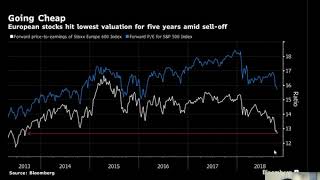
So ECB day, a couple hours until the event really kicks off. So let's have a, a bit of an overview of what the situation is, kind of giving you a bit of broader context, and then we'll have a look at some of the charts and, and how things might play out. First of all then, got to look at the, the broader picture, and let's have a look at the economic situation as we head into this meeting. The big thing that people are talking about is obviously there's a lot of negative kind of broader macro developments that we've had from a European perspective. Some weak economic data more recently, some questionable inflation conditions. Then you throw in the Italian budget situation, you've got Brexit, which seemingly is still at an impasse and obviously negative for not just Britain but Europe. US protectionism, ongoing trade wars, and then you've had a bit of a less-than-stellar US earnings season as we have some of the forward-looking guidance downgraded somewhat, just given the, as I said, the kind of looming trade war threat. So questions are then, what are the ECB's options and what are the key things to look out for today? And let's just run through a kind of sequence of graphics to paint a better picture and provide a bit of clarity as to where the focus will be. So risks to the euro area, and everyone's talking about at the moment, is, is there a possibility of kind of Draghi sounding a little bit more dovish today, given those aforementioned reasons? Now, here are a list of I guess 5 key areas of which the market is focused on at the moment, ranging from the Italian crisis on the left through trade tensions, US slowdown, China slowdown, and this EM crisis. I guess the one of which is highlighted is from left to right, is looking at the black being the most high risk, the blue being the least. So from various investment banks, research houses, economists, they're classifying Italy as the biggest risk to the euro area economy, the least being the emerging market crisis and the China slowdown, global trade tensions, because don't forget, you know, beyond that of the US targeting China, they're also targeting the other obviously huge single market as a trade partner as well. They've been highly critical of the likes of Germany, who are obviously heavily dependent on exports and so on. So the terminology at the moment which has been in action by the central bank is the ECB has described the risks to the region's outlook as broadly balanced since June of 2017. They've cited domestic demand as the main pillar for the upswing, but this is the problem— it's the external risks are threatening to undermine economic prospects. So as mentioned, away from Europe and Italy, you've got the Chinese growth is slowing at the moment. As, you know, kind of the transition, if you like, from a lesser interventionist kind of practices from the Chinese government, in addition to, of course, this escalation of the trade war situation and the uncertainty emanating from that situation. And then you've got the kind of Brexit deadlock. Time is ticking, obviously, before the UK is set to leave the European Union, and the threat of a disorderly rupture to Europe, and given the no-deal prospects could be rising if they can't get over the issues of the Irish border in particular. So plenty there to, to have a look at for, for downside risks, which could equate to some movement of communication strategy. But we'll get to what exactly that could be in a second. Let's look at something else. This was something which came out yesterday. Be looking at the, the PMI data from a manufacturing and services PMI reading. And if you remember back at the kind of tail end of 2017, actually European growth and prospects forward-looking in terms of positivity was incredibly high, almost a decade high. And what's happened is quite a swift and significant change. Looking at the white line, that is the euro area manufacturing PMI. You can see here, which was a kind of record-breaking territory in excess of 60 at the end of last year. And I don't want to use the word collapsed, but it certainly has declined at some pace down to 52. And obviously 50 is the key marker. We've never actually breached that even in 2014. This is kind of the, uh, contractionary territory if we were to breach that level. But you can see here from these indicators, PMI forward-looking So in terms of purchasing managers' confidence about the forward-looking economy, it's deteriorating just at the point of when the central bank is looking to end QE, of course, and then look to subsequently lift interest rates at the end of 2019. So if you were looking at a trend, well, this trend would identify the fact that these conditions are worsening. And so again, does this alter the ECB strategy going forward. Looking at the kind of engine room, if you like, of Europe, that being of course Germany, well, this is the German manufacturing sector, and we saw this data yesterday, and you can see it's been decreasing pretty consistently over time as we've gone forward. Obviously, domestically, there's quite a lot of uncertainties emanating on the political side. Germany has its own issues between the CDU and the CSU. But then also, as I mentioned, the trade war and the threat of protectionism from the US weighing over the kind of export names which predominantly make up the composition of their local stock index. So the recent manufacturing German PMI was the slowest expansion in factory activity in 29 months. The order books— so this is quite an important forward-looking indicator— order books contracted for the first time in nearly 4 years, as some companies commenting on fewer orders from clients in the car industry. If you remember, the US have been very particular in the tariffs targeting the automotive sector of Europe, and for companies like Daimler, BMW, Volkswagen, the American car market is absolutely critical in terms of the volume of their sales and their, consequently, their profitability. And tariffs on the of that nature would be highly detrimental to their order uptake. And we've seen that already come true with the number of orders hitting a 4-year low. Other things are inflation, inflation expectations. We're looking here at the euro inflation swap forward 5-year over the 5-year, which is— without complicating the terminology, this is basically something the market will look at for forward-looking inflation expectations. And what we have here is fairly lackluster. The ECB target obviously is 2%. Now inflation in the euro area has tracked up at levels of 2.1%, which is above the ECB's goal. But importantly, why has inflation been moving higher in the eurozone more recently? It's been down to the price of oil. And if we look at oil, let's just bring that up on a chart for a second. Here is oil, and what I've kind of marked here is, you know, recent inflation expectations have risen, or inflation in itself has risen in the eurozone. Because if we look at this rectangle box here, firstly, over the period of the last 2 months, oil rose from $64 all the way up to a high of north of $75. We hit a 4-year high here in crude oil. So energy prices have been a key contributing factor to rising inflation in the eurozone. However, fast forward to the last 3 or 4 weeks, and October has seen a dramatic shift in oil because, as you can see here, we've dropped the best part of 15%. So why we moved higher, obviously there's this kind of ongoing growth in the US economy. Data had been pretty outstanding, so helping on the demand side. All the meanwhile, people repositioning for the prospects of the Iran sanctions coming in and tightening supply. However, this has dramatically changed because as per the equity market falling at the moment, the prospects of are we at the kind of economic cycle high now and profitability can't go any further. Question marks about further policy being implemented by Trump if he loses control of the House. The bite of the trade war weighing on the likes of some of the industrial names like we saw from Caterpillar and 3M earlier in the week. And this has led to question marks then about the validity of economic growth going forward. We've seen this from the updates, the likes of the IMF earlier this month. Downgrading the prospects for economic growth. So the global economy growing, but downside risks are also increasing. And what that's meant then is that with the Saudis ramping their oil production back up— and an interesting point here is that obviously Saudi getting rumbled by on the Khashoggi situation has meant that really now they have to play ball with the Americans and pump more oil to keep America on side, for them not to cause further complications on the sanctioning front. So Saudi are turning the taps on, more supply coming to market, and we've seen quite a dramatic fall in prices. So the question mark is then, if you X out then and look more towards core inflation, your underlying price pressures are less than half the pace of the 2.1% that we're currently tracking. And market expectations are that forward-looking inflation expectations are decreasing. If we go back to that chart again, so again, if you think about the metrics that are necessary prerequisites for the tightening of monetary policy, inflation is obviously a critical one. But if inflation is falling away from target, well, is this really the ideal time to be talking about the tightening of policy? So another kind kind of risk on the table. Other things are, obviously, we're seeing some of the— not the most ferocious selling in US equity markets or global equities at the moment, but certainly we're seeing the most persistent selling at this present point, which is certainly raising big question marks over is this something more meaningful. Technically, of course, in the US indices, we broke that 200 DMA with some conviction. Plenty of reasons then to think that we might see some further pressure materializing. China also under pressure, their currency getting ever closer in the offshore renminbi towards that 7 critical level. Um, looking here is the forward price-to-earnings, uh, kind of ratios of the top 600 companies in Europe. And likewise, overlaying that with the blue line, which is the PE ratios for the S&P 500 index. And you can see here they have now dropped to a level in the States that hasn't been seen since the beginning of 2016. For Europe, hasn't been seen since 2013. So again, corporate, um, kind of outlooks are souring at this point. In terms of going forward, and hence you're seeing this kind of persistent repositioning in the shorting of equity markets globally. The other big thing, of course, is Italy, and although I don't like to offend Tommaso too much, Italy is probably one of the most pressing concerns at this present point in time. Now, what we're looking at here is what has been a big divergence between the yield of the benchmark German 10-year, uh, comparative to the movement higher of Italian yields increasing as the premium has, has gone up. This all coming, of course, you can see here the spike in the spread has occurred basically after they had their pretty messy election which brought together the coalition of the League and the Five Star. And as we know, their ambitious kind of social reform programs, which would equate to substantial, you know, increased amounts of borrowing, which raises significant question marks about the validity of that country getting further into kind of negative, deeper negative territory in its kind of GDP to deficit ratio in that So what's happened here is the, the spread is quite critical, and a number you often hear talked about is we've breached 300 basis points between the spread of the benchmark German Bund and the Italian 10-year, the BTPs. If we were to get to 400 basis points, this is seen as a critical line in the sand, and I do think this is important for the ECB. And why, actually, and I'll get to this in a second, I think that Draghi's not really going to say too much about Italy, and I think he's going to plow on with the current communication line. And I don't think Italy at this point has got bad enough for him to change course at this point. If this spread does get to 400 basis points, if as what we've seen, um, we continue to remain at a place where there's confrontation between the existing Italian government and their budget proposals and the European Commission's ability to accept those as part of the conditions in their Growth and Stability Pact, then you've got issues. What could this be? Well, Italy's cabinet undersecretary has been commenting in Italian press and said that Italian banks would need recapitalization if the spread of German bonds continues to rise above 400 basis points. We are currently just above 300, which puts us at the widest spread since basically, I guess, it's about a 5-year period. Now, what would happen? Well, according to the Deputy Prime Minister and the closest aide to Salvini, bank assets would automatically suffer if the spread neared the 400 level, and so as a consequence, recapitalization would be needed. This obviously would require back balance sheet restructurings, bail-ins, creditors and depositors. This would cause a severe kind of bout of selling pressure on Italian assets, which then I think would— and only then— become at a point where the ECB's got to start changing things up a little bit. So a lot here to contemplate in terms of the downside risks. The point being, I think, is that for Italy, obviously one thing that they've managed to avert is their credit rating avoiding junk status. We saw at the end of last week Moody's placed them one step above junk. Don't forget though, the S&P are due to update the market, and arguably they're the, the biggest rating agency, on Friday. So there could be some more Italian headlines to come. Other big things to look out for today from the ECB, and one of those is the question mark about the reinvestments of their— of the principal of the bonds that are maturing. So let me just be clear of exactly what the state of play is at the moment. The ECB have communicated they're due to end QE at the end of the year. They've been slowly tapering down the size of their monthly bond buying purchases. They've gone from 80 to 60 to 30 to 15, and they aim to conclude that at the end of the year. Now, beyond that point, what typically would happen is that any of the bonds that mature would simply be reinvested. So instead of buying new bonds, they keep the size of their balance sheet at the ECB basically the same, so keep QE in the system at its present level. And then further on down the line, they start to conduct something called quantitative tightening, which is what the Fed are going through at the moment. So in between the ending of QE and the raising of interest rates, which at this point is due in the autumn of 2019, there comes the issue of what did the ECB do with the reinvestment policy. So there's kind of 3 things you need to be aware of from an ECB policymaking point of view: the end of QE, the reinvestment policy, and when exactly do they hike rates. So what exactly is reinvestments? So Draghi stated in the last meeting that reinvestments had not been discussed but would be a topic for discussion at one of the meetings before the end of 2018. Remember, the ECB strategy is to communicate and be transparent well ahead of time. They don't want to be dropping in information at the last moment because that only increases volatility. As such then, this leaves the ECB with either this week's meeting or one later in the year, at the end of the year, to update the market on what they're going to do before their purchase program concludes. For context, various reports over the past few weeks have hinted at a potential Fed-type operation twist, which basically involves reinvestments being focused on longer maturities with the objective of maintaining control of the long end of the curve. So basically, you try to reinvest maturing money coming from the, the bond expiring into different parts of the curve in order to manage then markets' expectations. It's kind of an easier way to look at this. I would call it QE tapering lite. So it's instead of ending QE and causing a shock to markets, which as we've discussed it comes amid growing downside risks. This is a way of soothing those concerns by saying, hold on a moment, QE's not ending, we're gonna— it's gonna be an incredibly gradual, slow process. So personally, on this point, I don't think you're going to hear too much information on this. I think this will come later on in the year, um, in terms of actual timing of the announcement. People like Goldman Sachs, for example, are writing in their research this moment, this morning, that they think the update will come towards the end of the year. On the case of Italy, Goldman's, they also believe that Draghi may provide some broad comments highlighting the importance of fiscal prudence, but do not expect him to signal that any special measures targeting Italy are forthcoming. So remember, with the ECB, you get the rate decision at 12:45. We're not expecting any real events from that part. It's 1:30, which is key, and it's going to be the first Q&A questions, which will likely be centered on Italy, when we might hear some commentary. But I totally agree with Goldman's— I think he's not really going to say too much on Italy other than it's a situation to be monitored. But I think he'll be pretty light touch, specifically won't be mentioning any real details. As to what they're looking at to identify then ramifications on, on policy. In summary then, even though recent developments have been anything but encouraging, downside risks, uh, I think at this point are fairly minor and too premature for the ECB to start altering their policy at this point. This does mean then, from a trading point of view, I mean, we're looking at the euro currency here and And obviously amid the kind of weakness of the data yesterday, the flight to quality we're now seeing in risk assets, so typically the dollar for instance and gold, has pressured EURUSD lower. I mean, I was just looking at EURUSD from a long-term perspective and certainly we've managed to breach some interesting levels more recently and we're, we're down sub the 1.15 handle, close to testing 1.14 in the longer time frame. Um, but if everyone is belief that Draghi's going to come out today and start highlighting downside risks, I actually think that if he sticks to his guns, the market could get caught in a bit of a short squeeze where I think those looking for a real dovish spin from Draghi might be disappointed, is my expectation of what might occur today. So I do think there is a potential over this ECB meeting, short term at least, that you could potentially see some upside moves in the euro on the basis of— I think those looking for Draghi to really alter his stance given all the negative events that we've just discussed, I just think, as we've just mentioned, all of those things are too premature at this point for him to really start changing policy. Remember, credibility is on the line. So I think actually what we might hear is a little bit of a, a kind of repeat of the existing stance. Don't forget, they can always use policy speechings in the coming weeks to change guidance if necessary. I don't personally think that this meeting is the time to do so. So if you're looking for spectacular dovish sounds from Draghi, I don't know, I think you might be disappointed. And if everyone's of that belief of downside risks will create a dovish event, I think there's decent scope for an upside move if that does not materialize. If that happens, obviously pivot— looking on a 60-minute candlestick here has been a decent line of resistance so far. We're just coming up actually to test that at the moment, so worth keeping an eye on pivot, which was the early morning high. Any breach of these levels would bring into play the low point from back on the 19th, which is also close proximity to the low, uh, also 2 days ago on Tuesday. And then you've got the 115 handle above, which brings into line the R1 on the day and some of the range low that you can see here from back last week, some of the price activity, and also some of the floor to price movement back on Tuesday session. Obviously, under those conditions, you might expect then a little downside movement in German Bunds and the DAX if he does. Not— this isn't about sounding hawkish, it's about sounding not as dovish, if that makes sense. One other thing then, just to wrap this up, is I thought this really— this is Rand's kind of summary. They don't expect the ECB to change forward guidance at the meeting. However, on the balance, it will finally shift the view on the risks to the economic outlook. In particular, they expect the Governing Council to communicate the risks to the down— to the economic outlook are now tilted to the downside. So I guess in terms of ECB terminology, that latter part, the risks tilted to the downside, is something to be mindful of and aware. But I just think even if that is said, I think he will still remain relatively committed to the fact that he will still believe that inflation is going to come back to target, that Italy has not yet hit crisis point. And I think it's too early to talk about the reinvestment policy. So all things being equal, I just wonder if the market will get caught a little short here. All right. Well, that's, uh, that's the ECB. 12:45, uh, it will kick off with the rate decision, and then obviously they follow up with the press conference, which is arguably the most important part, will follow thereafter. Okay, good luck, and I'll see you in the chat room.
More from Anthony


Inside the Biggest Banking Stories You Need to Know This Week (Anthropic, Diageo, Private Credit)


Inside the Biggest M&A Deals You Need to Know This Week (UniCredit, GameStop, eBay, Eli Lilly)







AI Breakthrough or Hype? Anthropic’s Claude Mythos, Tim Cook Steps Down & LIV Golf Collapse