What to look out for in today's session
Anthony Cheung breaks down January 10, 2019's trading drivers: dovish Fed minutes with Powell and other speakers set to move the dollar, EUR/USD rallying on rate-cut bets, Brexit chaos after May's second defeat, and Chinese inflation cooling. The US shutdown at day 19 is affecting data and auctions.
Chapters
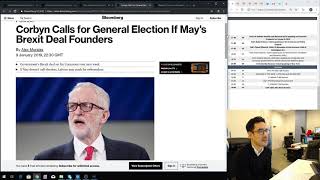
Okay, very good morning, Thursday the 10th of January. Hope you are well. I'm going to cover a couple things, going to start off with a recap, as you can see from the headline I'm sharing, of what happened in the FOMC minutes last night. There's been some Chinese inflation data in the Asia-Pac session. There's also updates on the Brexit front following a second vote defeat for Theresa May yesterday, and what does that mean. going forward. And then also we're going to have a look at some other areas as well on the calendar for the day ahead. So kicking things off then, let's look at the Fed minutes, of which we are anticipating to be largely a non-event. And you know, if you're not around to watch these, these type of events in real time, then the first thing I typically will do when I switch on my screens is just have a quick run-through of US assets this being the S&P here. And I kind of just look at the S&P at that 7 o'clock mark, and then I likewise will have a look at the, the US 10-year. And despite a momentary period of volatility, net-net, there's little to no reaction really. And as I said, as we were anticipating, because of the fact that the kind of relevance of the information has been superseded by Jerome Powell, of course, who gave that key speech at the end of last week, of which then brought about this new change of direction from Fed communication to be more, more dovish. So in effect, these were dated. It did though throw up a couple of interesting things, and really it's, um, these two bullet points here at the top just summarize it, and that is that many participants said committee could afford to be patient but said recent events made extent and timing of policy less clear. So on the balance, they were, um, slightly dovish, but obviously the market's already kind of prepared for that now, just given what Powell had said. The one thing to be aware of on that front, you can see here I've got on the right-hand side the daily calendar, and if I scroll down to the bottom here, so this section on the right, you can see you've got Fed's Bullard speaking today specifically on the economy and policy outlook. You've then got Fed's Powell speaking on the discussion at the Economic Club in Washington, D.C., separate event. You've then got Fed's Evans speaking on current economic conditions and monetary policy, as well as Fed's Kashkari and Fed's Clarida later on tonight. So hence the reason why, again, these minutes had little impact. These speeches really will be very important to get, you know, exactly where are we. The Fed have changed tact. Do they just validate and the markets are right to interpret this to the dovishness that they have, or do they tweak it slightly? So it's going to be really interesting to see where we stand by this time tomorrow. But one thing from a trading point of view, if you're UK, European-based trading those assets, well all of these speeches don't happen until later on after European cash equity close, and typically after many of the UK European participants have gone home. So, um, dollar movements though, if you are in in the evening, could be interesting. We did see that yesterday, if you remember. If I just bring up a EURUSD chart, so let me switch my screens. So here just roughly looking at this kind of technical level of what really was defining the initial year-to-date high, albeit we're only a couple of days in. That was right on the first day of trading really for 2019, but also marked the high for the latter part of 2018. And you can see the part I'm kind of really highlighting here is this episode of what looks like euro-dollar strength, but actually it came from dollar weakness. If you look at your Dixie chart, kind of yesterday afternoon there was a point at which it just tanked, which coincided with comments out of Fed's Bostic. Now, Bostic might not be a name you're that familiar with, relatively new Federal Reserve member, sits on the dovish side of the spectrum, kind of more towards the Bollard end but is a non-voting member. But it's one of those things where when the Dixie was at a technical point of the intraday low, uh, and everyone's in this dovish bearish mindset, it almost acts as the kind of catalyst to light the fire, if you like, that's already in place. And then we saw extension of dollar weakness. The comments were basically talking about the fact that should economic conditions warrant, then the Fed would be open to rate cuts. You know, the explicit nature of mentioning the words rate cuts, enough for the market then to hit the dollar. And consequently, with the technical break of that EUR/USD on those resistance levels, just saw it really fly at that point and move higher. So not so much a euro story, but certainly a dollar one. And what I'm saying is that later on this evening you're going to get another batch of what will be important monetary policy commentary, not just because Bullard and of course Powell, of course, is the Fed chair, but Evans and Clarida are all voting members and all of them are speaking, um, about the economy. So look out for that if you are sticking around this evening. One thing though that you'll recognize on the charts is There's been a bit of pullback in the, the equity space. We've had what has been, like I said, a Powell-inspired rally almost. It's been a twofold event of what has supported equities over the period of about the last week. There's been a dovish move from the Fed, but also what had been looking like some positive developments from the trade negotiations between the US and China. Those kind of mid-level talks which have been happening in Beijing have ended. The fact that there was an additional day was seen as, well, is that a positive thing? But we got to the end of the process, and there has been, as what we were suggesting yesterday, some commitment to continue the dialogue. There certainly has been some changes. China has, as we know, been rebuying now soybeans, which is quite critical as an export, uh, from the US to that of the main buyer in the world being China. There's been some other subtle changes, but the bigger issues are still kind of unresolved. And I think net-net, that's left the market a little bit disappointed. So it's kind of a little bit like a buy the rumor, sell the fact type move, and we've just kind of just come off the boil slightly. Nothing too great at this point, but the fact that there's not been a more concrete outcome, I think it's just quite rightly then the market's just come off slightly and we've hit that close to psychological 2600, uh, in the S&P. So China-US trade development still certainly, I would say, at the core of market sensitivity across asset. And so any updates that you get from Chinese officials, likewise from Trump and his tweets, are going to be very important. Again, the kind of summary here: China says talks in Beijing lay foundation for resolution. Well, that's fine. The market wants to see, you know, real actionable points rather than just future talks at that point. So So not a complete breakdown, but not enough to sustain a continuation of the upside moves that we've been seeing. And not forgetting as well, markets have now kind of repriced, if you like, given the dollar weakness and the equity appreciation, the new stance of the Federal Reserve. Okay, looking at other things, moving on to Brexit. What's the latest? Well, Yeah, I think with a lot of this Brexit news, you've got to be realistic here. It's not a great deal of definitive direction for the pound. I think from a trading point of view, it's, uh, it's so much uncertainty, it makes it just too much a higher risk product to really be trading, meaning that people then come out of that market awaiting further clarity given the time frame of the vote of May's deal on Tuesday. So if no one's trading, market movement starts to die down quite rapidly. So it's more a case, I think, of just sitting back, and unless something radically new develops, then I don't really see too much interest at the moment. And I think that, as you can see here, this is kind of 2019, and yes, we had a real big move as Powell made those comments which have weakened the dollar. But if you're looking at actually the consolidation that we've been in for the pound over the last, well, this week in fact, which is this kind of price action, it's because effectively people are in wait-and-see mode, and quite rightly so. So what is the latest headlines? This is it, May stairs. I mean, this is, you know, media sensationalism. I'm not sure This is quite the wording, but May stares into Brexit abyss as UK Parliament takes control. What this is effectively talking about is Theresa May is openly contemplating a Brexit Plan B amid growing signs that Parliament will reject the deal she's reached with the European Union when it comes to vote. The Prime Minister, of course, suffered her second defeat in two days in the House of Commons yesterday. Losing control of the timetable for setting out the next steps if, as expected, Parliament votes down her deal on January 15th. Now, what that defeat means then is that effectively she must respond as to what those next steps will be in 3 days rather than a more long, prolonged period. And this is a kind of negative for her tactical kind of strategy, if you like, which is that she wanted to push everything right up to the last moment in order to force MPs into a corner in that you either vote for my deal or you're going to get a no deal, knowing that most people will not want that latter outcome because of its economic consequence. So now she's lost that, it's opened up a new kind of situation, if you like. She's lost a little bit of that leverage So what she's coming out with now is— if I just shift this over to these articles, which is this one— May makes last-ditch Brexit move ahead of key vote. So now she's got to start cutting some deals in order to get the support that she requires. And to give you the long story short, Theresa May is to offer MPs a veto on over the introduction of a so-called Northern Ireland backstop in a last-ditch attempt to limit the scale of an expected heavy loss. So again, obviously the, the backstop has been such a contentious issue. She's talking about an offer of MPs to veto over the introduction of that situation as a way and means of appeasing them. So that's the kind of next twist that might happen. I still expect her vote on Tuesday, if it does go ahead, to fail, this could be then the sweetener as we go down that route. One thing that this has led to following her defeat is Jeremy Corbyn, and you know, Corbyn has been one of these people who even within his own political party has been heavily criticised about how he's dealt with Brexit. He was kind of non-existent during the 2016 EU referendum. And so people have been looking for him to leadership, just given the weakness of the existing Conservative government. And he's come out and made some pretty definitive statements in the last 24 hours. The main point being is that looking to take advantage of this weakness that May is seeing, Corbyn is set to deliver a major speech on Brexit today in which he'll call for a general election if May loses next week's vote. He said this yesterday, and he's due to re-emphasise this in a Brexit speech later on today. So certainly this does up the ante. What does this mean? Well, you know, if the government cannot pass its most important legislation, he's saying that there must be a new general election at the earliest opportunity. The other things that then this could lead to, of course, has been this rising possibility of potentially then, if the government does not then call that election, then do we go down the route of a second referendum? And so therefore, all these various options we've discussed before become possibility. So, you know, we're coming up to a real crossroads now, and so definitely it is going to get interesting come come next week. Okay, other things just to, uh, update you on, a few things are China. Overnight you did have some major Chinese economic data. How much of this is influencing markets this morning? I would say very little, but to give you the update, basically slowing Chinese inflation data came out over and overnight. Factory gate inflation dropped to a 2-year low last month, while consumer inflation fell to a 6-month low. Um, one thing this does actually mean though is that obviously the Chinese economy is going through an episode of a downturn. What we've been seeing is to mitigate that, the authorities, being the government and the central bank, are going to whatever means necessary to prop up and support the economy. Well, if inflation is moving lower, this does offer the opportunity for the People's Bank of China to, to kind of up the ante with the stimulus they're providing. Typically, that would stoke inflation. And so if inflation is falling, it almost gives them more room to maneuver with more policy stimulus, if you like, because they haven't got to worry about an exponential rise of inflation if it's already demand is falling. And so if anything, this data from overnight could spell then more to come. And actually, could this be again another kind of positive element to help support the fact that in the long term, if you're looking at US equities here— and I was talking to some of the, the guys here yesterday about the kind of longer-term view, I was getting a bit called out by the trading floor for saying, have I called the bottom, bottom in equity markets? And I do think that we're not going to get down— famous last words— to that December low that we printed. I think the change of the Fed, the political will of Trump to get a deal done, and also what the Chinese authorities are doing, I just think there's enough in place now to support that even if we did come lower again, I don't think we're going to get down to that 2316 print. I think that is that low for this recent episode of, of kind of bearishness that we've seen. Will we get up to that record all-time high again? I don't think so either. So, you know, it's more about just discounting the fact that I think that now the, the everything is in place and there's been significant enough change on some of the key issues to dispel any repeat of what we we did see with that dramatic sell-off through the December period. Not unless, of course, something unexpected occurs. One thing that we were looking at, of course, through 2018 was the ongoing weakness in China was leading to weakness in their currency. But given this renewed pressure in the greenback, dollar weakness, of course, as a net byproduct then is strengthening their renminbi. And actually This as well is, is quite a positive from what was quite a threatening situation of the dollar offshore yuan breaching 7. We're now back into the realms of the 6.7 region. So the Chinese currency strengthened to its firmest level overnight against the dollar in more than 150 days. More to do again, not so much with China but more to do with the dollar movement at this point. So again, it all circles back to the real narrative driving intraday sentiment is the US Fed speak and trade war issues. Um, on the US, just an update as well, what's going on with the government shutdown. Well, we remain at loggerheads. The President walked out of a meeting with the Democratic congressional leaders on border security, moving the shutdown into its 19th day. Just to give those who've not really experienced government shutdowns before, here's a, a graphic of all the federal shutdowns we've had since 1976. I guess if we zoom forward to what would be the the present era. Obama— there was a government shutdown. Of course, Obamacare was one of the main things that was highly contested at the time and was really his kind of main focal point, just like immigration and the border wall is for Trump. That government shutdown was 17 days, so Trump's outdone Obama again on that front as we go into day 19. So this isn't an unusual event. You can see here government shutdowns have happened on a fairly frequent basis, which is why the market is relatively contained. But the longer this goes on, the more impactful it does undoubtedly become. Um, at the moment there's 9 departments affected, meaning that around 800,000 federal workers are temporarily laid off or currently working without payment, which as we've seen has impacted already the release of some economic data. For example, the CFTC, the Trading Futures Trading Commission, or Commodity Futures Trading Commission, have stopped publishing things like their futures positions, which are quite critical if you're a fund manager to ascertain market positioning. Things like IPOs could be impacted if this goes on because the fact that the relevant paperwork can't be completed in time. So The longer this goes on, the worse it does get, and it's almost become a game of brinksmanship for the president now that he's come so far. So that is one kind of risk to the more positive factors we might have just discussed. With that being mentioned, the other thing I just wanted to cover briefly, because you might have read the headline and this talk of kind of Donald Trump and government shutdowns and Trump policies. One thing is, is US Treasury auctions, because yesterday we had the weakest Treasury demand since the financial crisis. The headline says, sends a bond market warning. I do think that's a little bit over the top. What they're basing this on was there was a 3 3-year auction where the bid-to-cover ratio hit a decade low. What a bid-to-cover ratio is, for those not familiar with the auctioning process, is essentially there's a fixed amount of size. So it could be, let's say, $15 billion worth of 3-year note being auctioned, and then depending on the type of demand there is, that will equate to a bid-to-cover ratio. If there was only so many bidders to equate to the, the exact amount on offer, it would be 1 for 1. But typically, let's say, bid-to-cover ratio would be— there's lots of buyers who want to pick up US debt, and so the bid-to-cover ratio might be 2 to 1, for example. The measurement of that ratio gives you an insight as to people's appetite to buy this debt. So if you can imagine during the sovereign crisis in Europe, not many people would want to buy, let's say, things like Portuguese or Greek debt. So the bid-to-cover would be very low. The point being here is that if we look at the bid-to-cover ratio in this auction, as you can see, the 3-year note bid-to-cover ratio dropped below 2.5. So still a fairly healthy level, but, you know, we're used to being up north of 3. Over the last several years, and the appetite for this hasn't been so low since the, uh, initial post-financial crisis era. Now, the one thing— why is this happening, and why is this not more of a talking point? Well, actually, there is a reason for this, and it's not about trying to spook the market as per these Bloomberg headlines might suggest. I don't think it's so much of a warning as much more a case of a function of the US now having to raise exponentially more debt, led by things like the policies outlaid by Donald Trump. Now, obviously, the way the bond market works and the way the government runs itself is that if you're going to have these large-scale corporate tax cuts as we have done last year, well, the amount of government spending and therefore debt issuance needs to go up sharply. And so what that means then is that there's an influx of much more higher supply where demand really is fairly constant. Not only this, the Fed of course are winding down their quantitative tightening process, so this is just more so to give you an idea. It's just a supply and demand equation. I don't think there's too much here to worry about. The problem would come if the US starts coming to market and doing more and more and more ever-increasing size issuance with their funding rounds. You know, there's only so much appetite and so many buyers out there, uh, you know, and that's another issue that Trump could run into in the long term. Okay, I just thought I'd cover that. Hope that makes a little bit more sense. All right, moving back, and just to finish things off, the calendar for today. We've already had the Chinese data, as mentioned. Just make this bit bigger. You've got fairly quiet morning. This is all Scandi numbers, so nothing really that's going to influence the major core assets that we look at, but certainly would if you're looking at the, the Norwegian or Swedish currencies. Then we turn our heads to 12:30. We got the ECB minutes. If you remember, the last Draghi meeting that we had at the end of last year was quite interesting. They were pretty, um, downbeat in some extent in terms of their growth prospects. So just looking out for how they've described those kind of global risks around trade wars and just global growth in general. Otherwise, you've got weekly jobless claims as per usual on a Thursday. I'm not really thinking that that's going to be too much of a, of a big deal. The job situation there in terms of creation and claims is still fairly constant at healthy levels. And so really the focal point will be on the Fed speakers So the first one up, you've got Fed's Barkin just after, uh, half past 1 London time, and then the bulk of them come in the evening. And then you've got another debt auction out of the US, slightly longer dated, coming out later. If you are looking at the Bund this morning, I know some of the live guys do look at that, then do be aware the French Trésor are coming to market with a large bulk of supply you could see some pre-setting which might weigh on the Bund with the additional supply hitting the market this morning. All right, that's it. I'll get Sam to place some technical charts of any interesting setups that he's seen this morning into the chat room, but otherwise I wish you a good day ahead, uh, and any questions of course just let us know in Trading Live. Thanks guys.
More from Anthony


Inside the Biggest Banking Stories You Need to Know This Week (Anthropic, Diageo, Private Credit)


Inside the Biggest M&A Deals You Need to Know This Week (UniCredit, GameStop, eBay, Eli Lilly)







AI Breakthrough or Hype? Anthropic’s Claude Mythos, Tim Cook Steps Down & LIV Golf Collapse