What's behind the USD's rise to a fresh 4-month high
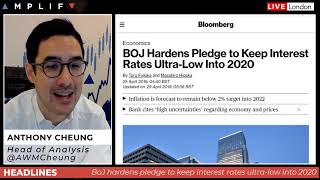
In this April 25 2019 market briefing, the presenter gives a rapid‑fire overview of the forces moving the US dollar to a four‑month high and the broader implications for equities, currencies, commodities and geopolitics. He starts by linking the dollar’s strength to a dovish Federal Reserve stance, the recent slowdown in US economic surprises and a wave of better‑than‑expected corporate earnings (about 80 % of reports beat forecasts). He contrasts this with weakening fundamentals in Europe – a contracting German manufacturing PMI, Italy’s technical recession and ongoing Brexit uncertainty – which have left the euro and pound vulnerable. Technical FX analysis shows the euro breaking key support around 1.1245 and the pound testing resistance near 1.30, with further downside targets identified. The Bank of Japan’s decision to keep rates ultra‑low is highlighted as a factor supporting the dollar against the yen. The equity market is described as holding up despite a modest pull‑back; the presenter outlines a consolidation range (≈ 2,350–2,450 for the S&P 500) and suggests patience rather than aggressive positioning. Commodity commentary covers gold’s volatile but generally positive sentiment and oil’s price dynamics tied to inventory data and geopolitical risk (Iran, North Korea‑Russia‑China interactions). Earnings snapshots focus on Facebook’s strong user metrics and a $3 bn litigation reserve, Microsoft’s 73 % Azure revenue jump, and a preview of Amazon’s upcoming report. UK banking news (RBS CEO resignation, Barclays and UBS earnings weakness) and a brief Brexit political update are also provided. The briefing ends with a short‑term calendar of US data releases and a note about a colleague’s return to the office.
Chapters
Okay, very good morning to everyone. It is Thursday, 25th of April. I hope everyone is well. Going to cover in the briefing then a quick look at how things reside from a kind of broader macro overview at the moment, because the dollar, as you can see from the chart I'm showing you at the moment, The dollar's increased its gains now, at least in the Bloomberg Dollar Spot Index, to a 4-month high. Equity markets come off a little bit from the highs, but as I'm going to discuss, I think that they've held up very well, all things considered, given the fact that we are, you know, it's getting questionable. We're at the top of this recent run that we've had in the equity market. A lot of corporate earnings, of course, continue to come this morning and last night, which we can have a look at. And then we'll have a quick review of some other stories outside of earnings. You've got a decent move in the Japanese yen overnight on the back of a BOJ interest rate decision. You've also got some updates on Brexit, and then we've got the calendar as well to look at for the session ahead. So first things first is did want to have a quick chat about this dollar move. As you can see here, obviously we came into the lap— latter part of 2018. And what was one of the key reasons for the sell-off, of course, in the global financial markets during the period of the October, November, December rout was a number of things. But again, at the core was this idea of policy tightening, this new neutral rate from the Federal Reserve, as they were indicating, was that we still had multiple rate hikes to come. And of course, this further removal from this prolonged period of accommodative monetary policy spooked markets. We saw that back in February of 2018 and again at the end of 2018. So that's when the dollar was at its kind of peak, if you like, at that point. Then of course we had the downturn, and as you can see then, in step, markets' expectations about the central bank's response, certainly from the Federal Reserve, had to change. And if anything, their hand was forced, and hence we find ourselves in the current context, which is a dovish Fed where they're not going to hike interest rates at all for this year is the baseline expectation. If anything, markets only a few weeks ago are pricing in potential cuts. And then what's happened here is that if anything, markets have stabilized and US economic data, which was seeing quite substantial downside surprises, has again started to even itself out a little bit. And the last thing that we've had, of course, is corporate earnings. Now earnings season has been going for the last, what, 2 or 3 weeks now. And actually, quite, I guess, to understand, you could think that, well, corporate performance of late surely has to be a little bit impacted by, you know, some of these concerns about an impending recession, this inversion of the yield curve, where does it influence then kind of consumer behavior, investor behavior, where it almost comes self-fulfilling and therefore we tip into this economic downturn? And would that then start to not only potentially affect corporate activity now but also the guidance going forward? But what we have seen from corporate earnings in the last couple of weeks, particularly this week with some of the largest-cap names reporting for the first quarter, is 80% of all companies that have reported have exceeded expectations. That's 80%. And I think that's what's helped, uh, this dollar move. And if you think about this from a broader macro perspective, you know, what is happening in mainland Europe at the moment? Well, you've got the main country of concern, which is Germany, which is still in a deep contraction in its main manufacturing PMI data. You've got Italy in a technical recession. You've got political uncertainty emanating from, from Brexit. You've got a potential trade war with Donald Trump and the US still yet to really materialize. And so there's a lot of downside fundamental risks still present, ever-present in Europe. Comparatively, in the short term at least, you've had progression in a trade war. And you've had a low dovish Fed, which still helps accommodate kind of a low lending environment, which is positive for corporate America. And now you're getting positive earnings surprises. So again, you've got a divergence here between a positive kind of dollar narrative against a weaker euro. Now you accelerate that as well with the technical breakdown when you start looking at the euro chart here on a daily continuation. We've also— we're starting to test some key technical points of interest. So if I just shrink this chart a little bit here— now this chart you're looking at is the last 2 years, so we're not looking at a short, we're looking at a longer time frame here. Now one of the key areas of course was this breach that we've had of a failed break seen back at the beginning of April, but when we broke through And really, this was yesterday and helped really accelerate that move. And this is when you're looking for these, these kind of key longer-term levels to break. And then the market, you can see here from a technical perspective, there is literally hardly anything between this price point and that price point. And you can see how these kind of short-term speculative traders, who again are in the market for short time frames looking to follow momentum, taking the trade down to the next logical point. So again, when you're looking at these key levels, I mean, when you look at the euro here, again, trying to get the timing for this kind of trade lower, I mean, the actual break here, um, I mean, if we actually go back to the level, this is 1.12445. So you're looking at around this break here, um, test, test, on yesterday's pivot, then it breaks down. You can see here getting a little bit more shallow on the response, bit choppy on that last move, but then it comes down, retest pivot, and then you get the prevailing move lower. Again, this would have come, I guess, post the European session as well, uh, potentially then with all the UK European players out of the market, that helps kind of drive and exacerbate some of the price movement with the lower volume. And you can see here people chase it down to the level and then when it breaks that S1 on the day, comes back and then acts as then the, uh, the short-term resistance, of which has held so far. And that is our near-term kind of resistance point for the time being at around, uh, 112, uh, oh, well, the 112.092 level at the moment. So yeah, this is interesting. The other thing, of course, which is that— so that's helping the dollar a little bit. And then of course you've got Brexit. Now if you look at the cable chart, it's not that anything really meaningful is happening with Brexit, it's just a constant kind of drag, if you like, of the political uncertainty, which is promoted by the fact that you've had a technical breach, multiple tests that around this kind of key support zone at 1.30, and again you can see how that 1.30 plays out. You break, you get an extension on the run lower, And you can see the market comes back up on the daily chart exactly to the 130 handle for then the next push on the downside. So here I think 130 now acts in the medium term as a really nice level of resistance. And given the current status quo at the moment, if earnings continue to deliver and if the political impasse continues for Brexit, I don't see any reason why we don't go through this 129 handle, which would be the next kind of challenge of a psychological level, and that's it. There is no other technical relevance to that level in the near-term multi-month price action. So I don't think that will hold too much of an obstacle. And then we push down to the, the low point which we'll be targeting, which is the, uh, 14th of February low, and that would be 1.2853 in the futures. So yeah, a lot of this is what I'm trying to say is you've got a backdrop of whether it's economic, whether it's political, whether it's both in the case of Europe, you've got a weaker story manifesting itself in the euro, in the pound, and this comes against them. What you've got is a stronger short-term dollar narrative. Throw in the mix as well Japanese yen weakening overnight, and that again helping keep this, this kind of greenback buoyant by the fact that its counterparts are weakening. And so this was a move from overnight. I'm sure you've caught up with the news by now, but we of course, uh, we saw a bit of a breakout actually last night. Uh, we broke— technically it came pretty late on, a bit of dollar fluctuation, further dollar gains. We break this kind of multi— well, this is like a weekly top end of the range that's been containing USDJPY. And then overnight you get a bit of a pullback because we get the Bank of Japan interest rate decision. But net-net, we're kind of consolidating around the price point of the previous top of that range. What did the Bank of Japan say? Well, I don't think it's really that surprising, to be honest. As the headline suggests here, they have pardoned their pledge to keep interest rates ultra-low into 2020. So what they're saying here— and let me just make this bit bigger so you can see it— is inflation is forecast to remain 2% or below 2% target into 2020. So basically, there's not a great deal Japan's had success in trying to get this kind of disinflation, or just zero inflation if you like, movement And so they're not looking for it to hit target until well into 2022, which basically means they're going to keep an accommodative policy stance for the foreseeable future, and at least committing now to a definitive timeline of ultra-low policy into 2020, citing high uncertainties regarding the economy and particularly that subject of prices, as we've just discussed. Okay, the other, the other chart of course to have a look at is this equity one. And, you know, I get a little bit dismayed by a lot of the financial press when you come in this morning and it's kind of talking down the equity market, saying, you know, mixed picture overnight and equities backing off their highs. I mean, you know, hold your horses a little bit. Let's just step back and put things into perspective. So since we got up to that big, that big push that came after that sequence of decent earnings reports when we came back from the Easter break. Now let's just have a look on a currency bar to see the percentage change then from those highs to where we are at the moment. Let me just remind you, we are down just a quarter percent. That's nothing in my mind. Actually, I think this equity market has held up really nicely, um, and so You know, I was looking at here a couple of different things yesterday. I know I've got my video feed in the corner which takes up the left-hand side, but the point being here is trying to judge whether this market is overbought and have we got to the peak of this phenomenal rally that we've had. And I do think we're due for a period of consolidation now. I was wrong. I thought that the era of that consolidation would come here, which was the 2900 handle to 2350. And as we said on Monday, the one caveat here to any potential break in either direction of that consolidation would have come from earnings. And as I've stressed, the earnings have been on the balance more positive than negative. And so that has been the catalyst, of course. And that happened on the Tuesday, kicked off by some of these big Dow names reporting, in particular as well as some of these social small kind of sentiment-related tech stocks, and now some of the heavyweights which came out last night. The point being is I could bump this box up, and I'd say the next kind of consolidation area here is now $2,350 in the futures to $44.75, which is the record all-time high. So kind of moving that, flip it up in a mirror image, and so you can see here that $2,350 I think is good support you got that resistance point from the 16th, 17th. And if we look at that, what does it look like? That pretty much brings us down. This is what it would look like on a more shorter-term intraday perspective. So that brings up this high here. And so where we are at the moment, I think, is, is literally we're bang in the middle of that consolidation move. So would I want to get long on the pivot? No, that doesn't really look that appetizing. Would I want to get long at the low that was seen, uh, from what, late yesterday's session after some of the earnings reports are coming out? Not particularly. I think if I was feeling a little bit more, um, if it came down to the price point— and again, this is the patience I guess needed, uh, in this type of market— is that this is the consolidation phase that I'm expecting. And it's that downside level that I feel is a pretty good, um, area here of where the market will find good support. So unless the market comes down to this kind of level, 2350, and you can see you've got a pretty nice area where you could have reasonable risk management to the trade in your stop placement and then playing the move back up to these lows and then potentially a push back up to the prevailing highs again, depending on your time frames and duration of the trade. So yeah, I guess a little bit of patience at this point. I'm not expecting, you know, too much in either direction. So elsewhere, the other thing I wanted to quickly comment on were two things. One is gold and one is oil. Now with gold, quite a few of you I did see were trading this yesterday, um, understandably quite a few of you getting caught the wrong side of whipsaw price action in gold. Now I guess one of the things that comes with experience and time in front of the screens is you get to know your products, uh, very intimately, if that's the right word. But what that means is you've got to look at things in the context of the product you're trading, and gold is incredibly volatile. By that, what I mean is it's— it can be responsive from an overall sentiment point of view, but if you think about its global sentiment, it generally has been consistently moderate positive is what I'd kind of classify it as. So the sentiment hasn't been seeing these big shifts between outright positive and, you know, really negative. And that does help to get a cleaner directional play. So this then adds to the more kind of mixed picture of the way gold is moving. What happens then is gold is very— can be a very technical-led product. I mean, as we were looking at from a daily continuation chart here, the reason why I've got all these lines kind of marked up is looking at these trend channels and break Smaller trend channel, smaller again. Then comes the big break, which was at the 85.5. It pushes down, and this, this kind of box again, this square, is where we were again talking about on Monday. Really nice area where you— when you get the technical breach of a key level and you get the momentum pushing the market lower, technically it's a nice level as well to, to kind of target on the two reasons, on the horizontal previous support resistance point and with the rising trend line. So this is where you kind of respond to those, those levels. When you look on the intraday, I think what was happening yesterday a little bit is that you were kind of treating this product a little bit like you would a normal standard currency, where you're kind of sitting in the trade with fairly ambitious profit targets, letting it run where realistically, as you can see, if you actually look at this price action— forget the lines on the chart, you know, swing loss up, comes back down, spikes up, comes back down, up, down, extension on the wicks, then it rallies, pulls back— that's a messy, pretty messy market. And so you need to adapt to the conditions, and therefore your execution of the trade needs to be more timely when the market is not so you know, kind of holding on to this directional play. The other market, of course, which has been quite interesting— and we had a little back off in prices yesterday because of some of the inventory numbers that came out of the Department of Energy, of course— and it's kind of a similar narrative here, I think, to the equity market, where you've had this really big run-up, markets then start to question, uh, the kind of next move from here. And what I'm looking at is, you know, this is an unaltered chart from what we were looking at from the weekly strategy at the beginning of the week. So the kind of the box colored boxes still hold true in regards to key areas of support and upside resistance. As you can see here, this kind of area 6686, again bringing into context the, the kind of 7th of September low Yeah, it just works out now as the next kind of area here. What's happened is you break higher, consolidate, break higher, consolidate, break higher, consolidate, break higher, and this— it kind of copies and repeats. Here you can see really key level, multiple tests on the upside, 6479. That was also the kind of the bottoming out of last mid-August low before the rally up to the multi-year high. That was a key level. We break, we push, and we find the next thing, clearest point on the longer time frame of technical relevance, and then we consolidate. So here again, we kind of— at that 6574 would be the lower area of that. And if you start looking as if we're looking at 6574, I mean, that's up and around the lower bound of where we are at the moment. And so Yeah, we've held on to these Iran-inspired gains. And again, I guess looking at it, this area kind of looks fairly interesting. You got the, the low point that was seen from the session on Tuesday, you've got the low from yesterday, so you've got that kind of area between 58 and 64, and then you've got the, uh, the S1 coming in just below at 65.48. So here, I guess what could help further fuel this, I think a further kind of positive corporate earnings story, if that can continue, could help that more equity appreciation. If the equity market starts to get a bit fatigued and starts backing off slightly, I think you could see then oil back off likewise and look to retest the lower bound of its recent range here. Wouldn't be that surprising. Any pullback further down, you can see then this is where the Iran news came. If we were to break this range, a pullback back down to this below the 65 here, that's a, that's a much stronger level then, because on the fundamentals I'd stay— say there's still, although there's this idea of a growing infantry situation as shown and reflected in the inventories from yesterday, which they're the highest amount in America now since 2017. The point being, there's enough there, geopolitical risks, supply shocks on the table, particularly with this Iranian situation, where I think that's a good longer or medium-term level to recommence the long again if that opportunity did come up. I'd say it's probably unlikely they will get down to that price point in today's session overall. One thing to be aware of on the geopolitics, of course, Kim Jong-un is meeting Vladimir Putin. So I'm, I'm sure one country in particular will be very interested to see how that plays out, and that's of course the United States of America. You kind of got Putin rubbing palms with Xi Jinping of China, and now Kim Jong-un definitely makes it quite an interesting atmosphere for for geopolitics at the moment. All right, quick finish off then. Let's have a run through of a couple of earnings reports. You got Facebook. Uh, let me give you the highlights here of Facebook because this is one of the— obviously one of the largest companies in the world these days, and, and certainly large in respective to its index. First quarter sales jumped 26%. Monthly visitors at Facebook's main site topped projections. And I think this was received in a positive light because if you think about the type of publicity that Facebook has had, it's all been negative, emanating from political interference to data privacy issues. There were fears that this could have had an impact basically on corporates' appetite to use the platform to advertise, but When you think about the numbers that Facebook generates, let me just, let me just throw a few at you. Facebook's main website attracts 1.56 billion active users every day, matching Wall Street estimates, and 2.38 billion a month on average. I mean, this is crazy numbers when you think about it. I mean, what is that from a global world population? You've basically got a quarter of the world's population accessing Facebook every single day. And so I guess from a corporate advertising platform point of view, I mean, it's just such a great tool to reach such a phenomenally large audience. You don't really have an alternative. And so I think fear is possibly a little bit overdone about all this negative publicity, as I said, that the company have had. The other thing I guess that investors have kind of liked is that the company has set aside a $3 billion basically litigation reserve fund because they're anticipating more inquiries from the US Federal Trade Commission, the FTC. And I guess that makes investors a little bit more comfortable that there's cash sat on the sidelines to deal with that type of thing, so it's not going to impact the bottom line. And then the other thing, of course, which is important is the development of things like Instagram in particular, which they've got great hopes which will be a good cash revenue generator going forward. And Instagram, having used now advertising in its new Stories feature, has been particularly popular. They've also started testing an e-commerce product called checkout, allowing people to buy products within Instagram. And again, you can just imagine the type of new revenues that, that could open up for the company. So yeah, that was the Facebook story. On the balance, positive. Their shares did see some fluctuation after market, but generally quite positive. Otherwise, this was the other big company that reported in the tech space. We've only got Amazon left after market tonight from the biggest cap tech names. This was the other one, of course, which did come out last night, and they were up 4%. Microsoft— their cloud computing business is what fueled their quarterly sales. Uh, they had 73% Azure revenue gain, which blew away Wall Street estimates. Personal computing unit sales jump on strong commercial demand. So one of the things that Microsoft's done an excellent job at doing is taking some of the market share out of what is the commercial cloud leader, which is Amazon and AWS platform. Microsoft have managed to get some key corporate large companies like ExxonMobil, Walgreens, Kroger in the US, who— they've changed them over into the Microsoft kind of environment, if you like, and platform. So big positives for them. On the other side, looking at the UK, few things to be aware of. Bit of a surprise this morning, caught the news when I came in. RBS has said that Ross McEwan has resigned from role as the CEO. I wouldn't panic though, this doesn't mean he's gonna, he's gonna exit and leave immediately. The plan is, is that he's gonna serve out a 12-month handover period. No names have been suggested as yet as his replacement, but a lot of the talk has been that it will likely be someone internal. Barclays this morning, uh, profits and earnings fall, uh, at Barclays. Obviously the cash equity market's just getting underway so we can get a first look at how these banks are performing. Revenue in the first quarter as it battled a tough environment for investment banking, and you'll find that investment banking overall has really kind of suffered, if you like, in the European area. UBS, another investment bank, quarterly profit dropped 64%. They actually said that its revenue of core equity trading and advisory business fell sharply, and this is adding pressure on their long-serving chief executive. I guess looking at it in Q1, you had that government shutdown of the US that did put off a lot of IPO activities that would have impacted potentially the kind of the advisory part of the arm of these investment banks. Lack of volatility as well can impact, of course, the trading conditions. A lack of uncertainty about near-term macro kind of outlook can also put activity on the, on the down, if you like, in terms of active movement. So yeah, a lot of these banks have been, been suffering in that respect. Finishing off with the, the corporate earnings side, I mentioned Amazon. You've got Other big names to be aware of pre-market, you do have 3M. And the reason why I point out 3M is because of this, uh, this is the Dow Index percentage weightings, and 3M is the third largest company in the Dow. They're going to be reporting pre-market. They comprise about 5.5% of the, uh, the overall Dow Index. Aftermarket, of course, Amazon, Intel, Starbucks, couple of other interesting names. The energy majors finished the week off on Friday. Finally, Brexit. Thankfully don't have to talk too much about this. This is just purely an update. We did hear the news yesterday, but we had a lot of rumor-mongering about potentially the backbenchers in the Tory Party looking to find ways to put the pressure to oust Theresa May by changing some internal party rules. However, that got rejected by a sizable margin. So again, I do think that this is the, uh, the 1922 committee kind of throwing their weight around like they did before, and multiple times unsuccessfully, when they initially tried to make a run on the Prime Minister before. So for me, this is just purely political games. I don't think it really is going to create, I would say, any near-term stress on the fact that I think that Theresa May's position as party leader is in question at this point. Okay, finishing off, a quick look. I can see equities have come under a little bit of pressure as I've— they've just gone through the cash equity open. Here's some of your opening calls. In Germany, Bayer are up about 3%. Other notable movers, uh, Sainsbury's down 4.2%, Barclays are down about 1%, uh, Peugeot, the car maker in France, down 2.2%. Most of those earnings related, of course. Finally, in terms of the calendar for today, relatively quiet for the morning, so I'd be looking for And as the market's kind of playing out a little bit this morning, maybe a bit of, um, I guess the more these earnings come out, the more that they continue to fit this storyline of being on the moderate positive side, the more the market's already factored this in, the more the general fatigue could set in and we could see the lower bound of some of these recent ranges retested. Otherwise, on the calendar in the US afternoon, you've got durable goods 1:30, weekly jobless claims of course every Thursday, so we'll get that as well. And from a US fixed income point of view, you do have a 7-year note, $32 billion auction coming, and then you've got all the earnings of course as well. All right, gonna leave it at that. Uh, pleased to say as well that I just saw A handsome young man walked back into the office. The US have not managed to steal him away from the Amplify team. So Sam North is back in the building. So be interested to see what his thoughts are when he's back in the hot seat. All right, thanks very much, guys. As I said, Sam is back. So for any of the guys, the backed traders in Stage 4, feel free to message him again. From now, and we'll wish you a good day. See you in the chat room. Thanks very much.
More from Anthony


Inside the Biggest Banking Stories You Need to Know This Week (Anthropic, Diageo, Private Credit)


Inside the Biggest M&A Deals You Need to Know This Week (UniCredit, GameStop, eBay, Eli Lilly)







AI Breakthrough or Hype? Anthropic’s Claude Mythos, Tim Cook Steps Down & LIV Golf Collapse