Who Is Iran's New President-Elect (Ebrahim Raisi) & Implications For Oil
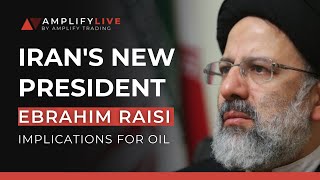
Ebrahim Raisi, Iran's ultra-conservative president-elect, refuses to meet Biden but wants to revive the 2015 nuclear deal. Iran currently produces 2.25 million barrels of oil per day, but could hit 3.8 million if sanctions lift. His August inauguration matters less for headlines than for how Iranian oil reshapes global supply.
Chapters
Okay, hi folks, Anthony here, and just wanted to do a quick video in regards to Iran. As you all know, or may not know, they had an election at the weekend, and I wanted to get you up to speed on who is the new president-elect, what's his stance, what does that mean geopolitically for negotiations with the West over their current nuclear deal, and what could be any consequent impact on the prices of oil. And if so, now or later, and what might that look like. So this is going to be the first of what my intention is to do, a series of different videos about general macro news items that come up. And I want to do like a shorthand, need-to-know kind of intel piece so that you feel a little bit better equipped to be able to interpret news flow when you see it. Ultimately, I think for anyone who wants to really up their understanding of global macro and what's really moving markets, uh, both day to day but also long term, um, really the key component is being inquisitive. Uh, and hopefully then, you know, with these types of matters like this example, um, I can construct it in a way that basically you're learning these little nuggets of information that will serve you well in the long term as you accumulate more of them. So let's get straight to it. Let's talk about Iran. And Ebrahim Raisi is Iran's top judge. This is the chap you're looking at here on this slide at the moment. And he holds ultraconservative views. He was very much expected, according to the polls, to win the election, to take over from Rouhani, the current president. He's not going to be inaugurated until August in terms of timing. And that timing is significant, which we'll come back to in a moment. He is under US sanctions. He has been linked in the past to executions of political prisoners in Iran, and he's seen as loyal to Iran's ruling clerics. He's even been as far as to be seen as a possible successor to the Supreme Leader. So he's definitely held in high regard and plays true then to the ultimate power player in Iran, who is the, this main decision maker which is this guy, Khamenei. Now, officially, the president, or the president-elect, Raisi, will oversee domestic policy and foreign affairs. So he's probably going to be more often than not the person you hear speaking on a regular basis, the person tied to then having a lot of discussions with the US at the moment about their nuclear agreement. However, ultimately, the reality is the Supreme Leader has and who is the top religious cleric has the final say on all matters. And so when you're trying to interpret news flow, just remember who it is that is saying it. But I guess do understand that the two are going to be very closely aligned, given the fact that Raisi is, is very much so of the cleric or cleric disposition in terms of their view on most matters. Now, what's the stance then that Raisi, the new president-elect, has on the US in general? Well, he gave his first press conference since winning the election on Friday on Monday, and from that he stated his priorities would be to improve ties with neighboring, um, regional countries, and he also wanted to revive the 2015 nuclear deal, which we'll have a look at in a moment. He did at the same time though rule out any meeting at this point in time, at least with the US president who you can see here, Joe Biden. So that's the status quo as it stands at the moment. And so that could be subject to change. And certainly if there is an agreement, that could well be the case that they will meet the closer we get towards that happening. So it could be a key signal to look out for in markets if there is an opening channel. Now our reference point is he doesn't really want, want to meet Biden. So if he does, that would be taken as a positive step towards a more likelihood of an agreement being struck. Now, what is this 2015 nuclear agreement? Well, here he is, the previous president, of course you'll know well, Donald Trump. And this is actually the bill that he signed where he withdrew the US from what was known in 2015 as the Joint Comprehensive Plan of Action. Otherwise JCPOA. So what was that agreement? Well, it basically lifted sanctions on, on Iran after they agreed to dismantle some of its nuclear facilities and allow inspectors to have greater freedom of access to carry out their inspections as part of that ongoing assessment that they're not developing nuclear weapons. Trump came in and withdrew from that He reintroduced sanctions on Tehran that had previously been lifted, and hence the reason why there's been a lot of friction between those countries over the period that really surmised the end of the Trump kind of era in the Persian Gulf. And of course, this is particularly sensitive when we're talking about key maritime transportation routes, like the strategic choke point of the Strait of Hormuz, which is where a high concentration of crude oil is coming out through sea, very small narrow sea channels, um, in one-way traffic from the Persian Gulf, which is then situating Saudi, Iraq, Kuwait, Iran, and out through that tip of Oman Peninsula, which we saw a number of disruptions through over the last couple of years. Now there's this idea of, you know, chicken or the egg— who's going to move first to kind of show an olive branch to draw the other party in, in order to broker an agreement. Now According to CNBC earlier this week, this, the stance at the moment is Tehran has since ramped up its nuclear activity to a point then, given, um, in the backdrop of what Trump had done in reintroducing sanctions, that they've upped nuclear activity far beyond what was the initial deal limits in what they say was a protest against then the reintroduction of those sanctions. Sanctions that Washington say then will not be lifted unless Iran reverses its increased nuclear activity, such as enriching uranium or stockpiling. And so at this point, it's kind of Iran wants the US to stop the sanctions, whereas the US want them to start decreasing their activities. So who's going to go first? So this is kind of where we're at at the moment. So far, most recently, they've had 6 rounds of talks, most of these happening since Biden's come in to try and reestablish a new relationship here and create some kind of agreement going back to that 2015 accord, of which he was also part of during the Obama administration. So they concluded the 6th round with no success, and a 7th round of talks is yet to be scheduled at this point in time. But if you think about the diplomatic relations between the two nations, they were very harshly broken and severed during the disruption that came through the Trump administration's decision to pull out of that agreement. So trying to reestablish trust here is what's quite key. But herein lies quite an important point on timing. So the inauguration of Ebrahim Raisi is going to be in August. So we've got roughly 2 months here until inauguration. And what some have been speculating— and this is coming from Iranian officials with close knowledge of the matter— they've suggested that Tehran could be interested in pushing forward and accelerating these near-term talks in order then that if there's any concessions that are made to broker the agreement, they can be pinned on his predecessor, Rouhani, to give then, uh, Raisi a bit of a, um, a free run without taking responsibility for any of those concessions. So that's going to be a key thing to look out for, but I guess this all leads on to what does this mean for oil? And this is looking at the production of Iranian crude oil. And pre-2018, when Trump pulled out of the, the US of the Iran nuclear agreement and tightened sanctions, you can see this had quite a dramatic impact on the level of which Iran could produce crude. And remember, Iran, like many of those Persian Gulf, African oil-producing nations is heavily dependent on the, um, the selling of this as a key product to drive revenue to the running of their government. And so here then, this puts in a bit of context of the pickup that we have seen, but to how far we need to go back to probably judge then levels of which Iran are going to be more content of producing crude oil at. Now at these levels, Iran typically is right up there, top 3, top 4 OPEC-sized producers, only behind the likes of Saudi Arabia, Iraq, and really Kuwait. And so it's a significant player within that, that market. Now, the question comes then, with a renewed deal, if that then means a lifting of sanctions, how quickly can Iran bring crude back to market? Because if you remember, at the moment If you're judging then what moves the oil market, it's an equation of supply and demand. Now we know the global economy is reopening gradually on further vaccine rollouts and economic reopenings happening on the loosening of lockdowns. So how quickly is that picking up on demand as to how much supply is there in the market, of which we know there is an OPEC+ supply pact at the moment. So new Iranian crude coming on the market Does that then start to flood the market with future oil, which then pushes the price of oil down? So there's a couple of things to answer on that point. And one is the numbers that we're talking about. So a revival of the deal and lifting levies could bring back technically 3.8 million barrels per day of oil to the market over time from around the 2.25 million that we're producing at the moment, according to Iranian officials. So you're looking at a gap of around an additional 1.7 million, which is almost doubling their current output levels, is what Iran would be gunning for. Consequently, any failure to reach an agreement though could then be seen as a bullish factor in the kind of short, medium term, because it means then that there isn't this supply coming to market in that sense. Now, one of the major things here I would say to be aware of on this front is the fact that a distinct lack of investment, given the financial constraints Iran's been operating on, is the time behind how quickly, even if sanctions were dropped, they could bring oil back to the market. And the point being here is that's probably going to take quite a long period of time. And so as the economy starts to reopen post-pandemic, that any future Iranian crude oil hitting the market could be quite easily absorbed by demand pickup that we're going to see on the global reopening process. So in summary, kind of what are we looking at overall? Well, this is looking at the, um, the US EIA's short-term energy outlook, which they issued earlier in June this month. And the kind of basic premise of this, I think, to tie all this together, is really comes down to Iran is very important. The nuclear agreement also for, for peace in that region, disruptions, potentially supply shocks on the passage of key maritime routes is one part. The other part is the ability for Iran to bring back oil to the market. However, I would say the risk of the latter is fairly small in terms of what the second half of this year looks like, certainly. And the point being here is that we had a complete demand destruction through the initial onset of the pandemic through 2020, but consumption and production should materially continue to improve as we go through the further timeframe of the, the global reopening. And so yes, there's a bit of dislocation between timing between areas in the West compared to some of the underdeveloped markets. But overall, we should see consumption rates continue to pick up. So in the near term, medium term, I would say the focus for me is not so much on this Iran nuclear agreement. However, it will generate headlines, of course. It's more to do with the supply and demand dynamics driven from the post-COVID recovery overlaid by how quickly OPEC+ start to loosen their current supply pact agreement. All right, that is it. I'm going to leave it at that. But any questions at all on this matter, feel free to drop a comment on the video. Absolutely happy to help. And I'll do lots more of these in future. So if you did enjoy that and you found it informative, then great. Feel free to like and subscribe to the channel. More to come. But otherwise, Have a good day. Take care.
More from Anthony


Inside the Biggest Banking Stories You Need to Know This Week (Anthropic, Diageo, Private Credit)


Inside the Biggest M&A Deals You Need to Know This Week (UniCredit, GameStop, eBay, Eli Lilly)







AI Breakthrough or Hype? Anthropic’s Claude Mythos, Tim Cook Steps Down & LIV Golf Collapse