Why Being Brave Beats Being Perfect in Finance | Terri Duhon - Trader, Board Director, TEDx Speaker
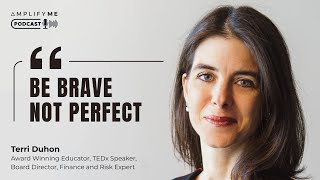
Terri Duhon, a former Wall Street trader, left JPMorgan as an act of bravery rather than perfection and reinvented herself multiple times. She argues that women's underrepresentation in finance stems from self-selection and bias, not lack of ability, and that financial independence is mostly vocabulary, not complex math.
Chapters
Hello and welcome back to The Market Maker podcast, where today I'm joined by Terry Duhon, a Wall Street trader turned board director, TEDx speaker, author, and award-winning educator. From growing up in rural Louisiana in the US to studying maths at MIT, leading a global trading team, and now shaping strategy in the boardroom of companies like Morgan Stanley International and the fintech startup Wise. And is also an associate fellow at Oxford University. This journey that you're about to hear from Terri is extraordinary. And in this episode, we're going to dive into some really cool things like resilience, financial independence, and what real empowerment looks like, especially for women in finance. So Terri, thrilled to have you with us. And how are you?
I am thrilled to be here.
One of the things here, when I first met you and we were talking before and through a fellow kind of colleague that John, who introduced us growing up in rural Louisiana, I was like, what were they putting in the water in this place in Louisiana for you and John to have come from that place? And then you ended up studying at MIT. So I just wanted to get a sense of how do you go from a rural setting and what was that childhood and upbringing look like and the visibility and access to these opportunities to then going to one of the most prestigious universities in the world?
Yeah, thank you for asking. It's a, I think it's, I'm incredibly lucky to start with. My parents hugely valued education and I was also in a state, Louisiana, many people would consider it probably one of the states with the worst education systems. And yet it had a school, um, a boarding school actually at situated at a, a university in a university town, um, which was like a, a magnet school. Um, I think there are different terms for magnet schools, but they would go around the state and see if there were any students who were particularly keen on an academic education and would invite them to apply for their junior and senior year of high school. It's a bit like sixth form, I guess, here in the UK. And they came to my school and visited, and my mama found the pamphlet in my backpack. And she said to me, "Terri Lynn, this looks amazing." In her very— she was from Texas, she had a heavy accent. "And I think you gotta do this." And yes, ma'am, I'll take a look. I applied and I was lucky enough to be accepted and it transformed my life really, that those 2 years. And it's funny because of course I did, you mentioned John, I knew John and we were, he was 1 year older than me, so we overlapped by a year. I didn't know him well, obviously. I was in the girls' dorm, he was in the boys' dorm, and I'm not gonna say I was uber confident with the opposite sex back in those days. And it was later when I, somebody from Louisiana contacted me from the school and said, by the way, did you know that John Norman is living in London and working at JP Morgan? And I, I was just amazed and I reached out and because of our shared background, which is very, very similar, we've become good friends and I think we would both consider ourselves very lucky that we were able to have that opportunity. It was life-changing for us. And certainly without that, I don't think MIT would've been an option for me actually. So, I was very lucky.
Did that then the boarding school, I'm assuming because it was a magnet school as you referred to it. So, were you already put into the mindset where the transition into MIT felt fairly natural because most of the people were going to target schools or was it like imposter syndrome? What am I doing here?
No, look, okay. So I have huge imposter syndrome. And even when I was at that high school, I actually felt very different from everybody else. I felt I was coming from a very, very poor family. We lived in a trailer and, you know, there were lots of other people who may have felt that way, but it, it's hard to see from the outside that that sense of difference. So I didn't necessarily know that. My perspective is that there seemed to be all these people who seemed to have, you know, money to own a car to go to school in, or seemed to have all these fabulous clothes or, you know, new textbooks or new backpacks or just things that just seemed out of reach for me. And I felt, I definitely felt very different. And look, MIT, Yale, where John went, MIT, Yale, all of the Ivy Leagues, these are reach schools for everyone. There's no single person on the planet that simply says, oh, I think I'm gonna go to Harvard today and waltzes in the door. It's not how it works. And so, for me, MIT was a reach. And in fact, I'll be very honest, I 100% knew as a result of going to that school, that I wasn't the biggest genius in the room. There was some very, very clever people that I was at school with in Louisiana, and I was in awe of these people. But I thought to myself, I thought, you know what? I, I'm good enough to go, so I just have to figure out how to get them to notice me. And that's one of the, probably one of the biggest lessons is to remove perceived obstacles, right? MIT's not necessarily looking for the biggest geniuses in the world. They're looking for clever people who work hard, can do the work, but also can contribute, not just to the MIT community, but to the world at large. What are they gonna be able to contribute? And I thought, well, I'm gonna make myself stand out. I'm gonna show them that I'm a dancer and I'm gonna explain my personality through dance. And so I choreographed this dance where, um, I explained that I was a Gemini. And so I had two different personalities and I had music. Um, it was a Gershwin song that changes tempo a bit and, um, to show my two different personalities. And, uh, you know, this is back in the day when, you know, not everybody was videoing themself in their bedroom and posting it 20 times a day dancing around. This was back in the day where you had to go and find someone and borrow a camera, which was as big as a small dog, and video yourself and then watch it. There was no editing software. There was nothing, you know, we watched it on a television and then you know, decided if it was good enough. And I actually redid the whole thing, re-recorded the whole thing. There wasn't, you know, there was no editing. There was actually just redoing the whole thing, which was a bit of fun, and mailing it in the real mail along with my paper application that went into MIT. And I'm pretty sure it's what got me in because when I arrived on day one, the admissions people came over and said, "We remember your video. That was fabulous. We really enjoyed that." And I thought, you see, I just needed to stand out and now I just have to get through. Now I just have to make it through. 'Cause it, it's not, it's not a sale in the park. It was a lot of work. But I did it. So I was over the moon, to be fair.
We might have a run at the most unconventional route into MIT here in this episode. So yeah, that's an awesome story. So let, look, just moving on then. So from your early part of your career, spending a decade on a trading floor and eventually running a global team, just now that you look back retrospectively, what do you think you learned about yourself during that particular period of time?
You know, I learned, gosh, so much. I, I learned, I particularly learned some of the skills that I was really good at, and they were not the things that schools make you think about. Schools make you think about, are you good at math or are you good at English? You know, are you a STEM, are you liberal arts? And, you know, do you like reading and analyzing text or do you wanna do a bunch of really complex math? The truth is that finance is not about math, really. If you can, if you're comfortable with numbers and you can multiply up to 12, that's probably as much as you need to do. That's probably as much as I ever did really on the trading floor. Now, to be fair, there was somebody else doing the really complex stuff in a backroom without windows somewhere. They did the really hard stuff and I got to use those models, but I did have to understand the output and it had to make sense to me. But broadly, you know, it's another myth busted. You don't have to be the biggest math genius to go into finance. You just need to know how to multiply and be comfortable with numbers. But the thing that I did learn about myself is that I was really good at making things happen. And what does that mean? I could, I could GSD, as I jokingly call it. I could get shit done. So if I needed to make a project happen, you know, I needed to get a presentation out to a client, so I needed a junior person to write the presentation. I needed some numbers to be created by the team over there. I needed to approve some wording from this team over there. I needed the legal guys to check it out. I needed the compliance guys or the branding guys or, I could make that happen. I could move it along. I could get people on board. I could bring people together. I could manage to make things happen and I could get it to happen fast and quick. And, um, and I could help people through complex problems. And, and when people threw obstacles at me, I could figure out how to get through them and navigate them. And those are not skills that you're necessarily taught anywhere, right? You have to figure them out. You have to, it's a bit like study skills, but it's also about, you know, herding cats skills. And, you know, everybody wants to go in a different direction, so you've gotta pull everybody together and, and push them along. It's some leadership skills and some management skills, and it's not often taught. Almost anywhere. It's something you have to figure out if you can do. And I figured it out really quickly. Well, really quickly. I did figure it out and I learned that I wasn't loving being a trader. I wasn't totally loving marketing, although I was never really in a marketing team. I, I did love structuring, but really I, I wanted to be the person that kind of drove the deals, making the deals happen. That was really fun. And what I figured out as well was that the way I described my skillset, it was kind of hard to put me into a specific team. And because I wanted to own different bits of the process and pull it all together, and that's not how the, the trading floor had been organized. And so I was, there was a little bit of friction with how, what I was trying to do versus what the natural organization of the institution was trying to do. But I learned a lot about how to navigate all of that, and it was far more valuable over time than the, you know, the partial differential equations class, if I'm honest.
Next question. You've kind of, I guess I'm getting an answer for that already to some extent, because I was going to ask, how did it feel stepping away from a front office trading seat into start something new, eventually going into these boardroom roles. What drew you to that? But I'm— am I right in thinking it was that strategic element and this ability to influence and see all parts?
You know, I'll tell you, the truth is that when I first joined JPMorgan, it was clear almost on day one that I was not going to work my way up that corporate ladder. And I just It, I knew almost immediately. And, and in fact, I, I knew, I knew instantly because of the watch. My watch story. There was a, a wonderful guy who gave, came and gave all the analysts this big presentation, and he showed us his watch and he was so proud of his watch. He held it up and, and he said he had received it for 25 years of service at JPMorgan. And I almost hyperventilated 'cause I thought, oh my goodness, this guy has, has been working longer than I've been alive in one place and he has a watch to show for it. And I don't wanna demean at all his achievement. He, he had done some amazing things, but it did not resonate with me at all, that pathway. And I knew I was not gonna stay. I just didn't know what was next for me. And I— leaving was hard because one of the things that those large, big organizations do is they tell you that you're a— you are so lucky to be there. You are so lucky to be in that seat. And, um, that seat has value. You're just lucky to be sitting in it. And when you leave, you feel like you are You're walking away from this unbelievable opportunity. How could you possibly give that up? It's crazy. And yet, yet it no longer resonated with me, and I knew I needed to leave. It was time. And it, let's be honest, I, I didn't like the politics of navigating my way up the, as some people say, the greasy pole. It was, I wasn't mature enough to do it. I think I could probably do it today, but even today I might lose my patience. And, you know, working within a large organization is tricky. It takes a certain personality. And so I left and I started my own thing and it was amazing. But honestly, I had identified as a trader or a structurer, for so long that when I stepped out of that role, I had almost an identity crisis. I knew I was gonna become an entrepreneur. I knew I was setting up a new business, but I, I felt like I, I had to reinvent myself and, and thus became my journey of, of reinvention on a pretty regular basis actually. Just learning that I, I could reinvent myself. I had the power to reinvent myself. And it was a wonderful way to kind of open up all of my options for the future.
So great. And actually the process of doing that, I think hopefully we can dive into some of that with the subsequent follow-up questions now to kind of break that down because while that's a fantastic journey of self-exploration and development, I'm sure there's lots of questions of like, yeah, but how do you have the confidence to do that? Like, yeah. And in that respect.
So, and it's not, you know what, we've talked a bit about imposter syndrome. It's less confidence and more, one might say bravery. Somebody else might say blind stupidity stepping into the unknown, but I call it bravery. It was definitely Look, it was terrifying, terrifying, really scary. And yet I knew I had to do it and it was the right thing for me. And so I just, I did it. I was brave. And that is, it's interesting, there's a book called Be Brave, Not Perfect, and it's targeted at women where the idea is that culturally and socially we encourage, without necessarily saying it out loud, we encourage women to be perfect. And so women don't try new things, don't put themselves out there, not because they're necessarily afraid or they're lacking confidence, but they think they need to be perfect in order to do things. And that is, that perceived obstacle is one of the things that stops people. And I love that phrase, be brave, not perfect. And I can certainly relate. I can tell you I was brave rather than perfect, that's for sure. And Being brave is the first step, obviously, but you know, let's take it back a step. It's more than that. It's about, it's about dreaming big, you know, just, you're not a function of who you are today. You are entirely a function of your future potential. So, you know, dig deep. What is that future potential? It's huge. It's huge in all of us. And if you remove those perceived obstacles, if you, if you let yourself dream and say, what if I weren't afraid? What if I just took a leap? What if I just tried? What if I told people I wanted to run the firm? What would they say? What's the worst thing that could happen? And, you know, what are you scared of? Maybe they'll laugh. I have been laughed at. People have laughed to my face about some of my dreams, and it hurts. Yeah, it hurts. But you gotta start, you gotta start somewhere. So, so dream big. That's the first step, right? You've gotta dream big.
I'm feeling pumped now. So, but the, uh, that, because I know that, you know, when we've spoken before, you've done, you know, you're a motivational speaker, you've been involved with schools. So impacting people at a very formative years of their development. You're on the Women on Boards as a, as an ambassador on that network as well. So I guess this next part then is a series of questions around going into deeper into some of these topics, which is women, self-selection, financial independence, all I know things you care deeply about, but have some really good structural ways on how to meet these challenges. So going into the first one of those, so you've spoken about how women often self-select out of opportunities. You've kind of inferred that from some of what you've described so far. Why do you think that happens? And more importantly, what can we do to change that?
Well, a lot of it is perception, self-perception. Again, these perceived obstacles or what society teaches us. And I'll give you a few concrete examples. So I was the— I ran a course at the Said Business School at Oxford University where I'm an associate fellow. And the course was called Financial Market Trading. And it was pretty, it was a tough course. It was considered really tough actually. And I didn't realize how much I was asking of them until I did the first year. And then the feedback came that I was the toughest teacher they had ever had, but the most fun. I'm going to say the most fun, but the hardest. And I thought to myself, well, this is fantastic. I'm teaching what's considered a relatively technical course. I think I'm, I might be one of the only female lecturers in, in, in a more, in a technical space. I'm gonna get all these women coming into my class. And at the time, SAID was about 30% female. And out of the 100 students, I capped the class at 100 students 'cause it's hard to, I grading and you gotta interact with all of these. I capped the class at 100 students out of 100 students. I got about 10 women that first year. And I, and I thought, well, hang on, this is even disproportionate from the number of women in the program itself. This is what, what could possibly be going on? And, and, you know, the research tells us that women self-select out of things where they are, where, where society has told them they're not gonna be very good. And if you overlay that with the idea that society's told them they have to be perfect, so not only are they not gonna be, not potentially not gonna succeed in this, but, but they're supposed to be perfect. So how can they possibly take that risk? And, and the, the issue, the area that they're, that, that society implies that women are not very good at is numbers. And you can see it in schools when you look at— and there's some research on this— uh, when you look at co-ed schools, and, and I think the research is around the U.S., you look at co-ed schools, you'll see that more boys go into STEM subjects and more girls go into liberal arts. Now, of course, we're all talking about STEM, so, so this might be changing. I haven't seen recent statistics, but if you then— if you looked at all boys' schools and all girls' schools, you see equal numbers of boys and girls going into STEM and going into liberal arts. And the truth is this push from society for boys to do STEM and girls to do liberal arts, you know, boys do the hard subjects and girls do the soft stuff, you know, terminology I really hate. But this push for society that for, for us to do this, to segregate ourselves this way. I mean, uh, first off, it, it, it's not, it's not fair to anybody, right? If we say, well, boys have to do STEM, well, what about the boys that really wanna do the liberal arts? And if we say girls have to do liberal arts, what about the girls that really wanna do STEM? And, and then you overlay that with the idea that actually what we're really saying, society is really saying, is that girls aren't any good with numbers. And that is, you know, that is really frustrating. And, you know, you can see it, you see it in so many places. You know, I'll give you another example where it manifests itself. A lot of women coming who took my class, who were brave enough to take my class at Oxford, would then call me up after and they would say, look, I'm applying to you know, private equity, or I'm applying to hedge funds, or I'm applying to banks, and the feedback I'm getting from my interviews is that I would be amazing in a sales role. And actually what I really want is an investing role or a trading role or, you know, a more analytical role, but I'm being railroaded into a, a role because of my gender. And, and ultimately. It is no one's fault. So there's no point in blame or getting angry. The important thing I think is to be aware, to be aware that no one is necessarily saying you can't do it, but there is an unconscious bias that people are acting on. So you just have to hit it on the head and you have to say, well, hang on a minute, I'm gonna be brave. I'm gonna take this class. I'm gonna be brave. I'm gonna go for the job I really want and not the job I'm being told that I should do because of my gender. I'm going to be brave. And when someone says I should do something else, I'm gonna tell them, I love your feedback. Thank you so much for that. But I'm actually really, really good at the numbers and I'd really like to do this job. And then when you get into that role, you prove yourself. And, you know, I'm sorry to say you're gonna have to do that a few times probably along your journey, but It's okay. Don't get angry. Just, it is what it is. Our goal, all of us today, is to, you know, get into these organizations to put ourselves forward for the jobs we want, not the jobs we should have for our gender, and work our way up and change it from the inside. And, you know, and change people's perception of what we can do. And, and I think I think it's— there are lots of ways to impact and change the world. And I think one of them is encouraging women to do exactly what they believe they can do, what they know they can do.
When women do opt out early, it's not just about that opportunity or that job or that promotion. This can create a lifelong impact on financial literacy, financial independence as well. So how does that cycle come into it in later life that young women probably are maybe not quite thinking about at that moment in time, but is it very important?
Well, I think, look, there are so many different paths that people can take and there are lots of other pressures on people outside of career choices. And, you know, socially, there's, you know, partnership, marriage, maybe children, or maybe you become primary caregiver. Maybe you become primary caregiver not just of children, or maybe not of children, but maybe of aging parents or relatives. There are so many competing pulls on your time. And of course, depending on what— where you live, there you're gonna feel them in different ways. And we all make compromises, all of us, not just women, obviously, all of us make compromises along the way. But one of the things that I do talk about is financial independence. I think it is a really critical part of every individual's journey. And again, it's not very gender-specific, this, Although it can be gender specific. So financial independence is critical. And what that means is if you feel the pressure from society that tells you that you're not very good at numbers, or maybe finances are a little, a little complicated. Again, I wanna repeat, you just need to be able to multiply. I know we can all multiply. So there is no barrier for women to understand their own finances and to understand how to be financially independent. But, you know, the important thing is that you think to yourself, what does my future look like? And how do I get there in a safe and secure way? And one of the sayings we have in the US is that most women are one death or one divorce away from the breadline, which implies— now it's an old saying, and again, I'm hoping that that saying is going away and it's changing, but the implication has been in the past that women are not financially independent. And it's a critical journey that we all have to go on, and it's one we should not be afraid of because honestly, you just need to multiply. The issue, the reason it gets complicated or seems complicated is that it's full of vocabulary. Now, if you think about that, it's kind of funny because actually what women are told in school is that they're really good at liberal arts. They're really good at reading and learning vocabulary. And actually financial independence is just, is more about vocabulary than it is about numbers. So we, you know, again, that perceived barrier, take it away and just ensure that you are you've got the independence that we all deserve and need.
And another part of that journey then to believe that they can take ownership almost to define their own destiny, I guess comes down to confidence. And for me, as being someone who works with community all of the time, I get to interact with these amazing young women. I can only sympathize to a certain degree because I am fundamentally different in a way, and how I've been treated by society has been different in that way of being a guy. So you having worked with The Prince's Trust, Speakers for Schools, what are actually, what makes a difference when it comes to building confidence in young women?
You know what really makes a difference? So I've talked about already, I've talked about being brave, not perfect. I've talked about just taking risk, right? It's okay to try and do something. That's a little scary. It is critical that you reach inside and you know yourself and figure out what is possible. What does the future you look like? You know, dream really big. Those are important steps. However, probably the most important bit on this journey is that everybody's journey is unique. So your journey is your own. But you're not alone. You can do this with the support of the community around you, right? Make sure that you have people around you who are prepared to support you. You have a phone-a-friend, you have a family member or somebody who's sitting there and is your personal cheerleader. And as much as you cheer them on, they cheer you on. And if you don't feel you have that, You need to go and cultivate that. We all need a support system around ourselves. We're not, we're human. We need that connection. And so while your path is your own and your hopes and your dreams are your own, your future potential is your own, you are not alone.
Yeah, it's like, it's almost, um, So simple, but so powerful. I guess it's that whole leap of faith to have the trust, to be confident, to make those decisions.
But, but also, you know, just, just to just say to yourself, you know what, this is going to fail. I'm going to do it, but it's going to fail. That's what I say. I'm going to do it, but it's going to fail. I hope it goes well, but I expect them to say no or laugh in my face. What's the worst that could happen? And I just, I, I, I kind of role play with myself. What's the worst that can happen? They're gonna laugh at me. Okay. I can deal with laugh. They're gonna laugh. So what? They're idiots. You know, I'm so, you know, I'm gonna waltz in and I'm gonna say, this is what I'd like to do. And, um, they laugh and off I go. I, you know, I go and cry in the bathroom and call my best friend who says, Terri, you're amazing. You can do this. Don't worry. You know, they don't know what they're talking about. Just don't give up. And that's the path we all have to be prepared to take. Look, life isn't easy at any stage. So nothing, you know, we shouldn't expect that all of these steps forward are going to be a walk in the park. So Along the way, we've all taken risk in so many different ways. Why not take it as well with what you'd like to achieve and what your, you know, hopes and dreams are?
I totally agree. I'm the father of two young daughters and I can see firsthand from being a parent how different the girls are treated to the boys, even at a very young primary school age. So when society is putting the burden of perfection on them, What are small little practical things that you can do to get comfortable to being brave?
Well, I think, I think role models are changing a bit for girls, and I think that's really important. My daughter did something amazing when she was about 8, 7, and she was, she had decided to join the parkour club. At her school and, you know, parkour where you crawl on the wall and you jump around and slide on the railings and all of this. And she was the only girl. And the school told the club members to line up on the sidewalk. So there was a line of boys and then Aspen was in this line somewhere and all the boys were, um, acting out. And my daughter was, I think she was just standing there for some reason. And one of the teachers came by and said, come on, boy, something like, come on, boys, look at Aspen. I mean, can't you behave like the, you know, like Aspen? I mean, this is, you know, behave yourselves, be a bit more like Aspen. And Aspen turned to him and she said, whoa, don't, you know, don't expect that just because I'm a girl that I'm gonna behave a certain way. She was so offended because she felt that it was some gender slur that had just occurred. And she was furious and she came home so angry. And I thought, wow, good for you. She said, just because I'm a girl, don't expect me to be per— she said something like, don't expect me to be perfect. And I thought, wow, where did she get that from? You know, because there, there, Who knows? Everybody's a little different. Thank— thankfully that makes, that's what makes the world interesting. But I think that the, the role models are changing and I think that's, I think that's fantastic. And I think, you know, you just encourage the, you know, the, the, the strong and capable role models, the ones that make you uncomfortable as a parent. I, there are so many to choose from. Look, I, I don't wanna judge and I, I think it's in, it's, I have to tell you that I have never had a job as hard as being a parent. I, I, so I, I am, gosh, I was so judgy before I was a parent. Oh, I'm never gonna let my kid do that. I'm never gonna let my kid do that. Oh my goodness, what terrible parenting. Um, I had no idea. Um, really no idea. How hard it was.
Right. And look, I'm just conscious of your time. So I think there's so much that you've shared that's been amazing. I just wondered whether if you were going to distill it down to one simple message to young women listening to this, you might be, you know, bright, curious, but unsure about finance as an area. You've kind of talked about the numbers aspect and the multiplication aspect, Is there anything else you'd like them to hear as a final message?
Look, I'm— final message. You are not alone. Dream big. Take risk. Be brave. Do not give up. Use your community. You are not alone. Do not give up. You can do this.
Amazing. Thank you, Terry, so much for your time, your insights. It's been brilliant.
You're welcome.
More from Anthony


Inside the Biggest Banking Stories You Need to Know This Week (Anthropic, Diageo, Private Credit)


Inside the Biggest M&A Deals You Need to Know This Week (UniCredit, GameStop, eBay, Eli Lilly)







AI Breakthrough or Hype? Anthropic’s Claude Mythos, Tim Cook Steps Down & LIV Golf Collapse