Why Italy is a concern for financial markets
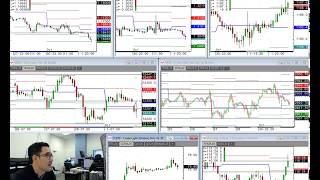
Italy's budget standoff with the EU is rattling markets. Finance Minister Giovanni Tria is caught between populist coalition demands and EU deficit rules, pushing 10-year Italian bond yields to a four-year high of 3.4%. Gold, the yen, and US Treasuries are rallying as investors flee risk.
Chapters
Okay, very good morning. Tuesday, 2nd of October. Obviously was away last week, so good to be back. And, and certainly quite a bit has been going on, particularly a renewed focus on Italy. So just because I'm also been looking into this both yesterday and this morning, I thought I'd do a bit of a recap on that because that is the dominant story of the morning. And as you're probably looking at your charts first thing, you've got a a distinct risk-off tone. So as you can see in the top right-hand corner, gold has caught a bid in the overnight session, we're up about $5. If I look at dollar-yen, so just looking at these classic kind of risk sentiment related assets and a kind of moderate flight to quality move, you've got gold bid, the yen firmer, so dollar-yen moving down and breaking through its kind of Asia-Pac low and a pivot level to find some support at the moment at S1. And then consequently, fixed income futures also higher with the weakness seen in the European equity market. T-notes up about 6 ticks, bunds even more dramatic a move. If I just move that chart up slightly, you can see here bunds having broken above— I guess these were levels from the end of last week. And up getting toward the 160 region and up around 80 ticks already this morning. So quite a distinct risk-off tone to the open this morning observed across these various different asset classes. So with that, let's just take a look at the Italian situation and what is the deal, what are we looking out for going forward, where might we go to from here. Uh, one thing, we're just looking at the, the euro currency obviously under pressure this morning. The general flight to quality bid also going into the global reserve currency, so the dollar's a little bit firmer. So with that move, the DXY is up about 0.3%. So EURUSD top left and cable both on the back foot, um, about 40-pip loss each respectively for the major pairs. EURUSD, you can see here, really since UK, Europe come in. So any of those newer to the markets, typically UK European participants tend to start coming in at about 6 AM London time, and then you start to see quite a substantial pickup in the volume and then the subsequent moves that tend to unfold thereafter. And certainly we have seen that this morning, and then some further push when we go through the, the kind of equity futures open on Eurex. we can see that volatility there in the DAX. Eurostoxx obviously has seen some pressure as well. You can see we've gapped down slightly here in the futures market. We ran down technically quite an interesting support point coming back to the 28th low where we bounced off at the moment. Certainly if we get back down to the lower bound of the, the day's move, if this Italian risk-off mood was to escalate further then a retest of that level could be interesting. You've obviously got the S— uh, well, you've got the probably 3346 level I'd be looking at from the, the kind of mid-September resistance turns, turns support in the latter part of the month as a, as an overall target if we remained heavy. That's in the, the Euro Stoxx. So Italy, what is it that's going on? I know this was an issue on Friday I'm told, and then Piers went over it yesterday, but just so we're all right up to speed, the Italian finance minister Tria's effort to promote his government's new fiscal strategy yesterday when he met with European Commission officials basically fell flat, and hence you're seeing these types of headlines. This is Bloomberg's main article this morning: Euro chiefs are dismayed by Italy's budget, as Juncker invokes Greece. So quite condemning words from Juncker, basically comparing Italy to that of Greece and obviously the multiple sovereign bailouts that they had to receive and the harsh austerity measures that were put in place on the country and the risk of them if Italy were to pursue the current deficit structure that they're proposing in their budget. Then they could go the same way. Uh, Tria is attempting to reconcile expensive campaign promises. So of course, this is kind of the shift of political balance we've seen in Italy with the Five Star and the League. So Di Maio and Salvini putting together kind of quite ambitious proposals to help, generally speaking, the lower socioeconomic demographic but therefore requiring large amounts of additional borrowing. And this obviously raises a lot of concern in a country like Italy, which already has a fairly precarious, or fragile at least, banking sector and debt accumulation. To give you a couple of stats here and a bit of background, so Tria attempting to reconcile expensive campaign promises made by his coalition government with euro area rules that essentially require member states to adhere to certain deficit targets. And while Italy will present its budget to the Commission in mid-October for approval— so hence the reason why this has become a dominant kind of major global macro theme for now— is because of that Commission deadline coming up in about 2 weeks' time. And officials in Brussels have already indicated that it may not stand up to the bloc's rules. So hence the reason why it's come under scrutiny now. Now, from an economic point of view, Italy has the highest nominal debt in the continent and the second biggest after Greece as a ratio of its economic output, meaning that doubts about its ability to refinance its obligations could pose this more broader threat to the euro area overall, particularly given the size of the Italian economy, of course. Now, what's been happening then is the markets have been repricing for this new risk. As well. There's been a fresh sell-off in Italian government bonds. The 10-year BTP yield— so that's basically the name for the Italian bond— is up 10 basis points, we're at about 3.4%. That is a 4-year high here for US 10-year yields, uh, as these talks on the national budget between the parties of the, the governing populist coalition continue. Again, the actual number why this has spooked the market is because last week's proposals pointed to a higher than expected budget deficit of 2.4%. A couple of other things here to have a look at. This is the kind of journey of the, the Italian 10-year government bond yield. And, you know, it's been a bit of a roller coaster, but broadly speaking, the last several months have seen a a distinct increase in the yield, i.e., going all the way from when we had these inconclusive elections. This was when we had that kind of concern in the summer. This is when Italy was last really in the spotlight, was because these quite ambitious proposals that were put forward by this new government and its requirement then to be really bankrolled off the back of further borrowing, as for those other reasons then prompting these concerns. And this last little pickup that we've had puts us right back to levels which we haven't really seen for several weeks. But as you can see, there's quite a clear line here of— if you were to draw just a horizontal line of resistance, if the yield starts breaching up towards 3.5%, well, it starts to come back into um, uncomfortable territory in that respect. Now, one particular bond yield other than the 10-year, which is at a 4-year high this morning, that people have been commenting on— the talking heads on Bloomberg— has been about tracking the Italian 7-year bond yield. Now, you can see here the 7-year is tracking at just over 3.1%. Now, the reason why this is important and why a lot of analysts are looking at it is because the average maturity of outstanding debt, so all the debt in Italy, is around 7 years. And if you look up here on the historical price chart, I mean, this goes all the way back for the last 25 years here on this chart. As you can see though, we've not been really above 3.1%, and we're just breaking it around now. You can see here on this where the line is kind of positioned at the moment. It's been a real marker for going through the best part of the year 2000 through 2010, where the yield was hovering, and then we subsequently broke that. But coming back up to levels which haven't really been seen— you've got to go back to 2014, 2013. This was obviously the peak of the sovereign debt crisis when yields in the 7-year really got north of 7.5%. This was when it was real frightening stuff that required commitments of whatever it takes from the ECB type territory. So this is one that a lot of people are talking about. And again, the 7-year, if you hear it quoted, 3.1% is quite a key measurement because it's the average maturity of the total outstanding debt is around that same duration. How are the Italian equity markets faring? Well, as you can imagine, under some pressure. I think over the last 5 days or so they're down about 6-7%. This morning, just looking at the gainers and losers, well, you can see here there's only 3 companies in the green. Everything else is red. And of course, the Italian banking stocks feeling the brunt of the selling pressure. You can see here some of the losses ranging from anywhere from really 2% to up to 5% in terms of Banco BPM. So Yeah, losses are mounting and concerns growing on Italy. Where does this go to from here? Well, Italian stocks falling to the lowest level since April last year, nearing bear market territory, now down nearly 18% since May. Italian bank stocks down another 3% today, is the lowest since Feb last year and now down 30% since May. Uh, so I, I don't know, my slightly longer-term view here is that I, I can— if you look at this from a political point of view, uh, obviously the League and the Five Star have come to power and become ever more popular because of standing up to Europe and the stringent European rules that are associated with the membership. So if they do disagree, who's not to say then that, you know, we go maybe back to elections? That's not uncommon in a country like Italy, a very frequent occurrence. And they get even more popular and even more ability to force hands then of not adhering to European rules. This obviously has dire economic consequence for Italy, but this is, you know, Since when did economic consequence come into the political equation? Take Brexit for one. We know Brexit is bad, and yet, you know, people still chose because of the situation on many different levels to vote to leave. And I do think with Italy, there's two ways of really looking at this. Do Di Maio and Salvini really push the envelope and appease the national sentiment in that respect, which comes at a consequence for their economy? That would be the worst kind of case, and I think then you'd get further risk-off continuation. Or does— have they already made their point? What I mean by this is, by just standing up to what they've done so far, is that enough then to appease this public kind of more nationalist sentiment or populist sentiment and so on? And now they back down from the deficit target of 2.4% and they go, "Do you know what, actually we'll compromise and we'll agree with Giovanni Tria and we'll have a deficit target of 2%." Everyone's happy, concessions made, but Salvini and Di Maio have proved a point and that keeps them politically popular. So if that was the case, maybe we get a little bit more risk-off, but then a little bit of calm and rationale returns to the situation. So I actually think the latter might be the case, is my own personal view. Certainly though, for the here and now, Italy is a concern in the short term, intraday, and we need to be looking at the market accordingly. So looking at some downside technical levels and those various different assets like the euro, like the Euro Stoxx, would be probably warranted. Okay, other news to be aware of. Couple things. Trump— this is a Bloomberg headline again— Trump clears deck for China trade war by striking new NAFTA deal. Good news and bad news. They're suggesting that Trump is not an ultra isolationist who opposed to all types of trade. This kind of protectionist policies, the fact that he's managed to strike a deal now with Mexico, this new rebranded revised NAFTA deal with Canada. The one thing for sure here though, Trump said yesterday it's too early to talk with China, announcing that the new pact with Canada and Mexico at the White House, he discounted anything happening anytime soon with China. I would say that's completely to be as expected. One thing to be aware of here, obviously the countdown has begun. We're only about 5 weeks away from the US midterms, and Trump had always committed to getting an NAFTA deal done by the time the midterms were coming around. And just given, although obviously it's tilted towards the trade deal being incredibly important for Canada, but also for the US. And I think a lot of this was just, again, political timing, getting the deal done. I would not be expecting anything concrete to happen with China, and especially not this week, given China's on lockdown for Golden Week, i.e., everything's closed and everyone's off in mainland China. So headlines are out there, and obviously a lot of people talking about, you know, the fact that it's a positive. So it's really just a a battle between the US and China, which obviously is the critical, most important one from a trade volume perspective. But that Trump, you know, this isolationist type of behavior, maybe he's a little bit more willing to do and cut deals. Obviously, the European and single market will be a big one. But now that Mexico and NAFTA are done, maybe a little bit of progression on that side. Other things that I've been looking at is this pretty incredible rally I've seen in oil. Obviously, I wasn't here all of last week, but what I have witnessed in the last morning or two, 24 hours, is a renewed kind of bullishness behind people's view on crude. If you've been reading our weekly strategy reports, which we issue every Monday, both Sam and I have been pretty bullish on crude for a while because of the underlying supporting factors of we don't really think that the trade war carries that kind kind of— it carries a tail risk, but a, a manageable one. And so therefore, global economy, under the increasing productivity of the American economy, demand side is looking good. And there's plenty of supply risk out there, particularly with the Iranian sanctions taking a lot offline, and the fact that you've got people like Nigeria, Libya, Venezuela who are unable to respond by any requirements to fill the gap of any subtraction of Iranian production. Because Iran's production going down, remember, is a big deal because Iran is effectively the third largest producer in OPEC, and we're talking circa 4 million-plus barrels of oil a day. So, an inability to respond, meaning that then you've got supply constraints with then these kind of growing demand economy, particularly US-led, means that we felt quite bullish and we've broken quite a distinct and key level here at around the, the summer highs of 2018. And we've now got above $75, which if we put it back on a weekly candlestick chart here, you've got to go all the way back to basically 4 years ago, last time we were trading these levels. A lot of the big, um, big hedge funds, they're calling for $100 Brent You know, we're just around, I guess it's about $11, $12 shy of that at the moment. Absolutely, I think we can get to that point. Where that would be in WTI crude, I guess we're kind of looking at $80 as a psychological target. Technically, there's obviously a couple of points along the way we'd need to look at around that $77.50 level from that low print from 2012, which was also the high subsequently in— or going back, I should say— in 2006 would be an interesting area as well to look at. Now, one thing that I do track, and this is something to be aware of and a resource that I can recommend, is, uh, there's a chap called John Kemp. Now, John Kemp is basically the head energy chap at Thomson Reuters. He puts out excellent research This is his name here. Basically, if you jump on Twitter and search John, he's got, I don't know, 20,000 followers, but he does have a free distribution list where if you just email him, say that you found it through Amplify, he will add you to his distribution list and he sends you really nice, short, concise daily updates about the crude market. One of the interesting things that I saw that I read from him yesterday was this, and this is something away from news, away from the technicals. This is the underlying market positioning. So this is something typically portfolio managers, hedge fund managers will look at, but it gives you a good sense of the market's kind of sentiment and feeling towards the direction of assets. And the one thing that we've been seeing in the big money in the market is that hedge fund managers are increasingly betting that Saudi Arabia and its allies cannot or will not replace all the crude loss from the market when US sanctions on Iran go into effect fully from November. So remember, that comes into effect in November, but the market's already pre-positioning for this shortfall. So in summary, hedge funds and other money managers increasing their combined net long position in the 6 major petroleum contracts by another 50 million barrels. in the latest week of, of exchange and regulatory data. To put this in a bit of perspective, hedge funds' long positions outnumbered short positions in Brent by more than 19 to 1, up from a ratio of 8 to 1 at the start of August, closing in on a record of 21 to 1. So again, the market is overtly positioning for more upside in terms of these bigger players in the market. So just following suit that everyone's feeling quite bullish mood at the moment. In terms of WTI, quite a similar situation. The ratio is slightly less bullish long positions now outnumber bearish short ones by a ratio of more than 12 to 1. So again, John Kemp's the chap, I recommend you follow him if you want. Just if you're trading the energy markets, I think it's a must. On that energy side, well, one person who is going to get increasingly disenchanted by higher oil prices is our friend Donald. Of course, this comes at a quite important time, of course, with the US midterms looming. Last thing he wants is prices at the pump for the average consumer to be hitting multi-year highs. This is something which came about a few months ago when we were going into the real kind of driving season or the holiday period, which was when you, you see Trump calling for the Saudis to increase output. He was calling for 2 million increase only a few months ago when I think gasoline at the pump was north of $3, whereas now what we're talking about here is if this were to continue with oil now hitting fresh 4-year highs, long dormant proposals to allow the United States to sue OPEC nations are getting a fresh look at in Congress. Obviously, this is a long shot, but with Trump in the White House, definitely this is gonna, this is gonna heat up, I'm sure, as a political kind of narrative going forward over the coming weeks if oil continues to climb higher, because he will want to be actively appearing as if he is looking to counteract this monopoly, as he will term it, by the Gulf nations, and how he is doing the best for the people of America by trying to pursue a lower price by counteracting the supply situation. I like the name that they're giving this, the testimony. So as timings go, the U.S. Senate Subcommittee on Wednesday are going to hear this testimony on the so-called No Oil Producing and Exporting Cartel Act. I.e., NOPEC. Can't make this stuff up. But yeah, legal challenges from the US to try and claw back some control, at least to counteract ever-moving higher prices of oil, of which market positioning would tell you is set to continue for some time. I think this is something Trump is going to look to pursue going forward, so you can expect him to be tweeting about these types of things things. Okay, other things to be aware of today: decision time for Boris Johnson. Will he challenge Theresa May? Obviously, you know the score here. The Conservative Party conference is ongoing today. The reason why it's, uh, Boris is hitting the headlines again this morning is because he's speaking at a kind of fringe event happening on the sidelines of the main keynote speeches. And apparently he's going to draw quite a big crowd, and obviously all eyes are on him. And, and does he pursue this kind of leadership challenge of the Prime Minister? Timings-wise, I mean, here is the Conservative Party agenda. I mean, the big one of course is tomorrow, because if we jump to Wednesday the 3rd of October, that's when the Prime Minister is basically setting out her stall for Brexit and the political parliamentary term up to 2022, which obviously encapsulates the negotiation and exit of the EU. So that's the big one. But today there is no set time that I'm aware of as yet, but Boris Johnson will be speaking. I do think there is a consideration for any sterling traders, so keep an ear out on the squawk when that starts coming out. Talking of May's speech, we'll talk, we'll talk about this more tomorrow, but obviously May's headline Tory Party conference speech since she took the role of Prime Minister in 2016 has always been influential for currency markets. This is just a quick look back, did discuss this in the strategy report yesterday, but this was 2016. This is when she gave the speech and ushered the words hard Brexit for the first time ever, and then it was literally a day after, and I do remember this distinctly because this happened during Golden Week in China. So China were out of the market, and apparently this was triggered by an algorithmic flash crash. But literally 24 hours after her speech, we had one of the biggest falls ever recorded in the pound on overnight Asia-Pac session. And if we go to 2017, this is when she had the, the infamous coughing fit, and it subsequently led to a leadership challenge speculation happening hours later, you know, you can imagine when she was literally coughing and it looked like she was in ill health, or at least incredible stress, you can almost start to anticipate the rumors. And they materialized literally hours later that day. There was rumors, and the pound was subject to selling pressure given her performance, that because of her health she was having to resign, and this led to speculation of a leadership challenge. The pound sold off quite aggressively in the 24 hours that followed. So the distinct pattern has been this speech has been notorious as a market mover, and it could once again be the case. But it's tomorrow really looking for the PM. It's Boris you're looking out for today. Arguably the one Wednesday is the more critical, of course, from the Prime Minister. Okay. Final things, a quick look at the, the calendar for today. It is pretty quiet for this morning, so markets— looking at the charts across the board at the moment, and this is where quite normally the early bird does indeed catch the worm, because the move, I think, with the fears on Italy as far as the European interpretation is over. Uh, the— if there's going to be a secondary risk-off move to the Italian situation, really it's going to be when the US come in later. My personal feelings on this are historical precedence has shown through the Greek crisis from many years ago that the Americans don't really start to take notice unless really the situation becomes really dire to the point of in Greece— I remember back in 2010, physical violent protesting on the streets with blood being spilled— the Americans came in and would start also selling it. Uh, and so I think the Italian situation hasn't yet got to that extremity where the Americans are going to jump on it and also going to hit the sell button. So we've had a little bit of selling, a little bit of risk-off this morning, but you can see markets have already um, you know, kind of caught their breath and regathered some composure at this point. And so I wouldn't be looking to get too overtly aggressive in a negative mindset to play out. Wait till the US come in, but my feelings there are they're going to be looking at other, other things. They're not so interested as yet in the Italian situation. So I'd say be— unless there's something completely obvious, maybe Uh, just be a bit conservative this morning. Calendar-wise, things start to pick up, but there's no real major economic data coming out of the States this afternoon. No major 130s. None of this data really is going to be groundbreaking from a game-changing of sentiment point of view. API is due after market. There are though a couple of interesting speakers certainly that I would be looking out for, and one is at 11:35. Another thing for any pound traders to look at is you're going to hear one of the first comments or speeches from Bank of England's Haskell. So Jonathan Haskell, who is by trade an academic— I believe he was a professor at the Imperial College London in his previous role— he has now taken over from who previously was the most hawkish member of the Bank of England, Ian McCafferty. So the change has happened, uh, Haskell has come in, and this is going to be one of the first times he kind of talks about broader macroeconomics. So it's definitely going to be worth one to just get a bit more of a better sense of where his monetary policy view lies. Going through the day, speakers then clustered around the afternoon with a Fed focus culminating in Fed's Powell, the Fed chair, speaking later at a business economics conference. But that doesn't happen until late afternoon, early evening. Okay, gonna leave it at that. Coming up to 9 o'clock, so I wish you a good day. I'll be around on the chat throughout, so just let me know if there's any questions. Okay guys, have a good one. Thanks for listening.
More from Anthony


Inside the Biggest Banking Stories You Need to Know This Week (Anthropic, Diageo, Private Credit)


Inside the Biggest M&A Deals You Need to Know This Week (UniCredit, GameStop, eBay, Eli Lilly)







AI Breakthrough or Hype? Anthropic’s Claude Mythos, Tim Cook Steps Down & LIV Golf Collapse