Why this week is important for GBP/USD
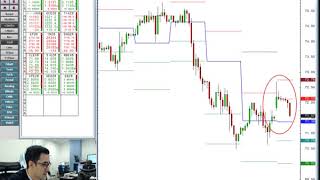
GBP/USD faces a volatile week as Brexit stalemate and UK data releases (earnings, CPI, retail sales) collide with US economic reports and oil tensions tied to Saudi Arabia's Khashoggi response. The pound could swing between 1.3050 and 1.3300 while European political turmoil and a US Treasury report on China add pressure across FX markets.
Chapters
Very good morning, it's Monday, 15th of October. Hope everyone had a great weekend. As per usual with the Monday briefing, a bit of a combination of a review of the weekend's main topics and how the markets open this morning, but also a bit forward-looking as to the week as a whole to give us an idea of where the kind of peaks and troughs of potential activity could come. So First things first, just a quick flash on the, the overall calendar. I'll probably circle back to this at the end, uh, in about 20 minutes' time. Uh, but as you can see, a fairly busy day. Um, few things certainly on the UK perspective, which I'm, I'm certainly looking forward to this week. Uh, as you will well know, the, the press at the weekend dominated by what is a bit of a breakdown in developments for Brexit talks. And this, of course, comes ahead of a key meeting back in Brussels in midweek. And so as a consequence, you can see that the pound has gapped lower at the reopening of electronic trade. So I'm looking here at the sterling future. You can see it dipped overnight about 50 pips or so to where it is at the moment, just sitting sub that S1 level. And we're going to dig into the details of that in a second, a bit more. But also this week, from an economic data point of view, equally as interesting because you've got on Tuesday here UK average earnings, then you follow that up the day after Wednesday with UK CPI, and on Thursday you get UK retail sales. So it's kind of a double whammy economically and politically this week. It's going to be a I can almost assure that volatility will pick up for the pound over the coming days. On that note then, well, let's just go in straight to the detail of what's happened with, with Brexit over the weekend. Certainly a few things I can highlight for you as to the current state of play. This is the headline being run: Talks put on hold as stalemate deepens. Now the crux of the matter here is that the UK and European Union are on course to miss this week's key milestone on the road to a Brexit deal after talks broke up in stalemate on Sunday, according to people familiar with the matter. Now this did include as well an unscheduled trip from the Brexit Secretary Dominic Raab, who kind of skipped over the the Channel to go and meet with Michel Barnier, and some were hoping that this could be a positive sign. But even he failed to break the deadlock, and there will be no further attempt to resolve the impasse before EU leaders gather in Brussels on Wednesday, according to some of the sources involved with the talks. So there was supposed to be some additional talks today. The major sticking point— well, things have not moved on, it seems, and This is still the, the difficulty here is how to avoid a hard customs border at the frontier between Northern Ireland and the Republic. One proposal is to keep the UK inside the EU's customs union on a temporary basis, which would mean no new checks on goods passing from Northern Ireland to Ireland would be needed. But pro-Brexit ministers in the Tory party, of course, including Raab himself, are determined to make sure any such arrangements have a strict end date to avoid Britain being trapped inside the EU rules and tariffs indefinitely. And you can imagine from appeasing of the more hard-minded, kind of hard Brexit Tories, this is absolutely pivotal in the details, that there's a strict end date. That's something that Boris had been calling for for a number of months, so that we remain committed to exercise this idea of eventually, at some predefined point, of exiting the EU. The other part here is some EU diplomats speculate that she needs to have a fight in order to get the deal she does eventually deliver through a divided British Parliament. I do think that that's quite an interesting point for the fact that, you know, step out of the move that's happened overnight, step out of what's happening right now, I think it serves Theresa May— Theresa May was in her favor if she can be seen here playing a little bit of hardball and up to the 11th hour when you strike a deal, all the more that she can kind of go back to Parliament and with the national sentiment a little bit more on her side, that she's tried her utmost to drive a hard bargain to get the best deal possible. So again, with all of these particular situations, Brexit for sure, there's a lot of political posturing, even though we know that the will on both sides to get a deal done is actually pretty high given the economic consequences of a no-deal outcome. So in the short term, obviously no getting around it, the pound has seen a bit of a pop lower, uh, and a gap down. And if we look on the longer time frame, so if we start looking on a— well, this is a daily continuation chart just to get a bit of an idea of the context of where we are in the pound at the moment. Certainly this week is going to be interesting. Um, I guess the more near-term range potentially is some of the price action probably around here would be the area we'd be looking at, the kind of 1.3050 to the 1.3300 handle. I would say there's room for a really big rally in the pound this week should they get a deal done. And the reason why I say a big rally is because my feelings are that that's not what's expected given what's developed certainly at the weekend. It would be a surprise and a positive one in that fashion. So If that did occur, I don't think it's out of the realms of possibility that we get up, we start testing up at the higher bound of some of these recent ranges. So I'd be looking for a retest up here, these kind of highs going back to as well the summer of 2017 before the eventual break which came in September. I don't think that's out of the realms of possibility at all. On likewise, I think that the pound might start just edging lower now to the lower bound of what was these kind of points of, again, in Q2 resistance of 2017, but also some support in Q3. I think that's quite a key area down here should we come down to 130.50 area. Um, for make— to realize this type of price activity, because we're only a point away from there at the moment, I think for sure a lack of progression in these talks— I think you're going to know really what the outcome of the talks are over the next 48 hours because I've been having a look at Twitter this morning. The regular suspects, Laura Kunsberg and, and all that, they have been extremely busy. And I'll be expecting various leaks, and hence what I said, volatility is almost guaranteed to pick up, um, given the journalists' leaks to the market and so on. So I think we could edge down to that point. I guess whether or not we can punch through that and start seeing lower prices beyond $130 on a breach of that level, I would say really is contingent as well as the— how does the economic data come out? Don't forget, you've got 3 key pieces, uh, of data coming, that being the wage data Tuesday, the CPI Wednesday, and then the retail sales on Thursday. If they all come out on the soft side, admit a stalemate midweek, then by the end of the week we might be looking at soon a breach of the 130 handle. Now the other thing of course to take into consideration when you're looking at cable here on a weekly outlook would be the performance of the dollar and actually of the economic data coming out from the US. Well, let's just quickly jump back to the calendar. When you look at the US, there's a couple of things coming out which may be interesting from a data point of view. You've got US industrial production on Tuesday, uh, JOLTS job openings, NAHB housing market index You've of course got the FOMC minutes on Wednesday. Of all of these, uh, dollar-related events though, my base case scenario here is that they would be dollar supportive, i.e., the FOMC minutes I think will strike an optimistic chord. Don't forget these are dated now, but come amid meetings where they've been sounding ever more optimistic about the economy's prospects. And in terms of economic data in the US, it's been particularly strong. So if anything, I think on the balance, if you're looking at it on a Monday morning, I think there's plenty to go at to suggest potential base case scenario of sterling weakness, both politically and economically, amid a strengthening dollar on the back of the premise that economically the US economy has been doing okay. So yeah, again, that does make it quite a compelling case that unless deal gets struck, which is not the expected outcome of the meetings in Brussels, and certainly downside levels here for the week could be quite interesting for the sterling currency. Just going a few other things to have a look for then. One of the key points I just mentioned here about, you know, is Theresa May doing this somewhat on purpose to try and make it appear on the surface to the public that you know, she's really battling for a better deal for Britain. Well, one of the positive sides that she heard over the weekend came out of The Independent newspaper sources, which was saying that multiple Labour MPs have told the newspaper they're prepared to support the Brexit agreement Theresa May hopes to bring back from Brussels. Obviously, this is quite a contentious issue because there's quite a sharp degree of division within her own party, the Conservatives. But if she can get the backing of Labour fully behind, let's say, the Chequers deal or whatever shape or form that comes back as, and then certainly this does strengthen her potential hand. It would be quite critical in terms of the actual arithmetic of the numbers in the other house. Looking forward, this is the actual kind of European Council meeting agenda. And so obviously the 16th, tomorrow, this is when the General Affairs Council, under the guise of Article 50 meet. This is the EU 27 ministers preparing for the Council meeting, which essentially kicks off on the 17th. This is then when they'll review the latest developments in the Brexit negotiations. So this will take place on Wednesday. They're also talking about key things on Thursday when they discuss migration, internal security, and then of course the Euro Summit format for the discussion of Brexit. So we're going to peak midweek in that side of things, but I would 100% be expecting lots of, uh, potential movement on the back of Source comments and so on as we go forward. Okay, moving on, a quick look at oil prices then. And just seeing oil having a bit of a move to the downside. Oh, just seen some really wonderful breaking news. The Duchess of Sussex is pregnant. Oh, Harry, Meghan, well done. Very pleased to announce Meghan is expecting a baby in the spring of 2019. There you go. It's not all economics. I'm breaking the news. The Duchess, congratulations from Amplify. Anyhow, that is genuine news, by the way. Just going back to the the chart for oil here. Oil has gapped up overnight. Now when I'm just looking at here, you can see this is WTI crude futures I'm looking at, um, on the November contract. We had a bit of a pop higher and we moved from 72. We did get close to what would be R2, so up at 72.76. Bit of a pullback and a gap fill though we've seen more recently, so Why have we had a little bit of upside volatility in oil? And so just to get you up to speed what's going on, this is the headline. So this is, um, oil rises as Saudi Arabia vows to hit back against oil sanctions, or against any sanctions I should say. So let me just quickly show you the oil chart here, what I was looking at. Just to give you an idea. So this is the, the kind of gap up and then the move down. We're coming back down in sight of pivot now as we, as we talk. So having a look then, what is it that Saudi have been saying? What is it that's making the price of oil fluctuate so much? Well, the Saudi Foreign Ministry has said that the kingdom will respond to any measure against it with an even stronger measure. This comes after a warning from President Donald Trump that he pledged severe punishment should Saudi Arabia be linked to Khashoggi's disappearance. So for any of those who haven't been following the news— let me just reshare my feed. I understand a few people have lost that, so one second. There you go. So anyone who's not been following this Khashoggi disappearance, this is essentially a journalist Anthony Cheung, who over recent years has been kind of of the view of Saudi progressiveness, was banned from Twitter in 2017 because of his criticism of the Saudi government. And all of a sudden he's disappeared. And certainly the US have been highly critical of this type of activity because they want an answer and they want to know what's, what's been going on. Um, what this has meant then is some renewed friction between the US and Saudi, and obviously this is quite critical. If Saudi Arabia does use its crude resources to hit back, it would be a break from decades-old policy of putting petroleum above politics. If you remember, it was only a couple of months ago that there was a big diplomatic spat with Canada which meant the withdrawal of lots of business activities with Canada. But one thing remains constant, and that was that Aramco, obviously the, the state-owned producer in Saudi, continued to supply a refinery in Canada even though the capitals had fell out with each other and severed economic ties. So oil has kind of remained away from this, but there's a threat here that this could be different. And certainly any type of supply shock to the market, certainly when you're talking about someone like Saudi Arabia, could cause very quickly price spikes in, in oil for sure. Now, while Trump is reluctant to cancel a multi-million dollar arms sales to Saudi Arabia out of concern the US ally will turn to Russia and China instead, said. So by this, what I mean is that, you know, how forceful can Trump be, um, when obviously the biggest buyer of their arms equipment, of course, is Saudi Arabia, to the tune of what we've seen in recent years, hundreds of billions of dollars? And more importantly, politically, if you were to disrupt your political harmony with someone like Saudi Arabia Does that then force them to cultivate new form relationships? And you can only just imagine who the willing buyers would be to get into bed with Saudi, certainly the Chinese and the Russians. And this, of course, would, in terms of the geopolitical landscape, be highly detrimental to America. So the reason why I think oil has spiked, I think it's a little bit of a reaction to these headlines overnight, just given the pretty aggressive commentary about retaliation from Saudi. However, we've already backed off because I think personally, in reality, neither side, the US or Saudi Arabia, will want to jeopardize their very important relationship. Okay, a little look elsewhere. Angela Merkel— there's been something in the calendar for some time which we've been waiting for, and this has been the Bavarian election. Now, the Bavarian election was always one that was going to capture a lot of headline focus because of the fact that it was Horst Seehofer, the head of that area and leader of the CSU party, the Christian Social Union, which makes up one half of the current grand coalition in Germany, of course, with Merkel's CDU. And there was a big issue because Seehofer has been trying to fight back against the kind of rising nationalist sentiment in his local region, given where it's positioned in the southeast side of the country and its high density of migrants. And so what's happened here though is that the Bavarian sister party dropped the CSU party to a historical low now in that regional election. Who has been the biggest benefit? And this isn't new, this is something that I think has been occurring since that last election that we had in Germany, is that the far right, the Alternative for Germany, otherwise known as the AfD, have swept into state parliament for the first time. And the Green Party, whose pro-migration platform has actually propelled them into second place after the CSU themselves. So again, it's more, you know, this kind of emphasis on, on a more nationalist view, particularly with the catalyst of migration as a key, uh, kind of talking point to base political policies on, you know, resonates across the European continent. This isn't just an Italian thing, this is certainly happening elsewhere, and it's been a constant and growing theme. So What does this mean now? Well, Merkel's own party was not part of the Bavarian elections. They weren't basically on the ballot, but they will be at the next regional election, which is happening at the end of the month on the 28th of October, which is the region of Hesse, which is obviously where Frankfurt, the business capital of Germany, is situated. Polls suggest that the CDU could drop to their lowest level since the 1960s in the state. Which the CDU have governed since basically the late '90s. A setback risks further undermining Merkel's authority before she seeks— and this is the important kind of timeline— as her reelection as party leader at the CDU convention in Hamburg happens in December. So we've had largely, I think, as to be expected, the CSU have weakened, and now we've got the Hesse election. I'd be expecting the CDU, Merkel's party, to also weaken The question mark then comes, then come December, can she hold on to her leadership of the party given its fragile and ever decreasing popularity? My base case scenario at this point is yes. But the point is, is that it's becoming more and more of a risk in terms of ability to lead the country, giving her diminishing powers as the kind of shifts are happening on a regional level. Is there something to trade the euro this morning? Well, I think the euro currency here is already telling you, uh, the answer to that question, which is no. And that's because I think that this Merkel and this CSU underperformance in the Bavarian election was to be as expected. It's just something to be aware of more that net-net, from a one-line tradable point of view, let's say Seehofer starts making some inflammatory comments about the longevity of his relationship as part of the CDU-CSU partnership, I think then you get a quite a quick flash immediate euro sell-off. So sensitivity here would be pretty much tied to making it black and white. Any signs of a breakdown in the coalition government, if that were to happen, as we've seen in previous months, you get a pickup in volatility in a negative sense for the euro currency. But at this point, I think this is all going as to be expected. Net-net, Merkel is losing popularity, but still the biggest party and will remain the leader for the time being, I would say. On the point of Europe, one final thing you've got to be aware of this week: Italian populists get ready to challenge the EU on spending. So we're not out of the woods as yet. When it comes to Italy. Obviously, all we've had over the last couple of weeks as these Italian yields have gone to multi-year highs is the putting forward of the numbers related to the draft proposal that was going to be submitted to Europe on their budget deficit of their populist kind of programs. Now, this week, what happens as of tonight, the European Commission will start reviewing Italy's plans. So as you can imagine, this being European Commission's first time to get a real line-by-line look at the draft budget, um, and with the coalition leaders having insisted in Italy they won't backtrack on any measures, Italy could quite quickly flare up, I would imagine, come midweek as well when we start getting the first responses. Given that that is going to be the deadlines tonight, I would imagine by Tuesday you'll probably start getting leaks and so on. And what I mean by that is newswire sources. If Europe are just completely, you know, this isn't going to work, I'd imagine that will come out pretty quickly. So again, more potential things to look out for. If it is well received, then obviously upside for the euro. But on the balance, you would say there's probably potential for this to be the opposite, I would say. One other thing as well, uh, on the calendar, if I just flick back to the week, you'll see that on Monday you've got the Treasury Currency Report written here. Now, one thing we're looking out for this week is the US Treasury Department set to release its report on currency manipulation. The key question is, is China on the list? Now, you'll remember when the stock market was kind of under pressure last week. You know, a lot of this comes under the guise of ongoing continuation of trade war rhetoric and the fragile relationship between the US and China. And what we saw at the end of last week, almost it felt like politically to mitigate the weakness in equities, was, well, what can the US administration do to try and calm market sentiment that the situation isn't so bad. And we have some source comments saying that the US wasn't going to call China a manipulator, which of course has been their stance previously ever since the Trump administration came in. Now, this Treasury Department list is going to come out later on, I think probably tonight, I would imagine. But when that does come out, whether or not China is included and the phrasing around that, I think could be very important as well for what has been a fairly fragile US equity market over the recent week. I mean, just looking at the S&P here, let's just stretch it out a little bit to give us a bit of a better, broader view. You can see last week really was interesting. We had those really two days of quite aggressive selling, particularly on the 10th But one thing that I did read, a stat, we've not had 2 consecutive closes yet below the 200 DMA. Now that 200 DMA, you'll remember, it was a very critical long-term support line that we've been looking at back to 2016. Let me just see if I can quickly bring it up. One second. Well, let me just go back to 2016 and you'll see. So Essentially, here's what I'm looking at. These flash activities, the referendum, the Trump election, and the 200 DMA worked a charm on this early 2018. This is when you had that, the fallout of kind of policy synchronized tightening globally, and we saw that actually was a bigger sell-off than the one that occurred last week. But what's quite key then is if we did get multiple closes i.e. 2 or more below the 200 DMA. That would be the first time since going back to 2016 if that was to occur, and technically I'd say that's important. So this Treasury report coming out could act as a bit of a catalyst here. Let's say those U.S. economic data points I mentioned all come out really stellar and strong. It's almost— good is good, but too good is bad for equities. And by that I mean you fuel the flames of the market thinking, well, the Fed have got to start tightening even further, and yields start rallying, and then equity pressure kind of mounts. And then you've got the trade situation as well. And then with the technical breach of some of these key points, it opens up potentials for further correction. The other thing, of course, this week is earnings. Let's not forget that, you know, we are in the midst of earnings season here. Who have we got this week? Well, there's no one really which I'd be saying I'm absolutely looking for to create a change of market sentiment. Actually, if we were looking at that, there's one company who's not actually that big who I think could carry a little bit more sentiment, particularly just on the coattails of what happened last week, and that's actually Netflix. Now Netflix Not a massive company. I don't think it even cuts the mustard for the top kind of 50 within the S&P size-wise, but just the fact that it makes up and comprises of the N, of course, in FANG, which tend to be highly kind of sensitive to market sentiment and movement, just given their phenomenal outperformance through much of 2017, I think that their results could be quite interesting. And they come out after market on Tuesday. But giving you a quick overview, here are the earnings. You've got 16 on Monday, 36 Tuesday, 52 on Wednesday, 64 Thursday, 23 on Friday. So this is very normal. There tends to be, let's say, a normal kind of distribution, kind of curve if you like, to earnings during the week. So typically the least on a Monday and Friday, and it peaks midweek. The biggest companies, give you a quick run through, obviously coming out after some of the big banks on Friday. We get Bank of America today. You get Morgan Stanley, Goldman's on Tuesday. Uh, you also get Netflix as mentioned, and Johnson Johnson on Tuesday. You get Amex and Philip Morris on Thursday, uh, Procter Gamble and Chambord on Friday. So I would say these will come out. Am I looking for these to really create direction in the equity market? I would say not so much. Still focusing more on the broader, the macro themes, and also as well just market sentiment as to when the equity markets start falling, you know, the kind of momentum sellers and things like that behind the market moves, rather than— I don't think these bank stock earnings, I don't think, are particularly important now, not that we've already seen some of the first report last week. Okay, quick look at Canada for today. And then we'll wrap things up. So this morning, particularly quiet. So I know that for the trainees internal here on the floor transitioning to the live environment for the first time today, you know, don't feel any particular rush. Take your time. This afternoon, I'd say, is probably going to be where the more interest will come in that sense. Uh, so retail sales coming out of the US this afternoon obviously is a tier 1 piece of data, and that'll be at 1:30. And that's probably the highlight for this afternoon. Looking at the calendar for the week again, just to give us that idea of— let me just quickly bring that back up— of a summary of other things beyond today. So Chinese data as well, we get Chinese foreign direct investment, money supply, new loans, CPI, PPI, and we get Chinese GDP on Friday. So, you know, a lot of things to consider here. Um, overall direction, as I said, not so much catalysts on, say, earnings per se, but let's say Chinese GDP on Friday is weak and CPI data is low foreign direct investment is down. You know, US data, on the other hand, knocks it out the park. I think this just adds to the narrative to some of the equity weakness that we had last week, i.e., China emerging market risk developing, becoming worse amid the US outperformance. And kind of this then has been the kind of cocktail that's weighed on the equity market. And that could be a catalyst for it to continue. The UK, we've talked about enough politically, economically. Big week. And then on Friday, some other interesting things, um, coming out, i.e., speakers. You get BOJ governor and Bank of England governor Kuroda and Carney speaking on Friday. There's kind of speakers littered throughout just to make things even more interesting from a sterling point of view. You've got Deputy Governor Cunliffe on Tuesday, you've got Broadbent speaking on Wednesday, so you've got the full monty if you're a sterling trader for the week. Okay, that's it. Gonna let you guys get on. I'll work on the weekly strategy report. We'll have that out to you in about 2 hours' time. Otherwise, have a good day and have a fantastic week. And our congratulations again to Harry and Meghan.
More from Anthony


Inside the Biggest Banking Stories You Need to Know This Week (Anthropic, Diageo, Private Credit)


Inside the Biggest M&A Deals You Need to Know This Week (UniCredit, GameStop, eBay, Eli Lilly)







AI Breakthrough or Hype? Anthropic’s Claude Mythos, Tim Cook Steps Down & LIV Golf Collapse