Will OPEC disappoint this week?
Markets are bracing for OPEC's Vienna meeting this week, where a consensus 1.4 million barrel-per-day production cut is expected. Saudi-US tensions over oil prices and Russia's uncertain role could derail the deal, triggering a rapid price reversal. Meanwhile, the US-China trade truce lacks concrete details, the pound faces Brexit turmoil, and bond market inversions signal long-run recession risk.
Chapters
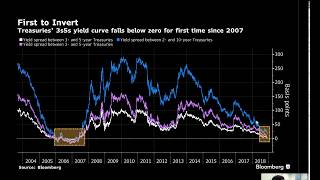
Good morning, Tuesday, 4th of December. Hope you are well. Welcome to The Briefing. Going to cover a few things here, going to look at the kind of diminishing returns of the Trump truce proving to be decidedly short-lived, and we'll look at some thinking and reasoning behind why that could be the case. We're also going to have an update with Theresa May. She is due to begin her debate in the Commons in regards to her Brexit plan ahead of that key vote on December 11th. However, she has come up against a potential vote of contempt about the legal advice surrounding Brexit, so we'll have a look at that. There's been a few news headlines as well this morning that have caused a bit of pound volatility, and then we're going to look at 3 other things briefly. We'll look at the inversion of the yield curve, a couple of moves that we've seen in uh, part of the yield curve, I should say. So we'll explore that and what does that mean. And then we've got slight update on Italy, and then you had the RBA last night. Also going to have a quick look at oil prices as we have the OPEC meeting, of course, on Thursday. And there's a lot riding on the outcome of that meeting for the price of crude. First things first, starting with here, I've got a, uh, this is a chart that I included in the weekly strategy yesterday. Because what we've got here is the kind of downward trend line from the 17th of October move, the retest that came at the beginning, the 8th of November, and then the kind of gap up and rally that we had in the futures to where we hit resistance pretty much right to the tick of the 61.8% retracement of the all-time high. So the October sell-off, that also just above was the 100 DMA. So quite a strong area of technical resistance. Price got there and we've pulled back at the moment. We found a little bit of support around the, uh, the other fib level and also the initial gap up that we saw on electronic trade on Globex on Sunday night. So there was a brief momentary gap fill, but obviously people just questioning now the sustainability of what was risk-on this time yesterday on the back of a brokered temporary truce between the US and China. So why is it that people have kind of pulled back a little bit from that? Well, this is what people are looking at, and it's basically now the questions have come, and rightly so, on, okay, you've got a trade truce, what is the details? And basically there is none. The Chinese particularly have been very light touch on what exactly is it that's been agreed. The Americans under Kudlow and Trump have been a little bit more expressive about, you know, they've secured a deal and this is what we've done and so on and so forth. But the problem is, is that there's not really a line-by-line definitive statement on what exactly does this include. And so I guess at this point then it kind of falls back into that, that remit of, okay, yes, it's a positive, they're talking again, they've agreed to continue talking, but it is just that. And let's not forget, this is a 90-day pause. The tariffs are still to come into play over the kind of expiry of that period. And so, you know, it's not a complete done deal. And so a little bit of a relief rally, what we were calling it yesterday. But once relief has kind of gone, then, well, then it's returned back to the normal, which is we are still in the midst of a trade war in that respect. So unless details are forthcoming and unless they are supported and followed through and implemented to the letter, then at the moment the market still remains relatively skeptical. So Any reversal back higher, obviously then a key area to watch is going to be a similar— I guess if this trend line continuation here, depending on what time frame we get up to it, could be well within around that 2800 level. But that's definitely going to be key to the upside. So any belief about, you know, is this the beginning of the Santa Claus rally, the Powell pause, the trade truce has been brought into question here. One thing to be aware of though, I was just having a look at the Chinese currency overnight and we've seen some really quite substantial moves here. And obviously 7 was that key line in the sand of where you had that big rout in the Chinese markets throughout 2018, the collapse into bear market territory of their stock market. The currency weakening to nearly 7. But we've seen a meaningful move over the last 24 hours, which for me would suggest, you know, if you were looking for a complete equity sell-off and an unwind of any positivity from yesterday, I think that's unlikely because as long as the currency in China remains contained and moving in this direction, I think that keeps the markets calm. Over the state of the economic situation in China. The other thing here is I did catch a statistic this morning, uh, and this was the seasonality of, of December. So I thought it warrants a mention because since 1950, the S&P 500 has been higher 75% of the time in the month of December. It is the best month, or it is the best for any month of the year according to the statistics. And just given some of those things we just mentioned, the kind of reversals to a slightly more dovish-leaning Federal Reserve, with this at least slight hiatus on the trade war escalating any further for the time being, well then seasonally December does tend to be a strong month. So just pointing out as we go through the first couple of days of December. Otherwise, let's just have a look elsewhere, and cable has been a quick mover this morning, and this is a 1-minute candlestick Um, definitely would not advise looking or trading a 1-minute chart, but wanted to just show you the severity of the spike we just had, which came at 12 minutes past 8 this morning. Uh, why did that spike occur? Well, this is the headline that came out, Bloomberg headline: UK could pull Article 50 unilaterally. EU court aid suggests. So essentially saying, um, that Article 50 could be reversed. Now, I don't think that's wholly surprising. You must remember there is no legal precedence for Article 50 being triggered because it's never happened before. So all options are really open. And I think this is absolutely a tactical play from Europe. If you remember, uh, you've had all of the senior EU politicians over the weekend saying, you know, you either accept this deal, there is no alternative. So playing a hard hand. Then you, so that's waggling the stick. But then you put the carrot in and say, but we would agree that you could pull it back if you wanted to. So I just think this is Europe playing politics to show the UK that look, there's options here. You can take it back if you want to, but, you know, threatening at the same time. So with that being said, I don't think that this headline is, is anywhere near a game changer. I think legally this has always kind of been the case, and I think you get a net knee-jerk reaction, hence the spike that we saw. But would I be looking for now a long-lasting rally to materialize throughout the rest of today? Absolutely not. I don't think that's going to be the case. I think this— anyway, for us to get to the point of reversing Article 50, many things have got to happen to get there. So I think knee-jerk reaction and that's it, as far as I would say. Big thing that's going on though, obviously, at the moment as far as Brexit is concerned is that Theresa May should be beginning today the multiple days of hearings and debate in the House of Commons about her Brexit plan in order to cajole support and sentiment in her favor to secure then the meaningful vote going through on the 11th of December. The only problem that you've had, and you probably read a lot of this or heard about it yesterday, is that Theresa May's attempt to sell Brexit deal to skeptical lawmakers has basically come under fire as as opposition parties were granted an emergency debate on whether her government is in contempt of Parliament for refusing to release legal advice about her deal. Now obviously, Theresa May is very reticent to release the full legal advice because it talks about this idea about the indefinite tie towards the backstop on the customs union and Northern Ireland issue. That would be something which the Brexiteers and other opposition, and in particular the DUP, who support the working majority, have a big issue with. So she wants to keep it as light as possible, and the opposition know that by unveiling the details, which inevitably legally is going to tie us to Europe for an extended period of time, is going to be damaging for Theresa May. So it's a good way to just pile the pressure onto her. So May had expected to open the 5 days of debate today, just before 1 PM, but it looks like that's going to be slightly delayed because they've got to just get through this first, for the debates then likely to be anticipated to begin later on this afternoon or evening. Is this a market-moving thing? No. This is just politicians being politicians trying to cause headache. Does this ultimately change the game of Brexit? Well, I don't think so. So hence the reason why the pound is not reacting to this, this type of headline about May and the government facing contempt. One thing though that I did see, and I know we've seen a lot of these over recent days, but I thought this was just quite a neat summary of the scenarios here coming up for the meaningful vote. I thought this was probably one of the most simple, straightforward ones that I have seen. So 3 options for this December 11th parliamentary vote: the vote passes, the vote fails narrowly, or there's a major defeat for the PM. So let's just have a look at the vote passing. Follow the line all the way down to the bottom. May's deal goes through. I would say, in my opinion, that is possible but not the most likely. The most likely that I'm anticipating is that the vote fails narrowly. The PM may need to survive confidence votes. This then, if you follow it down, can go two ways. The most logical, I think, is the EU negotiations to tweak their declaration. That then goes to a tweaked deal accepted or rejected. If it's accepted, obviously we move all the way down, the deal goes through, we push on to the transition period. If it gets rejected by the EU or House of Commons in the second vote, Parliament votes for a change of direction. We can either here ask for Article 50 extension or opt for a managed no deal. No deal being down here, I think that's less likely. So let's just follow this through. If then they ask for an extension, the EU either agrees, and they have talked about potentially agreeing an extension. This would alleviate some of the cliff-edge type kind of pent-up fears about a no deal and allow a bit more time for discussion. Where could that then go? Well, do we get a Norway-type deal, EU-aligned deal, or do we then go into the realms of the second referendum? The second referendum leading multiple ways, which is when it starts to then get quite messy And obviously one of the options here could be no Brexit, no Brexit, or quite equally the complete opposite for the worst economic scenario, no deal. And so again, this is quite a, just a nice simple way of looking at some of these options that could, could play out. But again, I'll post this in the chat, I'll let you have a read in your own time. It's an FT article, maybe just worth having a read just given the the vote in itself. Remember, it's the 11th, so that's going to be this time next week, next Tuesday. Just having a quick look back to cable. Yesterday was quite a key technical point. So the cable chart I'm looking at here is the complete Brexit saga, from the initial sell-off that we had the night of the EU referendum to the first announcement of the words hard Brexit. To the recovery, the transition period secured, then the economic slowdown in the UK, then the risk of no deal, to where we are today. Zooming this in a little bit, uh, this was a, a trend line that we were looking at from the summer that had a retest in late October and through November. You can see there, tested a number of times in recent trading sessions, but we did break below there, instantly ran down then to that low back at the end of October, but we've managed to hold there at the moment, and we haven't brought into play the year-to-date lows, which are, you know, around that 126.78 in the futures. Uh, looking back on the chart then, again, this is a daily continuation chart. Is— if I just make that visible so you can see above my video feed— uh, this kind of area where I've got the rectangle, I think, is really quite key, that being two areas of kind of technical relevance, that being the year-to-date low, but also these price points going back to what would be 2017, the beginning and the summer of that year. Because then this is quite a key area of support, which if broken, you can see, does open up quite an area of clean air to the downside. My kind of general thoughts here, in summary or in short, is that I think prospects for the pound are gonna get a little worse as this Commons vote is only gonna ratchet up the pressure on May. And if, as I was saying, the deal does fail at the first hurdle, that obviously does increase the prospects of a no deal, even though I think ultimately, you know, when the, when the ultimate deadlines come, politicians do fall in line in the 11th hour and and the deal goes through. But until that point, things have got to get worse before they get better. The point is, is when it does get worse, are we able to manage and to maintain support at these levels? Because if we breach there, things could get worse pretty quickly. And if that meaningful vote happens, maybe that could be the catalyst. This is what a lot of people have been saying, is that if the pound was to break lower and decline to, let's say, sharply lower to 124, to even lower, then at that point, is that what it takes for the politicians then to see the economic kind of reaction in the markets for them to kind of sharpen their, their focus and come together and make a compromise to get the deal passed through at the second attempt? That's what's been seen previously in other US-type political, or I should say government and central bank interventions in the past during the financial crisis. Okay, a few other things that I just wanted to have a look at, and that is quite a lot of, uh, people mentioning this: the flattening yield curve just produced its first inversion. And it almost feels like, you know, this, uh, this conversation about an impending recession can— you continues to to snowball, more and more people talking about this. Uh, the important thing to recognize here, it was the spread between the 3 and the 5-year yield, uh, that fell to -1.4 basis points yesterday, dropping below zero for the first time since 2007. Uh, the 2s-10s though is the one that people focus on, uh, and that yet hasn't got to that point. Uh, so I think, you know, it's part of the curve has inverted, but the main one, the more closely watched 2s-10s gap, is the smallest now since '07, but it's not quite inverted. This is the chart that people are looking at with the 3s-5s. So you can see here it has been moving that way for some time. Personally, I think the news agencies are making a bit of a mountain out of a molehill. Of this story, because as you can see from these charts, it's pretty inevitable that this has been coming. Uh, and looking at the economic cycle, a recession is technically going to be due in the medium term, so 18 to 24 months or so. So it's not massively surprising that this is happening. Yes, this is the situation, but is it a tradable thing for today? I don't think so. I think it's just something to be aware of more broadly. And as I said, looking at the 2s, 10s, this is the blue line. That's the one you want to be keeping an eye on going forward. The one thing I think we did see yesterday, I think it was the US 10-year broke, uh, I think it's the 100 DMA line. But if you think about it, what's happened from a news and fundamental perspective You've got the Fed turning dovish. Remember, a Fed interest rate hike in December this month is priced at 87% according to federal funds rates futures. So that means an interest rate hike is happening. Interest rate hikes are also happening in 2019. I don't think there's anyone who thinks that it's going to be December, one and done. The question mark is the Fed are saying 3 in 2019. Does 3 become 2? We're not a conversation now, does 3 become none? Things have not yet got to that point. So if anything, we know over the medium to long term we're coming to the high end of the interest rate cycle. What we've had was a Trump truce and positivity yesterday, so yields in the short end rose because of the positivity in that sense. So we're seeing that inversion just technically show its hand right now, just as a function of some of the news that's come out. What I mean is that yields in the, in the short end are rising, but in the long end have decreased. In the short end, because no trade war, things are positive, economic story picks up, rates rise in them in the short, medium term. However, in the long term, we know from the economic cycle things are going to back off. So an inversion I think from what we've seen from yesterday is a little bit of a byproduct of just timing of where we are with those spreads, but also the type of news that was coming out yesterday. So I don't think it's kind of a crisis, you know, buckle down the— was it the kind of the protection for the worst is coming, the recession, you know, the storm is coming. I think we're a long way off that as yet. Okay, last part. This is Italy, and just so you're aware, just keep an eye out for anything coming out of Italy today. This is because the Italian Prime Minister will present a new budget proposal in the next few hours, according to Italian press. This obviously is all about trying to appease the European Commission. We've seen this play out quite positively. BTPs have been rallying over the last day or two. The conversation then, how or not can that rally in Italian paper be sustained, is going to be what numbers are put forward. Italy has drafted an expansionary budget that forecasts the deficit to rise to 2.4% of GDP in 2019 from 1.8% this year. That's fallen short of the requirement for the European Union, so the question mark is where does it go from there? And some of the talk has been a reduction back down to 2%. So do keep an eye out for that. And then finally, this is, I would say, not really a market mover. Aussie dollar on the front foot this morning. But don't forget, this is some tensions have been alleviated on the China issue following some of the trade news from yesterday. But the RBA held interest rates. I think it's 1.5% currently in Australia. No surprises there. But some of the Aussie jobs data was quite strong. Um, just going back down to the charts here to see some of the data. The governor was decidedly upbeat, so the governor of the RBA, on jobs after unemployment fell to 5%. That is the lowest level in more than 6 years, with data Wednesday forecast to show the economy expanded an annual 3.3% last quarter. So we're not really near any change as yet at the moment. I'd say, you know, kind of trading the Aussie is a combination of a couple things. So beyond just this kind of technical setup of the chart, it's obviously such a strong trade tied to China. Any movement or change of perception and sentiment on trade wars has a direct impact on that then for sensitivity in the Aussie. And then while also monitoring this more domestic-based situation. But the RBA chief and his board left the cash rate 1.5%, as they have since August of 2016. I don't think markets are pricing in an interest rate move or a change from the RBA until the end of next year, 2019. All right, quick look at the the calendar. Or before I do that, in fact, let's just have a quick look at oil on the chart because the bounce continues. All looking good for some of those oil-producing nations, which I'm sure would have been sweating at the prospect of 50 quite quickly snowballing into a drop to 45 and beyond if, if we get through that psychological and technical point of significance. But we've had a decent bounce. We've bounced about, you know, roughly $4 from that initial low point that we were trading at the end of kind of last week. This then all leading up to what is always an entertaining event, which is the OPEC meeting in Vienna on Thursday. Obviously, all the oil ministers will start arriving in Vienna probably by tomorrow, So you're going to see a substantial pickup in the number of headlines from oil ministers coming in the next day or two. Remember the usual routine. OPEC, you'll probably know the result of what they're going to do, or at least the intentions of the major players, well ahead of the tentative press conference due on the afternoon of Thursday. A couple things I wanted to point out, and there was a good article on the FT and a few things for consideration. And this is Oil Rises as OPEC Meeting Looms: 5 Things to Watch. So I'm going to give you a quick overview of what the FT are looking at. Number 1 is the consensus. The consensus is that the meeting in Vienna will deliver a deal to lower output. This has been what they've been talking about since the weekend on the sidelines of the G20, this kind of agreement between particularly Saudi and Russia. To do something. The only thing is we don't know what that something is. Kind of sounds reminiscent of the trade deal, right? But markets have latched on to it for the time being. So what's less clear is the size of the cut that can be agreed, with OPEC, the kind of kingpin Saudi Arabia, facing pressure from US President Donald Trump, who's obviously an absolutely critical political ally, and he's been wanting to keep output high and prices down, so cutting of production would be, um, the opposite of then appeasing what is a critical partner for Saudi Arabia on many different fronts. To give you an idea about numbers, most traders and analysts, according to the FT, estimate a reduction in excess of 1.4 million barrels a day is required to have any type of meaningful lift to the price of oil. Remember, a number of countries are producing at record high levels, so it does need to be a fairly substantial cut for it to translate into something which is actually going to be material for the price. However, fewer are certain that Saudi-led OPEC will go that far, with suggestions the size of the cut may not even be clearly announced to avoid an antagonizing the US. So this is one of the key things which we're going to talk about, and that is, if we scroll down, the Saudi conundrum. And what this is, is Saudi Arabia faces a bit of an issue. They cut production and incur the wrath of Trump, intent on keeping petrol prices low for American consumers. Remember, he's been talking that up, saying that it's a tax cut for the middle class and so on. Um, as OPEC gathers after a kind of tough few months with relations between Saudi and the US, which this summer demanded that the kingdom lift its output to offset any cuts in global supply from the replacing of sanctions on Iran. However, as part of the sanctions, Trump did ultimately issue waivers to buyers of Iranian oil, leaving more crude on the market than expected. So again, this to fit his objective of keeping the price of oil low. People briefed on the kingdom's oil policy, though— this is Saudi's policy— say the need to secure US support for the Crown Prince Mohammed bin Salman over the killing of that journalist, Jamal Khashoggi, is what absolutely has caused a headache for Saudi Arabia. Can they Can they cut oil to prop the price back higher in order to be in a better financial situation? Remember, they have their own commitments and they're currently well offside in terms of a fiscal breakeven. Or do they listen to Trump and keep him onside? What's the greater of those two risks is the big debate. The other thing then is Russia. no deal can really have any type of impact unless Russia is on board. The energy minister, Alexander Novak, has said to Russian press on Friday that the current price range is comfortable, but added the country's oil companies could alter their production. This could mean a small cut by Russia of less than 300,000 or that Moscow freezes production levels. Again, it's Russia want also the price to be higher. They economically have suffered through Western sanctions over recent years, but they know too that really they can rely on the Saudis to take up the bulk of the cutting. So it's more like a token one to show, um, some concession that they're willing to work with Saudi without having to do anything too impactful on the money generated from the sale of oil by cutting only by a small amount. Spreading the cuts is the kind of fifth point the FT say, and this is where, you know, you kind of dig a little deeper, you scratch beneath the surface, and you start to see what really goes on with a lot of these countries. Because you might not have realized it, but Saudi Arabia have been particularly busy. The oil minister of Saudi was in the Nigerian capital last week And the reason he's been doing that is because Nigeria has managed to maintain a level of production closer to 1.8 million barrels per day. But what the Saudis want is, can they keep pumping? So in essence, then we can deliver a cut, Saudi, to keep the US happy. But we can also then, we can keep the US happy in ways that other producers continuing to provide more supply. So it's about using your other and pressuring other, pressuring other partners like Libya, whose production has more than doubled in recent months to over 1.3 million, for them to kind of come into action and to kind of bail them out in some respect. Meanwhile, OPEC delegates say Iraq, which has seen exports resume from the disputed region of Kirkuk, is believed to also be keen to keep increasing production. So yeah, big risk I would say for trading, uh, this oil price is that I think given the movement that we've seen, the $4 rally, given the commitments we've heard from the weekend from Saudi and Russia, I just wonder, is this market now susceptible to quite an aggressive U-turn back down towards the $50 handle if OPEC don't deliver. It's feeling a little bit like the unreliable boyfriend, Mark Carney. He's promising me the world, but then instead of taking me to a Michelin restaurant, he takes me to McDonald's, and I'm utterly disappointed. And we get a complete letdown of lofty expectations, and then the price tanks and we reverse the move. I just wonder now, have OPEC kind of played this a little bit wrong in a sense that they've gone too soon with these commitments? Because I think actually getting a deal done is incredibly tough for Saudi Arabia. One other thing to be aware of as well, just to finish on this point and then we'll wrap things up, is that last week the Senate in the US voted 63 to 37 to advance a resolution demanding that the president in the US end US armed forces activity in or affecting Yemen, where Saudi Arabia's war against Iran-aligned Houthi rebels has seen one of the worst humanitarian crisis ever in human history, is what's been tabled by a lot of the aid groups. Now, one thing is here is that those missile attacks on the Aramco network in the southern part of Saudi and even on the capital have been incredibly frequent. And so Saudi Arabia, with now sanctions on Iran, must secure military defense with the Americans. Otherwise, they are in effect defenseless. So Saudi don't really have an option, I don't think, other than to listen to the, the will of the Americans. And that's the problem which they they face. They want to cut, but can they cut? Because Trump is saying, I want more production because I want the price lower. Also, legislation that would allow the US to impose criminal penalties on members of OPEC and their allies for acting as a cartel is also been making progress in the courts in America. And for Saudi Arabia, which has extensive assets in the US, including the largest refinery in North America, that legislation is a genuine threat to the nation in terms of its other means of income. So, you know, there's a lot in the background where the relationship between Saudi and the US is a very close one in many different ways over and beyond that of just oil. And can MBS jeopardize that relationship? I think he can't. So that's why I think that a cut here of substantial magnitude isn't a complete done deal. I think if we continue to rally and come the OPEC meeting, we could be in for a bit of a disappointment. Okay, calendar, and then we'll conclude things. This is what we're looking at. It's UK Construction PMI coming up. This is a lower-tier data. I would say for today you want to be keeping an ear out for what's the initial kind of sentiment around the discussions in the lower house on May's deal. Otherwise, producer prices in Europe, fairly second tier. I wouldn't be looking for too much action off of that. Likewise, in the afternoon, not too much going on either. So further digestion on do we get a more of a pullback on the, the trade truce movement from yesterday could be quite key to monitor. APIs tonight, but I do believe the DOE's have been delayed usually on Wednesday, and they'll come Thursday. Remember, the New York Stock Exchange is closed tomorrow for a day of mourning for the 41st President Bush, who died a few days ago. So markets will be particularly quiet on Wednesday because most of the major markets will be closed. The oil inventory numbers in the DOE have been bumped to Thursday. Speakers-wise, Mark Carney's coming up And actually, Carney, Broadbent, and Cunliffe are talking to lawmakers about the impact of Brexit. And given the amount of criticism Carney came under after his Armageddon kind of scenarios, that could be worth watching for cable. And then you've got more Fed speakers, Williams, this afternoon. Okay, that's it. I'll let you guys crack on. I'll be in the chat room this afternoon. Just let me know if there's any questions you have, but have a good day. Thank you.
More from Anthony


Inside the Biggest Banking Stories You Need to Know This Week (Anthropic, Diageo, Private Credit)


Inside the Biggest M&A Deals You Need to Know This Week (UniCredit, GameStop, eBay, Eli Lilly)







AI Breakthrough or Hype? Anthropic’s Claude Mythos, Tim Cook Steps Down & LIV Golf Collapse