Women In Finance: Finding Confidence & Overcoming Challenges
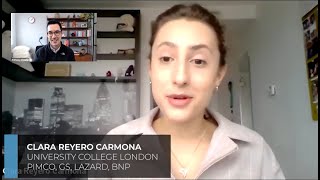
In this interview, Clara, a second‑year Mathematics with Economics student at UCL who grew up in Namibia and Spain, shares how she entered the finance sector and the factors that have shaped her confidence and career trajectory. She recounts discovering finance through the UCL Women in Finance Society, being inspired by a senior BNP alumna, and navigating the Spring Week application process despite limited prior knowledge. Clara emphasizes the importance of mentorship, community, and confronting imposter syndrome, drawing on lessons from rhythmic gymnastics that taught her discipline and resilience. She offers practical networking advice, such as leveraging internship buddies, reaching out on LinkedIn, and treating professionals as people rather than intimidating figures. Clara also discusses her upcoming Summer Analyst role at BNP Global Markets, her exploration of different desks, and her commitment to paying the mentorship forward. Throughout, she highlights the need for open conversations about failure and confidence among women aspiring to finance careers.
Chapters
Hi, Anthony. Hi, everyone. As Anthony has mentioned, my name is Clara. I'm a second-year math with economics student at UCL, and I am half Spanish, half Namibian. I was born, I grew up in Namibia, but my parents are Spanish. And, you know, it's a privilege to be here today and share any insight that might be valuable for you. And while answering your question, the reason for why helping women, I mean, it just stems down to wanting to help other people. When you help people, people want to help you. And I guess my journey into finance was very— I was very lucky, I must say. I started my first year of university, you know, mainly studying maths. I had no idea about the finance industry, you know, growing up in a small town in Africa and then, you know, in Spain, neither Spain nor Namibia, it's not a financial hub. So finance wasn't the thing in my mind, but I started first year of uni and everyone was like super competitive. Like I hadn't even started classes yet. And like, it was like, do you have LinkedIn? Do you have your cover letter? Do you have your CV? And I was like, I don't even know why I need all of this in the first place. So, I mean, I decided to get involved in many societies, join many random societies, met lots of people. And perhaps one of the societies I liked the most because of the people and the students was UCL Women in Finance Society. I had a few older students that were really kind to me. They offered me a position as first-year representative, and that's kind of how I began being a bit curious about the finance industry. And that's when I started doing my research into finance. And I realized that because I was in a 4-year course, I wasn't eligible to apply to Spring Weeks. So I was like, "Oh, okay, I will figure that whole process out next year. I'm gonna first, you know, focus on my degree and I'll just focus on maths and understanding everything." But towards like October, November, UCL Women in Finance hosted this amazing event with a really inspiring woman from BNP. And she was this really senior lady And from— and it was like, I think it was on a Monday, so I wasn't very sure if I wanted to attend or not, but it was my friend who was organizing and I was okay, let me just go and support the cause. So it was on a Monday afternoon, the senior lady from BNP coming in to give a talk on Zoom. We were literally 5 women in the room, only 5. So it was a very one-to-one conversation. Turns out that this lady also studied maths at UCL and I really just felt inspired by her. I didn't know much about what she was doing, didn't really understand much about markets, but I felt very inspired by this woman, right? And I think that's something that's been very crucial to me. The way I can actually see that there's really like higher women up there that, you know, have a solid career but they also have, you know, a family and they can manage both was something that really intrigued me because I want both in the end, right? So she encouraged me to apply to Spring Weeks and I went in applying to Spring Weeks not knowing the difference between markets and banking. I just did because I like the woman. Oh, I felt super inspired. I was like, hey, let me just apply. So that's what I did. I think sometimes, well, 98% of things in life comes through like hard work and discipline and, you know, motivation for what you're doing. And then 2% is luck. And that was my 2% of luck, meeting this woman and applying. So I got through the process, joined the Springs, and I really enjoyed it. And that's kind of how my career in finance started, inspired by this lady. And forming part of a community, I think, is really important as well, because in the end, when you talk to students and I talk to girls, We're all going through the same thing. We all feel very intimidated, very lost. You never feel like you're good enough, and that sometimes can put you off. But talking to other women and to other girls, you realize you're not alone. And if you really want it, then you just have to be willing to put yourself out there. So forming part of this community and meeting Ms. Wong was great. And after I joined the Sprints, I really enjoyed it. I enjoyed talking to so many people from different roles, from different desks. And I realized that this could be a potential career for me. And that's why I decided to take up the Summer Analyst Program at Amplify, because as I said, I had no idea about finance. Even during the spring weeks, I still didn't really understand the difference between markets and banking. And I was okay, if I want to do this, I should actually start from the basis. And that was really fundamental for me. Actually, through the Summer Analyst Program, I met a few other girls. I think Gabriela, Flavia, they were also— you were interviewing them. For me, they've been fundamental. Flavia has been such a great mentor and also seeing another woman slightly older than me that's gone through the process before me, and having her mentor me and help me has been really fundamental in pushing me and making me go forward. So I guess the whole reason for helping women is because I've been helped by women in the first place, right? And I feel that it's kind of like my responsibility that the little I know and the little advice I can give, offer it on. And yeah, it's just been— I'm still in the journey of learning and very excited to do so.
So where did your confidence come from? Because you, you know, you talk about, um, you know, having discipline and being persistent and being tenacious and like all these other kind of characteristics, but a lot of people find that very hard to be that way. Like where, where's that come from for you?
I mean, I don't know. I must say that confidence depends on the day. There's days that you're just on top of the world and you feel like you can do anything and you know, you've got to smash life and you can do it. And then other days you're just rock bottom. You're just like, I'm so lost. I'm so stressed. I don't know what I'm gonna do. And I think it's really important to be aware of the fact that it's okay to sometimes be like that. And then those days where you're just not feeling it and you feel like you're not gonna be able to do anything, just fake it. You know, just push through, just keep your eye on the prize and what you want to do. And you know that phrase, fake it till you make it, that has been so fundamental to everything I do. But I guess, you know, discipline, hard work. I don't know. I think it's been a lot in my education, how my parents brought me up. From a young age, I think around the age of 4 or 5, I started doing rhythmic gymnastics, which has been really, you know, has been fundamental in developing me as a person. I guess we trained for many hours every day, Monday to Saturday. We also competed. And I guess that's really helped me and shaped me and my mindset. So I know that hard things and objectives and goals that you really want don't come easily. Sometimes we're not patient with ourselves. We're really accustomed to living in a world where things come now, right? We snap our fingers, we go on the internet, we have access to information now. We can answer people now, right? But hard things and challenges don't come easily and they don't come now. So I think it's very important to, first of all, be aware of being patient with yourself. And that's something that gymnastics taught me, that, you know, if you're just slightly more flexible the next day, then it's a win. It's fine. You know, just continue. You know, the power of compounding is fundamental. And then discipline as well has helped me, especially with, you know, when you don't feel like you're good enough or you're not like, you know, you're not gonna be able to achieve anything. Just be disciplined with yourself and continue doing what you're doing every single day. I think sometimes people overlook the power of day-to-day work 'cause we're so lost in that future objective of what we want to achieve in 5 to 10 years' time, right? But don't forget about today. You know, every day is a new beginning and it can be so powerful that if you're consistent that way, you can achieve anything. And then I guess confidence, well, you know, just comes up and down. I think it's very important to be honest with yourself. And understand what you're good at and what you're not. I mean, no one's perfect. We all do mistakes, and you shouldn't be afraid of that. You shouldn't be afraid of making mistakes. You shouldn't be afraid of putting yourself out there, because if you want something, you have to be willing to take the hit, you know. It's like when you compete in competitive sport and you decide to, you know, I don't know, participate in a championship, then obviously you have this amazing opportunity to win. But in order to win, you have to be willing to, you know, lose, or, you know, potentially lose. And It's completely fine. Like, you know, like your life doesn't end in one day. You just continue and you continue trying if that's something you really want.
So, so when you're having these like meetings with your societies or you're in the various different forms that you're involved in, like how much of the general conversations are around more of the mindset and, and getting people in the right state of mind rather than the technical side of things?
Unfortunately, not so much, and I think that's one of the problems, that people feel that they're not allowed to talk about these things. They have to— I mean, coming into uni, I must say that I felt very intimidated. You know, you live in this bubble where, you know, you're just top of the class and you're just wonderful and all that stuff, and then suddenly you face reality. You just realize you're just one more person in this entire world, and there's thousands of people that are so competitive, so prepared, that are smarter or better or, you know, in any sense better than you. And that can be intimidating. And I think that's sometimes why it puts girls off to apply because they just feel they're not good enough. But I think it's very— and not only they don't feel they're not good enough, but they're not allowed to voice it. They're not allowed to voice their fears because everyone seems like they have everything under control. When I think more often than not, we're all just struggling with our own life and struggling to, you know, fit our priorities in and make the most of them. So unfortunately, it's not something that has been voiced that much. Actually, recently we had this HSBC event that you participated in. And after the event, we got really good feedback. And throughout campus, lots of girls stopped me and said, thank you so much because I felt very inspired. And actually forming part of a community and noticing that we're all at the same level has really motivated them to apply in the future to HSBC and other firms. So I think we should definitely make a push to talk more about imposter syndrome and more about failure and the fact that it's not as dramatic as it seems. We should not be drama queens. We've all failed. And the thing is, You only need that one shot at success, right? If you fail 9 out of the 10 times, you just need once, once to succeed, that's enough. So I think it's very important to, you know, relativize all of this, the fact that you're not good enough, that you're not perfect, that you make mistakes, it's fine. And that's something that my team and I have been trying to push a lot to open up the dialogue and the conversation and just make everyone aware that we're all in the same boat, actually.
Well, I'm sure you wouldn't mind me saying that I'll share your LinkedIn profile with anywhere we share this video. And I'm sure that they, you know, doesn't matter if you're UCL or not. It's just important, I think, for the communities to work together for the better. But tell me a little bit about what's happening in the summer then. So where are you heading and what's the plan?
Of course. So in the summer I'll be joining BNP within global markets. So I'm really, really excited. I mean, First, I can't believe that I'm here in London, you know, starting to work, having the opportunity to learn. I haven't yet chosen my desk, but you know, I've been talking to many analysts and the more I talk to people, the more interested I am in the role. So for example, the other day I talked about to my buddy, he's in the high-yield credit desk, which sounds super interesting to me. And then another analyst who is right now in the private structuring, private credit structuring desk, also sounds really interesting. So I'll be joining BNP. Hoping to make the most.
Just on a tip on that point alone, those other people you just mentioned, how did you find them? Were they UCL or you were just networking on LinkedIn or?
Right, so my buddy, I just got paired with him like through the whole spring, like summer process. I guess in many summer internships you get paired with a buddy. And I guess my number one advice is make the most of your buddy because he's there or she's there to want to help you. And I guess asking him, asking his advice about what roles he thought would be, you know, good for me. Introduced me to his friend who's in the private credit structuring desk. And then I talked to him and it sounded really interesting. So I think coming in, when you think about networking, it can be very intimidating because you think about these people as if they're robots, right? They're analysts working at BNP and you can't bother them and you don't have sufficient technical knowledge to ask them anything. But actually they're people. And I think it's very important to keep in mind that people connect with people and everybody independently of their job has hobbies, has a family, has, has other things, has a life, right? So, you know, coming in with that basis and connecting in that sense is very important. And I guess I've always been very lucky that no matter who I reached out to on LinkedIn, they have been very kind, very open, very willing to just go on a call and, you know, talk to me and tell me stuff, even if it's 15 minutes of their time. That for me, that's been invaluable. And I think that's important to be aware of, that people actually do want to help. And then that's— and once you've been helped, it's your responsibility to help others that come behind you. I think just keeping that positive flow going.
Yeah, it's amazing. Well, look, I mean, it's been great to catch up. I think your enthusiasm, your passion, your authenticity, I think are amazing. And I'm sure it's going to hold you in very good stead, not just now, but your future career. So I'm happy to have been part of that journey with you. So yeah, thank you, Clara, for joining me. And yeah. Well, I'll speak to you again next time.
Well, thank you so much, Anthony. It's been a great privilege to talk here today. And as Anthony has mentioned, just feel free to reach out to me on LinkedIn. I'd be happy to try and help in any way. Thank you so much.
Amazing. Thank you, Clara.
More from Anthony


Inside the Biggest Banking Stories You Need to Know This Week (Anthropic, Diageo, Private Credit)


Inside the Biggest M&A Deals You Need to Know This Week (UniCredit, GameStop, eBay, Eli Lilly)







AI Breakthrough or Hype? Anthropic’s Claude Mythos, Tim Cook Steps Down & LIV Golf Collapse