Women In Trading: What Is It Like?
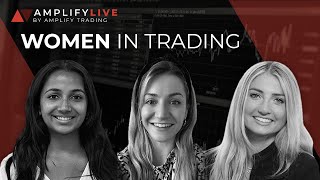
In this informal panel recorded on March 8, 2021, host Anthony Cheung (Speaker A) interviews three female traders associated with Amplify – Katie, a former marketing professional who became a back‑trader after the COVID‑induced redundancy; Fran, who joined Amplify in 2019, spent months refining a strategy and now trades full‑time with his own and prop‑fund capital; and Shreya, a former GB fencing athlete who entered trading through an internship. The conversation explores (1) each participant’s career path and how non‑trading backgrounds transferred to prop trading; (2) the psychological demands of trading, including resilience, discipline, handling losses, and FOMO; (3) the importance of rigorous back‑testing, rule‑based execution, and reducing discretion; (4) gender dynamics in a male‑dominated prop‑trading environment and the value of community support; (5) practical advice for newcomers, such as leveraging the Amplify online curriculum, seeking mentorship, and maintaining a structured routine. The panel underscores that success in prop trading hinges as much on mindset, community, and systematic processes as on technical skill.
Chapters
Okay, so I'm very pleased to hold an informal conversation with 3 current and former traders. And I know it's coming up to International Women's Day on the 8th of March, and so I just wanted to— I know Amplify as a business are talking on the student side to some of those guys who've gone on and secured internships and graduate positions. That I wanted to, because I'm involved on the trading side, Amplify Live, talk to some of the female traders. And I have with me Shreya, Fran, and Katie, all of which are either current or former traders of ours. And they've— they haven't actually, I don't think, met each other before. So in order for them and everyone who watches this to get, get to know who you guys are, what your backgrounds are, It'd be good to just kick us off. So, Katie, why don't you start?
Yeah, sure. So, I'm Katie. I have a background of about 7 years in marketing, so this is completely new to me. I sadly lost my job due to COVID impact, redundancy, back in November and joined the Amplify Programme late January. And, um, completed the course, the Course 1 and 2, and, um, actually managed to become a back trader. So, um, this is completely pushing me to my limits, and I'm still very much in the early stages of learning. But yeah, that's where I am.
And then, uh, Fran, you're, you're the experienced statesman in the room. You've been trading for a while now, and you're doing— you're still trading full-time, right?
Yeah, so I joined Amplify in February 2019 and completed the training there. And then, yeah, eventually it took me a good like 5, 6 months to find that consistency to go full-time, but then managed to do that. And since I've just been playing around with different strategies and different time frames, different markets, and I finally settled now in the past few months with one that I'm fully confident with, and I am trading full-time.
I know, Shreya, you're a, you're a GB athlete.
Yeah.
So I mean, what, what's the, um, first of all, a little bit about what is your sport, and then the level of, you know, are you still doing it now? How's it been with COVID Have you been able to do anything on that side? And then Was there any transferable skill from being an elite athlete to trading? Did it help at all in any way?
Definitely. So I, I started fencing at primary school, so I've done it for as long as I can remember now. And it's a really great sport. And I think one thing about it that's been directly useful for my professional work was the discipline, but also performing under pressure. It's helped me really build my work ethic. Um, and I think so when I started trading, that was the psychology aspect was so interesting to me actually. I didn't understand how big a role that played in kind of navigating when things got a bit tough or your strategies didn't, you know, fall out the way you wanted them to. And I think being able to fall back on that amount of resilience and patience, um, the type of trader I was as well, I think for me to be consistent it meant that I had to fall back on that patience. Um, so I think that that sporting aspect was a real asset for me in that sense. So it was good. But yeah, sadly I haven't been able to fence at all throughout lockdown. Everything's been— everything's stopped. So hopefully it'll pick up again soon.
Yeah, I could see, um, Fran and Katie nodding their heads there when you were talking about psychology. You didn't quite realize it was as important as it is. So is there any comment that you guys could make on that in terms of, I guess, uh, the stresses that you've had? And obviously, Katie, you've just gone into trading live funds. For us, whereas Fran, you've been doing it with your own capital for a period of time now, and you've kind of gone probably through the peaks and the troughs along the way to, like you said, consistency. Is there, is there any kind of like tips or advice or, you know, reflection that you have over the psychological side?
Um, I think that, uh, especially now, I'm sort of— I've just like passed this challenge, um, for an FTMO, um, prop fund basically to trade, so it's now trading like quite a significant amount of someone else's money when you get to that stage and it's not just your own capital you're trading with, there's definitely, you definitely need to have that confidence in your strategy and be able to, you know, still execute it perfectly without kind of floundering or I mean, yeah, you've got to, you've got to be able to take a few losses, sometimes in a row, and like work out ways that you're, you're going to be able to deal with that, like be it maybe trade less markets, take fewer trades. Like, I categorize my, my trade setups as valid, high probability, and very high probability. So maybe if I've taken a couple of losses in a row and I'm feeling slightly uncomfortable, I'll either have the day off or reduce my risk to half, um, or just take the high probability setups for a while. And then just, just to make sure the account's not, you know.
Yeah. So was there a period of time to get to that point of self-awareness to have these kind of checks in place?
Yeah, definitely. And definitely, um, I think another thing is, uh, removing as much discretion as you can from your trading, especially if you are kind of sizing up to trading Bigger Capital is, yeah, the discretionary aspect was huge for me. Like, once I started trading, trying out strategies and sort of forming and refining a strategy where I had these very strict management rules, very strict entry rules, very strict, like, lot sizes, and then not veering from those at all, then, yeah, then that's when it sort of, it became, you know, like automated, just on autopilot, and you're no longer fazed by the losses. Like, they'll happen, but look at the bigger picture. And backtesting as well.
Yeah.
Really helped. Like, 3 years for each strategy.
Yeah, I remember the last time we spoke, you said that you were like deep into backtesting. You had like baggy eyes and you were like—
Yeah, yeah. Yeah, that helped a lot as well, just, just in terms of confidence in the strategy. And then as long as you are taking the— following the same rules, taking the same sort of trades that you would in your back testing, um, then you don't really have anything to worry about as long as you've proven through the back testing that it does work over time. And I usually do about probably about 200 trades per strategy over 3 years, and then, um sort of look at that data, analyze it, kind of look for, look for similarities, differences between like the winners, the losers, and then filter those, filter the losers out, backtest again. And then that would normally— I mean, sometimes it would like double or triple the results. So you end up trading a strategy that's not even one that you sort of set out to start testing because you'll end up have changed it so much by that point that, um, yeah, it really, really helps with the confidence.
And you're unique to the other two because you did all of this training online. So where are you? Where are you at the minute? Where are you in the globe?
I'm in Abu Dhabi at the minute, so I am 4 hours ahead of obviously the, the trading in London hub. Um, so one, it was amazing because I'd put this course to the back of my mind thinking, right, I'll face it when it comes. And I could log on to the sort of Amplify community early and just sort of get a taste of what I was going into. So I wasn't feeling blind. So that really helped me. So yeah, I'd recommend for anyone if they're ever thinking they want to do it to definitely sort of speak to more people and sort of look at that material because that really helped me understand, right, this is the format of how I'm going to be taught and what's going to work. And then, yeah, it gave me the flexibility to go, actually, no, I didn't quite understand that. I want to go back and at my own pace. And I think that was actually a real benefit of learning. I'm usually someone who loves to be in the room with other people, but there was a benefit in the sense that I had everything at my fingertips. I could go back, I could pause things, write it down. Rewind. Um, and yeah, so the videos were amazing help for me, um, in terms of learning that technique and learning what works for me.
That's, uh, so for the others, the other two who you were with me at the time on the trading floor in, in the city, um, one thing that was obviously quite obvious and was still obvious for you, Katie, as well, being online, was that you were in the minority. I mean, I think Fran in particular, I remember— I don't know if you were— maybe there's one other female with you in the group perhaps, or—
I think in that intake it was just me.
Yeah, right, just you out of maybe how many, 10 people?
Yeah, 8 people maybe.
Yeah, whereas Shreya was coming from the internship, which I'd say is much more diverse and split. But when you start carving out the niche of trading particularly prop trading, it does tend to become very male-oriented. So how was that experience for you guys, like, when you were doing it in 2019? Does it make any difference? Is it even in your mind or not?
I think it was— I think it's something that was, um, that I expected, just because— I mean, probably, probably less so now, even a couple of years later, but it's sort of trading has always been seen as a male's kind of industry, so, and the same with, I mean, a lot of the jobs in the city. So yeah, did expect that, but it didn't, I don't think it negatively affected sort of like the experience as much. I mean, it would have, you know, it would have been nicer to have a few women there as well, but I agree.
I, I think I didn't really think about it too much before I went in. I think, um, like Katie said, I was more worried about, oh my gosh, there's so much I don't know. I have no idea what buy and sell is or bullish, all of that was. So I'm more focused on that. And then in my group as well, there's just one other female. I think we naturally gravitated towards each other, but I think very quickly when we all, you know, started to speak more, I think having that community and actually learning from the other males there, a lot of different types of personalities, and I think especially seeing that and being able to take a lot from that was really useful, and it helped me kind of react to my trades a bit more patient or kind of objective and not as emotional as some other members were being. So I think actually that having that split It was definitely noticeable, but it was actually kind of like an asset at that point.
Shreya, just going back to the beginning, you said that you've now secured a job, which is fantastic. So the experience that you've gone through and trading, was that beneficial in any way for the process that you went through to secure that job?
Definitely. I think it gave a very unique perspective with understanding markets, what drives markets, understanding asset classes and their interaction. So it definitely helped me with, you know, the interview process in general because I was able to apply that understanding to that specific industry and understanding more my role and what that will entail. So definitely the kind of the knowledge that you learn through that trading course was extremely beneficial, and that thought process you build as well, that discipline, was really great. So definitely did help.
Okay, and then I, I'm gonna go with two, two more questions because I know you're very busy. But, um, one, I want to, I want to know for each of you, like, what's the main challenge that you've faced with trading in general? Could be, could be anything. Um, what, what's the main thing that you found quite difficult and that's taken a lot of persistency to get over, if you like, or to master?
I think it's either sort of being— when I went into it, I especially like doing it on a trading floor with, you know, with 8 other trainees, 10 other trainees, a lot of whom had been trading for maybe a year or a few years beforehand. And so everybody, everyone has different trade ideas, everyone has different risk appetite strategies. And I was kind of sitting there sort of like trying, like getting really confused because maybe I thought one thing, someone else is saying something else, someone else had a different idea and I was just trying to like consolidate everybody's trade ideas like into sort of one trade. And that caused a lot of confusion. So I think, yeah, I think that the kind of going into Amplify and sort of forgetting every, anything you might have heard about like the industry or anything you might have like watched or read beforehand and just starting from scratch and yeah, just, just get like getting a good base. Also, I think the most difficult part was deciding which aspects you'd want to focus on in your trading, like what kind of, what parts of the strategy are you wanting to focus on? You wanted to be more of a technical trader, a fundamental trader, maybe maybe even look at quant trading, because I think if you mix all of those things too much, or sort of like you're an 80% fundamental trader one day and 80% technical trader one day, then that's going to cause a lot of difficulties in how your strategy plays out. And so yeah, I would— yeah, it was choosing kind of what kind of trader do I want to be, like what style suits me best, and then it's just a case of testing those things out and and just seeing what works for you. So, because everyone's different.
I think mine's kind of similar to that. It was, you learn a lot from your peers and, you know, the experts in this, but it's not only the lessons you learn, but learning when to apply them. And a lot of that stems from understanding your personality and character and how you behave to risk and stress. And so that process of understanding my psychology and taking what I'm learning and, and most importantly, having the confidence to execute that when I need to was, was a really big thing for me.
Yeah, I remember, I mean, obviously Sam, Sam North was the main mentor that was dealing with you, you guys a lot. And I remember he used to talk, Shreya, about you a lot. I mean, if you, if you go back to the summer internship, you're pretty much with us for a year almost. And, um, he always used to say about your ability to just hold trades. And that's obviously one of the biggest things that people find a difficulty with, which is like relying on the confidence that their strategy is, is solid, they've done the work and the analysis, and then just playing it out without tempering with it too, or tampering with it too much. And you're always excellent at that. And whether or not that's, uh, as you described, part of your sporting background or not. Perhaps it might be because we have had other people from that similar type of background before which have shown similar characteristics. That's always quite, quite interesting. But great stuff. And then, um, Katie, any, any, anything you'd want to add on that?
It's pretty similar to, um, what we've said of obviously learning your sort of style and your edge, but I would say the biggest thing is probably FOMO, um, because you can see everyone trading or they're posting, you know, their ideas. And that's what this whole period has taught me, is actually you need to stick with your principles. And yeah, it's that self-control of, I'm not just gonna rush into a trade. And I even had it before I was on the course in terms of, oh, I'm a bit jealous that that person's put that trade on. I want to know more, but I actually don't know how to do it. So I think, yeah, that's a real, um, factor that you overcome, I guess, in general. And lockdown's probably taught us all to not feel FOMO because there's nothing going on anyway. But, um, in terms of trading, that is the biggest thing, is that self-control and sticking with your principles.
Cool. Well, I mean, one of the things that I, I'll encourage you guys to do is definitely exchange Zoom details, I guess. It's 2021. So, um, but it's definitely something we try to encourage is that community. And obviously we house that now with Amplify Live. But I think that's a really important thing to have, uh, is other people around you to, you know, trading. I've always, in conversations with people, has found quite a tricky thing because you'll talk to other people who are not in this profession. It's often— it can often be a difficult thing to talk to people about because you're talking about money and you're talking about— you're sat there, there's people like the NHS, for example, doing a phenomenal job. And here we are talking about the yield curve and inflation and just clicking buttons. But I think a community is definitely important. And it's been fantastic with you guys. I know I've had individual chats as well along the way about careers stuff. And, you know, that's a, that's a part which I'm, I'm quite, um, proud of, is that we want to get involved beyond trading. Because I think being a good trader is more than just technical ability, you know. It's all about the psychology and the having a framework, a supportive network around you. Um, so yeah, it's just really pleasing to see what you guys have done.
I think— sorry to interrupt you— I think that's what's helped with you guys as well, is you're able to see our skill sets. You know, I'm coming from marketing, right? Where do I fit in in the finance industry, and what's the best next step? So I think that's really helped me in terms of that guidance, especially in this period where we're applying for jobs. And keeping on track and keeping that routine and keeping motivated. So yeah, I would say that's been really, really helpful. So thanks for your help.
Yeah, cool. All right, well, look, well, let's wrap it up there. I mean, thank you very much for giving up your time. I know it's, uh, I just, you know, I'm so proud of what we do at Amplify, to meet, have the access and privilege to meet so many different types of people. And definitely for my career, being very focused on the prop trading world, it has always been very male-dominated. But it's just great to see you guys getting stuck in and, um, and performing, you know, and, and being based and judged on your performance, as it should be.
So I think that's one thing I'm really grateful— sorry, um, for, you know, through this process is you meet so many different people. And I think having done the internship, done the program, and just generally the community online as well, you really connect with people that are— that have diverse perspectives and thoughts and approaches to their work. And so Amplify really provides those routes to, to grow and, you know, improve your career development. So I think that's something I've been really very grateful for. So thank you.
More from Anthony


Inside the Biggest Banking Stories You Need to Know This Week (Anthropic, Diageo, Private Credit)


Inside the Biggest M&A Deals You Need to Know This Week (UniCredit, GameStop, eBay, Eli Lilly)







AI Breakthrough or Hype? Anthropic’s Claude Mythos, Tim Cook Steps Down & LIV Golf Collapse