Working At An Investment Bank: Perception vs The Reality (Part 1)
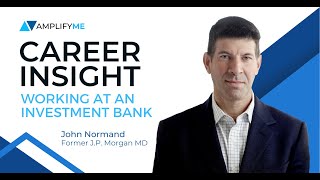
This content was created by Anthony Cheung. This content was uploaded by Anthony Cheung. This is a YouTube interview episode titled "Working At An Investment Bank: Perception vs The Reality (Part 1)" (created 2023-04-19). It's a podcast-style conversation hosted by Anthony Cheung with a guest referred to as John — a senior finance professional who spent ~25 years in sell-side research at JPMorgan (covering FX, rates, commodities and cross-asset strategy), relocated to London, studied at LSE, and is transitioning toward the buy-side. The discussion covers John's background (growing up in Louisiana, economics/public policy studies, entry into Wall Street), the reality versus perception of finance (day-to-day job content, technical demands, specialization, culture, diversity and ethics), memorable positives and negatives from his career (including public market-call failures such as the euro-area crisis), the role of mentors and role models, and practical advice for students and early-career candidates. It is part 1 of a three-part mini-series and is aimed at listeners considering careers in finance.
Chapters
Okay, hi John, and welcome to the first episode of this 3-part mini series. And I thought perhaps, given this is episode 1, you could just give us a, a brief history of time and walk us back to really your, your high school days. Before then, we start to delve into some of the major topics today, which I want to talk about really 2 things: the reality versus the perception of working in finance, because I know the two can be somewhat, um, a large difference in reality. And then your best and worst experiences of working in finance, because I think it's going to be a really good way for the listeners to get to know you as an individual while we embark down this three-part journey. But also, I'm sure there'll be some invaluable advice as well for all the community. So perhaps a little bit about you and your background first, John.
Yeah, sure. Thank you, Anthony, and thank you everyone who's tuning in for the, for the podcast. I always like talking to students, people who are at that formative period in their life when they're about what they should study and what career they should go towards, because I think it's important to realize that a lot of the paths that you end up on are very different from the ones you might envision when you're in school. And that was certainly my case. I grew up in Louisiana in a town of 5,000 people. We had a bank, but it was not an investment bank. A bank was a place where you took a load of cash to keep it safe in your savings account. It was a place where you took bunch of spare coins and traded them in for actual bills. I knew nothing at all about banking as we know it in the City of London or on Wall Street until I was probably about 25. That meant I went through my entire undergraduate program, which was in economics. I went through my first job, which was in public policy consulting. I went through the first year of my first master's degree in the States without any contact with the banking world and without really knowing anyone who had ever worked in banking. So then I went on to a 25-year career career at JP Morgan doing research, running research for foreign exchange, for commodities, for interest rates, and then for cross-asset strategy. So the kind of stuff that was going through my head when I was the age of people on this podcast was vastly different from what I ended up doing, you know, with most of my life. When I was in high school, I think because I grew up in Louisiana, you know, the idea of being a professional meant you were a doctor or a lawyer. Those were kind of the role models, and that was kind of the direction I was head again. And for, I guess, a good part of my undergraduate career, even though I was studying economics, the idea was that that was something that was just going to position me eventually to go to law school. And then from law school, I was probably going to work in some field of public policy in Washington, DC, where I went to undergrad at Georgetown. I thought about working for the US Trade Representative or the State Department or the World Bank or the IMF. These are the kind of things that were in kind of like my conception of a great job and a great life. And it wasn't until I went to graduate school the first time, I went to the public policy school at Princeton and I was studying economics within that track, that the Mexican peso crisis broke out in 1994. And that was the first time I realized that there was this nexus between economics and public policy and financial markets. And I thought, you know, I still want to go to DC and have a job working for the US Trade Rep or the White House or the State Department or whoever, but I wouldn't mind spending a couple of years learning about finance properly, especially as it interacts and is kind of shaped by economic policy decisions and policy mistakes. So I applied for a job or several jobs on Wall Street. I got one with a money manager, UBS Asset Management, and I was a global fixed income strategist there for about a year and a half covering all the bond markets outside the US, emerging markets and developing markets. It was a great job, but I was kind of the only one there doing that and everyone else in the shop was covering domestic US fixed income markets. So when I got a call from a former professor of mine at Princeton to join what was then known as Chase Investment Bank and be a currency strategist, I thought, this is great. You know, this is the middle of the Asian crisis. I'm going to join currency research. I'll work with someone who used to be my mentor and my professor at Princeton. So I'm going. And from there, Chase ended up buying JPMorgan. I ended up at JPMorgan. I relocated to London. I had a variety of kind of senior jobs running research for various businesses. And that was essentially the fullness of my sell-side career. I'm in the process of transitioning to the buy-side now after stopping at LSE and doing a degree in philosophy. But that's kind of the backstory. And the takeaway there is, you know, a lot of things are going to happen in your life and over your career. Nothing is exactly kind of predetermined by what you're studying right now. You've got to take everything incrementally, one year or every couple of years at a time.
It's so interesting because talking to people like yourselves who've gone through the career up to this point, experienced, there's not many of them actually who had this really predetermined idea from youth and have just followed it all the way through. It's nearly always that there's been some opportunity, some life situation, something which has meant that they've, they've ended up taking a slightly different route in that sense.
Yeah, the, the term for the other people use it, which is kind of an uncharitable term, is, is luck. Meaning things which has happened to you that are way beyond your control. And the degree to which, you know, you're able to, to capitalize that is a big determinant of whether or not you realize, you know, success or failure or kind of something in between. But there are a lot of things that you just can't control for. So you probably shouldn't beat yourself up too much that you haven't gotten on X or Y track by now yet. You know, that, that opportunity just hasn't presented itself. You can only kind of control the things that are within your remit— what you study, how hard you work, how much you apply yourself in a certain situation. But the opportunities, you know, unfortunately can be quite random.
Well, look, I'm lucky because I've caught you where you're not at JPMorgan at the moment, even though you were there for near on 25 years. So the reason why I say that is because I think one of the hardest things for students to get access to, for one, is a kind of direct line, which, which is why I love the podcast format. It's quite intimate, but direct line to really hear from you like a super senior person, but then also now that there's not so much constraint on you in terms of what you can and can't say, to get a bit of an insight really as to what is life actually like working at a major financial institution. So this idea then of the reality versus the perception, like what— when I just say that phrase, like, what's your take and where do you want to start with that? Because I know it's a big question.
So when you say perception, I think, how do people form their perceptions? They form their perceptions perhaps through contact with a handful of individuals they might encounter. And if they don't encounter people who work in the city or Wall Street, they formulate the perceptions based on things they see on television, like the show Industry or movies like Wolf of Wall Street. And I guess what I want to explain to people is what I think the common perceptions are of finance versus the reality, and I'll break it down into kind of two subcomponents. One is, what is the content of a job in finance? The reality versus the perception. And what's the culture of a finance job? The reality versus the perception. And how much of that is negative and justified? How much of it is positive and not justified? And kind of where is kind of the truth value in all of that? And if I start first with kind of like the content of a job in finance, I'm going to speak from the perspective of someone who's only ever worked in markets. So I did research, as I said, for 25 years. I still do research, and research is one of kind of the three pillars of a markets business. A markets business in an investment bank has sales, it has trading, and it has research. The markets business is one part of an investment bank. The other part of the investment bank is the capital raising side through debt and equity markets and the lending side. And everything I'm describing on the investment bank side, the banking and the markets, is known as the sell side. Its counterparty is the buy side, which is the investment management side encompassing hedge funds, asset managers, and asset owners. So everything I'm saying is about, you know, my research experience, but I think it's roughly representative of what goes on in markets. And I know a lot of your audience is sort of aiming to be traders. And I think it's also reasonably representative of life on the buy side, which is the complement to the markets business in investment banking. So if I think about what the content of those jobs is, I believe the perception is that these are jobs that are intellectually demanding and incredibly stimulating. I think people think of the content of the work as being incredibly dynamic, meaning the kinds of challenges you face today are not necessarily the challenges that you'll face tomorrow, even though it's all quite stimulating. They think of the work as probably highly technical, very specialized, and very quantitative. And if we kind of stick with those features, I think those are pretty much bang on, meaning I think the perception of the work as being stimulating and demanding in a good way, kind of intellectually, was exactly my experience. Rates, because I covered markets and I was an analyst, I had to make the call on what currencies, rates, commodities, equities would do in response to how the economy was going to behave and what macroeconomic shocks would hit and what monetary and fiscal policy events would occur. And because each of those things I describe are quite unpredictable and unstable in themselves, the challenge every day was unique in a slightly different way. It wasn't that day 2 was different from day 1, 180 degrees, but there was also always some slight evolution of the macroeconomic environment that I would have to respond to as an analyst. And so if I have to think, how many times was I bored in 24 years of doing investment research? I would say I could count them on less than 2 hands. I mean, not many times. And those times when I was bored line up pretty nicely with lows in volatility in markets. I was raised in a crisis environment. In terms of my market experience. I started during the Asian crisis. I like crises, I like financial crises, I like recessions as an analyst. And so low vol periods were kind of boring for me. Thankfully those didn't come very often, but that's why I would always characterize that experience as being incredibly challenging and stimulating. In terms of the technical side of things, I know we're going to have a discussion in part 3 about people coming into finance from non-traditional backgrounds. And I'm not going to lie to you, like if you're not, somewhat comfortable with numbers, if you don't like doing some calculations, you should kind of question why you're looking at finance in the first place. It doesn't mean you can't have a degree in philosophy or literature or psychology or something else and do very well in finance. But you have to kind of wonder, you know, if you really like that other stuff so much, do you like that plus numbers? You're fine. Do you like that stuff and hate numbers? Maybe you're not fine. And the last part of it kind of has to do with specialization. I think one of the good and bad features of finance is that people are given roles that are quite narrowly circumscribed. You know, you're a salesperson covering this or selling this product. You're a trader who has this book. You're an analyst who covers the sector. And that's what you're supposed to do day in, day out. And to the extent that you do it 12 hours a day, 5 days a week for 5 years, 10 years, you get better and better at it and you're compensated for that expertise. But that can be quite narrow. That part of it, I think, is thankfully changing. I think because markets are more interconnected, Banks tend to look for people with a lot of these kind of crossover skills. I think there are certain parts of finance that are becoming quite dominant right now that are inherently kind of cross-domain. If you think about data scientists who are very much in demand, those are basically statisticians who are also computer scientists. If you think about climate investing, those are people who are kind of climate scientists but also economists. So that, that bit of it's changing. The reality perception difference. I think is a little more problematic on the cultural side. Because if you ask people what their perception of the culture of the finance environment is, I think they're going to use words that are generally not flattering. They're going to use words like aggressive, competitive, homogenous, meaning not diverse, and probably unethical. And if I talk about two of those issues, diversity and ethics, these are ones that I think often are a turnoff in terms of the perception and how young people kind of feel like they will be welcome or comfortable in a finance environment. So to be honest about it, I think if you took a snapshot of the finance industry and you didn't sort of control for whether we were looking at the buy side or the sell side, or whether we were looking at the analyst associate population or the MD population, you'd say there's nothing about that demographic in aggregate which is representative of the country, whether your country is America or your country is the UK. But if you get a little more granular and you kind of recognize there's been a little more of a, like a moral evolution in people's thinking about barriers to entry into finance and how the finance industry should welcome kind of a broader church, you know, for its own, you know, quality of the workforce. If you took a snapshot of the analyst associate population now, definitely at big investment banks, and I think at a number of sell buy-side firms that have formal recruitment programs, you would probably see that they're 50/50 men and women. And you'd probably see that the racial composition is also pretty representative of the underlying population of the, of the country. So, you know, if you, if you judge finance in aggregate, you'd probably say not very diverse. If you look at where it's come and particularly what it's doing around analyst associate populations, you'd see, you'd say that's great. The ethical side of it, I think, is still very problematic for a lot of young people. And I believe that's partly because the ethical failings in finance are recurring. I think when the history is written on Silicon Valley Bank, there'll be a lot of malfeasance which is unearthed and, and publicized. And you don't even have to write the history of Credit Suisse. I mean, the whole sad tale of Credit Suisse for the past 10 years has been constructing this kind of monument to management malfeasance. Every year they paid a fine for the past decade. And the value of those fines exceeded the market cap of the company at one point a month ago. It's just the kind of thing that makes you wonder if there's been any learnings since Lehman and Bear Stearns. And And this is a point where I would really push back on the perception that finance is somehow inherently unethical. I think because I'm older and because I have friends who have worked in other domains, I can tell you there's some pretty unsavory stuff that goes on in fields like academia, which people think of as being an example of virtue or an example of upstanding sort of individuals. There's an awful lot of malfeasance in law. It exists in medicine. It exists in technology. Exists in media. So I would be— in fact, I will never say that there are more kind of bad actors in finance than other sectors. I think there are bad actors in lots of places. What I will say is that the consequence of unethical behavior is much higher in finance than it is in other sectors because banks, many of them, are systemically important. So someone that does the bad thing creates potentially more harm, more externalities for the rest of society than if that same bad person ran amok at running a toy shop or a cement factory or the department at a certain university. So it's right to kind of hold finance people, I think, to higher standards than in other sectors because there is a greater consequence to wrongdoing. But I think it's incorrect to say that finance inherently attracts more of the bad actors than we see in other sectors.
Yeah, no, I think it's a really timely piece to talk about that because given exactly as you just said, this latest banking episode that we've just gone through, for a lot of young people, I guess it's the first one that they've seen, right? Um, well, that they've been more interacting with financial press and news and consuming of that information. So yeah, I think it's going to be good for them to see that because if you didn't know any different, like you said, and you were looking at certain financial institutions, you, you might have some questions. But I think it's a very valid point thinking more broadly in, in other sectors is not too dissimilar in that way. But perhaps then to link into, um, the next part then, talking about your best and worst experience. Um, so I'm quite interested to know about the worst. You definitely weren't bored then. We've determined that it's, uh, intellectually stimulating, and I can totally, um, you know, sympathize with that as well, given that I worked in kind of macro on a, on a desk covering real-time stuff. So that for sure. But perhaps then personally, what, what were some of the things that really stick there as a memory out, out of your lengthy career of being a memorable positive and one maybe that was a negative but a learning lesson all the same?
So in terms of positives, like I said, like I came from kind of nothing in terms of my background. I was never supposed to be in banking, I was never supposed to be an MD, like none of this stuff was ever kind of on, on in the scope of possibilities for me. So everything was kind good and everything was gravy, whether it was the compensation, the professional opportunities I had, the promotions, the awards, whatever it was, it was all so much more than I ever would've wanted. So for me, the experience that was more meaningful to me, and I only recognized this when I moved on from sell-side research and I kind of wrote a final note to clients summarizing my experiences and my learnings, the thing I most valued was the simple fact that I learned so much all the time. And this is because, you know, I'm— I've got kind of an academic disposition in some ways with some commercial leanings, obviously. But the point is, I like figuring things out. And so the idea of getting paid to figure things out and talk to people about the things I figured out was a really, really great experience. And it's why I'm still committed to finance even after 25 years at one place and even after doing a philosophy degree. I still feel like if you're hardwired to like to solve problems and problems that are really at the intersection of economics and, and politics, like markets is still the place to be. And you just have to choose whether you want that market experience to be on the sell side or the, or the buy side. But conversely, you know, kind of linking that to worst experiences, because I am an analyst and because the role of an analyst is a quite public role, meaning you write things, it goes out to tens of thousands of clients, you get on TV and you talk about it, you go to conferences and talk about it. It's really important to be correct and be correct for the right reasons. Because when you're incorrect, you feel like an idiot and you feel useless and there's a paper trail of it and there's a video record of it. And that for me was incredibly hard. And there were moments where I failed miserably publicly in terms of market calls. So when the EMU crisis first broke out, the sovereign debt crisis in the euro area in December of 2009, I very publicly said, look, I think this is overblown and I think this will be resolved relatively quickly in a few months. And then it went on to last for like 2.5 years. So that was a very public failure. And what I learned from that is a few things. Number one is, you know, in finance, I think you're probably going to fail a lot more than in other domains precisely because of the content of the role. I mean, you're trying to wrestle with something inherently unstable, which is the economy and policy and exogenous shocks. And how all that translates into markets. And if you think you're going to get that right 100% of the time, you're dead wrong. If you think you're going to get it right 75% of the time, you're dead wrong. I'd say if you're getting it right 60% of the time, that's really good. But that means 40% of the time you're going to feel like an idiot. And if you're a researcher, you're going to feel like an idiot publicly 40% of the time. And so that's important to kind of understand. You know, the hurdle rate is really high to succeed. But what I learned from that failure is that, that, you know, when you are getting it wrong, you need to be introspective enough and self-aware enough to self-diagnose and to figure out, like, what did you miss? Did you— was your framework inappropriate? Was your framework incomplete? Did you look at, you know, data that wasn't so relevant? Should you have focused on this instead? And what I learned is that, you know, I really needed to always understand where leverage was in an economy. Is it in household sector, corporate sector, banking sector, government sector? Is it in the investor base? And if it's in the investor base, where part of the investor base was. And that was a really important learning that I took to every subsequent business cycle and financial crisis. I made sure I knew where all the bodies were buried so that when the shock hit, I could figure that that was going to be the hotspot. And I haven't always anticipated correctly all the shocks, but when they hit, I was pretty comfortable saying, look, this is going to be the problem and that's not going to be the problem. So the takeaway there is you're going to fail, you're gonna fail a lot more than a lot of other things you could do in your life. But you gotta teach yourself, you know, how to be better, because you might not have someone tapping you on the shoulder and saying, this is what you did wrong. I mean, if you're lucky, you have that mentor or that manager to point the way, but a lot of times you just got to figure this out on your own.
And is that something— I say is something I've heard from many other people, is about that importance of a role model, like a mentor that can help help you navigate these peaks and troughs generally of a, of a career in that sense? Is that someone— did you have that someone? You said at the beginning you had that Princeton professor who— yes, kind of called you over to chase. Is that a relationship that still exists? I'm sure it does.
It is. In fact, she wrote, you know, my recommendation 25 years later to go to LSE and do my second master's degree. So that's a relationship that I still have. So I would distinguish between kind of formal mentors and informal mentors. A formal mentor, I think, is someone who is designated for you by someone else or someone whom you choose. And it's recognized that you will have, you know, some degree of contact with them at— with some regularity. And, and banks and many financial institutions have these formal programs, you know, specifically to kind of nurture talent and to retain good people. And that's all great if you have one of those people, um, but that's not the only way to sort of get feedback on your work and, and, and to get guidance on your career. You can, you can have role models, which I guess role model I think is the better term rather than mentor, because you can identify people whose behaviors, whose work styles, whose particular methods are very useful to you as a salesperson, as a trader, as a researcher in terms of modeling and kind of developing your own craft and your own expertise. So they don't have to know who you are. You never have to introduce yourself to them. But if they are visible, you can hopefully identify like what, what, what traits they have, what, uh, sort of ways of working, or what frameworks they use analytically are, are useful and transferable to you, and you could try to mimic those. And so I had, I guess, semi-formal mentors, meaning my managers were always people who I felt very comfortable asking for guidance from, even though, you know, they were called manager, they weren't called mentor. And there were other people who, you know, aren't aware of it, but they always kind of set the standard for me. Analytically, and I, I sort of learned from them just by reading their stuff and, and listening to them. And, you know, those relationships are completely anonymous to them, but they were very useful to me.
Yeah. My final question, kind of just going, linking back to the beginning, is about this reality and perception. You talked quite a lot about where you've come from, the type of town and environment. What do those people— like, you must still have friends from home, from high school maybe What do they think of you now, and what's their perception of you, and how have you managed that? Because I know sometimes if you're going through this, this kind of social mobility process almost, and you get to interact with lots of different people and members of society, like, has that been something you've been conscious of when you— particularly because you're heading home right next week for—
okay, the reason I laugh is because like I'm from Louisiana. You can't stand on ceremony. You can't have airs in a place like that. So, you know, you're— especially when some of these things just don't register as experiences or professions in other places. Like, this isn't what people do. And so if I say I'm an investment strategist, that isn't something that people can kind of connect with. So it's not kind of the basis for my interaction with people back home for the most part, because that's just not the world of the South. And I think that's an important lesson. Like, the finance world is a particular ecosystem. And the more time you spend in finance working, the more time you will spend with finance people socially. And that's, you know, a sliver of society. And that's a particular sliver of society where there's a big gap in terms of relational equality with lots of other parts of society and parts of the country. And that's the case whether you live in the UK or the US. So you need to and this is difficult— you need to retain, you know, a sense of just self-awareness that you're incredibly lucky to have gotten this opportunity, that, that of course you should work hard and, and monetize it to the full extent, you know, you deserve it. But, um, that ecosystem is incredibly detached from, from other parts of, of society. It will lead to all kinds of distance, you know, even within your friendship circle, your family, other kind of domains that are important to you. And so you, you really don't want to think of yourself outside of those circles as being nearly as important as you feel within that circle. Like, that's a very kind of pernicious and I think kind of toxic mindset to have.
Yeah, well, look, that, that really leads us nicely into the next episode, which will air, which, to give people a bit of a flavor, we're going to talk about setting goals and managing expectations for success, and then company quality versus job quality, and work life versus personal life. And then we'll also go on to have an episode where we talk a little bit about— you mentioned non-traditional backgrounds and about how they could have their interaction with finance in various different roles, the value of those newer credentials, talking a lot more about quantitative finance and things of that nature. And then common attributes of successful analysts and associates. And, you know, you talked about kind of analyst associates and then the, the MDs. I'll be really interested to, to understand then, with your looking back in hindsight, what have been some of the, the memorable things or qualities, characteristics that you've seen. So they're all things we'll, we'll dive into. But remember to um, follow and subscribe, put on notifications to make sure you don't miss the next episodes with John. Two more still to come. But John, pleasure, and thank you very much for joining me today.
Great, thank you for the invitation.
More from Anthony


Inside the Biggest Banking Stories You Need to Know This Week (Anthropic, Diageo, Private Credit)


Inside the Biggest M&A Deals You Need to Know This Week (UniCredit, GameStop, eBay, Eli Lilly)







AI Breakthrough or Hype? Anthropic’s Claude Mythos, Tim Cook Steps Down & LIV Golf Collapse