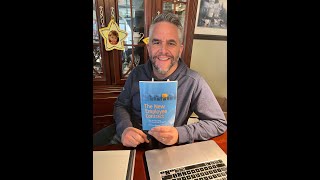
Short video by Anthony Onesto (excerpt from his book The New Employee Contract) explaining Insight 6 from Chapter 6, titled "Bodies in Seats." Onesto contrasts early-20th-century Taylorism (single-task, time-clocked roles) with modern multi-tasking roles and discusses how automation (Amazon, Walmart, Uber examples) is gradually replacing routine tasks. He urges employers to rethink workforce design and plan retraining/repurposing for displaced workers.
Chapters
Everyone, it's Anthony Honesto and this is insight number six from chapter six of my new book, the New Employee how to Find, Keep, Elevate, Gen Z Talent out now where all books are sold, Amazon, Barnes and Nobles, etc. This chapter in chapter 6 is called Bodies in Seats. And what I talk about in this chapter are two main things. One is Taylorism. The way organizations were structured at the turn of the century, that worked really well in the manufacturing sector, right? People had one job is a part of a line of other jobs. That has completely changed, right? You know, there's still elements of that workforce in our current jobs, but it has completely changed, right? The idea of just doing one single task in a line of tasks, it's so much more different now when we think about jobs and roles. And that's across the board, whether you're in sales or engineering. So the idea of moving away from Taylorism and starting to think about how you construct your workforce in a very different way and get rid of those expectations, right? The idea of someone punching in from a knife to five, right. Even that construct is very Taylorism focused. And we also, at least it worked then, but it's not going to work now and start to rethink about that. And the second piece is a lot to do with Taylorism also is the idea of automation, right. In the book I talk about Amazon, Walmart, Uber, Travis was famously quoted as saying that the most expensive part of Uber is the rider or the driver, excuse me, the rider. And that he wanted to eliminate the driver with driverless cars and automation, right? Same thing with Amazon. And we're seeing an uptick in activity around unionization. Especially here where I live on Staten island was one of the first Amazon warehouses to unionize. And the answer to the unionization is automation, right? Robots watching and seeing how folks are operating in the warehouse and then replacing those folks with robots. Walmart, Amazon is a little more back end because it's a warehouse, but Walmart, you see the robot doing inventory checks going down the aisle, right? So these are tasks that we used to be done by human beings are now being automated. And that's going to happen. We're going to see it and we see it. Automation doesn't happen overnight. Your job doesn't get eliminated overnight. It's a death by a thousand cuts, if you will. And automation slowly creeps in. And we see it even with our tools. Where we used to fax, we're now emailing, where we used to email, we're now slacking. So all this automation is going to happen. Companies need to think about, okay, what is the impact of that automation to my workforce? How do I retrain folks? How do I repurpose folks? And even though I do talk about Amazon and their automation, they are doing some interesting things, retraining some of their workers around healthcare. Right. Something a business that Amazon is not in right now. I think it's an idea for them to get into that business and they're preparing for it. So think about ways that you can automate roles, but also think about how you're impacting the human that's being automated. So that is my insight. Chapter six, Bodies and Seats, from my new book, the New Employee Contract how to Find, Keep and Elevate Gen Z Talent. We'll talk soon.