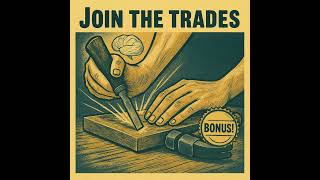
In this solo, podcast‑style bonus episode, Antonio Matta argues that gainful employment—especially in the skilled trades—can be a powerful catalyst for lasting recovery from addiction and trauma. He weaves together personal anecdotes from online recovery forums, research findings, and labor market data to show how work builds identity, self‑efficacy, and community belonging. Matta highlights the evidence‑based Individual Placement and Support (IPS) model, which helps about 60% of participants secure competitive jobs, and explains how apprenticeships provide earn‑while‑you‑learn pathways with over 90% retention. He connects the construction labor shortage (≈ 439,000 workers) and the U.S. housing shortfall (≈ 3.8 million homes) to a social opportunity: training people in recovery to fill these gaps while gaining stable income and purpose. The episode also outlines workplace‑supported recovery practices (confidential EAPs, supervisor training, flexible scheduling) and the critical role of stable housing. Finally, Matta offers three concrete steps for listeners early in recovery—a one‑hour “win,” exploring apprenticeships, and building a peer‑mentor crew—before closing with a call to share the episode and invite sponsor support. The overall message is that with the right combination of employment, housing, peer connection, and self‑efficacy, recovery becomes a craft rather than a cliffhanger.
Chapters
Recovery is possible. Recovery is possible. Recovery is possible. Recovery is possible. Recovery is possible. Recovery Dialogues and Sober Stories. Hey everyone, Antonio here. On this show, we say recovery isn't a finish line. It's a lived process of becoming. Last week's anonymous sponsor, the journeyman whose story we featured, followed up with me and said, excited, "You need to hear this interview." In it, the conversation turned to the idea of giving people who faced addiction or trauma a real opportunity in industries that urgently need workers. Like construction. It was framed as a way to tackle a labor shortage and help people rebuild their lives. That raised a bigger, more lasting question for me: who gets to build, and how can building help us heal? Today's bonus episode is inspired by that question and by our sponsor, who continues to put his paycheck where our purpose is on this show. And before we get into the research, I've been listening in on forums and subreddits where people talked frankly about work, recovery, and purpose. One man, newly in healing from opiate misuse, shared that even though he's working 54 hours a week, his life still feels empty—proof that paychecks alone can't fill the gap that meaning and connection do. Another person offered practical advice to explore entry-level office or admin roles as a manageable re-entry to the workforce. And a small business owner who's also in recovery talked about hiring people early in their recovery journey, admitting it can be challenging but also deeply rewarding. These conversations echo the two truths I want to keep front and center today. First, that gainful employment does more than cover bills; it anchors identity, bolsters mental health, and fosters belonging. And second, that the skilled trades deserve a rightful place in solving our labor and housing crises, while giving people in recovery a chance to rebuild not just their lives, but their communities. This also lines up with an evidence-based model called Individual Placement and Support, or IPS. It's designed to integrate job placement with mental health care, and it consistently helps about 60% of participants land meaningful, competitive work, compared to roughly 24% without that support. It's proof that when you combine practical opportunity with sustained, personalized support, the odds of a lasting recovery and stable livelihood grow dramatically. Here's what the research tells us: Employment is strongly tied to better substance use outcomes. Reviews of employment interventions for people with substance use disorders repeatedly show positive links between working Engagement and Recovery Markers. Self-efficacy, the "I can do hard things" muscle, predicts recovery. Decades of evidence from addiction science to smoking cessation show that higher abstinence self-efficacy predicts lower relapse risk and better outcomes. The trades can grow that muscle because they deliver frequent, visible mastery—a straight cut, A safe circuit, a leak-free joint. Peer and community support amplify gains. Peer recovery support services, people with lived experience walking alongside you, are increasingly embedded across care settings and correlate with improved engagement and recovery pathways. Job sites and apprenticeship cohorts naturally add this "crew effect." The trades are not just jobs. They're structured skill paths with built-in mentorship. Apprenticeships are earn while you learn. Department of Labor data shows registered apprenticeships start as jobs from day one with strong employment retention after completion, about 90% plus, and competitive earnings upon completion. That's stability people can build on. Hands-on work can help with mood and anxiety. Randomized and controlled studies of craft-based and nature-based activities like clay work and horticulture show meaningful reductions in depression and stress. Tradeswork shares many of the same ingredients: bilateral movement, tactile focus, clear feedback, and visible progress. Zooming out, there's a practical opening here. We have a construction labor gap. U.S. builders need to attract roughly 439,000 additional workers this year to meet demand. That's not politics, that's a pipeline problem. We also have a housing shortfall. Analyses estimate the millions of homes short, often cited around 3.8 million, even before accounting for future demand. More trained builders aren't just good for paychecks, it's part of easing the housing crunch. For someone in recovery, stepping into that gap can mean steady income, structure, and a role that clearly matters, all of which strengthen recovery capital. Work alone isn't the magic wand. The how matters. Workplace-Supported Recovery. Employers can integrate recovery-smart practices: confidential EAP counseling, supervisor training, flexibility for therapy or medication schedules, and clear safety communication. Reviews of workplace-supported recovery highlight improved abstinence, attendance, and job retention after treatment. Housing supports recovery too. When safe, stable housing is paired with services, outcomes improve across substance use, retention in care, and cost-effectiveness, especially in recovery housing models. If you're early in recovery, don't skip the roof part of your plan. If your nervous system lights up at the thought of honest physical work, here are 3 small, specific steps. 1. Try a 1-hour win. Fix a faucet with a friend, patch drywall in a community space, or volunteer with a local build crew. 1. Tangible job start to finish. Bank the mastery. 2. Explore apprenticeships. Visit apprenticeship.gov or your local union hall to ask about pre-apprenticeships in carpentry, electrical, HVAC, or plumbing. Earn while you learn can be the bridge from instability to momentum. 3. Build your crew. Add 1 peer supporter and 1 mentor to your weekly rhythm. Recovery gains compound when purpose and people show up together. The public debate may ask, "Who will build?" Our focus is humbler and more human. How do we set people up so they can build? Lives, homes, communities. With the right supports—employment, housing, peer connection, and self-efficacy—recovery stops being a cliffhanger and becomes a craft. As our show's philosophy reminds us, recovery is a person reaching their fullest potential through deliberate life changes that elevate the quality of their existence. Let's keep making those changes board by board. If this episode resonates, share it with someone who needs a fresh path. And if your company wants to sponsor a recovery-friendly skill path story this season, Reach out. We'll put your support to work where it counts. Recovery is possible. Recovery is possible. Recovery is possible. Recovery is possible. Recovery is possible. Recovery Dialogues and Sober Stories.