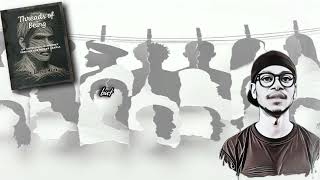
In this reflective monologue, the speaker explores the profound difficulty of turning one’s inner dreams and authentic self into lived reality. He describes how individuals constantly adapt to a shifting world, adopting masks, personas, and behaviors to meet external expectations, while yearning to express their genuine thoughts, feelings, and ambitions. The talk examines how personal ideals are shaped by early‑life conditioning, societal pressures, cultural norms, laws, religion, education, and the influence of celebrity idols. It contrasts bold, unfiltered personalities with those who feel compelled to wear multiple masks for different social circles, questioning whether true authenticity is ever attainable. The speaker interrogates the paradox of freedom versus conformity, suggesting that both external structures and internal mental constraints bind us, leaving the question of “who we really are” unresolved and perhaps unanswerable.
Chapters
There comes a time when people must bring their dreams into reality. It becomes almost unbearable to live in a world that contradicts or opposes what they truly want from life. And from themselves. Yet, breaking away from the dream, or rather transforming it into reality, often proves elusive; it remains a fantasy. Who among us can confidently say they have manifested their true self? We are frequently forced to adapt to a perpetually changing world, adjusting our attitudes to align with those of others. How can one transcend the passivity of the mental plane to bring their desires into the tangible world? Can we speak things into existence, And if so, are some things better left unsaid? The mind is both a ruler and a prisoner of the person we wish to be. It seems impossible to embody that inner self in everyday life. We long to reveal our true selves, our genuine feelings, thoughts, and ambitions to others, but the voice of our essence is constantly stifled. There is so much against us. Each day presents a set of circumstances, setbacks, or opportunities. We encounter people who challenge us with choices, often made spontaneously, to be kind or disagreeable, generous or selfish, understanding or intolerant. Early in life, we develop a personality, a visage, a mask of tragedy or comedy, a coat of armor assembled piece by piece to face the world's challenges. Our personality defines how we are perceived and how we carry ourselves. We see tangible things, but our motives, intentions, feelings, and thoughts are unseen. Each of us has moments when we think, "I want that," "I would have done that differently," or "I wish they understood me." We diet and exercise regularly, often not for health, but to look a certain way, to be more attractive, or to avoid comments about our size from those whose opinions we claim not to care about, but secretly hope will be favorable. This illustrates acting on the ideal residing in our minds. The ideal is who we aspire to be. We glorify stars and live vicariously through them. We celebrate their pregnancies or newfound love, admire their designer apparel, drool over their net worth, and frequently try to emulate them. Our style of dress, vocabulary, and interactions mimic what these idols do before fans and paparazzi. Yet, we still piece together attributes of others to create the ideal we wish for ourselves. Among us are unyielding, headstrong personalities dispersed by heredity and the universe. They say what they want, to whom they wish, and in whichever way they want, without consideration or censorship. They live as they see fit, sparing no feelings or conforming to societal expectations. In contrast, others are not as audacious, reckless, or bold. They must change for so many people, wear different masks and adopt personas to fit the company with whom they are with. They cannot speak or act freely around specific individuals and be as they would alone or with others who may make up their social circle. With more changes than an actor in a Broadway show, when can they indeed be themselves? Circumstances often reveal the opposite of who we wish to be. Laws and culture restrict our true desires, Alongside religion and education, we develop a model of right and wrong, acceptable and distasteful. Something always seems to forcibly shape us daily. We can build in our minds the ideal life we wish to live and the person we want to be, but the environment can pollute this dream or distort our perception of reality. Experiences can discourage us from pursuing our visions. People can evoke the best and worst in us. We long to act a certain way, but are constantly forced to respond emotionally. We adapt, creating a personality that suits our ability to navigate our surroundings, yet still yearn to be different. No matter how long we live, or how much we accomplish, most of us long to be in another place in our lives. Our identity dictates this placement. Who are we really? If the ideal is not us, and we must be different people for different people, how do we know who we truly are? Is the person we strive to become who we want to be, because it is who we are? Society claims to grant us liberties that are ironically ours by nature. Some things are permitted, others prohibited. We live at the mercy of situations, personalities, laws, customs, traditions, superstitions, and opinions. Rarely do we live by our own volition and desire. Our attempts to be ourselves are overpowered by conformity, laziness, and the dictates of the collective. It seems we are perpetually enslaved to our history, physiology, heredity, conditioning, fears, considerations, and perceived deprecations. Perhaps we can never be liberated from the endless manifestations of external or internal bondage. If it isn't the laws of man, it's the laws of nature or our minds that keep us bound beyond our control.