Does Intermittent Fasting Really Work for Fat Loss? Find Out!
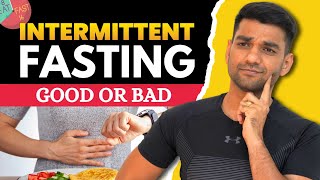
Arvind Padmanabhu explains that intermittent fasting works through calorie deficit, not magic. Common protocols like 16:8 fasting work best when paired with strength training and good nutrition. Start gradually with a 10-hour eating window and schedule fasts around sleep.
Chapters
So you heard about many people saying that, you know, I have magically lost my weight by using intermittent fasting. And intermittent fasting is a diet, and whether I can do intermittent fasting, what exactly happens intermittent fasting, whether it will help me into my fat loss, but is it something which I can do it as part of my schedule? You have a lot of doubts around it. In this video, we're going to go deep dive into what is intermittent fasting, how exactly intermittent fasting helps you into lose fat, and whether whether it is the right way to do it or a wrong way to do it, and what are the some of the different intermittent fasting ways and how you can do it effectively, and whether is it something for you or not, also we're going to unfold in this particular video. Hi, my name is Arvind Padmanabhu. I'm a health and wellness coach. In this video, we're going to deep dive into what is intermittent fasting, how intermittent fasting can help you into a weight loss, whether it is something which you can do it or not. We're going to discuss, deep dive into all these details in this video. So watch this video till the end. I'm going to have amazing gift for you. So, um, watch this till the end and also implement every single thing whatever we're going to— we are discussing in this video. Yeah, so first let's deep dive into what is intermittent fasting, whether is it intermittent fasting is a diet. First of all, let me make you clear, intermittent fasting is not a diet. Intermittent fasting is a, uh, just a pattern of a time-restrictive eating. What does it mean? You're going to eat your all your meals in a certain period of time, and you're going to fast in a certain kind of a time in a day. So there are different ways of intermittent fasting. First of all, intermittent fasting is not a diet. So if someone is saying intermittent fasting is a diet, it's not a diet. It is just a time-restrictive window, a methodology where you can significantly decrease the overconsumption of calories. Right. At the end of the day, why people are getting a result through intermittent fasting is one single science principle. Because they are into calorie deficit, because of this restrictive eating, they are able to consume less calories than what they were normally able to consume. Yes. So at the end of the day, intermittent fasting— there is no magic in intermittent fasting, but definitely it would help you for people who are really busy, who cannot make— who doesn't have a time to make a multiple meals and who really wanted to eat a little heavier in each meal, then definitely it would help. But what is the magic of you losing fat in intermittent fasting when you are in a calorie deficit? What is a calorie deficit? When you are in the negative energy balance, the amount of energy what you're giving to your body is lesser than the amount, your amount of energy you're burning out of body. When this fulfills by following a pattern, restrictive pattern eating, definitely you'll start losing fat. Yes, so what is first of all intermittent fasting? So intermittent fasting is a window where you're going to eat. So there are different patterns of intermittent fasting. There is a 16:8. In that, in this pattern, 16 hours of the day, 16 hours out of your 24 hours, you will not eat anything, and 8 hours you consume all your meals. This is one of the pattern. The next one is a 12:12. So basically 12 hours you're going to eat and 12 hours you're going to fast. And the next one is stop-eat-stop. Basically what you do, one day you fast completely 24 hours, and then 2 days you again eat, and again one day you're going to fast. And there is a different methodologies, but at the end of the day it's just a restrictive dieting, restrictive pattern of eating. Okay, so yes, I, I do follow intermittent fasting from so long. The one of the biggest reason why do I follow, it is more convenient to me, it is more easier for me, and I am the person I want to eat a bigger meal because it will make me to eat a bigger meal into 2 times of the day. Basically, I skip my breakfast. So my intermittent fasting pattern is something like I eat my last meal around between 6 to 8, and my first meal of the day I'll start, I'll eat between 11 to 1. So it depends on my timing. So I do somewhere around 14 to 16 hours. Sometimes it also goes to 18 hours. But what is most important, any, any person who's following intermittent fasting, first of all, ask your question, is it, is it sustainable for me? Is it flexible the way I'm living? Is it convenient to me? Am I able to manage my eating pattern and I'm able to include that part of your lifestyle? If your answer is yes, you can definitely do it. And whenever you start doing it, don't directly jump into 16 hours. Start with the 10 hours. It doesn't mean that in a day of awakened time you need to do a fasting. Fasting is all about— you can— the easiest way which I found for myself is doing it before the night. That means 2 to 3 hours before I sleep, I'll stop eating the meal and Then after I get up, at least I add another 2 to 3 hours. That means 6 hours plus 8 hours I sleep. That's how I get the fasting window. And also intermittent fasting has another, um, um, other benefits. But if you see in a fat loss, you can still be at the intermittent fasting, not be able to lose weight by consuming your overall, uh, excess calories. And I also see some people, they cannot follow intermittent fasting mainly because they are more prone to eat smaller meals. They can't eat bigger meals, and they tend to, um, disturb their eating pattern, they go into a binge eating mode. Even in that short, shorter period, 8 hours, people start consuming crazy cravings and they eat a lot of food. In that case, you will not lose weight. Intermittent fasting is for someone who, if you think that you can push your meal for 3 to 4 hours after you get up and it will make you balance into consuming less calories, then you can definitely follow. But what is one thing which I want to tell you is, so don't follow just because it is working for me. It is working for someone else. Just ask yourself, can I— will this dieting pattern suit my lifestyle? If your answer is yes, if you are able to enjoy, if you're able to do that, definitely do it. But some of the benefits, especially with intermittent fasting, what I saw is my, um, my basically my cravings and my eating pattern has been regularized. I don't feel hungry that, that much in the morning. I don't want to overburden. And also I was able to manage my private events, my social events much, much easier because of this pattern. Because what happens is most of the weekdays I do, I I do consume little less calories. And over the weekends, I was able to enjoy my social events much easier because whatever the calories which has added up to the weekend, and also weekend I take my fasting to little 2-3 hours more. And wherever my party is there, I'll try to keep 1,500 to 1,600 calories around that. So even if I eat, even if I enjoy some kind of a processed food, I'm not overboarding with the overall weekly calorie limit. So, so that is what is important. And also, how you can do intermittent fasting during the fasting window? So you should not consume anything which has calories. When I say anything which has calories, even the fruits, vegetables, or anything you consume which has calories, you're basically not in a fast. You need to be— make sure that the 12 to 13 hours or 14 hours, make sure you can only drink water or maybe a black tea or a black coffee with zero-calorie foods you can include it. Okay, and the second important thing is you need to also make sure that intermittent fasting is not that you can eat anything. Make sure you follow a balanced meal, make sure you give enough fiber to your body, enough protein requirement to your body, and drink enough water during the whole course of it, and sleep well. And after doing all of them, intermittent fasting will give you flexibility into your own life. This is what is my true thing, and definitely intermittent fasting along with the calorie deficit will definitely make you lose weight. And yeah, That's all, uh, um, for it. So what is— I wanted to tell you, intermittent fasting with a calorie deficit will make you lose fat, and it is one of the way of calorie restricting pattern. It's not a diet. At the end of the day, you still need to follow a balanced diet, and you still need to fulfill all your basic necessities of nutrition. If you don't do it in a proper way, especially with intermittent fasting, you eating any food, whatever you are eating in a restriction, you will lose weight. But most of the weight loss is happening from the muscle mass, and most of— if, and if you're not including your strength training part of this. And maximum weight loss happens from the muscle mass. And also, you, um, it will actually impact more into your, um, more damage to your, uh, health. And also make sure that you are fulfilling all the macro, micronutrients. Especially there is a chance of vitamin deficiencies because of the food options what you have. And, uh, it should be make sure that you balance it out, everything. Yeah. And at the end of the day, So don't follow just because it worked for someone else. Follow it because you wanted to do it, you really enjoy it, it creates a flexibility into your own life. That's what you do it. So this is how I do it. As I told you, that 11 to 1 o'clock is my first meal, and the last meal is around between 6 to 8. So that's how I manage my intermittent fasting, and I make sure that these other things are achieved— your protein, fats, and strength training. Is being part of your lifestyle. Okay, thank you so much. So hope this video is helpful. Just do follow only if it suits into your lifestyle. And if you really got a value from this particular video, please type it in the below chat box. What is the one single thing you are taking away? And also try the intermittent fasting and see whether it suits for your life. If suits for your life, you can include it as part of your lifestyle. Thank you so much for watching. If you really want to practice every single day with me and you want to energize your energy not only physically, mentally, emotionally, and spiritually, and also you want to do a minimum dose of workout every single day. I do something like a daily warrior practice. I'm giving you absolutely free, as I told you at the starting of the video, 7 days you will get absolutely free. The link is there in the video description. I want you to click, click on that link and enroll for it, and I will, I will see you inside my warrior practice. If you're still new to our channel, click on the bell icon, you will be notified, and also click on the subscribe button to keep following all this valuable information. There's only one thing I wanted to tell you is keep practicing it. The practice is what makes you transformation, not just listening. Listening will get you knowledge, but that knowledge is useless if you're not practicing it. So let's all create a healthier and fitter world together. Thank you, love you all, have a great day. Bye-bye.
More from Dr.




Manifestation may feel less like chasing what you want and more like becoming the person....