My Journey to Islam [Part 1/2] - Uncomfortable Beginnings
In this vlog, the speaker reflects on his personal journey toward embracing Islam during the COVID‑19 lockdown in England. He begins by asserting a belief in a creator, arguing that the complexity and vastness of the universe point to a divine origin. He then recounts a systematic comparative study of the three Abrahamic faiths—Islam, Christianity, and Judaism—highlighting perceived similarities, differences, and perceived gaps in the latter two that he felt were resolved in Islam. The speaker describes his initial misinterpretations of the Quran and Hadith, how deeper study corrected those misconceptions, and how he discovered that Islam integrates the teachings of the other two religions while providing a more complete picture. He critiques the way Islam is taught to young Muslims, arguing that rote Arabic instruction without contextual understanding leads to disengagement. Using a car‑crash analogy, he defends belief without direct empirical evidence, emphasizing faith and trust in others’ testimony. The narrative shifts to a personal transformation: finding purpose, rejecting materialism, and feeling a profound sense of belonging and gratitude. He expresses a strong stance of universal respect and tolerance toward people of all faiths, condemning division based on nationality or religion, and posits that environment largely shapes human behavior. The speaker invites viewers to comment, debate, and engage, positioning the video as both a testimony and a call for dialogue.
Chapters
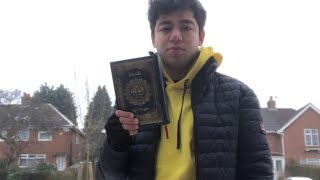
Hey everyone, hope you're well. So today I'm gonna be making a video on religion and just talking about why I kind of chose Islam. I hope everyone's coping during a lockdown. Currently I'm in England and it's freezing and it's snowing, as you can see probably. But I thought I'd just make a video sort of explaining my thought process on why I chose Islam, why I think it's probably the right religion. So the point of this is pretty much to raise awareness, to meet new people, to sort of express my views and learn about other people's views and opinions about religion in general. And what they kind of follow and their reasoning behind it. So I've been kind of confused about what to follow for a long time now. I've been born and raised as a Muslim, but to me, I think following a religion, practicing a religion as a young age or in a young age it's quite hard, especially if you don't know much about the religion's context, where it came from, why you follow it, things like that. So that's pretty much why I want to kind of share my experiences that I've had. So starting off, why I— first thing, it was sort of why I believe a God exists. I think that's the first important thing to sort of acknowledge, understand, and sort of research about for yourself. So for me personally, like everything around us that we see. So for example, just take a tour around us. Everything that we have here, this in itself is so complicated. It's so vast, it's so big. And for me to think that it sort of just appeared out of nowhere or that there's no context behind it or there's no creator for me doesn't make sense personally. I think that because, because the world is so vast, it's so complicated. Like thinking about it right now, Birmingham is the city that I live in currently. Birmingham's so vast and big and I can't comprehend the size of it, the complexity of it, things like that. So thinking about the whole world just baffles me, like the whole of Earth, with the size of it, with the amount of people, different belief systems, and just the way everything is. Like, everything is so complicated. And like, for me, I cannot imagine everything just sort of coming into place like on its own or through a big bang or whatever. I just can't imagine it. It's just way too big, way too complex. Everything fits into place too well. So there has to be someone that created it for me. So that's my sort of first principle. And then I kind of looked— so first I kind of realized, well, I kind of believe in a God. There has to be a God. And then what I thought to myself, so this was kind of my way of researching about religion, finding out a little bit and trying to find the truth for myself. So what I did pretty much was first So we went through those and then we, we looked at the like 3 main religions and we researched each one for a consecutive period of time. And we started off with Islam as it was. And at the time it kind of seemed a bit odd because I was kind of a Muslim, so there was no reason for me to research about it. And then so I kind of researched about it, but it kind of confused me a little bit more because everything was so like, there was so much restrictions within Islam. So I kind of thought, for me, from my perspective, everything was kind of restricted. It was kind of making you live a life that's kind of plain, kind of plain, a lot of restrictions. And to me as a young teenager, it made me think, well, well, it's kind of making you live life to be healthy and not have a lot of fun. Not experienced a lot, showing a bit of hatred and things like that. So that was my first initial reaction when I did a bit of research in Islam. And then slowly I did more research into Christianity, and for me, I found that it was pretty much the same concept, like the same thing. A lot of restrictions, In fact, for me, it was kind of similar in that there was, you know, some of the restrictions were quite similar. But what I found interesting was that the population of Christianity compared to the population of Islam, like Muslims, the amount— like, the people pretty much not the same exact restrictions. But it's all the same concept. But what was interesting was that, you know, Muslims were more devout, they were more practicing, they stayed more to their truth, like they followed their beliefs way more, they were more strict with themselves. And that kind of got me curious. That's not saying that all Christians would not be following their religion to perfection. That's just what I saw on a comparative basis, comparing the whole population as a whole. So that kind of got me curious, and then I kind of looked into Judaism. And I found pretty much the same thing, but Jews were way more religious. They followed their beliefs way more, but there was things missing within Judaism and Christianity. They were like little parts that were missing, that weren't making sense when I was reading the books, when I was talking to people, or just researching in general. So I had to sort of like they had questions that weren't answered. It wasn't for me. Both religions didn't kind of make sense. Christianity and Judaism. I felt like it wasn't the complete picture. The complete picture was not either written. Basically, it didn't make sense to me. And when I— so the first time I read the Quran, I kind of read it with a misinterpretation, misunderstanding that the religion was about hatred, killing people, terrorism, things like that. So when I read the book, I didn't read the Quran with an open mind in the first sort of time that I read it. When I read it, I kind of any sort of indication, any words that are indicating killing people or going through war or whatever, I immediately thought at the back of my head, oh well, it must link to just killing people randomly, I guess. But then I kind of dug a little bit deeper and tried to understand it a bit more, so I had to there's like books called hadith, which are kind of the, kind of the sayings of the Prophet, what the Prophet did, things like that, basically. So basically looked a bit more into context because it kind of didn't make sense for me. The first time I read it, I got really confused. Second time I looked into Judaism, Christianity, there were things missing within it that did not make sense to me. It had to be missing things, I was looking for them elsewhere. And I kind of found them the second time I was reading the Quran. I found them in, in the Quran. And it was kind of weird to me because from my understanding now, pretty much, is that Judaism and Christianity are basically the building blocks to Islam. In terms of the context, in terms of the history, in terms of the things missing. That's what I kind of found out. So I thought, so basically what I've discovered this, I've discovered this in my own way because this is my own journey really. But I've kind of found out that, you know, Christianity and Judaism are very good religions. They follow very good belief system, very good context, very good history. Principles, values, things like that. But the things that were missing were in Islam. So for me, the complete picture— I had discovered the complete picture. And the complete picture with Islam, with everything that you kind of needed in it, and I had not seen before, that's the first time reading it. So really baffled me. I want to say the complete picture, you know, the idea of Trinity, three gods in one, kind of confused me in Christianity, and I had to look a little bit deeper. And you know, there were— Jesus is a prophet in Islam, so that kind of makes sense. And Islam believes in a lot of the things that are written in both Christianity and Judaism. Obviously not everything, but some of the things. So for me, that was kind of a starting point. I had kind of discovered the truth accidentally by kind of having hate within my heart towards the religion itself. It was kind of weird because, you know, when I kind of discovered Islam to be the truth, and like now I cannot get out of my head because I was like, oh, how dumb could I have been back then to have thought that this religion is incomplete or is wrong, or is its fundamental belief values are based on terrorism. Killing people, hatred, no women's rights, things like that. Now it kind of confuses me. I'm like, how could I have been so naive towards the religion? It's so perfect. It's so put into place now. Everything I read, everything that I follow makes sense to me. That doesn't mean that I still don't make mistakes because I think It's— I think part of the reason why I was a little confused before as well is because there's so many restrictions within Islam. I was kind of bypassing them by telling myself that it was the wrong thing to follow. But now that I've discovered the truth, pretty much it's like if you don't follow those, um, rules, then you're the naive one because you kind of know the truth. Evidence behind it, yet you simply put it aside for, I don't know, your ego or whatever it may be. So now it's way easier to put— like, it's way easier to practice it in terms of praying, which is way easier now than before when I used to, you know, just pray meaninglessly, not knowing the meaning of the words, not knowing any context behind it, not being able to concentrate because you don't know what anything means. I mean, these are all the fundamental building blocks that you need to have in order to be able to follow the religion properly. Ah, I think the majority of the Muslims are missing Now they're missing it for a number of reasons. Firstly, I think the teaching system is like teaching Islam to the younger generation. I think it's the way it's done. I think it's wrong. And by that I mean, you know, I remember when I was younger, I went to sort of mosque to learn how to read Arabic. And for me, that was more of a laborious job, like a task that I had to do, than a thing that was meant to be spiritual. Like, it wasn't genuine. I wasn't paying attention. The teachers were kind of— they weren't showing the fundamental belief system, which is kind of to be nice, kind, open-hearted, approachable, forgiving, understanding, things like that. They weren't really that. They were kind of really strict. I mean, they don't— from what I remember, they only taught us Arabic, which was kind of pointless because if you don't know the meaning of the words, then how are we going to be able to understand it? And if you don't understand it from a younger age, then you slowly, then you slowly start to not abide by the rules, which slowly turns you away, which is kind of weird, but it makes sense because you simply don't understand it. You cannot follow something that you do not understand. And then I had some people, some atheists talking to me and saying that, how can you believe in something that you have not seen? Seen no sort of kind of evidence like miracles that you have personally experienced, anything that you, you haven't seen or experienced anything that was perceived to be like godlike. But then I kind of said to them that, you know, I gave them this example. If you were on a motorway and someone told you that there's a car crash, you know, a mile ahead, and that you had the opportunity to turn around and go back home, or you could wait in the traffic and see with your own two eyes whether there is a car crash or not. So you, you know, you have to decide whether you want to believe in something that you have physically seen with your two eyes, or you're gonna believe someone else's word. And of course, because you don't want to wait in the line, you're just going to turn back and go home. It's pretty much the same thing. You don't have to see everything to believe it. It can be from advice and knowledge of other people. But I think it's definitely hard, but that's the point. It's meant to be hard. If it was easy, it would kind of be pointless. Because everyone would be able to do it. And as a result, there would be no sort of reward that would be attached to it. I think it's way more sophisticated than that. You need to have a lot more knowledge, you need to be more open-minded and things like that towards it, towards the whole general idea. But once you do find it, it's incredibly— it's an accomplishment like no other. I mean, we have a lot of accomplishments in our lives, or I've had a lot of accomplishments in my life personally, whether it be sort of, I don't know, educational achievement or charity achievements or whatever it may be in life. But I think the biggest one and the most satisfying one out of all of them is finding the true reason as to why we humans are here in this life. I mean, if anyone hasn't kept track of me, I think I'm an idiot saying just a bunch of random stuff. I mean, it's kind of hard to talk in this freezing cold weather outside. There's pretty much snow on the floor everywhere. People think this isn't snow. UK standards, this is a lot of snow. Normally we barely have anything. So even this for us is a lot. Sorry for the noise behind. I'm going to try to go quickly. So yeah, and what was I going to say? I forgot. Oh, if you have any sort of— if you have any opinions on what I'm saying, what you think I'm saying is wrong, or what my belief system is wrong, or the way I approach everything is wrong, or, you know, whatever opinion you have towards it or belief upon what I'm saying, or something that you want to preach to me, please do write it and express it, because if you don't, I'm never gonna be able to know. So if you do have anything you want to express, please please do comment down below and please do subscribe and like the video. I mean, I'm in the freezing cold weather for a reason, but kind of my reason, like my reason for doing this, it's pretty much to find something beyond me. Because before, I kind of saw the world in a way that was very close-minded. I kind of, I was very money-minded. Like there was no purpose to my life, pretty much. And now that I've kind of found the purpose, everything materialistic has become worthless. You know, the simplest of things I appreciate in my life. Life just becomes way more enjoyable overall. You feel just way more genuine and what's the word to describe it? You have this, you know, you wake up every day feeling that, you know, you have, you know, you're here for a reason. God built you the way he built you for a reason. Reason. You are in the position that you are for a reason. You have everything that you have for a reason. So you are, you kind of think more about, you think about your life way more, and you know, you think in ways about yourself and about the people and about the position that you are in. In a more like a bigger, like a bigger concept. Like for me, everything before was kind of impressing other people for me to feel good. But I never felt good by impressing other people. I don't think they felt good by me impressing them because they felt like they would have to retaliate trying to impress me. And it was this sort of ongoing battle within, between each other. And this would probably last our whole lifetime. But now I don't need to impress anyone. I don't really care what people think. I am my own person. You know, I kind of just, just try to be the nicest, kindest, pure, genuine person that I can be in life. I mean, that's not always possible, but it's kind of trying and giving it a go that really matters, because of course not everyone's going to be able to achieve that. And also, I wanted to reiterate, I think— I don't know if this, you know, my ideology is kind of the same or different from the majority of Muslims or not, but for me, I totally accept anyone from a different religion. I don't really care whether from, what they believe, where they got the belief system from. You know, I respect it, I respect it dearly. In fact, I think the people that have a different belief system to you should be respected— like, you should respect them more than an average person because they're going through another pressure, but they're going You know, they're putting the effort to express to you what they think is right. Whilst most other people are just enjoying life, wondering about randomly, not knowing anything. I don't know. I really— I think that, you know, this kind of divided into nations for literally no reason. We are all one. There's no, uh, you are from this country, you should be treated like this. You are from this country, you should be treated like this. There's no, oh, you know, you follow this, you should be like this, should be done to you, or you are like this, so we're not going to speak to you, or we're going to hate you. I really don't care what people do, where they're from, what they believe, as long as they keep their own opinions for themselves. If they want to express, express it in a nice way. As long as they're kind, helpful, why would I care? Like, why should I spend time being horrible to them or disrespecting them? Like, there's no need to it for it. And I don't understand it when people do do that. At the same time, I do believe that everyone, literally everyone, has good within them. Like everyone. I think people do the things they do because of their environment, pretty much. And I think that's the biggest factor to why people are the way they are. That's literally the reason. Um, obviously genetics and the person that you are, things that you have, where you are, where you live, things like that do have an impact on it, but environment is the main thing. If I was in the same position and lived in the same environment as someone else that was a criminal or committed something really bad, I probably would have committed it as well because it's simply the environment. It's the peer pressure from other people. It's the wanting to be like approved by others and wanting to be liked, all that pretty much. It's not— I don't think anyone deliberately hates, uh, hates other people, I guess. Uh, okay.