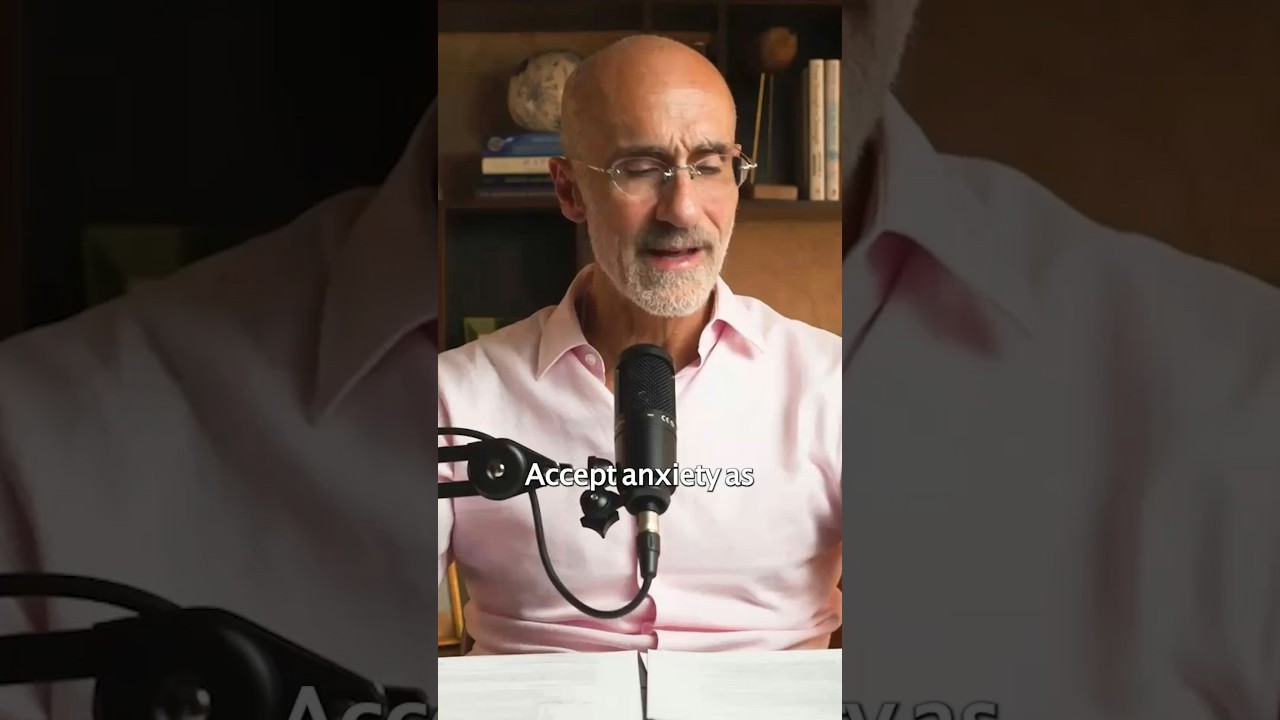
In this talk, Arthur C. Brooks reviews decades of psychological research that consistently show extroverts are, on average, slightly happier than introverts—a statistically significant but modest advantage. He first frames the finding in an evolutionary context, arguing that humans are inherently social pack animals and that extroverts actively seek the social stimulation that their brains reward with happiness. He then clarifies that meeting a need (as introverts do by preferring solitude) does not automatically translate into greater well‑being. Brooks moves on to cultural differences, noting that American society heavily rewards extroversion, whereas East Asian cultures find it uncomfortable and Spain embraces it even more. He presents economic data showing extroverts earn about $12,000 more per year and enjoy higher rates of promotion and performance evaluations, citing a meta‑analytic review from the Journal of Applied Psychology. Brooks shares personal observations from teaching at business schools, where class participation often counts heavily toward grades, creating a systemic bias against introverts. To counter this, he describes how he modifies call patterns to give introverts alternative ways to contribute. He highlights Susan Cain’s book Quiet as a seminal work exposing the unfairness and inefficiency of over‑valuing extroversion, citing examples of introverted innovators like Isaac Newton and Google’s founders. The talk concludes with a call to recognize and mitigate extrovert bias in educational and professional settings, arguing that doing so benefits both individuals and society.
Chapters
Extroverts are not a lot happier. Extroverts are a little happier on average. Decades of research have shown that extroverts have a significant— by that I mean statistically significant, not a large happiness edge, but one that does show up in the data consistently— over introverts. And not only do they have sort of more intense periods of well-being, but their general well-being is is punctuated by frequent moments of joy? Why do they tend to be a little bit happier? Now, here's— this kind of blends together a bunch of psychological theories, but here's the typical explanation for why that is the case. Humans, we know, are inherently social animals. You've heard me go on and on about the fact that we are a hierarchical kin-based pack tropical species, Homo sapiens are, and our brains are suited to live in bands of 30 to 50 individuals that We have to be really together to survive, to pass on our genes and to survive. We have to know our kin and be close to our kin and be highly social with our kin. So we're like wolves in this way. We're like many, many other pack animals. We have to be together. That being the case, that we are inherently social animals and that contact actually gives us a sense of satisfaction, extroverts who seek out contact to get this cortical stimulation, they're going to be happier as a result of doing this thing. We're highly rewarded for being social. We get a happiness reward for being social. Okay, part 1. Part 2, extroverts look for the stimulus because their brain needs it. Ergo, when they try to go get that thing that their brain needs, they get happier naturally. That's the whole idea. They're social, being social makes you happy. Extroverts love people. And so by doing what they naturally want to do, they become happier than introverts. Now, the fact that introverts prefer solitude and struggle with sociability doesn't mean that avoiding contact makes them happier. And this is an interesting thing. So you might say, okay, so extroverts, they're happier because they're in contact with others, so therefore introverts must be happier when they're not in contact with others. This is absolutely the case, and this is the argument that psychologists have always made, that being an introvert and avoiding people is an example of meeting a need but that, that need not bringing you happiness. We do this all the time. We do all kinds of things here that meet a need in our life or a perceived need in our life that actually make us less happy. Because once again, Mother Nature doesn't care if you're happy. We have to be responsible for that, not just following our animal impulses. All right, now there are other reasons, more contemporary reasons than all of this. I mean, I realize that some of that was relatively esoteric, but there are other more common sense reasons why you would find in the literature that natural extroverts tend to be a little bit happier than natural introverts. To begin with, extroversion in American society in particular is hugely rewarded. Much, much less so in other societies, by the way. In East Asia, for example, American-style extroversion is considered to be really weird and it makes people extremely uncomfortable, as a matter of fact. I mean, if you go out to dinner with a bunch of your friends in East Asia and you start talking about personal issues in your life, it's not going to be rewarded. That's more of an American thing. It's also more of a Latin American thing. I spend a lot of time, as some of you know, in Spain because my wife is Spanish. And so we spend— we've lived off and on in Barcelona for the past 35 years. And when we're there, I mean, it's like, it's extroversion, it's like 10, whereas it's less than that in the United States. Relatively speaking, it's a far more extroverted place. And the result is that you can have conversations that you never would. I mean, I recounted in one of my columns some time ago about a wonderful dinner that my wife and I had with complete strangers in Madrid last year. And within 15 minutes, the hostess at this dinner of 8 couples— we didn't know them— she said, you know, I meant to ask all of you, what's the closest you all came to getting a divorce? It's like, strangers. Gulp. I mean, that would make people uncomfortable in the United States. It would make people, you know, run screaming from the room in Japan, probably. But in Spain, it's like, ah, interesting conversation. Go deep or go home, man. And that's, that's, that's based this naturally highly extroverted culture. In the United States, it's rewarded not just socially, it's rewarded economically. Extroverts make a lot more money. There's an interesting study that shows that extroverts make about $12,000 more per year than introverts, which at the general level is like, that's no joke. When the average family of 4 in the United States makes about $75,000 a year, that's very significant. That's almost a 20% differential in what the average family is going to make. As a matter of fact, they also— extroverts, they tend to attain other advantages in the workplace, such as promotions to leadership positions and high-performance evaluations. And there's a ton of studies on that. There's one from the Journal of Applied Psychology I'll put in the notes called Extroversion Advantages at Work: A Quantitative Review and Synthesis of the Meta-Analytic Evidence. Yeah, you got to see this because, you know, it turns out that we're really rewarded. Now, I've seen it over the course of my career, not in my case, but I've taught at business schools for a long time. I go back teaching at business schools for 30 years. And business schools, they love extroverts. I mean, I've taught classes where the grading criteria involved class participation, up to 50% of the grade. I've seen classes that are 70% of the grade are class participation. And that's just Just like a root canal for introverts, putting your hand up and just going blah, blah, blah, blah for the sake of the blah, blah, blah because you want to get your grade up. Now, when I taught my classes, I tried very— despite my extroversion, because I'd be the guy like this all the time. Again, not a flex. But I didn't want to reward that in the same way because being a behavioral scientist, I got the data. I don't want to unduly penalize people who just happen to be natural introverts. So I would give them all different ways to participate, and I would make sure with my calling patterns For people who were not having their hands up, that I would give them a particular opportunity at the beginning of class to get their comments in if they're getting counted, right? But most professors don't do that. At business schools, it's like whoever got their hand up gets called on, they get higher grades. This is an example of the advantages that we're actually talking about. That, quite frankly, can be extremely unfair, but it's the law of the jungle. I mean, particularly when you're making your way in American culture. Very interesting book that talks about how unfair that is and how inefficient that is, is a very famous book maybe some of you already know about. The wonderful author Susan Cain has the book Quiet: The Power of Introverts in a World That Can't Stop Talking. I know she's not big on extroverts like me, I get it. But it's a wonderful book and it's really worth reading because she talks about examples of many wonderful things that have been created by introverts. And theory of gravity, Isaac Newton was an introvert. Google was developed by introverts. And she argues that admiring and rewarding extroversion isn't just unfair, but it actually hinders progress. And so we should do something about that. It's actually— that book has been influential among leaders and has been influential with me too. I mean, one of the reasons that I watch my call patterns to not marginalize the introverts in my class is precisely because of Susan Cain's work. And how important it is. So if you ever feel disillusioned in the United States or any other place about our habit of elevating egotistical and charismatic leaders, you'll probably admit that Susan Cain has a point and that it's not just unfair, but it's kind of unwise for us to be marginalizing introverts or not paying attention to them.