The Global Chess League - Analyzing 4th season and future | ft. GCL Commissioner Gourav Rakshit
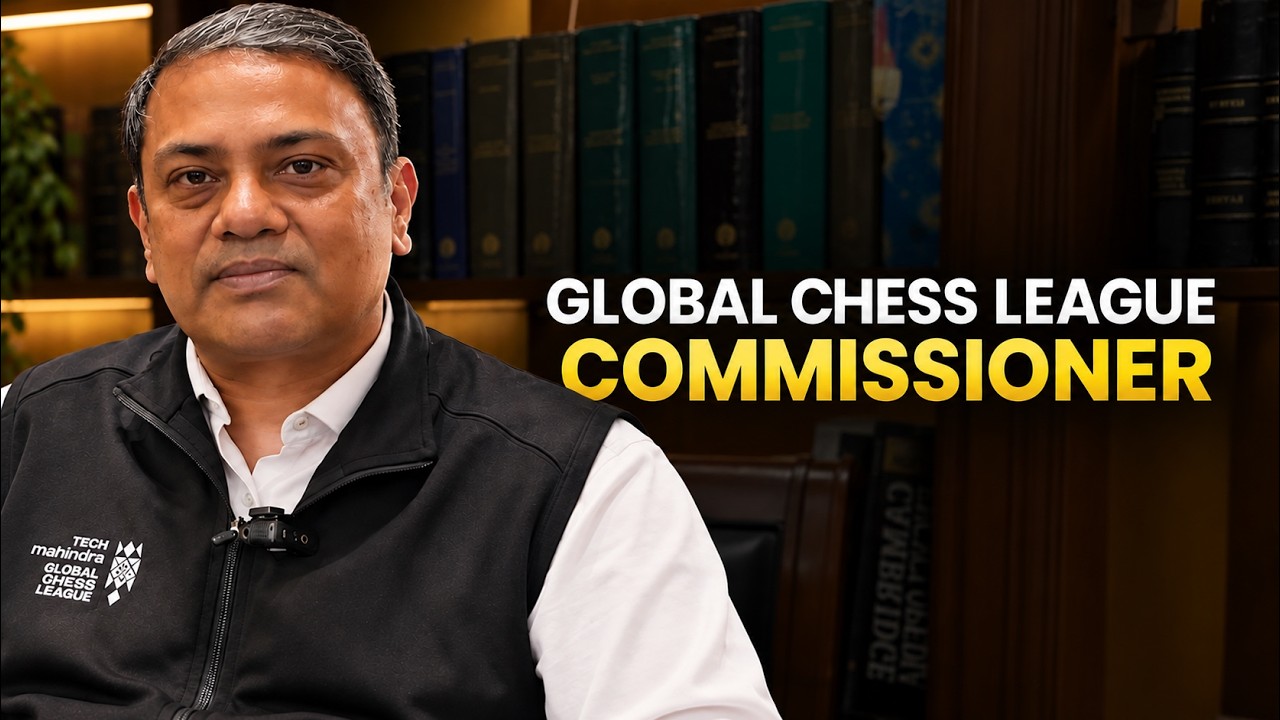
GCL Commissioner Gourav Rakshit discusses the fourth season's venue design at Bangalore Palace, the play-along mobile app, and how the league partnered with Tech Mahindra to build broadcast and fan experience. He covers lessons from Day 1 problems, player dynamics including the Magnus effect, and plans to expand the league globally.
Chapters
I'm joined here by the commissioner of GCL, Gaurav. Hi, Gaurav.
Hi, Sagar.
We are at the end of the Global Chess League. Tomorrow is the finals, and I think overall this GCL has been an incredible event for the fans, for the players. What are your feelings?
Yeah, I think it has been very, very special. I did not expect this kind of a fan reaction. We definitely planned a memorable experience for all, but seeing people come away, whether it be from the main auditorium or from the fan zone, with so much joy and happiness and themselves play chess over the board and interact with other chess fans is more than I could have hoped for. So candidly, I mean, I'm getting that from my players, my arbiters, everyone. Sometimes it just all comes together, Sagar. It's not always a grand plan. Sometimes you get lucky.
You became a part of the Global Chess League somewhere towards the end of 2025. Like, you had 3 months before the third season began, correct? So, somewhere in September 2025 or so.
Yes.
And that tournament in Mumbai was very interesting because it came For the first time in India. The first 2 editions were outside. Then, when it ended, you had roughly 8-9 months to just think through. How was that process for you? And what were your priorities?
I think I learnt a lot from that tournament. The first big experiment we did in that tournament was with headphones. Prior to that tournament, I had visited a few tournaments just to get a feel of what the spectator... Experiences. And having watched chess over the streaming platforms, yours especially, for a very, very long time, I really enjoyed the way chess was being brought to audiences. And particularly, I think in the Chess World Cup in Goa, it struck me when I was in this room with these best players in the world competing with large DGT screens. And as a moderate chess player, really not able to appreciate more than being in the same room with those players, not being able to appreciate what was— what they were putting on the board, what was going through their minds. And I could see that was not— I was not alone in that. I could see other people also, they were there for the photos with the players, but they didn't really appreciate the games. They were not stuck onto them. And I, having done broadcast for some time in my life, I realized there must be a better way. And that's where the idea of putting headphones on spectators came from. And it took a little planning effort, convincing of FIDE, because anti-cheat is obviously a huge thing in the chess world. And so I had to explain to them how I was going to position the chess screens, how I would let players see what was going on on the boards but not be able to engage with fans, how I would ensure fans stayed silent during the games. All of that was new to me, but I think it was new to the chess world in general, especially for a FIDE-rated event.
Yes.
And, uh, but they were good enough to let me. You're right, I was new on the scene, but I guess I was passionate. And FIDE is looking, just like everybody in chess, to broaden chess to larger audiences. And so they were willing to go along with this experiment. And that really taught me a few things in terms of what we could expect in the next season. One, there was a huge appetite for the fan experience. You were a big part of what we were able to do in the fan zone. And I didn't know that candidly whether that would work in Mumbai or not. But seeing how well it worked, it was then a lot easier to try and Double down on that and create a great fan experience. Which is what we did over here for even in the fan zone. So, those are some of the learnings I took from that season. I realized also, one of the biggest things that I noticed— there were a lot of fans. They were shouting last season for Gukesh and screaming his name. They were screaming for Vidit. They were screaming for, you know, Ali Reza, who was playing incredible last season. And I realized there was a real mania in this country which I don't think had been tapped. Entirely, and so that to me was a penny drop moment that this could be something that you know we can really take forward and and take into the next level. That's what gave me the confidence to also try it again in in India because otherwise as the Global Chess League we would normally travel. One of the most vivid memories I have which from that season was the players taking photographs of the fans. And to me, I had never seen anything like that in any sport. And to see them so struck by this fan experience, that sort of rung something in me saying that there's something special happening. It's beyond me. And that's kind of how we then built this season on some of those learnings. A lot of help from the chess community, which is extremely collaborative. You yourself, Sagar, have given me so much time that I really appreciate people that you know, have a shared passion and come together to make such a wonderful event. And that's kind of what we used. We used everybody that was willing to help us collaborate, and every help that— and a lot of help came from corners that I didn't expect, and it really made for a pretty nice product.
And how did Bangalore come into the picture? Because, you know, when you talk about India, Chennai comes to mind first. There could be some other cities. Bangalore, of course, has is a tech hub of India, but when it comes to chess, not huge events have not happened here.
Have not happened. I think that's also partly the remit of GCL to broaden audiences, because we have events in Kolkata, we have events very regularly in Chennai, Mumbai, Bangalore, not so much at this scale. So, both to put the rest of our cities also on the global map, as well as to activate audiences in different parts of the country. That's definitely part of what we're looking to do as the Global Chess League, not just in India, but globally, to try and take the game to many, many newer audiences. It's what allowed us to build this new app that we put out with the, you know, where people can play along. One of the big insights is there are more people playing chess than are watching chess. And so, we thought, why don't we let them play? They can play against the grandmaster in GCL and check how their moves stack up. And it's been fascinating to watch. It's quite tough to do, I tried. But those are the kind of things that we're looking to do to try and bring chess audiences to chess streaming and let them enjoy the game as much as we are.
How has been the response to the app?
It's been very good.
Because personally, I've seen many chess apps and I've downloaded them only to then realize that maybe it's worth deleting them. But this one, I felt like there was really something special because I was actually using it. And it worked. Sometimes, such complicated things, like the game starts, the moves are not coming. But here, the moves came instantly. All of this. So, I think it was very well done.
Thank you. Thank you. Some of that I owe to my 25 years in product management and IT and tech. But I have a big sort of debt of gratitude to the team that developed it, the Chess.com fraternity that supported it. That's one of the things where once you get an idea, it's amazing how many people will come together to try and make that a reality. And I'm really looking forward to that in the years to come because I see a huge potential and a lot of energy that people are willing to commit selflessly to these kind of things if the idea seems like it has legs and is a good one. So I owe them all a lot.
One of the things that I've seen in your way of dealing with things is that you're always very open to feedback. And even when someone gives some negative feedback or so on, you're never really affected by it. In fact, you only take that— take it positively and try to go step by step. And at some point, I realized that this approach, you are solving one issue after another It may look small, but you were kind of making progress. That was very interesting to watch.
I think it goes to my roots as a digital internet leader, I guess, that that's the way any digital product works, where because you work with millions of users, you just have to prioritize what their needs one after the other. There's no other way to to try and solve everything that everybody wants at one point in time. You have to have enough confidence that your product is the right product and they want it. They're giving you feedback for a reason. Your job to stack rank them in order of priority in terms of what you can deliver and be reasonably sure that you will not deliver every last user because they are that varied, their needs are that varied. Your role is to try and make the best experience that you can. And so that's sort of, you learn that humility all through any digital journey, and I've done many in my life. So in that sense, this comes naturally to me.
So the prioritization.
Yes.
So when Bangalore—
And having slightly thick skin because you will get it wrong. The internet teaches you both some level of ego to be able to take chances and take risks, but it teaches you incredible humility because you will get it wrong. Users will teach you.
And then you get it right over a period of time.
As long as you're playing the long game, you should do well.
So when Bangalore became the venue, what were your, like, these P0s, like the most important things that you wanted to get right?
So I think one of the things that we acknowledged is that we had a very historic location in Mumbai, but it was slightly compact. We could see people running into each other. It was not comfortable. So one of the things that we really looked for was a spacious zone and venue where we could actually create the festival that we had dreamed of. And as you can see, we have, you know, over 20,000 square feet of hall space, but connecting those is this massive township sort of roads where you can really create a festival experience. And quite proud of what we were able to deliver with that. So that was one of the things that we wanted to do. We also, you know, had a misstep in our experience with commentators among fans in Mumbai. Because again, it was congested and we were not able to get what we exactly wanted. But that thought never really died. And so, this time we had you amongst your biggest fans, Sagar. And they loved seeing you through the glass door.
Oh yes!
And that's so special to me.
It's the first time I've done something like this. And I liked the fact that people would come, sometimes just wave. Go away. At first, I was not sure how it would work. But actually, it was very smart.
Sometimes, I think you also underestimate the fact that the players on the screen keep changing. You are always there. And so, the way they think of you is very special. They relate more to these commentators because you all come into our homes on a regular basis. And to be able to then see and touch and see you doing what you do live so effortlessly and so well... I think that is very, very special. Of course, they love going into the main auditorium to watch the top players in the world play. But I do think it was also special to be able to see you. And then when you, of course, came out and were hanging out with them, that's just really joyous for us.
Yeah, I actually had a great time with all the people. In fact, I felt that the people in Bangalore were so chess-loving and chess-literate. They were all saying like, we've been following chess for 5 years. And that was the common thread. It was not like they just started following now. A lot of love for chess here.
Yeah, that's what I mean. I think what we had when we picked Bengaluru was, of course, it's the IT hub, it's innovation, it's startups, all of that, which, you know, are a very vibrant ecosystem. But it's also the fastest-growing chess city in India. It may not have the largest base, But it has the fastest growing and possibly one of the more passionate bases in the country. And we wanted to lean into that and make it even bigger. So that was something that we tested in a few places before we picked Bengaluru and very happy we did. I mean, there obviously, I think one of the— if there is a learning for me there, I think I underestimated the number of tickets that we could sell because Now it's like we're releasing more tickets, we're creating fan zone space, whatever we can to accommodate the fans because the response has been overwhelming. Just overwhelming.
Amazing. Tell us a bit about the setup because you're working with like Tech Mahindra as the company, plus you are someone who has come from, let's say, a world outside of chess and then you've taken this role up. As the— and perhaps, I don't even know whether you thought this as something that would be such a big part of your life, which it has become now. Plus, the team of Global Chess League that you have, how big is that? So, just the entire setup for people to know.
So, it has evolved. Just the way I think about it has evolved as well. I thought I was doing a stopgap because we needed help in the previous season. Went well, they seem to like it. I've continued. In that sense, I'm very fortunate to have very supportive management at the Tech Mahindra level. They value this as an IP. And so that, I think, makes a big difference. And this comes right from the top. Mr. Anand Mahindra is a huge supporter. And he perhaps saw the potential in chess early because it's one of the untapped areas of sport in India. And there wasn't a good reason for that. We have the top players in the world vying for the top slots in the world. And so credit to him for starting it and putting it out there. From my perspective, having lived in the corporate world for as long as I have, I needed to sort of structure a team that reflected the sensibilities I had for the event going forward. So I've got a marketing team, I've got a sales team, I've got an ops team, I've got an events team, I've got someone that's helping on sponsorships and deliveries. I've got international support on Tech Mahindra and its partners. I've got another team that's solely dedicated on design, which is the design aesthetic of GCL. I thought— I think we spent a lot of time on that to make it not just a grand event, but an incredibly beautiful designed event. And that's— I think you're seeing that in our—
What does that mean? Design as in not just the design of, let's say, a logo or something like this. It's more like designing an event.
It's designing the experience. We spent a lot of time on—
Can you give an example of what it means? Like, For me, perhaps one point which sticks out is players coming in these buggies. And to me, when you said this, I was like, okay, this— I don't know what it means. But now that I think about it, when they come in, it feels like a unit coming in. It does make an impact.
So, and there are many aspects of design. This one is human design, where we wanted the players to be able to alight and walk through their fans. And you have to use the restrictions of the venue you're at and what the— the opportunities are. I don't think we wanted it— we didn't want to crowd it with them coming in a car. And so the buggy came through as saying we want a light vehicle, but we need to move about 120 meters before they can do that. And so that's where that got born from. So it's human design, but it's also baked into the functionality of the terrain that you have. But let's say the experience of, you know, the color palettes that we use all across the venue, they're all from a particular family of colors. And so when you come inside, you know, anywhere you are inside our venue, you're inside GCL. And so for that, you know, full credit again to the events team. I probably drove them a little bit more nuts than they cared to be, but they made 3D designs for us, they gave us walkthroughs, and it came very close to what we had on paper. So there's a long-standing belief that if you can't dream it up and sketch it out, then it's not happening. So that's sort of something that I've learned over the years. And so they were good enough to do that. They planned our opening, which was quite grand and unusual, but I think that it stood out.
That was just insane. That opening ceremony is something that I've never seen. The palace in the backdrop. When you enter in, I was like, wow, this feels like a movie set.
I think we were going for some of that. just to put our best foot forward.
And it started raining, but okay, it didn't stop.
And that's sometimes when I say it's better to be lucky than good. I mean, the rain just sandwiched our event so perfectly, and it started raining again as soon as we concluded. You can't script that. We did have a plan B and a plan C and all of that, but it wouldn't have been the same. It just would not have been the same. So there, sometimes it's good to be lucky. And candidly, you mentioned that I take a lot of feedback. Some of this is because you have motivated, enthusiastic teams. Some of this is driven by them more than me also, in that sense. Good ideas have no owner, right? A good idea is just a great idea that you need to put there, and it doesn't mean— it doesn't matter where it comes from. But honestly, in this one, I have to give credit to Mr. Anand Mahindra. Just like, you know, every little idea and different scales I owe to somebody else, usually not me. Anand jumped at it and said, you know, wow.
The Bangalore Palace one.
The Bangalore Palace. At that point, I knew we had to make it work. It was just like you can sense that it's something that someone sees, and I knew there were many reasons why we perhaps should not have done it. The rain, the outdoors. They have a no-spirits policy. They have also strict, fairly strict limitations. But once the idea is uncorked and people are in love with it, then you have to find a way to make it work. That's kind of what these guys were able to do.
How involved is Mr. Anand Mahindra in the league? Because you are someone who may have interacted with him. He definitely feels someone who's so passionate. He comes to the opening. Maybe he'll come to the closing as well tomorrow. And he has been doing this for all the seasons. And also, he tweets about it. So, there's a lot of interest. But what about the times when you are planning for the event? How involved is he?
He's quite involved. It's very impressive. I think that just like I say, teams take motivation from great leaders. Anand demonstrates that. There are regular check-ins. He'll give his ideas, his thoughts. He doesn't get operationally involved in terms of, you know, There are things where he will take feedback and, you know, listen to, sir, this can't be done. So you say, Anand, this is not workable. He's absolutely fine with that. But his level of ideation is very high, very fast. He's very knowledgeable about chess also. So he'll ask me about, you know, why is such and such not happening? Why is this? Is this okay? Why are you changing the rules? Last year, I introduced the 2-second increment, for example, because I was not happy with some of the play over the board from the previous season. And so, he gets involved to that level where he is comfortable that we're putting on a great product. Beyond that, I wouldn't— he's not a micromanager, but he's a vision manager. And that's perhaps all we need.
What does a vision manager mean?
He helps to set the agenda for what this season is supposed to achieve. Where does it— what does it need to do for GCL? Then from that you can draw saying that then the Bangalore Palace makes sense because it has to be a breakout season. So at that point, we're also running to the end of, you know, we have a 5-year cycle that we're working on. And so now we've got to work on the next 5-year cycle. So in that sense, this is a very important season for us to be able to start to get things absolutely right, to get people to understand what to expect from GCL. I must say all stakeholders seem Quite happy with what we're putting on, Fide, our players, commentators, yourself hopefully included.
Yeah, for sure.
So in that sense, team owners. So it was important to get that right. Last year, for example, we started getting a lot more sponsorships into the Kitty beyond Tech Mahindra. And so that was again a proof point that this league is definitely something that people can lean into. This year we've got some— Continue to get great international sponsorships, but got SBI, we've got Roastery Coffee. So I'm seeing the narrative changing in this country as well, as well as abroad. So that's really, I think, what he was hoping for. In that sense, he gave us a very clear mandate saying it can't be incremental from the previous season. And he said, whatever it takes, financial discipline, but definitely it has to be a disruptive new agenda. And I think, to some extent, we've delivered that. People seem happy. I must say, the action over the board is not scripted. But that has been insane as well. Last year, we were lucky enough that all teams had something to play for on the last day. Today also, you saw every team had something to play for. I couldn't script that.
I think this entire narrative has shaped up so beautifully. That it couldn't— like, the last game of the league stage is determining not just the finalists but also the team which didn't qualify. Will they make it? 3rd place. What an amazing thing.
I think also for me, it's something I do believe when I see the team selections. And you know, we have a draft process and all of that. Seeing the underdogs today win each of their 3 matches.
Yes.
Right? The lower-placed teams. It reaffirms my belief, and this is something Anish keeps telling me, is that on a given day, anyone can win. There is no massive skew between teams in terms of that because there is a— anyone within a team can have a good day or a bad day or, you know, have a tough day or a blunder. Sometimes just not going aggressively enough. That's sufficient to tilt the balance. And so when you're doing that across 6 boards, you're more than likely to have results that keep rotating. And so that's kind of a nice part of this, is that we don't have runaway winners. Even when TCK won it the first 2 times, they didn't lead from the front the first time.
No.
So I think that's a testimony to the way it's structured. It's very robust when everyone's in with a chance.
One thing we see in the venue is the beautifully designed stage. It's fantastically done. In fact, it feels like, um, so well done, it doesn't even feel like it's designed there. It feels like it already exists there.
Yeah.
Um, who did this? You also took some decisions to change certain long-standing people who were part of this league. Maybe you could share a bit about that, like the broadcast, maybe.
Yeah, I think that we definitely want to be the front runners in broadcast capability and also just the in-stadia experience. And so we leaned into vendors who are best in class in that. And so if you take the broadcast, we brought in the 8Bit team, which is very close to esports and things like that. So they have a certain design language that they like to operate with.
But they have not done chess before. So that was also kind of a risk.
So that was, I think, the area where you don't ever get it all. I had to back myself to be able to make them chess capable. But their passion and their ability and the speed of turning things around, their agility because of their esports background, that I think is a testament to them. Now you're seeing them building things that I hadn't even asked for. They stopped building things for me, Sagar, from the middle of the tournament. Now they're building things for you. At some level, you, Tanya, anything you guys are requesting, they're saying yes and doing. That to me, that agility and willingness to keep improving and wanting to improve the product, that aligns very well with our GCL philosophy. So we like that. Same thing with the LWP team that's run the event. They came to us with, I want to say 4 design options, and each of them extremely beautiful and detailed out. So I knew that at that point, I knew they weren't— the designs themselves weren't exactly right because they're not— they don't know chess inside out. But I could see the level of rigor and detail they were willing to put into this. At some point, you just take a chance and you say, Yeah, I think we can make this work. And so it took a little bit of work, certainly. One of the things is that understanding how chess works is a little different because most other sports you have to follow one ball, whether playing cricket or— when you have to follow multiple boards and their line of thought is that, yeah, cameras, so what's the problem? Until you actually sit at the board, you have no idea how hard that is. And so that's— it's a learning process for everyone. But people that learn fast are attractive because they're the ones that will sort of succeed in the end because of the agility and willingness to improve. We like that. I don't think we're perfect, but we're definitely going to keep trying to get better and better. There's so many things you and I have discussed that we weren't able to put on this time. There's so much room for improvement. One of the areas, as we discussed, is potentially giving the captain a role to do a little bit more strategy. You know, changing board orders and the like. We're giving teams a slightly different look, which also adds teeth and interest to the programming. We like the fact that actually some of the games are predictable because— which is the matchups are predictable because people come to watch certain matchups.
Yes, like Magnus-Piruja.
Correct. And you can count on Magnus to say something also, and you manage to get it out of him as well. So, in that sense, people do come for marquee matchups. But there's also an element of potentially having a wildcard switch or things like that, which can also add to the watchability of the event. And so, that's something that we've done. I think we've brought a large number of chess creators also together. Which was really nice to see them coming here and having a nice time filming content, spending time with their favorite stars, and that's worked extremely well. So there's a lot more to do, Sagar, as you know.
On day 1, the broadcast was not up to the mark. Things went haywire. A lot of people said, oh, it's once again the same thing what we saw maybe in Mumbai has happened. On that evening, I saw like the debrief session. You were there, Peyush was there. The entire team sat in the crowd, like, you know, those chairs which the spectators take. The broadcast team took, the production team, on-ground production team took. At that point, what was your— because that was a high-pressure thing, like you meant to deliver something. And now on day 1, it has not been up to the mark. What was going through your mind?
So, yeah, it was disappointing. It was extremely disappointing based on the hard work that had been done. And in this case, it was specifically the broadcast because everything else seemed very close to what we had planned. And the issue was, I think, that they underestimated the level of— their screens were working, they were fine. Their API calls to be able to render the right names and the right things were not sufficiently tested, even though they thought they had been. And that was something that I figured out right before the broadcast. And it was very shocking to me. We had gone through them earlier, but I think they switched to an older API or they lost their API. And I wasn't able to tell why they couldn't fix that configuration. Having spent so much time in tech, didn't make sense to me. But we were in the middle of the event. And so, I spent 7 hours in the broadcast room just dictating the— we only limited ourselves to, I think, 1.5 screens. Half a screen for a little while, 1 screen for a really short time, and the others. And I said, look, if this is all you have, it'll be consistent, but I won't be wrong. But it was not a great experience because the shot would come up, the board would come up late. I would say 1 in 2. 10 times, it would also be the wrong board. But it was still a very limiting experience and it wasn't what we wanted to put out. And I knew it wasn't what we had in the bag. So I was disappointed. I think, yeah, if I had to say one thing, I don't like people underestimating complexity. It is tough and it's worth getting it right. So, but I take accountability for it. In that sense, maybe I should have done a full dry run with the actual names. In that sense, it's— you can't only blame somebody else, right? That's not cool. So, that's why I was standing there and, you know, doing everything we could to at least put the game on. Fortunately, the games were exciting. So, at some point, people forget that it's not what you intended. Even though we did get some brickbats on it.
But—
As you say, then we had the debrief session during— actually, they tried a couple of times during to switch back to the— but for some reason, their API was not working. And a lot of this is about metadata. So if your metadata is not fetching correctly, you will get surprises. And personally, as I told them, I don't think it's that hard. Having done tech for as long as I have, that to me is the easiest part. The screens that they built, The integrations, they're rendering through a 3D engine. All of that was top shelf and I was very impressed with. I think they over-indexed on that, which is the sizzle and not enough of the substance. And that cost us. Fortunately, again, like I said, having the right team, I don't think they— they didn't shy away from that accountability. And credit to them, they worked all night. I was here, I gave them my testing plan. I basically wrote a testing plan and said, look guys, you won't leave until this is done. And so they followed it and they would check off different points in the morning when they were done with each element of it. And you saw the next day, there were still a few glitches, I think, but by and large—
Kept improving because every single day there was a debrief session and everyone would talk about points. I think this is rare because the thing is everyone has to spend another half an hour after a tiring day But I guess, to bring that all together, I have not seen it happening in too many tournaments.
Well, here's the thing. I thought you all as a commentary team were very passionate to get it right. The event team was very passionate to get it right. The broadcast team was very passionate to get it right. So, I was— it wasn't hard to have you all there. In fact, you all were sort of demanding to be there and to be heard. So it wasn't, it wasn't like a command and control. कि यहाँ पे आना ही है। You guys were there and loud and opinionated, which exactly what we wanted. And I recall that by day, by the end of day two, Tanya was asking for stuff that we hadn't planned. So it was like okay ठीक है। We hadn't planned the two board screen, for example.
It worked. It has worked very well.
Extremely well. We over-indexed on the the full board screen. You called out that the timers were too small, which honestly, that I hadn't designed. Just because we had picked a graphic from chess.com, we hadn't designed that. So those were enhancements they built on the fly. So it's a very, very capable team. I think they will learn in that sense. We will learn ourselves as well because we were very impressed with them. Now, I didn't expect this part of it to go wrong because it's the really easiest part, but it did.
2 things which people have always spoken about the league. One is that there is a need for more people to know before the event, more marketing. The second is that sometimes it's difficult to know the names of the teams, so why not have special names like, you know, Bengaluru Gambits or Mumbai Masters, or just make it to the cities. Can you share with the viewers the difficulty related to this, which looks for them pretty obvious, but maybe it must not be when so many intellectual people are together running the league?
I mean, it goes to the audacious vision that the league set out when it was set up, right? I think that At that time, I have to give credit to the people that set it up that they were thinking extremely big. And from that point of view, didn't really know how the league was going to evolve. It was an absolutely audacious vision. We didn't know whether a mixed format with men, women, prodigies— didn't really know whether it was going to work. And so, they architected with a particular vision in mind. In that sense, if you look at the team names, they are sort of loosely oriented with geographies, large geographies. But our teams don't come from those geographies. The American Gambits is not featuring only Americans. It could have worked like that had we moved in that direction. Right then, you would have potentially a quasi-Ryder Cup type format where you have people from different countries and you have instant fandoms. It didn't quite take that shape. And so, it's evolved to where it has. I don't think it was designed necessarily with that in mind. Having said that, now, which is why it's easy to knock what was originally planned. But I think that we have the benefit of hindsight right now. If the American Gambits had been a purely American team and it had only the likes of Hikaru, Fabi, and everyone who plays for the US teams, Wesley and others, then maybe the naming would be perfect. But we realized that's not the way it's going to go. going forward. It's also the case that we had a 5-year window that we had structured, and people have made investments in these brands.
For example, let's say the Umumba or the Alpine, they have teams across several sports. So for them, it makes sense to continue with that brand name.
Correct. So that's the part that one has to consider when you're changing it. Having said that, there's probably a better way. I think that's what Anand wanted us to do, was to not change in weakness. He wanted season 4 to be an absolute breakout so that when you're changing, you're not, you know, kind of defending a weak product, you're defending an incredible product. And there's still one day tomorrow, but I think we've done reasonably well in that regard.
Yes, absolutely. and related to the marketing of the event and so on. So it's like a 12-day, a 10-day event in an entire year. So what are your thoughts on that?
So there are a couple of them. One, of course, that it's important to do business sustainably. And so in that sense, I know I wish I could like do 10 times the marketing I have. And there's a there's a reason that it's at a particular level. Having said that, I think that we actually start with marketing objectives. So the— and I can be very open about what we didn't do well in Mumbai. I think that our social game was pretty strong, but we didn't actually engage the core chess audience as much as we did the casual chess audience, if you will. And so there were a lot of people that That are what I would consider our core chess audience that didn't know it was happening. And that, I think, is something that we needed to fix. So, this season, I mean, you have people flying in from all over the country, people coming by train from Chennai, etc. There is definitely progress in that area, at the core chess level. Now, the chess— there's people who also are playing chess because they love it. They may have a coach or who comes home or they go for classes, but they don't play competitively. They're just because it's vocational. I think that audience is still not fully activated. It is actually one of the bigger challenges of chess, that there are more people who play chess than watch chess. And so that, I think, is something that all of us have to do collectively as an industry where it's also what led to this game. on our app where we thought that if you love to play chess, come and play and do it while playing against a grandmaster. And so that worked quite well. So that, I think, is the reality of the way the sport is. That if you look at any tournament, the numbers, the viewership numbers are probably 10-15% of the actual chess-playing audience who is just there to play chess. They're not necessarily into the superstars. And so that to me is a secondary audience because it's massive. And so that's where we go up. What we did do this time though to activate what I'm calling the core audience is that we held these Road to GCL tournaments both online and offline. Many more in Bangalore, to be honest, so that the Bangalore chess player wasn't ignored at all. And so we had this— something that we've never done before. We collaborated with one of the organizations here, and we got an event which I went to at Koramangala Stadium where there were about 850 people playing. And GCL has not done that before. And so they obviously marketed the event. And so through word of mouth, to the relevant audiences, we definitely got the word out. We also looked at a lot of chess creators and influencers, and you've seen them as they've come. Some has been on your You know, stream. Prakhar came, Goofy Jain came. So, and there are a bunch of others. Tushy was here. So there's Chef Pillai came. So there's a lot of people that we realize there is a lot of people that love chess. Perhaps have given it up somewhere along their journey in life. But they don't forget that they were once a chess player.
It brings a smile on their face.
It brings a smile. I saw that with Prakhar. I saw that with Chef Pillai. They're in different walks of life, but there's a core of them that's a chess player, and I think that's beautiful. So we're leaning into those groups. They're our biggest ambassadors to sort of promote because they have great followings and they're entertaining. And so that's kind of how we were looking to engage chess fans. Our own YouTube subscriber base has grown 5x. So, some signs of success for us, but a long way to go.
And Magnus coming here, how important was that according to you?
Yeah, I think it's big. In all sports, there are a few people that transcend the sport for that period. I do think Magnus is one of them. It's not easy to think of Magnus in the same breath as any other player right now. The virtue of his accomplishments as well as the way he plays. So, in that sense, having him come here truly feels like a once-in-a-lifetime opportunity for a lot of people. And that, I think, is extra special. They love all the players. But as you can see, if you can see the media frenzy or the fan frenzy—
Also, from the tickets, you realize that his matches got sold out.
Yes, got sold out. First, And then everybody else all got sold out.
Yes.
But the difference is you couldn't see that. And so it would be artificial to pretend that the Magnus effect is not relevant. It is absolutely relevant. We're so glad that he came and, you know, he missed season 3 with us and obviously had his personal life to take care of and a baby on the way and things like that. But we're very happy to have him back with us. He seems happy to be here. And it's an unusual format for him also, playing with a team.
But he felt happy here.
Yeah.
He looked happy.
He looked happy. It's, I guess—
He would be happier if he wins tomorrow though.
He has a challenge ahead of him tomorrow. But it's really fascinating when I see him looking at the screen and other people's boards. Because it's a whole different mindset in terms of how you change the way you play based on your— other people's positions. And I saw that a lot. We saw Sindharov doing that today in today's match.
I mean, he got stressed out when one of the boards lost.
So, it's a— yeah, it changes the pressure that you would face in an individual event. And, you know, I would back Nihal to win this game every time as an individual, but suddenly he's playing for a larger entity. You know, it's tough. It's one of those things. He's an incredible talent. And I don't think he would have been so disappointed for himself as he was disappointed because of our team.
I mean, I've never seen him so low.
I felt for him when I saw him. He's a real champion. It's disheartening. But it also shows how much these teams have grown in terms of their relationship with one another. I didn't expect it, but I've seen teams playing pickleball. I see them playing basketball every day. When we did the golf event, after that, they've been going on their own to play golf. And of course, as you can see right now, there's a late-night card session and salaam and all of that happening. It's amazing to see the camaraderie between players as well as the chemistry within teams. It's really nice.
How happy are you to see the team owners? Each team has its own kind of— it's a universe of its own. They have to find their own sponsors, they're developing their own ecosystem, you can say. And perhaps there are thoughts that you would like to involve more teams in the coming years.
Yes.
Maybe about the team owners, this entire thing, and how important is it from your end to manage this aspect?
It's very important. I'll talk to both the questions. One, would we like to expand? Yes. We certainly think that we had an ambition. I think when I came on, at least, we should have already been at 8 teams or whatever. It made sense to stabilize the proposition before we grew. And I think most of my team owners were with me, not most, all, in terms of saying, let's get a great product out there before you bring more people. in and create more chaos. So, we will potentially be looking at expansion in the year to come. I don't think we were architected for expansion in the sense we— I guess it was part of our intended journey, but I don't think we're designed for it. So, we need to design for that. We'll have to think about, does that change the structure of a team? There are lots to think about, Sagar. Should teams have more than 6 players? And rotate them. There's there's stuff like their economics because in the end we're part of the same family. I don't win if if my owners don't win. So it's really heartening to see the number of brands that are on the sleeves and jerseys of teams right now. I'm almost in the bus car yard, but the थोड़ा सा जगह छोड़ दे is is part of the way I'm seeing it. But I'm really happy for them that they've been able to. Demonstrate this, and it's it's it's very good for a league to have strong economics. And it helps that we have the very best players in the world showing up, and in in a fairly cooperative collaborative mode, you know, happy to help grow the sport. I can say say that about these people. They understand how important it is for them to also participate and give of themselves to grow the the the chess fraternity, not just the fans but also the sponsor ecosystems. They're very, very giving of that. So I'm appreciative to all.
Going ahead, do you see this league becoming an Indian chess league, remaining a global chess league? How do you visualize this?
It's a good question. So I don't think we've had this fan response anywhere else in the world. I was talking to Polina and Carissa today. And Karissa's, they're like, you have to do it in India. We'll never get these fans anywhere. There's one part of me that doesn't want to believe it in that sense. I do think that there is latent chess everywhere in the world. If I had to answer truthfully, I would probably like one foot in both worlds. I think one foot will be firmly in India because just of the variety of Of talent that we have in the country and the sheer size of population that follows chess. But I think that we will also have one foot outside the country because there are massive hot pockets of chess and interest. When we go out, there's a lot of people asking us about it. You know, when can you bring it here? So I wouldn't say never. I mean, the Olympiad in Uzbekistan, I think it will be very, very well attended by their fans. It's really one of those countries that has come a long way. And so, I don't think that India, by our size and population, I think we will definitely always be in the consideration set. But if I had to have my way and predict, I would probably do best of both worlds. It also goes back to your earlier question of, you know, how do you stay relevant if you're only coming on for 10 days in a year? So, I think there is an opportunity to do multiple events in the year now that we've established some level of brand.
But that would also mean that more outflow of funds and so on, you'll have to balance all of that.
Yeah, well, you're forcing me to think about the future without sort of finishing my current season. But yes, it's— we'll have to figure out how to balance economics in a good way. So I don't— I like the fact that we're reasonably sustainable. Early on in our— I think deep losses are— unless you have an absolute, like, you know, you're building a rocket and you have to make huge capital investment before the rocket goes up. It's better to evolve and grow like a snowball which keeps collecting and growing in size than shock and awe in certain cases. I think in the case of chess, for sure, because we're feeling our way around. It's interesting, for example, YouTube is the platform of choice. And that's where the chess fan lives right now. It does make it hard to then also monetize through broadcast revenue. It's expensive to be able to take fans over into broadcast. And Norway Chess is doing a good job in trying to see whether that's something that's actually scalable. And we've done some experiments with it ourselves as well. So, That's something that we'll have to figure out as we go. You can't sort of bet the business before you actually understand the model. And so the model is still taking shape. So in that sense, I think that we will continue to be bold, audacious, but I don't think we want a spectacular flameout. This is too precious a product now to let it flame out.
Lastly, I want to ask you, chess was a part of your life, you loved it, you watched it. Did you ever imagine that you would become the league commissioner? And right now, you know, when you look at this, is it like a surreal feeling?
It's a little unusual. Being a sportsman and playing every other sport other than chess, including my racquetball and squash tournaments and everything else that I do, and football and the works. The one sport that I enjoyed just consuming passively but not really playing all that much was chess. Because it was stimulating, but it wasn't— I never felt the need to actually play it. And then from last season onwards, now I mean, I knew the rules, obviously, otherwise you can't watch. And so, I've gotten back and trying to get better. Amruta is helping me. Unfortunately, the last 6 months I haven't been able to make much progress from the little bit that I made from the last season. So yeah, being surrounded by such top talent, it's important for me to get a little better just for my own peace of mind and ego.
But you would continue this role going forward?
I'm hoping to. I'm hoping to. I think that we, just like you said, We have to keep evolving. I think we need different structures now that we've set this as our baseline. We will need different structures to be able to run because our appetite now is much bigger. So, all of that is something that we— I'm trying to avoid thinking about while this season is on. But I know I have to jump on immediately after, especially if we're going to do multiple events.
Gaurav, thank you so much for your time and thank you for this interview. you. Also, for the patience, uh, to answer all these questions. It's quite late in the night, but thank you.
Thank you, Sagar. Thank you so much for everything that you bring to the Global Chess League.
My pleasure.
More from Aryaman



Clutch Queen Savitha Shri on Chess Olympiad 2026 | Individual Gold and Team Bronze

"Probably Gukesh had the best sense of humour" - Praggnanandhaa on Chess Olympiad 2026


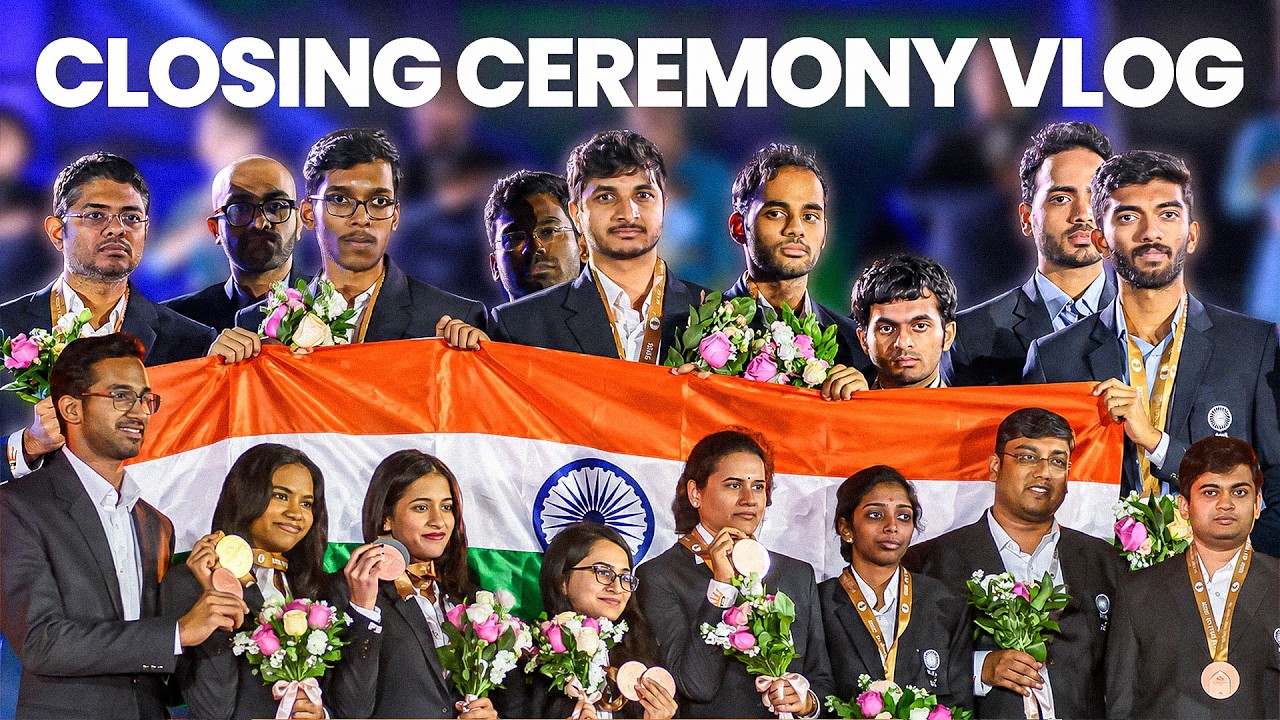
An Unforgettable Closing Ceremony VLOG with the Indian Team! | Chess Olympiad 2026
