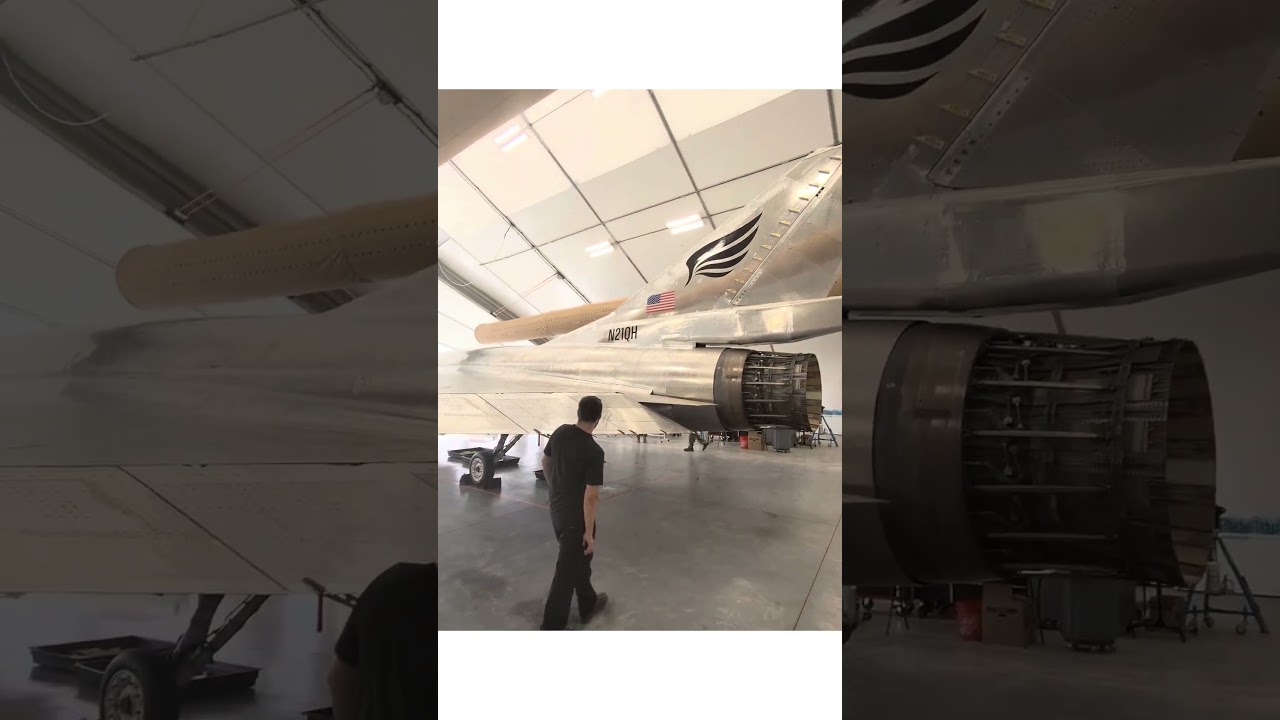
AJ from Quarterhorse aerospace discusses their new Mk 2.1 supersonic jet, which uses an F-16 engine to hit 30,000 pounds of thrust. The team is now expanding the flight envelope and working toward hypersonic speeds by adding a pre-cooler and ramjet that will let the aircraft cruise efficiently at Mach 3.
Chapters
Alright, AJ. Here we are, man. So we got a, hopefully, hypersonic plane in front of us. Supersonic now, but the goal is hypersonic one day.
One day, for sure.
Yeah. Tell me about this thing.
Yeah, so this is a Quarterhorse Mk 2.1. It's our first supersonic jet. It's about the size of an F-16. It uses the same engine as an F-16. And for us, it's already achieved everything that we needed to achieve for our program. So now we're in bonus time. We're playing with house money with this jet. We designed it to fly supersonic. That's now been achieved. So now expand the envelope up a little bit higher, get as much data as we can with the performance envelope that this aircraft can achieve, and then start hitting other objectives that we have for integrating payloads, releasing payloads, mission systems, all those kinds of things.
And so, and we're going to fly it. So to get to hypersonic, you guys need this hybrid engine design.
And so, yeah, what do we, this This is a Pratt Whitney back here. That's right, that's right. So this is the Pratt Whitney F100, same engine that's in the F-15 and F-16. Puts out about 30,000 pounds of thrust with the afterburner on. So it's the turbine part of our turbine-based combined cycle engine. So in this jet, it's just a straight stock engine, no changes, modifications, things like that. In the next airplane, 2.1, we'll have our pre-cooler on board. Which will allow us to push the F-100 up above its normal operating envelope and improve its performance within its operating envelope. And that's kind of the key, uh, you know, trick, I guess, is getting the airplane up to Mach 3 where you can start the ramjet. So we won't have a ramjet on an airplane for a little while, but getting up into that, you know, Mach 2.5, Mach 3 range, we will be able to do this with this guy in the next plane.
So cool, man. So the event So the eventual, eventual goal is half turbine, half ramjet.
That's right. Turbine and ramjet at the same, same time. So turbine below Mach 3, ramjet above Mach 3.
So the tur— and the turbine, you get up to, uh, to what, like Mach 2, Mach, Mach 3?
You get up to Mach 3.
Mach 3. And then it just totally kind of like turns off and you switch over.
Exactly.
To air.
Yep. You do, uh, the process is called mode transition. So from the pre-cooled afterburning turbojet mode to pure ramjet mode. So yeah, if you've seen like the second Top Gun movie, that scene at the beginning where he's like switching to scramjet, it's exactly that. Yeah, exactly that. And that way you have, you know, you use an engine that is kind of optimized for acceleration and climb for that portion of flight. And then the ramjet, its purpose is cruise, efficient high-speed cruise. Because yeah, you would not want to cruise at high speed with this engine. You wouldn't be there very long at all. The ramjet is what gives you range and high speed.