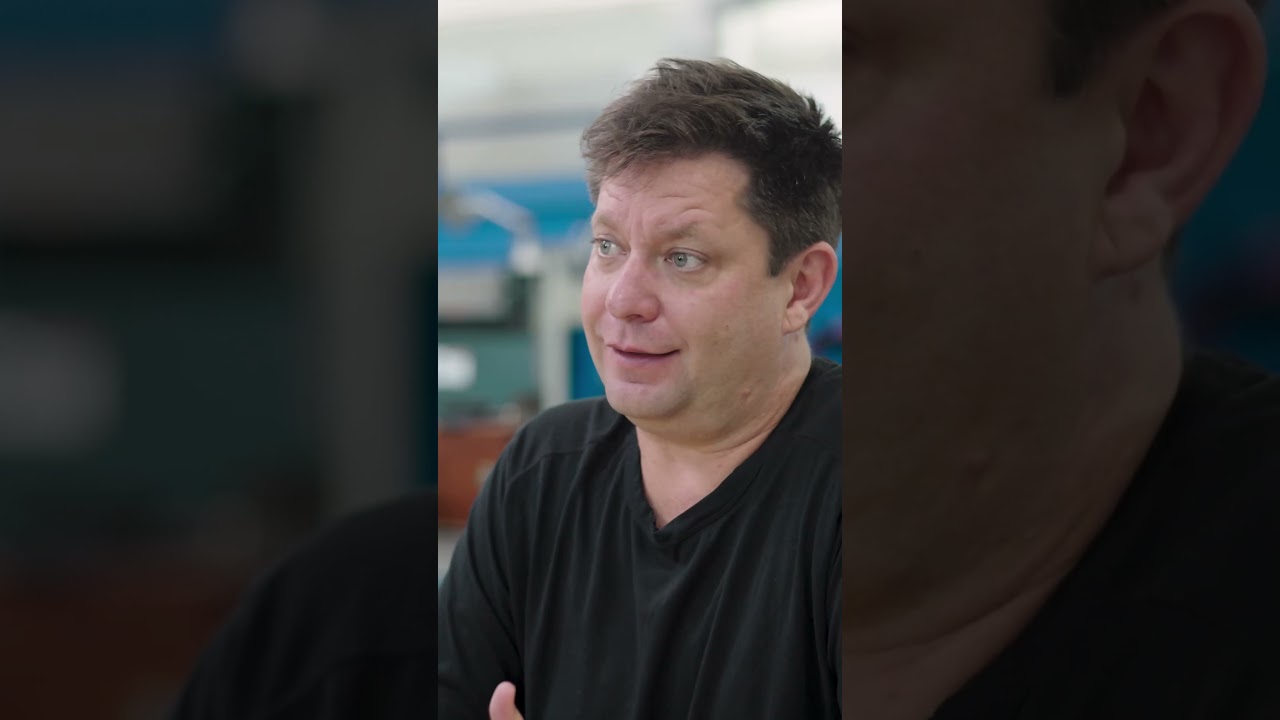
Aaron Slodoff's Atomic Industries is digitizing Detroit's tool-and-die trade, encoding the tacit knowledge of skilled craftspeople into AI software. The goal: produce molds and dies faster and cheaper than China, restoring U.S. manufacturing competitiveness in the foundational skill that shapes everything from car doors to aircraft wings.
The person who dreamed up this conference in the first place is this guy, Aaron Slodoff. And he runs this place here in Detroit. It's called Atomic Industries, and it's trying to bring manufacturing back to the US by modernizing tool and die making.
What we're focused on is honestly transferring a trade skill into an AI.
Okay.
This trade is called tooling. Tool in die making. So this is the keystone to mass production. You have like a widget and you want to produce it in some volume consistently and reliably, you make a mold or some kind of tool.
So you're going to make it the thing that's going to make the thing. You make a mold and that mold becomes the foundation of a bunch of car doors or airplane wing or whatever.
If we want to have any hope at accelerating the pace of development in the industrial base, We have to be able to digitize trade skills to preserve them, replicate them, and then ultimately scale them rapidly.
This collection of machines are what's needed to make the tools, molds, and other parts at the heart of mass production. Once upon a time, the US made these types of machines and had mastered these skills. But cut to 2025, and China is now the unquestioned tool and die-making capital of the world. Atomic's big plan is to learn from these machines and from skilled craftspeople by watching them work. Then it wants to use software and AI not just to mimic those skills, but to improve on them. It wants to make parts faster, cheaper, and better than even the most skilled human ever could.