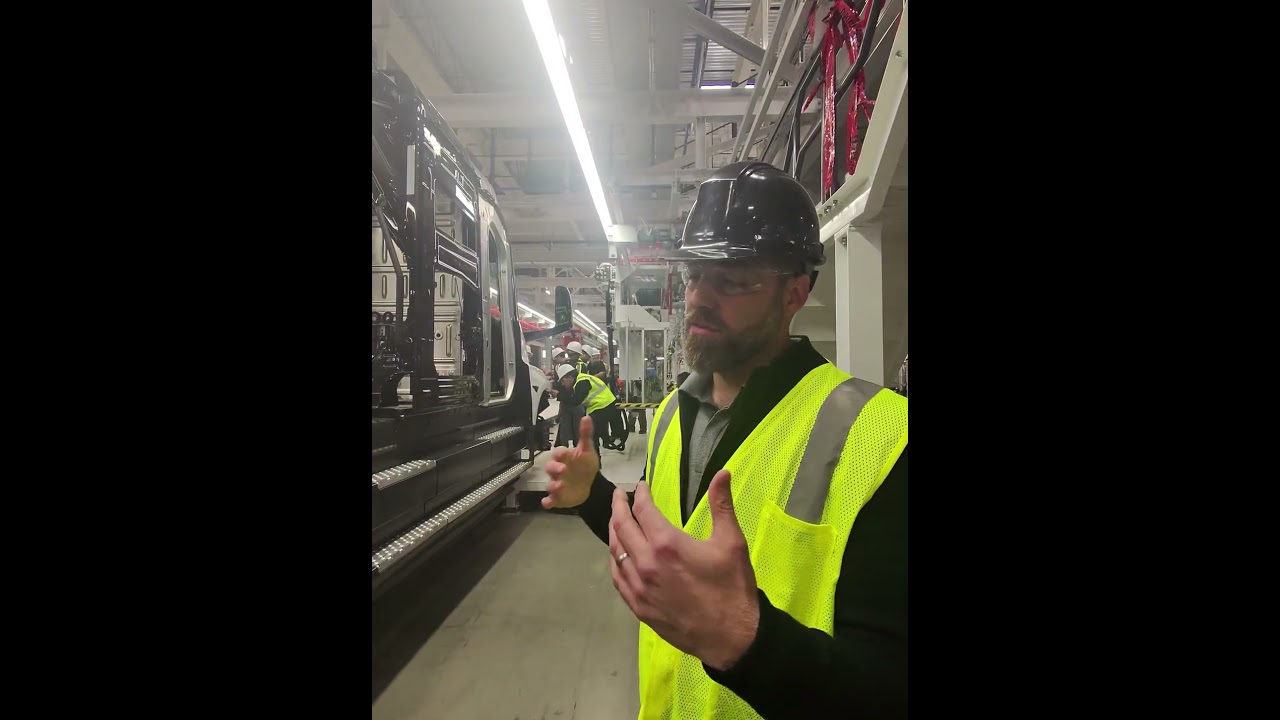
Tesla cut over 1,000 pounds from the Semi truck through high-volume casting and stamping processes. The redesigned vehicle is now easier to service and more reliable, with cleaner interfaces and better stampings than earlier hand-built prototypes.
All right, so we've been going through the factory and then here we go with like kind of the most complete version. Yeah, I mean, anything in particular you want to highlight for folks about this baby you've been working on? Well, I'm sure there's a million things.
Yeah, I mean, well, we're about to go driving the previous generation of truck.
Yeah.
And we've been working hard to make this one even better and we've carried over a lot of learnings, but we've also made a lot of changes. We've actually cut more than 1,000 pounds out of the truck. Through basically just design efficiency. And some of that comes from now having access to high-volume processes, castings and stampings that just didn't make sense at low volume. But a lot of it comes from design and understanding what the truck has to go do. And so we've made it a lot more mass efficient. We've made it more energy efficient. We've made it more easy to service and repair and just keep on the road. So we've really been trying to build on all those learnings. And you can see that just in the truck where it starts to look much more like a high-volume manufacturable piece of machinery as opposed to— you don't have a lot of hand-fabricated stuff the way we do on the prototype. Yeah. I mean, the stamping's super high quality. Just all the interfaces are a lot cleaner. The routings are really precise and neat. There's just a next level of maturity in this version of the truck that I think is going to really benefit our customers.
Very cool. And then we'll show people what it looks like on the outside here in a second.