This Stove Boils Water in Seconds and Comes from the Future
In this YouTube interview, host Ashlee Vance tours Impulse Labs’ flagship product – a high‑power induction cooktop that can boil a liter of water in under 40 seconds and offers degree‑level temperature control. Founder and CEO Sam D’Amico explains the engineering breakthroughs (10 kW output, silicon‑carbide FET drive, custom lithium‑iron‑phosphate battery pack) that enable unprecedented speed and precision, positioning the stove as a “Frankenstein” device that also serves as a distributed energy storage unit. The conversation covers the market gap for induction in the U.S., the strategic plan to embed batteries in everyday appliances to create a decentralized backup system for the grid, regulatory and safety hurdles tackled by compliance lead Lynn Stoller, manufacturing in China, and the product’s pricing and adoption challenges. Vance also highlights the public’s mixed reaction to Sam’s social‑media cooking demos and compares Impulse to other premium induction brands, underscoring the company’s broader vision of electrifying kitchens while reshaping residential energy infrastructure.
Chapters
This is a story about a criminal conspiracy. It's about a man who wants to destroy your way of life. Because here I am in front of this glorious gas stove, making flames. Big, beautiful flames. This fire is like apple pie, Taylor Swift, or an active shooter. It's part of the fabric of our society. My god, it fills the soul. But there's a guy in San Francisco, of course, who wants to take all of this away from you. He wants you to cook like a dork with technology. Let me show you what this heathen is up to. I didn't even know San Francisco had a Design District, but it does. And if you visit it and dodge all the robot cars and go through the right door, you'll end up at Impulse Labs. And you'll find this— the stove of the future. And you'll also find the disturbing gentleman I mentioned earlier.
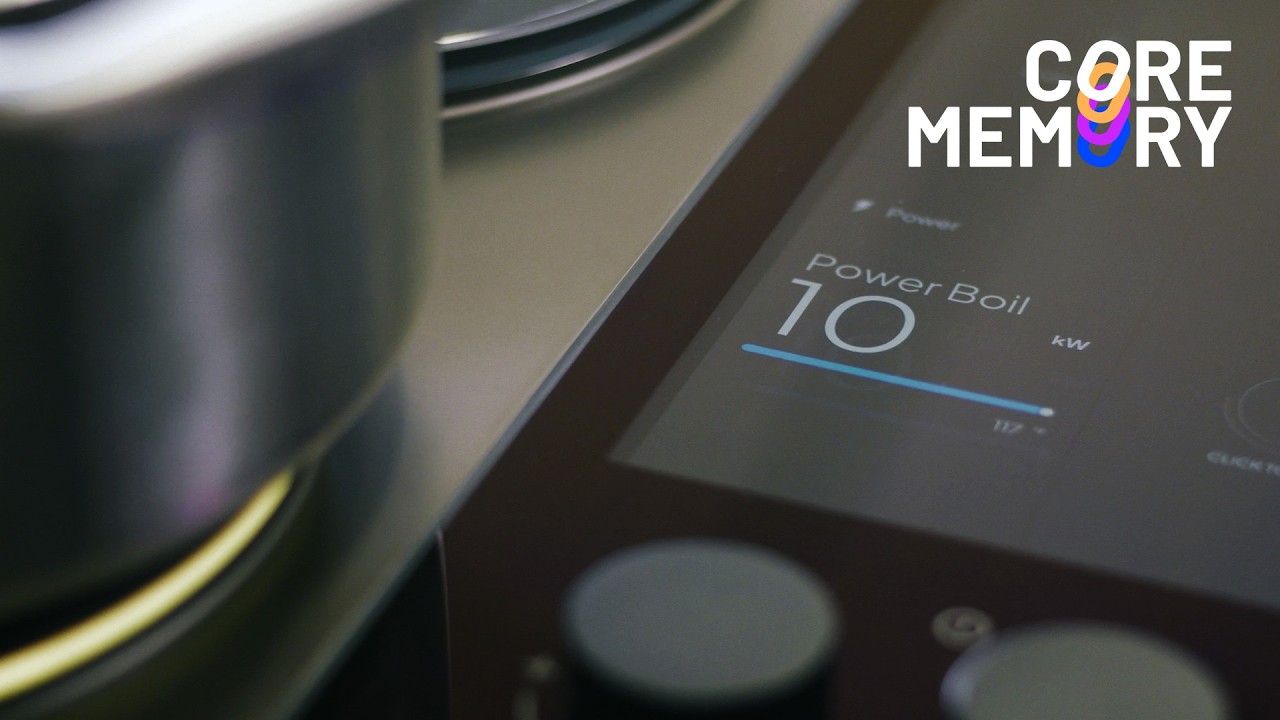
This is like Frankenstein's It gets cleaned up once they put a little cover on it. I'm Sam D'Amico, founder and CEO at Impulse Labs. We make an induction cooktop. It's called the Impulse Cooktop, and it's about 3 times more powerful than any other stove on the market. We basically started with like, hey, we want to make— we want to redefine the user experience of stoves, period. We want to be 3 times more powerful than the best stoves on the market and like 5 to 10 times faster than gas at boiling water. It takes a normal induction stove 10 minutes to boil 10 cups of water. We can do that in a minute and a half. We also like to say like a liter in under 40 seconds. So this is a liter of cold water I just put in there, and I'm gonna put 10,000 watts into the pan.
Oh, a boil. You didn't wanna do Ludicrous Boil?
We can change the naming later. Basically, as soon as you turn this thing on, the bubbles start appearing and it's boiling before you actually can do the next step in your cooking journey. On a gas stove, I think my gas stove at home is about 6 or 7 minutes.
Yeah.
And then we also have just like crazy levels of dynamic range and control. So like I can go 10,000 watts, 300 watts, 10,000 watts. And then if you yank the knob, it turns off.
Okay.
The stove is not just powerful and fast, it's also packed full of technology that makes it super accurate. You can control it degree by degree like you would with an oven.
This stove is different than most other stoves. Instead of low, medium, and high, you can say the exact temperature in degrees, and it sets the temperature right here. I think it was in the 1940s when ovens got thermostats. And so before that, like, baking wasn't a standardized process. It was kind of like, yeah, you just like set it to high. Temperature control has always been the holy grail for what people want for surface cooking. If you have a temperature you set your oven to, everyone can cook the same recipes and it works fine. You can actually have baking recipes that work. If we can make surface cooking closer to baking, We can actually make stuff that was previously only accessible to professional chefs accessible to idiots like me and hopefully the rest of the world as well.
Sam and Impulse have some problems. Gas stoves have long been adored because they deliver a lot of heat fast and offer a lot of control. But when it comes to induction stoves, the US has largely ignored them and left them for places like Europe and Asia.
All other induction stoves, to my knowledge, that are sold in the United States, basically you get like 10 to 20 steps of control. Control, and to get a lower simmer than that, it might actually pulse between off and that, off and that.
Okay.
And so it ends up being this really bad experience where you kind of either burn your food or it's not really on, and that's why a lot of people end up liking gas stoves. Cooking is a chemical reaction, which means it's like a temperature and time-based thing.
Yeah.
Once people get used to it, it's super straightforward because it's basically like, hey, I want to brown my food, I just set it to brown, and I don't have to touch the knob anymore.
Okay.
The SOF required some serious engineering, and we'll get to that in a minute. But you should also know that this is not really just a stove. It's the start of a devious master plan. Because each stove contains a lithium-ion phosphate battery, and Sam's real goal is to fill your home with appliances and more batteries, and to create a spread-out backup system to the power grid.
There's this whole Trojan horse aspect to all this. I mean, so you start by building a burner, but your major goal is to fill homes with all sorts of appliances with lithium-ion batteries. It seems like a kind of crazy plan.
Anything with a power cord, we want to be able to power by Impulse. Instead of having one centralized battery in your house, you have like 3 or 4 major appliances. And those basically bit by bit build the equivalent of say a Tesla Powerwall. It's actually kind of crazy that when you look at the most successful installed home battery product ever sold, which is Powerwall. My understanding—
From Tesla.
From Tesla. My understanding is they only have about 400,000 homes installed in North America, which is a crazy low number. If you actually are in the market for buying one of these things, it's basically a, I want backup and security. For my house. And that's a great feature. The problem is most Americans apparently are not doomsday preppers, despite the fact that that's incredibly culturally salient in America. Yeah. So the big thing also is there's going to be a traffic jam on the grid effectively. If you're thinking of like at the grid scale, like AI data centers are adding just a ton of new demand, we're going to need to build new power plants. But additionally, everyone's getting an electric car. Everyone's putting an electric car charger in their house. That electric car charger maybe uses 60 amps. Your typical home electrical connection for the whole house is 200. But then you think what other devices are going electric? Your stove. If you go from a gas stove to electric induction stove, currently 60. Your heat pump may be similar. Water heater, similar. So you end up in this situation where you very quickly run out of space and there's going to be, in some sense, contention from all of these new use cases going electric at the same time. What I just told you is not what sells the consumer. And this is why batteries have not ended up in every home in America. Basically, it's like there's only a limited appeal for backup and, oh, the grid works a little better. It's not a consumer value proposition. My stove is really awesome.
Is.
There's got to be a different way to get this technology onto the grid because it's good for the grid when the grid is alive.
In California, where we live, this is a really big issue. I live in the heart of Silicon Valley, which you would think would be very, I don't know, tech-forward. Forward and somehow my power's going out all the time. I see this happens in Texas all the time. I don't know, is it just like an issue that it's kind of localized in the state?
It's highly localized, so it's like if you're in Texas, it's a super high salience in Texas. It's super high salience in parts of California where we didn't build enough electrical infrastructure or we turn the lines off during high wind events, which is fairly common as well. But that's kind of where the high salience of Powerwall exists. If you can embed this in new devices, you can now drive adoption of battery technology at scale because people want a cool stove. Everyone basically has a stove in the United States. 55 million appliances are sold every year in the United States. There's an appliance probably being installed on your block today or this week or something like that. And so if you can access that demand that already exists and basically lead the charge by making the best category of that demand, you now have a real good business case to deploy a ton of batteries and remake the grid.
Impulse is asking people to suppress their cultural stove baggage and shell out $6,000 so they can live at the cutting edge of boiled water.
Definitely get more control than any other stove. Would you replace what you have just to get that? That seems like a bit of a challenge. If I was building like a new house, something like that.
Stoves are not an impulse purchase.
Right.
But that said, largely there's going to be a push to fully electrify buildings over the coming 5 to 10 years. New construction, they'll provision enough electricity for that building, but old construction, I have a 125-amp panel in my house in San Francisco. So it's replacing a gas stove with an induction stove, I would need to use this product to solve that problem.
To try and prove his point, Sam has been doing cooking demos on X for many months.
If people follow you on Twitter.
If you follow me, I'm Stove Guy, right?
You're Stove Guy.
But the demos from Stove Boy have not always been well received.
I got most of the way to the steak demo looking pretty good.
Yeah.
And I started posting it on Twitter or X and immediately got roasted.
Yeah.
People were unrelenting and brutal.
I saw you getting griefed.
Yeah, and the point is you just have to post through it. And then suddenly they're like, "Please get some real people in here that can actually cook." And I'm like, "Okay, yeah, we'll do it." One real person is Robbie Griggs, who has some experience in catering, makes delicious fries, and has trained Sam up. He does a bunch of stuff, actually. So it's like he's basically been here for almost every single demo that we've done and has bared with me and also figured out his own crazy things we can do with this product, basically. And then the quality went like from mid to decent. I don't want to say great, but decent. Mid. Like decent.
Sam now thinks Impulse has perfected its technology and that he's more adequate as a chef. Let's find out, shall we?
We're actually cooking it like sous vide style, but not in the way you would normally expect. You don't need a plastic bag, you don't need water, you just put the steak in the pan and you set the pan to 140. No accessories, it just works. Yeah, and every 20 minutes or so we just flipped it. It's really nice. About an hour later, voilà. Right now it's actually fully cooked. It doesn't look very appetizing yet. We'll fix that very shortly.
It never does when you sous vide.
State stuff.
Yeah.
I am someone who barbecues on a charcoal grill outside and you'll get the sear perfectly great because it's high enough temperature and it works great. On an induction stove, getting it to the point where it would not smoke in the pan, but you still got the sear was an incredibly big challenge and probably one of the hardest engineering lifts of this company that we had to do. One of the hardest engineering lifts the company went through. And tasty as fuck. And tasty as fuck.
There are companies like Copper that also sell fancy induction stoves. The New York Times has even filleted them, so you know they're good. But these are mostly built with standard electronics and don't come with the added decentralized grid vision.
We're gonna go ahead and just cut the center here. So you can see basically this is like medium rare all the way through, and then you just see the crust, there's no gray band.
Yeah, super cool.
And this is just a regular supermarket steak, this is not anything special. We can go to Niku later and, you know, You know, if you guys pay for it. I don't know if you enjoy steak, but—
I do, I'll try it.
Yeah.
Delicious.
To achieve StoveTopia, you have to science the shit out of a stovetop.
We basically said like, let's go take legacy induction components and add a lot more voltage. We basically built like a very high performance drive system. This is like a silicon carbide FET module that is used in like electric vehicles to drive really high power into like electric motors and stuff like that. I've actually been asked like, hey, is this a factory? Like, you've got this big space, whatever. This is a lab. And so all our units are built at a contract manufacturer. We actually have two, one for the battery, one for the cooktop. This is the sort of thing that's crazy here. It's like we built hundreds of units before— in Asia?
In Asia.
Before customers get them.
Okay.
Because you need to have the experience, both making sure that you've architected the product correctly and produced enough of them to understand, you know, what sucks and what you need to revise. Also, like, You don't know that like every third part could be bad and you need to understand that.
We can keep nerding out, but I want to nerd out.
Let's go nerd over there. Yeah, yeah, yeah.
Come. All of this was engineered in California, but it's built in China because the US and its consumers decided to gut the country's industrial base in favor of chasing cheap goods. Maybe you've heard about this.
Altogether, these are the major components in the stove.
This inverter charger, what we call a bidirectional inverter, bi-die as we call it, can charge the battery but also can send power from the battery back out through the cord into the house.
Okay.
This was a pain in the butt. The regulatory requirements for this are insane. This was really ridiculously hard. Power goes in there, you start charging the battery, and then the battery connects to the system through this connector over here. So actually you can install the battery separate. The battery ships in a separate box and you just stack them on top of each other and attach one screw connect. We started building this because we were like, let's start from first principles and build the best possible stove we could build. And as we kind of got closer and closer to the final product, we built like hundreds of samples of this thing before we actually locked in on a production intent unit that we're shipping to customers. With the hardware development process, you end up basically building increasingly high-fidelity prototypes.
Okay.
And so it's, it's actually like you end up taking anywhere from 1.5 to 3+ years, and it takes longer if you have to develop new custom modules. This is the battery, actually. It's lithium iron phosphate. We actually laser weld prismatic cells, so it's very similar to kind of how—
that's one cell.
That's one cell. How many of those are in there? I will be a little bit cagey on that, but I could kind of guess. You can count. You can count.
Yeah.
So this battery pack was custom designed with an industry-leading partner that is well known in this space for, for, for many reasons.
The company Sam won't name is BYD. It's known for making electric cars but is now making electric everything and may end up as one of the most important companies in the world.
So it's, it's constructed very much like the, the Chinese EV battery packs, and that means you can do pretty automated assembly at very high volumes, which means that we can put this not just in a high-end stove but in pretty much any appliance.
And then everyone obviously always worries about the fire risk with these things. I mean, I don't know, I guess you're replacing gas.
Yeah, you're replacing gas. I mean, that's the thing, it's the silliest thing, is like earthquake breaks your main gas line and you have a fire.
The poor human tasked with putting the stove in front of regulators is Lynn Stoller.
So, and so, and so Lynn's here because we have to make this legal to install in homes, but the big problem with this is no one else has really done this work before.
I mean, we saw in New York there were e-scooter fires and e-bike fires, and that actually led to a ton of backlash around energy storage. And it's not just enough to be like a delightful and effective product. You also have to be a safe product. When it comes to hardware, you want to be working at the frontier and you want to do the really exciting stuff. But the physical world is so much more regulated than, you know, the digital world. And so, you know, we have to deal with the electrical codes, the building codes, the residential codes. We have to deal with standards like UL standard. When you want to do something really new, oftentimes they aren't accounting for the ways that you can make new technologies, like, simultaneously safe and effective. And so we're really the only product that's set up to safely and effectively deploy batteries in a distributed fashion in anything that has a power cord because we've been working with these standards-making bodies from the get-go.
As my time with Sam came to a close, I needed to hit him with the hard questions. Do you feel like George Foreman dying has given you an opening?
I don't want to joke around about legends of the past, but I do think George Foreman Grill was very good for bulgogi.
I will say that. I will say that.
Mostly though, I press knobs. And ate stuff. Because this stove is actually quite something and quite good at what it does.
These are actually awaiting going to key opinion leaders and influencers.
Oh, okay.
So you may have to slip someone a $20 bill to get one.
But I'd get one. And what's— this is like MrBeast's.
Yeah, yeah, yeah, yeah, yeah. If he wants one, he can hit me up. Jimmy, if you're listening.










