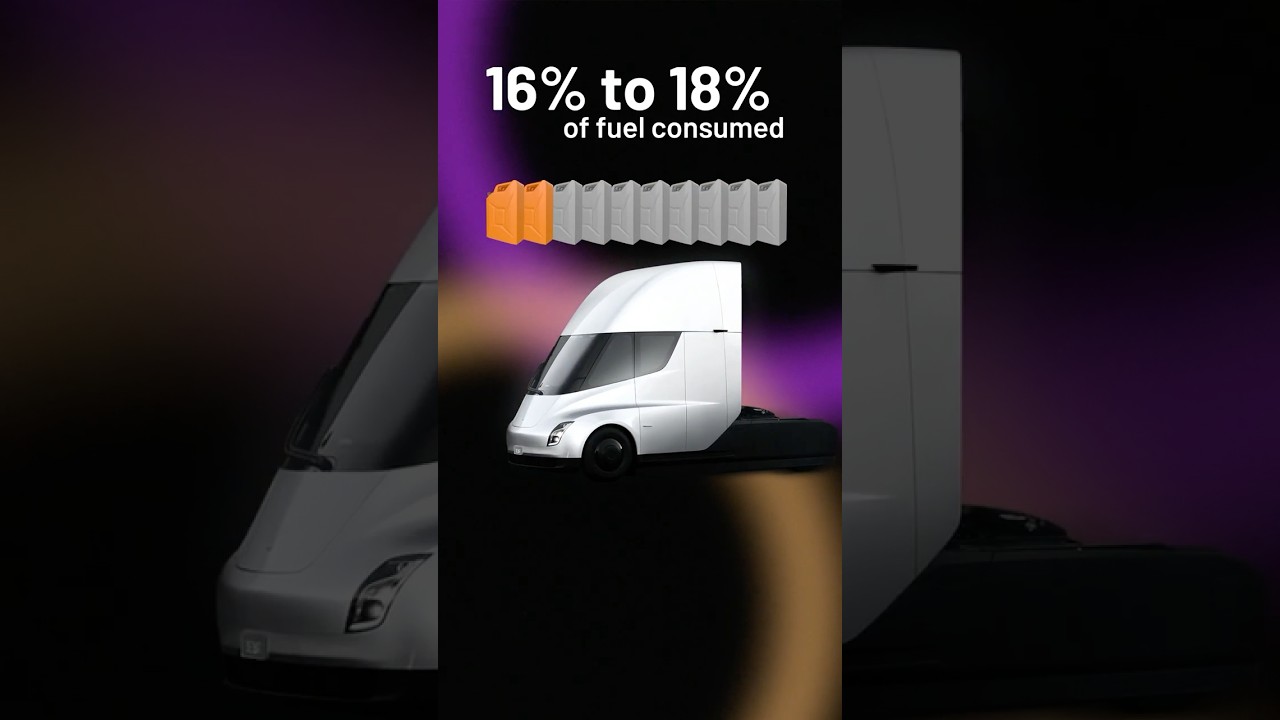
Ashlee Vance explains why electric semi-trucks make economic sense: though trucks are just 1% of vehicles, they burn 16-18% of road fuel, making electric semis far cheaper per mile. Tesla's Semi, first mentioned in 2016, finally reached customer deliveries in 2022 and is now scaling manufacturing.
They're 1% of the vehicles on road. They're like 16 to 18% of the fuel consumed. So on a dollar-per-mile basis, the semi-truck is substantially cheaper running electric than it is diesel. You know, so all the way back in 2017, we unveiled our initial design and then went through multiple loops, had some company growth challenges in there a few times, and, you know, we'll own the schedule, but now we're ready and it's time to bring this to scale.
Tesla mentioned its Semi aspirations for the first time back in 2016 inside of Elon Musk's Master Plan Part Deux document. Tesla then revealed a Semi prototype in 2017 and said production would begin by the end of 2019. But you know, things happen. It ended up taking until 2022 for some select customers to get early versions of the Semi, and it ended up taking until now for the final design to get into manufacturing. Since things here were in flux and some bits were off limits, we decided to hit a few of the key steps in making a semi.
What you're seeing here is a complete cab, and now it's set to be ready to actually be put on overhead conveyance.