Ashley Friedlein, Guild - Event Tech Live London 2022
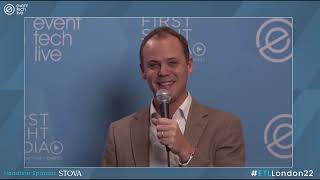
Ashley Friedlein, founder of Guild, explains why events and online communities need each other. Events are spiky and episodic while communities run year-round. Organisers can bridge the gap by embedding events into larger communities, running pop-ups around them, and using smaller virtual events and content to keep people engaged between flagship moments.
Welcome back to Event Tech Live London here at the xl. Hope you enjoyed that last session over there on the main stage. Still plenty more to come. Keep an eye on the agenda online to see what's in store for you later on this afternoon. But as always, I'm joined by another guest in our studio today, actually one of our speakers who've been over on one of our stages for ash. Welcome. If you'd like to introduce yourself to our fantastic virtual audience.
Thank you very much. Hello everybody. I'm Ashley Friedlein. I'm the founder of Guild, which is a platform for communities and networking, including event communities. And I'm also the founder of e consultancy which I sold to centaur media, so B2B media. And so in that I'm wearing that hat, I am an event organizer as well. Mostly conferences, not so much exhibitions, but roundtables around the world. Okay, so events and now community.
A man of a few hats then.
Yeah.
And in terms of the show, you know, what are you mostly here for what you're looking for out the show this year?
Well, I guess, I mean I was, I belong actually to a group of media entrepreneurs, a community, in fact, media entrepreneurs, which Adam Parry's part of. And I'd posted something about analyzing conversations of event organizers in a community we have on Guild, talking about event tech essentially. And it told an interesting story about Hoppin, which, I mean, you know, Hoppin did that stratospheric growth and now as well, it's just actually a big announcement yesterday as well, but. And he said, oh, that's fascinating, you need to come and talk at the. Talk at the show. So that's kind of how it came about. But I mean, I guess I'm say wearing my event organizer hat. I'm obviously interested in meeting other people, learning about the latest technology and wearing my Guild hat. Say we are a community platform, but we're kind of figuring out, well obviously events are a big part of communities, whether physical meetups or virtual meetups. But how does that kind of work in practice? Because I think most event organizers being a bit provocative here, but don't do a very good job of online community. And in fact some community organizers probably don't do very good events, to be fair. So yes, I'm sort of interested in this idea of okay, so you've got a community, online community and you've got events whether physical or virtual. How should those things work together better than they do currently?
That's interesting. Like that you mentioned event planners at the moment aren't great at building communities. But I know there's been a lot of discussion around it. Obviously that's the reason we got you in to be part of event Tech Live this year. If you got any just like a couple of tips of what, what people maybe just sort of overlooked in terms of what we can do better as event planners or whether we, where we even start, you know, building those communities and getting people on board.
Yeah, I think one of the, I mean despite the fact that I obviously represent a sort of tech platform, I actually think it's less about the technology in the same way that there's lots of good event tech platforms here and they do roughly the same thing. Even though they wouldn't say that my bit overstating it but you know, it's you that the skill, you know, it's more important than the content and the customer experience all this stuff. So I think that the challenge is less around tech and more around skills and focus. So event organizers planners are very good at running events, but the events tend to be sort of acute rather than chronic as in they happen at a point in time. So if you were to graph a chart of activity in events business over a year, it would kind of be spiky like this, like event, event, event, mind, event, do, on to the next one, da da da. Whereas community is more like this. Like it's particularly online community, it's 3, 6, 5, it's year round, it's always on. And the problem event organizers has is understandably when you're running an event like this, there's no plan B, it's like full on, that has to be the priority and you're manically doing event ops and everything. So the community bit, the ball gets dropped on that. It's like whose job's that? Oh, I don't know, not mine. I'm busy with this. So it just sort of falls between the cracks. And I think, I think that might be changing because people then events might think well that's all very well, okay, I need the people, I need the tech. I haven't experienced that's more money and cost. What's the ROI in that? When actually particularly now, events are bouncing back, making money again, why kind of do this community thing? So I think that in reality much more than the tech is the challenge. So I think it's about finding the senior people that buy into it strategically and commercially and then having the right skills and focus resource wise to make sure that the community bit happens as well as it can do and though that it's really aligned and works well with the event. If they're separate, that doesn't work either, you know, so you've got to try and embed and enmesh it.
It's more living it for sort of planning for the foreseeable future ongoing, isn't it? Rather than like you say, because I know what you mean about the, you know, the event planners graph if you like. Because you know, I have it, you know, the days of planning and then the event days and like you say it is very much up and down and I work with many different industries and they are a lot more community, probably focused than probably events are at the minute. So it's really interesting that you bring that, I think.
Yeah. The other thing is it's if you have a community built around an event brand like Event Tech Live, let's take today an example. It happens as far as I know, once a year. Is it at least in the uk? Once a year, yeah.
So once in the UK and then we also have Event Tech Live Vegas coming soon. My friends. Watch this face.
So what is the reality that you can keep people engaged year round in a community based around this event? It's actually quite hard because people, you know, they're super focused the day or two before at the event, day or two after and then they're on to other things, the delegates, the sponsors that, you know. So I think actually sometimes the right decision is to have what we call a pop up community, which is a temporary community essentially.
Yeah.
So you might say okay, well let's have a community around the event but only for a week before and week after and then we'll close it. That's fine. You can have a temporary community.
Yeah.
Or if you're going to create a community, you can have a community around event industry news. So that. Because that's year round news and that's the media bit.
Absolutely.
And then when you have events, those are just pop up ones or you drop them into the core community rather than trying to have a standalone one. Because that say a year round engaged community around an event brand is hard to sustain. Whereas if you just embed it in your core community or you spin it up quite quickly, I think that is the solution to not having too much resourcing, too much headache and stuff, but still maximizing all the excitement and buzz that you get around an event. And how do you kind of capture that and extend that using an online community?
It's really interesting because we've been talking with people about marketing teams and marketing Strategies and how people use events now to really engage people and keep people going. Do you think if people do do a sort of one off event a year, do you think they need to do more events throughout the year to keep people engaged throughout the year or are there other things people could be doing to keep that community engaged?
Yeah, as I say, I think sometimes a you don't need. You might be setting yourself too hard a challenge to create a year round engaged community based on the event brand. Say what I would say is no, create the year round community based on just general. Like if you're an engineering, let's say then say okay we've got our engineering forum or Engineering Futures or the Engineering Collective or whatever it is and then when we have our, you know, engineering summit, well that then fine is a pop up community or just is talked about in the core community. So I don't think you have to have a community necessarily that's year round centered around an event brand. But other ways you can keep engagement up are. And this is happening more rather than just one big event a year, you might still have that as the flagship thing. But then there are smaller events, most obviously digital or virtual events because they're just easier so you do more little stuff and a kind of roadshow type year round. So you've got a constant event experience. But it's not just events. I mean community has obviously user generated content, questions and answers. There's content if you're more broader media business, you've got content, you've got data, you've got trends, you've got best practice. If you do training or learning as increasingly media or even events businesses do, it's like okay, we've got E learning, we've got E courses, we've got a qualification, we've got one day training, we've got webinars or you might even have campaigns or initiatives like we are lobbying the government to do blah or get behind it and those all kind of things which a community is great for because you can align them behind that so you're not just relying on the events to kind of be the only thing that people can get excited about.
Brilliant. I say top tips there. I think lots to take on board and I say lots for historically like you say event planners, maybe it wasn't their focus but hopefully that has given our viewers watching from around the world a lot of things to think about there. So actually thank you very much for joining us. Thank you very much for all your insights there and we'll leave you to enjoy the rest of the show.
Thank you. Thanks.
So, ladies and gents, going to take a short break now. We're back here very soon with our next guest here in the studio.
More from Ashley
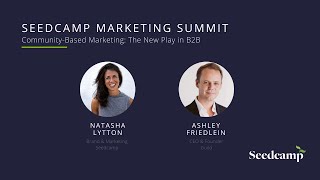
Seedcamp Marketing Summit: Ashley Friedlein, CEO of Guild, on Community-Based Marketing (CBM)
Seedcamp Marketing Summit: Ashley Friedlein, CEO of Guild, on Community-Based Marketing (CBM)