A Masterclass on Building and Scaling a Brand with Sam Paik, State of Fashion/YZE Agency
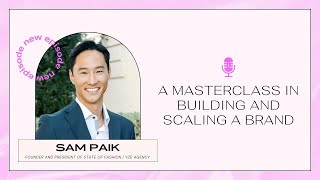
Sam Paik built Paper Crane from zero to millions in revenue, then navigated the 2008 crash and COVID. He walks through inventory turns, vendor communication, design costs, and the operational details most founders skip over.
Chapters
I think one of the most important things that we learn about business as we go is the power and the opportunity behind networking. It's not just what you know, but it's who you know. Right? So today I'm so excited because one of my best friends in this industry that I have really appreciated the opportunity to get to know and to get to collaborate with is my friend today is going to be joining us. And not only are we going to talk about his exciting, extensive experience in this industry, but also he's going to be sharing nuggets with you today that nobody talks about. And this is going to be coming from the angle of a wholesale brand and a manufacturer and someone who has been involved in building multiple companies. So if you're someone who's thought about private labeling your own line, manufacturing your own line, maybe you're a wholesale brand yourself. Whether you sell apparel or candles or jewelry or whatever it is. Sam has so, so much knowledge. He's busting at the seams. And today I'm thrilled to get to share it with you guys. Plus, we have been working on a really cool project that is going to be launching soon and you're going to be the first to know about those details as well. So you get to meet my friend Sam behind Wise Agency, State of Fashion, Paper Crane, and multiple other brands. You're going to love this one, you guys. Let's talk about your business strategy and the juicy details of what works from mainstream fashion to fashion on Main street and the entire ecosystem behind it. How do we scale your company and do it with the balance and the happiness that we all seek? Let's hear from those insiders, experts and strategists that actually make it happen. I'm your host, Ashley Alderson from the Boutique Hub and I can't wait to chat. Hey, guys, welcome back to the podcast this week. I am really going behind the scenes here this week with a friendship that I have that I'm so excited to share with you guys. And I hope you have a pen and paper because you're probably going to take a lot of notes from this one and be excited about the big picture conversation that we're going to have here today. So, Sam, let me just start off by saying this. I'm a big believer in it's not what you know, but it's who you know and just the power of networking. I think that's what's really built the Boutique Hub. And so lucky enough for me, we share a mutual friend, which is how we met, and those of you who've gone to Magic. You guys know I've been friends with Kelly Helfman for a long time. Kelly is who introduced me to Sam. And it was like, I don't know, lightning struck, and the two of us and our squirrel brains just, like, ran off into the forest with all kinds of ideas ever since. So I'm so glad that we get to talk about this out in the open and just share all of your knowledge with everyone today. Thank you. Thanks for being here.
Yeah. Thanks for having me, Ashley. And funny thing about that story. When I first met you, it was at Magic. Yeah. And you had just given a keynote, and so I was told to just hang out. And so when I would. After you had done speaking, I then was looking forward to meeting you. But then I had to wait in this long line because you had a bunch of fans there ready to get your signature and take pictures with you. So I stood in this long line, probably wait about 45 minutes. I was the last one there, so. But I'm glad we met. And I think it was a couple years ago.
Yeah.
When we first met and we started to talk and brainstorm ideas, and here we are.
Oh, my gosh, it was so fun. Kelly had spoken so highly of you for so long, so I was so glad that you bared the line and we got to meet. But what's even funnier so you. We didn't know a lot about each other, you know, up until that point. But you have to tell these guys the story of the second time we met face to face, because that's even funnier.
So, Ashley, you came out to la, and we were. I was super excited to meet you and your team for the first time. And this was probably a few months after we met at Magic, and you were out there for an event, and I was like, I gotta take Ashley and the team out to this really fancy restaurant and a French restaurant in la. So I had made reservations, and I was like, you know, we're gonna order some delicious food and. And really have a good time. And so the menu comes around, and as she's looking at this thing, puzzled and figuring out what she's going to order. And I just thought maybe you didn't know what to order because there's so many good things on the menu. But then when the waiter came around and you ordered, you ordered meatballs. Out of everything on the plate, it was just meatballs. And then I found out that you have a very particular taste.
Very particular taste. So you guys know if. If outside of the podcast, you guys, if you follow me on Instagram, I've shared my meatball recipe with everyone, but I'm very Midwesty when it comes to food, which is not great because you are such a foodie. Like, you've taken me to eat duck and you've guided me through eating sushi. Because I'm just going to tell you, when you grow up in Wisconsin and North Dakota, you just don't order sushi because where does it come from? You know? So I appreciate that you've helped me expand a little bit.
And you know, I had to, I, you know, I grew up with the particular taste buds. You know, I grew up in the Orange county area. It was always hamburgers, pizza, you know, stuff like that. But as I traveled and you don't come across these certain restaurants in certain areas, you have no choice but to eat certain types of food. So traveling for work has really opened up my taste buds.
I love it and I get to reap the benefit of that now. So if you guys see any more meatball jokes, you know, it, it came from Sam, so. Well, let's take, take us back. Sam. You know, speaking of all those travels, you are one of the most well traveled people in this industry that I've had a chance to meet. And you're somebody who has literally worked in every single angle in every single corner of this industry. So when I talk to you, it's, this is why we're squirrel brains together, is because you just have amazing insight into how things work, into why they work and, and where there's gaps and where there's opportunities. And so take me back to the beginning of that. How did you first get into this industry? What, what led you here in the first place?
Yeah, I was always fascinated with fashion. I think my first experience with fashion was going to an ASR trade show which no longer exists, but used to exist here in Long beach area. And I think I was just graduating high school and I wanted to figure out what I wanted to do. And so I went to the show, I heard about it through friends and it was the most amazing experience. There was, you know, people drinking, having fun, but there was also business going on. There was a lot of creativity happening with the boots were designed and so it really blew my mind as I thought this was the industry for me, but I didn't really know how to get into it. But I started to do a T shirt line just to try get my feet wet. And then I, it was with a couple of friends and one of the Friends was dyslexic. And so we decided to call this line Dyslexic Lab. And I wore this T shirt around everywhere. And I happened to meet a guy who was in charge of all the backstage award shows and having this gift room. And so he loved my concept, loved the shirt and said come out. And so for free, didn't charge me anything. I just helped him set up and being in college and then now getting to go to these backstage award shows, these award shows, from the AMAs to the Golden Globes, all of these different award shows and got to meet all these celebrities and give out my T shirts and the feedback that I got was incredible. And so I said, well, I'm going to start. And then I met a guy who was going to make the T shirts for me and gave, you know, $5,000, you know, everything that I sort of saved up, you know, eating peanut butter and jelly sandwiches and working part time jobs. And so I went, you know, gave him this money to start production. And then a month goes by, I don't hear anything from him. And then next thing you know, I found out that he ran off with $5,000 from my money. And that was a big wake up call. I was like, I need to go and figure this out and learn how to do it myself. And so I left the college that I was in, I was going to UC school and then joined FIDM and went to fidm, went to my two year program, learned apparel manufacturing, the business side of it, everything from design, production and sales. And then it was just all head knowledge and but I also wanted to get more knowledge in marketing and business and accounting. So I went to USC and got my accounting degree and then worked in corporate, got a job and then worked inside a company, grew that business from zero, started the brand to $25 million when I left. And then I decided to start my consulting company. So I went out and got a few clients and then one of my clients was saying, hey, why don't you come and partner with me? She'll fund everything and pay for it. I just had to bring my knowledge and my know how into the business. And so that was a great opportunity to then start my own line, which was now Paper Crane. So that was about 12 years ago and then went through that journey of launching Paper Crane. And since I started, for the first six years, it was just a skyrocket growth. And so we went from 0 to 12 million I think in three years, such a short span of time, and launched a lot of different retailers and gone to department stores and then took that business, spend it off into launching a Missy line, a men's line, a kids line, and an activewear line and did all of that. And then four years ago, Covid hit. And that was probably one of the most challenging times that I've faced. And even prior to that, during 2008, the financial crisis, that was a big hit, business started to slow down and so we had to relook at business. But when Covid hit, that was a big wake up call. I had probably a million units coming in that was stuck at the port or stuck at. In China. I had probably more than 3 million units sitting in the warehouse that all the orders got canceled. And then. Yeah, and then there was the lockdown that happened. And so that was a big, challenging time for me, mentally, emotionally, going through that. And we can sort of go into what that journey was during that time later. But so came out of that, I also had an accident that almost took me out. And so it all sort of happened at that one period of time, within a span of a year. But through different things that happened, I was able to transition out of Paper Crane and in the process of now, since four years ago, launching a support marketing agency called Wise Agency. You know, some people know it as state of Fashion. And that's been an incredible journey, which I am, you know, so thankful that I've been able to transition and really find going back to my first passion, which was, you know, consulting and helping others, being able to bring that full circle back to this place.
Everyone listening is probably asking themselves right now, sam, do you sleep? Do you sleep? That's incredible. There's.
I mean, yeah, scientifically I didn't realize this, but I heard this in a recent podcast. There's a gene that certain people have that allow them to not sleep as much.
There you go.
I think I have those rare genes because, yeah, I don't sleep a lot, but I still have, right, for now, energy to, yeah, do what I love.
I love that. You know what else I think really factors into all these different pieces of your story is I think as entrepreneurs, sometimes it's really easy to lock your identity up with the business that you're creating at the time. And I think it's hard for a lot of us to know, like, how long is this business supposed to last before I transition into whatever else I'm being called to do? So talk to me more about that journey, specifically about 2020 and what happened with your surf accident. Did that play a part in you being able to close one door and open another. And what advice would you share with others that you learned from that journey?
Yeah, I think if I could go back just even a little bit more about just the challenging time that I was going through, there were days that I couldn't make it into the office. I think I was having, you know, some sort of nervous breakdown. And so there were times where I would sit in the car, in a parking lot, in a park, just sitting.
There.
Just not knowing even what the next step was going to be and how I was going to move this forward. And so there's three things that I did during that time that really helped me that I still use to get through some of the tough days that I'm having, which is, you know, I started listing down three things I'm thankful for every day. I just will wake up. Because I think when you're in that situation where everything just looks dark and there's no hope, it's, you know, you forget that you have your health, you have your family, you have, you know, mobility and things that can, you know, you can get through the day. So I list three things. I try to get as specific as I can. The second thing was I made a list of three things that I was going to do that day. And when you're going through those dark days, the list is endless. And it's overwhelming to even know where to start. So I just said, I'm going to focus on three things. And I started just saying, okay, in the beginning is three, and then ended up, then I could do four, then I could do five as time progressed. But if you try to tackle everything at once, it's so overwhelming and so daunting that it's almost endless. And then the third thing was I started to prioritize, you know, and really look and say what's. What's important for me. And then, you know, going back to the basics of, you know, being there for my family, being there for, you know, you know, whatever was happening at work, knowing what I needed to prioritize. So I think those three things every day, just making that something that I did in the morning really helped me then to be able to drive to work, to then just say, okay, I'm going to tackle this. I'm going to take care of expenses. I'm going to let some people go. I'm going to, you know, contact a buyer that I haven't contacted and make it and reach out. So. And then. So as I did those three things, I was able to come out of it, the situation that I was in. But that during that 2020, as I was coming out of the rut and things were starting to move and pick back up again, I got into a surf accident. I think I share this with you. I was out here in Huntington Beach. I tried. That was my escape from everything that was going on and still is my escape from the busyness of life and place where I can find solace and peace. And so it was a beautiful blue, blue sky, sunny, you know, Southern California day. And then I went out and I dove underneath a wave that was coming, and I. My head hit a sandbar and I went paralyzed from the neck down. And so during that time I was underwater, probably it felt like forever, but, you know, it was enough time for me to reevaluate my life. Just think back on, you know, what was important, what I spent so much time doing, and, you know, really was like a flashback because I couldn't move anything and my. My body parts and. And I thought this was the way I was going to go. And, you know, fortunately, I felt at peace. You know, I felt like I lived a full life, and there was some regrets that came to mind, but I was thankful for the life that I was able to live. And I said, if I was to get out, if I could make it out of this, then I'm going to change. And so somehow, with the lungs in my water, lungs in my air, in my lungs, and wearing a wetsuit, I floated up to the surface. And then the water, the waves came and pulled me down. That happened a few times. And after the fourth time, the waters went calm, the ocean was calm. It's like a lake, and it felt like someone was carrying me through the water. And after about 15, 20 minutes of floating, I thankfully ended up floating towards the beach where people saw me and I called out for help and they pulled me in. And during those 15, 20 minutes, I felt like I was going to be paralyzed because I still couldn't at this point, move my fingers or my toes. And that was. Yeah, that was a tough time. That was tough. 15, 20 minutes of thinking what my life would be if I was going to be in a wheelchair for the rest of my life. And so there were dark moments during that 15 minutes. But as I came into the beach, they pulled me in. I'll start to move. I started to be able to move my fingers and toes, and that was a relief. And it felt like I was given a second chance at life. So I think that really changed at that point, I didn't realize how much it made an impact on me emotionally, mentally, as a person. But as time progressed and as I realized how precious life was, I started to really be able to be thankful for every little moment. Even my kids complaining before it was annoying and now it sounded like listening to music just. And then being able to spend that quality time and being present, being in the moment, and then at work, even through the hard times. Just being able to experience those hard times, I realized was a gift, was an opportunity to learn. And then I really started to question what do I really want to do? If I only had, you know, this much time left and who knows how much more time it is. It really made me go back to what I really was passionate about, which was business and helping people. And so then I decided to make a transition out of the business of doing clothing and manufacturing full time to then helping other businesses go through what I went through and hopefully taking everything that I've learned in production and manufacturing, wholesale marketing, sales, customer service, to be able to then offer that to people out there.
That's incredible. I just have goosebumps thinking about your story. And I mean, I know we share some near death experiences between the two of us, and I think everyone who, who's listening, who maybe has had something similar and very traumatic in their life, would agree that something good comes from every bad situation, if you choose to look for, can be life changing in the best way possible. And knowing you now, and knowing how you live now, I, I just can see that all over you. How do you feel like now when you consult businesses? How does like, you know, going through that and really like viewing your life in such a different way. How does that change how you consult and coach other businesses? What, what comes to the forefront first that maybe previous to this it wouldn't have come to the forefront first?
Yeah, I think one big thing that came out of it in the conversations that I have is being intentional. Being intentional about your plans, being intentional about what your goals are. And before you just get into the motion of doing things, you know, you're told to do this, so you go and do this. You, you're, you know, everyone says you need to be at a trade show, so you go to go do a trade show, you gotta, you know, have, do this amount of sales, you have this amount of employees, so you have this idea of what success looks like.
Yeah.
But then it's not intentional, it's not really going into what you wanted, the quality of life that you want, quality of business that you want, what is your objective? And really so asking some hard questions in the beginning. And I think that's what I start off with when I really approach companies or even talk to people is really finding out what motivates them, asking hard questions. And I think I've really gotten good at asking questions.
I would agree with that. And that's so important because you could skate around and put band aids on so many things externally without really like cutting deep and getting to the core of what the real issue is.
Yeah, real goal and issue.
Yes, absolutely. Have you ever woke up on a random Tuesday morning, Tuesday and wondered, what am I going to post on social media today? Or man, I'm uninspired Or why are people not engaging with my content? Or I'm gonna go live, but I feel like Ricky Bobby and I don't know what I'm gonna do with my, my hands. Right. We all do. We all go through the burnout of social media. That's why one of the most important products that we carry at the Boutique Hub is our Small Business Marketing Handbook. It's literally nearly a hundred pages of social media content and ideas you can use each and every day. We have everything from TikTok ideas to live sale ideas to monthly promotions and games and events. You can host daily social media content by month and by theme, engagement, questions and holidays and promotions. Plus, if you're buying and promoting in collections in your business, we break down what collections you should be not only buying but also promoting month by month. Everything you could need for a new social media idea is in the handbook. So I've got it linked up for you in the show notes. It is the Boutique Hubs Small Business Marketing Handbook. I hope you snag one. It is a digital download. Print it yourself or as a member of the hub, use your vistaprint discount to get it printed on the cheap and have it mailed directly to you. I hope you enjoy it. I hope you love it. It sits on my desk. I use it every single day. I hope you will too. So when you think about, you know, now you have an opportunity to work with so many different types of businesses. What do you think like, of the businesses that you work with today, what are the most successful ones have in common?
I think there's a couple things. One is there's communication. There's open communication across all departments and all people. So there's not one person that's leading the charge and giving directives and orders. It's a group effort and everyone feels committed and feels like they're part of the process. So I go into companies, you know, sometimes there's one owner that's, you know, telling everyone what to do, making all the decisions, and no one feels connected to the goal and they're just there doing the motions. So, you know, I think when I see companies that really succeed and are doing well, the owner is bringing everyone along, along the process and getting everyone involved, communicating the goals, you know, talking about what's. What's not working. That's a very difficult, you know, conversation to have a lot of times because it goes back to the owner and the owner has to change or the. Or the management has to change. So we talk about where things are working, what not working, and getting everyone involved. I think second thing is the companies that I see, the brands that I see still doing well are the ones that really understand who their customers are.
Yeah.
And they are building relationships. They're not selling products, and they're very focused on their niche. And I think just in the environment that we're in now, with so many options and resources and brands from overseas now trying to come in and be a part of this market, the more focused, authentic you are to your base, to your base of customers, the more that base seems to be rewarding the brands.
Yeah, let's talk about that a little bit even deeper, Sam, because just yesterday I was speaking to some vendor friends of mine in LA about, you know, just the climate we're in and how markets have gone so far this spring, and there's no surprise in the boutique industry anyway, there's a lot of conversation about Sheen and TEMU and how consumers are shifting their buying patterns, and so boutiques are really having to shift along the way. What advice would you give to brands who are. Are facing that and they're seeing boutiques order less and they're wondering about where this, where this industry is going. What advice would you give them to really stay ahead of, you know, the change and be at the forefront of what's to come?
Yeah, I think. Well, that's a big question.
That's a big question. It's a big question. And there's not a right. I don't think there's a right or wrong answer to it.
Yeah.
You know, but it's going to take everyone in this industry to put their heads together on, you know, where. Where we think we're going to go next and how to get ahead of what I think is a, you know, a winter in the fast fashion industry anyway. But right after winter, there's A spring to come and an opportunity that's going to follow.
Yeah. And I think this industry sort of, if going back into history, you know, I would say 10, 15 years ago, there were, there was this marketplace where boutiques would have in stores and retailers would have to place orders ahead of time, you know, six to nine months ahead of time. And then the brands would have to develop a collection that would be unique to their brand, unique to their identity. And these retailers were willing to go and place these orders ahead of time so that they got something that was unique, they got something that no one else would have. It was on the forefront of fashion. And these brands really focused on developing a collection, developing an item, an entity, identity that separated themselves from everyone else. Because fast fashion was always around. But this contemporary, young contemporary market was so different back then. Fast forward 10, 15 years now, the LA market, the fast fashion market, started to carry inventory. They started to plan ahead internally. A lot of times it was something that they did within their own design and design team and they started to plan ahead and bring an inventory, which then the retailers would not have to plan ahead, would have to take any risk. And it was all on the brands. Now the brands are stuck with inventory and they don't want to bring in anything that was, that's going to be considered risky. So now they're going safe. So then the retailers don't have anything new to buy or it's anything fresh and different to buy, and it feels very old, but it's new to the brands, but they're not doing anything that's going to be, you know, outside of what they consider safe, which is, you know, a lot of basics. So I think we'll see a lot of the same old things that have been working, but nothing new. So I think now the transition into how do you, where do we go from here? Is getting the retailers involved in the conversation, not just in what they're going to buy in season, but what they're looking at and what they're seeing as a trend for their customer base. And so that's difficult because they have to really identify their retail base and design for that retail base, which if you go into different states now, there's, it's so different. You know, how they buy in Utah is so different versus how they buy in Texas, how they buy in New York and la. So different. So the market is going to get smaller. But that, that would be the way I would say the market has to go going forward is to get the conversation going, understand who their core Retailers are who their core markets are and get them involved in the process of designing.
It's so good. It's definitely getting the retailers involved in the process. And something that I've been hearing more of, that I'm so excited about is, you know, our motto is community over competition at the hub. And that's not only for retailers, but it's for brands too. And I think as of the last six months to a year, I have heard about more collaboration among brands and more communication among brands or maybe that was a little bit more siloed than the retail industry has been, but that's opening up because I think brands are realizing when we work together and we share information with one another, we all become stronger because of it. So that's certainly a big shift in culture in what's happened in our industry as well.
Yeah, and I think that's a good, that's a credit to you and to what you're doing and fostering within the retail environment. I think that has to also continue to happen within the wholesale and brand environment. There has to be more collaboration, more communication, but just a deeper, again, connection with the whole retail base I think is going to be the key for everyone to survive.
Absolutely.
Next wave that's coming.
So I think there's an opportunity here to talk about if you're a new and growing brand. Maybe you're brand new to, you know, having a product based business and selling wholesale, or if you've been around for a while and you're maybe hitting a plateau and you're wondering, okay, how do I push through to the next level? There's opportunity for more education in this space and we're going to talk about this in just a little bit. But this is something you and I have been working on for about two years probably is, you know, how do we put our minds together and take your knowledge and put it on paper and mine and the connections that you have and the connections I have, how do we bring this together? Things that really aren't often talked about and shared in terms of how to really grow that wholesale brand. So before we talk about what that education looks like and some of the things we're going to be talking about soon, tell me about like we'll say new brands and growing brands specifically, or those who have stagnated, what do you think are some of the most common struggles that each of those groups are facing and where would you advise them to start to overcome and create some opportunity?
Yeah, I think for starting for brands that are starting out brand New, I think it's the easiest thing because there's a lot of excitement, there's a lot of, you know, energy that goes behind, goes behind launching something. And I think if I look back at all the brands that I've launched and the brands that have failed and succeeded, the number one thing that I would have done differently in doing that is gone slower. In the beginning, I didn't set benchmarks, so there was no way to tell myself or the team if something was going to work or not. I just launched it, and there's a big investment that goes into launching it. So my mindset was, well, I already have this overhead. I already have these costs that are going to go out, so might as well go big. Well, I think that if I go big, a lot of times ended up with me losing a lot of money. So I would say slow down in the beginning, set benchmarks and test the market. And as creatives and people that have a vision for what they want their business to be, we have this gut instinct that wants to go fast and tell the market, this is what you should have, instead of asking the question, is this what you want? And so I would say get people involved outside of your circle of influence or outside the circle of your company, because everyone in your company are probably going to be supporting you and excited about the venture, but you want people that are outside of that to be able to give you some honest feedback. You know, look at the product, get some samples made, test it, see what the reactions are from people that are not connected to you to see if it's a really a viable product. Look at your competition, look at your price points, look at your margins and see if it all makes sense, and then take steps to then proceed forward and not just dive headfirst into it. So I would say test as much as you can, set clear benchmarks and be open to getting negative feedback, because in the long run, that will save you so much money and time.
Yes. Oh, that's so true. And it's hard, it's easy to be in the echo chamber of, like you said, sharing with those we know first versus getting some negative feedback from the start. Okay, so what about that's a common struggle for new brands? How about those who've been around for a while that have maybe had rapid periods of growth, but now they're hitting some kind of plateau? What do you think their most common struggles are and how can they push through?
Yeah, I think during my growth period, where we were growing year after year, 20, 30, 40% I stopped. I didn't keep track of numbers and the key numbers that actually there was a number that I was keeping track of, which was sales and revenue.
Yep.
And that becomes sort of your benchmark to see if you're doing well, but then you don't keep track of everything else that's going on in the back end. So inventory, you know, I think that's the biggest dagger in the side that you almost forget about because you're so focused on sales that you're not seeing how much inventory you have, how the inventory is turning. And I'm sure the same thing as in the retail environment.
Yeah.
But eventually it will catch up. And so this industry, as you know, even as far back as five years ago, there was a certain amount of credit and free money that was given out or cheap money that was given out and that really. And not just from the banks, but also from the vendor side. So there are people getting 60, 80, 90, 120 day terms. On top of that, you were getting loans based on your inventory and at low interest margin. So there was a lot of money, or cheap money being able to circulate through the market that allows you to have a certain amount of cash flow. But now that's almost all gone. And there's a lot of inventory that's sitting in people's warehouses just from the growth periods. And so going back and looking at your inventory, evaluating, you know, what quality or, you know, if it's good inventory or bad inventory, and then finding a plan to then move through those inventories as quickly as you can, and then keeping track of the turns. So when inventory comes in, having a report that tells you a month by month basis what the turns are, because by the second or third month and as the season closes, if you're not moving through that inventory, you're sitting on it for another six months. And now most companies don't have the finances to track to carry that inventory anymore, to carry that cash flow. So having a good system to look at your inventory, evaluate it and move through it as quickly as you can and move on. The other thing that I would say that goes back to something really basic that people don't look at is customer service. So we would do these trade shows, spend 500, $750,000 on these trade shows. And that's compared to some of these players in our industry that's even on the smaller end. And then, so we spent all this money up front, bringing all this inventory and all this merchandise to sell these shows. But then you look at, you know, and do pretty well. And we had some really good, good shows. But then you go back and you look at the customer service now, has to call for credit card, has to process shipping.
Yeah.
And then you forget about. You just look at the final number that you did at the show. But then you don't go back and look at, you know, what was the actual ship through rate from the shows. And when I start to go back and look at the ship through rate, we were at 60, 70% shipping rate. So that means 30%, which was pretty much our profit margin from these shows. We're not getting shipped and we're not getting processed either through credit card declines, orders, styles, being late, you know, name all the things that come up. But that 30% was our profit margin. So at these shows, spending all this money, I was breaking even or losing money. And then, so then when that realization hit me, I started to then implement a whole SOP workflow on how we're going to track back orders, how we're going to, you know, when we're going to cancel orders. Because then you get 30% of the orders that then now sits inside your ERP system and then close clogs up the open to buy. So you're open to. Open to sell. Sorry, open to sell. It's showing a lot less than what actually you should be selling because that 30% is sitting. 30% of the orders is eating up on your inventory and not able to ship. So then, you know, after a month goes by, if you're not able to get credit cards, you should be closing out those orders.
Yeah.
And allowing your inventory to come back and be able to be sold again to the market. And so all those little details that you take for granted or you think that's happening unless you have a good process and a reporting system.
Yeah.
To come back to you as an owner is not getting done properly is what I found in most companies. So. So yes, everything from looking at your customer service, your inventory, your sales process, your design process. On the design process, I was probably developing 150 styles a month and we were bringing in about 100 styles every 100 new SKUs. 100 new styles a month.
Wow.
At the highest point, I was doing 300 styles. Developing 300 styles a month. I had two designers. Yeah, I had two designers that were well paid. They each had assistant designers. I had a tech designer, production, pre production. And so there was a lot of investment in that department. But then I was never able to track if those designs were successful. So each Design that I developed when I ended up calculating was 150 to $200 per style that I was designing. So 200 times, you know, 200 styles a month, 12 months out, that's a lot of money. That's, you know, not being tracked. So then I started to, we started to then assign designs to designers and track their success. And all of a sudden that 200 came down to 100 and we're able to get a better return on the investment that we made for each design.
This is fascinating. I hope every retailer that's hearing this because, Sam, no one talks about this. Nobody, you know, our industry doesn't know this. So as a retailer, I hope you're listening and going, wow, you know, yes, your business is a lot like a retail business, but on a razor thin margin at 100 times the volume, the risk that you assume is massive. And so when I talk to retailers about building relationships with your vendors, like, please do so, because these are, you know, your business, like so many others, these are family owned businesses, you know, just like a lot of the retailers are. There's so much more power when we can communicate and work together and truly collaborate.
Yeah. And I think that's, you know, from retailers to factories, it's all about relationships. And the deeper relationships that you can have and treat each other as partners in this business, I think the stronger this industry can become.
Right. So really, as I think about that and as we talked about community over competition, this kind of leads to the project you and I have been working on for some time is how do we take this knowledge and, you know, break down some of the barriers and share it with those who need it most so they don't have to have just trial and error as they're building and scaling their brands. So let's talk about the course that we've been working on. And not only just this specific course, but kind of the suite of education we've been working on. We have a couple handbooks that we've recently come out with, but I'll let you do the introduction of the knowledge that we're going to be sharing.
Yeah, we started talking about this two years ago and it finally came. Now we're very close to launching it, which is really exciting, but I think it's perfect timing because of where the market is. And I, you and I talked about what's happening overseas. There's a lot of changes that are happening within the factories. China, which is going through a very big economic downturn with their housing market crashing and a Lot of the factories closing down because of the subsidies that the government used to provide. These factories are no longer there. And so. And the raw materials and cost of goods are going up. And so a lot of these factories are closing down or they're downsizing. At the same time, it's allowing a lot of people to order smaller units. So before the minimum was 600 pieces on most merchandise, but now it's 120 pieces. So there's a lot of opportunity for smaller brands and people that want to do their own private label to fine sourcing at lower minimums and lower risk. So that's, that's exciting. And there's a lot of changes that are happening with, you know, we're talking about TEMU and, and these other big retail sites that are coming not just on the wholesale level. Forget wholesale. They're going direct to consumer with great products, great design. And something that I heard recently is that these big conglomerates are hiring designers from all around the world. They're going to Spain, they're going to Korea, they're going to Istanbul, they're going to Brazil, and they're, they're finding the best designers in those areas through competition and awarding designer positions where, you know, they're going to continue to get better and better. So there has to be a way for our community on the manufacturing side and on the retail side to understand what it means to do their own production, to find their own sources, resources, and also for the manufacturers to have better tools in place to compete against this new wave of competition that's coming. And so the way we laid out this course is we went from A to Z. So I told you this was my biggest struggle. I had many sleepless nights trying to plan this, because you're almost trying to take, almost trying to take 20 years of, you know, design, pre production production, manufacturing, logistics, warehouse, warehousing, and trying to squeeze it into a course that's digestible for the audience. And so that's a challenge and I think it'll continue to evolve as we get feedback. But we really try to take all the pain points that I've experienced. Pippa, my designer, who's part of this course, has experience. And also you speaking with all of the retailers and wholesalers and really trying to address how not to make the mistakes that I've made and how to have the right mindset when approaching this and to know how to communicate across cultures, across different departments, and really lay out a plan that's going to work.
I laugh when you say I've had many sleepless nights putting this together because I can't imagine it's literally pulling out all of the experience that you've had and that Pip has had and the community here at the Hub, the knowledge that we share and putting it together in a program. So for you guys that are listening, a couple of opportunities to learn more and to work with Sam and Pippa and myself. We've come up with first a couple of handbooks that are live now and we'll link them up in the show notes for you guys. So our, our beginner brand program as well as our trade show handbook, our early ones. And we also have a free download for you guys on how to attend the sourcing show. Because Sam, I know you're big on attending sourcing, but there's certainly some do's and don'ts when you attend the sourcing show at Magic. So that resource is going to be in the show notes for you. But then specifically this masterclass on how to launch and how to scale your own brand. Let's talk through that A to Z just a little bit because we start at the beginning of this really identifying opportunities and gaps in the market, talking about identifying your customer. But then we get right into the nitty gritty. If you want to give some examples of pre production and production and logistics and launching your brand, you want to speak to any of those?
Yeah, pre production we talked about, even from the design element of it, you know, what are all the different components that goes into a design process and the workflow? So we give all the tools, all, you know, templates that you would need to start the conversation and going, we pretty much go into detail. PIPA does a great job of, you know, step by step what each process is like. We go into cost sheets, we look at, you know, a lot of times you send a sample over and you say, well, how much is it? And then they give you a cost, but no one really knows what goes into it, how a costing sheet works on a factory level. So I think it's good, especially when you're going to negotiate with your vendors understanding how are they costing it and what are they considering when they are giving you the price and then how do you counter that and get the best price. So you know, if you're doing 10,000 pieces a month and you're able to save $0.50, $0.75 from the tools that we give you, you know, you've already hopefully made a profit back on the course and, and be more profitable. Right? So yeah, we want to give you tools, things that I've used, techniques that I've used from on, on the production, pre production side, talking through the process, we've. Pippa and I had had a lot of experience launching brands in the past couple years with influencers with smaller labels. And so there's a lot of challenges that we face understanding what the workflow is like. So we call it Time and action Calendar. So we break that down and talk about, well, how do you plan from A to Z on making sure that the product comes in right and it's on time, the quality is right and the pricing is right. So that really goes back to the foundation of making sure everything is planned out. Recently I had an opportunity to work with a company that placed 5,000 test orders. That test orders came in, came in well and I wasn't working with them, but they came to me after the problem happened. They ordered 100,000 pieces after that 5,000 test order came in and they missed some key steps in the process of communicating with the factory. And those hundred thousand pieces had damages. Oh. So it was heartbreaking to come into that kind of role and have to advise them at that level. But you know, we go into that, we go into, well, how do you make sure that when you're placing these orders and you're paying down payments and you're paying up front and before the merchandise comes in, how do you guarantee that it comes in, you know, on time again with the right quality? And then we go into the financing part of it. Right. So if you're planning out, you know, before in the market, you would, you know, go and buy something in stock and your cash flow wasn't as important if, as if you're going to place production orders, which is sometimes three to four months out. So how do you plan your cash flow and talk to your vendors and to, to help with your cash flow situation? So, and make sure you're plan. So that's a big challenge a lot of people have to look at and face when you're doing your own production. And then we go into, you know, things with logistics, you know, and how to bring things in, you know. And even with, I think this, the biggest thing that we offer here is templates like I mentioned. And one of the templates that we do is a vendor guide. And I think so much it's so many, even companies, big brands, they never give an official brand or a vendor guide that lays out their requirements for boxing. When you're receiving thousands of boxes every day, you want certain labels to be placed Even if you're working with five different factories, you want it to be placed a certain way. So when your warehouse receives. Comes in a certain way, it saves time. Because I started to. I don't want to get too far into everything, but. Yeah, so we go into templates and we make it so that the communication between your vendors and your. Between you and the factory is clear and setting the guidelines. So we lay that all out and setting the right expectations. So there's a lot. I think I could go on forever. I'll stop here. But there's a lot of good information that I think will give you the foundation that you'll need. Even if it's not you doing the actual production or you not doing the actual designing or you're hiring outsource, you're outsourcing it to a third party. The more knowledge you have in the process, the more control you'll have over how things. What the results will be incredible.
We've already been at this almost an hour, and I feel like we could probably stay on this podcast for another hour just talking about all these things because like you said, there's a lot. And I just have to. I just have to say this, Sam, I hope everybody knows who are listening and who've had the opportunity to meet you in person. Our masterminds met you and a few of our members. First, how genuine you are, and I really just commend you on that, your character. But second, how generous you are. Because like I mentioned. No, this. Nobody talks about this. You know, I. I'm so fortunate. I get to hear brand stories often on the podcast and in the hub, and every single brand story I hear is trial by fire. You know, I figured it out. I. I tried this and it didn't work, so I tried something else. And so for you to come in and to truly offer your knowledge like this, it really is generous. So thank you for this and the opportunity for me to get to work with you. I'm just. I'm so excited about the knowledge we're going to be able to share with people.
Yeah. And I tell people my claim to being able to work with people on so many different levels is 1, I failed so many times. I'm probably the king of failures. So I can probably list out pages and pages of how I failed. And I think that's why this course is unique, and that's why I think I bring some unique perspectives to different companies, is I've learned through failure. And the second thing is I learned how to ask questions and the right questions.
So good. Well, Sam, your time has been so well spent. Thank you for every drop of knowledge and your story and the history that you shared with us here today. I'm going to drop in today's show notes for everybody. Information on the course we're building on, the master class, our manufacturing, manufacturing masterclass for building on the other products that we've built together and also information about your agency because I know you're going to have a lot of questions. And when I think about who's this for? Just to kind of lay that, you know, lay the land. We have a lot of retailers who are doing some of their own private labeling and manufacturing, but we have a lot of brands of all types, apparel, candles, jewelry, you know, home decor and gift that can really benefit from the knowledge that you have that you're going to be sharing through these products. So if that's you and you want more information again in the show notes, we'll have that. And Sam will be joining us inside of our wholesale group at the Boutique Hub for every one of you who are members of the Boutique Hub. So Sam, thank you so much again for your time today. It is such a pleasure to get to work with you.
Thanks, Ashley. Likewise.
Hey guys, thank you so much for listening to this episode. We hope that you loved it. Don't forget to hit subscribe and leave a rating and review down below for a chance to be one of our featured listeners each and every week. For more information on our spirit of community over competition and how to access complete show notes and bonus downloads from our guests, head on over to the boutiquehub.com and join the community. We'll see you next week.
So there's a lot of opportunity for smaller brands and, and people that want to do their own private label to fine sourcing at lower minimums and lower risk. So that's, that's exciting. And there's a lot of changes that are happening with, you know, we're talking about TEMU and, and these other big retail sites that are coming not just on the wholesale level. Forget wholesale. They're going direct to consumer with great products, great design. And something that I heard recently is that these big conglomerates are hiring designers from all around the world. They're going to Spain, they're going to Korea, they're going to Istanbul, they're going to Brazil. And they're finding the best designers in those areas through competition and awarding designer positions where, you know, they're going to continue to get better and better. So there has to be A way for our community on the manufacturing side and on the retail side to understand what it means to do their own production, to find their own sources, resources, and also for the manufacturers to have better tools in place to compete against this new wave of competition that's coming. And so the way we laid out this course is we went from A to Z. So I told you this was my biggest struggle. I had many sleepless nights trying to plan this because you're almost trying to take, almost trying to take 20 years of, you know, design, pre production production, manufacturing, logistics, warehouse, warehousing, and trying to squeeze it into a course that's digestible for the audience. And so that's the challenge. And I think it'll continue to evolve as we get feedback. But we really try to take all the pain points that I've experienced. Pippa, my designer, who's part of this course, has experience. And also you speaking with all of the retailers and wholesalers and really trying to address how not to make the mistakes that I've made and how to have the right mindset when approaching this and to know how to communicate across cultures, across different departments and really lay out a plan that's going to work.
I laugh when you say I've had many sleepless nights putting this together because I can't imagine it's literally pulling out all of the experience that you've had and that Pip has had and the community here at the Hub, the knowledge that we share and putting it together in a program. So for you guys that are listening, a couple of opportunities to learn more and to work with Sam and Pippa and myself. We've come up with first a couple of handbooks that are live now and we'll link them up in the show notes for you guys. So our, our beginner brand program as well as our trade show handbook, our early ones. And we also have a free download for you guys on how to attend the sourcing show. Because, Sam, I know you're big on attending sourcing, but there's certainly some do's and don'ts when you attend the sourcing show at Magic. So that resource is going to be in the show notes for you. But then specifically this masterclass on how to launch and how to scale your own brand. Let's talk through that A to Z just a little bit because we start at the beginning of this, really identifying opportunities and gaps in the market, talking about identifying your customer. But then we get right into the nitty gritty. If you want to give some examples of pre production and production and logistics and launching your brand. So you want to speak to any of those?
Yeah, pre production we talked about, even from the design element of it, you know, what are all the different components that goes into a design process and the workflow? So we give all the tools all, you know, templates that you would need to start the conversation and going we pretty much go into detail. PIPA does a great job of, you know, step by step, what each process is like. We go into cost sheets, we look at, you know, a lot of times you send a sample over and you say, well, how much is it? And then they give you a cost, but no one really knows what goes into it, how a costing sheet works on a factory level. So I think it's good, especially when you're going to negotiate with your vendors understanding how are they costing it and what are they considering when they are giving you the price and then how do you counter that and get the best price. So you know, if you're doing 10,000 pieces a month and you're able to save $0.50, $0.75 from the tools that we give you, you know, you've already hopefully made a profit back on the course and, and be more profitable. Right. So yeah, we want to give you tools, things that I've used, techniques that I've used from on, on the production, pre production side, talking through the process, we've. Pippa and I had had a lot of experience launching brands in the past couple years with influencers with smaller labels. And so there's a lot of challenges that we face understanding what the workflow is like. So we call it Time and Action Calendar. So we break that down and talk about, well, how do you plan from A to Z on making sure that the product comes in right and it's on time, the quality is right and the pricing is right. So that really goes back to the foundation of making sure everything is planned out. Recently I had an opportunity to work with a company that placed 5,000 test orders. That test orders came in, came in well and I wasn't working with them, but they came to me after the problem happened. They ordered 100,000 pieces after that 5,000 test order came in and they missed some key steps in the process of communicating with the factory. And those hundred thousand pieces had damages. Oh. So it was heartbreaking to come into that kind of role and have to advise them at that level. But you know, we go into that, we go into, well, how do you make sure that when you're placing these orders and you're Paying down payments and you're paying up front. And before the merchandise comes in, how do you guarantee that it comes in, you know, on time again with the right quality? And then we go into the financing part of it. Right. So if you're planning out, you know, before in the market, you would, you know, go and buy something in stock and your cash flow wasn't as important if. As if you're going to place production orders, which is sometimes three to four months out. So how do you plan your cash flow and talk to your vendors and to. To help with your cash flow situation? So, and make sure you're plan. So that's a big challenge a lot of people have to look at and face when you're doing your own production. And then we go into, you know, things with logistics, you know, and how to bring things in, you know, and even with, I think this, the biggest thing that we offer here is templates, like I mentioned. And one of the templates that we do is a vendor guide. And I think so much it's so many, even companies, big brands, they never give an official brand or a vendor guide that lays out their requirements for boxing. When you're receiving thousands of boxes every day, you want certain labels to be placed. Even if you're working with five different factories, you want it to be placed a certain way. So when your warehouse receives. Comes in a certain way, it saves time. Because I started to. I don't want to get too far into everything, but yeah, so we go into templates and we make it so that the communication between your vendors and your. Between you and the factory is clear and setting the guidelines. So we lay that all out and setting the right expectations. So there's a lot. I think I could go on forever. I'll stop here. But there's a lot of good information that I think will give you the foundation that you'll need. Even if it's not you doing the actual production or you not doing the actual designing or you're hiring outsource, you're outsourcing it to a third party. The more knowledge you have in the process, the more control you'll have over how things. What the results will be incredible.
We've already been at this almost an hour, and I feel like we could probably stay on this podcast for another hour just talking about all these things because like you said, there's a lot. And I just have to. I just have to say this. Sam, I hope everybody knows who are listening and who've had the opportunity to meet you in person. Our masterminds met you and a few of our members. First, how genuine you are, and I really just commend you on that and your character. But second, how generous you are. Because, like I mentioned, no, this. Nobody talks about this. You know, I. I'm so fortunate. I get to hear brand stories often on the podcast and in the hub, and every single brand story I hear is trial by fire. You know, I figured it out. I. I tried this, and it didn't work, so I tried something else. And so for you to come in and to truly offer your knowledge like this, it really is generous. So thank you for this and the opportunity for me to get to work with you. I'm just. I'm so excited about the knowledge we're going to be able to share with people.
Yeah. And I tell people my claim to being able to work with people on so many different levels is 1, I've failed so many times. I'm probably the king of failures, so I can probably list out pages and pages of how I failed. And I think that's why this course is unique, and that's why I think I bring some unique perspectives to different companies, is I've learned through failure. And the second thing is I learned how to ask questions.










