Boutique Chat #205 | How to Sell Shoes & Build Profitable Vendor Relationships | Sara Resnick
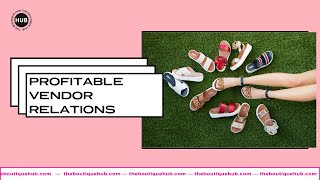
Sara Resnick from Chinese Laundry talks wholesale buying for boutiques, from building retailer-rep partnerships to moving inventory. Animal prints and hikers are trending. She covers curated buys, social media strategy, and how to stock shoes that actually sell.
Chapters
Get ready. We're about to talk about one of my favorite topics. Shoes.
I can't wait for episode number 205 with my friend Sarah Resnick of Chinese Laundry. Let's talk about your business strategy and the juicy details of what actually works, from mainstream fashion to fashion on Main street and the entire ecosystem behind it. How do we scale your company and do it with the balance and the happiness that we all seek? Let's hear from those insiders, experts, experts and strategists that actually make it happen. I'm your host, Ashley Alderson from the Boutique Hub, and I can't wait to chat. If you were able to join us at the Boutique Summit last June in Dallas, you had the awesome opportunity to get to know Sarah Resnick and the team of reps at Chinese Laundry who joined us inside of the Summit. Now, Sarah has become such a great.
Friend of mine, and I have loved.
Hearing her insight on shoe business, what's trending in the industry, how to best work with reps, and really, how can boutiques be more successful when they get the information and education that reps are able to provide, whether it's working with a shoe vendor or an apparel vendor, really, that relationship can provide so much insight into how you can better sell and market your product as a boutique owner. So today, I'm really excited that Sarah was able to join us not only to talk about Chinese Laundry and what's trending in shoes right now, but also to give some tips on how to best work with your reps so that you can get the best sell through possible and pick the best products the next time you go to market. So, guys, help me welcome my friend Sarah Resnick at Chinese Laundry to the podcast.
All right. Hey, guys, welcome back to the podcast. This week, I'm so excited to be joined by my dear friend Sarah Resnick, who's the west coast account exec with Chinese Laundry Shoes. And if you guys attended the Boutique Summit last year or if you were at Magic or some of the events in apparel markets around the country, I'm sure you had the opportunity to meet Sarah. So, Sarah, welcome to the podcast.
Hi. Thank you so much for having me.
I'm so pumped you're here. You know, every time you and I have been together, I think we could sit and talk each other's ears off about this industry, right?
Yes. I mean, you are a big inspiration to me, and I love that. Boutique Hub was created so Chinese Laundry could be a part of it. I'm super passionate about the wholesale and fashion world. And so this is amazing.
Yeah. Well, I think that you and I, through the many rabbit holes we may possibly go down together today, could cover a lot of ground. But for everybody who's listening, there's a couple key things I really want to make sure we talk about today that you're able to take home. And one is if you're listening as a retailer, I really want to make sure we talk about how to build successful partnerships with the wholesale companies you're doing business with and really how to work with your reps to create a win win scenario. And if you're listening as a wholesaler or a brand rep, that you're really taking home some new strategies of how to work with boutique owners in really this new kind of omnichannel fashion, I would say. And third, I mean, for anyone who's listening, we're going to talk about shoes. Right. So that's going to be a win, no matter what.
Absolutely.
Perfect. So before we talk about Chinese laundry, and I want to get into the details there, I'd love to know first, I know you've been in this industry for a long time. Tell me about how you came to be with Chinese laundry and kind of the evolution of your career as it relates to fashion, because I think it gives great context for the conversation we're going to have.
Yeah, absolutely. I'm 30, and so, I mean, ever since I was young, I love fashion. I used to, you know, watch Rachel Zoe and Project Runway, and I used to envision myself working with anything fashion related. And so actually, I got my first job when I was 15 at Brighton Collectibles selling, you know, all of those adorable necklaces and handbags and shoes. And I remember a woman approaching me and asking me what size shoe I was, and I was so confused. But I told her that I was a five and a half, six and living in Vegas. We have all of those trade shows, as you know, you all attend, you know, magic. And back then, there was this shoe show called wsa. But she asked if I would be a shoe model. And I said, oh, okay. I mean, I'm five foot tall, but okay, sure. And here I was. I was landed with Chinese laundry at the age of 15. So 15 years ago from that, I went to University of Nevada, Reno to get my bachelor's in business marketing. And being that I love fashion, I stumbled upon a boutique that I started working at. And I quickly became the manager buyer. And it was amazing. I started to travel to shows outside of what I was doing with Chinese laundry. And Start buying. And it was insane because I think after the first year that I started purchasing for the boutique, it had a 60 to 70% growth, which was really rewarding for me at such a young age. Yeah. And then after that I graduated and was offered a full time position as the west coast rep for Chinese laundry in 2011. And so seven years later, but really 15 years later, I'm still with the same company, which is crazy.
That's gotta be pretty remarkable in the industry, don't you think? Like, there are a lot of reps that do hop around and you've been with Chinese Laundry for a long time and you've built, you know, a great career and so many great partnerships with not just great boutique owners, but big brands as well. Yeah.
I think, you know, I think the best part of it was being young and naive, to be honest with you. You know, the owner at Chinese Laundry is so wonderful and he's very open to suggestions and I never held back. And I think that there was, there's been a respect that is cultivated over the last 15 years. And you know, with my voice and being able to be heard and continuing to change with the time, I think it's kept like a really steady and successful relationship. I think as I evolved and grow ever since I was younger to who I am now, we're able to make shifts and changes at Chinese Laundry to meet the ever changing world that we have. And I think that looking at myself as 30 and if I started with a new company, that rapport and relationship and open door policy, I don't know would be there. Um, and so that's something that I really value, being at Chinese Laundry and being here for so long. But then again, they've all, they've known me since I was 15, so it's definitely a catch 22.
That's pretty shoe model. That's better than being Derek Zoolander and like model. Right. And I have to ask, what shoe size are you now? Because everybody wants all those sample sizes.
I mean, honestly, I've stayed the same. I'm still a five and a half, six. That's perfect.
You get all the cutest shoes.
Yes.
So I know you approach this business a little bit different than most people and you built some great relationships because of it. So I want to talk about, if you're a retailer that's listening, a boutique owner that's listening, how should a retailer start to build a successful long term relationship with a rep? And what type of quality should she be looking for in a rep that she wants to do business with. What has that relationship been like for you and what could you share with her?
I think it's really important to start off with an open mind on both ends. I mean, at the end of the day, I always tell customers when I first meet them to please go through and look at the styles and pick out something that would be in their store. One, because I've never been in their store if I've just met you for the first time. So who am I to tell you what's best for your store and be able to, you know, in a sense, control your dollars like that? So I like the openness and kind of understanding and paint a picture for me as a rep of who you sell to and who your demographic is. Secondly, I think it's really important that you trust me because at the end of the day, I want you to come back. I want your shoes that I'm selling you to sell so we can have a flourishing relationship. You know, and I think that that's something that maybe boutique owners have had a bad experience in the past, but they're not very open minded to reps because they've been burnt. I mean, reps have a kind of bad rap in that they try to sell everything since Sundays. And that's wrong. I mean, they shouldn't because not the same shoe works for everybody. And so I think it's important to establish trust and credibility, but also be open because, you know, I'm seeing emerging trends in the market, you know, that could be beneficial for you and balance with what your customer asks and needs. So that would be my ideal relationship actually, with meeting a new customer.
Do you dig pretty deep to try to understand that boutique owner's ideal customer? I mean, just so you have a better understanding and can really lead her in the right direction versus, you know, just starting from scratch with shoes, which can be a big investment for a lot of people. But really like digging into who that, who that customer is.
Yeah, absolutely. I love to know what the demographic is. I love to know what their sweet spot price point is, you know, the things that they're carrying. I love if they have an Instagram, which everybody by now should have an Instagram, I love to, you know, check on it really quick. And then I also provide tools in how the shoes that I'm selling you, you know, what you can do to move through them. And I know everyone that I work with that purchases a shoe for me, I push them to take a photo and post a story and to do things to really Engage, especially if it's a new brand. And I like to educate everybody on what Chinese laundry has to offer. You know, we have four divisions in our company, and we kind of go with the lifestyle of a lot of different ladies. And so we're just not one size fits all kind of brand.
Mm. What do you think, your approach that you've outlined, what do you think other reps or brands can learn from that? Like, if you're a rep or a wholesale brand that's listening, what can they take away to grow their relationship with their retail clients right now, or maybe to even reach new retail clients? What tips would you give them?
I mean, I think, number one, I was taught from a very, very young age, is to know your customer. Like, I can't tell you enough of how many times customers will show me the styles that they just purchased before because a rep swore to them that it was the best thing. But they don't sell dress, you know, so I kind of look at them, I'm like, but that's not in your lane, you know, so it's so important. And I think that customers, you know, they kind of enlist a lot of trust in us. Like, you know, imagine if you're going to a car dealership, you know, and you want to try out this suv. You're hoping that that salesperson knows more than you do about the thing that you're going to purchase. And so I think that, you know, as reps, it's important to understand that we should be raw and honest and listen to our customers, you know, and guide them in the right way. Because like I said, retention, business is everything. You know, I want to know that you're going to sell through, you know, 12 pairs, you know, or maybe let's just be really realistic. Let's say 9 out of the 12 pairs of shoes that I sell you, I want to know that you'll sell through, because I want to see you again in six weeks or at the next show to know that, you know, we can plan out a different package.
Man, that's. That's great advice. And, you know, I was just thinking about the last time I ran into you guys in la, and really, every booth I've seen Chinese laundry set up at a show, it's always so aesthetically pleasing. And I think you've done a good job with that in terms of allowing the retailers who are coming in and buying with you, like, giving them, like, a blank photo space where they come and take, like, flat lays of the shoes. They're thinking about Purchasing. And you've really encouraged them to test their own market before they make that final purchase order with you.
I mean, absolutely. I think that with the rise of social media, especially Instagram, you know, it was so funny. I met an account not too long ago, and she was so sweet. She gifted me a pair of sunglasses, and I said, oh, my God, I'm gonna take a photo and you better put on your Instagram. She said, I don't have an Instagram. I said, what? Instagram is the way of sales right now currently. So we at Chinese laundry try to make it seamless for you right from fruition, when you purchase a shoe, to throw that up on your Instagram story and create demand. Because at the end of the day, you should be able to sell those 12 pairs before it even lands at your door. Yes, I'm big on that. And I'm also big on cultivating a package for the next 90 days at Trade shows. And I think a lot of. And I've learned this too, over the years. I used to bring everything under the sun. But, you know, as the boutique buyer, it's confusing. I mean, what. What am I looking at? You know? So I think as reps, we should make it a very seamless process. Hone in on the top sellers. No, because boutiques can't carry, you know, a shoe in five colors. And so I think it's important to create a really seamless buying experience to where they know what they're getting. And it's just a snapshot of, you know, what we can do in 90 days, what people are needing, and vice versa.
I like that. And really, it's a changing way of wholesale. It used to be, you know, where you were ordering for so far out. And there were so many options that studies have shown the fewer options and the more seamless that delivery experience. Because the boutique owners are purchasing anymore for immediates. You know, it's rare that they're purchasing that far out. So the more you can offer them that seamless opportunity, the more they're gonna. The. The more they're gonna sell. The more you're gonna sell, the easier it's gonna become for everybody involved. Because we're all so easily distracted today.
Exactly. And right now, it's such a. I mean, it's always been actually a buy now, wear now market. And so, you know, as reps, it's important to cater to that, but also to have communications with some customers. Because currently, take, for example, lug boots. You know, little hiker boots are blowing out right now. And I actually can't fill them in until January. But the communication came with a lot of my customers to pre order and buy in because we will sell out. So, you know, those are instances where, you know, they trust you as a rep. They're going to listen to you, and they're going to maybe, you know, hold some of their dollars for those later deliveries to get in those shoes. But ultimately it all comes down to relationship.
Man, it's so true. And that's wholesale and retail both. Would you say, besides having Instagram, what would the traits of your most successful retailers that you work with, what would be things that they have in common?
Besides having Instagram?
Yes, besides having a good Instagram.
You know, I do travel on the road frequently, and I will tell you that the customer experience is the same from an employee to the owner. And I think that's really important. I think that, you know, when I used to manage and buy for a boutique, you know, all my customers would want to shop with me, and the sales would be down when I wasn't there. And I would say, what's going on? But then I would realize that, you know, the employees wouldn't give them the same experience as the owners. And so in the most successful boutiques, I think that the owners have trained rigorously the employees, to give them the same experience and to personal shop for their customers. You know, one of the best qualities I think, in a boutique is when they meet you, they chat with you, they see what you're pulling, and they pull for you immediately in your dressing room. I mean, I think that that is so amazing. And I say this all the time. It's like you know your store better than anybody. And so here I am, I have 30 minutes of my time. How am I going to navigate your shelves and your displays better than you? So that communication is so big with some of the most successful boutiques. And also, I love when they're doing things in their community. I always frequent the boutiques in my area, and I think it's important when they do a little sip and shop or have some customer appreciation or any sort of event to get people out. And, you know, and actually collaborations are so big too, you know, like, are you collaborating with the coolest local, you know, jewelry or, you know, bringing in accessories that, like, you know, you wouldn't normally carry to kind of like bring freshness to it? Yeah, those are the kind of things that I'm seeing lately in a lot of successful boutiques that really do more. And I think it goes to say, in your life. I mean, the more effort you put in, the more results you're going to get. And so if we're only operating at 30%, well, we're only going to receive 30%. But if we're channeling all different streams, whether it's Instagram, whether it's, you know, in store shop experience, whether it's, you know, reward programs and vice versa, wow, we're going to really see results coming from every channel.
Man, you said a lot of really smart right on things. And one thing I pulled from what you just said that I think is relevant to both boutique owners, but also wholesale brands and reps that may be listening is that you know your store, you know your product and the layout and what pairs well together better than anybody else. So don't you think sometimes the word sales gets a bad rap both in wholesale and in retail? And really, it's not that you're selling something, but it's, you know the product better than anyone and you're counseling them through that experience so that you can serve them in the highest way possible. And if our sales staff could all understand that, again, wholesale and retail, imagine what a great customer experience everybody would have if they adopted that philosophy.
Oh, I mean, absolutely. And I think, you know, for me, I have to do my due diligence as a rep in understanding my product, understanding the fit, the demographic, the trend that I can arm you with information to turn around and sell that to your customer, you know, And I think, you know, with boutique owners, I think it's so important to know and navigate your store for your customers. Just like I'm navigating the newest styles for you. I mean, we really bring down 50 new styles every season. You're not going to take 50 in. But me understanding you and your customer, I'm going to show you the top five and you're going to pull from that. But imagine if, imagine if I just let you walk in the showroom, didn't cater to you, didn't kind of understand what you needed, and you just pick blindly. Then I become an order taker and I don't sell the top things and vice versa. In your store, if you just sit back and just let people mosey on in, then you just become an order taker at your counter and you really lose out on building relationships with your customers, understanding them, and kind of like adding in more things that they didn't even know that they needed because they.
Didn'T even know that you had. Oh, that's so good. So good. So let's talk about Chinese Laundry as a whole. Back up. Tell me more about Chinese Laundry, about the company. And you talked about different lines that you have. Tell me more of the backstory.
So Chinese Laundry, I mean, started, gosh, I mean, more than 40 years ago. And Bob Goldman is the owner and he is, I mean, he's incredible. I mean, his eye for fashion, dress shoes in particularly is crazy to me. And he created Chinese Laundry as a dress shoe house actually in the beginning. And, you know, over time things evolved. You know, we see a lot of trends in athletic and also in casuals and comfort. And so he was able to sector and create divisions based on the consumer lifestyle and kind of stages that they go in their life. So, you know, we have Chinese Laundry, which is our main brand, and we have a mix of price points in terms of real materials and synthetics, and we're very, very trendy, very spot on in that division. And then you have dirty laundry, which it's a cool. It's like the cool girl that like, you know, is going to college and she loves to wear, you know, combat boots and sneakers and, you know, it's very casual. Junior even too, the price points are a little bit lower than Chinese Laundry, but we still even use some real sways in that line. And then you have CL by Laundry, which is that working woman on the go. So it's that moderate heel, wearable, everyday styles. And it's at a really great price point, that $50 to $60 retail, which is incredible. And then we actually are launching an incredible new line next spring. It's called 42 Gold. And Bob Goldman is his last name. So that's where the Gold comes in. And he was born in 1942, so that's where the 42 comes in. But because of social media and how big that is, it's actually going to be backed by 42 social influencers, which.
I think is incredible.
So it's kind of a very indie collective line that can become, you know, curated. And the price points are kind of in line with, you know, what Matisse is and things like that in terms of like 129 and things like that.
Perfect. Tell me, you know, if someone's listening, what are your thoughts on the importance of boutiques carrying shoes, whether they're a brick and mortar store or online? And I'm sure you run into this question at shows, you know, when boutiques come in and say, well, I don't carry shoes, or I'm thinking about carrying shoes, we what do you think the Importance and value is of a store carrying them.
You know, I say this all the time. It's crazy to me that we don't have a head to toe mindset in dressing the customer. You know, when you don't carry shoes in your boutique, you are allowing them to go elsewhere, you know, to purchase them. Because I don't know if anyone's looked around, but we all got shoes on our feet, you know, so it's funny to me how they're afraid. And that's what it comes down to is that their fear of carrying shoes, I don't think that they necessarily don't want to, you know, because they're carrying belts and they're carrying jewelry and they're carrying, you know, all the clothing. But I think that for some reason shoes are foreign. But I will tell you that if we hone in on five styles, five styles that, you know, can go with everything in your store, it's a win win because you genuinely dress your customer from head to toe.
Truthfully, I like that price point. You know, I think that boutiques sometimes can get wrapped up in different price points. But I think if I think about myself as a consumer and I look in my closet, I have everything from Chinese laundry to Matisse to even like boot companies, Liberty Black and Crel boots, down to a more affordable shoe in my closet, the consumer kind of looks at all price points. Do you think the retailer should as well?
Yeah, I definitely think so. I think that we have to understand that shoes actually. Let me back up. Different styles of shoes have this, like this, their own price point in a consumer's mind, you know, and so if you think about it, you know, what do people invest in? People invest in a great booty and also people might invest in a great heel that's comfortable and it's going to carry them through. But other items, whether it be a flat sandal or a little casual flat, we really need to pay attention to the price points of what your customers want. One of the most successful boutiques in my area carries their price point is anywhere from $39 to $69 in their clothing, period. But their shoes range anywhere from 39 to, to 149. Because the average person will invest in a good shoe. It needs to be comfortable. And so I think it's, I think it's important for boutiques to open their minds into that theory and test it, you know, and don't be afraid. I mean, honestly, you think that 12 pairs is a lot. It's really not because it's broken down to the most desired sizes that, you know, consumers buy. And so you'll get, you know, two seven and a half and two eights and things like that. And if you, you know, you do a pool with your customers, I mean, those things will fly off. And so I think it's important to sit down and kind of have realistic expectations. I personally will buy a $29 top or a $59 jean, but I will not buy a little inexpensive shoe because it's uncomfortable on the foot. And so I think it's important that, you know, we just open our mind and. And really understand what our. What our market needs. But try. I mean, it's.
It's.
It's crazy when we have this mindset that we can't sell shoes. Well, you know, what shoes have you put out and have you tested them and. And then, you know, come back to the drawing board.
You and I were talking about something before we started recording the show, and that was how the consumer's mindset shifts over time. You know, for example, when you're in college and you're buying five different tops in different colors at forever 21 versus as you get a little bit older, value becomes more important and wearability. And that pair of shoes in your closet, not just being able to wear them once or twice or throughout this season, but them being able to be a staple for a few seasons in your closet. Can you talk about that mindset of the customer as well when it comes to shoes that. That shifting from trend to value?
Yeah, absolutely. You know, it's funny. I remember when I was in college and I used to be able to rock a charlotte russe heel all night long, and as you get older, you can't wear charlotte russe heels anymore because they're so uncomfortable. So I think because of the alcohol.
When you're in college. Is that why you can rock Charlotte Russ heels and not complain about it?
Is it because you're. What? I couldn't hear you. I'm sorry.
Is it because the alcohol we consume.
In college that we not complain about it? I mean, maybe, but, I mean, it's insane how I go back to knowing your demographic and understanding who you're shopping to for. I'm sorry, who you're shopping for. But if you think about, you know, where you are in your lifestyle, in your life stage, and it's like, you know, I'm 30, and rather, I used to be quantity over quality. I used to want my. My closet filled with things. I used to want to know that I had 10 black sweaters to try from and you know, five high waisted jeans and things like that. But now as I get older, I really want to hone in on things that are made better, things that fit my body correctly. And it's crazy. I mean, once we start to really understand the way that things should fit and it doesn't have to necessarily be the most expensive thing, I don't, I don't think that that is an issue here. I just think that we should really pay attention to quality and understand what we're giving our consumer at their life stages of what they need. And you know, at the end of the day for us, I think because the Internet is providing 20 ways to Sundays on what you can get these days, you got to really hone in on that customer experience in store and really curate from what's mass marketed. And I think that's really important. And for me, I'm noticing that when I shop more in boutiques, it's becoming more specialty buys and things that I can't, you know, quickly purchase on an Amazon. And, and I like that actually.
So let's talk about trend because I mean, we're all listening and we're all in this business because we love trend. Right. So tell me about your favorite shoe trends. A Chinese laundry for fall, winter and then once you are done with that, what you see coming for spring, summer.
So currently right now I am obsessed, and I mean obsessed with animal print. And that is a huge trend that is actually going to carry in to next year. So you're seeing, you know, obviously we've seen leopards, you know, stand the test of time, but really we're going into snakes and textured, you know, animal prints that are tonal, which are beautiful too. And so I think that everyone should make sure, even in clothing to have, you know, cheetahs and snakes and leopards. And in terms of fall, winter hikers are so big right now. And it's crazy to me because Doc Martens have really been coming up on the map and they have for so long. But I mean, in terms of the girly girl, I actually never been a Doc Martens girl. I've always been very girly in my aesthetic. But recently they came up with a platform hiker that I think is gorgeous. And I would actually rock with like, you know, a little high waisted, you know, skinny jean and a plaid. And so I think it's important to open your eyes, you know, and find things in trend that service your customer. And so, you know, if you know, animal prints are in. Then what animal prints resonate with your store, you know, and find it in there, because I think she's looking for it. It's all over social media. You know, belts and, and jackets and shoes. And then also now to hikers, what is, you know, a feminine hiker or, you know, vice versa that we can take down from a Doc Marten that would appeal to, you know, your customer, too. And then in terms of spring 2019, I feel like florals are always in spring. And I think this year mixing and matching florals is going to be really big. I also think muted denim tones are going to be huge. I think netting, you're going to see a lot of netting in certain things.
And then.
Yeah, that's all I can think about for right now.
We should link all of your favorite shoe styles in the show notes so people can see some of the things that are, like, in the line.
Absolutely.
Along with some of those trends. Because I know when I walk by the booth, I'm always drooling, to say the least, over what pieces are. We have talked about a little bit previously, and I think anyone who's listening, who's in the wholesale side of this industry has this topic, you know, always in the back of their mind is either you're. You hit the trend, the company hits the trend spot on, or they miss a little bit. And that fluctuation can really cause for a peak, a great year, or it can cause for a down year. And you've been with Chinese Laundry a long time. So tell me about what strategically does a company need to do or retailer need to do when they hit or miss, and how do they ride those peak seasons and those low seasons? Because that's the nature of the beast, right. How do you ride out the ups and downs?
You know, I say this to my company all the time, is we are a certain brand to the consumer, and so they come to us for certain things, you know, and I think it's so important to always stay in that lane, you know, because when we try to, you know, be something that we're not, that's where the customer doesn't understand. And I, and I think, you know, I don't know if you can understand what I'm saying, but, you know, maybe I'll refer to the dad sneaker that was so big, you know, this year, but it's really not in Chinese Laundry's wheelhouse to, you know, carry those styles. And so I think it's so important for both the consumer, but also the Wholesalers to just be true to themselves within the trends. And so I think that where we fall short sometime is we get way too fast for the consumer to understand. And knowing that we have really great customers that we service and they need certain things from us is to not really lose the meat and potatoes that we carry. And that's done so successful. You know, I remember one year we were just way too, way too much print and way too high fashion, and we really lost like a little bit of, you know, that core, those really cute, you know, western boots that we always do and those great, you know, block heels. And we were just overly embellished. And I think we were at the mercy of what was going on in fashion. But I think that we forget that, you know, we have to be wearable. And, you know, like I said, you should always. Customers should always be able to dress head to toe. And so if you're wearing prints, then it's hard to be to wear a print on the foot too, you know, and that's why I always go back to core styles as being, you know, the evergreens of this industry.
But I think that's a really good. That's a really good takeaway. What about as a wholesaler, your view on doing business with just boutiques or big box stores and kind of the mindset of a company looking at who they're going to sell their product to with Chinese laundry.
Since we've been in the business for so long, we're able to create product for big box stores as well as create product for independents. You know, in our company in specific, our owner is pro independence all day long because he loves the genuine feedback. He loves, you know, the need. And boutiques will never, ever, you know, go away because everybody wants that customer experience, you know, in terms of big box stores. It all really becomes algorithms and numbers much less than the styles. And so it's really important to know, and I say this to all, to a lot of people, it's important to only be in competition, truthfully, with yourself, you know, and I think that's the way that we started to look at things is, you know, we honed in on what we do best and how we can service the customer. And that's why we linked up with Boutique Hub. And, you know, we offer an incentive as part of Boutique Hub because we want to cater to boutiques. And I think it's important, you know, for boutiques listening to, not pay attention to what the other big guys are doing because again, they don't provide that like Intimate, you know, neighborhood experience that y' all provide. And so, yeah, I think that's the way that we look at the different sectors of the business.
One other thing you and I talked about earlier, and I want to make sure that all the boutiques who are listening understand kind of how this works, is of course they're going to come to you and they're going to shop new trend and new product. But you also have a unique way of serving the independents when it comes to, especially this time of year, Black Friday sales, because you have opportunity lists where they can take advantage of deals and specials that you may have to offer. Can you kind of talk about how that piece of this industry works? And I know you're not alone in offering this. I know other brands and companies do, too, but it's probably underutilized.
Yeah, I mean, absolutely. So, okay, if I broke it down, the fact that we all have residual inventory at the end of the year or after a season, why don't we say that we all have residual inventory at the end of the season? And it doesn't mean that it's a bad style. It means that we overbought or, you know, a delivery that we chose from the factory got pushed out later than needed, you know, so say we ordered a sandal and it was supposed to deliver in April, but actually came in June. Well, we're not really selling all of them in June, so that, you know, again, leaves residual inventory. So we have what's called an opportunity list, and we provide, you know, really aggressive pricing, made to have aggressive retails, and so they have to match. And especially at this time of the year, it's, you know, you're getting the most traffic to your stores or you're getting the most traffic to your site. It's. Why not increase your margin with great value on styles?
So can they just reach out to their reps and ask kind of what that list entails seasonally?
Yeah, absolutely. And I really, you know, I said this before, you know, opportunity styles should be, you know, maybe 15% of your buy, you know, because at the end of the day, they were already sold at higher prices. And so the market's already seen that, you know, and so it's important now that a lot of boutiques understand that they're great shoes at a value, but it shouldn't, you know, be encompassing your whole line, you know, and it's happened in the past where we've sold opportunity list to style and customers like, well, I only want to buy opportunity, but it's not Moving as fast. It's like. Yeah. Because your customer knows what they need from you. And if they're looking for new items and things they haven't seen before, then they're not going to continuously shop the opportunity. But during, you know, Black Friday and, you know, what's that. What's that thing called Small business? Small Business Saturday, it's important to maybe offer great things at a price that they couldn't find elsewhere.
I like it. I think really good takeaway. All right, should we have some fun? I have some lightning round questions for you. You down? Oh, my God.
I'm excited. I'm scared. I'm ready.
You got this. All right. So your favorite podcast.
Ooh, How I Built this with Guy Raz.
Ooh, that's a good one. You're someone that you look at as.
A mentor, I would have to say my sister Rachel, she is a communications professor, and she actually started her own blog and Instagram. It's rachelfriend. And she talks about your end game and your mindset, and she's so empowering and so motivational. She's also a special needs mom, too. And so she's really inspiring. I could, like, even get emotional talking about her. She's incredible. But that's someone who's a mentor for me in business, in life and relationships.
Yeah, I think you told me about her before, just how she's changed your mindset. Like that study of your end game and how you look at things differently. Yeah.
I mean, if I could share for a minute what she's taught me, it's thinking what your end game is. And so if your end game is to have a successful boutique and to really break the mold in your neighborhood, what are the steps you're taking every day to get to that end game? And it kind of shifts your mindset and makes you in a line with your intentions. And so, yeah, I mean, it's crazy how inspirational she is. And, you know, it's all hard on us. I think business is hard. And I think as wonderful as this boutique hub is, and we're all women inspiring each other, at the end of the day, we actually are our worst enemies and we are our hardest critics. And I think. I think we should practice, you know, self kindness and, you know, really setting intentions and giving yourself a pat on the back. Because the fact that so many women in this boutique hub are business owners is incredible to me, you know, that they. That they've done it on their own.
So true. And we are our own worst enemies. There's so much truth to what you just said. Oh, man. Okay. Your favorite book.
Ooh. It's the Seven Habits of Highly Effective People by Covey.
Oh, that's a classic. Yes. Your favorite trend at the moment.
Oh, my God, I told you. I'm so obsessed with snake, animal, everything. I love it so much.
Do you have one friend you wish would go away? Like, what, are you over at the moment?
I'm so over, like, the 90s. I. I just. I'm not a fan of it.
Like, are you a fanny pack girl? Like, do you. Oh, wait, bags. If we're being politically correct in fashion at the moment.
No, I mean, I'm not, actually. I. I just. I don't know. I just. I'm not into it. I'm not into the netting under the denim. I'm just. It's not my thing. I just.
Yeah.
I like it. And the biker shorts, like, I know everyone's into that, but I'm like. I feel like I'm wearing Spanx in public. Like, I. I just.
I'm not a fan.
I.
True. Oh, so true. Biker shorts are meant to go under things.
Yes.
Not as a solo piece. Agreed. Okay. What is your favorite quote? Motivational quote?
Ooh, she believes she could. So she did.
Oh, that's a good one. We have that on some coffee mugs at the boutique. I love it. All right, so two last questions, because I know we've monopolized your time for the day, but this has been so helpful, I think, from both wholesale retail, like, encompassing the entire industry. This has been a great conversation. So absolutely. Second to last question would be. The industry that we're in is changing so much. The number of shows that we have people going direct to LA to buy, the number that boutiques work with brands to place orders. Just a lot of change happening at the moment. If you had a crystal ball and you could say, man, this is something that I see happening in the next year, or really where I see this industry evolving in the next year to two years. What do you think that looks like?
That's a good question. I mean, I genuinely think that there's way too many shows, you know, and there's not enough traction between all of them for all the brands to go. And so I definitely think that shows will limit. I mean, I know that those, you know, like the Dallas Mart and the LA Mart, we go, like, five times a year. I think that those will not be on months that we go to the larger shows. I think that that would be key. And I also think That I think customers are just gonna start really going to social media for their shopping more so than they have. I mean, I've never swiped up more in my entire life, and I just am getting packages right and left. But, I mean, I think it's really crazy because we are on our phones, I mean, the majority of the day. And I think the new iPhone has an update where you can see your screen time, which is so embarrassing. But, yeah, I think that it's all going to evolve around Instagram. I think that that's going to be a new shopping platform. And I think as a wholesaler, we need to get smarter to provide you shoppable, more shoppable content. I mean, we need to do the work for you, which is something that I'm hopefully working on with our customers. And I think for those on the flip side, I think that really need to start engaging more in their social media.
I think that's really true. I think wholesalers used to kind of shy away from social media, don't you? I agree. And now there's a big opportunity, if you're in wholesale, to maximize social media for the benefit of the retailer and your end consumer.
Yeah, I think, like, you know, we were so worried about other people copying us, but at the end of the day, because the Internet is so transparent, the relationships are what's going to make everything succeed. Because your relationship and your loyalty to the brand or to the boutique is what's going to take you there first. And I think that a lot of us forget that. I think that we might have the most beautiful things and the best sellers, but the reason why we're not selling is because the relationship on the inside is not there. And so if we're all cultivating all of these buyers on both sense and really, you know, building up kind of this momentum, then we're going to funnel it all through the same buying field of okay, come to us and, you know, we'll come to you kind of thing.
I like that. All right, Sarah, last question. And this is kind of the way we wrap up most of the podcast with our guests, because we're all in this industry and this business. It's not just about products. We'll say we're here because I think so many people believe that they have a greater purpose that they're fulfilling and a greater impact they want to leave on the world around them, no matter who their end customer is and no matter what product it is that they're selling. So I'd love to know, just through your time at Chinese Laundry and your time in this industry, if you would, you know, picture yourself 20 years in the future and you look back at all of this, what's the impact that you hope that you left on the industry around you and the thing that you really hope people take away from the message that you're able to share?
Oh, that's a good question. I would want people to look back and think that I was always doing everything with intention and I cared about their business, I cared about their dollars, I cared about their.










