Boutique Chat #210 | WOW Customer Service & Leaving a Legacy | Dana Spinola founder of Fab'rik
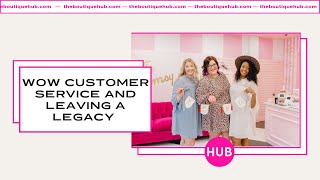
Dana Spinola built Fab'rik from one Atlanta store in 2002 into a 40-location chain focused on customer experience and a "WOW" program. She also founded Free Fabric, which gives free clothing to human trafficking survivors, and wrote a book called Love What You Do about building company culture.
Questions this video answers
2002.
"40 plus locations" (and she said they were opening another 10–15 in the next 6–8 months).
About 11–12 states (mostly in the U.S. Southeast, with some in Denver, Chicago, Austin).
Free Fabric.
Love What You Do by Dana Spinola; available on Amazon and via fabricstyle.com.
Chapters
Should we see if I could start an episode without saying, hey, guys? The answer is probably no. So, hey, guys, welcome to episode number 210. And I know how much you're going to love today's episode, because I fangirled over today's episode. So get ready to meet my friend, Dana Spinola, the founder of Fabric. Let's talk about your business strategy and the juicy details of what actually works, from mainstream fashion to fashion on Main street and the entire ecosystem behind it. How do we scale your company and do it with the balance and the happiness that we all seek? Let's hear from those insiders, experts, and strategists that actually make it happen. I'm your host, Ashley Alderson from the Boutique Hub, and I can't wait to chat. So the old saying goes that people want to do business with people. And I think if there's a reason why boutiques are so successful today in a true Amazon society, it's because even though people like that gratification of having something now, the next day, shipping, the free shipping, whatever, it is a great selection on Amazon. At the core of our hearts, people want to feel like they're loved and someone's taking care of them and someone's watching out for them, and someone simply wants them to have a better day and than the day they had before. And the person that we're going to visit with today on the episode, I think really embodies what that boutique mission is all about. And she's someone who got into the boutique market way ahead of anybody else, when people were actually getting out of the market the first time and really built an empire off that very same type of customer service, the thing that's really propelled our industry to where it is today. So I can't wait for you guys to meet today. My friend, Dana Spinola. She's the founder of Fabric, which has almost 50 stores around the US you're going to hear more of that story in just a minute. But what I love so much about Dana's story today is not just the actionable takeaways you're going to hear in terms of customer service, which guys, you're going to hear some bomb takeaways in terms of customer service. But what's more impressive to me is that even with that many stores and a business as successful as it is a foundation where she's serving women around the country, around the area that have been victims of human trafficking, and now, having written a book after going on a sabbatical, having to walk away from work for a short period of time. Even with all of those great things happen. The thing that's most impressive to me is that you can hear her heart and her mission and her true, genuine and grounded nature throughout this entire interview. And it's evident that she is in this business to leave a lasting impact on the world around us, not just to sell products. And to me, that is what this business is truly all about. So, guys, I know you're going to love this one. I say that all the time. But truly, I interview people who I want to get to know personally because I think they're awesome. So these episodes really excite me because I took away a page of notes just by interviewing Dana. So I can only imagine the great things that are to come as you listen to this episode, too. So please help me welcome my friend Dana Spinola to the podcast. Hey, guys, welcome back to the show this week, man. We have an awesome guest for you. And we've been talking kind of before we started to record exactly how we pronounce things, because that's always an argument in culture.
Right.
So please help me welcome today Dana Spinola of Fabric. And you can give the alternative pronunciation that people seem to think you go by. Right?
Right. Like, everyone believes it's fabrique. I think it's more. It's just more fun to say, like Target Tarjay. So people call it fabric, but it's the phonetic spelling of the word fabric from the dictionary. So there you go.
So there's the K versus the C. Exactly. Oh, man. Hey, when we met, I don't know, a couple weeks ago, a month ago, whatever it's been now, I've just been so on fire for what you have going on in your business. I'm so glad that you're able to share some of your story with me after we were connected from our friends at Atlanta Apparel. And I've been so excited for you just to share not just how your business has grown and what the business has become, but more than that, your mission of serving your purpose in this world. So we're going to unpack a lot of things in today's episode, but I think to set the stage. Can you talk to me, Dana, first about the business as it is now? What is fabric today? And then we'll back it up into how that all started in the first place.
Absolutely. So we're a women's clothing store. Started as one 16 years ago, and now we have 40 plus locations. We're opening another 10 to 15 in the next six to eight months. So it's a growing business and I love it. We have a wonderful e comm site. We have a nonprofit free fabric. We have a book that kind of talks about how we do things and how we grew and. Yeah, it's one of those things that just started as one little seed and has now grown into a beautiful business.
That's pretty remarkable. How many states are the stores located across the.
You know, I should know that it's like one of those things you would never forget, but probably 11 to 12. I mean, it's throughout the southeast and we go Denver, Chicago, Austin, but mostly in the southeast, up through the Carolinas and down into Florida. We started in Atlanta, was the first store.
And so with that. Are you on the. Like an advisory board for Atlanta apparel or remind me of the specific title that you serve there?
Absolutely, I'm on the advisory board, yes. And it's just unbelievable to think back, you know, to my very first market there when I. It's like a kid in a candy store. I had no idea, you know, a million floors and a million pieces of clothing. And now I get to be part of, you know, the group that makes sure that everyone else's experience there is as great as it can be.
Oh, man. Well, just hearing from their team, I know they value your input so much because of the experience that you have and just your vision for where this industry is headed. So you've got to walk with me and, you know, I don't know a boutique owner that starts and goes, you know what? I'm going to have 50 plus stores across the U.S. i mean, it's just so remarkable what you've built. So tell me about how it got started in the first place and what led you. One foot in front of the other, to build it to what it is today.
Sure. I mean, I think I used to answer this question that, you know, I had this plan and this strategy, but I really just had a vision of. Of the one store. And luckily my customers demanded that I had more of them. But I think that's the coolest part is I. I pictured a place that was not. It didn't cost a million dollars, but you felt that high style, that boutique experience. So that was the very first store's vision, is to create a place where everyone could afford to feel beautiful. And I think, you know, we pulled it off. We, meaning I always talked in the wees then, but it was just me for so long in the beginning. And then as we grew, like I said, my customers would move to other places and say you really need a store in Austin and you really need a store in Raleigh. And I started learning, wow, like I can't be everywhere. What if I had other women like my and other communities that cared about their community, knew their schools, knew the vibe of that area. And so we started growing in what is called the franchise model. That was not necessarily the plan, but I just wanted to find like minded women that loved business but also loved fashion, but had a real purpose to serve their community. So that's how we've grown. I have five, actually six corporate stores and the rest are franchise by just brilliant people throughout the country, man.
And so it all started in Atlanta. And tell me, what year was it that you got started again?
2002.
Perfect. So 2002, before there was, I mean like you said that affordable option with that boutique feel, right?
It was crazy. Yeah. There wasn't really anything. It was like the $400T shirt in the high end boutique. You know, unless you were planning on spending a lot of money, you weren't really a boutique shopper at the time.
Absolutely. So was it well received or do you think people were surprised by it or like you said, it just took off and people were wanting it in different communities?
It was so awesome. I talk about it all the time. People would come in and they'd pull up the price tag and it'd be just this beautiful dress and they'd say, ma', am, this is $74. They didn't really know how to handle it because they were used to it saying $374. So that happened year after year after year in the beginning. And my customers would just beg me like, please, you could charge 400 dol for this. Please don't. So that's really the beginning. I mean, I think almost shock and like guilty pleasure. Like, is this really a dress that I can wear to a gala that is $74? So it was. It's so fun, man.
Talk to me about how you see the difference in where it was when you started that perception versus, I mean today with fast fashion, people are buying dresses for like, gosh, way less than they should be. How do you think society has changed that? What do you think is going to happen to the boutique market really, as that evolves?
Yeah, well, I mean, what I love about this is I love being challenged. So every year you have to stay in the top of your game. And I love that customers have gotten so smart. They're resourceful, their style has kind of been blown out of the water. They used to only be able to see a fraction of how they could dress. Now they have 16 options for every event and billions of different places to go to. So for us, how it's evolved is make sure experience is first. That's really all that matters. In boutique, I'm not trying to compete with Amazon and price, and in overnight delivery, that is not the game I'm playing. I'm playing the game of we care about you as a person. We're going to make sure that we know exactly what you need for your second year anniversary, because we dressed you for your first. So if you can play the experience, if you can really understand what's unique to your experience, it's really evolved from there. And we kind of try to one up what the experience is for the customer.
I love that. And I want to come back to what your strategy is on that, because I've been dying for you to share this message with our audience in just a minute. But would you say, you know, I feel like today so many people talk about cheap, you know, fast being cheap, but you can truly speak to cheaper is not better. But your customer acquisition and really the way that you maintain your. Your lifetime value of your customer is through that experience. Can you talk about how women are not just price conscious, but they're looking for what you're offering?
Yeah. I mean, that's the thing about style, is it changes so quick now. Trends change so quick. And if you are a person that loves the idea of being on trend, you want to be able to shop. We have people shopping three times a week, and they want to be able to wear something new. And the investment isn't in the $900 outfit anymore. For everyone, it's the ability to have that variety and to be able to try things that they probably wouldn't try an item at a higher point. So I think it allows you to have a lot more versatility with your style. And people are trying things they would have never tried before.
Absolutely. So when you first started, and it started with a handful of stores, let's say, at what point did you go, oh, my gosh, I've got to throw some fuel on this fire? And where did you see? Was it, you know, five stores, 10 stores, where did you go, oh, my gosh, this is going to take off now into almost 50 stores or more than 50 stores?
Yeah, I mean, you know, it's how I'm made. I don't think I still have realized it. You know, I kind of feel like I did, you Know, when I had that first store of, you know, my head's always been down in making sure that the business is what the business is. But I think from the perspective of the amount of stores, that's kind of stay true. But when I look at how your team grows, that's kind of when it changes of like, wow, I don't get to know every single person's the birth date of all of their children anymore. You know, the things that are so key to me. Your team grows, and I think there's a lot of understanding that I had to learn there. It becomes a little bit less about just every single piece of clothing. Then you're building a place where people's lives and careers are going to grow. I think that's probably the perspective that I've learned the most of is kind of looking up and out at your teams as they're growing and contributing to the business. It's not about Dana and fabric and me buying clothing and that really being the, the full scope of it all, man.
Do you think in your process, I don't even know how many staff you have yourself at this point, but could you speak to any of the biggest lessons or maybe the biggest failures that you feel like you had along the way that there's never really failures. Right. There's the opportunity to learn from them. But anything that sticks out to you when it comes to growing your team that you wish you could have a second chance at again?
Yes. And there are like you and I have kind of talked about this. There are failures, but it doesn't mean you are a failure. Right. Like you are going to just do things that are just so stupid and in hindsight you would do it so differently. And I have a million answers to that question. But I think the one that comes to top of mind is kind of what I hinted about with people is I would just be going so fast, being so productive, getting through my to do list and my job responsibilities that I would just stop, forget to stop and ask people, hey, you doing okay? What's happening in life? And you know, get on the productivity train and just forget that we are all just humans trying to get through this world together and we need each other to just slow down. And I look at my calendar with 64 meetings in one day and it leaves no margin to be able to look around and see one of my teammates eyes going, huh, Something's going on. So I mean, that is the lesson that I learned over and over and over. But I try to keep front of mind Every time I walk into an office or to any meeting is I need to check kind of the pulse of the people's hearts before I expect them to deliver this incredible performance. So that's where I fail. And you can ask anyone on my team that I've been running so fast, quick through, and I've just forgot that it's their birthday or called them in home on a Saturday, and I thought it was a Friday, and I want to talk through something like Tina with my family. So I think that's kind of my number one obstacle that I try to keep front and center is, hey, if you want to team to really perform and give their best, you got to make sure they're. They're whole too, man.
That's great advice. That is. Oh, we're all guilty of that. Absolutely. How do you, you know, knowing that, how do you really instill that into your culture as a company? So it's not just you with that mentality, but everybody on your team really treating one another with that same ultimate respect?
Absolutely. Well, because I, you know, failed at it so poorly, and what I was looking like, people wanted to do really well by me. Right. I'm the founder and they wanted to do the best. And when I forgot a thank you or forgot to really look into their career path, it was so hurtful. So what I realized is the hardest thing to say as any founder, is I couldn't do it all. I couldn't kind of keep that tab on everybody and where they were. So we created something in our company when I kind of fell down on the job to help me, called the love what you do council, and it's comprised of our company nominates who's on this council and they take care of career path and new ways to encourage people and all the different things that were slipping through the cracks. For me, sure, that birthdays are celebrated and that why we're all together matters. So I think that was probably one of the many ways that we keep our culture with a heartbeat on who's actually doing all the hard work. It's so many people that are making this happen. So our council really helps make people love what they do by listening to them and getting their input.
Man, I love that. Tell me more about. I'm sure you've got a pretty cool org chart in the way that not just the franchisees, but your managers for your flagship stores and your internal, internal, like, core operation is laid out. Do you want to share with us kind of how that looks in your organization?
Yeah. One of the ways I picture it, that kind of changed my whole mindset. About seven years ago, I was researching a couple different companies and looking at org charts and you know how you always like the leaders at the top and then the executive teams underneath and then you have your managers. And I ran into these org charts where my stylists are at the top of our org chart. They're the ones that are running around the floor in high heels wowing customers all day long, long hours, Saturday, Sunday. So we have our stylists, then we have the managers that serve them. Our stylists are serving our customers. So the customers are the top, then the stylist, then our managers, then we have our owners. So each store will have an owner that owns the store, the franchise owner, and then it's our executive team. We have our coo, Ali, who's been with me since the very beginning. She was a stylist and a manager and now she's charge of all operations. And that's Ali Lisa, who is now our CEO and myself who I'm founder and my formal title is Chief Visionary Officer because that's usually where I'm playing in the vision part of what's next. So just it kind of feels like instead of we're lifting everybody up and ending up at the top with the people that truly touch our customers on a day to day basis.
I love that. I love the flipping the model and how your managers serve the stylist. I think that's, that's very clever. Something else that you do related to that is what you call wow. Can you talk to me about that?
Yes. I would take six hours to talk to you about it. And it's funny because people have asked Ali and different people in the company like, where did that come from? And Ali's like, I think Dana was just born with it. Like, it is truly one of my favorite things to do is what we do in all of our stores. It sounded like in the beginning it's not something you can make a KPI, but for us it truly is. It's a key performance indicator. Just like year over year sales would be and units per transactions and all of margin, all of the important retail indicators. Wow, is that for us? So in every store, every day, when you send in your stats, you're also sending in wow as one of those. And that is the best wow of the day. So what that means it can look like that. Really big wows. We've had customers let us know that their house burnt down and we replaced their closets with racks of clothing. Those are the big ones. But what we found is the small little ones that a customer comes in and they've just got tears in their eyes and they're telling us about their terrible day and compliment the necklace our stylist is wearing. And we put that necklace in a bag and send it to their house and say, we're so sorry, we're with you. And we have wow awards around that. So each week we are truly reading all of these wows and the best of the best and learning best practices and sharing them throughout the company. So we have this culture of kind of one up, wowing. How do we make that? How do you get to one up the other person in the wow elements? So what we do every year is we have wow awards. And so around our core values, we all come to my house and we have a big pool party and it's celebrating who wowed the best, who wowed with heart, who wowed with hustle, dream and inspire all throughout our core values. So it is the heartbeat of our mission statement, which is high style with heart. That is it for us. How do we make people just go above and beyond from the little things that if someone has a pushing their kid in the stroller, we're like, can we just push them around? Anything that just kind of one ups. But I think the idea of wowing is nice, but the idea of measuring it is beautiful because you measure what matters and so people know it's very important to me because we are measuring it. Man.
There's a saying that says only a track number grows. And I think we can track all the KPI's just like you were talking about. But man, this is the one that actually matters in business to track.
It's so true. When you talk about experience kind of being what I believe is longevity in any business. This is the differentiator, how your company people call it acts of kindness. But we are looking every person that comes in, we're looking for what matters to them. It's so simple. I mean a lot of it's a handwritten note and just it was great to see you today. But we're realizing that that int relationship is game changer and it just makes our stylist jobs more fun to be able to say, guess what I did today? I'll give you one more example because they're just way too fun. But the other day, you know, I'm reading through our wows. It's just like the best way to start a day and basically one of them says customer shopping. And she found out that her babysitter canceled and she had a girls night and she was devastated. You know, any mom that's had a crazy day, you're looking forward to that time so desperately. And our stylist said, well, I'll be happy to babysit. Not only went over and babysat, but she also did her makeup that day. And that mom got to go out. So this isn't in a job description. This isn't something that you teach. We just, we hire people with a heart that wants to go above and beyond and we reward that so that, you know, not only am I allowed to, but we encourage you to.
Man, if only we could instill just a little bit more of that in our day to day culture. Could you imagine how different the world would be if people actually lived by that notion of.
It'd be amazing. You just around every corner instead of looking something to be frustrated about, you're looking for some way to just really make somebody's day.
I love it. So when people talk to you or when you turn on the news and people talk about the retail apocalypse and what's happening with Big Box or the thought of Amazon taking over, I'm assuming that you look at it through a very different lens because you have a very different story to tell. What is the answer you give to people that are wondering your take on retail apocalypse?
Yeah, I remember the day I saw that word and I was like, wow. I mean that's a big word. And I take everything, I mean, I love business, I take it very seriously. I think that you'd be crazy to not look into every single angle. But that is going to be life. I remember the recession and most of my friends closed their boutiques years ago. So I know you have to be the best of the best to survive. Regardless of what's in the media and what's happening your business, you also have to evolve. If you're not innovating and you think that you can put it on a crock pot and set it and forget any business or any relationship, you can't do that to your marriage, you can't do that to a friendship. So I'm a big fan of learn as much as you can, but definitely don't let that move into fear. You cannot operate in any kind of fear. So I take all that information, I take what I need to know from it, facts and move forward. I mean, I think. And if you asked any big boxer, they knew that their rent per square foot is going to Be a challenge to come. So you're always looking for how you're evolving. You've watched. I mean, a friend of mine was flying over New York City the other day, and he sent me a picture of just taxicabs, right? Like in this big parking lot. And he was joking. We were joking about innovate or die. But it's true. And you have to remember that. And you have to be thinking, you have to have vision for your company past today. So you shouldn't be too shocked. There's a retail apocalypse, whatever the name may be, you should always be preparing for how is my business withstand incredible margins and happy people and a demand that our world needs.
Man, take me back to the recession. I think you hit on something interesting because, you know, our economy is at such a strong point right now. Even though they say there's a retail apocalypse, I think you're absolutely right. It's innovate or die, right? And there's such a rise of unique retail opportunities right now. But should there be another recession, tell me about how you handled the first one and how you did look for that, like, point of evolution in your business.
It's kind of cool because when I think back, I don't. Again, don't think it was my strategy, but it will be the next time. I got instead of scared as people started this whisper of what's happening, what's happening. I just got super bold. And so people are closing doors. And I saw it as an opportunity to expand because there was extra space. And I did. I mean, we expanded so much in those two years because why not? The rents were lower. It was a time that you could pull back and sit in the backseat and wait to see what happens or just push forward. I look at all these opportunities as one of who's going to jump on the front line and make smart business decisions that I respect. Do that. I don't think the game I'm playing isn't, let's wait and see what happens and then move. Let's make really smart, educated risks. And if you're not willing to risk, once you grow your business in the beginning, you risk it all. And you're like, I'm going to open this store. But as you grow, it gets harder to think, huh, I have more to lose. But you almost. You have more to lose. And if you don't risk, you're not going to grow your business and continue to grow it. So I luckily have ingrained a pretty good perspective from the people in my life that have taught me that piece, man.
My husband's been reading the Tony Robbins books Unshakable. And I forget what the other money master game. Right. Which is like his, his brilliant work. Just like, all about strategy and like Warren Buffett strategy and all of that. And the funny thing is, what you mentioned is exactly what Warren Buffett talks about in the book and how his strategy has always been. Of course, it's a long term play. And when the market's down, that's when you buy. So, I mean, just like you, when everyone else is scared and closing in their stores, there's your opportunity. It's so, so smart. Yeah.
And not, you know, I think it, it would be crazy for me not to say that, yes, a jolt of energy goes through your body and butterflies are in your stomach and you're not sure, but who's ever really sure? But you also have to evaluate of what's the alternative.
Right.
If I don't move on this, then. Then I will move backwards. So. So, yeah, I'm definitely more scared of doing nothing than doing the wrong thing. I'd much rather dive into trying something than just say I just froze and never moved and never risked.
I love it. Tell me about your mentors along the way.
Yeah, it's so crazy. I don't know how I'd ever live without them. It's crazy that they're the people that just hold you accountable. When you're a leader, what happens in a beautiful way is people come around you and they're like, well, she started it, so she must have all the answers. Like, we're not humans that are messing up all the time. So for me, I've had several mentors, and it's crazy. I kind of always talk about my parents because they started their own business and I got to grow up watching it. But probably my most impactful mentor, Jeff Shinneberger, he basically said, I will mentor you, but this isn't going to be something that we just touch base every once in a while. It was very formal. It was very accountable. He asked me questions the first time we sat down. He's like, so how's your marriage? I'm like, what? No, I want you to mentor me on my business. And he's like, well, I need to know what we're working with here, how far you're going to push and where you need to be whole. It's really incredible, that vision, that mentorship, that it's not just a business I'm running. If I come in brokenhearted or not giving to my family. Or them not being able to give to me then and he's not going to push me in a different direction. So like what are your life goals? Is really where we started. Not tell me your goals for fabric. So I think that's the coolest part is it's a holistic approach to mentoring. Not I need a mom mentor and a spiritual mentor and a fabric mentor. I need somebody that looks at Dana and says, okay, is she going to be able to lead where we're going to go? Because you can't take out that I have four kids and 12 chickens and a non profit and everything else. You've got to look at it holistically if you want to really think where you're at, business can go next.
Man, I love, love, love that because you don't live to work, you work to live. So how do you approach that today on a daily basis as in running your business holistically like you as a mom and this thing that people call balance and all the other things you have going on right now?
Yeah, well, I mean I'll start by, you know, going back to I am coming off of a sabbatical where I just broke where I threw my hands up and said I cannot do all this. And I tried to hold it together. Many of us do of it. Just I got it, don't worry. And I was going from 10 minute meeting to 20 minute meeting and there was no time even to take a phone call. If something went off course or a kid got sick at school, everything would just too maxed out. And my team came to me because I just wasn't that pleasant to be around. I needed an answer and you needed to deliver because I couldn't sit around and talk about how was your day. And it was a productive, tough place to be in because guess what? I loved everything I was doing. I loved going to my kids soccer game. I loved the fact that I'm coming up with marketing plans. I love visiting my stores, I love my nonprofit, I love my friends. But guess what? You're gonna have to figure out what you sacrifice. So they came to me and said in a sweet way, you need a break, Are you okay? And I said, no, I'm not. And luckily I got to step back and kind of regroup and say, there's no way that we can try to pull. Why are you trying to pull off something that's almost impossible to do? So I got to kind of break it all and put it back together. And I reprioritized everything. I mean, it's different for everyone. But for me, I let my nanny go because that was something for me, that I didn't have a guardrail. I would just work till all hours of the night because I loved fabric so much. I was a workaholic. But then when I'm the person that's picking my kids up from carpool, I have a hard stop. And so I just built in things in my life. I built fun back in. In. I've talked to so many leaders during this time, and I'm like, what usually goes when you're overextended? And they're like, just fun. So you become the leader that nobody wants to follow because you've turned it into this churn instead of this beautiful company that you're building. So I was able to kind of take a breath and come back into my company with a whole new breath and vision and look at it in the fresh new lens that I had when I started, and that's kind of where I get to be now, man.
So what did you do during your sabbatical? And you've got to tell me more about this. I'm fascinated by it, because I think there's probably a lot of people listening that are nodding their head going, yeah, I need to do something like that for myself.
Yeah, we just need resets. I mean, what's so amazing about some people? Like my husband. It'll be Saturday, and he will look at me and say, hey, I got to go to the gym. I'm like, you can't. We have too many kids.
This.
And I need your help. And he's like, I need this. Like, he knows when he needs to keep himself fueled. And I just wasn't that responsible with my own. So I kind of crashed into a ditch. I was working at 1% battery life. You need to kind of keep this throughout your week instead of at the end of the day. So the first thing I did on my sabbatical, well, obviously, I cleaned out my closet. That was the greatest day of my life. There's people out there that hate this idea, and then people that totally get how cleansing and amazing that is. But I sat down, and I deleted 140,000 unread emails, and I can't even tell you how cleansing it was. Nothing blew up. No one came to my door and arrested me and started just unsubscribing and detoxing from what I'd put up in my life of, like, if I don't reply and I don't do this, and I canceled probably a Hundred coffee meetings that I had that I just started saying yes to everything instead of protecting my time and my energy. And I went on a silent retreat. As you can tell, talking to me now, that would be challenging. I hate, hate not talking and not connecting, but I really got to kind of peel back all the noise in my head and get back to like, wait, why am I doing all this again? I can do it. Does that mean I'm supposed to just keep adding and adding things on without really enjoying? So, yeah, I really kind of peeled everything back and then I just rebuilt my calendar. What I learned for me, and most of us is if it's on your calendar, you're going to do it. If it's not, guess what? You're not. So built in devotion time in my morning and what non negotiables. I'd taken date night off the reserve. I'm like, babe, I love you. We're high five in ships in the night kind of thing. And we'll get that back on when we can. No, those are the things that are so key. And so I just kind of put back in those non negotiables and then let the other things be booked around my schedule. And that's where I am right now. I put my wise counsel in place to make sure that I've asked them, can you raise your hand if you think I get back to a. A level that's not healthy and just give me a little ding, a little text, a little emoji. That's like taking it too far. Let's get back to healthy man.
Is there a question that you find you need to ask yourself before you say yes to something? After going through that, I just love it. I think you're spot on.
Is there anyone else that can do this? Because when you're a founder, there's not many. Like, when I come in, I talk to a stylist and I say, I want you to know a customer just said you. You literally, it was the best experience they've ever had. I want them to hear that from me. It matters to me to be able to tell them that it's not an email from their manager. And then my kid's spelling bee, that's gotta be me. But I found there's a lot of things I just wanted to do that somebody else could do and they could learn. I mean, I let the amount of growth that happened in my company when I was out of it was incredible. So I don't need to hog all the fun stuff, you know, like, let's watch people grow too. So, yeah, can somebody else do that? This man.
Tell me more about your morning routine that you've come back with.
Yes. So again, you know, the first thing that happens is I just try to protect time for myself. It's not going to happen the rest of the day, which I've learned and I've come to terms with. Anytime I try to protect time for myself and the rest of the day it gets ripped away to something that's beautiful and more purposeful. But I wake up before, you know, my crew and I have a devotion and I'm really big into gratitude. So I usually write, write a couple handwritten notes to people that I miss or I just want to thank. And that's usually about 30 minutes. And then everyone starts stirring. I have four little ones and so cook them some eggs. We run out and grab them from the chickens and cook some eggs and bacon and send them off to school. And then it's 8 o' clock and we start my day. I have a lot of interviews. I'm doing a lot of public speaking now. So I'm going to speak to companies on kind of their culture and how to infuse their culture with, with a wow, love what you do, kind of commitment. So I'm doing a lot of speaking, spending time with free fabric. That's one or two times a week we get to go do free shopping sprees and love on the women escaping sex trafficking. And I'm on only four boards now. I kind of had to quit a lot of those and just really be intentional of the ones that I am and my kids, schools and so that's kind of life. And then with fabric I'm fully focused on the vision. So they kicked me out of the day to day, meaning I'm not going to hear about every customer complaint and every customer experience. But I get to make sure that our company is innovating and what is next. And you need someone to be intentional about that. So that's kind of the day. And then I pick my kids up from three to five and then I'm on some sort of football field from five to seven with the three boys, it's no joke. And then three or four nights a week I'm either speaking somewhere on a date with my husband or with my fam. It's never the same, which for me works perfectly. My days were the same. A lot of people in my life just look at my calendar and they just almost want to cry. But for me it works so well because I love that surprise of what's happening today.
I think as an entrepreneur, you have this weird gene where you can go and do things most people would cry about. I think you're exactly right.
Right? Yeah. My dream days, my sister and I, she's my best friend in the world, but she's like, so I have a meeting at the school at 8, and then I'm walking at 10, and then the girls come home and I'm like, oh. And I tell her my day. She's like, does that make you sad? I'm like, no, it makes me happy. She's like, I don't understand. So, yeah.
Oh, man. So I have to hit on one thing because I know everyone who's listening to what you just said and who is like totally head shaking along with this interview. They're like, does this mean that Dana's going to come and speak at the boutique summit?
I say yes to the good things, remember? But yes, it's all about calendar. So this year I think we figured that out.
Yeah. So this year was a no because there was another opportunity that you had to fulfill. But man, we are working on the next one because I think it's vital that we collaborate in the future, right?
Absolutely. When I talk about just conversations that are so easy, I mean, for anybody, I'm the person that listens, loves podcasts and loves reading. If we're not learning, how are we moving forward? Right. So, yes, I mean this, I'm the listener to this conversation. There's nothing more fun to me than getting like minded people to talk about a little bit of the good stuff. I love celebrating, but I just love digging into, what would you do differently? I mean, it's one of my favorite questions. If I had anyone in a room for five minutes and was able to ask one question, it's usually around not like, what was the greatest thing that's ever happened? It's like, hey, what obstacle would you have kind of handled differently? And it's amazing how it bonds you because most people are like, yep, I wish I would have done that too.
I think it's ironic that you say that because literally the next question on my list was, if there's anything you could go back and do differently in your business, what would it be?
So this one's always so hard because I am that believer. I'm like kind of the annoying optimist. Just, I'm like, what's next? What's next? What's next? I probably live in the future, maybe more than I should, but I Try to go back to the past and learn best practices. I think that one of the things that I am not great at is make the decision quicker once I know. Like, I remember when I knew that we started off carrying men's and women's clothing. I wanted to be everything to everybody and it's clothing and wanted, you know, that be that experience that men and women come shopping together. Okay, we didn't sell men's clothing, like, as well as we did women's clothing. The numbers were very clear. But I let that a good couple years before I realized, hold on, shoes, my shoe category. If I replaced men's with shoes, this would blow up our business. And so I sat there kind of once I knew the information, I didn't act quick enough. And I think that's something that we have to remember. Yes, you need a strategy for acting, but don't let a whole quarter or year go by and not move in a better business direction, because it really does matter to pivot a lot quicker than, you know, once you are confident in the decision.
Man. That's solid advice right there. Tell me about two things I really want to uncover because you hinted at them, but I really want to make sure everybody knows what you're up to, because I think this is so meaningful. But tell me about free fabric and then how that's now led into your book as well.
Absolutely. I'm very honest that I started a clothing company because I love clothing. There was not a bigger purpose. It was very selfish. It was very passionate, and it still is. And I got to a point in my career where I was either having a baby or opening the store, and it was just like, a lot, but just a lot of blessings of growth. And I'd run into people and they're like, oh, congratulations on your success, and thanks, thanks. And it just started to feel like, what is my success? I'm building stores, but what's really matter to our world? Luckily, as all crazy stories go, one day my closet broke, and it truly broke, and the clothing hit the ground. And I'm like, I have too much clothing. And that night, I had scheduled to go over and have a glass of wine with a girlfriend. And we were talking about it, and we said, I mean, just one simple statement. I said, what if we could meet the girls that we donated this clothing to? And it wasn't just a bin in a basement somewhere? And we after, you know, sent a couple emails, and all of a sudden, fast forward. A week and a half later, we had a free spree. With hundreds of women that had nothing really but the clothing on their back. And we sent out an email saying, does anyone want to volunteer? We had everyone wanting to volunteer as stylists, and we threw a free spree that would just knock your heart off the chain. It was so incredible to watch. What clothing means to me is amazing. It makes me feel happy and confident, but there was, like, a dignity. And come in. We're going to give you the most beautiful experience. We're going to clothe you and give you that confidence that you're loved. And so now we do that throughout every single week. We go into safe houses and women that have truly left sex trafficking the night before in many cases, with nothing but an outfit that doesn't make them feel beautiful. And we clothe them. And we at the end there in the beginning, they're so timid. And by the end, we have a Runway. We have them walk the Runway in their, you know, their new outfit. And they say to us, this is the outfit I'm gonna wear to go back to court or to get my son back or to see my mom for the first time in 10 years. And it's just become watching clothing kind of go full cycle. Somebody else's clothing that they love. All of our customers donate this clothing back into our store. So it's our customers clothing that they. They're donating to go for us to drive to a woman and say, hey, your community cares about you. We're going to clothe you, and let's go. We got you.
Oh, my goodness. That gives me absolute goosebumps. I such a bigger meaning in everything that we do, isn't there? And I love seeing that come to light and come to fruition through a business. I think that's absolutely perfect.
It's one of the coolest parts about it that I did not predict is when people come to interview at Fabric now, the question used to always be like, what's my employee discount? And now it's, can I volunteer? Do we? You promise I get to volunteer at Free Fabric? So what it's done to just the heartbeat of our organization was something I could have never imagined.
Man. Well, you can tell just by this short conversation that we've had how your culture absolutely bleeds through into everything that you do in life and in business and how they aren't separated, but they're one in the same. So you've written down these stories and so many more and kind of your philosophies on how you operate. Tell me about your book.
Yes. So like, remember I was on a sabbatical and I wasn't supposed to be working and what did I do? I wrote a book. And you know, my husband's like, I think I'm supposed to tell you to not do that. I'm like, I know, but I think the universe and God is telling me to do it. Because what I found is so many people. It wasn't like, how do I start a boutique? The question kind of became like, how do I do what I love? How do I make it matter? And so I was telling, I was having all those copies to tell people. And I realized what if I just wrote it once down? And so I did. And I'm not an author and I didn't plan on speaking. I'm definitely not a speaker. I'm a boutique founder and I'm a creative director mind. However, I learned that this is probably one of the most most important conversations to be having is, yes, go find your passion, but you've got to layer it in with what our world needs. You can absolutely love clothing, but doesn't really contribute to our world in a big way. You're going to be stuck in a place without the meaning piece of your company and you don't want to be there. So folding those two in as you're building something I get to look at hindsight is really such a powerful way to create something of value.
I love that, man. So if I want to read your book, where can I go and find it?
So obviously it's on Amazon. Love what yout do by Dana Spinola. And then on our website, fabricstyle.com, it's on there too.
Perfect. Perfect. So, last thing, I always ask this question and man, I think with everything that you spoke about today, I think it feeds right into it. But I always am curious. You know, you talked a lot today about your vision. You've got such a long term vision that's very clear to you. I'd love to know, you know, 30, 40 years from now, you're sitting on the porch and you've got your, you know, your kids and your kids kids, your grandkids are there and they're sitting on your lap and you're talking to them about this life that you led, what you created, and really who you want people to remember you as. And I'm curious, what is the story you tell them about the life that you live and how you want to be remembered at that point?
Gosh, it's such a beautiful question. I will answer it by saying, I was at my 9 year old school the other day and the moms were kind of meeting each other and I kind of barreled in late as per usual, and a mom kind of leaned over and said, hey, I don't know if I've met you, what do you do? And my 9 year old said, oh, she makes people feel beautiful. And I just remember pausing, going, that's it. If that can be the legacy that fabric is, my vision is that people feel beautiful inside and out. And the next part of my career is going to be fully dedicated on the inside because luckily I feel like our team does a great job on the out, on the clothing. But with the idea of anxiety and depression and just women forgetting how unbelievably beautiful they were made, that's kind of where my next vision is going to come alive. So if my kids are saying she made people feel beautiful and that's kind of what fabric's legacy is, I think that's something to be glowing about. Wow.
Oh my gosh, Dana, I have absolute goosebumps hearing you say that. I think that is so beautiful and so fitting. Man. There's not a better way to wrap up our time together today. But as we do, I just have to say thank you so much for your raw authenticity and just the heart that you have to serve so many women in this world. And I know firsthand how many lives you're impacting and I want to thank you for your time because I know it's precious and the lives that you're going to impact just by being on this show with so many other retail owners. So thank you.
Thank you for doing what you do, because these conversations are the one that I'm going to be listening to your next one. And this is the, this is what's so beautiful about the idea of having these conversations for everyone to hear. So thanks for having me and I've absolutely loved it.
Hey guys, thank you so much for listening to this episode. We hope that you loved it. Don't forget to hit subscribe and leave a rating and review down below for a chance to be one of our featured listeners each and every week. For more information on our spirit of community over competition and how to access complete show notes and bonus downloads from our guests, head on over to the boutiquehub.com and join the community. We'll see you next week.
Sam.










