Building a Size-Inclusive Boutique with Jessica Throneburg of Little Details Boutique
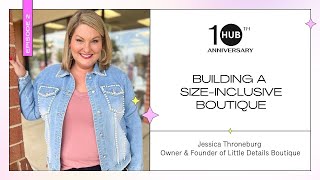
A recorded interview (Boutique Chat / YouTube) where Ashley Alderson interviews Jessica Throneburg (founder/CEO of Little Details Boutique) about building and operating a size-inclusive boutique. Jessica recounts starting Little Details from a $500 hobby (monogram/gifts) in 2012 and evolving into a 5,200 sq ft storefront selling apparel (XS–3XL), gifts and home goods. The conversation focuses on practical lessons for selling extended sizes: go to market/showrooms to check fit and fabric, model plus-size items (side-by-side photos), tag/feature plus items clearly online (searchable "plus/curvy" category), merchandise sizes side-by-side in-store (yellow hanger tabs), prioritize vendor partnerships and give actionable feedback about fit/cuts and production timelines, and be prepared for inventory/timing challenges (shipping delays, staggered runs). Jessica emphasizes that "carrying five plus items" is not size-inclusive — aim for majority extended-size assortment and think beyond basics (special occasion, shoes, bracelets, wide-calf boots).
Chapters
Okay.
Calling all apparel boutiques who carry extended and plus sizes in your store today is a conversation you are not going to want to miss. You're going to be joined today by Jessica Throneberg, the founder and CEO of Little Details Boutique. Jess is a longtime friend of mine and member of the Hub, and I really appreciate about Jess the fact that she always approaches issues or obstacles or stumbling blocks in our industry with a can do attitude and a willingness to look for solutions to problems rather than just vent about them. So today's conversation is one that she knows a great detail about, and that is selling extended sizes and being a full plus and size inclusive boutique. Today we're going to talk about how to sell plus to your customer, what it takes to build a business centered around extended sizes, and how to make your customers feel welcome. But also some of the issues that we're having in our industry today with manufacturing and just the discrepancy in sizes coming from a large to, say, a 1 to 2x. Now, there is not overnight solutions to some of these problems. But I love the approach Jess takes today and she extends a great invitation to all of you to join her in this effort to just raise awareness of what it takes to successfully manufacture apparel for all body shapes and sizes. So let's get into it. Meet my friend Jessica. You are absolutely going to love this one. Let's talk about your business strategy and the juicy details of what actually works, from mainstream fashion to fashion on Main street and the entire ecosystem behind it. How do we scale your company and do it with the balance and the happiness that we all seek? Let's hear from those insiders, experts and strategists that actually make it happen. I'm your host, Ashley Alderson from the Boutique Hub, and I can't wait to chat. Hey, guys.
Welcome back to the show this week. I feel like I have an old gal pal on the show today. Like, when you and I talk, I feel like that's what it is because you've been a part of the Hub so long, Jessica. Like, since the beginning, we've had some fun stories together.
So far we have had some fun stories.
Maybe we'll save some of those for the end. Like when you were so nicely introducing people to the Boutique Hub and they were like, no, not having it. You're like, well, you know, your loss is my gain. Whatever. Big gulps, huh? Let's move on.
So here we are. When you and I get together, I feel like one of the first things.
You and I do is we often dive into strategy, what's working, what's not, where are things going? And I love that about our conversations.
And so the one that we're about.
To have today, I think so many stories are going to resonate with because this is such a big topic in our industry right now. So I'm really excited to just pick your brain and hear your feedback. But before we get to that, let's give everyone a little bit of context and background. Tell me about your store. Tell me how you got started, where.
You'Re located, and what things are looking.
Like for you right now.
Yeah. So I'm Jessica Throneberg, and I own Little Details Boutique. We are located in Garner, North Carolina, about 10 minutes south of downtown Raleigh, which is our state capital. And I actually got started because I had gotten laid off for my job back in 2011. I was working for a local university, actually did student housing as my career at that time, and had gotten laid off and had a small baby at home. And so I was like, let's just look for a job. But you need to pay for childcare when you have that job. So look for nine months, couldn't find a single thing. And so I went to my friend's baby shower. I just got in this monogram machine, I think, for Christmas the year before, and I was hosting this baby shower and was like, I'm going to make some monogram and vases and some monogrammed decor. And people were like, hey, is this your job? Like, is this what you do? And I'm like, oh, no, but I can. And so I just decided, hey, I'm going to just do this. And instead of waiting for something to fall into my lap, that's going to work for me, my family, I'm just going to create my own destiny. And so I started little details on a whim around my birthday In September of 2012, I put out a Facebook post and I said, hey, I'm gonna start this Facebook page, and if you could join it. If you think that, like, you might like something, go ahead and add yourself. But I don't even know what I'm gonna do yet. Like, I'm gonna monogram, but it's gonna, like, evolve, and, like, you're just gonna be along for the ride. And so I went on, like, my birthday trip and came back and had, like, 150 followers. I was like, yes, like, we're onto something. And that was like the. The wild, wild west of Facebook, where, like, you could post and everyone saw it, you know what I mean? And it doesn't have anymore. And so I told my husband, I said, listen, I have this idea. I'm gonna just monogram, and that's gonna be my job. And I'm gonna make like, maybe a couple hundred dollars a month because that's really what we need, like just, just a little extra. And he's like, okay. Like, he, he called it a hobby. And he's like, well, all right. How much do you need for your hobby? And I was like, I just need 500. Like, I'm gonna buy like, tumblers and just all this stuff. And he's like, okay. And So I invest 500 in product. And I remember, like, sitting in his mom's house and everyone's kind of like looking at me like, here she goes. Like, this isn'. 11 years later, like, we're kicking it in, like a 5200 square foot store and we don't monogram anymore. We sell size inclusive clothing. We sell extra small through 3XL. We sell gifts, home decor. Just whatever it is, you name it, we've probably got it in our store. And it's just been like this evolution of business. And so now I'm always like, so how's that hobby going for us? Andrew, like, that's my husband, and he's like, yeah, yeah, like, now you have a job, it's a career. But, um, it's just so cool to see, like, what I've built from literally $500 to now, this massive, what I like to call my empire.
So, yeah, and it is your empire. It's amazing to watch because you are always, like, you're always someone who is trying to figure out the next thing. Like, you're always, like, trying to be on the edge of what's going to work next. I love that about your store.
And you have to be careful. You have to be careful with, like, being on the edge. Like, I was thinking about it this morning, like, the brands that I was on the edge with and then got stuck with, like, does anyone remember bourbon and bow T bracelets? And I ordered like 5 million. And then I literally, when we moved into the new store, was unboxing boxes and found like, 20 that we just never got rid of. And I'm like, oh, yeah. Like, I was too far on the edge sometimes, but it's great.
So if someone's listening and they're brand new to business and they're like, oh, maybe they're just like, coming off of a real, like, kick in the pants.
Right?
What's your best advice for somebody on how to Weather those highs and lows.
Cause it's all part of it, right? You really hope that you're always going to have a win, right? When you bring in a product, you're hoping like, oh, this was so cool. I found this at market. It was great. Or I saw someone else had it and I had to add it to my store because no one else had it in our area. And then like, you sell a bunch of them, you're like, let's just keep ordering, like, bog bags. Oh, my gosh, I sold so many bog bags in 2020, but it couldn't get any. Like, it was the supply and demand. And then I had like thousands of bog bags on backorder and they tried to ship them last year. And I'm like, we don't have a demand for it anymore. So it's knowing when to get out without like losing your shirt over it, you know? And sometimes you don't get out fast enough. And so it's like being emotionally untied to your product to know like, hey, I. Even though I love this and it was so great for so long, like, you just have to let it go. You can't just hold on to it because once that wave hits and it goes like, it's not coming back. And you have to be like, liquidate now. Get out, Run. Because it's just money just sitting on your shelves. And then sometimes I just get tired of looking at them. Like, donate trash. Because it's like you're. It's like an ex boyfriend that won't leave. Like, you just gotta get. Kick him to the curb.
Know when to say goodbye.
No one to say goodbye. And don't like, was that the Irish goodbye? Like, you just leave and you don't tell anybody. Just do that.
Just do that.
Just.
Just a little Irish goodbye with the old good.
Just. Yeah, just leave.
So when you. When you first started your store, correct me if I'm wrong, did you start in gift first and then you added apparel next, or was it the opposite?
So I did gift for monogramming and had an Etsy shop. And then so I did vinyl first, then added embroidery. And then my customers were like, so listen, you're embroidering clothes. Have you thought about selling clothes? And I'm like, no, but I can. Because I've worked retail since 1999. I work. I started the Gap Black Friday. Like, I know retail addressed tons of women over the years. So I'm like, I can do that. I don't know where to buy it, but I'll just figure it out. And so, so my husband went to Taiwan. So he's an engineer, and he went to Taiwan for seven months. And it was like January 2013. Had a two year old at home. And my customer tells me, hey, I want clothing. And I'm like, I'm gonna do that for you. So my husband was getting a per diem, and he's gonna kill me. He was getting this per diem. And so what I was doing is I was using the per diem to buy clothes and then replacing it. Cause I was trying to sell them so fast. And so it's like you buy a case pack of like six, and you sell two or three, and you've like, you know, recouped your investment.
Yeah.
So then I had all this extra product, like just sitting. And so I would just buy and then replace. And then he came home in like April or May, and I had taken over our dining room, our breakfast or our dining room, our spare bedroom, and our bonus room. And he was like, wait, when. When did you start selling clothes? Like, I didn't tell him at all that we had expanded the business. And he's like, I'm. I'm really confused. And I'm like, it's fine. It's all paid for. Like, that's the first thing you need to know. Like, don't be mad. It's all paid for. And now this is just profit. Like, anything that's. From here on out, we're profitable. And so we did clothing and kind of like left monogramming. Like, we were monogramming, but not really. And then when we moved into our storefront in 2017, that's when we really started adding in, like, those gift lines again. Because I was like, hey, it's hard to hold on to gift. Gift doesn't have a big turn like clothing. Like, you can tell seasonally. Like, hey, I got to get rid of this. The season's done. But if you're selling a Lily Pulitzer pillow and she doesn't make a new one for the rest of the year, that it might take a while to get rid of that pillow. And they also take up a lot of space. So gift didn't really come again until we. We opened up that. That brick and mortar. And now our store is half gift and half clothing. And our revenue stream follows that same pattern. So I find that gift is great in the slow season, when it's not a new season. Like if, when, when it's springtime, people are like, legs are out, arms are out, time to get new clothes. But then when the season has like progressed and they've gotten their clothes, what are they buying? And for us it's like they're buying their birthday gifts. Their mother's day is huge for us, like, you know, Father's day a little bit. But we do have some men's gifts. So it's nice because it's in the slow cycle. We have revenue generating product and we're not selling gift every day. But if you look at our numbers overall for the year, it's like half and half.
Yeah. I think that's so interesting and that's something that I feel like our industry has evolved quite a bit in the last, I'd say even three years on that front. Because when I speak to boutique owners, a lot of times they're like, oh no, I'm just apparel, I'm just specialty, I'm just blah. But then when you go to a gift market, like when you go to Atlanta or Dallas, they're like, no, no, I'm a home and gift store. And in certain like sectors of our industry, they see it as very different. But in the last three years, especially post Covid, when everyone had to get online and sell live or whatever, they're all this cross over started to happen. And I think new opportunity unfolded. One side really didn't know about the other.
Yeah. And we kind of went in knowing that that was always going to be the. I just knew, like, and I have been so fortunate to know people who own boutiques and to know like, tell me about your, your cycles. Like, I was researching storefronts long before we went into one because I wanted to make sure we went in knowing what can make us successful. And so when a boutique owner would tell me like, Christmas is my slow time, well, it's because do you really buy a lot of clothing for gift? No, you buy stuff for yourself to go out to a party or maybe you're going on a trip, but you aren't focusing on your spending dollars. So you're literally sending them to Target or you're sending them to Amazon and you're not providing them anything that they can tangibly take away from your store other than an outfit. And so for us, we, we really wanted to be like your one stop shop that is like local. And so our store is actually across from Target and Chick Fil A. I like to call it the trifecta of awesome. And so you're gonna hit all of them. Like you're gonna hit all of em. Like you're gonna Start with us, probably. And then you're gonna probably have your kid with you and you're gonna go to Chick Fil A and have lunch and then you're gonna go to Target and you're gonna buy whatever you didn't find at our store. And so, like, we're trying to basically hit that customer who's like, I want that one stop shop experience. Like, I want to get a cup and I want to get like a lantern and I want to get a flag and I want to get a sweater. And you. And you don't know what you're coming in for. Like, it's an experience.
I love that.
So the trifecta of awesome.
I think the trifecta of awesome. Yeah, I'm gonna make a sign and just like map it on MapQuest.
Perfect. So talk to me about this. So you went into clothing. At what point did you realize, like, okay, the way that we buy and sell clothing is a little bit jacked?
Right at the very beginning. I realized at the very beginning, like, I didn't know how to order. I didn't know how to order back then. Like, I was googling how to be a boutique. Like, I had no idea. And so it was like the hard knocks lesson that I learned, right? So I would get stuff. I had a two year old at the time. And so like, sometimes I would get things in and it's like, it's a size small, but it would fit my 2 year old. Like, who, who was this cut for? I have no idea. And so it was like a lot of like, lessons. Like, I couldn't, I couldn't afford like air quotes. I couldn't afford to go to market because we were so, so new. Um, I didn't know what market was, to be quite honest, but like, I would take my little clothing racks into like these shows and then I would talk to other boutique owners. I'm like, so are you having the same problems I'm having? Like, stuff feels itchy. It's like not great quality. It's super small or like a plus size will come in and it fits like a schmedium. And you're like, how, how do you find your stuff? And so it's these conversations that like, luckily people were super like honest and, and kind. And we're like, hey, like, have you heard of market? Like, do you know where to go? And I'm like, no, tell me. And so I didn't actually go to market until I think like 2014. So I had tried like a year and a Half of ordering on my own from these like, not even like direct suppliers. It's like these people who are like the middleman. So I was paying way more and you know, making all these mistakes and it was okay. It was like a learning experience for me. But you know, wow. Like, it's totally different when you actually go into the showroom. You're like, hey, I can try this on and I can feel the fabric and I can see this print because sometimes it's so small on the screen you don't know what you're getting. And one time I ordered something and I got teddy bears and I thought it was flowers and I'm like, this is teddy bears on a dress.
It was.
Wow. It was, it was special. And so yeah, you just, you have to kind of live and learn. And, and I think that's such a big investment for me. Like I try to go to the markets because if I order online from a vendor, even if they're my tried and true vendor, sometimes it's not a home run.
Absolutely. So talk to me about your full size inclusive boutique and that. There's so much conversation on this. What works, what doesn't work. I tried it, it was a flop for me. If someone is going to be a size inclusive boutique, talk to me about may top three things they must know in order to sell size inclusive items.
So let me just go ahead and say that this is my fourth attempt at being size inclusive. And when I say it's my fourth attempt, like I tried it back in 2013 when we first started, realized I wasn't getting the best quality. So then when I asked myself why did those items not sell, it was because the fit and the fabric were terrible. And so then I tried it again when we went into, we actually went into like a little vendor mall before we went into our first storefront. And so I tried it there, didn't work. And so when we went into our storefront in garner, we had 1200 square feet. And I remember thinking like, who is the demographic here? Like, are we going to get plus size customers? And there was Elaine Bryant in our shopping center. And so I remember thinking like, if Lane Bryant is here, then that means that that customer is nearby. And so tried it again, but we just didn't have the space for it. It felt like back then my 1200 square foot store had 5ft of back room. It was just very small. We rented like a storage space to like house, like backstock. It was just really not a great fit for us. But we like weathered that for three years and then went into our 5,200 square foot store in March of 2020. And I need y' all to know, like, that was 10 days before the Pandemic shut us down, which was terrible. But I was like, you know what? Like, we're gonna try it here. Everything I clearanced was plus size. But what I wasn't doing in that storefront or in any of the other times was I was not modeling those clothes. And so when the Pandemic hit and I had a brand new store that we had spent hundreds of thousands of dollars of my own personal money on, and I had no website because everything that was on the website was old product that we had clearance from the old store and had sold out. So I had nothing to sell. But we were closed for six weeks. Like, I mean, it was insane. So then you think, like, how can you, like, get through this? And so we started doing live sales, but not with, like, comments sold. Not all fancy. Like, we were manually invoicing people on our live sales. And then we were doing 45 minute Zoom calls with people or like FaceTime calls to sell product to people because they couldn't come in our store, but they could go to Target, which was across from us, and they were packed. And I'm like, we ain't going down like this. So I was putting myself in the clothing on these videos and I was showing people, like, if I'm on a 45 minute FaceTime and Ashley's like, hey, how does that pink dress fit? Well, girl, let me go slip that on for you and let me show you. And what I was finding is that people were very much responsive to the fact that I am plus size and I'm putting my clothes on and then like, well, you should model that. And I'm like, I should, shouldn't I? And so now if you look at our social media, it's my social media manager myself, like, we're just taking our photos on an iPhone. We're not fancy. There's no professional photographer. It's just us. But we are literally trying for everything that is size inclusive to do these side by side shots. And our. The, the feedback from our customers has been so big because they're like, oh, my gosh, it's so nice to see two different body types side by side.
Yes.
And sometimes the vendor cuts things differently for plus. So there might be a keyhole cut out in the small through large, but it's not in the plus size. Or there might be a different type of skirt to the dress in a small through large. And maybe it's more of a body contrast, but in the plus size, it's an A line. And so it's showing it side by side to be like, there are differences. Here's what this looks like. And that has been huge for us. And. And I recognize that not everyone who carries plus is plus size as the owner. But for me, being able to say, like, I'm carrying clothing that I can wear. And so if you walk in the store and you see me, there are things here I can sell and that I can fit in. And that if you feel comfortable seeing me when you walk in the store and you're my size, like, girl, I got you. We have a spot for you. And it's not a space that is secluded in the back corner that says plus. It is side by side with everything else. And so you can shop with your friends and you don't feel like you're being ostracized to the one back corner of the store that only like five people go to. It's, hey, this is an experience and you're with your people and you guys can all shop the same.
I have so many things I want to say right now. I love all of that. That was so good.
But can.
Can we be so bold to say this? Because I love that you called this out and I feel like I've had this conversation hundreds on this topic. You cannot successfully sell plus size clothing if you do not have a plus size model.
Right. And it has to be a plus size model who's not like a large and a half. It needs to be someone who's kind of filling it out a little bit. And yeah. And I will say, like, it's frustrating for me as a plus size woman. Like, I'm a size 18 and I tell everybody, like, I'm very open about this is my size. If you're in our VIP group, you know my bra size, like, every, like, we're, we're just, you know everything about me. I'm an open book. And it's very frustrating for me to get plus size sometimes and order it and think, like, this is going to be great. I already envisioned, like, what this is going to look like on Molly and I, and then to not be able to fit in it and to like, order like, I know, like, if I'm an intro, I'm like in the middle. If I'm in this size, I'm in like this brand. I'm in the middle. And to get brands sometimes or to get products from brand sometimes and not be able to fit in it at all. And to know that I can't sell that now, if I can't take a photograph with that product on and they don't see me in it, then they don't think that's available in plus, first of all. And second of all, they know it runs small and then therefore they're not even going to try it. And that's what's frustrating. And, and that's what I'm trying to like, really kind of give feedback on with my vendors is like, hey, just FYI, I got the stress in. I couldn't even get it over my hips. Like, it's not a dress, it's like a crop top with some extra fabric at the bottom. And, and I'm trying to give that feedback because for me, I know that that could have been a winner had the cut been a little better. And so it's just trying to help, help people like, realize, like, it kind of sucks. Like, I am very confident in my body. I'm, you know, but it kind of hurts my feelings sometimes when I can't wear stuff. And, and then for me, when I'm getting very adamant about is if I can't wear it, then I can't sell it. And then this is a miscut for me. And then we need to work together as a vendor to be like, hey, this needs to go back because now this is just going to collect dust. Like, I can't sell it on web and in the store if they know that I can't wear it, they're just not. No one wants to size up. Like, no one wants to be like, I'm an XL now I'm wearing the 3X. And I think that that's something that you have to be comfortable. Like talking to your vendors about is like, hey, this fit weird, or this was odd. But being kind and being like, is there something else I could buy instead? Like, can we trade?
Yeah. I want to talk about all the vendor things in just a sec, but I have to go back and clarify something in case someone's confused on this point. You're a size inclusive boutique. Tell me what the difference is in being a size inclusive boutique and carrying plus size is.
Let's talk about it. So being size inclusive for us is that a majority of our product is going to be size inclusive. Whether that is. And, and let me be clear, extra small needs some love because some things run entirely too big. And so we've been looking for brands that offer extra small all the way up through 3 XL. If people offered beyond that and it was actually sized correctly, we would, we would carry it. Sometimes a 4x really fits, like a 3 or a 2. Um, now we are not 100% size inclusive. I would love to eventually broaden into that, but the problem is, is that a lot of vendors are creating really cute styles in small through large or small through extra large. And they're not including the plus community in those styles yet. And that's okay. Not everything is going to look good on everybody, and I get that. But I'm, I think that we're probably about 75% right now size inclusive. And that means that we're, we're carrying like the extended size run and if there's an extra small, we're throwing it in. So like Judy Blue this season added extra small, which was much needed because her stuff runs oversized when you're in their shorts. And so, you know, adding those extra smalls where we can, or if they had a 4X, you know, we're adding those in plus size. When you say like we carry plus, like I see this all the time, we carry plus. Having five products in your store does not make you size inclusive.
Right.
And so sometimes you're like, I have a basic dress that I have in four colors. We're plus, we carry plus size. You don't, you carry a plus size style. And size inclusive means that you're thinking about all of the occasions that people need product for. You're not just thinking about the basics. You're thinking about beyond jeans and beyond T shirts. Like they want wear to work, they want special occasion, they want all these things. And then when you get into like shoes, like knee high boots, buy a wide calf, like that means size inclusive. And so thinking about it from all sorts of angles, if you're buying bracelets, E. Newton carries like extended size bracelets, it's thinking about extended size all the way around. And so that's really where we're kind of pushing for and we're, we're trying to get everyone on board to be size inclusive. And, and it's a, it's not easy.
One of the most impactful quotes a mentor once told me is only attract number grows. Now, as I think about retail, I know we have the retail art side of the brain, which is all of the fun and buying and social media and customers. But then there's the retail science side of the brain and we have to dig deep into the numbers if we want to see them grow. That's why we created a brand new dashboard for you at the Boutique Hub called Boutique Hub Black. Boutique Hub Black is an opportunity for you to deep dive into every single metric in your business together on one dashboard and emailed to you weekly. Plus text message updates if a number on your dashboard changes. And in addition, custom training based on every single metric so that if a number of yours is out of order, you can learn what to do to fix it right away. I want to invite you to this brand new opportunity Boutique Hub Black. Right now it's limited to only 200 boutiques because of the high level training and opportunity that's inside. Together with your own custom metric dashboard, your dashboard has an opportunity to measure your real time metrics from your backlinks, SEO page speed and quality, everything SEO driven plus Klaviyo Shopify your Facebook ad and Instagram ad data plus your overall social performance. If you want to see all of your numbers tracked automatically for you, you don't have to pay a team member to track all of your numbers. You don't have to spend hours gathering all the data from Google Analytics and everywhere else. Instead, Boutique Black is your very own automated custom dashboard so that you can track those numbers and watch them grow. Sign up and learn more about Boutique Hub Black in this week's Show Notes so you can get to tracking and seeing those track numbers grow.
No, it's not easy and we'll talk about the vendor side of that again in just a minute because it's a whole conversation like we're, we're evolving to get there. But it's taken a minute and it's going to take all of us to talk about it in order to get there. But I want to ask one more just strategic question because in order to be size inclusive, I mean that's a huge investment as well.
Oh, it is.
And I don't want anyone to think that we're saying everybody needs to be this because it's not feasible.
Nope.
Again, you either have to know how to model these items yourself or you have to have a model that can be. Otherwise your sales in store and certainly your sales online will be non existent. Talk to me though about the merchandising of being size inclusive. Like you said, it's not. There's a section in the background, but talk to me, what does that look like both in store and online? How to merchandise the items together.
Yeah. So first of all, for, let's just do online really fast because I'm doing. I have web in the brain. I'm redoing our website with Josh or right now. And so I have website on my mind. So first of all, you know, when we're online we use Shopify and so we're tagging our product to where we can create a category for I call it curvy. But we're going to go with plus for the general public. Plus size for some of our customers was very offensive, but that is what the industry term is. And so you want to make it searchable, you want to make it as easy as possible to, to find it with SEO you need to be able to find it. And so you know, we do have a tab on our. Don't look at our website today, look at it maybe like July when it's like all launched and pretty. But we do have a tab right now that says curvy. And when the new website launches it will say plus. So we kind of delineate all those products that are plus. And if something run really big, like I have some of our best selling shirts are from Adrian and they're like an oversized V neck and I'm an 18. I can wear large and it's still flowy. I'm going to label that as plus because I know I can wear it. And so what we're doing is when we're updating our size descriptions, we're figuring out where those plus sizes are. We're putting it in one area so she doesn't have to mess around and look for it. We're going to have our website searchable for size. So if she knows she is an extra large, even though we all know there is no standardized sizing that she can type in extra large and she can find that. But we do try to make sure that our model photos are taken side by side so people recognize that there is a variety of sizes available. Because let's be honest, we all know our customers don't always read. And so we know that like we have to make it as easy as possible. So if they're doing a Google search and they're like on Google images, they're not reading, they're just looking at images. And so you want your images to be easy to see. Like hey, that is two different body types. Let me click on this. And so that's kind of how we do it on our website in the store. You know, we're merchandising our product together. So we're making sure that we don't have a separate section that everything you know from left to right is small or extra small through 2x3x depending on how that size runs. And so that way if a customer says, hey, is this available in an extra large? Then when we go out on the floor, not only obviously we can scan it in the product, but then we could say, hey, that's not available. But you will see your sizes altogether. We had yellow tabs on our hangers that said like, that would basically let people know, like, hey, this yellow means that it is plus they pop off really easy. But I think we're going to go back to that because it was an easy way to say like if you're looking for size extra large because you don't want to like just tell people, hey, look for the yellow tab when they come in your store because they look curvy, like, don't be rude. But like if they're coming and they're asking you a question like, is there an extra large in this? No. But if you see the yellow tabs, that either means it runs oversized or it is going to be sizes extra large and above. And so that's an easy way you can get them. I get them off of Amazon and they're not that expensive, but they will pop off. And so you have to kind of keep up with them. But that is an easy way to kind of show that this is the extended size run.
That's super helpful. So when you like talk to me about your process, when you're evaluating a new vendor that you're going to bring in and you're going to market and you're just trying to plan your season.
Right.
Talk to me about like that process, making sure it's going to fit a certain way. Since there is no standardized sizing, how do you go about evaluating what vendors are going to work for you and which aren't?
So, you know, since COVID has happened, I want to touch on this, that everything has changed.
Yeah.
Like nothing is the same. And so that means pricing has gone up. And as a result of that, I feel like I've gotten a little pickier about what we bring in. And so for clothing, for me personally, clothing has to fit a certain within a certain box. For me to bring it in now, it means it has to be either size inclusive, it's by a women owned company, it's either going to be a fair trade factory or give back brand or it's going to be locally designed or locally made. And so if it doesn't fit one of those boxes for me, knowing that I have to charge a certain amount to run my payroll and to do my Overhead. I'm not even looking at it anymore. And so when I go to market, the very first question I ask any vendor is, do you have plus size? And if so, show me your section. And if the section is like this big and has just basics, I walk right out. I don't even look at the booth anymore. To me, it's not worth it to waste my time knowing that I'm looking for a certain thing. So if you are trying to be size inclusive and you know that what you need is plus size and you need the full size run, then my recommendation would be that's the first question you should ask any showroom person working is, do you have plus size? Because I see a lot of people who get frustrated when they're at market and they're like, I'm not finding a lot of plus. And I've wasted all this time in these booths, and it's like, did you ask if there was plus? There's not always signage, but did you ask? And then did you ask the question, does it also come in regular sizes? Because sometimes I think we get stuck with, you know, a plus style that you can't photograph well because you didn't have small through large. Like, they only do it plus only, which is super frustrating. And so those are the questions I ask when you come. When I come in the booth, do you have plus? If you don't, I'm walking away. And then if you do have plus, what is your sample size? Because I need to try it on, and I'm a size 18. So if I can get your Excel on as an 18, I know that your sizing is off. So if I can't get a 1x on, then I know, like, if 1x is like your. Your bottom sizing your lowest size for plus, then I know I'm probably going to be able to get in that, too. But if I can get your extra large on and I'm swimming in it, then I want to see your large, and then I want to compare the two sizes. And a lot of times the vendors don't have a full size run at market, which I think is something that we could improve on. But I want to see your small then, and I want to kind of compare that, because sometimes I think it runs so small in the small through large, and then all of a sudden they think the plus has. Is like 6 foot 8 and has, like, hips that are just enormous. And then we get in it and we're like this. I look like the marshmallow man from Ghostbusters and so that is. So that's what I do. And I want to. I want to see your fabric. I want to know that, like, you've not added a weird ruffle to plus, but you don't have that weird ruffle on your small. So I'm going to compare all of. So what I do is I say, hey, I'm gonna. I shop plus first. I shot my plus section first. And so I pull all the styles I like, and then I tell the person working. I say, can you grab these same sizes or these same styles in size small? Can I see them side by side? Because they're not always the same. Sometimes they'll be like, oh, it's a different color. No, I want it to be the same. And so we. That's how I shop. And then if I feel like I need filler, because I'll be 100% honest with y', all, we sell more small through large than we sell plus. So I have to have more filler somewhere. Then I shop the filler next. But I always go in with, like, hey, we need tops. We need sweaters. Like, depending on what season, we need some dresses. Curvy girls love a jumpsuit. Let's get some jumpsuits. There are categories I know we need to have. And then I'm like, let's see who we can fill it with. And obviously, if I'm working with a vendor who has all of the above, that's great, because if I'm buying in bigger bulk, then that means I'm probably getting some sort of incentive to purchase with them. And so I try to do that in as few of booths as I can, because I want to build that relationship with these vendors. Um, but then at the same time, like, I do try to save some money where I'm like, let's splurge on something. Let's do something different. Let's have, like, a little bit of our budget for something unexpected. Um, and that's kind of how I go to market. And it. I could spend six hours in one booth because I'm buying all the things, or I'm really trying to, like, compare. Um, it can be intense.
So you. I mean, in doing that, though, what I love that you just said was you want to create a part partnership with these vendors.
Yeah.
And that's, I think, what's so important. And no matter if you're plus or what you sell, I think all of us should have that strategy, because then. And the vendors love this, too, because then you're creating an Open feedback loop of here's what's working, here's what's not. And let's be honest, money talks.
Yeah. I say that money is like voting. Like, you use your dollars to vote, and so you're basically like, I like you the best, and I'm going to spend all my money with you. And so now you're president, and then this next vendor, I spend the next amount. You're vp. And so I'm like, we're. We want to create this partnership because without our vendors, we don't exist. Like, you can't be a boutique if you don't have product to sell. You can't do retail that way. And so I think it is this constant loop of communication. And so when I'm in with, you know, I can think of people like Renee over at Adrian. Oh, my gosh. Like, does everyone not love Renee at Adrienne? Or sorry, Andre, by unit. Like, they're just so kind and like. And I'm like, oh, man.
Hey, guys. Thank you so much for listening to this episode.
We hope that you loved it. Don't forget to hit us.
What I do is leave a rating.
My data below or a chance to.
Be one of our featured listeners each and every. For more information on our spirit of community over competition and how to access complete show notes and bonus downloads from.
Our guests, head on over to the boutiquehub.com and join the community.
We'll see you next week.
Didn't work quite as well. Like, is there something that's similar but is maybe the fit is a little different? And then he'll be like, oh, let me. Let me check. And he just knows their product line. And so I love being able to work with him and being able to say, like, hey, like, we love the embroidery or my girls weren't so into that. And I feel like it's a shopping experience the same way that, like, we treat our customers when they're in our store. And so I feel like some vendors are just so in tune. Some vendors are not as in tune. And so then it's finding who. Who do I need to talk to who. Who actually does these things that I'm asking for? Because you can give the showroom manager information all day long, but they're. They're trying to sell. Like, they're. That's like someone coming into you and being like, hey, girl, I love these jeans, but they just didn't fit right on Black Friday. And you're like, got a line wrapped around the building. You're like, okay, so it's like, who. Who can I contact to talk more about these things? And, yeah, and that's kind of what I've been doing for, like, the past, like, year is like, hey, like, here's what worked. Here's what didn't work. And then now, like, I'm getting into rooms or on zoom calls with people who are actually the decision makers. And to say, like, gosh, we would love this. And. And one of the things I find for plus, someone said this to me recently is, we don't know what we're doing. We don't know what you guys want. We are literally cutting the easiest thing to cut to say we have it. And that's when it's like, in my head, I'm like, oh, my gosh, they don't know. And we know because we're in outside the fitting rooms with these people. We're hearing their feedback and what an opportunity we have to share with them. Like, this is what's working for our customer, and this isn't. And being able to get that feedback. So I got on one of our hub pages and said, hey, I'm about to get on with a vendor, and I need quick feedback. And, like, just give it to me. I don't care what it is, but if there's something specific that you're seeing in our industry, please tell me. Like, I want to be able to share this with everyone that I talk to. And one of the most common things was that we're leaving out of size. We're skipping over what I think is one of the largest populations of women in this country, which is, like, a size 14. And so we're going immediately from a 10, 12 to, like, a 18, 20, and we're leaving like a 14 and a 16. So giving that feedback to people, and they're like, oh, my gosh, you're right. We are skipping over something. Or, hey, let's not just do basic colors. Can we have some pattern? Like, can we have, I don't know, some structure, some tailoring where everything isn't billowy and. And flowy and. And the vendors, they don't know what they don't know. And plus is new to them. Like, when I started in 2013 buying clothing, there wasn't a lot of plus, and it didn't exist beyond maybe a size extra large. And so this industry for, like, for this type of fashion is new. When you look at the Gap in Old Navy, they manufacture their clothing, so it's easy for them to say, hey, we're Size inclusive and because they manufacture it and they know they have that customer feedback and that data. But jodiful intro. Skies are blue. All those people, they don't have that data that the Gap has. And, and we have to be the ones that kind of tell them in a, in a very kind way that this is what we need. And, and figuring out a way to like actually work alongside them and not just say, hey, well you're not making what I want. I'm just going to pull my money and go somewhere else. Like this is a conversation we need to have.
Yeah. I just want to reiterate what you said because it's so good going back to this is a partnership. How can we win together?
Yeah. Because if, if I'm selling your stuff and it's flying, then guess what I'm going to do? I'm going to reorder.
Yes.
And then I'm going to be like, hey, this went so well. Like have you thought about how we could tweak that for fall and, or you know, the following spring or you know, gosh, we've had requests for this. Like have you thought about new patterns? Like, and, and those are conversations I feel like some people are really excited to have because I'll be honest, I think we've, we've all seen it this year that the plus is secondary. It's not the first thought that is in our, in our wholesalers minds. And so what I'm trying to do is make plus a priority and saying, hey, this is an industry that needs to wear clothes. Arlene Bryant in our shopping center during COVID went out of business. And so now there's all these women in our area who may not know that we carry size inclusive at little details. But when they walk in and they find out they want to come back because they, they constantly need something. And so we need to keep up with the demand. And the only way to do that is to work with our vendors to say, hey, like this is what people are asking for. Have you thought about this? And I think some vendors are willing to listen because they realize that what's that, how they have been doing it isn't working anymore. And so when we see one of the common complaints was not only the sizing but the delivery dates. And so when we talk about taking pictures side by side, but you're ordering your small through large and getting it in January, but you don't get your 1x2x3x until June, how do you do that? And these are conversations that I'm Having. And unfortunately, I had to cancel orders this year. I said, like, if we can't get everything at once, we don't want it. And we've waited too long. And you can't hold on to product for six months. I mean, unless you're mean, you're doing collections and you kind of have that game plan set aside. Like, I've ordered my fourth of July and it's, it's waiting for its time to shine, but, like, you can't hold on to everything. And so I think that's something that are. That they need to know. And, and the reason that they do that is because they don't know what to cut. And so they're waiting to see their bestsellers at market, and then they're like, well, gosh, this top sold and it's a good fabric and it's a flowy fit, and we're going to go ahead and just cut this in plus. But now the plus doesn't come until the second or third run. And that's kind of how the industry has been working. And so what I'm trying to do is have conversations to say, hey, if you talk to some of your top vendors who are ordering plus ahead of time, we can help you build that line. Like, our vendors are already designing and cutting for spring 2024 right now. And so having those conversations to be like, this top, if you did it in plus, we would sell so many. Like, all the smocking that's happening this season, my plus girls are eating that up because it is making the girls look good. And then it's like flowing away where it needs to. It's. It's amazing. And so it's having those conversations to say, hey, like, this is what we need more of. So then when we go to market in January, they're like, look, we've expanded our plus line because we've had this feedback, and now we're going to see if it's actually going to sell. Because if you ask them, are your sales good, they literally tell me, no plus bomb this year. And I'm like, well, did it bomb because you gave it a good opportunity or did it bomb because you had it ship late and you had like 10 styles like you. That does not mean your plus line did not do well. It just means you didn't plan accordingly.
And they can't do it without your feedback.
Yeah, they have no idea. They honestly have no idea. And if you based off of what China thinks is plus, it's not plus it all.
I mean, there there's such a cultural difference. It is in sizes. But also, I just have to note, like, there's such a cultural difference in the generational change that's happening with many clothing manufacturers right now. But one generation was a little closed off to feedback. Yeah, our younger generation of manufacturers are so open to it.
I think they're open to it because of what Covid has done. So Covid gave us an opportunity to pivot. And some of us, like, I'm like, pivot queen. I've pivoted, like, more than I've pivoted ever, you know? And so I'm a professional pivoter now. And so I think that, like, people are, like, it. What was working just doesn't work. And so how do we make it work? And when you talk to people who can actually make those decisions, I find that they are more receptive to that feedback. And it's. And they. And they understand, like, man, these people really do love us. They just want us to, like, make more so they spend more money. And if. And if I'm spending the money and I'm giving them this feedback, I'm like, we had 75 people comment in, like, a couple hours on that post. And I'm like, so let me just go down the list and read all these things, and let me summarize for you. And they're like, wow, this is good feedback to have. And I look at that as, like, wow, look at the power of numbers. Because that conversation could have gone differently, but I'm like, I have literally 75 people all saying the same thing, and they're all boutique owners from across the country. And maybe the other 45 people, 4,500 people in that group, didn't see that one post. But the 75 people who did all get the same feedback. And we just want it to be better so we can just buy more and sell more.
Yeah, absolutely. So I'm going to do this. If anyone is listening and they're like, you know what? I want to be a part of this conversation. Hopefully everybody has gotten enough, like, takeaways from this conversation today that you can go back to your own vendors and talk about this right now in a positive way, while also keeping in mind that, yes, money talks when we buy things, but it's also very expensive to manufacture 100%, and one bad decision can take a vendor out of business. So please, like, it's kind of a delicate topic because they're making an insane investment to make this happen for us based on this feedback. So tread Lightly, but. And be professional, but certainly raise your voice. I would also say those of you who are in the Hub, Jessie, you're in the Hub. Anybody can message you with more feedback anytime. We can post about it all the time.
Yeah.
I'll also take your post from the 30k group. I'll put it in our wholesale manufacturers group. So those of you who are a wholesale member of the Hub, you can see screenshots of that post. I think that'd be really beneficial for everybody.
Absolutely.
And then as a final follow up, you guys, my Instagram's always open.
It's A.J.
Alderson. Or my email, ashley@the boutiquehub.com Send your thoughts. And Jess, I'm going to make you kind of our middleman. I'm going to pass lots of these things off to you.
I love it.
You're welcome.
Because I am working with vendors right now and, you know, we have a local vendor and I want to, I want to give them a shout out. Michelle McDowell is out of Apex, North Carolina, and she's part of the Hub. And, you know, I've said it for years, like, they added in, I think extra large and xxl and the sizing just wasn't. It wasn't XL and double xl. And so I kind of was a squeaky wheel, you know, and I know my reps, their friends, and so we have this conversation and then I finally said, listen, I'm down the street and if you could just let me try on stuff, I would love to give you feedback. And so I've been posting some of the pictures of this in the Hub of me in dresses that are a double xl and they're having to cut them all the way up to, like, right under my armpit to get them to lay flat so we can see like, okay, so this is what China thought double XL was. And then this is what is reality of a size 18. And it's kind of humbling to be like, look at me and all of this, like, scrap material. But they have hired like, a new designer who's like a new fit designer who's like, I want to get it right. And knowing that they're investing that time and that energy into something is just so encouraging. And knowing that, like, they're not going to get 100% right. There's always going to be things. Like, I've, I've learned a lot from being with them that I've learned that, like, there's like a 2 centimeter threshold that 2 centimeters can make or break whether or not something is actually manufactured correctly, but when you are talking about 2cm on a flat lay, that's actually 4cm when you double it and you put it on. So 4cm can be the difference of me getting something over my hips. And so thinking about, we have to have grace because these factories have a threshold limit. It's not going to be exact every time. But there's the things I've learned from this process. I'm like, wow, this is hard. And, you know, it's. It's so cool though, to be able to say, like, oh, I've tried these on. And I feel like their fit for spring was so good. And that was. People were messaging me who knew that, like, I'm like their double XL fit model. And they're like, oh, my gosh, it fits this season. I'm like, yes, but I didn't get try on every sample for spring, but for fall I have. And so I'm like, hey, I need to tell people, like, for fall, I've tried on every sample. And that way they know, like, they can go in a little bit more confidently. And. And that costs money. Like, that's time, it's energy. But, like, kudos to them for being like, we want to get it right and we want to be more inclusive and we want people to feel confident that if they walk in that this is more true to size. And y', all, it's sad that, like, men, they can be a 34, 30, and they can walk into a store and buy a pair of pants everywhere they go, but women, they can't. And we are really the shoppers. Like, women spend more money in the fashion industry than men. And so, you know, my hope is eventually we're going to see a more standardized size chart across the board. I don't know that we'll get there in my lifetime, but gosh, like, wouldn't that be amazing that we could tell people, like, this is how it fits and it's consistent. But I think it starts kind of with us. And it starts with just making, you know, some of those changes are offering, like if you are plus size offering to, you know, when you go to their showroom, like, I've never been to la. I'm really hoping I get to go on the LA experience this year. Hope it fits in my schedule. I know, but I'm really hoping that I can take some time and go to some of these warehouses. And I've already talked with some of our bigger vendors like Intro and Jodoful and OMG and talking about can I come in and can I try on some of your stuff and sit down with your designers who are there and like, let them see me in these things so they can see what I'm talking about. And some of them are like, yes, like, let's get that on the calendar. Like, let's do this. And so I think if you're going to LA and you're there and you're curvy, like saying, hey, can I try this on for you? Like, can we talk about this? Because I think that's such a good opportunity for them to be able to see firsthand. Because most of the people, let's face it, that are coming in their booths at Market are going to be like in that small medium category and they're not taking the time to do that. And the showroom is not really the best time to do that. But when you have those one on one appointments, that is, that is where you can really be making an impact.
I love it. You're giving me some ideas for the LA experience. I'm feeling like we need to have like a plus size roundtable with several vendors and some.
Can I be part of it?
Okay, so many things we've got to get off this podcast and plan it right now. Jess, thanks so much for taking the time to be on the show today. This was incredible. You and I could talk all day long not only about size, inclusivity and carrying plus in your business, but a million other things as well. There will come a time and place for that. But thank you so much for being a part of the hub, always being such a supportive mentor and leader in this community. I just really appreciate you. So thanks for sharing your wisdom with us today.
Yeah, thanks for having, you know, this environment where we can do things like this. And I feel like I have benefited so much as a, as a boutique owner from doing this and, and learning from other people. So just what a fantastic group that you have created.
So thank you so much.
Hey, thanks for listening to our 10 year anniversary series here on the Boutique Chat podcast. Not only is it our 10th anniversary here at the Boutique Hub, but several stores in our industry. So each week on the podcast we are hosting a series. For our 10 year anniversary special, you're going to listen to lots of great stores just like this one who are sharing their lessons learned in 10 years. You guys, to help celebrate, we have a massive, massive, biggest we've ever done giveaway happening on Facebook and Instagram at the Boutique Hub. To help celebrate 10 years in business, we're giving away prizes like a thousand dollar shopping spree on Hubventory. Hundred dollar credits across 10 different brands on Hubventory. A lifetime membership to the Boutique Hub VIP package, to the Boutique Summit, a VIP planner package. An opportunity to get into Boutique Hub black and so much more. So check out the giveaway details on our Facebook and Instagram. And thank you for helping us celebrate 10 years in business. We couldn't do it without you guys. We appreciate your trust, your loyalty and your community so much.
Warehouses and I've already talked with some of our bigger vendors like Intro and Jodoful and omg and talking about like, can I come in and can I try on some of your stuff and like, sit down with your designers who are there and like, let them see me in these things so they can see what I'm talking about. And some of them are like, yes, like, let's get that on the calendar. Like, let's do this. And so I think if you're going to LA and you're there and you're curvy, like saying, hey, can I try this on for you? Like, can we talk about this? Because I think that's such a good opportunity for them to be able to see firsthand. Because most of the people, let's face it, that are coming in their booths at market are going to be like in that small medium category and they're not taking the time to do that. And the showroom is not really the best time to do that. But when you have those one on one appointments, that is, that is where you can really be making an impact.
I love it. You're giving me some ideas for the LA experience. I'm feeling like we need to have like a plus size round table with several vendors and some.
Can I be part of it? Okay.
So many things. We've got to get off this podcast and plan it right now. Jess, thanks so much for taking the time to be on the show today. This was incredible. You and I could talk all day long not only about size, inclusivity and carrying plus in your business, but a million other things as well. There will come a time and place for that. But thank you so much for being a part of the Hub, always being such a supportive mentor and leader in this community. I just really appreciate you. So thanks for sharing your wisdom with us today.
Yeah, thanks for having, you know, this environment where we can do things like this. And I feel like I have benefited so much as a, as a boutique owner from doing this and learning from other people. So just what a fantastic group that you have created.
So thank you so much.
Hey, thanks for listening to our 10 year anniversary series here on the Boutique Chat podcast. Not only is it our 10th anniversary here at the Boutique Hub, but several stores in our industry. So each week on the podcast we are hosting a series for our 10 year anniversary special. You're going to listen to lots of great stores just like this one who are sharing their lessons learned in 10 years. You guys, to help celebrate, we have a massive, massive biggest we've ever done giveaway happening on Facebook and Instagram at the Boutique Hub. To help celebrate 10 years in business, we're giving away prizes like a thousand dollar shopping spree on Hubventory, hundred dollar credits across 10 different brands on Hub and Tory, a lifetime membership to the Boutique Hub VIP package to the Boutique Summit, a VIP planner package, an opportunity to get into Boutique Hub Black and so much more. So check out the giveaway details on our Facebook and Instagram. And thank you for helping us celebrate 10 years in business. We couldn't do it without you guys. We appreciate your trust, your loyalty and your community so much.










