Finance 101: How to Build Wealth as a Boutique Owner
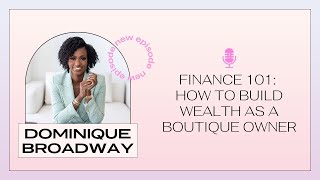
Dominique Broadway, founder of Finances Demystified, talks with Ashley Alderson about how boutique owners can build wealth beyond their business. They cover money mindsets that hold people back, how to start investing in stocks and ETFs, and why you need a will and life insurance.
Chapters
One of the questions that I feel like I've been hearing a lot or conversations I've been having a lot recently, especially after the Boutique Hub launched its own mastermind and we hosted a few weeks ago in la, is about what's beyond the boutique. So we build this great business, we have this solid revenue stream. But then what is the plan long term to sell the business? Is it to build enough revenue to feed into additional investments that similarly pay ourselves back in another form of revenue, like investing in real estate or the stock market or other businesses? What is the long term plan with the business we're creating today? And so today I'm so excited because I'm going to attempt to answer this question through a conversation with an awesome guest who I can't wait to introduce you to my friend Dominique Broadway, who is the founder and CEO of Demystify your finances with Finances Demystified. Now, Dominique and I are going to talk about what does it take not just to build a business, but more so what does it take to build wealth? What are common misconceptions when it comes to investing and protecting yourself long term with wills and trusts and real estate? And what do we all need to know about our money mindset before we start investing? There's definitely some common misconceptions that we all battle. So I encourage you to think about this conversation today and ask yourself that question, what am I building long term? And just for the record, I mentioned this in the podcast, but I do want to call it out and mention it one more time. If you haven't yet read the book Rich Dad, Poor dad, please do, because it's going to play into everything that we talk about today on the podcast. I hope that you love this episode. Get ready to meet my friend Dominique Broadway, the founder of Finances Demystified. You're going to love it. Let's talk about your business strategy and the juicy details of what actually works. From mainstream fashion to fashion on Main street and the entire ecosystem behind it. How do we scale your company and do it with the balance and the happiness that we all seek? Let's hear from those insiders, experts and strategists that actually make it happen. I'm your host Ashley Alderson from the Boutique Hub and I can't wait to chat. Hey guys, welcome back to the podcast this week. Dominique, I'm so happy you are here. This is perfect and timely and a conversation that we all have been dying to have. So thanks for being on the show today.
Thank you for having me, Ashley. I'm super excited to to be here and to get to talk to your audience.
I love this topic because I feel like in our industry, so in retail, I feel like successful store owners have two sides of the brain. There's the retail art side of the brain and then there's the retail science side of the brain. So the art is social media, customer service, going to market, dressing pretty. Right, all those things. And then the retail science is really understanding numbers. And something we talk about a lot on the show is inventory turn like that side of finance. But I think an even broader conversation that you bring to the table is it's not just the inventory and making money out of this one stream of revenue, but what do you do overall with your cash? What do you do overall with your wealth? How are you creating multiple revenue streams? And I know there's so many topics you and I can dive into today to just really like make a plan that everyone feels good about at the end of this show. But before we dive down all those rabbit holes, I would love it if you would just start by giving us some background. Tell me your story. I know you have wanted to do this for a long time and you've got so such a cool story of how this mission has evolved for you. So let's hear about it.
Yeah. Thank you so much. So I always like, always, never really know where to begin, but I'll say, you know, like as a kid I was always selling stuff, trying to be, you know, being an entrepreneur. I had that entrepreneurial bug probably at like 5 years old. And then I was around, you know, had a couple other little companies and participated in one of my friends businesses. Around 14, I would say became the chief operating officer of his company, Kids Interactive Data Systems. And we essentially just taught kids how to use computers because then I want to age myself. But then they weren't teaching kids how to use computers in school. So in the evenings and weekends, teach them how to use various computer softwares. And then when I got he went off to college. So we ended up shutting the company down. And then when I turned 16, I just got really intrigued with trying to figure out how to make my money work for me. I'm like, okay, I get it, I can go get a job and when I have a job I can make the money, but then what do I do with it, right? There's only so much spending you can do. And so I got really intrigued with that and started teaching myself how to invest in trade. At 16, I went to my family, asked them to help Me, you know, hey, can you help me understand how to invest? And they're like, honestly, we don't know anything about it. And so, you know, outside of just real estate. So took my mom, my grandfather's like, in my grandma's like, retirement statements and just like started researching. My grandfather bought me Investing for Dummies. And I just started trying to teach myself how to trade and invest. And then I went on to Bowie State University, which is a historically black college in Bowie, Maryland. Majored in banking and finance. Got an internship with this company called UBS Financial Services and ended up doing really well there. Became a licensed financial planner and advisor for high net worth individuals. I had bought my first house at 22 before I graduated college. And my friends were like, how did you do this? How did you do all of this? And I'm like, wait, you guys, like, weren't investing while you're in college? And they're like, no, they're like, you move from your dorm to this, like, condo, you know, high rise, and we all move back home with our parents. And so I realized, you know, over time there was this huge gap in information, right? Like I was working with these clients that had 10, 20, $30 million in investable assets. And, you know, it was great and I learned a lot, but it wasn't as fulfilling for me as I thought it was going to be. I wanted to help people who were like me at the time, that didn't have millions of dollars but wanted access to financial information, education. So I ended up quitting my job and starting my company, which at the time was just my name, Dominique Broadway. Fresh Ideas for a Brighter Financial Future. And I wanted to focus on millennials, entrepreneurs and creatives because those to me were the group that was just not getting access to the financial information, not getting served. So I ended up getting a booth at a company, paid $1,000 for the booth, kicked that off, got my first 90 people that, that was like the start of my email list. I ended up making about a third of them clients and then kind of kicked off from there. You know, was doing well, getting a bunch of clients, but I was not charging enough. I didn't really understand my worth and all the value that I was bringing to my clients. My clients were buying investment properties and paying off their debt and budgeting and just doing great. But I was starting to not do great. I was starting to fail financially because I started ignoring, you know, ignoring my finances. And then I went broke. So my worst case scenario happened. House. When it's a Foreclosure, car got repossessed, completely broke, negative bank account, all the things. And so had to really build out of that. And I've had my company now for I think actually 10 years next year. And so now we are a thriving financial education company. And thank goodness for the bad things I went through because it also educated me on a lot of other areas. Right. How to get your house on a road culture, how to get your car back from being repossessed, how to, how to increase your credit score once it hits a 450. So you know, looking back, it was just my way of, God's way, I feel like, of, of helping me to, to learn other areas. And so now we're, we're a full fledged financial or fin edtech company. And so, yeah, that's, that's, that's my story.
I mean, there's a lot to unpack right there. But first of all, I love what you said. Like, I am such a firm believer that God only gives us as much as we can handle. Right. And like all those moments happen on purpose because look at what you, as awful as that was, look at what you learned in the process and think about how many lives you touch because of that story. That's really unbelievable.
It was, it was bad when I was going through it, but now I can look back and say, okay, I get, I understand why.
Yeah, yeah. The sweet is not a sweet without the sour. Right. You've got to walk a little bit on that. When clients first come to you, I'm assuming there's just a lot of misconceptions and just blank gaps that I wish our education system would address early on in school, where do you start? Where is home base? And just helping people understand the basics of their financials, understanding their credit score, understanding how to make money work for them, and understanding what the stock market's all about. Where do you start?
Yeah, you know, it's hard because. Well, I will say, I will say now within the past like four years, you know, we don't do any one on one working with any clients one on one. Right. So I will say when I work with clients one on one, you know, the biggest thing or the first thing was really tackling, you know, where they are currently. Financially, it's really, it's nearly impossible to help, to help anyone create a plan if we don't know where you are currently. So that's the big thing. But then also realizing even when I work with clients one on one and even now that we don't Work with clients one on one. We're still educating them. The biggest thing is, I'm seeing is just the negative relationships they have with money that a lot of times come from childhood or come from just, just life, right? Like just starting to beat you down as you, as you start growing up and going through life. And so a lot of people don't truly believe that they can be wealthy, that they deserve to be wealthy, that it's possible for them. A lot of them feel like, oh, I see that you did it or someone else did it, but I don't think it's possible for me, for me. So that's a big money mindset or big shift that we have to break down. Also just a lot of the negative experience, negative things they seen, right. Their parents deal with or families deal with. So not talking about money, you know, I'm very, very open about money and about how much I make and all the things. And they're just like, wow, how do you do this? And not really understanding the importance of that. Because if you can't talk about money and aren't comfortable having conversations about money, it's going to be hard for you to start building wealth. Like, to build wealth you have to talk about money all the time. And so those are some of the things that people just saying, you know, seeing their family struggle. You know, obviously I'm a black woman and I work with a lot of people of color and a lot of us are first generation, we're the first people in our families to have ever made $100,000 to maybe, you know, my case, be a millionaire, a multimillionaire, the first people in their family to, to, to just make $100,000 a year. So, you know what I mean, to have a degree. And so there comes a lot of negative money thoughts and issues that surround that as well. Being the first feeling, you know, almost embarrassed of how much money you make, knowing how much harder your family had to work to make smaller amounts. And so those are some of the things that I see people having to deal with initially before we can even start the conversation of building wealth, you know. But I will also say outside of that, like, you know, like I said now I don't work with individuals one on one, but I still see people struggling with the overspending and things. Things like, as well. But those are some of the first things that you truly have to attack when you're starting to that wealth building journey.
Yeah, I would agree. I just, I have got to hit on this because the shame that Surrounds money. I had a very similar situation. I grew up on a farm. I grew up poor. Right. And it was just always a point of contention. And money is the root of all evil. And, like, just. Yeah. So much negativity and shame. But you have to be able to talk about it. And what I've learned is that money is amoral. Right. Like, it's neither good, it's bad. It's simply a mirror. And it's a reflection of your character. And for some people, it reflects positively, and for some, it doesn't. Right. It's a brick. You can use the brick to build a beautiful cathedral. You can use the brick to throw through the window of that beautiful cathedral. Yeah, but that's a choice.
Money is the root of all evil. That's something that you hear a lot even. I grew up as a Christian. Right. I went to Christian schools and everything. And they always said this money was root of all evil. And when you look back on it, just really interesting. I'm not sure if you noticed this, Ashley, and this may be the first time you noticed it. Growing up, the wealthy people were always the villains.
Yes.
You ever noticed that? So, like the Simpsons, Mr. Burns. Mr. Burns had a whole power plant that basically employed all of Springfield.
Yeah.
He was considered the villain. And I'm like, this man is literally paying everyone in Springfield. And then also Scrooge mcduck scrubs it. Scrooge mcduck or whatever, they will always show him, like, sitting in his. His. What is it? A vault with money. Ha ha ha ha ha. Throwing his coins as, like, this bad guy. And so growing up, we also think that, like, like, making money and wealth is bad. Have you ever noticed that?
I have never noticed that. And now, like, as you say that, I'm thinking about all the children's movies, and it's, like, popping for me. My mind is blown right now. Thank you very much.
All the things that you're thinking about, like, oh, my gosh, like, all the villains have these big mansions, and then they're like, superheroes. They're not superheroes. They're villains, like, trying to tear down the city. It's crazy.
Anyway, I don't even know where to ask a next question from this because download mind is, like, going down such a rabbit hole. So how do you suggest when someone understands, like, oh, my gosh, I have that train of thought, too, and I know I need to unravel it. For me, a really positive way of unraveling. This was the book Rich dad, poor dad. It's like, one of my favorite. Like, I'm gonna buy it for my whole family for Christmas.
Yeah, that was a good book for me too.
Yeah. Is there another? Like, how do you help people start to unravel that process and that negative money mindset?
Yeah, that's a good question. So I love Richard poor Dad as well. That was a big game shifter for me when it first came out. You know, like you said, you grew up not having tons of money either. And so it's like, it was like, wow, another way of thinking. But I would say, honestly, one of the things that have really helped me is money mantras. Like, counteracting negative thoughts with a positive thought has been huge for me. One of the things. And I love my mom, but she's very like, oh, my God, what if the world falls apart? Or, what if you. You fail? What if you go, she's that person, right? And I'm very optimistic. Like, but what if I succeed and what if I make millions? And what if she's like, but what if you don't? And then you're poor? And I'm like, well, I'll just start over, right? You get broke and da, da. And so for me, having to counteract those things have helped. Have been really help, help, help. Me having money mantra. So, you know, there's times either the day I was thinking about this thing, I'm like, oh, my gosh, like, what if this happens? And I'm like, wait, no, I'm a money magnet. Money flows to me easily, right? Like, literally, literally immediately counteract it, because I was starting to have thoughts of scarcity, but I can't have a thought of scarcity when a thought of abundance comes and pushes it out. And so for me, having those money mantras, like, similar to, like, how people say, like, I'm having Bible verses, you know, to counteract any negative thoughts. For me, that's been very, very helpful, I would say, also identifying what those triggers are, right? So sometimes people have certain triggers that take them back to that place, take them back to those negative thoughts. It could be your family, it could be your friends. It could be certain smells that remind you of a bad situation where maybe you came home from school and the lights were out because your parents couldn't pay the bills. And it triggers certain things, and it makes you feel scared, and the fear kicks in and the scarcity comes in. So for me, having those affirmations have been really good. And since you're talking about books, this is one of my favorite books I want to share it with you guys as well. I keep it here and I send it to a lot of our students. But it's called the Game of Life and how to Play It. It's one of my favorite books and this has just been super, super instrumental in my life and I require my students to read it and they all love it. It's a small book, it's 100, maybe 15 pages. I read this book probably every other month because as I go through life and certain things happen, you know, being able to reference something like this, you know, if you research things, it may impact you one way one month and impact you another way another month. Right. Especially as you're, as you're going on this wealth building journey. So that's one of my favorite books that I found about a year ago and I've just, I can't stop reading it.
So I'll, I'll link it up in the show notes. That's so helpful. So when someone is coming to you and let's say they're a small business owner and they have one stream of revenue, right. It's this business they're trying to get off the ground. How do you help them shift not only the mindset but like what is the process you start to walk down to move from creating one stream of revenue to actually building wealth?
Yeah. You know, I will say this. I think that a lot of times we get really caught up in having multiple strings and multiple strings is important, but I think there's a lot of value with having one string. I had one strain that made me $10 million over the past two years. One strain. So I think that there's a lot of power in focusing on one stream. I think that sometimes we focus so much on having all these different products, all these constraints, and it gets it. You spread your energy. But imagine sometimes if you're saying, hey, I'm going to take this one string, this is what I tell even like my business coaching clients take that one string and set a revenue goal for that. Right. So it may say, hey, I have this one thing. I want to try to get this one thing to $100,000 a year. I want to get this one thing to have a million dollars a year. And my thing is once I got that one thing producing, you know, for at least $4 million a year or $5 million a year, then I'll go to the next thing, right? So I had one product, I'm like, okay, this will consistently bring in millions of years. Now that, that's doing that now I'll go into the next thing. And so I will say, like, there's nothing wrong with honing in and really getting that one thing to the next level. Yeah, that. That's my thoughts there. Because I do feel like people get so concerned with launching. Like, I've seen people who have eight different products, and I'm like, pick the one that's making the most money and double down there. You're going to get the quickest profits there. So I think entrepreneurs need to sometimes laser in. I'm an entrepreneur. I'm a CEO now, which is definitely different from being an entrepreneur, but I'm still an entrepreneur. I buy businesses, I invest in businesses. And now what I had to do, I'm like, yes, I love nails. I love nails and nail designs. I don't need to start a nail design company. It's not a good use of my time. I'm going to invest in one. I'm investing someone else that's doing it. So I had to do that, right? So as entrepreneurs are like, oh, my God, I like this thing. I'm going to start this. I'm going to start this. Laser in. Laser in. There's more abundance in lasering it. So that's my answer there.
We are all squirrels. It is so easy. You're absolutely right. You can be spread way too thin, way too wide when you do have that stream of revenue. And even if it's small, I want to just, like, reiterate, like, you don't have to have a million dollars to start investing in something. So how can you start, like, you've got your one stream of revenue, big or small, how do I start taking that one little piece and understanding what it means to either invest it in the stock market, invested in real estate, or creatively make a plan for me to build wealth for the future where I'm not having to hustle for every dollar I'm trying to make, for sure.
And that's where we should be thinking, how can we grow what we have, right? So as I told you guys, like, I started investing at 60, I had about 50 bucks. So I put $25 in Jones soda and $25 in Apple. The Jones soda didn't pan out. Not gonna lie. But the apple panned out. And what I did when I started investing then and even now, and even what I'm doing for my children is slow and steady actually wins the race. So if you have a business and you're like, hey, okay, I have some money, I want to start investing it first, make A list of all the companies that you love, right? I love Apple. I love, you know, Amazon. These are companies I fre. I'm on a MacBook. There's an iPhone, iPad. Right. And you know, Amazon. I get Amazon packages delivered to my house every day. A lot of us do. Right. So these are companies I'm already using, I'm already frequenting. Right? So start investing there. And you don't need tons of money. You could literally start investing with as little as $5. Literally. Right. You can open up a Robinhood or E Trade or a Weeble account. Pick a couple companies you like and, you know, set an amount, 50 bucks a month, $100 a month, whatever it is, and have that happen. I have a really great. I wish I had the illustration to show you guys. It shows the power of investing over time. Right? And this is great. A lot of times for entrepreneurs, if you don't want to have to chase the markets and trade. It was an illustration that showed if you had started putting $200 a month aside for your kid from, like, age 5, by the age. By the time they turn to age 65, I believe it was like $2 million. They would have. That's awesome. Like, imagine if your parents are putting $2 a month aside for you. Just, you know, and then you wake up at 65. They're like, oh, here's $2 million to supplement your retirement. That's amazing, right? $2 million. There's another illustration. If you started at age 25, from 25 to 65, just putting $200 a month into an account, into an investment, you'd have a little over half a million dollars, right? Just $200 a month. So basically saying that to say you want your money to work for you. Right? You want to have your products and things that are making money for you, but you also want your money growing for you in other ways. Right? Another thing that I personally do, what we teach, we teach trading as well, right? So we have our students who are placing trades and making fifteen hundred dollars, two thousand dollars extra a day. And so even when I'm thinking about the multiple streams, I'm also thinking about multiple strings outside of my business. And I think a lot of times as business owners, we put all of our eggs into our business basket. And I did that for years. I get it, you know, when you're first starting and supplementing, but I think there's a lot of other ways now, especially with technology, we can start investing and having our money grow for us in other places. If that's, you know, real estate through REITs, which are real estate investment trusts. And you know those have, you can get into some of those for 10, 20 bucks. Right. So having your money growing in other areas is very important. Even when you're thinking about the streams and as I said, you can literally start doing that for like five bucks and just start investing into companies that you already use and already frequent.
Do you think that they're like, when you're thinking about where someone is going to get started, whether they're picking stocks like you're saying, or would you also recommend that they get into something stable like mutual funds or something that's going to be even keeled when the market is, you know, doing what it does, Is there one or the other or both?
Yeah, you know, so this is my thing. You have to do what works for you. Right. And so anytime you open up your investment account, they're going to have you fill out a little risk tolerance profile to determine your risk tolerance. Are you aggressive? Are you aggressive? Are you conservative? I am an aggressive investor. The greater the risk, the greater reward. The reward. Now if you're one of those people, like I don't like to see the market ups and downs. There's nothing that's truly stable except cash and that's technically losing money. If your money isn't making 9% a year, because that's what inflation is. Mutual funds are considered to be stable. But if the market is down, the mutual fund is going to be down. Right. So a mutual fund is essentially just a basket of stocks. That's all it is. So instead of just. So instead of investing in, just into Apple, if you buy a mutual fund, they're taking your money and spreading it amongst hundreds, sometimes thousands of companies. But if the entire market is down, it will be down. Right. So I think there's a lot of yes, it's great to invest in mutual funds. You're going to still see great returns for sure. You may not see as strong of returns if you're investing into individual companies, but mutual funds and ETFs, which exchange traded funds are great places to invest. My thing is that invest in something, that's the thing. I don't care what you invest in. If you're investing in a stock, a mutual fund, etf, I don't care. One of those is better than you investing in nothing at all. And for most people, they're investing into nothing because they're so scared. Also now with the market being down and you know, I've already lived and worked through one recession and now we're into another recession. I wasn't here with the Great Depression, but based on the research from the Great Depression to the last recession to now, one thing the market always does is go up. Okay? So people who are taking advantage and getting their money into the investments right now over the next three years, they're going to be very happy. They're going to be their future selves are going to be thanking them for what they did today. Right. Right now the market is literally most of the stocks are at their 52 week low, meaning this is the lowest that the stock price has been in the last 52 weeks. So I consider this time in the market like not sure. If you guys shop at Target. If you go to Target, you go to the end of the aisle and there's all those red stickers.
Yes.
You feel like you hit the jackpot when your favorite products have a red sticker on them. They're on sale. Down clearance. That is literally what the entire stock market is. It's like walking into a Target. Yeah. To a Target where everything has a red sticker. Okay. So being able to take advantage of various opportunities to get into investors right now, you're going to thank me later. You're going to thank your future self later. This is not the time to be scared. So if it's a stock mutual fund, I don't care. Just get into something. Don't let the market go back up again and you miss out. Right. Because for a lot of us maybe, well, there probably be another recession in our lives, but there only may only be another, another one or two down times in the market. So making sure you're taking advantage of this time for sure.
That's so good. I completely agree that, you know, the studies show that the highest highs come after the lowest lows. Right. And so the stock market will come back and this is your opportunity. Right, Right. What is the quote like? Never waste a good recession because millionaires are made during a recession. So this is the time to invest. Yes, yes, absolutely. So do you feel like some of the biggest misconceptions are, oh my gosh, okay, if I've invested right, and I see that stocks are falling, oh my gosh, I better pull my money out. No, you better be safe and ride it out. You've got to be comfortable riding it out. Do you have any.
If you're in a financial position, double down. Like on those days when Apple is down or other stocks are down, I'm like, oh, let me go put Some more money. It's on sale, you know, and that's the way I look at it. Like, people in the stock market, they see the prices go down, they freak out. But if you walk into a store right now, your favorite thing was 50% off, you're probably gonna buy more. You're like, oh, let me buy a couple of these. I'm gonna need them anyway. Oh, deodorant's 50% off. Let me stock up on my Dove Dove deodorant. It's a similar thing. Right. You're gonna try to get more because it's locked in. You know, you're gonna need it at some point anyway. It's a similar idea there.
Yeah. If you could say there's some definite don'ts when it comes to investing, what would those be?
Good question. Don't invest your rent money. Don't invest your mortgage. Don't invest anything that you need. Don't invest any money that you need. Honestly, within the next six months to a year, like, that money should not be in the market. If you need that money, don't put it in. Now if it's like, hey, five, ten bucks, cool. But, like, don't put your rent money or mortgage money or any other important monies into the stock market. Right. That's. That's an absolute no. No. I will also say don't just jump in without knowing what you're doing. Right. You don't have to know the complete ins and outs, but know a little bit. Right. I hate sometimes when my students are like, oh, I got into the trade, and they're like, dominique, how do I get out? Don't get in the trade if you don't know how to get out. Don't buy. You know what I mean? Like, don't. Would you walk into a room if you're not sure if you can maybe get back out the room? No. So make sure you have at least a basic understanding. Don't just jump in because you see everybody else doing it as well. Right. I think those are some of the no's or don'ts. I think those are probably some. I think those are some of the biggest don'ts that I would have to say that are coming top of mind. Just don't invest anything that you're not comfortable with potentially losing. That's, to me, one of the most important things. And then don't get greedy. Don't get greedy either. Greed is another. Another big issue that I often see, you know, in the markets. Like, oh, you made a little bit of Money, and then you kind of get greedy and not appreciating what the market has paid you. But I think the biggest thing is don't invest any money that you can't afford to lose.
I mean, it's no different than going to the blackjack table. Don't get greedy and don't gamble what you can't lose. Don't gamble your rent money. What do you feel like your best and smartest clients have in common?
Oh, that's a good question. Best and smartest clients, those would be the most successful ones. The one thing that, the thing that they have in common is a couple things, actually. One, they're consistent. They're consistent. They're not trying to just come in and get rich quick. And, you know, they're literally consistent. They're showing up to the classes, they're studying, they're practicing, they're reading. They're, you know, they're just showing up consistently. That's one thing. The other thing is they are sponges. Like, they're coming into this. Like, I want to learn everything that, you know, I've noticed when people come in and, like, I'm coming here to get this information, but my cousin just told me that, like, the stock market, it is a scam. So I have that thing here that I'm, like, holding on to. So one thing goes wrong, I'm going to bring that scam point back up. That's not good. Like, when you're coming in to learn something, you need to come in. Like, I'm a sponge. I'm leaving all negative thoughts, misconceptions at the door. Those people who show up consistently, who are truly coming in to be sponges, they do well. I mean, we have students making 10, 20, $30,000 on a month in the markets. We had a student who made over a quarter million dollars last year. She's on track to actually retire, like, eight months earlier than before. We've had nurses who travel, nurses who are just tired of travel, nursing, who end up quitting their jobs earlier because they were able to make money in a few minutes a day in the markets or were able to just start investing in their portfolios were able to grow exponentially so they don't have to put as many hours into the day. Right. And so, but those people, it wasn't overnight get rich quick. They showed up, they went to the classes, they learned. They watched the videos and the courses. So that's the biggest thing that I see for sure.
Yeah, absolutely. If someone is feeling like, you know what I Have this cousin or friend or I know someone who's a financial planner, right? There's always an Edward Jones or like some sort of firm local to you. If someone was going to weigh their options on someone to work with to invest and plan for retirement and build wealth, would you have like a checklist or questions you should ask for things you should look for when you're choosing someone to work with?
Yeah, good question. So I would say, and there's nothing wrong with any of those companies, I would say you just want to figure out how you want to work with these financial planners and advisors. The first thing you want to ask them is one, if they're a certified financial planner, that's one thing, right? So one, are you a certified financial planner? If they aren't, that's okay. But knowing that certified financial planners are going to come with a higher level of expertise and they're also going to, you know, they are certified. The certificate, the CFP designation is not an easy designation to get. It's similar to passing a bar. It's very, very hard. So that's one thing. Are they a CFP also? You want to know, how do they get paid? How are they compensated? You are able to ask your financial planners and financial advisors, how are they compensated? Right. So there's a couple ways that financial advisors are compensated. They could be fee based only, meaning you pay them, you know, 500 bucks or $1,000 or a couple thousand dollars a year for a financial plan, for financial advice, or a month or whatever it may be. Or they could be commission only. So, meaning that they only make money when they sell you products, or they only make money when they sell you investments, Right. Or other investment products. There's nothing wrong with it, but just understand that that's how they make their money. So typically, if someone makes money that is more commission focused, what are they going to do? They're going to sell you as much as they can because that's how they make money off of you. So I would say if you can, especially if you're just getting started, lean towards someone that's going to be fee based because you know that they're going to be giving you unbiased financial information. They're not going to be giving you financial guidance based on, you know, that will support the product that they're trying to sell and they're going to look at your complete financial situation. That's another thing. When you're meeting with these financial professionals are typically going to give you like a free session, probably at first if they're not asking about your entire financial situation, Run, run. No one should be giving you financial advice by just asking what your income is. That's not good. They're just trying to sell you something. They should be asking what are your financial goals, what's your income, what's your debt, what insurances do you have? Do you have children? How old are they? They want to get a really good, clear. They want to get a good, clear picture of your entire financial information. So those are some of the things that you should be looking for when you're starting to work with a financial planner or a financial advisor.
Yeah. What is the term fiduciary? Like is that someone who is fee based, who has to invest on your best interest?
Is that so I can never say the word fiduciary. Responsibility basically means that their responsibility first lies with you. Right. So they have a responsibility to only act in your best interest. Right. So typically people with a fiduciary responsibility are going to be fee based. They're typically not going to be trying to sell your products. They're going to be focused on only you. They have a fiduciary responsibility to you. Not necessarily trying to sell you stuff, but providing you with the best financial advice.
So good. Talk to me about this next step. So a lot of people, let's say we've started small businesses, we put them in an llc. Right. We're investing, doing all these things, but now we're planning for the future. So something that we've done is created an entire estate plan where we have trusts set up, we have these irrevocable life insurance, like all, all this or irrevocable trust, all this stuff. Talk to me about like the basics of how you should set yourself up so that a, you don't have to give everything away to the government at some point in time and you can plan for your family or whatever charitable causes you want to donate to in the future.
Yeah, that's a good question. So this is one of the things that I think people put off.
Yes.
And people a lot of times are like, you know, we don't like to talk about death. Right. We all think we're going to be here forever. But that's what they say. The two things in life that are guaranteed is death and taxes. They are. So with that being said, you need to prepare for that. So I would say, you know, it's hard to say what is best for everyone. But I do think it's very important, bare bones to have wills, you know, if Your finances supported having trust. You know, not everyone necessarily needs a trust or has enough access assets to put into a trust for it to make sense for them. So I think it's very important to, you know, meet with estate planner and see what is best for you and your, in your, your lifestyle. I know with, with me similar to you actually, like, you know, having the various trusts set up. Also I have two daughters as well, right. And having, you know, trust set up for them and having their assets set up so that, you know, God forbid, if I pass away, I don't want some little, you know, hot man riding on a, on a horse and taking advantage of her. Right. You know, like Disney movie. So that's important to me as well. I don't, you know, I don't want her just, you know, you know what I mean? So anyway, setting those things. I would say bare bones. When you meet with your financial planner, this is one of the things that they should be recommending for you as well based on your financial situation. I would say bare bones. Having a will, right? Having a will is one of the most important things. And then if your finances support and you have enough assets to, to, for a trust to make sense, do that. Because there is cost that come with having a trust. And so for some people it doesn't make sense just yet. Right. But talking to your state planner and seeing what works best for you, if even it comes down to having, you know, medical directives or having trust or having wills, but I would say bare bones, having wills, having life insurance. Sometimes you need key man life insurance if you're the, you know, the main person or the main face of the company, in the event that that person goes, that you pass away, will your company shut down? What's your, your, your succession plan for your company? Right. If you die tomorrow, who gets the money, where does it? Things like that. So I would say, you know, it's hard to give advice that I am not an estate attorney, but I would say meeting with an estate planner, that should be a part of your financial plan. Yeah, well, there's also, you could go to websites like will. And I think it's Will and trust that calm and you need to have a conversation with them, you know, if you don't necessarily want to hire an estate planner just yet. But you're like, look, I know I need a will. You can go to websites like that. And I think for a couple hundred bucks have a will up and you know, in a week just to have something and you can always get something More customized later on. But I think it's important to at least have something in place.
I totally agree. I think at minimum, a will for everybody is absolutely, like, 100 should be required. If you are an adult, you should, you know, be responsible, like, when you have a will. But I will say this. See this? And I don't think I've ever talked about this on a podcast or in the community before, but I. I have lived through estate planning gone really bad, and it completely ripped my family apart. So we grew up on a farm and ranch. When my dad passed away, like, it was not a good situation for anybody. So I just really encourage, like, for.
Those of you, like, estate plan, did he have a will or anything in place for the ranch?
So they did not just start to set everything up until he was diagnosed with brain cancer. So he wasn't even fully, like, mentally capable. Once we started to, like, put everything in place, like, he wasn't able to make decisions that you normally would have. Yeah, yeah. So it was horrible. And I just, I recommend it, you guys, for you who are listening, for your kids, your business. It does not matter how old you are. Like, you do not want anyone to live through that hell. And if you have parents who also have businesses, like, please talk to them, right?
The cost of it as well.
That's the relationship cost on top of.
The relationship cost and the financial cost. I mean, I was. I. I see celebrities all the time, right? They were talking. What's his name? Gosh, I can't think of his name from. From Black Panther, who just passed away. And I think his estate ended up being. I don't know, something around. Don't quote me exactly on the numbers, but around $4 million. And they ended up having to spend, like $2 million in lawyer fees.
You know what?
His wife essentially got 4 million, but because of the probate and all the things they had to fight, she only ended up getting about 2 million. And so those. Those things obviously, like, like you mentioned the relationship cost, because when people pass, they're grieving, people are mourning, but you. You almost don't have the time to do that. Because if the finance, if the estate plan is in place, you immediately have to just jump on it and just, like, get into work mode to get these assets separated. And it can cause. It can cause more. More unnecessary grief. And I will say, my grandfather just passed away this year, and, you know, he was like a father to me. And to this day, I am just, like, so thankful that he had everything in place. Like, literally, we had to do nothing but pick my grandma, all she had to do was pick what outfit he wanted to wear in the casket. He had already purchased his burial plot. They had purchased their burial plots and their stones when I was like, 15, right. Because they were like, we're gonna lock in these prices now. And obviously the plots cost more later. So literally all my grandma had to do was pick what suit she wanted, what suit he wanted, she wanted him to wear, and the casket. And that was literally it. Everything was done because the estate plan was in place. And so, you know, I think him now, even just seeing, like, how he made that transition from our grandma so much easier, she was able to just mourn. Right? And that's what we want our families to do when we go, just mourn, not be scrambling around the house trying to figure out where everything is. Just. Just mourn. That's all that you. That you. That you should want your family to do. And that's why, as you know, Ashley's saying too, like, just have at least a will in place, you know, and get it done before you fall ill. Because you can't even express your wishes then because you may not be in the right mindset, you know, I know even as my grandfather got sicker, my grandma wasn't in the right mindset because she was mourning. Right. So, so hard. Yeah. It's very, very important.
And if you add in a nursing home or anything like that, the equation, they can go back and take your assets for the last five years if you have not trust or done something with them. So just unbelievably hard. Prince is another example. I was thinking about the actress. You're talking about Prince in Minneapolis, like his entire estate. Yes.
That was amazing.
Gone. Like locked up in probate. Gone. Look at all the good that could have been done with that.
I think that they just finished his estate, like, last year.
Did they? I have to look at it. I think so.
And he's been deceased for, oh, gosh.
What has it been, eight, six years?
And I think, like, whatever was left was dispersed to, like, his nieces and nephews. We don't even know that's what he wanted. Did he even talk to his nieces and nephews? We don't know. That's just so. It's like, then you, you. You know, I feel like trust, Trust and wills are the easiest way to manage your money from the grave. It's easy, simple. There are some people, if I die right now, I would not want them getting my hard earned money. Right. We all have. Like I would not want them getting money. So think about it that way. If you like control, like we probably both do, that's nest. That's the easiest way to control your.
Money is get your get your will notice.
Oh my God. Stay in control from the grave.
Absolutely.
What a way to what a way.
To end this podcast together. How do you stay in control from the grave? We're going to make that the title. Oh my gosh. This has been so awesome. Thank you so much for being on the show today. I will link up all of your information. I know that you help people learn all about investing and managing wealth, so we will definitely drop those links for everybody as well. But you are breath of fresh air. Thank you you so much. Hey guys, thank you so much for listening to this episode. We hope that you loved it. Don't forget to hit subscribe and leave a rating and review down below for a chance to be one of our featured listeners each and every week. For more information on our spirit of community over competition and how to access complete show notes and bonus downloads from our guests, head on over to the boutiquehub.com and join the community. We'll see you next week.










