Finding Traction and Fostering Growth in a Niche Market with Ang Castelli, Roman & Leo
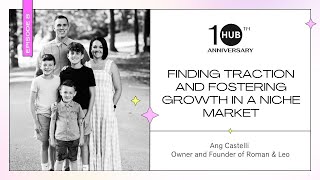
Podcast interview (Ashley Alderson host) with Ang (Ang Castelli), founder of Roman & Leo Boutique, a boys-only children’s clothing boutique. Ang recounts founding the store around 2013 after noticing a gap in boys’ apparel, explains how niche focus, local community support, and early Instagram presence drove traction, and shares concrete operational tactics — sizing and inventory notes, weekly markdown approach, styled customer photo shoots (about six/year), events (birthday sale, Small Business Saturday), merchandising for AOV, and use of Klaviyo for segmentation by brand.
Chapters
Have you ever heard the saying, the riches are in the niches? Well, it's true across so many different types of businesses. And really what it comes down to is the more you intimately know your customer, whoever he or she is, you know what drives them. Then you can really double down on your sales processes, your funnels, and really scale your business. Well, today I'm excited to talk about this very topic with a children's boutique. My friend Ange Castilli, the founder of Roman and Leo Boutique, a boys boutique and a boy mom boutique. Ange has been around the boutique hub for as long as I can remember in a part of retail boot camp, and I love her tenacity and her ability to always show up, to always find a new nugget that she can take back to her, her sweet family and her awesome business. Today, Ange is going to talk about what it means to just target boys and boy moms because it's a very select group of customers. Traditionally, children's boutiques have a difficult time. You've got to sell through 14 pieces of a product, right. So you have to know how to really diversify and maximize that customer base. Ange is also going to talk about the lessons she's Learned in over 10 years of business, how she's had some awesome events and promotions along the way, and where she's headed next. I also love how she's going to talk about today her customer photo shoots. Again, children's boutique. Not always an easy thing to do to have customer photo shoots, but she's going to break down her process. For all of you today. You guys, please welcome my friend, Ang. She is an absolute gem and I'm so excited for you to listen and learn from her today on the podcast, Let's talk about your business strategy and the juicy details of what actually works, from mainstream fashion to fashion on Main street and the entire ecosystem behind it. How do we scale your company and do it with the balance and the happiness that we all seek? Let's hear from those insiders, experts, and strategists that actually make it happen. I'm your host, Ashley Alderson from the Boutique hub, and I can't wait to chat. All right, welcome back to the podcast this week, guys. I am so excited. Ang, you're in the seat. You're on the podcast. Welcome.
Thank you so much for having me.
Does it feel a little different this week to not be sitting in your car listening to this podcast, but getting to be the guest expert podcast? Yes.
It's almost kind of surreal. Like, wow, I'm on the other end of it now, and someone will be listening to me. It's kind of cool. So thank you so much for having me. You're very welcome.
You've got tons of value to add, so I'm really excited to dive into it today. So give me the background. Tell me about how you decided to start the boutique. Your boutique is obviously different than a lot of boutiques we have on the show. I can't wait to talk about it.
But bring me back to what led.
You to this business in the first place.
Right. So I'm a boy mom. I have three boys. Roman, Leo, and Silas. And back in, like, 2010, when I was pregnant with my oldest, there was no Instagram. So when I found out I was having a boy, my husband and I just went to the mall and we said, we're gonna get our first outfit. We're having a boy. And we walked into the children's clothing store, and we were like, where's the boy stuff? All these racks of girls things. And so we found, like, the two little racks, and we just thought, this is not our style or our taste. So we left kind of deflated.
Like, really? This is.
These are our only options because I never shopped for little boys clothes prior. You know, most people haven't had a niece, but beyond that. Yeah, I hadn't. So that was the initial, like, seed that was planted is, why are there no stores for little boys? And. And why are the children's clothing stores so dominated by girls apparel? Obviously, it's a much bigger market. But at any rate, I had a second boy and found tons of brands and styles that I loved on the Internet that my kids were wearing everywhere. And we would just get a lot of questions. I mean, at the library, at preschool, everywhere we went, people would say, oh, my gosh, your kids dress so cute. Where do you find their clothes? And so I kind of felt like an expert. I was always telling people about brands and how to shop and how things fit. Um, and actually, it was at a girlfriend sleepover with my best friends from high school. We try to get together once a year, and we were just sitting around talking, and it was like pie in the sky. If you could do anything, what would you do? And I said, I would open a boys clothing store. And they're like, oh, my gosh, that suits you. You should totally do that. And it was just like, yeah, I should. I'm gonna pursue this. And so that's real. That was in 2000, the beginning of 2013. Um, I started thinking of the ideas of what I could carry, all of the brands that I loved for my kids. I just started reaching out to the brands directly. Um, I had no idea what a showroom was. I didn't know what market was. My background was in sales. I do have a marketing degree in college, but I knew very minimally about how you even start a boutique. So, yeah, that was 2013. And decided to just jump right in and open my storefront. And it's an all boys store. It's actually, actually named after my two oldest, Roman and Leo. I do have a third son, but my store was four years old when I had him. So he's just now to the age where he can read and he realizes it's not mommy's store, it's called Roman, but he has his own collection in the store and he's the face. He's the only one that actually still fits into clothes for my store. But at any rate, yeah, that's kind of how I got started. And I'm in my 10th year right now of dressing cool little boys. And yeah, it's amazing.
I mean, 10 years if you think about that. So children's stores primarily, if I would say, like, if there's stores that I see struggle to get traction, it's often children's stores. So tell me about how you really found traction, grew your customer base, drove traffic to continue to have such a strong business for so long.
So I would, I absolutely agree. Since I started my store, I have seen 12 children's boutiques come into my area and close. Like it really, it, it's a, it is a tough market. And I, I do think a big reason that it's tough is we have to carry so many sizes. I think I carry 14 sizes in my store. So just trying to figure out the mix of how many of each size and those types of things, it is difficult. But I truly, I think the biggest thing for me is I just live in a really wonderful local community and that's where I started. My store was in my community. And we also, our community is affluent. So we do have people that are willing and wanting to find something different and unique and people share it. And I also, I have to say, you know, everyone talks about social media. Back in the good old days, I had that. I mean, I started on Instagram and I started my page in 2013 for my store and I got a lot of followers very quickly because moms wanted to show up on my page. So they would tag me and then you know, even before stories or any of that. And we would reshare. So social media was initially that and being in a really great local community. Our local community also just the. It's not our chamber, but it's our economic development. They do so much for small businesses and promoting us. And I've been on the COVID of our local magazines a couple times. They just are really, really wonderful with helping. They want small businesses in our community. So those definitely are the. The top ones that really, I think, kind of catapulted us in the beginning. And we're different. I mean, that's one of the biggest things, too. You aren't gonna. And when I started, no one was carrying the styles or the brands anywhere. And so it was. It was really unique and that's what people wanted.
So, yeah, I think that says a lot. Because what is the saying? The riches are in the niches.
Yeah, right. It.
To be different. It pays to stand out.
But that's a.
That's a tough call. Sometimes, I think when I hear new boutique owners talk, they often, I think, fall in the trap of, like, they're trying to be something for everyone. They want to cater to all these different markets, but it's. It's hard to really create your identity when you're trying to be so many different things. What advice would you give to somebody as they're trying to decide, should I really niche down and just serve this one demographic? Especially when the demographic is children's and. And your customers, you always have to acquire new customers because they're going to age out eventually. Right?
I mean, I think for myself, the reason I did it is because I am my own target market. I am actually aging out as well. It's funny, too. In my store, I'll play certain songs, and the younger women that are in their early 30s that work in my store, they're like, who is this? Like, you don't know who Debbie Gibson is? Oh, I forgot. You're like 10 years younger than me, and that's who's shopping in my store. But I think if you're really passionate about something and you really believe in it and you know you're going to work hard towards it, I think you just have to jump in and do it. Because again, I'm my own Target market. I'm a boy mom. I like clothes. I wanted to dress my kids cool and unique, so. So it for me was natural. There were times when people would ask, oh, I wish you'd open a children's. A girls store. Just like this. And I'm like, girls is a black hole to me. Like, I don't know what's cool for girls. I don't like all the ruffles and patterns and stuff that I see for little girls. So I think if it's something you're passionate about and something you feel like you are an expert at, you can't lose because you're going to work really hard at it. And you know what, you know what you know. And I just think that. I don't know. I. You can't lose. I think if that's the position that you're in.
Yeah, I would totally agree. I think that's really, really good advice. Like, you have to start with you first. That's what people are coming to. You're the expert and they want to build trust with you and relationship with you. And that's what keeps them coming back again and again. So something you mentioned earlier, I really want to hit on, I think this is important for children's stores, is the sizing. And I'm sure it took a minute just to figure out your buying plan, thinking about, oh, my gosh, I do have all these sizes. And obviously I'm sure you have some that sell through a lot quicker than others. Tell me about some of the biggest lessons you've learned just in inventory management and in your buying over the years so that you're not left with a bunch of waste at the end of the day. Right.
I. It definitely took time and I'm still always. I will always say you're never going to get it right. I'm the type of person that I want everyone's input. I show my husband the line sheets. I'm asking my sons, but just looking at your data. Shopify has gotten so much better since I started. I couldn't even put in, like my wholesale cost into Shopify when I first started. But just the reporting and being able to go back and look at. And keeping good notes, too. And not to plug this, but I'm gonna plug it for you.
The.
The bite or the. I can't think what it's called. The thing that our.
The planner.
The planner, yes. Keeping the notes in the planner. I just got that for the first time this year. But at the. As I'm rolling through the seasons and saying, like, this style did not sell through in these sizes and just keeping those types of notes because it is sometimes hard to pull those types of things from your reporting. But I just, I really go back to looking at the reports and keeping good notes. About how things went. We do a lot of seasonal things, so we really, our customers love, I mean, Halloween. We've got pajamas, T shirts, toys, books, and looking to see like, how did. Maybe this style of pajama didn't do as well this year. So we'll know not to do that next year. Or we sold through our size twos this year fast in this style. We need to probably get more threes next year. So that is, it's tough because it changes from year to year. And there has definitely been moments when we've sold out of a shirt in a two T and we have a dozen three T's left and I'm like, dang it, where are my threes? My three year olds? So you're never going to get it. All right. But I do rely a lot on my notes that I keep. Because you're not going to remember what happened last Christmas. Come this summer when you're ordering Christmas. But I'll flip back through and see, okay, we, this shirt did not sell well. We're not going to reorder this. This one we blew out of. We did not order enough. We're going to get more of this this season. So that type of stuff, just looking at the reports and keeping good notes as you roll through your seasons.
Yeah, I, I'm so glad that you mentioned that because it is, it's a huge resource that, that you have just to keep track of those notes and know for next year. What about, talk to me about just even your markdown strategy. You know, when you do have all those threes left and you're like, oh, shoot, you know, I have 14 sizes to go through. How are you moving them so you're not stuck with a bunch of unsold inventory at the end?
We mark them low to get them moving. And really I feel like we all have our shoppers who will go straight to the sale and we turn our sales stuff quick. So if I know I need to get rid of something just because a big part of it for me too is I have a small storefront. My storefront's 900 square feet. It's like I truly don't have the room to move something in. I have to get rid of things to be able to bring in new product. So for our markdowns, I do markdowns once a week. And a lot of times it's just me going in and saying, what do I need space for? Or what have we had for a while? Again, you look back at your reports and I actually have A pretty good memory of knowing when things were released again, because my store is small. But I'll say, like, hey, I know we've had this for a little while and we only have two remaining. Just get them on the sale rack. It's just. And mark them down as far, like I usually will do about 40 to 45% off right out the gate, because there's no sense in doing 10, 20, 50, you know, just moving down the line. I'm like, mark it down once, get it out of here, and then I have room to put new stuff up. So that's what I've. I've always done that. I. I don't know why I was just in. I didn't learn that strategy, but it has worked well for us.
Yeah. So we're preaching to the choir. Because I feel like I am always saying, like, oh, Cheryl Crowe, the first cut is the deepest. Like, you mark it and you get rid of it. But you don't murder your price tag by taking, you know, five different. And really the mental anguish that goes along with having to take 10% more and 10% more to do it once.
And if no one. If they didn't buy it at full price, they're not gonna buy it for only 15 off. You need to give them an incentive to purchase it. And a lot of times with kids, it's just because of the sizing. We had so many sizes that it sold really well, but then we have two that sit for, you know, 30 days, and it's like, okay, move along. Come on, get this out of here.
Love that. So I'm sure, you know, with your store, you have not just apparel, but, like you said, books and games and all these different categories. How have you really focused on. Because you have a niche market, right? Like, you're selling to only a very specific group of people. Something I'm sure you have to be really aware of is your average order value. How do you and your staff really focus on building your units per transaction and your average order value? Getting as many things into one person's hands as you can. Any around that.
So we definitely do. So we do photo shoots about six a year. I have 20 models right now that are my son, my. Our next door neighbor, son, my two nephew. I mean, it's all my friends that have, you know, all these little boys. It's all people that I have personal relationships with because it's kids and they're unpredictable. I never want parents or kids to feel pressure for their children to perform. But when we do These photo shoots, they are fully styled. And a lot of times it's funny, when I'm not in the store, the girls will say, we know what outfit you posted today on Social because they got the top and the jeans and the socks and like the full look. And we try to merchandise that way in the store as well. So a lot of times I feel like because of the photos that we take of the children that, that people don't want just the hoodie. They want the total look. They want the baseball hat, the little backwards hat, and they want the comfy little joggers that go with it and they want the shoes. And so I think just showing like women do, like the women's boutiques do, showing complete looks and like, for holidays and things like that, we'll do like the little Easter basket area where it's, you know, all these different things you can add to an Easter basket. Maybe they came in looking for an outfit for Easter, but it's like, oh, wait, I didn't get all these things yet for the Easter basket. So we're going to add these things on. And then we also, in the last like two years have started offering things for moms that are boy moms. So we have some really great items that, like the sis kiss. I've done pre orders for her. I mean, this is. Moms love to wear necklaces with their children's names on them. We've sold tons of them. So just because our shoppers are moms, sometimes they want little gifts to be able to give to people. We have boy mom candles, these little boy mom stack bracelets. We just have added those types of little things just because our shoppers are moms. So sometimes they want stuff for themselves or to gift another mom too.
I love that. Absolutely. Hey, it's time to save the date for our next boutique Summit. The largest conference for our industry just for boutique owners, E commerce stores of all types and wholesale brands. June 9th and 10th. Coming back to Dallas, we can't wait to see you there. With several speakers, tons of breakout sessions, your very own private trade show. Did I mention swag? Plus an opportunity to network with retailers just like you. Ready to scale and grow your business, you guys. We plan the boutique Summit on the front end of the market happening at Dallas Market Center. So you can really get the most bang for your buck when you're traveling. Attend the Boutique Summit, stay for market, learn as much as you can, buy as much as you can, and get ready to grow and scale your business. June 9th and 10th, click the show notes to sign up, get the information and save the date right now. So I'm curious. You talked about. I love the idea of the photo shoots, right? And it's not just physical merchandising, it's digital merchandising. And I think sometimes I've heard children's stores say things like, well, it's just so hard to do photo shoots. I'm just going to do stock photos online. And then they wonder like, why can't they drive the traffic or the excitement? Because they're just showing like the stock photo, like one image. How do you. You balance that like every week when you have new arrivals? And if you only do six big photo shoots a year, how are you showing what's new or styling what's new every single week? Both for social and then also for your website as well, right?
So when we do the photo shoots, because we have 20 kids that are modeling, it's not just one collection. So we just did a photo shoot actually last Monday, or not this Monday, the Monday before, but. Or no, it was this past one. What's today? What day of the week is it? And so we were shooting Halloween, we were shooting some game day, and we were shooting some family picture outfit ideas. So we weren't shooting just one collection. So I can make those pictures last longer. It is difficult when you have kids items because again, kids are unpredictable. But we always laugh and say it's not about the photographer's. Like, this is so easy to shoot because it's not about their smiling faces, it's about the clothes. And they run around and act ornery. And she's like, this is great. She's just, you know, click, click, click. As they're running around, you're seeing the clothes in action. It doesn't have to be, you know, like a family photo where they're looking at the camera and they have their biggest smile on. It's them running around, they're doing their little karate kicks. And so I feel like we've done photo shoots sent with the same photographer since before we started. And they have made a world of difference. And I feel like it keeps my brand cohesive because I've used that same photographer. I use the images on my hero images or on my hero images on my site and on my banners and, you know, with every product trying to put the images there, but just being able to take one photo shoot and do a couple different collections, that that's what we've always tried to do to make those pictures last. And then when we do run out of those pictures. I have a five year old that sometimes I'm like, sales, I need you to put the shirt on. I need a picture of you. Like, I'll take you to Target and you can pick something out. So I'm not above bribery, for sure. Or just pictures in the store. Yeah. So we try to just do mix it up and do different things when we do run out of pictures. But I don't know that I've that I really use many stock images. Yeah, that's what we just have always done.
Good. I love that. I'm sure someone is listening and they're asking, okay, Angie, how do you pay your photographer and how do you pay your models?
Mm, yeah, so I do pay my photographer a flat fee. I gave her a raise about four years ago. I'm like, you have been doing this for me for so long, you need more money. But it actually, it's a pretty good process. I create a schedule. It's about two hours and every kid has an arrival time, a styled time, and a photo time. And so the kids are just kind of rolling into the store throughout this two hour time slot. And then all of the parents, you have a lifetime discount if your child models. So even if you know one, the child outgrows. And they have a sister and the sister, they want to come in and get a gift, like they can still use that, their discount. And then honestly, the kids are paid with treat bags. These little kids love. I spend, I spend about 250 on treats every photo shoot. But I put them in these cute little cellophane bags and they have all these different treats in them. And it's literally once the kids are done, they're like, Ms. Angie can have my treat bag. I'm like, yes, here's your little treat bag. So it's discounts. And then also the parents get access to. We give them the photos. So they. That's helping me too. They're posting on social like, oh, my son's modeling for this and they're tagging our store and then that I also. So I do like the big 16 by 20 board prints. I have really cool ledges up in the top of my store. And so I put. Put all those big board pics up in my store to show in the store what those styled outfits look like. And then at the next photo shoot, the parents get those. And so some of them, they'll say, you know, our, our house is like a shrine to our one kid because we have so many pictures. And then Their daughter has no pictures, so they get to keep. And the kids love them, too. When they come in, I'm like, who is this? Showing them their big board print, and so it's cute.
That's a really good idea. I love that idea. And I'm sure it just makes the store look beautiful. Like, that's such good merchandising.
Yeah, I love it. I love. I've done those, too, for. I think I started maybe at my second year putting those up in my store. And it's nice, too, because a lot of times the girls in the store will say, like, oh, that little guy up there, he has on a 2T in that sweatshirt. If your son's about that size, that's probably the size to go with. So that helps too, is they'll look and say, like, oh, my son's probably about that size. What would you go with? Oh, well, they'll look, oh, it looks like he has on a 4T and that. So that's helpful, too.
That is really helpful.
What about.
Tell me more about, like, just events, promotions, reward programs. What are other things that you do just to drive, like return traffic and continued excitement to get people back in the door.
Yeah. So my store, again, is small, so it is tough to do events. But we've always done two annual events. Our birthday sale, which is in June, and then small business Saturday. Our old store. So I've moved to a bigger location. My old store was 500 square feet, which is where I started. It was very tiny, but honestly, it was perfect. It was a perfect place to start. I always tell people, like, my clothes are little. I didn't need a giant store to fill with these little clothes. So it was a great stepping stone. But I learned quickly, when you have an event in a store like that, no one can walk around and shop. People are waiting outside. So when I moved, I. I knew I needed to have space that, like, people with strollers can actually get around and get through the store. But we've always done, like, face painting, balloons. I always do treats. There's tons of local bakers that I purchase from to promote them. But to be able to give away treats, we really love also doing gifts with purchase. We have. And a lot of times we're doing gifts with purchase for the moms. So the moms are shopping for the kids. We initially we were giving away things for the kids, like free sunglasses or a free superhero cape. But I'm like, no, the moms are shopping. They need something for themselves. So this year at our birthday Sale. If you spent 200, you got a swag bag and it had. It was like $75 worth of product. But it was like things that moms would use, like the, you know, the rubber keychain things you wear on your wrist and sunglasses and a little mama necklace and a candle from a local candle maker. All kinds of cool little change purses. But people wanted those swag bags because they really had a lot of value. So we had things at the register like, well, I'll add this and I'll add this to hit my 200. So, yeah, so those are the types. Those are the events that we do twice a year. I wish I could do more events, but really it just is. Is tough with space. And I feel like we pack it because people know there's only two a year, so they want to come in for those things.
I love that. One last thing on that. I'm just thinking about marketing. I'm thinking here about. I'm analyzing your sizes, right. Do you do a lot to segment your customers with your marketing? Like email marketing or just trying to drive in when, you know, I'm sold out in a certain size and just like, how do I continue to get people back in the door in a certain size range?
Yeah, so I really have. I just switched to Klaviyo maybe a year ago. I had Jane Casper do my flows for me, which is wonderful because you. I cannot tell you how awesome it is when people respond to my welcome email. Like, it makes me so happy because I didn't. Obviously I didn't know it was going out, like, who it went out to, but it tells kind of my story and I'll have people respond, oh, my gosh, it's. It's so great to have a store like yours. I'm so glad I found you. So having those flows, not only does it help business, but it, like, makes my day when I get a response to my, you know, my automated emails. So I just, in the last year have started segmenting. I used mailchimp previously and they had some issues with syncing with Shopify and then they weren't. And then they were. And my. Because I had it for so long, all of my data was messed up. It would say a customer was added to my list in 1969. Like, what it was. So I couldn't segment because my data was wrong. So when I moved over to Klaviyo, I. Jane made several segments for me. Not with size, though we have them with brands, so I have all. Most of my product is Brand name. So when we have a specific brand that has a drop, I can segment for people who have shopped that brand and can target them that way. But I really haven't really dove into the size. It would be nice.
They change so fast, too. As I'm like, as I'm hearing you say that, I'm thinking, like, oh, brand is probably a better way to segment because they're always going to be into the next size. So you really can only market.
Get there your size up. Yeah. Like, you know, you're cleaning out closets from the fall from last year. You need the next size up of that same item that you love that they wore all the time, you know?
Absolutely. And so that I really appreciate about you, and you and I talked about this before we started recording, is I feel like you're such a lifelong learner. Like, you've been a part of the Hub for a long time. I see you show up so often. You've been a part of retail boot camp. Sometimes I get this feedback from people that are maybe just, like, thinking about becoming a part of our community, and they're like, I think the boutique app is only for women's boutiques. And I'm like, oh, no. Like, that's not our goal. I hope it's not just for women's boutiques. But I would love to hear, like, from your perspective, what does it mean to you to be a lifelong learner? And you're just so dedicated to always, like, finding the next thing, but also your experience in the Hub as someone who's not a women's boutique as well.
So we were talking about this earlier. I. I love learning from boutiques that aren't just like mine. So I do love being a part of it and getting inspiration from women's shops and from home and gift shops. I also, I feel super inspired when I listen to a podcast or when I sit in a retail bootcamp class or just hop on and look at something in the training library or listen to Shannon Gordon's, you know, the monthly social. Like, I have so many ideas in my brain, but when I sit down and I listen to something and I take notes and I get, like, little pieces every time, one little piece every time I sit down or listen to something, that it inspires me to take action. Because a lot of times I feel like you have all these ideas, and it's almost like analysis paralysis. Like, you're just paralyzed by all these things that you think you want to do, and then you hear a great idea and you Jot it down. And you. I feel like it puts me into action faster, I guess, and it just inspires me. I. My. I don't think I told you this, Ashley. My husband actually founded a community for financial advisors. He co founded it with a business partner years ago. And he's the one that told me, you need a community. You need to talk to like minded people. You need to be inspired by people who are better than you and you can inspire people who aren't in your position. So he's the one. Years ago, and I was like, I don't think that exists. They have communities for boutique owners. I didn't know. Yeah. And so that's when I kind of sought it out and I was like, wow, it is so inspiring to just have other people who are in our shoes that we can ask a quick question to on Facebook or sit in class and hear someone else's story and be able to relate to it. So I am thankful that my husband was like, pay the money and get in a community. Find, figure out other. There's more people that are in the same shoes as you that you can, you know, collaborate with. So, yeah, he's the reason that I joined the hub. And I do, I love sitting down and doing, listening to podcasts and doing the classes and all of that. I thrive off of that. I feel like I need to meet your husband now.
Now I'm. We have to talk way more about this. Well, and the fact, I mean, it is your 10 year anniversary. It's our 10 year anniversary. So we really did start about the same time. So that timing was perfect. As you look back at the last 10 years and you think like, I mean, I've. I even feel like this, like 10 years, where did that even go? Yes, this is a blink of an eye. But as you look back, what do you think?










