From Brick-and-Mortar To Online
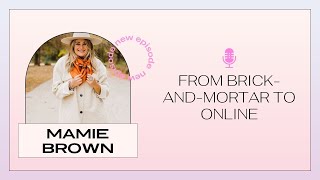
Mamie Brown McKee, co-owner of Tucker Brown, a boutique founded by her father in 1986, discusses moving the store online while keeping the in-person experience central. She uses email marketing and Shopify to turn walk-in customers into repeat buyers, and partners with influencers like Shaylee from West Desperado to reach new audiences.
Questions this video answers
1986.
Over 35 years.
Seven years ago (from time of interview).
Mule Alley in the Fort Worth Stockyards.
Shopify.
Chapters
One of the biggest challenges I hear from traditional brick and mortar stores that have maybe been in business for a few decades even is how do I successfully transition my business online. I also hear from a lot of these brick and mortar stores and tourist areas. How do I capture that customer information to sell to them again when they get back home and maintain that long lasting relationship? Today I'm so excited because I hope we answer both of those questions plus talk about how to make your online store an extended extension of your in person experience and bring that store up to date by using influencers and email marketing and the latest in social media. Today I'm so pumped because one store that I personally love to shop, Tucker Brown, which is home in the Fort Worth stockyards, if many of you are familiar and also a huge face of western fashion right now, I'm so excited to visit today with Mamie Brown McKee who is the co owner of Tucker Brown with her father who started the business many years ago. Today we're going to deep dive into what makes Tucker Brown successful, both from the storefront capturing tourist information to email marketing, all the way to that influencer relationship. You guys get ready to meet my friend Minnie Brown of Tucker Brown. Let's talk about your business strategy and the juicy details of what actually works from mainstream fashion to fashion on Main street and the entire ecosystem behind it. How do we scale your company and do it with the balance and the habit happiness that we all seek? Let's hear from those insiders, experts and strategists that actually make it happen. I'm your host Ashley Alderson from the Boutique Hub and I can't wait to chat. Hey guys, welcome back to the podcast this week. Mami Brown, I'm so pumped that you're here. Thanks for being on the show with me.
Oh my gosh, thanks for having me. It's such an honor, man.
You have such a great story story to share and I think that your story is so relevant to so many stores today. As I look across our industry, I think about so many trends that have unfolded, especially post pandemic, right? There's these brand new online retailers, there's brand new brick and mortar retailers, and then there's brick and mortar retailers from a long time ago that are now really working to maintain status and move online and grow with wherever the future of our industry is going to grow. And you kind of come as a mix of all of those things together. So I'm really excited to share your journey with everybody today. So before we start, I Want you to take me back, talk about the business, how it got started, your dad's vision, and what led you to where you guys are today.
Yeah, so my dad actually opened the store in 1986 across from Texas Tech University. And I believe that his sister asked him to buy the store and he had money from winning the Junior Angus Hereford something at a stock show. And so he used that money to buy this store after college and he just never stopped doing it. So we've been in business for over 35 years. I grew up in the back doing inventory and I swore I would never get into retail because counting shoes is just not a dream that I had. But yeah, we had the store in Lubbock forever and we did pop ups in different resort ski towns, traveling shows to different friends. I mean, it's definitely been a transition through every aspect of retail as retail has evolved, including the fashions of retail. And then we opened our store in Fort Worth seven years ago. I at the time was working in the marketing department for Double D Ranchwear and he called me and he was like, hey, I'm going to do this. I'd love for you to be a part of it. Because I'm the oldest and I was the only one who graduated from college and in the fashion industry at the time. And so I moved to Fort Worth and I bought into the store and we moved about a year ago to Mule Alley in the Fort Worth Stockyards, which is another huge transition for us as far as buying and trends. So we've been there for about a year and we're still going 35 years strong.
I love that there's so much to unpack there. Take me back though. What did your dad first sell when he first opened the store? I'm so curious, like, what was his inventory like then? And I'm sure for him to see what your inventory is now is a pretty cool journey in transition.
Oh, yeah. I mean, they sold candy striped rompers, like, not short rompers, like jumpers is what we call them now. And I call them the Oompa Loompa outfits, but that is, that is what we sold. You know, it's really funny because one of our big brands that we carry is Queen of Sparkles. And we just got our Christmas sweaters in and he actually pulled out some Christmas sweaters that he had from the store in the 90s that my mom had and they're the exact same. So it's funny how fashion comes full circle in some of those ways. But yeah, it's definitely Evolved. And Fast Fashion has had such an effect on that because originally the brands that you carried were Double D and Johnny was theory were some of his brands. Brighton was a big brand of his.
Yeah.
Um, and you had to place all those orders six months out.
Yeah.
And Fast Fashion in, I want to say, like the early 2000s, truly changed the way that he bought and the way that the store, what the store became. It wasn't really a super high end store. It was really more of a store for everybody.
Yeah. Talk to me about that today. I actually. Let me, let me ask you this question. I'm dying to know this question. What's the best piece of inventory management advice your dad's ever given you?
That's so hard because he almost has like a photographic memory when it comes to inventory. You can ask him something, you know, in a pack of shoes you get 12, and he can tell you exactly what sizes we have left in each shoe that we have. It's wow, it's nutty. But I think for us, the biggest one is just, you know, doing inventory checks. Every quarter we transfer our inventory from one category, like quarter three, we transfer into quarter four once it's been inventoried to make sure that we have the right amount. And I think just being for him as far as inventory planning and buying, just being really aware of the transactions and what sells in this in the store. You know, we have best sellers for sure and best brands and just kind of really hitting heavy on those and knowing which ones are the most successful and just being aware of what's happening in your store.
Yeah, absolutely. Inventory, I think, can be, you know, like math. It can be so intimidating to a lot of people unless you figure out how to let it tell you the story that then feeds into marketing and all the fun things. What if you could give me like a little behind the scenes peek of what your process is? What systems do you guys use? I'm sure with a store that's been around for a while, you've had to transition from system to system, from POS and now also bringing the store online. So what does the technology stack look like for you guys?
Yeah, so I remember when they hand wrote everything in the store for every transaction and then they switched to QuickBooks. But it was like this whole system that you had to buy and they shipped to you because Internet was kind of not a thing, which is so crazy. And I can see in my mind like entering the customer and like entering the items. I mean, it was just such a process. Now we are huge Shopify fans. We have tested every form of POS system at this point. We love Shopify. One of the things I really love about Shopify is it's very time consuming to do all of this, but they offer so many free resources to help build your business brick and mortar and online. So we use that as far as inventory goes and as far as our online goes. Project planning. I'm a big asana person because it allows me to connect my whole team and send out certain tasks per person and we can really streamline our projects. So if we have an event coming up, I put stuff in there. Like, you're in charge of picking up the drinks or the napkins or anything like that. You have to get the flowers. You're in charge of the graphics. So we really. And that way everybody knows. And there's not a whole lot of wiggle room for questions or not knowing what you're doing, and then for scheduling and just kind of like keeping track of what everybody's doing. We use Sling, which I love. If you are an online store and you have a lot of people working remotely, they can check in from wherever they're at. You know, if we have girls that are going on vacation and they help with our social media and website, they. They can still clock in and work while they're on vacation. I don't usually make people do that because I'm a big proponent of work by work life balance, so. But it's crazy how technologies, there's all these apps that you can just use versus how it used to be when you had to punch your time card.
It's come a long way, it's easier.
A long way?
Yeah.
Come a really long way, it's easier, but there's just a lot of information to digest for sure.
It's a lot of big decisions that you have to make along the way and trust.
Right?
Because you knew, like your dad, like you said, with a photographic memory, he knew probably where everything was and what everything was. And now to trust an entirely new system. A lot of stores, if I think about, you know, longtime brick and mortar stores, struggle with that transition to move online and to adopt technology and do some of those things. But you guys have been really successful in that and moving your store online and making your online a real extension of the brick and mortar. Talk to me about that journey and that process of really how you and your dad came together and made the store what it is today. Right. Like, made it even more current than it was and brought it to a whole new audience. Online. What was that like? How'd you attack that process?
Yeah, you know, my sister was really into website building whenever blogging and online became a thing. And so she was really the first person who told us that we needed to take it online. And it was kind of her baby when she was in college, which online was not really a thing then. It's crazy to think how much it's evolved in 10 years. So that was kind of her thing. And it was very simple. We didn't have everything on there. We weren't taking our own photos. We were just kind of like, uploading what we had photos for. And I think as we grew, the issues I started to have was the inventory tracking, just having two inventories, or if something sold online, having to pull it from the inventory in the store, from the system specifically. And I think that's why we transitioned to Shopify, because it allowed us to do both. But it was definitely a process. My dad, I will say, has always been a huge advocate of email marketing, and that's really how the online store started, because he would email out products, just like a picture of a product and say, like, this is a really awesome piece. And that's kind of people would call or they would respond to the email. And then Maggie came in and was like, you need to take this online, so it's easier, it's more streamlined. And it was definitely a learning curve for him, too. Get past people calling and emailing and just going directly to the website. Yeah, but, you know, that was 15 years ago.
Yeah.
And now, you know, he still is like, have you. We sent emails this week. Like, what are we emailing? And driving that traffic to the online store. And that's kind of how we got started. So if we knew we were emailing something, we would make sure it was on the website so that it was a little bit easier. People didn't have to call for it. They didn't have to email. They could just go directly to the website. And then as social media became a thing, I became much more interested in that. And you saw all of these businesses getting on Facebook and selling stuff with Facebook sales. And that was a really big push for us, too, to start putting that product out there for people and posting about it. And. And that all kind of catapulted us into having an online store. And we've always had one. It's always been pretty basic until 2020. And when Covid hit, we were so fortunate because we already had it all set up and it was ready to go. But we'd always had a brick and mortar and so we'd never really taken the time to pour in to the online store. We'd always had it. It's been, you know, we were making sales on it, but not. It had so much more potential than the time that we had given it. And so when 2020 hit, we really took time to focus in on that online store. And we just haven't stopped giving it the attention it deserves since then. And now, you know, we're very OCD when it comes to our website. We want all the pictures to look the same. They all have to be formatted the same because that's how we are about our brick and mortar. You know, we want it to smell good, we want it to be clean, we want all the clothes to be color coordinated. Like that's how we are with our website as well. It's just like you said, an extension of our store. And I think that's what's helped us be really successful is that it's so streamlined with our in store experience. And, you know, I think the biggest thing, the biggest piece of advice I could give about online is it's worth the moments that you put into it. As a brick and mortar owner, it's difficult to pull yourself away from the sales floor. But if you take 30 minutes every night instead of watching a TV show while you're sitting in bed, like, take that 30 minutes and pour it into your online store and I swear it'll be so worth it.
I love that. Take that one step further from you. If someone's listening and they're like, okay, like, really? Is it another person? Do I need to hire another person? Is it how I also approach social media and making sure I'm sharing links? Is it also that attention to detail like you were talking about with the online store? What else do you think a lot of brick and mortar stores are missing when it comes to making that connection in their online and their brick and mortar and how to finally drive the traffic to online that they need.
I think a lot of it, when it, when, when you're talking about social media and the website, it's very much about your personality that you're showing. I know. Like, for me, I just spent the last 10 months, I was, I was pregnant and so I was like, I am not putting clothes on as far as the store goes. I don't want to be in the photos. And it was interesting because people missed seeing my face because I'm, you know, Tucker Brown's one of my children. And I think, you know, doesn't. You don't have to make it difficult. Just kind of show up as yourself on that platform for a very, very long time. While we were here in Fort Worth, it was just my dad and I running the store. We were in the store every single day. I was doing the website while I was up there. You know, I would take pictures while I was up there. I would take some air selfies. I had him take my photos for four years, and that's how long it took me to train him to take a really good photo. But, you know, I don't think you need to hire anybody if your brick and mortar is doing well. If you're wanting to just create an online it, you don't have to spend that money hiring anybody. But you are going to spend that time, and time is valuable, but you are going to spend that time creating something. I know a lot of people talk about how their husbands or their boyfriends or their sisters, you know, influencers too. They're like, oh, yeah, my boyfriend took my photos on my phone for three years. You know, it's. It doesn't have to be perfect when you start. You just have to start, and then as you go, you can tweak it. I mean, there's constantly things on my website that I'm like, okay, I don't like that. I want to just tweak it. And there's so many resources, free resources, too, that help you build a website and make it profitable and make that conversion. And it's just a matter of. My biggest thing is just take the time. Like, if you. There's so many things that we do in our day that could be put to better use, myself included. Like, instead of playing sudoku on my phone, I could be researching different ways to maximize my presence online. And, you know, as an owner, we, I, I've done that and I just hired somebody. Like, we've been in business for 35 years and I just hired somebody six months ago to help take over some of that website and email. And I think I'm a huge advocate of emails.
That's.
And they're so easy once you start. I mean, once you start kind of curating that email list of all of your customers, I mean, you can you branch out so far and that's, you know, go ahead.
Oh, let's, let's talk about that more. Because I too, I'm a huge advocate of emails, and I'm always shocked at how many people aren't really using and maximizing email. So I know you're on Shopify. Are you using Klaviyo or what are you using for emails? And talk to me about your automations and campaigns and how often they go out.
Yeah, so we actually just use Shopify email. We were using mailchimp and there's another one that I tested. I am all about streamlining. So if, if Shopify offers it and it's just going to make it easier and there's not like a transfer of data, I'm all for that. So I remember a long time ago I took a class by Jenna Kutcher and she's a huge advocate of email campaigns and she just said, you know, if social media disappears tomorrow, what do you have to show for your customer base? And that has always really stuck with me. And that's kind of what we think of when we're doing the emails. You know, I've gotten, this is so random but I've gotten some of my best employees from sending out emails about the fact that we're hiring. It's not from social media, it's not from being in the store. It's from an email that they opened and saw that we were hiring and applied. So the power of email is very, very real. But yeah, we use Shopify. We have automated campaigns. Again, anything automated or streamlined, I'm all for abandoned cart. So 24 hours after somebody puts stuff in their cart and then doesn't check out, we send out an email that's just like hey, this item missed you come back. So we do stuff like that. We're currently working on creating automations for our best customers who haven't shopped with us in 30 days or stuff like that. And I think that there's so many ways to gather emails. You know, one way is if you're an online boutique just having a pop up and offering a discount or on your Instagram, if you're running a pre sale on something, say hey do you want this pre sale when it comes out? Enter your email here. And that's a great way to kind of gather emails for us in the store. It's, you know, can we get your name and your email and do you agree to sign up to receive marketing from us? And then campaign wise we probably send an email every other day, just about anything if something's not doing well, if something's brand new, if there's something that we love but it hasn't sold on the floor because it has no hanger appeal. Like we send emails about everything and they're very simple, you know, we go on Canva and we just kind of drop a photo of the item and make it kind of funky and then put that as like the title graphic. And then underneath it we just like put different photos of the product or the different colors. I mean, they're very simple. And we try every week to kind of do like a collection email and then we try to really hit products, like singular products.
I am so glad that you're here, that not only are you listening to the podcast, but you know why you're different. Because you actually implement what you learn and that sets you apart from everyone else in this industry every single day of the week. So thank you for that. And because I know you love to take action, I want to make sure if you're not already a part of our community at the Boutique Hub that you have an opportunity to join us. You see, the membership at the Boutique Hub is the core of everything we do, and it has been for almost 10 years, which is crazy. We gather together from all 50 states in the United States and seven countries, boutique owners, wholesale brands and our trusted and vetted industry partners on a daily basis to talk about what's really happening, to answer your ongoing questions, to share stories, to learn and grow from and with one another. Inside of the membership of the Boutique Hub. Not only do you have access to our daily community, but also our ongoing education. You see, we have live experts coaching and speaking every single week, two days a week, both retail and in our private wholesale groups. We also have monthly training bundles and content calendars that go out to our members on a regular basis on all kinds of topics. Plus our vetted training library. Our training library is full of tools and templates and videos and how to's checklists, everything from non disclosure agreements that you can learn from, model agreements, content calendars and engagement library, videos on how to run Google Ads and Facebook ads, to optimizing your inventory you're buying and how to pay yourself more with profit first. Besides learning, I want to make sure that you also have an opportunity to buy and stock your store accordingly. So members of the Boutique Hub also have access to so many discounts from vetted and trusted wholesale partners, almost a thousand of them now inside of the Hub and also on our platform. We hubventory.com the new wholesale marketplace built by the industry for the industry. And finally you guys, your membership. I can tell you how to get it for free. And many members do. And here's why. Membership at the Boutique Hub comes with all kinds of exclusive perks and discounts only open to you, a Boutique Hub member. And when you use those perks and discounts, it saves you often three to four times the amount your membership actually costs, which starts at just $24 a month. So access those perks and those discounts, those wholesale savings, and also make sure you're growing your business to build more revenue with all the trainings happening at the Boutique Hub. You know what, one last thing. I know you like listening to podcasts, but you know what's even better? Meeting in person. And that's one thing I am so thankful for at the Hub. Because at every market in Dallas or Atlanta or Las Vegas or even at our conference for boutique owners, the Boutique Summit members have an opportunity to meet up, learn and grow together in person. So I want to invite you to join us@theboutiquehub.com join to become a member of our community today. I love that. That was something else I really wanted to ask you about. And this will be a twofold question. I know you're really big on collections and you happen to have a big collection coming out this fall, a big collaboration with an influencer, which we'll talk about her in a min and that whole like how that came to be. But talk to me first about collections because I all I'm with you. Like, I think collections are like the best opportunity to really drive traffic both online and in store. So how have you maximized collections collectively across all of your channels to make sure people are seeing the exact products they need to see when they need to see them?
Yeah, so our collections are pretty basic. We try to launch new arrivals every week, but for the most part when it comes to our collections and our emails, we just sent out like a Halloween one. So here's all of our Halloween products. I know we've done like a faux leather fever one because that's huge for fall and we send out kind of like all of our faux leather, clearly. Yeah, I know, I love it. All the like serotonin dressing, like all of that. I think for me, our Instagram is not necessarily collection based. Some of it is. And we'll post, we do take the graphics from the emails and we post those on our Instagram and then we will share the products. So we kind of try to like coordinate everything. But as far as our website is concerned, we have a tab called featured shops and we have a bridal tag, a bridal collection and we have a, you know, bump friendly collection because, you know, as a mom that is, I still wanted to look cute. I Didn't want my picture taken, but I still wanted to look cute. So there's a bump. Friendly. You know, I think we have a modern cowgirl just for that Western crossover with the stockyards. So we have maintained collections throughout the year that we keep all year long. And then we'll throw in random collections like Halloween or stock show and rodeo, when in January. And then, you know, NFR is always a really big one for us too. But I don't think you have to, like, put a lot of time and effort into like creating these collections weekly. Because as a buyer, you're already creating a collection. And I think that it just kind of all comes together when you have it all and when you are buying, it's important to maintain, like, trends and what you're thinking for the fall. But yeah, for us, it's just kind of like when we get it shipped, it all just kind of comes together and that's kind of how we determine what we're going to do.
Yeah, and people want to see that. They want those options laid out next to one another that are. That are like items. All right, so talk to me. You've got a cool collaboration coming up. This is not the first time you've done this, so I'm sure there's things you've learned along the way, but let us know what you're up to with this cool collection and collab. Yeah.
So innovar in this industry is in the Western fashion industry specifically. And I think it's becoming more mainstream as rodeo becomes more trendy. It's always a big deal for us. And we are heading into our second year of launching a collection with one of my friends, Shaylee, better known as West Desperado. It's shopping.
And for those of you who don't know, like, that's one of the biggest western influencers. She's a big deal.
She's awesome. I'm a big fan. I've always been a big fan. But yeah, we kind of came up with this idea to create a collection that she hand picked for our store for her followers. For nfr, we've had, you know, she has a tab on our website. We kind of keep it up to date and she picks stuff throughout the year. But NFR is always the really big one. And, you know, she handpicks these pieces and we put them on our website and she wears them to nfr. And I think it's. She's such. Her style for NFR is, bar none, some of the most creative and iconic looks that I've seen at nfr, not saying that there's not a ton of beautiful women with ic looks at NFR, but I feel like Shaylee's are always very noted and I think that there are a lot of people who want that inspiration when they're going out there. And so for her to come in and hand pick pieces and style those pieces for her followers has been really, really cool to watch, but also just a great resource for people going to NFR who just need a little extra creative help from somebody who's just brilliant at styling. So it's always been fun. We love doing it.
I love that and what an awesome opportunity. Just, you know, the social media engagement, that connection. Like, there's so much fruit that can come from that collaboration. I'm sure you've had good and bad experiences along the way with collaborations and influencers. So if there's anyone listening who's like, oh, my gosh, that's a great idea, I want to do that. What would be some maybe quick tips you could give to someone looking for an influencer or how to set up a collaboration like you did?
Yeah, I think the biggest piece of information or piece of advice that I could give is you have to create a relationship with them. I had known Shaylee for probably six to eight years before I asked her to do this, just through social media. Like, we had never really met in person. We were just social media friends for a very long time, and you just kind of have to create that relationship. We're very, very lucky because I met Shaylee when she had just started blogging, and I think that's important too. Like, if you see somebody who's a micro influencer and you see the potential of what they could be, invest in that, create that relationship, because they could be the next big thing. I do think micro influencers have more influence than we give them credit because they have the time and the energy to really, like, focus on your brand. We're so lucky with Shayli that we have the ability to create a collection with her, but she has a million, you know, projects and people that she's working for. And so, you know, we're one of those projects, which is amazing and I'm so grateful. But sometimes it's nice to have another smaller influencer on the side kind of posting too, because they have a great following as well. And I do think, like, a lot of the kickback, not kickback, but a lot of the intimidation with working with influencers is the price, it's expensive and it's an investment. I think you have to look at it from a marketing standpoint. If you have a marketing budget, which I highly recommend everybody put together a marketing budget that includes, you know, your emails and Instagram ads and all of that. And I think using that money to invest in an influencer, it's not just like you paying an influencer. You're paying for content, you're paying for reach, you're paying for an ambassador and an advocate for your brand. And, you know, those last two things, there's no amount of money, I feel.
Like that.
Is sufficient to have really, really good advocates and ambassadors. Like, that's just, that's more of an experience thing. You're paying for that with the experience that you offer people.
Yeah. You're building your brand long term. I think, like, maybe a mistake that I think a lot of people make is they associate influencers with quick sales and that's a long term, long term collaboration, long term play. Right?
Yeah. And I think, you know, as a, as a boutique owner in the Instagram world, you see people with hundreds of thousands of followers and you're like, oh, I'm just like, I'm never going to get there. That's just so much work. And I've really had to train myself. One comparison is the Thief of Joy. And it's just more like, good for them. They're doing great and maybe I can, you know, what are they doing that I'm not doing, that I can take and brand it in a way that's like, for my brand. Because you can't just steal ideas from people and then just be like, you know, you're not them. You have to create your own brand. And I think too, the biggest thing is like, the amount of followers does not equal the number of sales. You know, we've talked before about how you can have a million followers and not be profitable. You can have 10,000 followers and be doing really, really well. So I think that's something that we've really had to train ourselves on. And, you know, we, every time we do a launch with Shaylee, we always end up getting like a slew of followers. But it's those few followers that follow through on buying something. Those are the relationships you want to maintain, you know, And I think it kind of goes back to email again, which I didn't think I was going to talk about email this much, but apparently it's like a very, it's really important to my business. When they buy something, you know, you can have a million followers. And the ones that buy something, you end up with their email. And those are the ones that you should be targeting because they bought something, they already know your brand, they already know your product. I think that converting those followers to shoppers is more important than just creating a hoard of followers that don't buy anything.
Yeah, it's like the old days of the loop giveaways, right. Where you got all these followers, but then nobody converted to buy anything. Which actually, I have to ask you this question, Mamie, because you're in a tourist area. So what you're saying about emails and converting those Instagram followers to sales has to be true for your brick and mortar too, because it's always new people coming through. Like, if anyone has not gathered yet, you're in the Fort Worth Stockyards, like one of the number one tourist areas in the United States. That's a big deal. How do you convert them and keep them long term if they're a new tourist to the area?
Yeah, I mean, we. I want to say I don't know the exact number, but I know that there's around 3 million people a year that come through the stockyards, which is. Yeah, wow.
A lot of people.
And they don't all buy something. A lot of them do a lap and walk out. But I think for us, you know, we. We create this really cool. The Stockyards is an experience, and we want to be a part of that experience. So we're trying to create this experience in our store. And we always try to gather emails when somebody checks out. And I think we always tell people to tag us if they wear our outfits and they're on Instagram. We're like, please tag us. We give out little cards that have all of our social media information on it. Our website information, it has a QR code that if you scan it, you can just automatically pulls up our Instagram. That's how we're converting those brick and mortar customers to our social media, but mostly to our email list. Just having them sign up when they buy something because, you know, if you were like, if you return something, we have to have your email because we can't look up just a random, you know, if you don't have the order number, we can't look anything up. And if you want a receipt, you have to email it. So it's those little things that you don't think about that really help convert those shoppers into online customers and transferring them over.
Yeah, I love that. And then one store becomes an extension of the next, and you've retained that customer for life. This is so awesome. I feel like we've gone down so many good rabbit holes today. I'm so impressed.
Nice work. Story of my life. I'm like a retail wonderland over here. I love it.
Okay, well, let's end. I've got a couple of quick, like, rapid fire questions for you. Are you ready? Yeah. Okay. You've had enough coffee. I'm putting you on the spot. Best piece of business advice you've ever received.
I was not ready. I do think my bet. My dad tells me this all the time. You can't compare yourself to other people. Your journey is your journey, and what you're doing is important to your brand and your store. And comparing yourself is only. It's only going to create stress and worry and just, you know.
Yeah.
Focus on the positive of what your business is doing rather than the negative of what's what.
It's not so good. So good. Best business resource. You can't live without resource or tool.
Shopify. I love Shopify. And I mean shameless plug, but the boutique hub has a lot of really incredible resources that everybody should be using. But yeah, those are probably my two.
Thanks. I'll. I'll slip you at 20 next time I see you. Thank you.
I appreciate that. Put it in my boutique club planner that I'm buying.
Yes.
I'll see you in market for sure. Perfect. Okay.
Fashion trend you hope never comes back.
I'm probably gonna get a lot of flack for this, but boot rugs. Okay.
Yep. I. I'll leave it at that.
Okay. Yeah.
Yes. Fashion trend that you wish would come back.
Oh, man. I. You know what's so. This is so. Just from, like, my mom comfort standpoint, I really miss a good gaucho.
I don't know why.
I just. For some reason.
Yeah, I totally forgot about those, but I feel like. I feel like you're onto something. I'll be looking for that in your NFR collection.
Thank you. Metallic gauchos. They're coming soon. Metallic gauchos.
Yes.
Perfect.
Okay. Where do you go for inspiration? Like, if you are feeling down in the dumps and you need to pick me up. What's your.
I love Pinterest. I use the Calm app to meditate.
Oh, that's good.
Which I find really, really helpful. It just kind of, like, clears things out. And then a lot of times I'll just go, like, I clean up my closet a lot for inspiration. It just kind of helps me like, like, physically decluttering my space declutters My head for what we want to put in next. I clean out my closet a lot.
You know what's funny? I was just telling Eric last night, I got in bed and I'm like, listen, I'm really sorry, but literally every room in our house is torn apart. I must be going through something, like, mentally, because I've started to clean out all these cupboards and, like, our medicine cabinet and all this crap, and then I've only put back in what I want, and then I've just left everything else just a total disaster.
And I don't like taking things to Goodwill. I don't know why. I like to, like, give them to people. But there's like, I. You know, I just had a baby and, like, the whole concept of nesting, I don't think I've gotten over it. Like, I'm still cleaning everything out and getting rid of stuff and purging. And I do think, like, I do it at the store, too. Like, decluttering your space, your physical space helps declutter your mind to let new stuff in and new inspiration and creativity. So it looks really messy all the time. It's a decluttered mess. In my mind, there's not as much stuff as there used to be.
I love it. I love it. Okay, well, last question. And I love this question for you because you have a family owned business, which I just love these stories. But you and I both know, especially now you as a new mom, right? We're not just in this business to sell products. It's about way more than the gauchos, right? So when you think about being not just a mom, but being a Grandma, you know, 30 years down the road, you're sitting on your front porch and you're talking about Tucker Brown and all the things that you built and how you lived. What's the thing that you want your grandkids and just people in general to remember the most about you and the life that you lived.
You know, one of the things that we always tell our employees, because the stockyards can be a very overwhelming environment to work. Retail, obviously, this is not a hobby. This is how we provide for our family. This is, you know, my husband's involved in this business. My kids are up at the store all the time, but at the end of the day, it's just clothes. You know, we're selling clothes. It's, for me, the one thing, and my dad has done an exceptional job about doing this. We're creating relationships with people. We're creating relationships with our employees. A lot of them have become like family. My dad has employees from the 90s who still come into the store today. There are people who come in the store who are like, yeah, my mom used to shop at Tucker Brown when I was a kid in the 80s. And it's so cool to be able to say that I can shop there now. I think that's my biggest thing that I want to tell my kids is no matter what you do, what career path you choose, those relationships that you create are vital because at the end of the day, you can't take it with you. And so I think that is my biggest thing that I hope. And just to have, like, an impact, you know, on somebody's life. I think that there are so many people struggling to find their place, especially young people working in retail just to be an encouragement to those people. Whether you're online, whether you're brick and mortar, whether you're a Facebook store. I think, you know, everybody has somebody that they can have an impact on. Yeah, I think that's my biggest thing. It's just. It's just clothes. It's my livelihood, and I'm so blessed to get to do what I love, But I don't think I would ever sacrifice somebody's mental well being or their well being for a silk shirt, you know?
Yeah.
So good.
So good. All right, well, maybe. Brown McKee, thank you so much for being our guest today on the show. I can't wait to catch up with you in person soon, but this has been so insightful. I really, really appreciate you.
Well, thank you. Thank you. I just feel blessed to be here.
Hey, guys, thank you so much for listening to this episode. We hope that you loved it. Don't forget to hit subscribe and leave a rating and review down below for a chance to be one of our featured listeners each and every week. For more information on our spirit of community over competition and how to access complete show notes and bonus downloads from our guests, head on over to the boutiquehub.com and join the community. We'll see you next week.










