From Humble Beginnings to an International Celebrity Brand
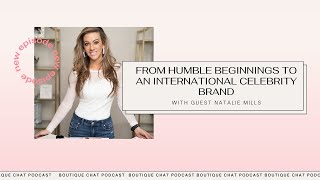
Natalie Mills started designing at age 4 in South Africa and built a jewelry brand that dressed celebrities and scaled globally. She moved her headquarters to the US in 2016, grew through press and wholesale partnerships, and now launches new product lines guided by her Christian faith.
Questions this video answers
Four years old.
About eight years old.
2016.
About ten years before the interview ("about 10 years ago").
Chapters
You guys know I love a good overcomer story and a growth story and a scale story. And so today I'm so excited because Natalie Mills, many of you know her beautiful products, she's the queen of Bling, is here with me on the podcast and we are talking about her journey from starting in South Africa as a little girl and being the Queen of Bling, deciding she wanted to grow up and become a designer, moving to the United States and growing an international celebrity brand. You guys, today on the podcast, we're diving deep with Natalie about working with celebrities, working with influencers, growing brand recognition through collaboration, but also overcoming some adversity along the way. And just how she has scaled her product based business into hundreds of boutiques. Today, Natalie also shares something that is near and dear to my heart and that is how her faith has also impacted her business along the way. You guys, she is as sweet and genuine and honest as they come. I am so thrilled to have her on the podcast. I hope you love the opportunity to meet Ms. Natalie Mills. Let's talk about your business strategy and the juicy details of what actually works from mainstream fashion to fashion on Main street and the entire ecosystem behind it. How do we scale your company and do it with the balance and the happiness that we all seek? Let's hear from those insiders, experts and strategists that actually, actually make it happen. I'm your host, Ashley Alderson from the Boutique Hub and I can't wait to chat. All right.
Hey, guys.
Welcome back to the podcast this week. I'm so pumped, Natalie, to have you on the show today because your story is so inspirational, but it's so relatable to boutique owners and to product based business owners today who want to work with more boutiques. So I would love to go back to the beginning and hear from you to just your story of being a little girl and having this dream and where that's led you.
Thank you, Ashley. Thank you for having me. And I'm just so excited to share my story. I think the best things that we can do with our stories is to share them, right? So I started literally when I was four years old. I would tell my mom, mom, one day I'm going to be in America and I'm going to be on TV. And this was me at 4 years old in the tip of South Africa, not even really knowing what America was all about. So I kind of think I just had this epiphany from such a young age. But my journey of designing started at about like 8 years old. I used to go on my, with my family to vacations. We used to pick up all the seashells on the bed and I'd get back home and I'd kind of put my nail varnish on it and thread it with like string and then go sell it to the neighborhood. Whether they were buying it because they loved it or just because they saw this little girl really trying, I don't know. But I really got my first taste of designing and you can make money if you do what you love. So since then the entrepreneurial designing bag really just bit on me and it's grasped me ever since then.
I love that. So talk to me about how I'm sure through education and then getting started, where did you actually start thinking, okay, this is a real opportunity for me, this is a business I want to start, I want to come to the States. Where did that all start?
Yeah, so basically, you know, kind of I'm very self taught and self taught and street smart. So I didn't, you know, my family fell on, you know, very hard times. So when I left school wanting to go into tertiary education, we just didn't have the money to send me to tertiary education. So it was kind of at that moment you've got to say, well you got to decide what you want to do with your life and because you don't have that supporting structure that you need, it's going to be completely up to you. So I was always really known as the bling queen. So every time I would go out to parties, you know, there Natalie with the belt and it's got the blings and the big earrings. But again, you know, coming, you know, working straight out of school, trying to be secretarial jobs and really figuring my way out. I didn't have that disposable income to buy the really expensive gorgeous pieces of jewelry. So I'd go to the markets, get the cheap jewelry but it would just really fall apart and break. And I thought I'm not the only one that wants to have something quality that can last a while and that's affordable. And that's when I really started seeing there is this gap because it was really much market jewelry and then really expensive. There was nothing to cater the middle. So that's when my journey started about 10 years ago in South Africa where we, I launched my brand very much called Fashionable Affordable Quality. We quickly became one of the fastest growing brands across Africa, really servicing the huge department stores across Africa. And then in 2015 I started really getting global attention on the Brand a lot of appeal. And that's when I thought, you know, if I want to make it work in the States, I've got to move here. So I moved my global headquarters to the United States in 2016. Yeah. And that's kind of what led me here to where we are today. Five years ago. Well, nearly six years ago, I've been here.
Tell me about that scalable sense from the start. I mean, it's one thing to scale across Africa, then to scale internationally. What would you say for someone who's listening, who has a product and they're like, I just need to build this brand. I just need people to have the attention and know who I am and what this product is. What are some of those things you did from the start that you feel like really gained the most traction?
I think it's really dig deep, honestly. You know, as much as we might say that this is cliche and so much of what is inside of you, you know, we all got this burning desire, right? I've got this burning desire. I want to scale my brand and I want to be big and I want to do that. We all want to do that. But do you have what it takes and are you prepared to take the hard knocks that is going to get you there? And a lot of the times I say to people, when they say, oh, this is going to be easy, the first thing I say is we'll stop right now because if you think this is going to be easy, you've already failed. So I think brace yourself for a really, really beautiful, magnificent, but tough and challenging ride. And then secondly, you have got to equip yourself and be so resourceful to see what are the tools out there that can help me scale my brand. What are other brands doing to scale, what methods are they using? And that's really, I think what helped me to really scale the brand is just being so open and so resourceful in what is it going to take now in a brand new country. So, you know, coming from South Africa and we didn't even online shopping, so I arrived here five years ago and this Amazon company dropped stuff in your front door and I was like, no, this is what if they steal it? And. But it's having that mindset of having to adjust and adjust so quickly with what is going on because the pace and the change of the market is just like unreal. So it's really having that forefront of it's going to be dig deep. But when you, if you got it inside of you, that's what's going to pull you through because you're going to work that much harder to get to that level that you want to be.
I love that there. Actually, there's a lot there that I want to unpack, but I'm going to come back to that in just a couple of minutes. But I love that. Were there things when you first came to the States that you were like, okay, when I come, it's these relationships I need to make, it's these collaborations. It's like, this is where I went once I knew I needed to dig deep. Where did you start to really place your brand that you felt like could get you the most traction?
Well, I think definitely it was looking what made us so successful in South Africa. I had to kind of copy and paste that formula. And when you get to that level, it's the credibility of the brand. I think that is where it's going to be, the strong foundation and that is, you know, having a look at the influences, which press can we tie up with, what celebrity dressing can we try and fit in with? And because once you've got that credibility, it's really good to scale and it's very quickly for buyers to look at you well. This is a serious brand. They look at you very differently when you've got that. So it was very much copying and pasting that formula and bringing that through to the States, because that was one of the keys that we did in South Africa was a lot of press, a lot of collaboration and, you know, a lot of celebrity support.
And I love that. On your website, you guys that are listening, make sure you check out Natalie's website. But you have that. You have all the celebrity dressing that you've done. And I'm not asking you to give away, like all of your secrets because I know what it's like to try to figure that formula out. It's very tricky. But I would love to know high level, like, how would. How do people start in that? Like, if I'm new to this and I'm like, you know what, that's a great idea. I want to start, but I don't want to get burnt in the process. I could lose a lot of money in the process. What's your strategy?
Well, I think you've got to find a celebrity that ties up with what your mission and your vision is.
Right.
And secondly, it's so critical to look at your product, but look at your product objectively. So, I mean, I had somebody reach out to me because I get a lot of people asking for Advice and they were selling cupcakes and they were like, how do I get my cupcakes into the hands of celebrities? I'm like, well, this is really going to be difficult because to try and spot a celebrity with a cupcake in their head is not going to be easy. So you've got to be really objective with what your product is and how does that fit into the genre of where they are going to be. Once you find that you have a look at what is your mission and what is your values. So, so you could be a company that really much supports in terms of philanthropy and mission, you know, woman, you know, you know, mental health awareness. And there's a lot of platforms that you can search what celebrities align with that mission. And you know, there's some online portals where you can post and you can gift them and you can send them a message. And I mean granted they do get a lot of requests, but that's kind of where you just got to knock and carry on knocking.
Yeah, that's helpful. This seems true for influencers. And I just have to add this Natalie, because I feel like we do get this question a lot is do you just take anyone who shows up at your door wanting to collaborate as a product based business and the answer is no. Right. Like you really have to make sure it's a, it's a two way street, it's a relationship and you do have those aligned values. Are there other pitfalls or things that you would warn people against as you're going down that collaboration at the high celebrity level? Just things to look out for.
Yeah, I think one thing we do have to look into is that it's not going to always turn into abstract sales. So if you are looking at some kind of a collaboration with an influencer and they've got hundreds of thousands of following and they kind of say, well, right, this is what the cost is going to be. You have got to really be prepared to know that that cannot transform into that exact roi. And once you say to yourself, I'm okay if this doesn't transform because of the credibility it could offer because of the exposure I might get, then go ahead. But very, you know, that don't turn out the way you want to do. And the suggestions that I've got is we find so much more success with our macro influences, you know, our, our customers that have got a thousand friends and got, you know, 500 people and 2,000 people and you collaborately get all of those together on an influencer, your own ambassadors, which we've got, we've got thousands of ambassadors. Get those people on your platform and you find that that drives a lot more sales and it's going to be way more cost effective than really going out for a huge influencer. Look, don't get me wrong, I'm not saying that it doesn't work, but I'm saying in the event that it doesn't, you need to prepare yourself because to put all your eggs in that basket, you could burn your fingers.
Yes, I love that. I love the macro side of things too. Like more about engagement versus followers. Tell me a little bit about your ambassador program and how you've built that and maybe some tips and tricks for those who are listening.
Yeah, so we, I think you might have seen our masks during COVID We had those bling masks that were all over and that was one of the designs that we patented. But what really was happening, we were getting so many referrals to our website from our customers and we thought, you know, this is a good time to let our customers earn. So that's why we created our ambassador platform. And it's a simple platform where ambassadors would just log in. They get a code, they share a code with their friends, their family, their stories. We keep them, part of our community, up to date with product developments. But really the best ambassadors you've got are your customers. It's the people that have already bought from you because they know you, they your, you know, your rising fans, they your shouting stars. So that's really where a good point is to start with that and just really engage with them, reward them, you know, kind of maybe free gifts, birthday gifts, store credits. That's what you do just to really keep them close.
I think that's so good, that's so important. Now there's one side of actually securing the relationship, right? And like getting the post and getting the press and getting the celebrity. But the other side that I think a lot of people miss is the follow up. So how have you taken, once those pictures are posted or that shout out takes place, how have you taken that back to your business and really use that on a press page of your website or promoted it so that that collaboration and that celebrity or ambassador experience translates to be like a really long term asset for you?
Well, look, I mean, it depends if, I mean, it depends. We don't really go, we haven't really gone too deep into a complete collaboration, you know what I mean? So we get a celebrity spotting and a celebrity dressing. So it's just like, you know, this celebrity was Wearing this, you know, this purse on the red carpet and, you know, knowing what our products are. We got eyes on the ground to start. Exactly. Like we had Kerry Washington wear our, you know, our clutch bag at the Met, which was absolutely insane. And then what we really do is we try and figure out if there's any press that's going to be around Kerry Washington in, you know, any of the press. You know, we try and get our tags to let them know, well, that really is our purse or that really is our handbag. But it's just, you know, keeping your eyes on the ground, knowing who you've gifted, what you've gifted them, and just kind of the follow through to let the press know that that's our brand, just to get that tag with it.
That's so good that follow through and follow up. And that's, I think really was my question is that's where a lot of us fall down is it's one thing to make the pitch, but it's a whole nother to have the follow up and the strategy to actually keep that photo and use it as brand credibility. Right?
Absolutely. Yeah, absolutely. I mean, you've got to do that. You got to be aware on, you know, the rights of the pictures and make sure that you're not kind of infringing on anything as well. But yeah, I mean, it's just, you know, letting people know, you know, sen them. The link where you have got the mention to your customers. Well, we were in this magazine, you know, here is the link of an article. So definitely. And funny enough, we're talking about this. I was watching the Bachelorette. I was a Monday evening, and the next minute I see she's wearing all my stuff. So I send a photo to my press company. I'm like, those are my earrings. And then she's like, yes. And then she was like, but wait, that's your bracelet. I'm like, yes. And then there was another one. That's your other bracelet. So literally, I think the Monday episode of the Bachelorette was all Natalie moles all over it. So it was so fun, but I know my stuff so well. So I immediately took a photo. I'm like, she's got our stuff on because we kind of send, you know, we kind of send a package of jewelry to, you know, the, you know, the stylist of the celebrities and things like that. So we knew they had a good package. But Monday was just all about Natalie Moll's jewelry all over the Bachelorettes. It was so fun.
That is so Fun. Now here's something that I think is really important for boutiques who are listening. So boutiques have a choice when they're stocking product in their stores, right? We can buy fast fashion, we can buy things at a great, you know, low affordable price, mark them up and it's our curation as a boutique. But it's another thing to bring in a brand that has name recognition and credibility or celebrity status or whatever. Because the purpose is really, how do I get more customers through the door? Because the customer already knows this brand and they're coming through my boutique to access this brand. So when I think about assortments in stores, it's always important to have that full circle name recognition come into play. Now, I know you and I were chatting about the fact that you do have a wholesale line as well. How have you leveraged again that name recognition of your brand to build wholesale relationships with boutiques that have in turn helped the boutique owner also be successful at the end of the day?
Yeah, I think, well, it's really important that you kind of just let them know who you are. And, you know, it's a different strategy for different brands. You know, we knew that wholesale was going to be a really big arm, but we can't rely on the wholesalers to do everything for us. So it's so important to invest in your own brand so that that coverage is there. So when they do, you know, put you in the store, they know that you are meeting them halfway. And I think that's what gives that boutique a bit of comfort. Well, I'm stocking this brand, but this brand invests millions of dollars in marketing and advertising to make me do the sell through and the follow through. And I mean, you don't really have to invest, you know, that much money. I mean, you could look at what is your area, have a look at what your local product presses, who is your local radio station and then really infiltrate that area and really do it properly. So the boutiques know, well, we need it halfway and that's really just critical. Well, for us, as you know, as our national brand is for them to know, well, we are doing our part because especially if you, you know, in a big department store, if you don't have that sell through, there's going to be no repeat orders. If you don't have that sell through with anyone, there's no repeat orders. So how do you look after that investment as well to have that continuous business going on?
Yeah, that's such a good point. Are there things you feel like Your most successful stores that you work with, are there things that they have in common or things that maybe your relationship with them have in common that have allowed that success?
I think the big success with the stores is that it depends how the story embraces the brand as well, because, I mean, we've got some stores that really, really do well, but they embrace the brand. They merchandise it so well. We kind. In the front of the window, we got a bucket hat on a model, they put a scarf around a mannequin. Those are where we really find the successes. When you've got, you know, we got the relationship with them, but they've got such a love and such a trust for the brand that they really make sure it looks merchandizable. And that's where we find a really good success is when we know that they are. That they are showcasing our brand the way we feel it should be done.
I love that. Do you have any other tips for brands who are really wanting to create lasting relationships with boutiques? Like other maybe do's or don'ts that you found along the way?
I think. You know what I think it is? I think we are all kind of in a ball and we all kind of fighting against, you know, trying to get in the stores and try. You've got to be different. And I think you have got to really look at the authenticity of your brand and who you are and what you represent and to a point, look what other people are doing, but never focus on that. I think the more you focus on you and your brand and. And your authenticity is what is going to set you apart and like I said, be different. You know, those approaches to the boutiques, handwritten cards, gifts, more of that relationship. That's how they're going to remember you, because you are up against other people fighting for that space as well. So embrace your authenticity and keep your message consistent. You know, they know that your brand is known for its certain flair or a certain message. Keep that consistency going. Because, you know, as, you know, it takes seven knocks before somebody even kind of recognizes you. So the longer you knock and the more consistent you are with the message, the higher the chance you've got of this door actually opening.
No, that's so good. That's so true. Right. Natalie, something else that you mentioned that I think really goes to this message and just your entire message today is just that of tenacity, just that of there's highs and lows in business. There's those relationships that come through and there's those that don't and you've certainly had a lot of tenacity to keep fighting to build your brand. Are there things, you know, in this economy that we're in, in this time of life that we're in, as businesses are really wondering what's going to happen tomorrow. Are there tips you would share with others just on how to ride those highs and lows of business?
There are. And I think one of the biggest tips that, that I would kind of, you know, share is don't take this personally. I think what happens is when there are so many external factors, we look within and we blame ourselves and we say, well, why aren't the sales happening? Maybe it's because it's my product and maybe it's because, you know, the pricing. You've got to relook at that. You know what I mean? So you have to make sure that you do everything stronger, faster, harder. But you've got to have the. The mindset of there are things out of your control. And when you realize there's things out of your control, you're not so hard on yourself. When you're not so hard on yourself, I feel that you can perform more, you can perform better, and you can give more of yourself. Because when you are so judging yourself that you're feeling like a failure, it's to get up in the morning. So it's really looking at the economy is bad, but we are all affected by it. So kind of look at it holistically and say, well, what do I do to change it? But don't be so hard on yourself while we've got this e. Because what goes down will go up, and it's kind of prepare yourself during the down so when the up comes, you're ready to go, man.
Absolutely. Are there places you find yourself going to remain in inspired during that time? Like, are there certain podcasts or books or maybe it's habits that you have that help pull you up by the bootstraps during those times?
Yeah, I think, you know, during these hard times, it's so critical to look after yourself. I think now the times when I make sure I'm exercising a little bit more, where I'm watching what I'm eating well, you know, how much water I'm drinking, because what you're putting into your body is what you're putting into your mind. And if your mind is not alert and sharp and on point during this time, the field day your mind is going to have with its emotions are just not healthy. So I think make sure during these times that you do the healthiest habits for yourself, mind, body and soul to get through this. But again, you know, I always go through the, to the drawing board when there's things like this happening, it's right to the drawing board having to look at all my income streams and am I working to my ample capacity in every single one of those income constraints. What am I doing different? What outreach can I change? How can I, you know, what can I kind of do to, to, to make us, as I say, stronger, harder, faster, to try and get better results? Because now we've just got to work more harder than we did before.
Yeah, absolutely.
Meditation as well. Like I do a lot of meditation.
Yeah, well, so this actually flows right into my next question for you. So meditation. But also I know that you're a Christian based business and I think that's really important as something that'll carry you through this time as well. How have you really brought just like your, your, your faith life into your business during this time?
Yeah, yeah. And you know what? The Lord Jesus is my savior, I think, you know, I wake up, I pray every day and you know, a lot of people ask me, you know, Natalie, how did you get where you are today or how have you achieved what you are today? I got one answer. It always has, it always will be, and it always is God. Because I don't think me within. You know, I've had a really, really hard life and I have had a lot of testing time. I could never have got through this and be standing the way I am without the strength of the Lord Jesus. So, you know, that's kind of my go to is, you know, when things are kind of tricky, I just pray because at the end of the day where I say we're not in control, we aren't in control. But I, as a Christian, I know who is in control. So that's kind of who I leave it up to. And I say, you know, Jesus, guide me during this time. And I think, you know, one of the things that we are doing is we launching a beauty brand. And that was brought on to me through the Holy Spirit. And it was during my quiet times of praying to say, Lord, you know, things are a little bit quiet, you know, how do we get back up? And you know, the Holy Spirit guided on me. You need to do something perishable, you need to do something that's going to build your subscription base. And beauty kind of laid on my heart during that time. So that's pretty exciting about the direction we go in. But I Mean, absolutely. We are proud to, you know, faith based organization and the Lord is our core and our center of everything we do.
I love that. You know what's so helpful about that, Natalie, is when I think about when times get tough. Right. And when business gets slow for me anyway, I have a tendency to take everything on my shoulders and think, okay, I've got to dig my way out of this. Like, I've got to hustle and grind and like, I carry this weight. But what my husband is so good at always reminding me and pulling me back into our faith and just saying, you know what, it doesn't have to be that way, right? Like, God's got this. He's already like made this happen for you. Like, look at what he's already done. And so when I, when I go back to my faith and then it like takes this huge weight off my shoulders, is this happening to me or is this happening for me? Like, this is. This is what's being placed ahead of me. And I know it's already been done. So I think that's the beautiful thing of there's so much grace in this time if we'll accept it for ourselves and not feel like we just have to hammer all the way through on our own. So thank you for sharing that.
Yeah. And actually the question I would ask to you is, how do you stop inflation? You can't. You know what I mean? So there's a lot of things that are just so outside of your control. So, Ashley, how do we get the gas prices down so people will spend. You can't. So that's why I kind of went back to look at what's out of your control and realize that there are external forces that work here that there's nothing you can do. So you've got to just dig deep, pray the way I do pray, and just know what comes down will go up. It's just the cycle. It always works that way. But yeah, absolutely, you know, and you know who's in control. So. Yeah.
Well, Natalie, I really appreciate this time together today and just you sharing your journey, the ups and downs, but also how you maintain in your faith life through all of this. I know this is inspiring not just for boutique owners listening, but for, for product based businesses who see you as an example as well. So thank you for being on the podcast. We'll link up everything today in the show notes. Is there any last tips you'd love to share with the audience today?
No, I think we covered it all. Just basically, I think one thing that we must all realize is that we all so unique and we also special and I think we've all just got something inside of us and there's so much to go around. So let your, let your star shine bright and, you know, just be everything that you're supposed to be. Your dreams are the, you know, the only kind of barriers we put on we we have in our life are the ones that we put in us, in ourselves. So dream big and reach for the stars and with that tenacity and the desire and the hard work, you can achieve anything you set your mind to.
I love that. Well said. Natalie Mills, thank you so much for being on the show.
Thanks, Ashley.
Hey guys, thank you so much for listening to this episode. We hope that you loved it. Don't forget to hit subscribe and leave a rating and review down below for a chance to be one of our featured listeners each and every week. For more information on our spirit of community over competition and how to access complete show notes and bonus downloads from our guests, head on over to theboutiquehub.com and join the community. We'll see you next week.
Sam.










