How Obsession, Ingenuity, and Instagram Built a Candle Empire
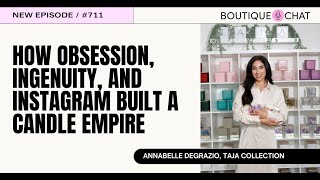
Annabelle left law to build a candle brand on Instagram, starting with DMs and now running a Miami-based operation. Her bestseller is a design-your-own engraved candle. She handles manufacturing in-house, drives sales through paid ads and organic referrals, and credits hiring experts in accounting and development as key to scaling.
Chapters
Foreign.
Business can be a lonely game, but it doesn't have to be. Welcome to Boutique Chat where we explore community over competition and how to scale your company with the balance and the happiness that we all seek. We'll hear from product based businesses of all types, retailers, e commerce and wholesale brands, along with industry experts shaping the future of our industry. I I'm your host Ashley Alderson from the Boutique Hub and I can't wait to chat.
Hey guys.
Welcome back to the podcast this week. I am pumped about this conversation. We just became like fast friends, I'm pretty sure, didn't we? Thanks for being on the show today.
Annabelle. Besties, thanks for having me.
I am such a nerd when it comes to like founder stories. Growth stories found founders who found like really unique iterations to a product that we're all familiar with. And I think that you've done just that in a really cool way. So I can't wait to share with everybody what you've got going on. So as you get started, tell me the very origin story of how the company came to be. How did we get into candles in the first place?
Well, it's going to sound very random, but I was a lawyer and it was holiday season. I was looking for a gift for my secretary. She loved her cat and she loved candles and diffusers and so I wanted to get her a candle with her cat on it. I felt like that was something that was already out there. So I looked for it everywhere and couldn't find it and so I created it. And that's really how that was the idea that drove me to this obsession.
I love that story. I talk to teachers and nurses and stay at home moms and everyone else who starts a small business. I get a few attorneys, but not that many. So I love that it's perfect. So you have this idea and it becomes your obsession. How did you first dig in? Where did the manufacturing process begin?
So actually I needed to understand how I was going to engrave them because really what existed at the time and still are candles that you can slap on a sticker and then that's what they would call personalized. And that's fine. But I wanted something that had a more luxurious look and that was more beautiful than that. So for me that was. It was a necessity that the candle had to be engraved. So I went to a conference in Fort Lauderdale, which is like an hour away from me, and I spent the day walking around with like a prototype and asking people to engrave it. And so that's Sort of how I understood how like we were actually going to make it and I didn't. I had never made a candle before this. I think I ordered a kit on Amazon and tried to make it like, oh, this is really easy. Of course it's easy when Amazon sends it to you and it's all pre portioned and it's like one single candle that's like 8 ounces, like super easy. But then you know, as you get into like larger candles and you don't use. I obviously was felt very strongly about using clean ingredients. So once you start taking out a lot of the ingredients that are commonly used as can in candles, that also creates some issues in the manufacturing. But that's fine. I just kept going and I really didn't know that I was going to be making them all. We manufacture everything in house still to this day here in Miami. And a reason, a really big reason for that is one, I like to have full control over what's going into them. Also it's a great way to manage inventory. But secondly, when I went around in the beginning to other factories that were making candles, it was mostly human labor. So yeah, there was equipment and some machines, but it was human labor. So I figured, why am I, I'm just going to cut the middleman out and I'm going to do it. Why not? I made one candle from Amazon. I felt like I was an expert. So that's really how it came together. It was not my intention to do all of the manufacturing in house, but that is how it happened. So we pour all of the candles here, we engrave everything here, we fulfill everything here. So it's a full blown operation.
I love that. I think I have a few of those Amazon candle kits currently like stuck to my carpet in my kids bedrooms. Those don't ever end well, it seems like. So I'm glad that you have a different story. So you decide, you do all this research, you decide and really that's what entrepreneurship is, right? It's becoming obsessed with solving a problem and not taking no for an answer. And far too many people, I feel like, quit before they ever get the result that they're looking for. Because they just aren't willing to keep, you know, digging and digging. And that's exactly what you did. So you keep digging, you get a few more prototypes, I'm assuming then you're like, okay, great, I have this product now how am I going to sell it? Where was the first sale that you made?
So the first sale was through DM on instagram and so that was a large store, which is actually so funny because the brand was built to be a direct to consumer brand. And so the Instagram, I think I had the Instagram before I even had a website. I just felt like getting an Instagram there and starting to post and have a presence was key. So that's how we got our first order. And I would say to this day it's one of our biggest driver of sales.
I'm assuming when you started, did you bring people along for the journey like you starting the company, starting to pour some of the initial customization as you went?
Yes. It's so funny. I mean it was mostly friends or friends moms that were looking for something to do. It was just like very in the community and it was a lot of like part time helpers. Like, oh, like my daughter's home from college for a summer, can she help out? I'm like, sure, I need help. Yes. So I mean, yes, it was a lot of. I did have, you know, a lot of hands in the kitchen, but I did do a lot of it myself. I did most of the pouring, I did all of the engraving. And then I would have, you know, helpers with packing and things like that. But it was a lot, I did it all.
Well, dig in a little bit more to the product for me. So everyone who's listening knows it started with this cat. It started with the engraved cat. Now I mean, I think this is the thing that like you said, it sets your products apart from everyone else. Is all the opportunities for customization beyond just a sticker. It's much more beautiful. What does the product line look like today and what are some of your best selling categories?
Sure. So our bestseller. So we do more than just candles, but we are known for candles. So we have candles, vases, diffusers, soaps, coasters. And so the idea really behind it is thoughtful gifting. And so you can get this for yourself. You can, it can be on a larger scale for corporate gifting and it's really just how to make something beautiful that's also thoughtful. So our number one bestseller is a design your own candle. And that allows you to put anything you want, anywhere you want. And when I say that, people still don't understand what I mean. So let me dive into that. You can put your pet's face on the candle. You can write your wedding vows on the candle. You can have like a personal message on the inside of the lid if you don't want it on display. There's so much you can do with it. And the possibilities are endless. So it's really nice to give people that option. And so that easily, hands down, is our bestseller. But close to that is our Casa candle. And so that is just Casa. And all you do is type in the last name. And it's just, it's fun when people go to other people's houses and they send me a photo and they're like, oh, here's your candle. Because we also do have a square shape. Most of our candles, we do offer sub cylinder, but most of our candles are square. And so first of all, that helps us engrave it easier. But also at the time when I was developing the product, all of the candles out there, if you look, most of them are cylindrical. So it's nice to have something that's different and from a design perspective, like, it looks really chic. So yeah, that's, that's what the product looks like.
I love it. So the customization piece. Now I'm going to be like such a technology nerd as I think about this. And your tech stack, I'm assuming, are you selling on Shopify?
We sell on Shopify, okay. From day one.
From day one, it's so easy. So as you got started, I mean, I'm sure you have an app. You had to do a little bit of tinkering to figure out how to add in all the customization options. That's a little bit tricky for people. So tell me about that process of getting launched on Shopify and figuring out like all the apps that you needed that really allowed you to do your job much easier.
Right. So my background as a lawyer did not prepare me for being a web developer. But luckily when I started, one of my close friends had already launched a DTC business, so. And he had a lot of experience with that. So he. I leaned on him a lot in the beginning. But setting up the store on Shopify was pretty simple. It was adding the variance that to this day are very complicated because anybody who knows Shopify knows that they allow for three variants. And beyond that you have to add an app. And that's where things get a little tricky. If you have any experience with apps, sometimes they're glitchy, sometimes they decide to work. So, you know, we're still kind of dealing with that. The goal eventually is to have like a fully custom built website. We have done some custom things, but to fully do that, I haven't gotten there yet.
It's tough because at that point you have to have development on staff. I have development on my Staff and it's tough. It's tough and it's very expensive. So Shopify is such a great choice if you can get the right pieces in place to work for you.
And I mean it definitely works for now. And I can't say that it's anything but great. Especially like the value is there. But at a certain point I think we'll need someone on staff to help us with our custom built website.
Absolutely. So tell me now about your sales funnel. So you've grown into a few different channels right now. Are you running ads? What's your email tech strategy? How have you grown to really expand your funnel?
Yes. So that has changed significantly. Anybody who knows what Instagram was like eight years ago, seven years ago, back when I started, everything was free. There was really, you could push something out as a business or as an individual, it didn't really matter. So it was very easy and I didn't. And it was very low cost. It's still low cost but we definitely run a lot of ads on Meta and Google and Pinterest and so that's, I would say that's like a huge driver for us. We do like our best referral is still organic. So that's really good. Which, you know, it's nice and it's a testament to the product because a lot, I would say 90% of the orders are gifts. So usually the recipient is like, wow, this is a great gift. I'm going to give this to my whatever and then they'll order. So that's great. And usually they know the name so they'll just Google our name. So that's great. We've also recently gotten a lot of wholesale orders through Google, which has been great. So, you know, shout out to SEO, I guess it's still alive and well. It is, yeah. Right, yeah. And yeah. So I mean we're constantly like trying to find new ways.
Yeah. Something you mentioned a little bit ago that I'm curious about and I'm sure many of our listeners are curious. They probably haven't even thought about this a whole lot was when you mentioned corporate gifting. So when you think of corporate gifting, do you have a strategy of outreach to some of the larger employers or larger companies that you really want to target as an opportunity to pitch to them or how do you look at corporate gifting?
So corporate gifting fell into my lap very, very early on and that was great because we had given a local gym a candle to use with their logo on it. And one of the women who works in the marketing department for the Miami Heat went to the gym, saw the candle, was like, wow, this is a great gift. We need to get this for the Heat. So we got into the NBA and the NFL, like kind of like early on. Cause we realized like, wow, this is a great market for us. And so we've worked with a lot of sports teams and the way that I would get to a lot of them that weren't local was I would go on LinkedIn and try to find people in like a similar position and just cold email them and say, hey, I would love to send you a sample with your logo on it. And maybe out of like 110 would answer. And out of those, maybe like five would order. But I. You might look at that and be like, that's not that great. But it really is great because it's cost $0. And on top of that, a lot of these people who order, they reorder, so they might need something for a specific event. They'll order for that event and then I won't hear from them or like they won't answer my emails for like a year. And then like a year and a half later they'll come back and be like, hey, we have this thing coming up, like, send me, you know, an invoice. And I'm like, okay, great. So it really is. It doesn't sound like a successful tool, but I think it is.
I'm so excited that you're saying this because I think just that strategy of outreach is lost today. I think that there's a lot of us that were business owners that got started on Instagram like you did, and everything was free. And we all got kind of used to like inbound traffic. And very few people have had to hustle in that way and get creative in that way of that outbound, like really cold sales. And I love it because my husband was in like high level sales for many years where it was all cold outreach and like huge contracts. So he's used to a sales process that is years and years long, which is really what you're describing as well. It could be an instant yes, it could be a no for two years and then all of a sudden it lands. But I love that we're talking about this because we what an opportunity for people to just ask. The answer's always no unless you ask. And it's all a relationship business. I can't imagine how much referral business you've done from some of those cold outreach emails.
So many. And like, that's the beauty of it from that. And some of them I probably don't even know. Like, we always try to ask people, like how they found out about us, but you know, sometimes we're just like, usually people are calling us and they're like, I need 500 candles in a week. So that's like what we're used to. So we don't really have a lot of time to like get to know each other. But, but you know, a lot of them are referrals. A lot of them, you know, find us through Google search. So it's like it could be any. Some of them I have to work so hard for and some of them just land on my lap and it's like the easiest thing. So I would say it's like a very good balance between all of them. But yes, I totally agree what you're saying. It's so important to reach out.
Hey, can we meet up in person? It is one of my favorite things to do here at the Boutique Hub. To get to meet you face to face, to hear your personal business story and your journey and what you're working on, but also to put you in contact with and to build friendships with some of the most amazing business owners from around the world. Boutique owners, wholesale brands, industry service providers and experts. All of us together in one room. And that's what we do at our annual Boutique Summit event this year. I would love for you to come to Dallas, Texas of course, on June 8th and 9th for our annual Boutique Summit. Our theme this year is the summit and your business completely reimagined. And I think it's time for that theme to take effect. Right. We have been through some crazy highs and lows in this industry and I think going into 2025 we are all ready to reimagine what's possible in this industry and in your business personally. So get ready for detailed hands on workshops. Not just you listening to speakers, but you actually getting things done. Pulling out your Facebook ads account and building some ads together or planning out an entire quarter of content, maybe doing some social media audits with some of our most well listened to experts in the room along with fellow boutique owners. It's time to dig deeper into your business. And that's what we're going to do together at the Boutique Summit in Dallas, Texas, June 8th and 9th. I hope to see you there. It is our biggest and best and favorite event of the year. And. And it's time to take your business to the next level. Let's do it together. So how are you also because the second part of that is, like, the outreach, but the first part is LinkedIn, period. Very few people in this industry are active on LinkedIn, and I feel like it's a real hidden gem for people. So. And I'm sure the attorney piece really plays into the LinkedIn piece for sure.
I mean, I, you know, I think all of my former attorney friends are on LinkedIn. And so, like, as. When you're in, like, the corporate world, I think LinkedIn is really big. So. So maybe as entrepreneurs, like, we don't really think about it firsthand, but I do think it's a great tool. I mean, I definitely did get kicked off of LinkedIn for sending so many messages, but I think that. I think that they've, like, changed it around now where they have, like, premium access and you can send unlimited emails. So, like, I mean, I'll randomly send emails to executive assistants for, like, CEOs or, like, I don't know, like, big companies. Because why not?
Like, why not?
So smart.
I'm so glad we're having this conversation. So I gotta go back, because at some point you were still an attorney and this was an idea, and then it shifted and you're like, oh, holy smokes, I've got something here. It's got some legs. And I'm assuming there were some awkward conversations where you're like, hey, guys. Hey, family. Hey, friends. I'm ditching this. Peace out. I'm not going to be an attorney anymore. I'm starting a business doing candles. What was that process like?
I mean, awkward is a very nice way to put it, but it was. Yeah, it was. I could just see people's faces. Like, they were like, are you nuts? Because it's not like you snap your fingers and become a lawyer. There's so much involved, and I'm not going to sugarcoat it. It was difficult. Like, there were. I. I really did a lot of schooling and testing and just like, a lot of work and hours that went into it, and then to just kind of say, like, okay, never mind, I'm just gonna go start a business. And by the way, it's gonna be making candles that's. That are, by the way, gonna be sold online. So, you know, it was like, definitely a lot of funny faces, funny face reactions. But I. I would say that now people understand a lot more. But it's definitely taken time.
I love that. Just a great, like, turnaround story, right? Going in one direction and then completely other. When you think about just, like, even your background as an attorney, I can't imagine the number of skills that brings into being an entrepreneur that a lot of entrepreneurs probably lack in many cases. So do you find that, I mean, just like in being more analytical and understanding your numbers and some of the processes and bigger picture items that those skills have really come to play for you for?
Sure. I think every entrepreneur has different set, a different, A different set of skills that whatever, you know, their past gave them. I always say, you know, I have some friends that used to be buyers for stores, and I'm like, oh, too bad I wasn't a buyer, you know, because that's sort of like what I struggle with, like, because I don't have those connections. But on the flip side, I do have these analytical skills that really help me problem solve anything. I mean, no problem comes my way and I'm like, oh, this is impossible to fix. Like, I'll figure it out. Also, I always have a lawyer friend to call, so that's nice. But, you know, there's also a lot of. I'm very analytical and I like to know data. And so, like, we are heavy on that. Like, we are always looking at numbers, we're looking at, at trends, we're looking at, you know, at the numbers. Because I, I think that's really important when I make decisions. I mean, I do like to make a lot of decisions based on my intuition, but I also want to see some data to back it up.
Yeah, absolutely. And it's such a skill to have that I think a lot of people shy away from, like, oh, you know, maybe I'm more creative. I don't understand the numbers. And so we kind of use that as an excuse to set the barrier between us, actually. Just like deciding today. Well, you know what? Today's the day I am going to understand my numbers and I'm going to just pick one number and knock it off and keep going. So that's very helpful. Let's get into some analytics, shall we? Should we get into some lightning questions? Sure. All right, I've got some fast ones for you. So I'm sure you're very analytical with your time as well and how to use your resources wisely. So if I give you two hours back in your day to work on income generating activities, what do you focus on first?
Okay, so if I have two hours and I'm trying to generate income, I would probably spend 15 minutes on social. I would do a video or something talking about, you know, a great scent that we just launched or something. I would definitely do something on social. Then I still have an hour and 45. So I'd probably be so spend like an hour doing outreach because I, I do a lot of our wholesale outreach and partnerships. So I like we, we call it like phone a thons but like, you know, so randomly, like sometimes we'll do it like once a week, sometimes we'll do it once a month. But we'll like either go through our old wholesale like customers and just like touch base and say, hey, do you need anything, whatever? Or like we'll just pick up the phone and be like, hey, just wanted to touch base. Like how was your order? Do you want to reorder? So I would probably do that because that always yields something. And then with whatever time I have left, I might just get out of the office and take a walk because it's so funny. But sometimes like getting out and like being not here helps either come up with like a good idea. So like right randomly I'll be like, we need to send an email about this, you know, and so like that stuff for me happens when I'm not at work and it's less forced. And sometimes I run into people and they're like, oh, you just reminded me I need a candle. So it's always good to get out.
Yeah, it's so true, isn't it? Like sometimes the best things happen when we just take ourselves out of the day to day grind of business. So I couldn't agree with that more. That's very, very smart. All right, what is the unsexiest but most impactful process in your business?
I would say like managing people. I think it's, I don't know if it's like the unsexiest, but it's definitely the hardest. I think just dealing with like so many different personalities and everybody has stuff going on in their lives and life only gets more complicated the older you get. So. So I think that, you know, dealing with people and the team can be like weighing on you as a leader. But I think it's rewarding tenfold, hundredfold because you know, if you work with your team, like they will work with you. And so I think it's like a very important investment. But not, not always the easiest.
No, it's definitely the hardest. I agree with you. What's been some of the best management advice that you've ever received as your team started to grow?
Invest in your people. Like we make it a point. We celebrate birthdays. I check in with everybody almost daily. Communication is key. Like we that since day one of everyone kind of like Coming on board, everyone knows we over communicate rather than under communicate because, like, I don't want to hear when the problem is already at. When it's like a really bad problem. I want to know, like, 10 steps before that, because then we can actually fix it. And, you know, so I really, like, I feel like I try to be very tuned in.
I love that. All right, what has been the hardest lesson that you've had to learn along your journey so far?
The hardest lesson is that sometimes people can really let you down. No, I mean, look, it's that dealing. You know, we make a product, but we also have customer service, so we deal with people and we don't use AI for that. So when you're calling in with an issue or you have whatever, like you're talking to somebody on the team, and that is, like, very difficult. And sometimes you see, like, the worst of people because maybe they got a product and it's broken, and then they'll just, like, pick up the phone and scream at you or they'll, like, send you an email and you're, like, really vicious. And so sometimes that's like, you know, it could be solved so much quicker and easier if you just practice a little kindness. So that part's just a little hard, and it's a little surprising. Like, you know, you want to live in your naive bubble where you're like, oh, we're like, making people happy and it's all, like, happy. But, you know, sometimes it's not like that. So dealing with that is a challenge. For sure it is.
And it's on every level of business, you know, from. And I'm sure you from even your past life can see this too. I mean, it's not even just consumers to retailers, and it's retailers to brands and brands to retailers, and even here at the boutique hub, even retailers to the hub sometimes, and vice versa. Like, it's just relationships and catching people on an off day and giving people the benefit of the doubt is so important.
So important.
All right, next lightning round question. What is one metric you live and die by? And second part to the question is, what's one metric you wish you knew more about?
So many. You know, I always ask what the conversion rates are always like, you know, I mean, yes, I know traffic is important. I know, like, all the other data is important, but I always want to know, like, if people actually converted. So that is something that's, like, always included in, like, reports for me, because that's going to be the first question I ask, you know, I don't know. What. I don't know. I guess so, like, maybe it's out there and I just don't know what I need to know.
Well, and it sounds like you have a good handle on a lot of the metrics already, which, yeah, isn't always the case. So I think that's. That's pretty awesome to start with. All right, how about this last lightning round question. Best advice for new entrepreneurs. Getting started with a big idea.
Surround yourself with good people that you trust. Don't rely too heavily on them. But, like, always, like, if you're not an expert in accounting, then you should, like, make that investment. I know a lot of people try to cut corners in the beginning and say, like, well, I'm not big enough. I don't really need an accountant. I could do it myself. And then you're like, well, I don't need a web developer. Like, I could do it myself. I've been there, I've done it. I get it. My. My advice would be to not do it all yourself, especially the very important things that you are not necessarily qualified to do that you know, you want. I mean, I think it's so important to have your books in a row. So, I mean, I think the accountant is, like, key. Get an accountant.
I agree. Do what you do best and hire the rest.
Yeah. Because then you're just wasting your time. And I have to say I'm guilty of doing that, but I learned the hard way. So if you're just starting out, take it from me.
Perfect. All right, Annabelle, so last question. And this has been so awesome. I have loved getting to hear your story, and I feel like I'm gonna have to get on the website and go stock and, like, upload a photo and order a custom candle. Like, that's step number two of when we get off of this interview. I can't wait to see more. But last question. And I know you're still early in the journey. You still have so much growth and scale and opportunity ahead of you, but I would love to even fast forward, you know, 20, 20, 30 years from now. And as you kind of take pause, 20, 30 years from now, you're on your front porch, you're surrounded by family and friends, and you're looking back at this journey and those big, tough decisions you made in order to be here. What are the things that you really want them to remember the most about you and how you lived and just this legacy that you're building?
I mean, I really pride myself on being generous and thoughtful. And that's really what the brand is about. So that would be something that I would want to have somewhere in my legacy. And I would really just love for the brand to continue to do that and to really. I mean, our mission is to make people happy. And it sounds so simple and it can be that simple. So all you have to do is send somebody you love a candle.
Perfect. Well, this was incredible. Thanks so much for your time and for joining me on the podcast today.
Thank you so much.
Thanks for listening, guys. I hope you took away all kinds of nuggets and new ideas from this week's episode. Don't forget to subscribe and leave a rating and review. We love to hear your feedback and give you a chance to be featured on the show each and every week. For more information on our spirit of community over competition and to access guest downloads and bonuses and all the resources we talked about on the show, head on over to the boutique and join the community. We'll see you next week.










