How to Fashion Forecast for your Small Business
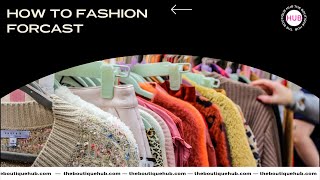
Shane Holman, a footwear merchandiser at Ariat and boutique owner, walks through how to spot trends for Western wear. Ariat scouts runways and rodeos, then develops boots over 6 months to 2 years. Small boutiques can test new styles with opening orders around $1,000 and reorder based on what customers ask for on Instagram and Facebook.
Questions this video answers
It can range anywhere from two years to six months (faster if fast-tracked).
About 15 years (started two weeks after graduating college).
Envy Boutique, Visalia (spelled E N V I E).
About a $1,000 opening order (with smaller quantity-per-style options).
Chapters
It's episode number 283. And today we're talking to one of.
My great friends in the industry, Shane Holman, who is not only a boutique owner, but also a trend leader at Ariat. You guys, if you want to hear more about the behind the scenes of what it takes to get a product from trend to idea to product to market to your store, today's episode is for you. You're gonna love this one. Let's talk about your business strategy and the juicy details of what actually from mainstream fashion to fashion on Main street.
And the entire ecosystem behind it.
How do we scale your company and do it with the balance and the happiness that we all seek? Let's hear from those insiders, experts, and strategists that actually make it happen. I'm your host, Ashley Alderson from the Boutique Hub, and I can't wait to chat.
Hey, you guys.
I'm so glad that you were tuning in to today's episode because I feel.
Like this is going to be a.
Girl chat with someone who I highly respect and look up to in this industry. Not only is Shane Holman a boutique owner, so she understands real world, the world of retail and going through Covid in 2020 with a brick and mortar and building an online business, but she has amazing insight in this industry. And I'm here to tell you, when I run into Shane in person, you know how there's always like that one woman in the crowd that stands out and you're like, who is that? She's dressed so cute.
It's always Shane.
So today I'm going to tell you why, because she's going to talk about what it's like during her day job as she's the senior director of global merchandising, trend and Business development at Ariat. She's worked for ariat for over 12 years and she's traveled the world seeking trends that can be interpreted in Western fashion. She goes to high fashion arenas in London and Milan and Barcelona, New York, Louisiana. And right down to your local horse shows and rodeos in the nfr. And she's able to uniquely curate what's happening on the Runway and in street fashion and create an authenticity that's all her own, you guys. She is responsible for building trends and making happen what goes to your store shelves each and every season once you visit with Ariat Market. So today, let's talk about behind the scenes. Let's go into how does a product go from trend on a Runway, into an idea, into a concept, into a product line in manufacturing to market and then land in a store. Shane's going to give us a step by step and a play by play and talk about how to interpret trend in your own business and make fashion all your own. I love this episode, you guys, and I know you're going to love learning from Shane. So join me in listening to today's episode.
Hey, guys, welcome back to the podcast. This week I am with one of my most stylish friends that I have met in this industry. I don't say that lightly, Shane, like, you're the real deal when it comes to stylish friends, do you know that?
Oh, thank you. That's too nice.
I'm with Shane Holman. She's the senior director of Global Western footwear, merchandising, business development and trend at Area in Ariat International and also the owner of Envy Boutique. So for those of you that are more on the western side of the world, you've probably run into Shane at Western Summit. She's been one of our panelists at Western Summit. You're always at the nfr. You've got a rodeo family, equine related family, and you have such a cool perspective on this industry. I'm really excited to talk to you about it today.
Thank you for having me. I'm really excited to talk on here.
Awesome. So let's start here. I mentioned trend in your job title, right. And we were talking before the podcast, I was like, gosh, I think a lot of people would love to know what goes into product development before it ever comes to, you know, wholesale platform like Ariat has and then into boutiques and into major retailers. So talk to me a little bit about your position at Ariat, Shane, and how that came to be and how you are involved in trend and product development and how you landed where you are today.
Yes. So I've been at ariat going on 15 years now, so it's been quite the journey. I started there two weeks after graduating college and really it was the perfect fit for me. So I've grown up living the western lifestyle, rodeoing, showing horses my whole life, and I wanted to work in the business industry and I also wanted to work in the fashion industry. I didn't know if I wanted to move to New York, work for Vogue. I didn't know what I wanted to do, but this was the perfect blend for me because it was blended my passion for fashion and the, you know, the business smarts with it. So it was a really great combination. So what I do with Aeria is I come up with the Western product line for footwear. And so what that entails is it's a. It's a quite lengthy process, and we have a great team that works with me as well. So we start thinking of an idea, and we look for a hole in the marketplace, and then we start scouring trends. So we go to horse shows, we go to rodeos, we travel to Europe, we travel to main shopping spots like Louisiana, Dallas, New York City, and we really gather and look for all the latest trends on the Runway, and then we interpret them to be Western, so we make sure that they're right for the Western consumer. So we might see, you know, a spike stiletto on the Runway with square dome studs, and we're like, that's awesome. Okay, we need to put that in the line. But how do we make it right for the Western consumer and how do we interpret that to have Western DNA? So at Ariat, we are always innovating. We want to be forefront of the Western industry with technology, style, look, design. We all strive really hard to be pushing the market forward and always step out there with our best products. So what we'll do is we'll have a technical foundation, a technical footbed into that shoe, and then we're going to make sure that it's aesthetically beautiful. So it might be Southwestern trend, might be the trend out there right now. So we're going to put the pull tabs with some southwestern arrows. Or we know that red and turquoise are trending. We know that that ties back to Western jewelry. Or we know that cheetah. Right. Cheetah is always a staple in the Western world. So we pull all these elements together to create the best product that we possibly can, and we put it out there. So we do a lot of testing, we show it to consumers, we talk to retailers, talk to buyers and really get their opinions and make sure that they're on board with us, and then we go to market. So we create these products. We do turn many different samples. We make sure that the price is right, we make sure that the fit is right, the quality is right, and then we head to market.
How long is that process typically, like, from trend inception to product development to market?
It can range anywhere from two years to six months, depending on how fast we're trying to track a product. Sometimes we'll do a fast track to market if we see that there's a trend out there that we have to be part of. Otherwise, our typical calendar could be up to two years. So I'm already working on fall 22 right now and thinking about spring 23 even, which is hard to imagine. So you're juggling five or six seasons at a time. Because I'm launching fall 20 right now. I'm pre selling spring 21. I'm looking at prototypes of fall 21 and I'm briefing fall 22. So you've got all these seasons at once that you're juggling. So it's really hard to kind of keep all the trends in line and when they're going to hit for season. And we do use a lot of trend services also that help us kind of forecast and know when it's going to be right. But the great thing about the Western industry and the boutique industry is it's so versatile. So the train, the trends are always evolving and changing and you can take all these nods from the mainstream and then bring it in with your Western DNA.
I feel like you've done a really good job of that. Like, and I'm not done talking about trend specifically at Ariat, but you're also a boutique owner yourself, so you kind of live the best of both worlds. And what I appreciate about you and your entire family, I feel like you all kind of have this fashion DNA is that it's not just core Western, but just like you said, you take so many nods from mainstream and you might take fast fashion or something that's a little more just contemporary and then mix Western with it. How can people that are like looking for that eye and like trying to fit their ideal customer and they know she's western, like, what's a good starting point for them to know how to start to buy and to build collections around that idea where it doesn't have to be just core?
Yeah. You know, Western has evolved so much and it's so much closer to the mainstream. We all know as we're shopping out there and looking at western boutiques or Western retailers, they're pulling in a lot of the mainstream looks and pulling in some of the fast fashion out of la. And you'll notice all the Western brands are kind of leading that way. So I think it's, you know, you gotta dress for yourself and dress for your customer and know who your customer is. And you're gonna have traditionalists, you're gonna have people that are really fast forward and you can't suit maybe all of them, but just be true to you and true to who your customer is. And so you can start simple with, you know, denim. Denim is always a classic. And then you layer on pieces over that. And you can have conservative boots, and you can have wild boots, or you can have a fun belt that might be your statement piece or maybe it's a piece of jewelry. So it's all about just layering these different pieces, and that can take you from being conservative to very fast fashion.
I like it. When you're thinking about developing your product line, I get anxiety thinking about, like, spring 22 or fall 23, like, however far ahead you are right now. Do you ever worry about bringing in something that's going to be a flop? Or have you experienced that before where you're like, oh, my gosh, I'm projecting this is really going to be the thing. And then it doesn't hit quite like you think it's going to be. And how do you, like, recover from that? How do you pivot from that?
Oh, absolutely. I mean, that's just the nature of the business. That happens all the time. And honestly, women's fashion is the most difficult out of any category. Sometimes you feel like you're throwing darts at a board and hoping that something sticks. I mean, if you look at a men's category, it's very traditional. It can be conservative. It's day in and day out, it can be very similar. But women, they want something new and different all the time, so you don't know exactly what's going to do it. So what we try to do is set the trend, be the leader, put something out there, and not everyone's gonna like it right away, but they might circle back later and come back to it. Or maybe they don't buy your fastest style, but they go buy a conservative brown one, because that might have caught their eye, but it's not right for them. They want something else. But absolutely. I've had a ton of products that you know are not winners, and you just keep trying and throw something else out at it again. Or, you know, even this season, we're showing some great products, but because of some of the stuff going on with COVID you know, buyers just don't have the open to buy doll now where they're feeling conservative. And so that product may not be selling in as well. And that doesn't mean that it's a flop. It may just be the economic situation at the time as well. So there's a lot of things that can go on that change it. But, yeah, it's difficult. You just keep trying.
Yeah. Do you have any favorite wins or misses that you can think of in your career?
My favorite one right now is The Dixon. And I know you have a pair of these. Yeah. And so it's. It's this great bootie, and it's so versatile, and it can be for the traditional western girl or it can be for someone that's mainstream. And that's what we love about this product, is it's selling in your big chain retailers, to your western boutiques, to mainstream boutiques, and there's so much versatility. So it's one of my favorites because we've been able to build a franchise around it now with your staple colors. And then now we have these fashion iterations coming with buckles and studs and openings, and so that's probably my favorite win right now. The Mrs. You wouldn't even know, because I get them out of the market as fast as I can. But, you know, I've done a lot of fat babies back in the day, and I've been there 15 years, so there's a lot of shoes. I can look back and be like, oh, my gosh, what was I thinking? But at the time, it was right, you know? Yeah.
Sometimes when I still see fat babies, like, just. Just, you know, around in the world, I'm like, oh, my gosh. Like, I remember I was a sophomore in high school when I very first, like, got my first pair of fat babies, so makes me think about where it comes from.
Well, and fat babies used to be the main thing. You needed them in every color. I had a turquoise pair, a pink pair. But what's funny is that business during COVID right now is doing so well because it's like an essential boot, and it fits well, and people use it to go water their lawn or go, you know, wash a cow or wash a sheep or whatever it is. But it's still alive and well, and people love it. It just depends what your style is, obviously.
Right. Right. I. I'm sure not just with COVID but I mean, even before COVID hit, I feel like our industry, and not just western, but just product development as a whole in the industry, has really shifted because everything has become so much faster. And then with so many markets not taking place, I feel like the seasons are shifting too. How do you see that in your industry? And, like, do you think that product development is going, like, the seasonality of these collections and how they launch? Do you see that changing? Or. What's your crystal ball tell you?
You know, I think people are morphing and changing and evolving with the times. But what I've seen is that we're able to do a lot virtually, we're able to step up our game and show product videos to our sales team and to our store buyers. And the buyers are actually kind of enjoying it. They're not having to go to all these markets and drive all around and now sales and people are coming to them. So I think it's almost. It's doable, it's workable. I think from a product development standpoint, we're still chugging along, we're still doing the same thing and pushing new product, and we're not going to slow down because we know that consumers, at the end of the day, want newness and they want freshness, and that's what keeps people coming in and out of your store. So we'll keep on doing that. And it's just kind of the process of buying the product, I think.
Yeah.
Have you seen a lot of changes in terms of how some of your, let's say, brick and mortar stores have morphed into also now having an online presence that have helped kind of keep them stable through the pandemic and help them to continue to buy from you throughout this time?
Yes, absolutely. I think online and E commerce has become so important and really social media and hustling your products and hustling your story and getting your customers to be interested in you. I mean, we all know there's a lot of noise out there right now. It's busy on the Internet, so you need to be really compelling to get your customers to be coming to you and looking at you and be loyal to you. I think that E commerce, we're seeing everybody step up. And I know with my own boutique, we really stepped up and took that time during COVID to revamp and get sales because when you're shut down, it's like any sale is a sale and you need to do it. So we got our website going and started pushing on Instagram and just trying to come up with new innovative ways to sell product.
Tell me more about what you did kind of step by step through the time with envy. Like when things are in California, things completely shut down there even earlier than some other places. How did you manage that process and how do you think your business has changed for the long term because you went through it.
Yes. So we're in California, and as of March 20, our governor shut everything down. So we were forced to figure out, how do you pay rent, how do you pay your employees? What do you do? How do you survive? So we had to make sales. We revamped our website, we started pushing things On Instagram, Facebook, and we started doing curbside delivery. We did in home delivery, we did personal shopping, really trying to tailor it to our customer and give them whatever they needed to suit them because they're stuck at home as well and they're bored and they still want to shop, they still want to get new products. So we just really had to tailor our services to work better for that. Now that we are open, you still have kind of like a nervousness from a lot of consumers of wanting to be out there, wanting to shop again. So we've just made sure that we've made a really safe environment for everyone. Everyone feels like it's very clean. But again, we're still doing a lot of personal shopping. We're still doing curbside, if that's what they choose. But we are back open and operating fully. We've just kind of had to add these additional, I guess, features and benefits for our customers. And I think that this is something we'll have to do for a little while. We've even come up with this new, like, garage sale that we do once a week on our Instagram stories. So just trying to be creative and innovative with new ways to sell and to engage your consumer and make sure that they're coming into your store.
Tell me, what is a garage sale on your Insta stories? I want to hear more about this.
So our garage sale, it started out as we were trying to move sale products and so once a week we would put post pictures up on the story and with the sizes and then they can comment with their email and we send them an invoice and then we ship it to them or they can come and pick it up in store however they'd like. And so now it's moved from just sale items to any item. It's just a new, fun way to shop, basically.
Perfect. So kind of like comment selling on your Insta story.
Exactly, exactly.
Yeah, perfect. I think that's the thing that so many retailers that I've spoken to have learned from COVID is just to adapt and go where your customer is already living and how to make it that much more simple for them to buy rather than, you know, trying to just stick to the one or two sales channels that we're so habitual about, right?
Yes, yes, absolutely.
There has to be perks of the job, having a boutique and working for Ariat, Right? How has working for Ariat and what you do on a daily basis impacted your boutique or shift, how you operate your boutique?
Well, obviously working at Ariat for so Long. I've. I have a lot of insider knowledge. I see everything going on with our retailers and with the market and what the trends are and what the business are. And I know, you know, what's going to be a good seller, what's going to be a bad seller. So that helps me too, when I order my Ariat product because I kind of know, like how things are booking in and what's going to be a true winner or not. But just I think the overall business experience has helped and being in the industry has helped. And, you know, I actually, I turn to you guys a lot. I listen to your guys podcasts. I see what you guys are doing with Boutique Hub, and I think it's a phenomenal program. So I think, you know, just always being open to learning and taking in new insight from different people and different, you know, podcasts or stories. It's always good to keep gleaning and learning more information. Aw, I love that.
Thank you.
Appreciate that.
How do you. If someone is listening and they're like, gosh, I would love to have the trend knowledge that Shane has, how would you suggest that another boutique owner that's listening understand trends in a better way, in a deeper way? Or where could they go to identify trends and start to test trends more in their boutiques?
Yeah, you know, trend is. That's my favorite part of the entire job, I will say. So that can be anything. That's. That's research and learning and looking at Instagram and reading fashion magazines and watching what the celebrities are doing or watching what the influencers are doing, looking at the mainstream big brands. You can subscribe to trend services if you'd like to. I mean, that's more of a pricey option. But there's a lot of newsletters you can subscribe to that are just kind of pulsing what the weekly idea is. I mean, even for boutique owners that are using fashion go. We all know that they're pulsing trends, seeing things. So. Or if you're shopping, if you go to a Nordstrom's or Neiman Marcus, you can see in the window what is their key trend that they're pushing. So anytime you go to a market, you'll see from every brand, you'll start seeing consistent themes. Like, you'll see, okay, leopard is showing in five different brands. That's going to be a key trend for that season. Or turquoise is in by brands. When you start seeing things repeating, you know, it's a trend and if you want to get way ahead of it, you need to be watching Like Gucci, Louis Vuitton. Watch all these big name designers because they set the tone and then everybody trickles and follows it and interprets it after that.
So good. So don't be, don't just follow what you find simply for sale on the next vendor's website, but do some research. Do you suggest building like brand boards, Kind of like a vision board, but a brand board. So you kind of are pulsing collections that you want to bring in for the year?
I do. You know, when I. When we're starting a season. So this is more from the manufacturer side. When we're starting a season, we create vision boards and so we create different themes and what we're seeing and we create these collections and it's so fun. I love to put them up around my office. But even on Pinterest, you can make boards for each season. It's just what you're feeling, what you're seeing, what you want the look to be. And it all comes together. But there's always going to be staples, things that you start seeing, like whether it's a silhouette and apparel, you know, we all know whether it's a duster or whether it's a high, low tank or whatever it is. When you start seeing it repeat, you know it's going to be a trend. And, you know, if your consumer doesn't like to be friends, then maybe you do a more conservative version of that. But if you do have a trendy consumer, make sure you're getting those pieces in. And then the hard thing is, is don't stay on a trend too long. That's the hard thing is understanding when to move on and get out of it. And there's things like a leopard, and I keep using leopard as an example where that's now a neutral or basic. Right. So it's always going to be in style. But there might be that high, low tape top that we need to move on from and move on to the next silhouette.
How do you know when it's time to move on from a trend?
Oh, that's the crystal ball. I mean, if I knew that, I would be. I don't know. I don't think anybody knows that. So that's always the tough thing, right? Like when you sell out of a, say a six pack, do you reorder or do you just say, okay onto the next? That's always the trying question. And I think all of us have bought it one too many times and you're stuck with inventory and you've got it on your sale rack. So that's just the challenge. And I don't think anyone really knows the answer. It's more of a gut feeling. And you just have to kind of, you know, watch it and learn from your consumers. Talk to your customers in the store. They know they are what's buying it. They are the answer to everything.
Yeah, man. That's a good reason for Insta stories and Facebook groups right there is that you're, you're having that. The other day I was talking about this with some customers that it's. Or with some clients that it's not just you communicating with the boutique. I'm sorry, with the customer. Oh my gosh. I'm going in like 10,000 directions in my mind. In a Facebook group, it's not just you communicating to your customer or your customer communicating to you and answering your questions, but it's also your customers communicating with one another.
So what a good place to ask.
Those questions and get all kinds of feedback and have them also influence one another at the same time.
Exactly. Because honestly, sometimes you ask them and they don't want to either hurt your feelings or they're worried you're judging them. So they're not going to give you necessarily the most honest answer. But in those chats they're talking to each other and then that's when the honesty comes out and you can really see what they're feeling. Or if you do like Instagram polls or surveys where it's a little more anonymous too, then they feel comfortable saying it. But sometimes if you just ask a question like do you like this? Or what do you think? Or what do you want? They may not answer the right way or they may be afraid to say the wrong thing. So it's interesting. It's good to have those conversations where they can be free to chat with each other.
Yeah, absolutely. I know, Shane, you see tons of boutiques and not just boutiques, but let's say like, I don't want to call them big box stores, but like NRS or you know, companies of that size as well. You see all these different businesses operate from a business and marketing perspective and also maybe from a trend and product perspective. What do you think some of those most successful businesses have in common that we could learn from?
I think it's having kind of a multi channel strategy or omni channel strategy where they have their brick and mortar, they have their social media and they have their website. I think it's being true to your customer and understanding who's shopping in your store and really targeting them and Getting product that's right for them. Don't try to be some Instagram that you see down the road. Don't try to be some store that's in a different city. Do what's right for your customer and what's right for you. And I think as long as you're true to that, everything will follow so good.
When you target everyone, you reach no one, Right, Exactly.
And that's one of the things with Ari. You know, we do have something for everyone, but we have to be really specific and true when we're targeting those buckets within. Because I might have someone conservative that lives in Montana that wants one type of boot, but then I have somebody in Fort Worth that wants a different.
Yeah.
So when I make that boot for Fort Worth, I need to make sure it's right for them and not trying to be too vanilla. So you have to make sure that, just like you said, you can't be something for everyone. You have to really target who you're trying to be. Yeah.
I think that's so funny about the Western industry. If you are a cutter, you have certain boots and you shape your hats a certain way. If you're a team roper, if you're a roughy, if you're a barrel racer, like, everyone is so different within such a niche. I think that's so unique, and I don't know how exactly have something similar to that.
And that's one of the challenges, really, when you get new people coming into the industry to work. They don't understand all the nuances and, you know, niches, like you were saying. And so they think, oh, a cowboy boot is a cowboy boot. Well, no, you know, this guy in West Texas doesn't like the same boot in East Texas. And, you know, and they're almost offended by it. So you have to really make sure you know who you're targeting and be true to your consumer.
I think about watching the show Yellowstone. Do you watch Yellowstone?
Oh, I love it. Yes.
I love Yellowstone. And so many of the times, I'm like, man, like, they did really good with costuming in so many areas. And then, of course, there's times where, you know, it's a little bit off. But the tricky thing, that most people just wouldn't understand the detail that goes into it.
Exactly. And I think every big Western company runs into that, too, with their marketing. You just have to make sure you're authentic because your consumer knows, I mean, God forbid you put a cowboy hat on backwards or something, but if you think about you. Hi, you might hire these stylists and they don't know, you know. So you always have to make sure that you have someone that's authentic.
Yes. I think I've seen some ads in some pretty big Western magazines where spurs were on upside down and just goofy stuff like that.
Yes.
Talk to me about. I know you work with influencers a little bit, and Ariat as a whole has some great partners that they work with as influencers for the brand. I think it's always a good question in the industry. People want to know, like, what works and what doesn't work. Tell me about any of the experience you've had kind of in that realm.
I love influencers and I love that it's a growing segment of our industry. I think there's so much opportunity for influencers out there too. If you compare it to the mainstream market and compare it to Western market, like, we have so much room to grow. And I think you've done a phenomenal job as an influencer as well. But I don't know. I think for influencers, it's important that they stay loyal and stay true to who they are. And I think that's challenging because a lot of brands are throwing products at them and a lot of, you know, you want to make a living, but at the same time you need to keep your personality and who you're, I guess, stay true to your vision. So I think that's the difficult part as a brand. Coming to an influencer is when you're choosing one, you just want to make sure that they are going to be loyal and not the next day be advertising the competition. So that's the biggest challenge, like from the brand side, from the boutique side. It's amazing. When you get a shout out or a tag from an influencer, your following goes up, you reach new customers, you're getting new sales. So I think the influencer whole market is amazing.
And the wave of the future, huge opportunity for sure. Let's shift a little bit. I know you being part of product development, specifically in boots. Let's talk about when a store is wondering, when do I bring in boots? How do I bring in boots? How many products do I need? What price point should I be looking at? I feel like that's a big commitment for a lot of people that are new to it. What advice could you offer them on the topic?
It is, I know with my own boutique footwear is tough. It's hard to have all the inventory, it's hard to house all the sizes. You don't Want to get stuck with the half sizes or it seems like you're always out of either the small size or the big size. You're never, you know, just perfect. From an Ariat perspective, we believe boots are year round and they never go out of style that are a staple. But we do understand that it is difficult to carry all that inventory. So Ariat's offered kind of new programming for boutiques where they allow them to take in smaller size runs and test the product. And then it's easy to reorder, it's easy to buy additional sizes as you run out of them. You can reorder, but I think the best is just kind of test with almost like your gut sizes of a 7, 8 and 9 and see how you go from there. You can also test it on social media, see what your consumers, you know, need or reaction is. But footwear obviously is a staple. Everyone needs it and we're always looking as shoppers to buy new and fun trendy looking shoes. So. But I definitely get it from a boutique perspective. It's tough to house all that inventory.
Yeah, talk to me a little bit more about Ariat specifically. I know you guys had like a boutique line. Is that still in existence and is it open pack because you were saying testing in a 789 or what does it look like a boutique buyer to start with? Ariat specifically?
Yeah, absolutely. So part of the boutique hub was when we got started with that, you guys invited us down there to speak and invited us to get, you know, situated. So we started a boutique line. We have a workbook that's for that. We have our specific sales reps that go towards it. And what the feedback was is the Ariat was intimidating to a lot of boutiques. It was too big of a minimum order, too many credit reports. It was, you know, the line is massive. So what we did is we really tailored it down to be a smaller line that's really set for Western boutique consumers and buyers. And we lowered minimum. So I think it's a thousand dollar opening order and you don't have to buy 12 pairs of something. You can buy three to four pairs of something and then reorder. So yeah, it's open packs and we try to make it just really buyer friendly.
Can I just tell you how awesome it is that you guys did that? I mean, thank you for taking that feedback and for collaborating with us on Western Summit because that is such a huge thing for any boutique that wants to get into Western and, and specifically feeling like more core Western, like A name brand like Ariat, it was intimidating. And so I think that's really awesome. You know, in case anyone's listening, whether you're Western or not, this is not like a sales pitch. I'm just genuinely telling you you should go check it out because the line is really good. And I think it's neat that you've made that opportunity available for everybody.
Well, and it's fun for us because we can get kind of more fashion forward products out there too and test it with the market. And then, you know, if the boutiques like it, then we can get behind it in a bigger way and push it to our bigger Western stores too. Because boutiques are really looking for something different. They don't want to have the same product that the big boxes do. So it's fun, actually to make product that's a little bit different and more fashion forward and boutique specific.
I'm amazed every day just at how far this industry has come and how it's changed in the last three years. Like, specifically meaning how we've shifted toward the boutique buyer, where for so long boutiques felt like the little guy and no one heard them or understood them. You know, it was all about the big box stores. And now today, all these brands, Western and non, are like, what do the boutiques want? You know, to see that question even being asked, that is so cool. And I hope everyone in our industry, boutiques that are listening, in case you're new here and didn't know that was kind of the backstory. I mean, you should be really proud of that. That's really cool to see where it's going to continue to grow for boutique owners, too.
Well, and some of these boutiques have massive social media followings, bigger than the big box stores do. So they're reaching way more people than just their location. So it's pretty exciting.
Very cool. Well, Shane, I have a bunch of personal questions for you now out of Harriet and Envy, should we do a little lightning round? Sure. Okay. I said you're one of my most fashionable friends. I always love seeing what you're wearing. I think the last time I saw you in person, I'm trying to remember.
I think it was NFR maybe. Oh, no. Denver. Denver.
You were wearing a hot pink hat.
Oh, yes.
And it was so cute. It was so cute. So tell me more about what's in your closet and what are your favorite items in your closet right now?
Oh, gosh. Okay. Well, my closet's spilling over. I have way too much stuff in there, so I'm not a good example for closet organization, but come shop in your closet any day.
I'm telling you.
Yes, I had to start a poshmark just to start selling things because it was getting really cool. My favorite things right now, I'm always evolving and changing, so it kind of depends what I'm feeling at the moment. But I'm really into camo, so I've been wearing a lot of camo shorts. And then I love leopards, so sometimes I mix the patterns together, which sounds a little taboo, but it ends up being cute. And then I'm loving the Ariet Dixon booty. I think that's adorable. And then I'm loving, like, a big hat from, like, American hat or even glitzy Bella or lack of color.
Love it. Love it. What is your prediction for fall? What's going to be your favorite trend in fall that you're seeing now for fall 20?
Now, I told you, we're working on semi season, so I gotta think back.
Okay. Maybe we currently have fall 20.
So what we're looking at right now is studs. We're seeing a lot of studs out there. Everything from a dome stud to a square stud to even, like a spike stud. We're seeing leopard be very strong. And then the southwestern trends are still hitting hard, so you're going to see kind of muted versions. It may not be as bright as the true serapes were before, but you might see more muted turquoises and rusty and mustard colors in there, but still very strong. And I think anytime we go through, I don't know what you want to call it, the pandemic. With the COVID people go back to their roots, and they're looking for that kind of, like, Americana, true spirit of the West. So you go a little bit more classic and, you know, things that make you feel comfortable. So I think we'll see a lot of the Americana looks as well.
How about spring 2021?
Spring 21. So then we're going a little bit brighter because people are going to be coming out of the pandemic. They're sick of being at home. They're sick of being, you know, masked up. So they want to stand out. They want to show up in a brighter, bigger way. So you'll see brighter color palettes. You might see neons, again, less muted. So if you do do a serape or a southwestern print, they're going to be more vibrant and bright.
If there's one trend you could pick that could just go away now and never come back, what would it Be.
Oh my gosh. Honestly, I love all trends. I love fashion. So even when it's a bad trend, I still think it's fun to experiment with and try. I'm trying to think of one thing right now that's bothering me, but honestly, I can't name it.
That's all right. That's all right. All right. Biggest fear. Snakes. Payroll or Internet trolls?
Oh, all of them. But snakes.
Do you have many snakes where you're at in California?
Funny you should ask. No, where I am. We get an occasional snake here and there, but actually one snuck into our house recently and it was the biggest nightmare I've ever had. So we had to stay at the hotel for a few nights until we got it out.
You're kidding. What kind of snake was.
Was just like a garden snake, but it was in my bedroom and it was too much.
Too much, too much. Couldn't handle it. That's the thing about the Midwest, you know, like, we hate snow. We get so sick of the winter, but we really don't have much for snakes or spiders or scorpions or tornadoes. So, I mean, you take the good.
With the bad, right? Yeah, we live in the country, so I guess it's just what you have to deal with. But it, I mean, it's not bad. It just happened to happen this year.
All right, how do you. Where do you go for inspiration? Like a mentor or a podcast or a YouTube channel? Where's your inspo come from?
All of the above. So I read a lot of trend reports, I read a lot of magazines. I'm always looking on Pinterest, on Instagram. I do listen to podcasts. I have a lot of great mentors at Ariat that are senior leaders. So I just really like to collect it all and just keep learning and listening and being open to new things.
Do you have a favorite book that you've read recently?
Honestly, I don't have time to read very often. So if I'm in the car, I'll do an audiobook sometimes or I'll do podcasts, but I really don't have much time to read. It's too much juggling in my life right now that I lack the reading.
I feel the same way. I read what I can, but it is tough to fit that in.
And really it's a magazine if I'm reading. So I hardly ever read.
There you go. So I know there's lots of boutique owners that are listening that may have full time or part time careers along with the boutique, just like you do. Obviously Yours go hand in hand, so it's not like you're having to pick one over the other. But that's a lot to balance. So do you have any tips for someone on how to do it all, how to do it like you're doing with so much on your plate?
It's challenging, I will say, just balancing everything from family to friends to work. It's always a tough balance. And I do not claim to be, you know, the queen of it. It's tough. Every day is a challenge, for sure. I think you just have to have good time management and really focus on what you need to get done that day. And I'll make a list at the beginning of each day. And I think it's tough to juggle, you know, school and kids and husbands and siblings. It's tough to balance it all and make sure that you're meeting your deadlines and make sure that everyone's getting paid and you have employees that are relying on you. So definitely it can be very stressful and you have a lot on your plate, but at the end of the day, it's very rewarding. But I think the most important skill set is probably time management and just making sure you're hustling and getting things done.
Do you have, like, daily routines or anything you feel like really helps you with that?
I think you also have to make time for yourself as well. Whether it's, you know, going to the gym or going to ride your horse or do something, or else you just go insane, basically. So it's just kind of like bucketing out different time slots for, okay, this is my school time with my kids. This is my horse time. This is my gym time. This is my husband time. This is my job time.
Yeah.
Whatever it is, I think it's just kind of checking off the buckets and making sure that you're equally going into all the different spaces.
Right. All right, talk to us a little bit. Are you carving out time this year to follow and watch Lefty compete?
Oh, absolutely. So every night, we've been so thankful for the Cowboy Channel because most of the rodeos have been on now. So we've been watching every night and just rooting and cheering him on and watching his journey. So it's been really great. He won last night in Faith, South Dakota, at a bronc match, and I think the day before, he had also gotten second or so. So it's fun to just keep watching and praying and hoping that he continues to have success.
For anyone who doesn't know Lefty and What he does tell us more about that.
Yeah. So Lefty is a professional saddle bronc rider. So he is out on the road. He's sitting ninth right now in the world, and he's on that journey to try to make the nfr. So it's pretty exciting and fun to watch.
Yes. We were just talking kind of before the podcast, and I think anyone who's in the Western industry and is familiar with the nfr, the National Finals Rodeo is like the super bowl of the sport. Right. So it's a huge deal and I think unlike any other sport. What I think is so cool about the NFR and about Western is fashion is such a big deal. It is such a huge part of it. And so it's one of the largest shopping experiences in Las Vegas all year long. Bigger than magic, which is pretty crazy. The fashion that happens there and the vendors and the boutiques that are there, they depend on that part of the economy. But we don't really know what's going to happen for this year yet in terms of the pandemic. So any predictions you care to share on the podcast?
Well, I'm just hoping that it's happening. And I saw a thing on Instagram the other day from Las Vegas, nfr, that said there was a countdown. So I'm going to assume it's happening until I'm told otherwise. But like you said, it's such a big fashion moment. And like what you guys did with the turquoise carpet last year, I mean, that's amazing to feature all the cool outfits that are coming down and showcase people's, you know, individuality and their trends that they're showing and show the influencers and show, you know, the rodeo wives. I think that's all great, just publicity and getting it out there because it really has become such an event and people save up all year to go to this rodeo and plan out their outfits and months ahead of time, and it's a lot of work to figure out what you're gonna wear, you know?
Yeah.
So I hope that it happens one for the cowboys and two for the fashion and for the people that are shopping and have boots there as well.
Absolutely. So for those of you that aren't Western and you're like, what are you guys talking about? I feel like I need to know what this is. Send me a DM on Instagram or follow Shane on Instagram. Shane, if you want to drop your Instagram handles, go ahead and do that, but you guys have to know more about NFR fashion no matter what.
Yeah. Our boutique is Envy Boutique Visalia, and it's E N V I E. And so it's. We really are showcasing. And we'll showcase the NFR fashions too. We have a lot of influencers that go out there and then just our family members alone, we have a big rodeo family. And so they're always wearing the latest and greatest and being featured on that rodeo carpet. So it's, It's a fun.
I think if there was an award for like most fashionable rodeo family, I think your, your whole family, your extended family would win hands down.
Oh, thank you. Yeah, we have Quincy, who's so stylish, and all my nieces. And yeah, it's. It's a great family.
So awesome. Such a great family. Well, last question, Shane. I always end the podcast with this question, as you probably know, because I feel like the reason that we're all here, whether it's this podcast or business or the hub, any of it, it's not just to sell products. Like anyone can sell a product. Right. But at the end of the day, our purpose is so much deeper than that. So I'd love to know, as you think about your life in this industry, whether it's with Ariat or your boutique, and you fast forward 20 years down the road and you're sitting on a front porch with grandbabies and you're talking about the life that you lived and the cool things that you got to see around the world. When it comes to fashion, what are the things that you hope they remember most about you and who you were and what you built in your lifetime?
Oh, my gosh, Tough question. I appreciate the western industry and the people. The people are good people with great values and morals and, and honestly, I see that with the boutique industry too. So I'm just thankful to be able to work in this world and be a part of this. But I. I don't know, I hope that people just appreciate my hard work and my efforts and my values towards trying to do the right thing. And I think that we as a company try to be innovative and push forward. And I think people just. I hope that people accept that and are excited to see new products coming down the road.
I love it. Well, Shane, thank you so much for your time today, you guys. If anyone wants to get in touch with Shane, we will put all of her info and also Ariat's info inside of the show notes today. But shoot her a message on Instagram. Shoot me a message on Instagram. We'd love to know what you thought of today's episode and also what you were doing while you were listening. So take a picture, send us a story and we would love to hear your feedback. But Shane, thanks again for being on the show today.
Thank you, Ashley. This was great and I love what you do and all your podcasts have been amazing and so helpful to all the boutique owners. So I really appreciate your time.
Thank you so much.
Foreign.
Hey guys, thank you so much for.
Listening to this episode.
We hope that you loved it.
Don't forget to hit subscribe and leave.
A rating and review down below for a chance to be one of our.
Featured listeners each and every week. For more information on our spirit of community over competition and how to access complete show notes and bonus downloads from.
Our guests, head on over to the.
Boutiquehub.Com and join the community Community.
We'll see you next week.










