Lesson from the West with Kristyn DeBord Durbin
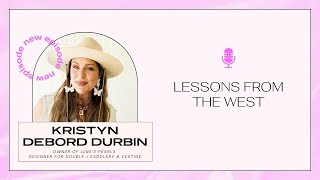
Kristyn DeBord Durbin grew up in her family's Western accessories business Double J and now designs handbags, belts, and Vestige, a jewelry line made from recrap leather. She shares how to survive trade shows on a budget, why handmade quality and Made in Texas matter, and why she's stepping back from travel to focus on motherhood and a new children's boutique.
Chapters
Let's talk about your business strategy and the juicy details of what actually works, from mainstream fashion to fashion on Main street and the entire ecosystem behind it. How do we scale your company and do it with the balance and the happiness that we all seek? Let's hear from those insiders, experts, and strategists that actually make it happen. I'm your host, Ashley Alderson from the Boutique Hub, and I can't wait to chat. Hey, guys. Welcome back to the podcast this week or on YouTube if you're watching there. Kristen, I'm so pumped that you could join us today. Thanks for being on the show.
Yeah, super pumped also to be here.
So you and I were just talking the last time we saw each other. It's been a little bit. We saw each other in person at the NFR with Double J. Your life has changed, changed quite a bit since I last saw you.
Yes, I am my main role now, or my biggest role, I guess, in life now is Mom.
It's a big one. It's an important one. So for those who are listening who aren't familiar with Double J, tell me more about the family business, the history of the family business, and then your role along the way, how you've been supporting the family business.
Okay, so, I mean, I've been around Double J my whole life. 1991 is whenever we officially the year we started business. So, I mean, growing up, I was down there at the factory and in the office doing stuff. In high school, I did some work there. So I've been working there for a long time. Even as a kid, I remember painting the letters on the trophy saddles that we were sending out. I mean, I wasn't real, real little then, but, like, oh, here's.
I think I have one of those Double J trophy saddles from high school.
Like, right out here. That's so funny.
You probably painted that one.
Probably. I mean, who knows? But, yeah. So, yeah, it. It feels weird to like, like, talk so much about my involvement just because I haven't been super involved in the last three years. So it's. Life has been a little different with kids, but I'm fortunate enough to be able to be home with them and taking care of them and getting help when I need it. And I still get to do some things. But, yeah, it's nice to talk to an adult.
Oh, my gosh. I've been there. So I. I know you've got some new exciting things since having kids and now starting a children's boutique as well, but I want to before we talk about the children's boutique, I want to talk a little bit more about Double J and just some of the experience you had because we have so many Western stores inside the boutique hub and Western boutiques and I think there's always so much to learn from your family's business. So if someone doesn't know what Double J is, can you explain more what you guys sell and how it's, how that's even evolved over the years and the different lines that you carry?
Yeah, so I, I remember when I was first going to market, Western wasn't like as cool as it is right now. So yeah, aren't as many young people involved. I was probably one of the only. Me and a couple others were probably some of the only young females in the business. And we kind of with our handbags, we based things a little more contemporary. So we were at the World Trade center, but we were in like the, on 13 where the temps were and we were kind of marketing ourselves as both Western and contemporary. So that, I mean we've always tried to kind of do that. And so it's neat to see, see more people doing that and see Western kind of going into more mainstream and like seeing some of the lines out of LA that are doing like, you know, the whole, the whole Western, like with the fringe and the bling and the Barbie pink and all that, like just loving it. Yeah, just, it's just everything's getting a little louder and more fun. So.
Yeah, I love seeing.
Go ahead.
Oh, I just, I love seeing Western Takeover. So much of mainstream today. That's really exciting thinking about, I mean.
Kind of the reason too, like why you see more younger people just that are into trends and wanting to maybe even start a new business in the Western industry. I like it. I like it a lot. Yeah.
And social media is really aided in that too, you know, I mean, not only has it made Western cool, but there are so many. Like the rise of the influencers in Western fashion has been really something to watch. But also I feel like something that your family's done really well is you've taken products that were traditionally very handmade, labor intensive and you've really like ramped up to create like a multi channel brand. So it's not just saddles and tack and all of that belts, but the accessory line is huge. And then you also have a jewelry line, so you help design for accessories and you have a jewelry line that you design with Double J. Tell me more about that.
Yeah, so it kind of, so I've Always been involved in the designing for the handbags and some belts and stuff. My sister has also. Her name is Shadra. She's. I have to give a shout out to her. She's doing pretty much everything right now. But anyway, I wish she could be on, but she's in Vegas doing, doing work. But anyway, what were we talking about?
Oh, about, about the designing accessory lines and the jewelry.
So that kind of started. We had all of this leftover scrap leather and I was like, man, I really wish there's something cool we could do with this. I just kind of started playing around with it and I came up with the name Vestige because actually a friend of mine helped me also with coming up with that name. But anyway, Vestige is actually a word in the dictionary and it means basically something old that is turned into something new, like revamped and refurbished or, you know, just brought back to life. So that's kind of where I came up with the name Vestige by Double J. So that's the, that's the jewelry line and I get to do that. I have all of my stuff at home. So the girls. Well, my two year old likes to get into it sometimes, but it's, it's still fun. We, I still get to crank out some orders that way. And so still, definitely, still very much working, just not out in the public.
Eye, just in a different way. When you think about designing the jewelry line and helping design the handbag line is huge for Double J. Where do you go to find your inspiration and new ideas?
Honestly, it's hard to say because I just like being around it my whole life kind of is where my inspiration comes from. I may get an idea from like a saddle that we made for Brittany Posey or you know, just things here and there, new leathers that, you know, come out. I just, I usually take a look at those and say, you know what, this will look good in this shape. Or you know, our customers actually are, are good at voicing their opinions on what they like. So we try to pay attention to that and then, I mean, just paying attention to trends. You know, I, I'm a girl, I'm a woman, I like to shop a lot. So I pay attention to patterns and clothing and color schemes and just stuff like that.
I love that when you think about all of your time going to the NFR and setting up with shows with your family, I know you've taken a break from that now with kids at home, but I wanted to ask you this because I feel like I see this Question a lot inside the boutique hub. Specifically, what advice would you have for people when they're contemplating setting up at a show and how to make setting up at a show successful?
So I think the biggest struggle with setting up a booth in Vegas is the amount of money that you spend going out there. So flights, you, those airlines like to trick you into spending all this money, you know, on certain days that are so obviously everybody knows that, but try not to, you know, try to keep your staff there instead of flying people in and out, which we get put in a pickle sometimes and have to do that. And. But just I think money wise is a big thing for people because if you want to be successful, you want to make money, then try to keep your, try to keep your costs down.
And.
Maybe we rent a house and we cook at home in the evenings, you know, and everybody can go do their own thing, obviously. But that's usually, that's what we have done over the years. And my brother Josh does a good job of coordinating all of that for us. He's. He's. He'll be. Yeah, we went out there to set it up this year and my sister will be out there majority of the time. But other than that being successful, I feel like if, if you're new and you're wanting to brand yourself, then just being out there in general is great because you get a lot of traffic and it's a great time of year for people to buy, just in general, because it's Christmas time, people are out shopping and spending money, and it doesn't hurt that there's alcohol flowing and they're in Vegas having fun. So everybody's in a great mood. But yeah, I mean, I recommend it to set up a booth there. You just have to try to keep your cost down. Absolutely.
You said something that I think is really important, that you guys have done really well as a family, and that's branding yourself. There's all kinds of people who make leather products.
Right.
There's all kinds of saddle makers, jewelry.
Even more now.
Yeah, even more. But you've created a brand that's stood the test of time, and that is a bit of a household name in the Western industry. Specifically. Are there things that, like, jump out at you as you think about things your family's done or things you've been really intentional about that have helped you to build that brand name over time?
Oh, for sure. Just staying true to who we are. Which is made in Texas, handmade. Just the quality is so important to us. I think that is probably the number one thing that has made Double J successful is just the attention to detail and the attention to quality. And I mean, we hear it from our customers all the time. Like, I've had this built for, you know, 15, 20 years and look at it, it looks brand new. And we're like, yeah, you know, we love hearing stuff like that. So I, I think that's, you know, the key. Because honestly, a lot of other brands out there that do leatherwork, I feel like they can't really touch us in that area of expertise just because it's, most of it's not made here or a lot of it isn't. A lot of bigger brands and even some that aren't so big they are able to source their work elsewhere in other countries. And I just don't see the same quality because the communication isn't the same, you know, being able say, hey, you know, this is wrong, this needs to be fixed. This is not the quality that we're looking for. You know, we want to make our customers happy. And the pride and the pride that everybody has in our factory can tell they feel the same way too. So all of our workers, it's so important to them because, you know, it's their job, it's their livelihood, and it's ours too. Yeah.
You know what's interesting about that, I think the Western side of retail industry knows this so well. And I wish sometimes just apparel would pick this up from Western. And that is cheap's not loyal.
Right.
There's a lot of people who want to carry products in their stores and they're price conscious. Right. I want to bring in a cheaper belt. I want to bring in, you know, something that's sourced overseas, whatever. But at the end of the day, like, the consumer isn't loyal to that. The consumer's loyal to quality and they're loyal to a brand name. And in Western, you know, you see people like, yeah, you might spend $20 on a crap T shirt, but you're going to spend $300 on a belt and you're going to spend several thousand dollars on a nice saddle. Like in Western, we take it very seriously. Do you think that there's other things that non Western retailers could learn from the Western industry?
Yes, absolutely. I mean, everything you just touched on, they can learn for sure. I, I think it's to me, like, it's a whole different world getting into the boutique ownership with the clothing, because I mean, it's, I, like, I wish there were more spin mills in the United States because I would totally support 100%, all of that. But it's, I mean, it's, it's hard to compete in the clothing industry, I feel like, with, with all of that. But I'm, I'm new in all of that area. But as far as the western industry goes, yes, I think there is a lot to learn. I think some people in the western industry need to learn more about quality also and less about knocking other people off. That would be great.
But let's talk about that. Let's talk about that because that's a big deal and that in the last year.
Kidding. But no, it's something that, yeah, we've dealt with like our entire time of being in business. Yeah, it's, you know, I always get told like, oh, you should be so flattered. Like, but it just, it's not, it's not flattering when people take your hard thought out designs and you know, try to do the same thing. It's just, it's, it's repulsive in a way to me because it's like, you know, where are your morals? Like, didn't your mama raise you better than that? Yeah, yeah. But yeah, it's just part of it.
I think everyone who's listening, Kristen is like shaking their head because everyone deals with this. You know, whether you're a boutique owner that gets your ideas knocked off at the boutique hub. How many times has my own content been knocked off and all of your leather work.
Right.
And there's people that are just flipping that like crazy. I see it all over markets all the time. What's your best advice of how to just rise above that?
Had some boutique owners, they're like, hey, you know, so and so's like making your clutch organizers. I'm like, yeah, yeah, I do, yeah, I've seen it, you know, and you have a choice. You can either buy the crap or you can buy the quality. And you know, it's just depends on what kind of name you want for yourself. What kind of name do you want your business to reflect when you are, when you're selling.
So that's perfectly said. Definitely. You're going to build a reputation around that, right? Yeah. Tell me more about you. So having kids, having two little girls and transitioning a little bit out of your role. I mean, you're still busy designing, but not on the road as much as you were with Double Jack, deciding to now start your own new venture. Tell me about starting the children's boutique.
Well, I have two girls and I think like any mom that has girls I love to dress my little girls up, and I think they love it, too. At least my 2 year old, I know she really gets into it, or she's, you know, starting too. But I. That's kind of where it all started. When I found out I was having another girl, I was like, man, I'm gonna be spending a lot of money on clothes. And now I spend even more money on clothes. But. But I'm, you know, things are starting to take off. They were a little slow at first, just because I one, I started off in the summertime, which is like, that was, you know, that's like the deadest part of retail. So it was a little discouraging at first, but my husband's a good chance.










