Mastering the Art of Boutique Ownership: A Deep Dive into Niche Markets and Online Expansion
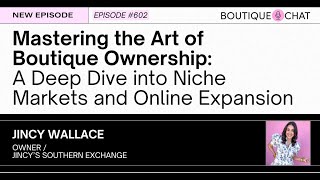
A conversation between host Ashley Alderson and boutique owner (Ginsey) about building and scaling a small-town boutique (storefront + ecommerce). Key themes: discovering and narrowing a target customer, keeping brand consistency (visuals, voice, in-store service) across channels, practical tech stack (Shopify, Klaviyo, specific Shopify apps), inventory and buying workflows (weekly launches, unallocated racks, shared inventory for online + in-store), and hiring/delegation challenges during growth. The guest emphasizes community, ‘old-school’ customer service, and using profitability reports to inform buying.
Chapters
Foreign.
Business can be a lonely game. But it doesn't have to be. Welcome to Boutique Chat where we explore community over competition and how to scale your company with the balance and the happiness that we all seek. We'll hear from product based businesses of all types, retailers, e commerce and wholesale brands, along with industry experts shaping the future of our industry. I'm your host Ashley Alderson from the Boutique Hub and I can't wait to chat. All right, guys, welcome back. This week you just look so pretty. We're so lucky. If you guys are listening to the podcast, it's one thing, but if you're watching the podcast on YouTube, it's another gen Z. Thanks so much for being here today.
Thank you. Thank you for having me. It's Wednesday, so we shoot pictures, new arrivals on Wednesday. So worked out how many boutiques accordingly.
How many boutique owners can relate to that? Like you get photo shoot me day and then you get like sweatpants and a hoodie day.
That's it. Then you get like, Aaron, run an outfit the rest of the week. Doing all the things. Exactly.
Well, I have wanted to have you on the podcast for a long time because when I think of you, like when I think of you and your brand, like a very specific image pops up in my mind. So I always admire you for the way that you have just really identified who you are and who your customer is and how you present yourself online. And I haven't got to come to your storefront, but I have a pretty good idea of what that's also like. So I'm so excited to dig into your business today and for you just to share your story and for us to learn as much as possible together. So why don't I turn it over to you? Tell me how you got into this business.
Yes. So I love that. Well, first, thank you for having me. An honor to be here, but yes. So I opened my storefront in August of 2017 after. I don't know if you know this or not, but I got my undergrad and middle grades education and taught fourth grade math for two years. I did not know that. I did. I hated it. And my husband, my second year teaching. I was getting married in June and I told Scott, I'm like, look, I don't know what I have to do for 30 years, but it is not teaching school. So I at the time was monogramming. Imagine that. You remember the days that we were putting monogram on literally everything. So I had a few commercial embroidery machines and I monogrammed. I was Teaching school during the day. And I had taken over my mom's dining room with my machines. And so I was monogramming until super late at night every day. And it was just kind of like, you know, this is. Teaching's not for me. I'm just kind of feeling led to my community. I'm from a small town, literally one red light population like 2300. So one red light town in south Georgia. So I just wanted something in our community, like, you know, a place for grab a baby gift, grab a shower gift, you know, whatever it is you have going on. And then that kind of turned into boutique clothing. And I kind of found the world of boutique clothing. And I think over the years, we've just kind of found our, you know, our niche and like, who we cater to. And so boutique clothing is our bread and butter now. So here we are.
So take me back to those early moments because I'm sure when you first started, your brand had a little bit of an evolution, right when you were kind of figuring out, yes, tell me about the early days and how you felt at that time. You really narrowed down who your customer was and how you gradually started to shift until you really felt soft it in that.
So I actually, I think this is like still a work in progress. But when I initially opened, I felt like, okay, I gotta have something for everybody in my store. Like if a man comes in, I need men's clothing and I need a baby onesie to put, you know, a monogram on. And we need baby gifts and we need some home decor, and, you know, we need kids clothes and we need all the things. We got to have something for everybody. You want to have something for all ages.
Yeah.
And I think over the years I have learned that you can't cater to everybody. You, you know, are a little more successful when you figure out who your customer is, who she is, how old is she, you know, what does she like, what's her personality? Like, what's her style? Does she have kids? You know, all the things and cater to her. So we do that. We do still carry men's. Men's is about a third of our storefront, and then it is online. It's not our bread and butter. I'm totally transparent there. But we do have it. Again, we're in a small town, so you have to kind of think there's. There are places in our area, but like, our towns are so spread apart that like, you know, we tend to be a destination store. Our storefront does. And so we do have Men's clothing in our storefront, but it definitely matches the vibe. And our men's clothing caters to men who, you know, are husbands of these women that, you know, she is our target customer, but our as far as women's goes. So our boutique clothing, we tend to be fun and full of color and, you know, we may style things that somebody else may not. And, you know, it may be like, oh, I don't know about wearing that, but that's cute how they put that together, you know, so bringing some style to our small towns. And then in our storefront, we have, you know, gifts that sit well, that are fun and happy, that sit well and kind of match the vibe of our clothing. So here we are. We have evolved, like you said. So I love that.
I love that you said it's a work in progress always. I think that's a real conversation for people. You know, your customer changes over time, and your taste and your own life experience changes over time. So tell me about. I know you have, like, such an authentic brand, right? And you just, like, speak to your customer, like, she's your friend on a daily basis. Tell me about how you gather, like, just data and information from your customer, you know, to stay ahead of how she's changing. Is it that you have a lot of conversations in Facebook groups or in Instagram stories or how else do you get just customer feedback so you can use that in the buying decisions that you're making?
So, like you said, and well, we both said it is a work in progress and it's ever changing and evolving. And I think, you know, trends evolve over time on their own, you know, without our own personal style changing. But I think, you know, me, like, when I opened my store, I was young, you know, so it was like, oh, like, I'm finding these things that I like, but, like, okay, well, my age person is not my target customer, you know, so I think over time, you know, you find like, who. Who you're catering to. How old is she? And like I said, you know, all the things she likes. Her personality, does she have kids? Does she work? And so you just. Here at Ginsey's, we. Our target customer is a working woman. She typically is a mom. So we mainly sell, I like to say, easy to style and easy to wear clothing. So, like, most of the things we sell, like, they don't require a lot of indepth styling. Like, they're super easily styled. Anybody can do it. And, you know, you look complete. And then typically, things that are, I'm gonna Say on trend enough to like, wear to date night on the weekends, you know, that you love. And they're cute enough to wear on the weekends, but then also conservative enough to wear to church and to work. So over time, you know, styles change on their own. And we just, we know who our customer is and we know, like, where she's working, she's in a small town, and we just. Yeah, we try to cater to her.
I love that. And you've catered to her in person in your storefront, but you've also done a great job of transitioning your business online. Tell me about that process, about you going from storefront to also having an online business. How did you keep your brand so consistent across both that now you've started to attract women from outside of your local area to shop online with you as well.
So I am a big believer in just like old school customer service. Hey, how are you? High fives and hugs. And I'm gonna hug my customer's neck. Like, sorry, if you're not a hugger. I am. And you're gonna hug me. No, I'm joking. But I mean, really, you know, making everybody feel like there's somebody when they come in your store and outside from the happy clothes, like, you know, we're a safe place where your people. I want you to love what you're wearing. And so taking that online, I feel like we do that in the form of like imagery through product pictures. And then our print that we use, it's like our logo, our floral print that we use. I don't know if you know this or not. We have a boutique truck. We have like a picture like UPS truck, box truck, like old red truck. No, she's super old. She's like as old as I am. We call her Barbie. But anyway, she is wrapped in this big, beautiful floral pattern. Anyway, so that's the floral pattern that's on our logo. So those colors, like through product pictures and imagery and all, and those colors of our logo, I feel like, you know, you take all that online and people and our customers online who, you know, are craving that experience, it's like, oh, wow. Like, these are my people. And I can tell these are my people, you know, even again through know captions and text and pictures and color and graphics and all the things. So isn't it funny?
I always feel like when you target everyone, you reach no one, right? So when you choose your just your brand, colors are so important. And that print, I love that. That's like your statement because it's either going to attract a hell yes or it's going to repel a hell no.
And that's perfect.
That's what you want because your customers are going to be even more loyal to you because you feel like, oh man, that is 100% for me.
That's it. Yeah. And then I think we keep, you know, kind of piggybacking on that. You know, you keep customers coming back through that old school customer service that I told you about and kind of also piggyback on like taking that from in store to online. You know, in person, it's so easy to just carry on a conversation with somebody, but then when you're talking to somebody online, like things are so misconstrued, like when you're talking via email or text message or know, social media DMS or whatever that looks like for your business. But so, you know, we try to keep our brand voice the same. You know, they're the same that we way we talk to customers in the store and the same, you know, happy tones in our captions. And then you also get those same tones like if you call the store or send an email or a social media DM or whatever that is. So yeah, I feel like it's maybe.
A common misconception for stores that are brick and mortar that then transition to go online, that if I just build this website, they'll come, you know, I'll just build it and people will find it and then I'll be like selling online. But I love that you said all of that because to me, it's almost like you have to physically walk through the front door of your website every day. Just like you would walk through the front door of your storefront and make sure in every single nook and cranny and corner of your website and your email marketing and your social media, it feels identical to how you would feel in your storefront. How have you, like, when you think about all of your social media marketing and your email marketing, where else have you really made sure you injected your brand voice? So you were, you know, serving those existing customers, but it was also helpful in attracting new ones.
So I think, you know, obviously social media is like such a beast in itself, you know, and so outside of like typical customer service, outside of emails and things, you know, it may be a Facebook group or it may just be our Facebook page or our Instagram page, but nonetheless, like when you click on our Instagram page and you see all these little square thumbnails and you're like, man, and I feel this way. So I, I really hope that other people feel this way too. You know, you're like, man, this is happy and this is my place. And look at these clothes. So just social media in itself is such a. I don't. It's not easy. I should not even use the word easy. But it's just such a good place to, you know, if used correctly and used consistently, it's such a good place to find more of those people that you want.
Yeah, it is. Especially for a brand like yours. So, you guys, if you're listening, we'll link up gen's all of your links in the show notes. But seriously, go to her Instagram because you're gonna be like, oh, immediately, I get it. Like, you immediately have a reaction when you see it, which is so powerful. And I, I just hope that for everybody, everyone should have that same, same opportunity to stand out like that. So let me ask you this. I'm going to call it a red flag question. When people say to you, what's the secret to your success? What do you say?
You're right. That is a red flag question. Okay, here is the secret. This is the secret sauce. The secret sauce is that there is no secret sauce. There is no one thing that I can tell you to do that you should implement today. Because it is just a combination of all the things. I cannot tell you that any of the success I've had can be attributed to any one thing. It's a combination of all the things. Social media, email marketing, automated email marketing, customer service, telephone customer service, in store experience, you know, product imagery, SEO, maintaining a website, inventory. I mean, the list literally goes on. I could just rattle off things as long as you wanted to listen, but, like, it's a combination of all those things and doing all of those things consistently and doing them well. I mean, again, no secret sauce. I wish I could tell you there was secret sauce. I wish I had found the secret sauce years ago. But it, it's ever evolving and it's ever changing and those things are always changing, you know, so there's always new things. There's always things to get rid of that aren't working anymore. All the things.
I love that because I, I totally agree. And that's. You and I were talking about this earlier. Just. I get this question a lot when it comes to the hub or, you know, retail boot camp. Like, people want to come in and just say, what's the one thing I should do? And, you know, unfortunately there's. There's only the things you already know. You need to do. You just need to do them. But I love that in this conversation you led with knowing your customer first. And I think that, you know, if there was a secret to me, like, that's the secret, that's the foundation, is you always have to lead with your customer and inject that brand wherever you go. But then it's just taking one bite at a time and learning a little bit more about inventory and learning a little bit more about SEO and learning a little bit more about, you know, events and experiences. So when you are starting to just grow piece by piece, both brick and mortar and online, there's only so many hours in the day for you to do all this.
Yes.
How did you start to ask for help or delegate or build a team so that you could take on and learn a little bit more and then pass off for someone else to own the thing that you just learned?
Man, that might be. That might be worse than the red flag question. I feel like those of us who, you know, have built our businesses from nothing, there is such value in that. Like, but they're also. With that comes a little bit of toxic, if you will, because, you know, and I own that. But it's like, well, hold on now. My name's on it. We have to do it this way or I have to do it so that I know that it's done correctly. But after we. We opened in 2017 and launched online in 19, and I don't think I told you this, but when I initially opened, I only opened in 600 square ft, and of that, 600 square feet was a storage room and a bathroom. So not even 600 square feet. And I rented that unit. Yeah. For two. Two years and two months. And in October of 19, I bought our entire building that we're in, which expanded our storefront tremendously. And then we also gained a ton of warehouse space. It's all under one roof, but it's divided off. And I say all that to say, when I bought the building and we expanded over and we were online, and then that following spring is when the world shut down, God forbid. You know, after all that happened and we started to see growth through Covid, it was like, man, we've got to do something. And we have folks working for us. My. My cousin Melissa, she and I are more like sisters. She kind of serves as our operations manager, if you will, and kind of like our cfo and honestly, a doer of all the things, you know, just a total godsend. But so it was me and her and Then of course we had our part time workers but then we started to see growth and it was like, man, we can't do all this. We've got to have people and, and we've got to delegate out tasks. And slowly but surely over time I feel like the Lord has sent us the right people and we have been able to delegate out things to other staff members. So you know, it was like I learned how to input inventory and you know, all the things that that entails. And so now we have a team of girls who input inventory for us and then, you know, we packaged orders and you know, we still do these things if we have to fill in. As a matter of fact, yesterday our customer service manager, Gloria, she was out and so I filled in for her and shipped packages and answered emails. Yesterday, thank God I had a low key day so I was able to do that. But you know, so we have her and she handles all of that. And then we have another lady who intakes our inventory and barcodes everything and checks, you know, sales orders and invoices and quantities and reconciling all of that and keeping it straight. And so, you know, I, I try to be a help to everybody but I also, you know, have tried to give these tasks off and I trust them. We're able to go to market and I'm able to go on vacation or what it is. And so, you know, over time these girls have, women, actually, they're not girls or women have, you know, invested in my business with their time and energy and learning and I have to trust them. And that's hard. But as long as, you know, somebody can tell me why they did something a certain way, then I'm fine with that. You know, so it's hard, but it is. And it's ever evolving, it's ever changing. You know, we want to keep people around, we want to keep our strong staff here. But I recognize, you know, everybody can't stay an entire lifetime. It's not a career for everybody. So anyway, they're here and they're doing it and I think that's hard to put trust in them, but we do.
So yeah, you, but you've built like as a leader, it says a lot when you have a team that wants to stay right and that you've, you've delegated to, but you've empowered them to not only find success but to make mistakes along the way and you know, just help correct them when you need to so that you have the ability to, like you said, go on vacation or go to market or have a life besides as well. All right, so for those who are listening, I always get these questions. So I want to make sure I start passing them off to guests more often. But let's do the tech stack. Let's do some like lay of the land stuff. So tell me, what point of sale system are you on?
We use Shopify for everything. Shopify powers our point of sale. And then of course our online, our website is powered by Shopify. So everything integrates together, you know, as far as inventory goes. So that's convenient.
All right, how about email marketing?
I don't know if you pronounce it Clavio or Klaviyo. Nonetheless, some people say one and some people say the other. And I'm just torn in between and I'm like, yeah, that's who we use.
You know what? Boutique. Boutique. I think we could argue about that.
Oh yeah, there you go.
All right, so using Shopify, I know a lot of people listening use Shopify. So let me ask this. If you could pick like your top three must have Shopify apps.
Oh, wow. Okay. So number one I think would be what's called order printer templates. So you know when you get a pack and slip in the mail.
Yeah.
And it's just a typical Shopify pack and slip.
Yeah.
And it, you know, it's kind of boring, whatever, but it gets the job done. We use those for years. If you're using that, there's nothing wrong with that. But we use order printer templates and so you're able to go in and like control what shows up on the template, like the amount of orders the customers purchased. You know, it puts your SKUs on there. So if you use bin locators, shipping address and billing address, their contact info is there. It's. So for whatever reason, when you're packing orders, you know, you have all that info right there without having to go back and search for the order and all that. So order printer templates. Secondly, we use Power tool suite and through. It's basically like an automated system. It probably does way more than what I am aware of. But what we use it for is like categorizing things on the website automatically. And it like creates collections for you, like brands and vendors and stuff. And it has like, I know it has a world things that I don't even know about. We recently implemented using like an automated removal. So like when something sells out, you can like put a timeline on it and it auto removes it from the online store so that you're not having to run maintenance on, you know, sold out items. My third one I think would be we use something called apicon back in stock. So it's like a restock notification app so customers are able to sign up for notifications in the event that things get restocked. So we love that. Years ago we were with comments sold and so we had the ability to wait list and pre authorize things and so we lost that when we left comment sold. So this kind of fills the gap and we're able to like run a report or I can go in and look at any time, like if something sells out and see who and how many and what size things have been requested. So I would say those are my three.
Those are really good actually. So two of them I did not know about, so.
Oh, what did you not know about?
Add these to my own personal list. That's so good.
Yeah.
Have you decided to attend the Boutique Summit yet, you guys, this is our industry's biggest business conference and in person gathering for you to learn from all of the top industry experts, top retailers in home and gift, top retailers in e commerce stores in apparel, and all kinds of industry experts. I hope you join us June 9th and 10th in Dallas, Texas for the Boutique Summit. Plus, you guys, John Acoff, he is our keynote speaker this year and he's one of my all time favorite authors and he's going to be doing deep dives on leadership just for you. You guys, I want to get you something special. So here is a fifty dollar off per ticket at checkout coupon that you can use just for listening to the podcast. Use summitcast at checkout when you're purchasing a ticket to the Boutique summit and get $50 off per ticket. I've got those links linked up to you in the show notes. So let me know if you've got any questions. But I can't wait to see you at this year's boutique summit June 9th and 10th in Dallas, Texas. Okay, so next question. Again, just I love hearing every single retailer take their own spin on things and what their process is for things. So I know, you know, you're great at buying, you're great at ordering, you've got great selection. Talk to me about your process when it comes to, you know, going to market and buying. What reports, what inventory reports become most important to you on a regular basis that you feel like help you be a better buyer.
Can I tell you something? You're really stepping on my toes with this because this is something that's on our list to get under Control. Shout out to mary@management1, because you're also on my to do list to call up. So it's like. And we have seen growth. Okay. Which is, you know, I'm so thankful for. But over time, we have just been on a steady incline, and for that, I am so thankful. But it's like, we've never had to have. Yeah. Report it. We look at reports. Don't get me wrong, you know, I know that boutique tops is our top selling category. Denim is high. Dresses are high, Specifically midi dresses. You know, I know those things. But, like, I don't take reports and things with me to market. It's just like, okay, I know that this is a top selling category for us. And as far as buying goes and deciding on something, when I'm, you know, at a vendor or meeting with a vendor, I can pretty much tell you, like. Like, I like it. But if we're having to stand here and decide about it, then the answer is no. So. And that has helped us over the years because it kind of went from, like, buying everything we loved to, okay, no. If we're having to have a conversation about and decide about it, then, no, we're not. We're not ordering it. So I think for us, it's a matter of how heavy and how deep to order something. So again, you're stepping on my toes. Because we don't take reports to market. It's just kind of like, order all the things. No, I'm joking. We don't order all the things, but we do a good job. I feel like it goes back to knowing our customer, and I feel like we know our customer, and we know what she's gonna buy. And I feel like we have a good hold. We do have a good hold on, like, how big our customer base is at this point currently, you know, and what they can withstand. You know what I'm saying? Like, I can't buy so much. Like, I don't have. I don't have a million people in my customer base, you know, So I don't have. I can't have unlimited supply of something. So there's. There's value in knowing when to cut things off and knowing, you know, if you're on the fence about it in a certain amount of packs or whatever, you know, there's value in things selling out. So. Yeah, you know.
Yeah. I think it's so good. I'm so glad I stepped on your toes.
You did, because I'll move that right on up my to do list, too, to call Mary Well, I know that.
There'S so many people who are listening and they're like, I love her honesty because I think that like on a growth period, if I think about like most common boutiques that I know that have had growth, there is a certain period of time where a, you're just either like figuring out your customer and you're testing, but then once you kind of nail that and you know, like, okay, this is my girl, like, you have a lot of just gut instinct that's going to lead you in your buying and that gets you so far, and then you can go, you know, a step further with management one or with whoever, you know, to really dig into the reporting. So, yeah, there's, there's value in your honesty there. But let me, let me just like take it back a notch then. So let's just say it's a random week at Ginsey's and you're like, okay, it's a date with my books, it's a date with QuickBooks, it's a date with my inventory. What reports are most important to you just to like gauge the overall health of your business?
I was actually looking last night at one of my big things for this year is profitability. I feel like so many of us just spin our wheels and spin our wheels and spin them wheels. And it's like, what the hell are we doing here? Like, hello, like, we deserve to make a profit at the end of the year too. And so last night I was actually looking like at a profits report and the specific one that I was looking at broke it down. And I was looking at last year, so 2023, but I had sorted it by product. And so this report gave me, like, which products provided us with the most profitability with the highest profit margins. And so I was really like, wow, like what? You know, and, and some of the things on the, on the report kind of caught me by surprise. And I was like, oh, okay. So going into apparel show next week actually, you know, it was like, oh, okay. And so I would say for me, and I'm a very numbers driven person. Yeah, Like, I'm one of those people. And I want to see results also results driven. So, like, I want to cut the grass because I want to see that it's being cut. You know what I'm saying? Like, you like to cut grass because you can see the results. That's me. But so seeing that profit report.
Really.
Was like eye opening, like, and when you break down things like that, which is why I feel like I need Mary in my life because I know that tops are best selling. But she's probably going to dissect it even further than that. It's like, when I broke down that profitability report, some things did not that I thought were great, and they weren't. And then some things kind of took me by surprise, and it was like, wow, we should really put some more focus into things, you know, blah, blah, blah. So I guess for me, I'm numbers driven, so give me the report that, you know, breaks it down black and white.
You know what's so helpful in that is, you know, I think we're definitely very like, right brain, left brain. Some people are more creative. Some people love numbers more. I think that if you don't love numbers, the way to get to love them is when they tell you a story that goes back to allowing you to do something creative. So when you have those reports and they. They give you a clear path and you can take a story from them, then that means, oh, I get to go buy this. I get to go do this marketing. I get to go merchandise my store in a whole new way. Like, there's a lot of freedom and flexibility that come from just letting those numbers tell a story. Would you agree?
Yeah. Fully agree? Yes. And then talking about telling a story, like, the numbers tell you a story and you start to understand things, but then also back to, like, the trends and, like, who your customer is. Too piggybacking on that. And I feel like when you start to see upcoming trends, then, like, for us specifically, we start to, like, build collections. And I know, you know, whatever she noise reprint and tool and bows and pastels are gonna. You're gonna see a lot of that from us this spring. So when you start to kind of see trends and you start to tell the story and, you know, the story being through prints and patterns and trends, but also through numbers, because you know that you need a lot of dresses and you need a lot of tops, if that's what you sell. Well, you know, then. Then when I am doing my buying, then it's like, oh, man. Well, I know I want to do a, you know, whatever, a pastel collection. So this is going to fit perfectly in that, you know, and now I need a bottom to go with it, and it all kind of comes together through everything. So.
Yeah, that's so good. I would love to hear your inventory process for, like, how do you decide what collections you're going to launch and when?
And then when.
When you launch them, do they go online first and is it Separate inventory for in store or what's kind of the flow and like your process for all of that.
Okay, so when we order things, and this is something too, that like, is on my radar for this year, just being totally transparent is like, it's hard also to manage inventory in the sense of that when you buy something from a vendor and it has totally making something up here, a 1:15 ship date.
Yeah.
And they shipped it to you December 1st. Right. And so if you're not currently operating that far in advance, you know, you're sitting on this inventory for two months or even longer, whatever, until it's appropriately timed to launch it, you know. So for us, we have what we call unallocated racks in the warehouse. And so Ms. Angie, that's who intakes our inventory. When Ms. Angie intakes inventory, as she checks the invoices, she pulls model samples and she hangs them on this unallocated rack. And then we typically, again, seasonally appropriate, go behind her and kind of she just hangs things on the racks and puts shoes. We pull a shoe sample too, so that we know what shoes we have unallocated, and we kind of go behind her and move things around on the rack and put them. We have like little rack clips. And so, like right now, currently, we have like a green St Patrick's Day launch that we'll probably roll out in the next week or so. There's like a pastel collection building different things, a neutral collection, you know, as we order things. And you know, when you go to market, you talk about these things like, like I mentioned earlier, and you're kind of buying with those collections in mind when they start to come in, you know, you hang them up there. But then you run into things like, oh, like we personally at Genti's do plus size if it's available. And it's so hard, you know, but we try to find things that are available in regular and plus size sizing. But then we run into like, well, we got it in regular size, but we haven't gotten it in plus size yet. You know, we know it's coming. So then we hold on to the regular one or the plus one, whichever comes first, until we have the full size run here to launch, but those hang there and then we decide what we're launching. So, like, once we have, we launch new arrivals weekly. So we typically shoot on Wednesdays, you know, whatever day of the week it works for. But whatever, we pull our launch and then everything obviously gets steamed, it gets styled, we shoot everything. And then those items like Live in a bin. And then you asked if it hits online first or if it hits the storefront first. For us specifically, we are just at a point in business where I have not decided yet to separate online inventory from storefront inventory just because storefront is like its own beast and so is online. And I recognize that that would basically require two separate staffs, like, integrating together as well, like two separate staffs to manage each set of inventory.
Yeah.
So we currently. And thank God we're under one roof here, so that works for us. We just are separated by a door, so it's easy. But inventory lives in a bin. And then it does launch online before it goes to the storefront, typically. And that's only for inventory error purchase purposes. So after, you know, we launch initially and the bulk of that launch selling will happen that night when it launches, we can typically tell you, like, which things are going to blow out and, like, what's not, you know? Yeah, but so then after, like, orders are all fulfilled, like, the days after the launch, then, like, I hate to say what's left over. That sounds so negative. Like, we do try to buy to accommodate for both online and in store.
Yeah.
But then those things go to the storefront and we don't put them there yet. Only to. If we run into an inventory error with packages, hopefully we can fix the inventory error for the order before it goes to the store. Because if we had put it in the store first and then an inventory error occurs. Well, a customer's bought it and it's gone. And I can't. Obviously, I can't call her up and be like, hey, I need you to bring that back. I had an inventory error. Somebody else bought it before you, you know, so we try to alleviate that with not putting it in store yet. So that's it. That's really sore. And, yeah, it's loved on there. So that's.
I feel like that's the question that most boutique owners want to know about one another, but we don't get to talk about it enough. So I'm sure. I'm so happy that you shared. So helpful. Well, Ginsey, this time together has absolutely flown by today, but I have one. I have one last question. I always have one last.
Okay, okay.
So you have built this incredible business right in this small town. You get to work with your family and, you know, just like, really build this beautiful thing for your community. But let's fast forward 20 years, 30 years down the road, and, you know, you're. You're on a front porch Somewhere with family and friends and you're looking back and thinking about this business you created and the life that you lived. What's the thing that you want people to remember most about who you are as a person and what you created in this world?
I love when you ask people this. So when I listen to the podcast, I love when you just lay that out and you're like, oh, you know, picture it. You're old and you're on the front porch with your coffee. I love it when you do that. But no, so I think ultimately, you know, being from a small town and being part of such a tight knit community, you know, you want people to know, you know, that what you've done in the community and for the community has been good and it's been done right and, you know, for people and by the people. So, you know, I hope that people recognize that I just strive to bring, you know, some livelihood and some, some life to our small town in the form of, you know, for us, it's clothing and gift buying and having a place where they can come and feel confident in their clothes and what they buy and then, you know, buy a happy gift and be able to, you know, share those happy giftables, you know, to their friends or to their family as a pick me up or whatever. So just knowing, you know, that we played a part in the community, you know, in the peak prime of our life, and that it was done well and it was done right. So I love that.
Creating a memory with people, creating some emotional longevity.
That's right.
Well, thank you so much for being on the show today and for being a part of the Hub. You've been a part of the Hub for a long time and like I said at the beginning, I just really admire all that you've done and all that you built. I know this has been helpful for everyone listening today. So thanks again for being here.
Yes, well, thank you for having me. I have enjoyed it and again, I'm so honored that you had me. So I enjoyed it.
Thanks for listening, guys. I hope you took away all kinds of nuggets and new ideas from this week's episode. Don't forget to subscribe and leave comment. A a rating and review. We love to hear your feedback and give you a chance to be featured on the show each and every week. For more information on our spirit of community over competition and to access guest downloads and bonuses and all the resources we talked about on the show, head on over to the boutiquehub.com and join the community. We'll see you next week.










