Simplifying Banking and Small Business Loans with Tracey Smiskey, Northwestern Bank
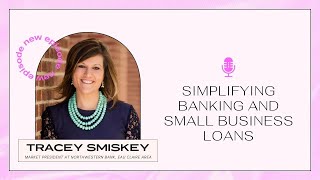
Tracey Smiskey from Northwestern Bank talks with Ashley Alderson about what small business owners need from their bank. They discuss building local banking relationships, managing credit, and protecting against fraud in retail.
Chapters
Let's talk about your business strategy and the juicy details of what actually works from mainstream fashion to fashion on Main street and the entire ecosystem behind it. How do we scale your company and do it with the balance and the happiness that we all seek? Let's hear from those insiders, experts and strategists that actually make it happen. I'm your host, Ashley Alderson from the Boutique Hub and I can't wait to chat. Hey, guys, welcome back to the podcast. This week I this is kind of like old home week a little bit. I have not got to see my friend Tracy Snisky for such a long time. So I am pumped that this podcast episode is working out a little backstory. Tracy and I used to live in the same town. She actually is from the same town that Beth on our team is from. There's so many different connections. We used to run around together, our kids hung out together. And now since I've moved, I've never get to see you. So we're going to have to catch up offline. But we've got lots of business to cover today, right?
Absolutely. It's great to see you.
So good to see you. So Tracy has an incredible banking position in Wisconsin. And something I've always admired about you, Tracy, is you're just so community minded. You're small business minded, you're growth minded, you're so approachable. And when I think about one of the biggest struggles I see happening in our industry today in retail is I see that there's such a need for capital, but so many small business owners don't exactly know how to go about getting, getting it in a safe and effective and I would say cost effective way. And I'm going to kind of put my, like, stake in the sand a little bit. If you're a member of the Boutique Hub and you're listening to this, you've heard me talk about this. I am not here to shame anyone if this has been you, because there's no shame in, you know, how you do your business. But there's been a lot of pitfalls with retailers getting stuck and getting underwater with Shopify Capital, PayPal, Capital terms, I mean, any type of online lending or you don't actually have a banking relationship. Again, if it works for you, awesome. I've seen success stories, but I've also seen a few horror stories. And so I wanted to use today with you, Tracy, just to break down the barrier of what does it mean to actually have a banking relationship in your community or with a local bank and how can small business owners really have a more effective relationship versus what's happening with these online lenders? Sound good?
Sounds great. And thank you to all of the small business owners that are part of the boutique hub and that are running these successful businesses. Because honestly, our communities are only as strong as our small businesses are. So thank you for being brave and bold and being business owners. And wherever you might be located, as Ashley mentioned, it is very important to try to have, I like to say, a banking partner or if it's a credit union or someone who's on your side to keep your financials in order. And I like to say that we're a partner. We're not doing the hard work that all of you are doing on a daily basis and trying to spend hours upon hours running and operating this business to the best of your ability. But we like to come alongside our business owners and try to help them to be as successful as they can be. And a lot of our business owners are wonderful at running their business and the conceptual, creative of their business. But when it comes to financials, a lot of people want to, you know, I don't like this. This is not my zone of genius. How can I find somebody that's an expert to help me with this? And that's what I hope we can talk about today.
I totally agree with that. And I kind of equate it to going to the doctor a little bit. Like sometimes we don't want to go until it's almost too late and we're like, oh crap, I really need help. It's the same with probably attorneys and many other things. But when I think about, like your relationship with the bank, I think you have your team. Right. As a small business owner, you have your employees and your internal team, but every business owner has to have an external team that surrounds them and supports them. But we have to, like, have, you know, checkups to make sure we're healthy along the way before things get out of hand. So in your opinion, Tracy, how can somebody just get started with a banking relationship? What does it look like to have a banking relationship beyond just lending someone money?
Absolutely. There are associations in every state. So there's a banking association or a credit union association. And if you're looking for more of a community minded institution, I would have you start there and you can kind of see in what area that you live in and what are some good financial institutions for you to partner with and start there. And then also once you have two or three of them on a list, interview Them. And I know time is of the essence, but it does not take a whole lot of effort to schedule a 30 minute Zoom call or go into the bank, honestly. Ideally that's what I'd recommend you doing and sit down and kind of have a little interview with them and ask them how they work with their small business community, how they advise their small business owners and see what person is a good fit for you. I think that the relationship that I know that I have with my clients is so valuable and it's really important that you align well with whoever you're working with. We have a women's business center locally here and they refer different businesses to different financial institutions that kind of are the best fit for whatever niche that they have or what they're looking for, or quite honestly just a good personality match. So put that control in your hands and make sure you're selecting somebody in an institution that aligns with your values and mission as a business, but also as an individual as well.
So how important, Tracy, is proximity, do you think, to that relationship? Because one piece of pushback I hear is I don't want Sally at the local bank to know my situation because she might go blab around town and this is going to be so crude. But I'm going to tell you, this is my response. Your gynecologist is probably also local and she is not talking, talking about your coochie downtown. So does proximity really matter in banking?
No, I mean it's, it's definitely just a personal preference. I mean, when we went through Covid, when, and we're a local kind of mid size area, population wise, quite honestly, the people in the big metropolitan area weren't worried, weren't, weren't as concerned with the mom and pop shops that were down Main street where, where we live. But when it's your banker who you might go to church with or school with, or you know, your kids go to school with or things like that, they have ownership in that business because that's their community and they're going to want to advocate for you and if you need to pause your payments because during COVID we didn't know what was going on. Your community bank is more likely to do those things for you because they understand what you're going through and they know that the success of the business is going to support the bank as well. So those relationships are very important. However, I know people that are working with banks that are. We have clients that are not local that we have great relationships with. So I definitely think there's some benefits to having that localized relationship, but also it just has to be a comfort level.
Right. Such a good point. So those of you who maybe don't have a lot of options in a super small town, there's got to be something regionally that again, proximity isn't the only thing that matters in this case. One of the biggest things I have been advocating for, just as an opposition to just taking Shopify Capital, PayPal Capital, et cetera, is the importance of a line of credit. So if a business owner was interested in coming in and getting a line of credit, what does that look like? What's required?
Yes. So basically we do a great number of lines of credit. And the nice thing with that is the business owner has the flexibility to use it when they need to and pay it down when they're able to. And you're only paying interest on the amount that you need at the time. So going into your financial institution and requesting. And maybe if you're just getting started, you could start with a smaller line of credit. See if you use it. If you do, you might want to bump it up, but you'd need a few years of your business or your personal tax returns. They might request both, something called a personal financial statement, which basically shows what your assets are and what your liabilities are. And that document kind of determines what your net worth is. And if you haven't gone through that exercise, it's just kind of good for you to know, here's what I own and here's what I owe, and ooh, is there a shortfall there that I need to work on or, wow, I'm doing really well. Maybe I could buy an investment for the business to help me succeed. So that's a good exercise to go through. There's templates online that you can find, but between the tax returns and then your corporate documents, so whether it's your articles of organization and your LLC documents, things like that, those are the basic elements that you would need to bring in. Typically, if you are utilizing a credit card or kind of a national financing piece, ask some questions about interest rate. Because your community bank with a line of credit, more than likely that interest rate is going to be more desirable than a credit card or getting some financing through one of the outlets that you mentioned, Ashley. So ask those questions as well. I know interest rates have gone up in the last 12 to 18 months, but they are still more competitive than what a credit card would offer, for sure.
I think that's really important to note, and that's one of the biggest reasons I advocate for it is because you have this available just sitting there if you need to use it at a better rate. But I also want to know, I know there's so many retailers listening who, when they order inventory and let's just say they use a credit card, they're using the credit card if they can get cash back or points or some sort of benefit. So how can you use a credit card in a beneficial way where you're paying it off and still getting those benefits? How do you use that in conjunction with a line of credit?
Yes, I would say I like rewards, and I think most people do. As long as you are controlled enough to ensure that you're paying that off as soon as you can, you're getting the points. But then you're not stuck paying the 25% interest that comes along with that credit card. So, you know, depending on what it is. For instance, let's say my boutique is growing and I need to hire two new employees to help with everything that we have going on. A line of credit would be really good to utilize for payroll for the first few weeks as those employees are helping you to sell more or, you know, get some things online for an online shop to help you generate more revenue and then you can pay down that line of credit. Whereas if you're ordering inventory and things like that, a credit card might be a faster solution than you having to go through making sure you go to your online banking and transferring funds from your line of credit to your checking account. So there might be a few extra steps to that, but you just have to remember to be disciplined to pay off that credit card with. With the amount of interest it has.
That's such a good, such a good point. And there's opportunity in that, I think, if you can use that the right way. What about. So if I'm thinking about, I'm interviewing these banks, like you said, and I'm trying to decide who to go with, and I know I want a line of credit, and of course I'm going to need to move my checking and savings over. What other types of benefits do banks often offer that maybe could set one apart from another that I should look for when I'm choosing what bank to work with?
Definitely, I would say, again, that relationship piece is key. I can tell you probably 50% of my week is helping to connect my business clients with other people in the community that can help benefit their business. We do a lot of networking events to try to connect our business owners together. And the highlight for me is when these businesses start doing business together and that networking is worth more than, you know, the hours that you might be trying to hit the pavement to try to build relationships. Also ask some questions about your online banking modules and what you need to use to simplify the process to save you time. So whether it's remote depositing, you've got your phone and you're trying to deposit a check really quickly, or you want to make sure that you can turn on and turn off certain features to avoid fraud. If you're doing some traveling or you're at a conference, just asking those questions to make sure that it's helping with the efficiencies of running your business.
I think that's really helpful. That online banking piece for me is huge. And what does their technology look like? Can you do mobile deposits? Same thing. Eric and I don't have a bank really local to us, so our online banking is really, really important. What are other ways you feel like a banker really help a small business? I know we talked about during COVID we had PPP and edil and those things you didn't have access to unless you had a banker. So if I maybe am not in the market right now that I need a line of credit, or maybe I don't need money lent to me, why else should I come in and build a relationship?
There's a lot of resources that a bank might know about that you might not be aware of. So we partner a lot with the economic development associations in town. So if you're looking for a grant for a brick and mortar shop, economic development or the city that you're in might have a lot of programs for startup small businesses or growth and enhancement, or if you're hiring, you know you're bringing more workforce to the community. There's a lot of programs like that that are kind of these hidden secrets that your banker can be able to kind of keep you in the loop on and ensure that you're taking advantage of nationally. There's some great programs to enhance economic development and we sit on conference calls and join conferences constantly to get updated on this information to share with our small businesses. So ensuring that you're kind of aware of those things and then also to kind of build the team. So not just your banker, but if you're looking for a new accountant or an attorney or an insurance person, your banker can help you align. They're going to get to know you very well, so know you and knowing who you will work best with, they can help you with those Resources as well.
Do you think that's also something that really sets like a community bank and like you said, a credit union apart from, I'm going to just pick on like U.S. bank and Wells Fargo bank and some of these bigger banks I'll name column. It's fine. But that's really what sets you apart, is that interest in small business.
Yeah. Like I said before, they're a partner in your team and they want to see you succeed. And I'll say it, Ashley, I was a U.S. bank customer. I came from a big market in Chicago and I could travel anywhere and utilize U.S. bank. And obviously this was before we did all of these things on our phones, but I didn't understand community banking until I actually moved to a smaller community and saw the investment they're making in businesses and in the community. So there are some significant benefits and those banks do good things as well. I don't mean to say that they don't, but your community bank that is living in the community that you or your business are in definitely has a little bit more skin in the game.
So. Good. Do you think there's other misconceptions people have about banking in general?
I think it's the fear of walking in and. Excuse me, what, what. What a business owner needs to ask for. So having the confidence to just say, here's my financials, maybe last year was a phenomenal year and this year isn't going as well. And here's the why I like to say that, that open, honest communication. You want your banker to know everything and not have any surprises and they're going to celebrate the great years with you and be there for you when. When there might be a year that isn't so good. So again, that key to that relationship, to make sure that they're a champion for you and your business and that you're comfortable going in there and having great conversations and also really difficult conversations where, you know, I had a manager that was not a good employee and did this and did that, and we're going to need an increase to our line of credit this year. Okay, let's work through it. So those are the things that, you know, be prepared and, and don't be scared because I can assure you that what you're going to share, your banker has already heard 10 different times and maybe in a lot different situation than what you're sharing.
We're just going to continue to compare going to the bank to going to the doctor and going to your gynecologist because it's uncomfortable and you may not like it, but it is necessary, right? And they've seen it all before, literally.
So good.
You didn't even know this was coming today, did you? I just.
Just tossing them at you left and right.
Tracy, one of my favorite things that we do throughout the year at the Boutique Hub is getting together in person and networking and sharing wins, but also learning from some of the best experts in our industry and some of the best boutique owners in our industry. And that's what we do at the Boutique Summit. I hope you have saved the date June 9th and 10th in Dallas, Texas for the Boutique Summit. It is our industry's biggest gathering of the year. This year we have over 30 speakers led by some amazing keynotes, including the best leadership speaker and author. You guys, I'm giddy with excitement. It's John Acuff. Please read his books or look him up if you have not already. Also, my friend Dominique Broadway, digging into the finances. Lynn Graff, talking about really mastering your brand and your story. More correct, crucial now than ever. And of course, I'll be dropping a few keynotes as well, you guys. This year the theme is the Rising Phoenix, and it couldn't be more timely for our industry. So I hope to see you there. Snag a ticket, save the date June 9th and 10th, 2024, in Dallas, Texas. Something else I know that has become a really big topic in banking and just for businesses in general is dealing with fraud. And I know that's something that you see a lot as well. How can listeners today kind of know what's happening with fraud and how they can protect themselves?
Yes, a couple things it's really important to not be emailing Social Security numbers, birth dates. And I know it's so easy sometimes to throw that information into a quick email and then move on with your day. But you never know who's watching and who might be connected to the WI fi you're connected to. So try to keep that information as confidential as you can. We are in the security business, right. So when I'm traveling at a hotel, I'll utilize my personal hotspot instead of the WI fi because it's very common that a fraudulent episode might be somebody staying down the hall in a hotel with you and they might be hacking into your computer while you're on the hotel WI fi. So be cautious of that. Also, as a small business owner, you have less time to report fraud than you do as an individual. So set the alerts to your deposits or when you're. If you're doing any ACH or payroll or you're doing checks, please. I know a lot of us are not good at balancing checkbooks anymore, but at least get a pair of eyes on that every week. I like to say every day, but I know people don't always have time for that. And make sure there wasn't a fraudulent check that went through or a fraudulent ach. It's so, so important. And I've seen businesses lose tens to hundreds of thousands of dollars with one fraudulent activity. So please make sure that you are investing some time and keeping an eye on that as well as whoever's on your team that's helping you with those things. Make sure you have the controls in place to have the checks and balances.
Do you recommend that people subscribe to any services for that? I like? I think Eric and I are subscribed to Lifelock, which gives you, like, alerts when someone has looked at your credit score or done all these other things. Like, are there other services out there like, like, like lifelock?
Yes, there are. And there's also individual services through your financial institution. And I think sometimes we'll send out educational materials on those, but I just think it's common. It gets missed if it's an E Blast or something that comes in the mail and it gets shoved aside or tossed in the garbage. So another good question. When you're meeting with your financial institution or even just send a quick email and say, hey, I'm just wondering about fraud protection because it is a big hassle and a big mess when you encounter it. So try to be on the defensive side.
I think it's something actually that's really common in our industry. So if you think about these boutique owners traveling to market, they're handing out their credit card to all kinds of vendors. But then I'll often see posts in the Hub like, oh, I think this vendor is stealing my credit card information. When really, I don't think it's the vendor. It's shared wi Fi or. Honestly, I'm shocked. Just like you said how often I'll get someone who'll email our customer service team and say, oh, update my credit card. Here's a picture of it. And we're like, no, don't do that.
Don't send it.
Do not text it to us. Do not put it in a Facebook message.
Do not.
Do not share it like that. It has to be through a secure link. So just like, if you're listening, please make sure you hear this part that when you're traveling to market, and when you're updating your cards online, it's really, really critical you do it the right way.
Absolutely.
All right, I have a question for you on a scenario. So let's say there's someone listening and they've checked all the boxes of things we've talked about in terms of maybe they're over, over their head in debt on their credit card and they have a Shopify Capital loan and they're paying 28% on it right now. And they're like, oh crap, what do I do? How could I begin to even consolidate some debt just to move forward in a, in a positive direction and just get this to a manageable place? And interest rate, if they come into their banker, what are some of the first steps they might take in that direction?
Yeah, I would say the first thing that we would do is again, collect all that information. And if you have the time to put together a spreadsheet of all of it with the balance and the interest rate that you have on it, they're going to want to see all of that. And then see there's a term called prepayment penalty. Right. So if you have taken out a loan at another financial institution or with a company that's offered you some financing, that's one of the first pieces that your banker should be looking at to make sure that if, if, say my bank was to pay off this loan that you might have. Ashley, is that bank going to charge you 5 or 10% of the balance of whatever it is as a fee? Because you said you would pay for it in five years and now you're paying for it in six months. So, you know, you really want to dig into that information to make sure that you're not paying additional penalties. From there, it's your credit score. So I can't stress enough that even if you can't pay things off, make some form of payment. Because when you miss payments, that affects your credit score and that affects the ability for you to borrow. So you want to make sure that you are making an on time payment of some amount, even if it's the minimum balance, to make sure that that's not affecting your credit score. And then from there you can look at different options. So we really like to customize things based on the customer and their needs and be flexible. We have a lot of clients who have some seasonality. So right now all of our boutiques are going into fourth quarter or in fourth quarter. Right. Sales might be great come January, February, first quarter of the year, things might be slower so what do we need to do with the seasonality of payments? Maybe you make double payments in October, November, and December, and then maybe you skip a payment in January or February because you've either prepaid it or you might pay it in the spring when things ramp up a little bit. So think about some unique scenarios that work better for your cash flow as a business so that you're not starting off the new year with a setback because you had so much coming in at the end of the year. And then all of a sudden things slow down a little bit.
Yeah, that's so true. It's such an ebb and flow in the retail business. Those J months for some people are tough. Unless you're a resort town, then JMLNTs are wonderful. Right. But just making something that works for you, and only a banker can do that. These online places can't. So such a helpful conversation. You mentioned credit score, and I just want to, like, land back on that for a couple more minutes. If someone's like, man, I'm ashamed. I made some. I made some mistakes. My credit score is terrible. What are some other important things we can be doing to really increase that credit score right now?
Yeah, and that kind of goes back to the character piece of it. Whereas at a community bank, they might know you and they might know that you're a good person and you might have missed a payment or two. When you're working with a big national bank, they usually have a lot of strict guidelines and there's not as much flexibility. So if you have had troubles with your credit, disclose that information right away and just ask them what their lending rules will allow. Because instead of continuing on with this conversation, for them to tell you no, it's good to disclose that right away and then find out. Okay, their risk level is not for someone like me. So I need to move on to the next financial institution that I'm going to be meeting with to ask those questions. But it definitely takes time. One of the things is, if you have some credit that's open, I think it was a, an express card or a Victoria's Secret card or something that I had back in college. I didn't ever close it, and it's sitting on my credit report still open, you know, go to one of those free credit report sites and run it typically, I'd love to say quarterly if you're. If you can. At least twice a year, ideally. But make sure you look through that credit report and see if there's anything you need to get rid of or Anything that might not even be yours, that might be on there again, that might be fraud. So definitely look at that and try to clean it up on a regular basis.
That's a really good tip. I, in fact, had something very similar. I think it was a Victoria's Secret card I had opened from college. And then we got married, and Eric's like, what is this? You're not. Clearly you're not utilizing it, Ashley. And I'm like, for Pete's sake, of course I'm not. So I think it was Maybe even our LifeLock subscription or something that, like, gave us that alert, like, oh, ding, you have this. So that's really helpful to know. And I'll say this too, for those of you who are listening, who are mothers, and Tracy, you've got. You've got kids of this age, too. I'm curious how you parent them, but I'm a huge Dave Ramsey fan. I love so many things about Dave Ramsey. But one thing I worry about is I believe we're raising our kids today to be scared of debt, when really debt can be such a powerful opportunity and debt is necessary or credit, I would say, is necessary to build a credit score. But we've raised this generation of kids that only use debit cards or, you know, whatever, and they don't ever have a credit card and learn how to properly use the credit card and pay it off in full every month. So they're building a healthy credit score. How do you advise parents to handle that with their kids? What are you doing with your kids going forward and educating them on building their credit score from the ground up?
Yeah, and there's, there's some creative things that you can do with that. And one of the things that I'm doing with my kids is you can, you can open a loan for them. It's a savings secure, secured loan. Some financial institutions will do it, others might not. But I can open one in my daughter's name and be the co signer on it. And it's a loan, but the money is still sitting in a savings account. Right. So for some reason I wasn't able to pay. The collateral, per se is the savings account with the $5,000 in it. Right. So she can get in the habit of, okay, I need to make a hundred dollars a month payment on this savings secured loan, whether it's for a car or, you know, for whatever. She might need some expenses for college or a laptop. And then they get in the habit and it's, it's in their name. But the bank likes it because it's savings secured and it might have the parent's name tied to it. So ultimately they're building their credit, but we're teaching them how to do it so that they're not missing a payment. And the funds are already in a savings account, so the rate is typically lower.
I have not heard of that. That is really, really smart. Would you advise. You know, we've talked about tax efficiencies a lot in the Hub, and we talk about, you know, the opportunity you have to pay your kids through your business. At what age would you advise parents to get their kids a savings account of some sort and continue to, you know, put money in there and start to teach your kids habits that way as well?
You know, I would say right away when they're born and sit down with your financial advisor as well, and talk about the benefits to whether it's a college account or whether it's a money market account to ensure that that money is growing. Maybe not in the last 12 months, but for the long term gain it is. And when you think about if you are able to throw in, I mean, even $20 a month or $100 a month into each of those accounts for those kids, we know how expensive kids can be. And even if it's. If it's coming out automatically, just like your subscription to Apple Music or whatever it might be, you're not even going to really miss it because you're not realizing that it's going anywhere. And then all of a sudden, they have a really nice little savings account for them, whether it's for college or a car or whatever they might need.
Yeah. So helpful, man. I. I don't even know how we got here. Our oldest, My oldest is 13. Your oldest is a junior. What happened? Our kids are going to need these things before we know it. That's crazy. All right, Tracy, what do you think as you look across the businesses that you work with? What do you think the most successful small businesses have in common?
I would say they have a really good team that's looking at their financials on a regular basis and looking at profitability. And as we talk about, you know, you all are in this business because you absolutely have a passion for it. You love it. But at the end of the day, we need to make sure that we're profitable. Right. So what are some strategies that you can do to increase your profitability? And sometimes it's making sure that you're looking at those financial statements every month, every quarter, every year, and all of A sudden, wow, my expenses are really going up. Have I reflected that in my cost of goods and what I'm selling or the services that I'm offering? That's really hard for people sometimes, that pricing piece. But at the end of the day, you have to be making money to be operating a business. So make sure you're kind of digging into that. And the ones that really keep a good pulse on that and are looking at it constantly and ensuring that they're generating funds, those are the businesses that have the longevity that are then able to continue to grow.
Very helpful. All right, Tracy, as we wrap up our time together, you've got to just pause for a second. I hope people can reach out to you. We'll put your information in the show notes, if that's okay. But tell us for a minute, because we've got to take this full circle. Tell us for a minute specifically about your bank that you work for. Again, where it's located. We mentioned this at the beginning, but also your Beth connection, because so many in our community know Beth. So we've got to loop Jerry into this conversation as well.
Yes. So I work at Northwestern bank, and we're headquartered out of Chippewa Falls, Wisconsin, and we service the Chippewa Valley with seven different branch locations in the area. And I never saw banking on my career radar. I was a public relations, community relations professional in professional sports and in the nonprofit world. And Beth's dad actually came to me one day and said, hey, would you ever consider working in banking? And I said, well, I really don't like debt, and I don't know a whole lot about it. And he said, you'll make good decisions and I can teach you the rest. Okay. So, yeah, I had known them for a long time in the community, and geez, probably back when Beth was in middle school, we met, going to church together. And she's an amazing young lady, and I'm so proud of everything that she's accomplished. And her dad has been a great mentor for me and likes to go to Rockfest, our annual music celebration locally, and have some great drinks and headbang to some rock music. So I won't embarrass Beth too much with that, but that's where you can find him in the summer.
That's true. And fun fact, my favorite Beth and Jerry moment was at their wedding because the traditional father daughter dance was actually to Ozzy Osbourne. So it was so good. Tracy, it was so good to see you today. Thanks so much for just sharing your wisdom and making this so just easy to digest for everybody. I know, again, this can be a little bit tricky, overwhelming, make people feel a little bit insecure, but you've made it really easy. So thanks again for your time today. We'll put all your info in the show notes so everyone can reach out if they have questions, but I hope you have a great rest of your year. Thanks again.
Thank you.
Hey guys, thank you so much for listening to this episode. We hope that you loved it. Don't forget to hit subscribe and leave a rating and review down below for a chance to be one of our featured listeners each and every week. For more information on our spirit of community over competition and how to access complete show notes and bonus downloads from our guests, head on over to the boutique home and join the community. We'll see you next week.










