The Ultimate Tool to Grow your Boutique Business in 2020 | #BoutiqueBossPlanner
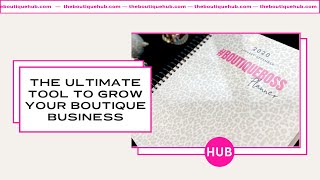
Ashley Alderson walks through the Boutique Boss Planner, a tool that centralizes sales, inventory, and financial data for boutique owners. It includes pages for goal-setting, COGS calculations, daily deposit logs, and turn rate tracking to help you make better buying decisions and improve cash flow.
Chapters
Good morning. Happy New Year, everybody. Give you guys a little bit of time to jump on here it is, 10:00am Central Standard Time. We are going live, talking about the Boutique Boss Planner and how to get started on the right track. So good morning. Good morning. Hi. Give me a wave when y' all are here. Hello. Well, hello, Ms. Shannon. How are you? I hope you had a wonderful night last night. A wonderful New Year's. So everybody say hey when you get here. Yeah. We are talking about the Boutique Boss Planner today and how to get started on the right track to really scale your business in 2020 in the next year. So, hello, Rebecca. Hello, Haley. So who has their planners? I'm excited. We have shipped out a ton of these all over. We're shipping them overseas to Canada, Australia, all over the United States. So we're very excited about that. And the best thing about this is the idea behind the Boutique Boss Planner all started with helping you guys have a source that you could take with you to markets, you could take with you home from your office or your warehouse to really have everything in one spot. When I had basically, it was a binder. I've been in retail since the early 90s, and we kind of called it like our boutique bible. We carried it everywhere with us when we went to market, and it had all of our numbers in it. It had all of our expectations in. Had notes about our employees, how they were doing, how our vendors were doing or how they weren't doing. And yeah, it was just. It was something that we carried with us everywhere and through chatting with a number of you and identifying your needs on what you were looking for, that's where we came up with this. So Rebecca won hers and brought. It brought me to the membership. Oh, awesome. That is so cool. I'm excited. Very good. Well, guys, I won't. I want to jump right in here, but let me just tell you that this is yours, right? You can do with this how you want. There is no one right way to fill this planner out. I look at it and I see a lot of comments, and people are like, how do I use it? I really don't want this to bottleneck you and your business. I want this to help you grow in your business. I want this to help you succeed and track and know what is really happening in your business. Right. In Retail Bootcamp, the course that Ashley and I teach, we talk an awful lot about. If you don't analyze your numbers soon, there will be no numbers to analyze. I'm a firm believer in that. I'm a firm believer in the fact that it's not enough to just guess investing in your inventory. You notice I don't say buying, we say investing in your inventory is extremely important because we want to make sure that you are investing in the right products at the right time, at the right quantity and the right price to satisfy the needs of your customers. Right. So what we find happens a lot of times is people go to market and they buy because they think it's cute or they buy because they think a customer is going to buy it. Well, what really ends up happening is they bring it in at the wrong time, they bring it in at the right price point, or they're already overstocked in something and or else they just plain don't have the money to pay for it when it comes. So that's where the boutique boss planner comes in. This does not, let me just say this does not substitute for an open to buy plan. We're huge advocates for inventory planning, but what this does is it allows you to take those numbers from your open to buy plan, the numbers from your bookkeeping system, the numbers from your point of sale, and put it in one spot. Throw this in your backpack, Go to Magic, go to Stylemax, go to Atlanta, go to DMC in Dallas. This is what you need to take with you. And don't be afraid when you sit down at the vendor's booth to flip this open and think, wait a minute, what did I do back in, you know, March of 2018 or 19, what vendors were really working for me? You sit down in vendor, let's say Vendor XYZ booth, and they're like, oh no, you ordered so much from us. I know you did awesome, blah, blah, blah. And then you open it up and you're like, actually I did. I sold through everything, but I sold through everything at 80 or 90% off. So that's not a booth you want to spend a lot of time in. Right? So that's the gist of this. So let's jump right into where we're at with the boutique boss planner. Now, guys, I know this is going to be reversed, but there was really no other way to do this. Going Facebook live with you. But all of this, like I said, this is yours. Fill this out how you want. Let me slide over so you guys can see the goals and tracking this self assessment page. The self assessment page is 100% on you. You know, make sure you look at that and really own that and don't fill it all out in one day. You Know, come back to it because where you're at in business today is going to be a little bit different than where you were at, you know, six months ago, which will be different than where you're at six months from now. So make sure you come back to this. Make sure you understand, like where you're at really in your business and where you want to be. Same with the roadmap. This is just kind of a fun little way to do, you know, a road map and you know, talk about what you're doing again, where you're at today, where you want to be, Things like that, your life in three months. Where do you see yourself, you know, what are you thinking is going to happen? And you know, bring that to fruition. We're big on vision boards at the Hub. We're big on seeing things written down, seeing things on the wal, looking at it, understanding and, and like really concentrating on that to make those things happen. So that is really important. We have all sorts of tracking things in here. Three things that you're grateful for this year that happened this last year. Three things that you want to accomplish in this next year. Guys, these are fun things. I like to sit down. You know, we're big sports fans, but let's be honest, sometimes games get a little boring. You're sitting on the couch with whoever. These are great things to just fill out. Then these are great things to look at first thing in the morning when you wake up and really concentrate on to, you know, to focus on throughout the day. You have downtime. We all have downtime. Everybody has downtime. This is something that you can be filling out in that downtime and really get your mind working and figure out where you want to be. Right? So I don't think anybody has a whole lot of questions about the goal setting side. That's pretty simple. We've been doing that since we've been kids. But, but let's jump into. These aren't scary either. Let's jump into some of these tracking sheets, right? What I want to, what I really want you guys to understand today is these tracking sheets go where you're at today with your business. Don't stress if you don't have a point of sale or a bookkeeping system currently today that can give you the numbers from last year. That's fine. Get the numbers today and start today. Because that way next year when you get your boutique boss planner, you'll have those numbers available to you. You are where you are today. You can't go back. There's no reason to worry about that. Right? So if you don't have a point of sale system that helps you with reporting, look at that today. Well, hi, Dana Straka. Good morning. If you don't have a point of sale system that can help you tell what inventory you have on hand today, what you discounted last month, what you got, what you're getting in this month, what you received. Right. You don't have a true roadmap of exactly where your cash is tied up at. And that's something we preach a lot about here at the Boutique Hub, understanding where your cash is. A lot of boutique owners honestly don't even pay themselves. And I promise, I promise you guys, you don't pay yourself because the money's tied up in other things. Right? It's tied up in inventory. Well, we also talk about this in Boutique a retail bootcamp. When you walk into your store, you walk into your warehouse, all that clothes that's hanging on racks, our 20 and $50 bills, that's yours. You want to figure out a way to turn that into cash as fast as possible. So what, you can pay yourself, you can pay your employees, you can pay taxes, you can be a legit business, but also you can take that money and reinvest it back into inventory. That's going to make you more money again. So that's the bottom line. Retail is retail. Where is coming in, where it's going out. Every penny that comes into your business, you want to track. Right? That's awesome. We're excited about money coming in, but we also want to track where the money is going out. Right. I'm going to pause there for a second. That's what this can help you do. So basically, what you're looking at doing here, I just want to pull this up. What you're looking at doing is go back through your sales from last year, from 2019. Go back through there and just write all of those down. What did you do in January, February, all the way through, Right? And then total that up right there. That gives you a goal, that gives you a baseline of where you want to be for 2020. Right now, as the months happen in 2020, just fill that in. That's pretty easy. Then you can figure out your growth. Right. I've given you your formulas and everything right down here to figure out your growth rate from January 19th to January 20th. It's not that hard. Everything is right there. However, where you guys might get bottled up is if you don't have a system that allows you to track These kind of numbers, very important, right? So a great point of sale system. And if you have Shopify guys your numbers, otherwise I'm a big advocate of point of sale systems like Springboard. I'm a big advocate in Rick's. A lot of those have what you're looking for as far as your point of sale reporting. Many of them work with Shopify, which is a win. Win is. So that's your other thing. I want to make sure you're looking at the tools that I think are so important to have to be successful besides this strong retailer. When I didn't really know what I was. If you do this, it's going to affect this, right? So it makes me think about it two or three times before I actually input that information or I created a new account or a sub account or something. So that being said, what you're going to do then is you're going to be able to figure out where your growth rate is for the year's comparison. Right? Are you over or under? Right. Are you growing? Are you not growing? What's even more important then tracking that inventory? So when you track that inventory, what did you do in sales in 20 with the amount of inventory you had? I think this is really important. A lot of times I hear people say inventory, and then they'll say, well, I'm actually carrying about four times the amount of inventory that I did last year. Okay, so then we want to go back and say, all right, so if that's the case, then how much are your sales going up? If you're. If your sales are going up like 2%, but you have four times more inventory, that's not a good idea. Right? Because where's your cash? It's tied up in a lot of old inventory. So that being said, this is a great, great place for you to track how much inventory you have on hand this year working for you or working against you. So that's basically the yearly comparison sheet. There's not a whole lot of. I mean, don't get scared about it. And the other thing that we did is we wrote down examples here for you. We did the math for you on an example. So see a lot of people saying. Some people say it's working fine. I hope it's. Wouldn't really surprise me that it's our Internet here in Grant County, Wisconsin. Let's see, for the 2019 column, is that yes, cost. Absolutely. Cost, inventory cost, you guys. It's really important that you will look at, get your inventory at the cost, not cost plus. Shipping plus any other things you want to add in there. Inventory at the cost. That's extremely important. Okay? Sorry guys, I've been battling this cold. All right, let's jump into the monthly comparison sheets. Your monthly comparison sheets, guys. This is for inventory. A lot of what you did earlier in that previous sheet you're going to be able to put over here as well. Again, what did you start the month with? Your beginning inventory? What did you end the month with? And yes, that's simple. So whatever you ended January in is what you're going to begin February in, right? You want to know that because you want to know you're not going to sell through everything. You're not going to sell through 100% of your products as soon as you buy it. The key to this page is this last column, this turn rate. And we did the formulas and everything for you right here. The key to understanding your turn rate is it's important to understand how long does it take you. Like if this, I buy this sweater in, in January, I buy six of them, how long will it take me to sell through those six sweaters that I get my money back, Right. Ideally, you're looking at wanting to have around a four time turn. That means you turn your inventory over four times a year. What is hard is a lot of times people end up having like a two time turn. So they invest in say inventory in January, but they don't get the money out of it until the summer. So that ties up a lot of your cash, right? Not only does it tie up your cash, it ties up your inventory space on the floor, it ties up your hangers, it ties up all of these things. So that's a problem. That's a big problem. And what happens there, you don't have cash to pay yourself, you don't have cash to pay your bills, you don't have cash to pay off your credit card that you put all the products on. You don't have time. Excuse me. You don't have cash to pay your taxes. That's where we get in a bind. Excuse me. Oh, it keeps interrupting. I missed the first 10 minutes. We will replay this. Let's see. Okay, so Ashley's in here putting some notes in as well. But so where you're getting these numbers from again, guys, is we talked an awful lot about. Don't worry about if you don't have them from behind. Go ahead and make sure you're setting yourself up for success now. So if you are strictly using Shopify, I highly recommend, I highly Recommend looking into shopventory, Delirious Profit or Inventory Planner. Those are three apps that you can add into your Shopify system that'll help you start tracking right now. Right. And the other thing that's extremely important, I get on a big soapbox about this. We talk a ton about this in Retail Bootcamp for all the Boutique Hub members and I'm super excited to talk more about this. But it's really important that you're using your purchase orders when you jump on to say Fashion Go or you jump on to any, any, get, get a shipment coming in order, make any order with any vendor, they're going to send you a purchase order, right? It's important that you use that information and input that into your point of sale system. Input that into your Shopify system right away. That way you know that you've contracted in with the business to have them send you product. That right there is a contract saying, yes, I want to order this, I'm paying for this today and I will accept this within X amount of days, whatever it is. That's great. However, what we end up doing, guys, is we end up forgetting about that. What happens there. All of a sudden a UPS guy comes, drops off a big shipment and we're like, oh my gosh, what is this? I didn't plan for anything. I already went ahead and ordered more product. Will you forget about the products that you recommend? Delirious Profit, Shopventory and Inventory Planner. But I'm a big, big advocate for a strong point of sale system. And yes, I think there's a number of them out there that we work with that works directly with your Shopify site. So that helps you. So it's not multi work for you across the board. But let's jump back in here talking about the planner again. We have all of the, the formulas down here for you to help you figure out your turn rate, to help you figure out your cost of goods sold, all these kind of things. But let me tell you that if you have a quality point of sale system, a quality bookkeeping system, you can get that cost of goods sold right from running a report on your, on your, in your programs. You don't have to do a lot of math. So that's why I say point of sale system and a bookkeeping system are more of, they're of an investment, not an expense. So I want to just make sure you understand that those are investments, not an expense. Judy, are you bringing planners to Western Summit? Yes, we will have planners in Denver next week. So if you didn't get one. You can get one there. So let's flip this over then. And this is where, excuse me, where is our bucket? A little leaky. Where is the money? Coming, going out and not coming back in. Right. So best return on investment classification. What's a classification? A class to wear under my blazers. Those. And where are you falling short? Maybe you're spending a lot of money in shoes. And let's be honest, you're the only one that really likes shoes. Maybe you're the only one that's buying the shoes in your store or you're using those shoes to merchandise, but they're not actually turning into cash. Maybe your turn rate on shoes is less than 1. Maybe you're investing in shoes in January and you don't even get your money back out of that investment till December. We go over all of this stuff in retail bootcamp, but I'm telling you, a lot of what I'm asking you to do is go through these formulas that are here, gather the data through your bookkeeping and point of sale system, track them here and have them. So when you have a question and you're at market or you're wondering about where to merchandise and put things for your floor placement, your merchandising, you know where your best selling items are, where they need to be in focal, focal points, right? Or where your sell through rate, you know, how much of what you're buying in are you actually selling? How much of what you're buying in are you actually giving away, discounting, donating, whatever it is, Those are all really important things. And then obviously we will give you plenty of room for notes. And again, I just want to draw your attention to the fact that we do have the formulas right there for you. So again, where are you getting these numbers from? Well, hopefully you're getting these numbers from your point of sale system. Hopefully you're able to run these reports if you have retail edge, if you have springboard or lightspeed or you have Rick's or celerant. What I hope that you do, if you don't understand how to run these reports is get on the phone and with your customer service agent and ask them, say, okay, I'm trying to figure out my best selling vendor, how do I do that? Have them walk you through that. Have them. Because every system is a little different, right? Every system is totally different. I'll be very honest. Point of sale systems change a lot as they upgrade. They're offering more features. Which point of sale do you recommend with Shopify Honestly, I've seen a lot of really awesome things coming from Retail Edge that syncs in with Shopify that I also another reason I really like them is because that also works with their QuickBooks. But it also I'm also a big fan of Springboard and Lightspeed because of their reporting features and seller and also because they also offer a lot of help with your inventory planning. We work with Management one and we also work with Inventory Planner and for your open to buy plans. And what I'm hearing from my inventory planners is that those are the point of sale systems that they really like to use because that gives them the right data quickly where they can make the best assessments of your inventory and help you develop a plan. I'm going to talk about inventory planning a little bit more here as we go through these charts. But the best, the one thing I want you to take away here again is investing in inventory is not just a fun thing to do. It is a complete science. And if you want to make money in retail, which I hope we all do, understanding where your cash is tied up, I said this earlier, is so important to help you become the best investor in your inventory, to invest in things that are going to quickly turn into cash in your business. So you make money, so you pay yourself right. So I just want to say time is money again. So if you don't have delirious profit Shopventory or Inventory Planner as an app, if you're just 100% Shopify based, if you don't have those things, guys, you're spending a lot of time spinning your wheels and you're going to get frustrated and you're not going to have the numbers that you really need. So I guarantee you you're going to end up guessing at things. Guessing is not a good thing to do when you're talking about hundreds of thousands of dollars. Okay, moving on. All right, let's look at the next page. This is your monthly comparison, your sales and miscellaneous. Again, this goes by a month. We're looking at our sales, we're looking at the current year total sales. So basically I want you to run a running total here. How about expenses? This is a great place for you to start tracking some of your expenses. I'm gonna, I just want to let you know I said this before. If in this planner say you don't want to chart just expenses, say you want to get more, more specific and you want to track payroll there, or you want to track discounts there, or you want to track travel expenses, whatever it Is where is your leaky, the leak in your bucket. Like where are you really feeling like you are having a lot of money going out? Maybe it's your advertising expenses, Maybe if, maybe it's your memberships or your subscriptions, maybe it's your apps on Shopify, maybe you have a ton of different apps and you're like, I am spending a ton of money on apps. I just want to make sure I'm tracking that month to month, keep track of that there. Whatever it is, make this planner yours, make it work for you. Then I want you to note your top customers. This is super important. Another thing that a good quality POS system does is a CRM component, right? That customer management program, that retention program. Knowing, knowing what customers are really paying your bills is important. Why? So you know, you take care of them, you understand them, you make sure you are investing in inventory that they need that they're going to buy, right? It doesn't do you any good. I can tell you, I've worked with so many stores, they get frustrated because their core customer is not them. It happens, right? Your core customer want something that is not exactly what you really love. So then what I find is a lot of store owners want to go out and invest in inventory. That is what they like and try to get their customer like it. Well, if your customer is a banker, if your customer is a teacher, if your customer is a attorney or a stay at home mom. Guys, let's be honest, they probably don't need NFR clothes or they are probably not all the time needing clothes to go to market in Vegas or clothes to be photographed for awesome Instagram shots or whatever it is. What I find is a lot of times people end up having this entire inventory selection in their store that doesn't necessarily work for the main customer that's paying their bills. So that's where we get spread way, way wide in our inventory and really thin and we start not serving anybody. So with that, what I want you to use this for right here is your top customer. Who is it? Keep it in mind. You know, it's really important to run the numbers and see what is Susie spending with us in a month? What is Susie spending with us in a six month period of time? What is my lifetime value of Susie compared to my lifetime value of like say Sally? You know, maybe Sally comes in and she buys something but she only buys the ten dollar rack, right? And she'll probably return, try to return it. Whereas Susie comes in and she buys it as soon as UPS driver Drops it off. Right. She buys it as soon as it's new. So note that, be aware of that because I'll be honest, you'll get to market and you'll say, oh man, Sally buys a lot from us. Sally buys XYZ brand. She really likes it. So let's, we need to bring it in. Well, when you get out your planner and you look and you're like, actually Sally buys XYZ brand at $10. XYZ brand wholesale cost is 20 bucks. So we're losing money. Right. So this is a great place for you to keep track of that. And again, more notes. Right. So when you go to market, you have everything you need. Let's jump over to the next page. I'm a big one for brick and mortar stores, even online stores. I do think this is relevant. I'm a big one on weather. I think weather plays a huge part in what is being sold and what our customers are wanting. So reminding yourself what the weather is like 5 degrees, our winter sales. Right? Absolutely. Did you do for pop ups? What did you do for in house events? Any of that thing? Any of those things. Very important for you to track staff notes. I do a lot of and I'm a big sports fan, like I said. So who's your A team? Who's your D team or your F team? Who needs more training, all that kind of stuff, who's winning, who's really struggling? Whatever it is, make some staff notes here. Like on these events. It's really important for you to understand, you know, who did I staff at this time, who, who was, who was running the cash register, who was running the sales floor, who handles our returns, things like that. I know this isn't a ton of space, but this is a great place for you to understand or just jot down some people that are really winning within your business, really helping you succeed. Seat right. And then best promotions. Those are just some things that I think are really relevant to track. Again, you can make these things your own. But I think it's really important not to guess back and say, oh, that Mother's Day sale was a hit. And then go back and look actually and look at the numbers. Like we spent a crap ton of money on ads, we gave away a lot of product and we really didn't sell a whole lot that revolved around Mother's Day. Right. So understand those things. Or maybe it's a pop up event. Maybe you loaded up a bunch of stuff in a trailer, you drove 100 miles, you paid rent on a facility. You took six staff members with you. You did all these things over and over and over again. That's where you want to track those things. What are the things that you did? Never again. Then down all your marketing guys. I just think this is very relevant. I don't need to go into a lot of detail here, but basically you want to know, are you winning, are you losing, are you growing, are you shrinking? Where to invest your time and where to invest your money. Because like I said earlier, time is money. And I so ourselves focused on things that are not really our graphics or maybe developing our own website. And then we have actual live customers coming into our store, coming onto our website, our social media present. Right. So keeping track of those things to understand where your time and money is best spent, think is is vital. Okay, moving on. So then we have our holiday planning, we have our checklist. I think the big thing about these checklists, these are just great reminders. The reason we put those in there is because these are reminders of things you don't do all the time. And sometimes if you don't, if they're not down here on a checklist, you're going to forget to do them until it's too late. We don't want to do that. You want to make sure. We want to make sure you're ahead of the game. That's why in January, we are talking about things happening in February, we're talking about market that are, that are happening in February. We're talking about promotions, things like that to be thinking about. So again, we're big on the checklist. Add your own notes here, set your monthly. Thing else is bring your managers and other people up to speed on these things. Help them or make sure you're telling them what you want to do and what you plan to do and what your goals are so they can help you stay accountable. I talk in a lot of my workshops and in retail bootcamp about open book planning, open book financing. And I think it's really important to bring other people on board with you on where you're at and where you want to go and how you're going to get there, because it's extremely frustrating to say to yourself, I am going to be on a diet, I'm going to lose £15. But if you don't tell anybody cookies, and they're going to offer you ice cream and they're going to say, let's go to the movies, they're going to say, let's do all these things, they have no idea you are on a plan to lose weight, right? So you have to be very vocal and bring them up to speed on that. Same with your inventory numbers and your sales numbers within the best decisions and stay on track. I'm a big believer in that. Everybody's like, oh, my God, I don't want to tell anybody my numbers. Well, you know what? If you're asking them to work for you and you're leaving them on a floor in a warehouse with hundreds of thousands of dollars of your money, you've already given them a lot of power. So being open and honest with them about where you're at in your business and where you want to be is puts the kibosh to them thinking you're, you know, making the big bucks and you're flying off to Vegas to have parties and have all this fun. Right? There's a lot of expenses that come along with running a business, and it's. It's important. I think it's really important for them to understand those things. So having a good reporting system helps with that also, because you can quickly just pull this up and say, look, yes, we sold those pair of cowboy boots for 100 bucks, but it cost us this. We've had six or seven. So that's your goal today because we've invested this much money and time into these. So I've got to get whatever I can get out of these in cash today so I can turn around and do something with them tomorrow. That stuff is extremely important to have those conversations with your sales staff, with your managers, and I think open book financing, Open book management is a big part of that. And keeping up with those things here, you can quickly open that up and just say, look where we're at. We had set a goal in three months to be here. We're falling short of that. What do we want to do today to make that happen? Okay, let's see. Okay, I want to talk about the monthly daily sales. The monthly Dale daily sales. This is really. You guys. This is just an absolute kind of dum dum worksheet. I'm not going to lie. There's nothing fancy about this. This is just a place for you to come in. Write down what you have brought in in cash. Write down what you brought in in checks, credit cards or other, whether that's PayPal, Venvo, whatever it is you do. Why here? Because, guys, I hope at the end of the month you are reconciling your checking account. I hope you're reconciling your credit card statements. I Hope you are keeping up with these things so they don't bite you in the butt and all of a sudden realize like oh my gosh, I've been paying for some sort of fee or some. Or I have was over billed by this vendor two months ago and I didn't even know it because I'm not reconciling my books. Right. So when you do get those statements in your email or actually in the mail, open this page up and you have everything you need to quickly reconcile your credit card statements. Excuse me. And reconcile your bank statements. I'm a big, I'm a big believer in keeping up with this credit card right here. Because a lot of times we have no idea how much is coming into us in credit cards. And I've seen a lot of store owners do this or cash. The lootly matters. It matters because you want them to pay with, with cash. There's no fees with cash. But keeping up with that, that deposit because you hope that when you swipe it or you insert the chip or whatever it is that that money actually hits your account. Well, you have to look that up when you reconcile your bank statements, exactly how much is hitting your account. Make sure you're on track with all of that. So next page is just total deposits. Are you over, are you short? And guys, you're going to be over and you're going to be short. There's going to be days that the till is just not going to balance up. So you want to mark that, you want to note that and then other notes. But something I think is really interesting down here at the bottom. This doesn't need a lot of explanation but I think these are really important things to kind of keep you on track. This is another, another place where you're going to be able to look at what your inventory is on hand at retail, what it is on cost, what discounts have you taken Right here in your monthly goals are your monthly actually tracking right here? This tip. Once you've input data here, that's where you take it back to the beginning. Now these sheets, these sheets are in here every month. This daily sales, monthly daily sales, it's in here for January, February, March, all through the whole entire year. So you take these numbers and go back to your beginning goal tracking sheets in the beginning of your book and you can input all of that information right there. So that's how the planner works all the way on and then take those numbers and come back to the beginning of the book. These beginning tracking sheets, the three tracking sheets at the beginning. That's it, that's that. I know that seems like a lot but again and I'm very, I'm sorry my Internet, this Internet. I'm not sure what's going on. I keep getting things on my end but it looks, it's not freezing on my end but I apologize. Looks like we'll do this again which hopefully it will be better because I won't have a bad cold at the time. But the other thing about this guys mate, like I said at the beginning, make it your own. If there's a column in here you don't want to use, don't use it. Change it into something else. Get a bookkeeping system. I highly recommend QuickBooks utilize your Shopify utilize a point of sale system if you are a boutique hub member. We have many walkthrough free trial offers discounts with lightspeed springboard ricks retail edge celerant. We work with a lot of them that will give you free tours. They'll help you. They white glove you as far as getting you on board with their systems inputting your data. Highly highly recommend streamlining your next year getting the tools in place to win. I think the boutique boss Planners is a big one. I do, I love it. However I'm a big believer in point of sale system, a bookkeeping system and an inventory management system. I love those things. And you're going to see money actually in your accounts and sitting in, sitting in your business that is turning into cash again. Right? Because you're making wise business decisions. That's what this is. It's a, it's a resource to help you make the absolute best decisions in your business. Possible popped up. So with that I will sign off and we will maybe do this again. I apologize but happy New year everybody and go use that boutique boss planner. Good luck. Bye.










