What No One Tells You About Opening a Second Store
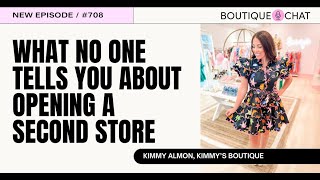
Kimmy opened her first boutique in Waxahachie in 2019, then a second in Galveston four hours away. She ran both for years with separate accounting and buying plans, but eventually closed Waxahachie to focus on her local community and her three kids. She shares what actually works when you're managing two stores at once.
Questions this video answers
2014
April 2019 — Waxahachie, Texas (Dallas area)
July 2019
Son Pierce: January 2020; twins: born January 17, 2021
Chapters
Foreign.
Business can be a lonely game, but it doesn't have to be. Welcome to Boutique Chat where we explore community over competition and how to scale your company with the balance and the happiness that we all seek. We'll hear from product based businesses of all types, retailers, e commerce and wholesale brands, along with industry experts shaping the future of our industry. I'm your host Ashley Alderson from the Boutique Hub and and I can't wait to chat. Hey guys, welcome back to the podcast. This week I have such a friendly face that I'm so excited is joining me fresh off of getting to see you in person not that long ago at our Hub Mastermind retreat. Kimmy, thanks for joining me on the podcast today.
Yes, I'm so excited to be here. So good to see your face again so soon.
So I was joking and telling you before we started to record, I was like, oh, I'm going to see Kimmy today. I should wear something bright. I didn't like, I even like I got out like a bright pink blazer and I put it in my car and I was like, yes, I'm going to take that to my office today. No, I left it in my car.
So, you know, I wore enough for the both of us. Pink chair, leopard wallpaper, pink and purple dress. So you're good. I got you covered.
It's definitely on brand. I love that. All right, Kimmy. Well, for those who are listening who don't yet know, you, give me the backstory. It's been 10 years. How did you get started in business?
Yes. So been doing this for 10 years. I started Kimmy's actually when I was in college in 2014, I was online and pop up only for five years. And then I was teaching full time during that time and I got married and we decided, okay, if we're going to continue Kimmy's, let's do it full out full time. And so I took it full time and then shortly after that opened stores in 2019 and 2020. So I had one store in Waxahachie, Texas, that was my first store, Dallas area, and then one in Galveston here where I'm from. And I still have that store today. And then we opened. It would have been our third store, but we have two stores now in Galveston and Yeah, so that's kind of the really quick short version of my story. So.
Well, let's dig a little bit deeper into that. So brick and mortar has always been kind of the name of the game for you. And I just talk to me first about like Number of stores aside, talk to me first about the first store and when you first got started, just some of the things you did early on to start to scale that location before you knew it was right to expand.
Yes. So my husband is from Waxahachie. I knew I'm also from a small town. I'm from Galveston, where our stores are now. And I knew that, like, community and, you know, what you pour into the community is like what you're going to get out of your stores. And so that is what kind of drove me to open the Waxachi location. My husband's family has been in Waxachi a long time. I got to know so many people through him and build a community there. So I always knew from the get go that having brick and mortars, it's all about that community that you build is how you know how well you're going to do. And you know, what you pour into that community is what you're going to get back. So I kind of learned that from being in Waxahachie and my husband Stanley being there and the way we got to open our Galveston location so quickly, I'm from there. And, you know, we were newly married. We had been almost two years married, and we had been talking about moving to Galveston. He knew I kind of wanted to raise kids there. And he was like, if you can find a Galveston location, you know, let's do it. And I was like, are you serious? And he's like, yeah. He was also a teacher coach at the time. And so a month later, I found a location that was July of 2019. So I put my Waxahachie store of April 2019, and I found that location in Yalveston, July 2019. So was I ready to open a second store? The answer was probably no. Was I ready to scale? No. But we did it anyway. And we were like, we're going to make this work. We're going to always, forever have two stores four hours apart. Like, that is so doable for us because we have family in Wasatch. We can totally handle that. And it did work for five years. I have Katie. She was my manager there. She now still works for Kimmy's. She's like my remote right hand man. We can get into that later. But, yeah, scaling. Was I ready? How did I do that? I don't know. Was I ready? Probably not, but I did it. And live to tell the tale. But, yeah.
So for five years, there was two locations in four hours apart. @ some point then you were like, okay, no going to Make a change. Going to scale back a little bit. How did you make that decision?
So, speaking of community, the community I actually live in here in Galveston, wanted to. It was always in this community, like, housing community's vision to open, like, retail stores. There was always a coffee shop here. They opened a restaurant. They wanted a retail center here. And my community is here. I know I'm raising kids with all these moms. We send our kids to the same school. We're all here together. So I was like, I cannot pass up this opportunity to open in this community. And so I was like, this will be my third location. I'll have three locations. These are, like, two of them are in Galveston. One's in Waxahachie. This is going to work out fine. And as I was getting closer and closer to opening the third location, it just got to the point where I was like, okay, I am, like, spinning my wheels way too fast. I have three toddlers. I wanted to serve this community better than I. Not that I wasn't serving Waxachi well, but I'm not there, so I can't pour into two different communities. And you can only so much ask that much out of your employees. And so I kind of just decided, let's pull back so we can. Let's scale back so we can better serve our customer. And that's kind of where I am today.
Yeah, smart. And I'm sure you today feel like it's a weight off your shoulders, but it's a huge decision to make in time.
It was. It was. I'm sure that, you know, I've listened to other podcast episodes where people have had to close stores, and I would say, you know, at first, of course, it was very emotional. Like, there is a lot of emotions tied to that decision. It was my first store. But, yeah, today I can say it is kind of a weight off. Even though I miss it from time to time, it is a huge weight off because I do feel like I'm serving my customer better. I feel like I'm honestly better. Like, I think. I think this is better for my employees. I feel like my headspace is better. I can. I can delegate better. I can prepare better. I can give them better instruction versus me, just, like, everywhere, all the time. So. So I'm still everywhere all the time. But, like, you know, on a whole.
Nother level, what advice would you give? You know, as retailers are listening and they're deciding, should I open a second location, Should I open a third location? Like, what are the pros and cons that you would share with them on how to make that decision.
So, yeah, I mean, some of the things I've learned for one, expenses, like I work with Christine Gray and she really wanted me to break out my two stores expenses to see like which one. Because sometimes what I learned is when one store would have a really, really good month and then your other store doesn't perform as well, the other store kind of has to float the one that's not performing as well. And so then it kind of turns into this. Well, you're kind of as Mary from Manchet. One would say, like you're kind of like choking the store's inventory out because like this store has to float this store.
And.
And so then you're like, okay, I have to bring in less to this store, which create a problem. Creates a problem at this store that's actually performing well. So it just, it gets very tricky. My biggest piece of advice would be from the get go to break those expenses out separately and really think about the costs you're going to do doing business that far apart. Like, one of my big expenses that I save now is I think I'm saving anywhere from like 2 or $3,000 in shipping costs. Because I was shipping. We would order from a vendor, we would order, you know, a pack or two for each store and they would each ship separately to each store. And so we're talking that all that adds up with all the different brands you buy. So now we're saving what are like probably 3,000amonth in inbound shipping.
Yeah, makes sense.
It's insane. Like, so we're. Now we have. I still have two locations, but they're located 15, 20 minutes apart. So I ship everything to one location kind of as a hub and then we break it out from there. And so I would say kind of think about the real cost that you're going to incur by being hours apart. Like, how much are you really going to have to pay someone to work after hours, be involved in that community? Like, are you going to support her being a part of the Junior League or some kind of, you know, to where her roots are, building there and building your brand in that community. Because I've now learned that community is the biggest part of this. Yeah, it is.
Absolutely. I love that you said that right from the get go. Like, what you give to your community is going to be what they give to you in return. And that is so absolutely, absolutely true. I want to dig more into the community piece. I want to come back to the store operations again. In just a second. But how else do you see yourself being involved in the community that others listening, you know, could probably easily accomplish too if they put their mind to it?
Yeah. So my husband and I were both self employed and we try to just attend. I'm part of the chamber, obviously. I highly recommend being a part of your local chamber. We have an amazing one and you know, sometimes other business owners ask me like, do you really think that is worth it? And just like anything, it's what you put into it. My local chamber has so many events that I don't, to be honest, I don't even utilize them all the time. But I try to go, they have like Good Morning Galveston. And just any chamber event that you can get involved with, I would say do it because you're again, you're building that community and you're supporting businesses around you that will in turn want to support you. So get involved in your local chamber. You know, mingle with wherever your kids go to school, get involved with them. Serve donuts sometimes to the teachers at school, you know, love Kimmy's boutique or whatever your business is. I mean there's just any creative way you can to give back, you know, donate to the school sports teams, to the charity events. I mean we try to do all that and attend all of that and just put ourselves out there constantly, honestly, like making sure we're social and just being in the community to us is like a lot is everything. Yeah.
And there's so many like on every single level. It's funny just thinking about this. You've met Jeff Fenn who's on our team and Jeff does Ironman competitions. And so he was just telling us he was in Tennessee a couple weeks ago in a race and the local boutique there had an aid station set up at the Ironman competition and was serving pickle juice and which that's a whole like pickle juice. I don't even understand. I don't even, I don't even run a mile at a time. Little Ironman. I don't get it. But to your point, whatever is happening in your local community, like get involved, it doesn't have to be related to clothing or to whatever it is you sell. It's just getting your name out there and whatever good you will put out in the world, it will fulfill come back to you.
Exactly. And we're actually, we haven't launched it yet, but after Mastermind, I got this idea because I was like, okay, what, you know, what is going to up level my business? And I Just thought, digging deeper into the community, I feel like I'm already really involved, but I want to, like, dig deeper. And so I'm actually going to start doing kimmies in the community and just do, like, little meetups of, like, okay, we're all kimmies. Is meeting at a coffee shop today. Like, come one, come all. I'll be there from 9 to 10 o'. Clock. Or like, we're going to go on a walk on a sea wall. Because I also want to make sure I'm creating community for, like, you know, new moms who are postpartum, like, need people to talk to or someone who just moved here. Like, if you can create a safe space within your boutique, like, you should be creating a community within your brand. And to me, that's like, above selling clothes. Selling clothes is kind of a byproduct of that. I could talk about this all day.
I love.
This is your. This is what the boutique of is.
It is because people are so lonely. I just think that we have such an epidemic of loneliness today across all levels, all walks of life. And being a successful business owner is creating community, and it's helping people feel seen and heard and understood. It's not about what you tell them, it's about how you make them feel. So, Kimmy, I think that is so awesome, just getting people connected whether they buy something or not. I think when you lead with intention, you lead with heart. The money will follow for sure. Yeah.
That's all a byproduct of, you know, the way you live your life and the connections you're making. And yeah, like you said, how you make people feel. So that's most important to me for sure. So good.
I feel like a proud mom over here.
Wow. You're like, I taught her this. Yay. Since 2019. Or was it 2019? Yeah, it was before I opened my first store. So 2019, I remember.
I remember running into IT market like, you are such an OG boutique hub member. So I love seeing it come full circle. That's so good. All right, let's go back to the tactical. Let's go back to. Because I really want to hammer on this for anybody who is like, seriously having these questions of juggling inventory, multiple stores, all of that. Talk to me about systems and processes with multiple stores and distance. I mean, I'm sure you've learned so many that are critical. Talk to me about, like, the three most critical systems and processes when it comes to having multiple stores.
Okay. So one would definitely be your buying process, your buying plan. One Thing that's helped me with management, one is I have a different plan for each store. Like, one store might need X amount of blouses and one store might need triple that. So really going in with a buying plan to, if you're wanting to scale and open another location or whatever, really think about how you're going to have to buy differently. Also think about, is your customer the same? Our customer was a little different in Waxahachie than it was Galveston. So I think making a buying plan from the get go. And that's with obviously one location too, but. And second would be a transfer plan. So part of the joy of having multiple stores is there's sometimes where if something's sitting for, you know, five, six weeks, you don't have to necessarily mark it down. You can transfer it to the other location that maybe has already sold out of it or is already like low stocked on it. So. So apart from buying, it's also transferring and making your mark, making sure your markdown strategies are really strong. And the third thing I would say, gosh, there's. I'm like trying to pick one. So buying, transferring, and I would say I think really like training your employees. Well, I think I have. I've always had a great team, but I think one. One way we struggled is I kind of jumped down to Galveston. Was like, okay, y' all got it. Like, you are awesome. I think they could have been more trained and like, had more direction from me. So if you're really wanting to open another location, especially in another town, really make sure everyone knows exactly what to do. Because no one is in your head. No one is. There's only, you know, one boutique owner or two boutique owners, however many are on your, you know, owner's team. But no one's going to know what to do unless you, like, detailedly teach them what to do. So train them well and really train what's expected of them. And that's going to be super helpful because we ran into that. I just kind of figured, oh, well, we did that when I was there. But I guess a lot of the time I was doing that, I wasn't necessarily teaching anyone how to do that. So training your employees would be the third huge thing. They need to be ready for that for sure.
Yeah. It's so interesting, you know, the entire marketing strategy of like McDonald's or Coca Cola or like, think of any international brand, right? How do they set that experience up? Where a Coke is, a Coke is a Coke, no matter where you experience it. And having multiple stores is the same. And that only comes from excellent like repetitive training process with your team. And if you think you said it once, it's not enough. You need to say it about a hundred times. It's just like being a sports team team and you know, shooting layups every single time you take the court to practice. So spot on. The other thing, I really like that you said a little bit ago, and I'll call this in as your fourth thing is like Mary said, and I would rephrase it a little different, I would just say like don't throw good money at bad. So if you are lumping all of your money together from multiple storefronts, like money can cover a lot of sins, right? So just having money in the bank can make it look like things are fine and well, but really you're leaking somewhere, you just don't know where. Unless you've really done the work to say separate it.
Yes, so true.
Hey, can we meet up in person? It is one of my favorite things to do here at the Boutique Hub to get to meet you face to face to hear your personal business story and your journey and what you're working on, but also to put you in contact with and to build friendships with some of the most amazing business owners from around the world. Boutique owners, wholesale brands, industry service providers and experts. All of us together in one room. And that's what we do at our annual Boutique Summit event this year. I would love for you to come to Dallas, Texas of course, on June 8th and 9th for our annual Boutique Summit. Our theme this year is the summit and your business completely reimagined. And I think it's time for that theme to take effect. Right. We have been through some crazy highs and lows in this industry and I think going into 2025 we are all ready to reimagine what's possible in this industry and in your business personally. So get ready for detailed hands on workshops. Not just you listening to speakers, but you actually getting things done, pulling out your Facebook ads account and building some ads together or planning out an entire quarter of content, maybe doing some social media audits with some of our most well listened to experts in the room along with fellow boutique owners. It's time to dig deeper into your business and that's what we're going to do together at the Boutique Summit in Dallas, Texas June 8th and 9th. I hope to see you there. It is our biggest and best and favorite event of the year. And it's time to take your business to the next level. Let's do it together. All right, so you also, I mean you've got two storefronts, you had three, and you've got three beautiful kids. Let's talk about that and how busy you've been raising these humans. What have been some of your go to just like lessons you've learned along the way or boundaries maybe that you've had to set in order to be a successful business owner and mom.
Yeah. So I had Pierce in January 2020. When he was four months old. I got pregnant with twins and they were due right around his birthday. So they were born January 17, 2021. So they're literally 12 months and four days apart. So it's kind of like triplets. It is wild at our house. But honestly, like, I think that chaos at home really like helps me put things into perspective at work. It kind of grounds me, obviously. Like, I love my, my store and my business, but nothing is more important than family. So like I now know, like, okay, you know, when I pick them up at 3 o', clock, that's when Kimmy shuts off. Before I used to work, you know, till midnight and then wake up in the middle of the night and go, go early. I feel like kids, at least my kids have really taught me not balance because I'm not balanced, but taught me, you know, the priorities and just like how to be where your feet are. And when I'm at work, I'm working. When I'm at home, I'm at home. And like it's kind of separated those things, those two things for me, which has helped a lot. But yeah, having kids and running a business is a little crazy. But we're both, my husband and I are both self employed and so we just, that's just, it's like tag, you're at, like you're in, I'm in. It's just you have to work together and that just works for us. I'm just like proud of what I'm building for them. Honestly. Sometimes when I get down in the dumpster, I'm having a hard day, let's say, because it does happen. Right. Sometimes I do. An employee will call in and I have to be on the floor and so I miss their little event at school or something. I don't miss it a lot, but I try to tell myself that I'm building something for them and I think they're going to be proud of me so someday.
So I'm absolutely certain they are. I just think there's such a, I mean, what a wonderful opportunity to Raise your kids alongside what you're doing and to show them they can have the best of both worlds. I just think that's such a great opportunity. And for you and your husband both, you know, being self employed, like, it is a whole nother level of chaos. I mean, that's our family too. So it is tag, you're it. But what a great opportunity for flexibility at the same time.
Exactly. Like, I really want to show them that owning a business doesn't have to be, you know, the old, like in the, you know, 60s. Oh, entrepreneurs have a horrible lifestyle. They don't get to do this, they don't get to that. Like, I want to show my kids that, like, no, you can own a business and have freedom. Like, I'm very passionate about being self employed and being an entrepreneur, so I hope I can show them that it's fun and worth it.
So good. All right, Kim, you want to do some lightning round questions? You ready?
Yes.
All right, let's do it. All right, let's say I give you two hours magically back into your day that you didn't expect to have and you're going to spend them on income generating activity. What do you choose to work on?
Okay, so one thing I've been doing lately is personal styling appointments. And that also goes back to like the community I'm trying to build and trying to make people feel very comfortable at kidneys. So if I had two open hours, I would assume that I had two really good clients book and I would just want to help them, help them dress, like, help them feel good about themselves, educate them on how to style, how to wear. And it's not even about how much they buy or what, you know, what I end up selling. But to me, income generating now is it just, I'd like community, community, community and just pouring into people. So that's what I would use with two extra hours. Like today, if I had that after kids school, I would want to get two clients in here and just work with them.
Yeah. So good. And probably a lot of fun in the process.
They are fun. They're so fun. And like you're just getting to know someone on another level too. And you don't always get to do that when you're in the back on your computer and you know, doing all that stuff.
For sure. All right, what is the unsexiest process that has the most impact on your business?
Ooh, definitely digging into your numbers. Like Christine says, that weekly numbers date. Yeah. Knowing your numbers and your margins and your markdowns. And your. What's in your bank account. Like, what's literally in your bank account. It's definitely the least fun, but it is the most valuable thing that you can do if you're knowing all the time, like, exactly how much cash deposited last week and all the payouts that are coming in and all the bills that are coming out, and you know, what you have to work with, what you're going to buy. That is, to me, what makes the biggest impact, because your whole business, like, that's its heartbeat, is the cash coming in and out, honestly. So, yeah, it is.
Understanding where it's. What does Mary say? She says it's not about knowing your numbers. What if you just change the word numbers to dollars? It's about knowing your dollars, knowing where your dollars are at and how they're working for you. And. And then when you think about it, you're like, oh, yeah, I'd rather know where my dollars are than where my numbers are. Less intimidating.
Like, you can look at your sales and your revenue all day, but, like, it doesn't matter if there's this much piled up on a credit card that you don't know about or, you know, this much leaving the register unaccounted for. Like, if you don't know where any of that is or what's going on, then that's not good.
So true. All right. How have you set boundaries to take care of yourself, your family, and your time?
So I have really, even though I enjoy working the floor a lot, I have really tried to set a boundary with working the floor. Like, I used to think, okay, I can save X amount of dollars if it's me on the floor, you know, four days a week. These. These shifts. I've kind of learned that that's not what fills my cup because there is stuff to do on the back end. So I've kind of taken myself off the floor schedule and just kind of. I'm always at work and I can walk out and, you know, chat with customers or whatever, but it's. It's kind of helped me get everything done so I can go be a mom at night if I'm working on the floor less. So that's kind of something I've put into place. And I kind of save those, like, floor moments for, like, special times. Like, oh, my gosh, I'm on the floor today. You all can see me. So, yeah, kind of pulling back off the floor and realizing that just because I might be saving a little on payroll, I might be bogging myself down. Later. Because if I'm on the floor all day, I'm not getting my computer stuff done, and I'm doing my computer stuff at night. So personally, I pulled off the floor a little more.
I actually love how you said that, because I always say you can't grow a business by cutting expenses. And that's kind of that mindset, like your old mindset, right? Which is, oh, I'm gonna save my way forward. I'm gonna save these dollars by me doing this job. But really, like, ah, what is it costing you to do that job? Like, what's the money you could be making?
Are you using your headspace? Yeah.
Yeah. I look at it like you're kind of stepping over a dollar to pick up a dime. What would you rather have? So I'm so glad that you brought that up. That's so powerful. What's one metric that you live by, and what's one metric that you wish you knew more about?
One that I wish I knew more about is definitely Facebook ads. I just joined Boutique Black, and Jeff is helping me get set up with all that. So I would. I want to learn to live and breathe and die by, you know, my social media metrics and how I can, like, use those to propel. Propel me forward and, like, make marketing decisions based on what I'm seeing in those analytics. What I kind of live by is this is, again, I'm brick and mortar is foot traffic. We track our foot traffic. That's such a random little odd metric to make decisions on. But I look back. So ever since I've had a store, we've had a little clicker, and I have my records from 2019, and I will look back, okay. You know, based on my clicking of people coming in and out. Like, I'll make notes like, oh, it was rainy that day, or, oh, blah, blah, blah. You know, we'll base events on that. So I look at foot traffic numbers a lot, and that was one thing with the whole, like, creating community and doing these personal styling appointments. We were looking back at our Saturdays from, you know, the last couple years and seeing our foot traffic numbers this year. We're like, wow, Saturdays have dropped. Like, what can we do to bring people more in? So I always look at my sales and also my foot traffic numbers a lot. Yeah. Like, my conversion rate, how many orders I'm getting per, like, foot walking in the door. Yeah.
Oh, I'm nerdy listening to you say that. Because traffic is the basis and the foundation for everything. Like, sales don't mean anything. Unless you know what traffic it takes to make those sales.
Exactly. And I. I kind of like, thanks to, like, when I did retail boot camp and stuff, like, thought, okay, I know If I get 50 people through the door, that should be X amount of orders. Okay. Yeah. So how do we improve, you know, average order value? How do we improve how many things are going on the ticket? Like, okay, so if I bring this many people in and get this many tickets, and then we should all be selling two or three things per ticket. What should that be? That helps me a lot. Yeah.
There's a formula for everything. So, so perfect. What's been the best business advice someone's given you that always sticks with you?
Okay, so when you try to serve everyone, you will serve no one. Yes. That is. That's a big one for me, because having multiple stores, like, and just being brick and mortar in general, I think you just want to serve, like, every single person that walks through the door. Like, the grandma that's taking the granddaughter shopping and the daughter that's, you know, the daughter that has a daughter graduating and the girl that's graduating and the grandma that's going. And you realize that, like, if you're trying to serve all of them, you're really serving none of them, because it's just. You're not. You're not. You're not being a lot to anyone. And so that is one thing with scaling back to these two stores in this town is what I've been trying to do, because it was hard to buy for two different clientele, like, two different client types. And so, yeah, now I'm just trying to serve my. My one customer. And that's, again, why I'm finally going after, like, Facebook ads, too, because I feel like I. My brand is a lot more cohesive, and I can actually speak louder to someone now. So I'm proud of that.
And someone said to me the other day, actually, a friend of mine that I like to golf with, she goes, you know, Ashley, I can't be everyone's cup of tea, but I can sure be somebody. Shot of whiskey. Oh. Like, it's such a good branding statement because it's the same. Like, you can build your brand and you can double down on who you are, and you have such a unique, unique brand. Like, it's so bright and playful and fun. It doesn't have to be for everybody who likes colors. Right. Like, that can be a whole nother thing. So.
And I think I heard somewhere recently, maybe it was at Mastermind, someone say, like, your Brand should either. Like, if your brand is good and specific, it should make someone totally turned off. Like, it should just be. It should totally repel someone and it should totally attract someone. And that's like, all of that is just good advice because I used to just try to buy for everyone and you can't do that. Yeah, spot on.
Okay, last lightning round question. What does it mean to you to be a good boss? What is a good boss?
So a good boss, to me, I feel like, used to be giving, like, everything everyone wants all the time. And I feel like now I've really learned that, like, if you're using those. If you're being honest with them and using those teachable moments to help them is what being a good boss and a good example is, versus trying to give everything to everyone that everyone wants, you're really not doing a good job because one day you're going to crack.
And.
Be unhappy with that. So I would say it's definitely like setting boundaries and, you know, being honest. Honest feedback all the time. A culture. I have it written down on my thing right here. A culture where feedback is expected. I've been trying to be better about that as a boss because I think when you don't create that dialogue and you don't let them know that feedback is always going to be something that is talked about in your review or in whatever, you're not doing a good job at opening that line of communication for everyone. And then you crack. And then. So, yeah, I think setting boundaries, I think, is surprisingly, being a good boss. Most important thing, being a good boss.
Oh, spot on. Agreed. All right, Kimmy, our time has flown by. This has been so awesome. I'm so glad that you were able to join me today. I do have one last question before we leave and that especially because I know how young your kids are and that they're going to be involved in the business with you and all these things. And I look at your business and I fast forward, you know, 20, 30 years down the road and you're on the front porch with your family and your kiddos. They're all grown now, and you're all looking back at the life that you lived and the multiple businesses that you built. What's the thing that you really want them to remember the most about you and how you lived and what you built.
Yeah. So I hope that they look back and they're like, wow, Bob was so in love with her business and she was still able to be such a good mom, and she was able to give Back to the community. And, you know, if someone was wearing a dress in Galveston during the years of, you know, 2020 to 2050, it was from Kimmy's, and the whole town knows it. And, yeah, I just want them to be proud of me. I do selfishly wish that one of them, hopefully, Annie, would want to take over someday, and I don't want to put that pressure on them. But, of course, that is a dream. But, yeah, I hope that. I hope I built a legacy at that point and that it's just, like, part of our everyday lives and like, how I, you know, can help my family for generations, so.
Oh, well, I love that. And, you know, I don't know if this is like a godwink, but the last podcast interview I did before you, Kimmy, was twins whose mother started their boutique, and now they've taken it over and expanded it across the country. So I. That just seems a little ironic to me. I'm about to cry.
Oh, my gosh, that's so cool. No, like, literally, I'm tearing up, but, you know, I'm a cracker.
That is so cool.
That does feel like a little godly. I agree.
That was meant to be. Well, it was so good to see you. Thank you for spending time with me today on the podcast. Everyone can find you inside of the hub community, but I can't wait to see what you do next.
Yes. Thank you all so much for having me.
Thanks for listening, guys. I hope you took away all kinds of nuggets and new ideas from this week's episode. Don't forget to subscribe and leave a rating and review. We love to hear your feedback and give you a chance to be featured on the show each and every week. For more information on our spirit of community over competition and to access guest downloads and bonuses and all the resources we talked about on the show, head on over to the boutiquehub.com and join the community. We'll see you next week.










