What Vendors Wish Boutique Owners Knew To Be Successful
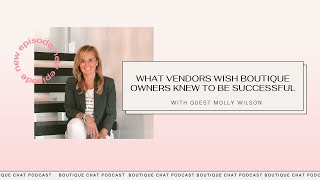
A recorded conversation between host Ashley Alderson and guest Molly Wilson (founder of Molly and You and Best of Show). Molly recounts her retail origin (starting at a Hallmark Gold Crown, later buying a 6,000 sq ft store), pivoting from brick-and-mortar to launching a gourmet food brand (Molly and You), scaling wholesale distribution (thousands of retail accounts, roughly 70% B2B / 30% e‑commerce), and then creating Best of Show — a curated permanent showroom concept in Atlanta and Las Vegas to connect boutique buyers (including live sellers) with brands. The discussion highlights relationship-building, abundance mindset toward big competitors, practical growth lessons (mentors, recognizing pain points, systems), and candid feedback vendors want boutiques to hear about professionalism and partnership practices.
Chapters
Okay, calling all boutique owners and wholesale brands. Man, this episode is for you. I'm so pumped today to be talking to someone who I feel like is one of the brightest minds in our industry. She's so incredibly talented and experienced and creative and she is sharing tons of mega nuggets for all angles of the industry today. Molly Wilson is the founder of Molly and you, a food related company that many of you are familiar with in the home and gift space. Also huge in the boutique and live selling space, as well as as the founder of Best of Show, a huge showroom based in Atlanta. She's a very active member inside of the boutique hub with not only her brand, but all of the brands represented in Best of Show. And she's so willing on a regular basis to drop feedback and ideas and nuggets of support for fellow members. Today, not only do we dive in for her experience of running a retail store, a large retail store, mind you, being the top performing Hallmark store in the country. What it took from then to go from retail to starting her own wholesale brand and manufacturing in the food industry to then starting a showroom in Atlanta called Best of Show. One of the things I think is most important about this episode today, you guys, is that she talks from the angle of a vendor about what it's like to work with boutique owners, the.
Good and the bad.
There are definitely some huge tips and takeaways that are shared in Love today both from Molly and myself on how we both think partnerships can be formed that are going to create much longer lasting relationships between vendors and retailers. The things that we all need to hear. Again, wrapped in love. I love this episode. It is so honest and straightforward and packed with tips and ideas and information. I can't wait for you to meet Molly. So let's get into it. Molly Wilson of Molly and you and Best of Show. Let's talk about your business strategy, strategy and the juicy details of what actually works from mainstream fashion to fashion on Main street and the entire ecosystem behind it. How do we scale your company and do it with the balance and the happiness that we all seek? Let's hear from those insiders, experts and strategists that actually make it happen. I'm your host, Ashley Alderson from the Boutique Hub and I can't wait to chat. Hey guys. Welcome back to the podcast. This week. I am pumped, Molly, that you are here. Molly Wilson, one of the most creative women in our industry today. I would say without a doubt. We have had so many good conversations just on the phone and brainstorming and chatting back and forth. And you had the opportunity to be with us at the Boutique Summit. So I hope everyone has pen and paper today because we're going to get into it and maybe have some squirrels, would you agree?
Oh, some squirrels. We're going to. There's going to be so many nuggets. Write this down. Be typing in your phone if you're on a walk, listening. This is going to be inside Ashley and Molly talks when we have those real talks that are just real about what's really happening or what we're struggling with. So I'm glad to have that with you on your platform because I'm also a big fan of the podcast and I've listened to Yay. Dozens and dozens and dozens. So.
Oh, it's going to be so good. So before we get started, I know what I think is going to be unique about today is you have such a great vantage point in our industry. So you have retail experience, you have building a wholesale brand experience, you have showroom experience, you have wholesale platform experience. Like, you really see everything from all angles. So I'm excited how much everyone will have an opportunity to learn from your vantage points. So before we get there, just let's go back to the beginning. Everyone has to hear the origin story of how you got into this industry in the first place.
Well, when I was eighth grade, I babysat for the family that owned the Hallmark Gold Crown store in my town of 10,000 in rural Iowa. And then I needed money and they let me work pricing items in the basement for the summer sidewalk sales. That was my. I was hooked on retail immediately. I was a four sport athlete. I gave up three of them so I could work more. I told them one day I was gonna be the president of this little store. I just, I felt it in my bones. I started doing their radio ads for them. Hi, this is Molly from the Sugar Bowl. Come on down. It was like a soul connection. Retail talking to people, having people walk in the door, not looking for something, but me knowing them and learning about them or having seen them at church or wherever and suggesting something that they ended up purchasing. And they walked out and never felt like they were sold something they didn't need or told. This looked amazing when it didn't. But they walk out like, I'm so glad she mentioned that. And then later they say that to you or they mention that gift or the person they gave it to, or you see them wearing what they bought. I was just. The whole thing.
I was.
Right away, I'm like, this hits all my happy touch points. So I got started really young, and I went away to college to grad school. I had a whole nother career in politics, working on women's public policy issues and heavily focused on domestic violence and what we might call kind of women's empowerment issues on the. On the legislative side, like women's economic inequality and pay and all of that. And had just a gut feeling I needed to make a shift. And when I was 28, I moved back to my small town in Iowa and bought that little store and became the president.
Oh, my gosh.
Full circle, full circle. And had my babies in my town I grew up in and had, like, right at the same time, JCPenney closed. So if anybody's listening in, like a small town where you had those big brick buildings, JCPenney was kind of the anchor. And they closed. And I was freaked out. Same time they were closing, Walmart was coming to town. And I was like, downtown is gonna crumble. This is the worst thing ever. I woke up one morning like, what if I had that building? What could I do with it? And I went to my first boyfriend when I was 10 years old. His name is Ben. He. His dad was the president of the bank and he was working there. And I went and I said, could I get a loan to lease. Lease. I couldn't buy the JCPenney building. He said, yeah, but you're crazy. And I said, I'm going to do it. And I did. And I moved and created a 6,000 square foot destination retail store with everything from bridal registry with china and tabletop to fragrances to fashion to a Vera Bradley store within a store, kids in cards. And my mission became my. Why is employing women creating jobs? And I didn't know what I was thinking. I just knew I could do it.
Oh, my gosh.
And I did it. I did it. And oh, my gosh, eight or nine years in, I had this bread recipe and I've had this booming store, the number one grossing Hallmark store store in America. There was about 4,000 Hallmark stores then.
Wow.
Yeah. And I was young. I don't know.
I was.
Not enough fear. Yeah.
That's to your advantage, for sure.
Yeah. Yeah. I had this bread recipe and I wondered, I wonder if people would buy this in my store. Yeah, yeah. So I put a bag of it in the store. Like five bags. People bought it. Five more. Ten more. This is so great. I love this bread. And stores didn't sell food then. Yeah. And I was like, I might be onto something. So I leveraged friendships with 10 women that owned stores around the country and sent them a box. And I said, if it sells, pay me and please give feedback. If it doesn't sell, please give feedback. Do you think I'm nuts? And 10 years later, Molly and you exist. And those women are all customers. And I, at 38, I sold that retail store to two of the employees and created Molly and you, my food company, and became a food manufacturer. I'm like, I need a new challenge.
I can do this.
Yeah.
Oh, my gosh. Wait, so pause, because we've got to talk about Molly and you. But so does the retail store still exist today?
Oh, yes. Liz and Holly are the owners. Holly was, they were both in their 20s at the time. She was the store manager and Liz was an OB nurse who worked like four shifts a month for us. And I went to them both and I said, you two would be amazing business partners. And they were like, what do you mean we can't do this? I said, yes, you can, yes, you can. And they agreed and I helped them get there. And it's thriving. More ideas than I ever, ever thought of.
That is amazing. A 6,000 square foot story. That's a beautiful story. And at the time too. I just want to go back and touch on this. You mentioned Walmart coming in and I can remember working in economic development at the time when Walmart was coming into communities and it just sent chills down everyone's spine. And you looked at it in a very different way. To me, I would think about it like abundance mindset. Right. Like a shift in an opportunity. How did you approach that when there was the change? Not only did you create a new store, but you just saw an opportunity.
Well, you said it. Abundance mindset before I kind of knew what that was. Is really leveraging the abundance of someone else to be open to receiving it yourself. So how would a small retailer ever think they could leverage any abundance from their competitor Walmart, that we may have many things we don't like about. And I was on the chamber board and everyone was protesting at the city council. I said, we've got it wrong. Wash the windows, stay open till eight at night and let's open on Sundays. And they said, no, we need to protest. I said, they're going to spend all the advertising money bringing people to town. Yep, let's get them somewhere else to go that is small brands that they can know the owners. And I just really rallied people to just believe in my idea that now I would call it abundance mindset. Let's go. Let's roll out the red carpet for the new customers that are coming in because of Walmart. So it worked.
Oh, I just want to drop the mic right now because that's so good. That was my biggest lesson, I would say, in economic development. When one store closed across the street, the other store came in and said, what can we do to fill that store? And I said, but aren't they your competitors? And they were like, no. Wherever there's two or more stores, we become a destination. We have to draw people to town. So I just love that way of thinking. And I think that same thing's true today. Whether it's Walmart or Amazon or any other big competitor, there's opportunity always. And I know you know that's we're going to get into more of your story, but you still live that today, so that's amazing.
I still live that today. And you know what I don't look at in my food company? So Molly and you is a gourmet food company. We manufacture mixes like, Easy, easy, easy. We do the work, and you look good. So a beer bread. So we have multiple flavors of beer bread mixes. Garlic, cinnamon, Italian. You add a beer and you bake. Amazing. We have mug cakes that you make in the microwave. It's our top item with boutiques, for sure. But there's competition. But you can't look in the rearview mirror. You got to look forward. That's how you thrive and grow and wake up feeling good and not feeling dread.
Absolutely. All right, so fast forward. You started the bread mixes and decided, I'm going to get into food manufacturing. Which I'm sure you were like, I don't know anything about this either. But back. Gosh. You. Here we go. Where'd you start? Where'd you start? How did you start to grow, Molly? And you.
And you were like, hi.
Does anyone have a commercial kitchen? What are we gonna do?
Nothing. Nothing. Relationships. Mentor. Humility calling. I'm thinking about doing this. I know there's this famous brand in the grocery store. Brownie Brittle. Yeah. It's like the crispy edges of the. It's in the package. It's everywhere. I found where her office was. Drove there. It's a woman owner. Her name is Sheila G. Owns it. I walked in and I was like, I just wondered if Sheila was around. I had my bag of beer bread mix, and I was like, I just would love 10 minutes to talk to her. Like, you know, my. My inspiration is Sarah Blakely. And Sarah Blakely can knock on doors and sell fax machines, you know, and. And he was like, I want to sit down with you. And now I have a friend who owns a hundred million dollar company. How'd that happen?
It's because you were a stage five clique. You just showed up.
It's baby steps figuring it out, knowing I don't have to be an expert at usda, FDA food if I partner with experts. I'm really good at branding, sales, and marketing. So, you know, and in the beginning, we were making the mixes by hand. A certain amount of flour, a certain amount of baking soda, a certain amount of sugar, a certain amount of salt, the whole thing. Our party dips. We had, you know, parsley by hand for a few years. And then I was like. As we got bigger and bigger and 50 stores became 100 became 500, I realized I was becoming a manufacturer and I was. I was kind of nervous. I have no business now. We need bigger machinery. I don't know how to do that. I don't barely know how to light the grill sometimes. So I decided I'm going to release control and share my recipes again. Abundance mindset with a couple factories and let them help me. So now we can outsource the factories. And it freed us up to grow to 4,000 stores because we're focused on what our team does best, which is building the brand, sales and marketing, and connecting with mostly stores. About 70% of our business is B2B to retailers, and 30% is E Comm.
Wow. Talk to me about that journey. Because, I mean, just you don't casually grow to 4,000 stores. Right. So sales and marketing. Talk to me about the process and just the evolution. It started with relationships. You started sending samples to other stores. I'm assuming you started selling online. When was the first time you decided, you know what, I'm gonna take Molly and you and I'm gonna set up at a gift market. What was that decision? Like?
We did not start selling online. So we were not online until a couple of years ago.
Okay.
So I only knew retail. That's what I knew. That was the language that I spoke. So didn't even focus on consumers. And if you look back at our Facebook, then I was talking to both the end customer and the store at the same time. I was all conf. Lots of mistakes. But I knew I needed to target stores. That's who I could speak to and relate to and who I could help build sales because I had a multimillion dollar store myself. So I was like, I can train stores how to sell this food because I did it in my store. So that's what I did. And it was one on one connections and knowing every store. And then everything I knew is I started to add employees, teaching them everything I knew instead of keeping it for myself. And they sit in the box and do this. So I was trying to clone myself to make. To make everything stronger. But I went to my first trade show, the Minneapolis gift Show. Yeah, that was the first trade show. And we did start. We sold 100 bags at our first craft show. So in the beginning, we were doing some of those craft shows too, that just sort of built a little bit of name recognition and taught us how to do the sales, but really started selling to stores. And that's always been the focus of our business, not the E Commerce. We want to drive people to stores because I love American retail. I want retail to stay strong. So that's where I want them to buy.
Yeah. Talk to me about the growing pains at that time. What do you think as a new brand, a growing brand, you're just trying to expand your reach? I know we have, we have a lot of brands like that that we work with. What do you think were three biggest lessons you learned at that time? Like if you could go back and, and teach yourself all over, what would those three biggest tips or lessons be?
Oh, my gosh. You know, I would almost say taking things personally, but it's a negative and a positive, right?
Yeah.
So feel emotional or crushed. When something happens or customer doesn't like what you do, it can, it can derail you so quickly. I think in the beginning, you're so one on one. And every sale matters, every dollar matters. Especially when you have one employee or two and you need to pay them. The failures feel so much bigger than they are. So I would say one thing is to feel those failures. Process them. Never, never, never. The customer is always right. Even when they're wrong, they're right. So when you have those little failures, really, truly analyze it, don't be defensive, but don't let it define your day. Learn from it and go. Don't get stuck in it. And I think people get stuck in those little failures. Find a mentor, Talk to someone. Tell someone, you failed this. Failed. I went to this trade show. I have my pack size, this, and no one's buying it. I'm having returns. Did you have this? And why? You can't figure it out yourself. You won't get there. So take those failures, learn from them, and then get someone else's advice. You know, that's one thing. And then in the growing pains is know when you're at a pain point and don't ignore it, hear it, and then figure out what to do about it. So if you ignore those pain points, you're going to miss those opportunities to grow. If you're going to keep doing things the same way, you're going to keep getting the same results. So many moments like, my gosh, when we needed to switch to QuickBooks in the beginning and not using Excel and all of that, that's too much. We can't figure it out. It's too much. Nope. You need to do it if you want to grow. So I know you don't want to, but figure it out and do it. Because I would ask people, well, how are you managing books? Nobody was doing it on Excel after year one, but I was, because I was too scared. So the second thing would be to recognize pain points. And they're telling. That's a voice that's telling you time to grow.
Yes. That's so good. I have another question around just that growth period. So obviously, I mean, you get to 4,000 stores, almost 5,000 stores, right? So you get there a. Because you have a good product that people like and it sells and they can reorder, but it's also because they like the company, they like you, they like the experience that you're giving them. How does a growing brand manage having both a great product and a great experience?
The product is you. You. Whatever your quality control is, and quality control, whether you're. You have a clothing brand, a headband brand, a food brand, you stick with your quality and you make that not a lot of work. You get there, you perfect that, and you put that on autopilot, right? So then how do you manage, how do you manage that? That in the growth, you get the foundation right, and you don't keep changing the wheels. Once you get it right, let that go to autopilot and then you can focus on some of that growth. My biggest tip on how to get there is, and I know where you're gonna connect this, I just know. So you work as a brand, you work so hard to get a customer, so hard, the money you spend to find them, to get them, customer acquisition, a trade show, if you're paying a sales rep, if you're driving to a store, walking in the door, all the gas, the hotel, you spent so much money to get that customer. Keep them. We're in four to five thousand stores because they haven't left in Three, four, five, six, seven years, we give them reasons to stay. And, you know, so many people that are focused on sales, are focused on getting those sales and the triumph of the day, the week, the month, and they're just looking at what's around the corner and not realizing the opportunity to build your business is right here with the people you already work so hard to get. So why aren't you working hard to keep them so you can grow that big if you keep adding value to the same customers?
That's so good. There's a lot of ways I could take this conversation because there's so many lessons on the boutique side of things, and I think we'll come back to this in a minute, but on the boutique side of things, just gonna, like, throw my hair into the microphone. It's the value of understanding partnerships, truly building a partnership with your vendors, understanding your turn, understanding reorders and understanding. On a boutique, it's not just about turn and burn with products, but really, where's a brand I could partner with for the long term that's a really great product and they're going to take care of me. Right. But on the brand side of things, teaming up and collaborating with other brands and also providing an experience where a boutique, not just a boutique, but a gift store, anybody, any retailer can come in and not just shop your brand, but shop multiple brands with the same experience. And that's really kind of the. The next step that you took in your journey was from Molly and you tell me about the next business that you created.
I know I did another one. Oh, my gosh. I saw, I saw, I saw a problem at our brand. So Molly and you. I employ all women. We have all women licensed to drive the forklift operations, customer service, sales, everything. So we were doing, I don't know, 16, 18 trade shows a year across. Gift shows, food shows, hardware shows, mostly like pipe and drape temps, and ladies that own stores. When you go to these, These people have worked so hard on that day one, when it opens, they are so exhausted and their back hurts. Unloading pallets, building their booths, paying so much money to get it from the dock right to there. We're just in thousands and thousands of dollars and exhausted by the time you walk in, right?
Yes.
And we've been building our brand this way. And we were just. My team was exhausted. I've got moms. We're missing so much. And I have a motto at my company. You will never miss anything that is important in your life or the life of anyone. You Love. I don't care if it's, you need to drive your mom to an eye doctor appointment or donut day at Sally's kindergarten class. You will not miss it. If you work for me, it is so important that you're happy. And we started missing so many things, and we're exhausted. Right. It's just a hard way to work. And then we were also in big rep groups, which has a great place in especially helping a brand seed the market and being that in between for you and. And the store. But the commission model was. We were struggling with it and not making the money that we thought we should because of our. Because what we had to pay to be in rep showrooms. And there's just always something that works at the right time for every company, every business. And neither were, like, working. And I just kind of kept complaining. And my husband was, like, kind of tired of hearing you complain. Can you do something different? And I'm like, well, there's no other way to sell in the marketplace. And this was before, you know, online platform selling was. Was getting started. This is, you know, four years ago, five years ago, I'm in the shower. And I was like, okay, I'll just do it. I'll just make the alternative that doesn't exist. So I.
There's a pattern here. There's a pattern here.
Okay, yeah, I'll just make it up. So I went to Atlanta, America's Mart, and I sort of pitched them on this idea, and they were like, like, I'm like, I want to create a showroom with lots of brands in it, but there's no. I don't have a rep group company. There wouldn't be. They'd be selling their own. And he's like, you. They said, you sell your own in the temps. And I was like, no, I want to do it this way. They said, well, we'll give you a 20 by 20 room, and you can just be there by yourself for $3,000 for a show and see what you think. They put me on a floor with country pillows and candles and primitive things. And I had beer, bread, and we stood there in the hallway with samples. We outsold our tent booth. We outsold everything. All new customers. And friends of mine that owned other companies, jewelry and everything, were like, what are you doing? I said, oh, look at the sales. Yeah, look at all the new customers. I don't know, but you want to join me in the summer? I'll try to get this room again. And then I had six. I had a. I had A children's brand, a hat brand. I had all different brands, Diffuser company. And then that summer we had the six of us in this room with no name. And then I was like, I can. Nope. This is a thing. I can do it. And I created a brand called Best of Show. And we just, we're in our fourth year, I think, and we have 10,000 square feet of showrooms in Atlanta and Las Vegas at the gift show. And we have 50, 60 brands like my brand, Molly and you that's there. We have small brands that are in, that are just new, like really in like 100 stores. And we have hundred million dollar brands. And so we are the place to come when you want to meet the owner in a beautiful, curated permanent space. And we do live music and food and drinks and parties and it's just an amazing vibe. And the brands have a different way to sell. So we're just an alternative in the marketplace place. And it's a great place for boutiques and others to connect with gifty brands.
I love it. You're so creative. And it, it really is a need in the market and it is a whole new way. It's not a typical showroom or agency, but you've really invested yourself into growing multiple brands, which is amazing to see. And something I, I feel like you were really on the forefront of is one of the first, I guess I've ever spoken to that had a, a room like yours. You really invested in live sellers before that was a thing. Tell me about stepping into that direction.
So do you. Well, you know, even on online platforms, only recently have live sellers that don't have brick and mortar been allowed to shop. Right. I've been an advocate because of one woman. So someone came in to best of show wanting to sell and she's like, can I buy in here? And I said, well, of course. What do you mean? Well, I can't buy in a lot of showrooms because I sell on Facebook. Not I don't have a store, I don't have a website. I sell on Facebook. Okay, sure, come on in. What's that all about? And I said, can I hang with you while you walk around and buy the brands in here and learn from you what you're doing? And sure, I would love that. She was, had a little like 1500 square foot space and then she was buying brands and she was buying volume and I was like, 1500 square feet? Wait a minute, you're buying big order, you're ordering 72 of things. What's happening? And I just listened to her, and she's a woman and trying this business, and she used to sell Lularoe leggings. And I was like, okay, explain this journey. She's like, but I think I can do my. My own items too. I just need to figure out how to find them. But places won't let me come in and buy. I was like, well, you can buy here all you want. And then I flew to see her live in action. We sold some Molly and you mug cakes. And then I was like, I get it. Are there more of you? She's like, there's lots of us. There's lots of us. Yes. I was like, give me some names. I'll invite them in. So we started inviting in boutique owners and telling. Explaining to our brands, and they're like, wait a minute, what are their hours? What are their, you know, 24. Yeah. We don't understand all of them. So the brands didn't understand either. So it has taken a long time to get the brands to understand. And I push the marketplaces to let these buyers in and out. And then pandemic hits. Yeah, pandemic hits. And. And trade shows are like, you know, it's terrible. Brick and mortar's closed. But guess who's coming? Boutiques. The ones that are selling live and they're coming to best of show because we've been there, we get them, we've been their friend. We're willing to take a risk on them. And I think we've taught them a lot as they're growing up and they've opened our brands ideas to like, you can have a different mindset of work and work with customers that are outside of the margins. Because a lot of boutiques are outside of the margins in the way they operate. And so it's been a win. Win. Yeah.
One of the first times I spoke to you, Molly, we had this whole conversation around the difference in boutiques and brick and mortars or gift stores. Because I consider a boutique is still can be a brick and mortar. I think to me, I have this like rosy vision that a boutique is anything it wants to be. It's online, it's a live seller, it's E commerce, it's a brick and mortar. It sells clothes, it sells kids, it sells makeup. So whatever it wants. Yeah, Conchos, who knows all the things. But that is not how our industry was like, to your point, it was, I'm a gift store versus I'm a boutique or I'm an e commerce store. And so I personally feel like the industry is really changing. I'm curious, like, your perspective on. Do you see the industry just really melding in a new way between boutiques and gift stores, both from the boutique perspective, but also for the brand perspective?
I do. Oh, my gosh. I have so many thoughts on that. So we always have to be open to change. Those that aren't are slow to come, right? So we want to be open to change. We want to be open to this community. And I think that the more we're open, we're open to changes in the industry. So, yes. And I think Boutique Hub has done such a wonderful job of empowering these stores, especially young and new and small, to not feel overpowered. Part of why I started Best of Show Showroom was for 10 years, I was a buyer and I, you know, it was rural Iowa and I would walk into Atlanta to a showroom and I would know they didn't want to wait on me. I didn't look like I had money or I didn't fit the bill or I didn't have a suit on. Like I was from Macy's with my badge turned backwards. And I had the feeling I would see people sitting at a table not look up to help me. And I felt left out because I was small. And eventually I got big. But that feeling never goes away. And so it's still happening. It's still happening. And so it does not happen at best of show, right? It's like the Pretty Woman thing. Like, oh, you thought, I couldn't spend this money, I could spend this money. Yeah, big mistake. I'm going to give you a very specific example. In our industry, on the side of the sellers, we have key accounts. Who is a key account? A key account is Disney. A key account is Nordstrom. A key account is a Von Maurer. If you're in the Midwest, there are 39 chain departments. They write big POS, they are corporate. Everything is on Excel or a different system. At trade shows, there's a day before and a lot of buyers don't know this. We're really open the day before. Who's in there? The key accounts, the big stores. When the pandemic hit, who wasn't traveling? Corporate policies, not traveling. Nobody was going into Von Mauer department store or, you know, Belk or Nordstrom, and they hadn't figured out the online thing. But guess who had boutiques and whether they were doing live selling or just in their store. I had a revelation one day and I said to all the brands and Best of Show, I do a Little pep talk before every show. And we were like, no one's going to come. I said, you know who is going to come? Boutiques. We're gonna welcome them with open arms, because guess what? They are the new key accounts. And if we help them build their businesses, absolutely, they will be the next key accounts. And Molly and you has been in Nordstrom. We were even in Walmart for a while. That's a whole nother story. But we're not. We're not. We're not. We're not in any, like, discount or major like that. But we have key accounts. We have boutique hub members that out order all of those key accounts every single month. The key accounts aren't the key accounts anymore. Boutique Hub specifically is, you know, fast approaching 15% of our wholesale sales. At Molly and you, they are the key account. You know, if they were just a little bit easier to manage, that would be better, but they are the key account. So that's a shift that's happening. And there's a lot of power for those boutiques right now because they know how to sell greater volume.
That's so good to know. I love hearing that. Now, here's another conversation we have to have today. And we've got time to do this, Molly. But there is a difference in traditional brick and mortar gift stores that have been in existence for a long time and how they operate versus the new online social sellers, which we've discussed. Right. There's. They operate totally differently. But I would say I hear this from brands a lot, and that is the request that they wish that boutiques sometimes operated at a slightly more professional level in some ways. And so boutiques, if you're listening, guard your hearts because we have to have this honest conversation. And this is something. I feel like we talk about this in retail boot camp a lot. Like if you know Sarah Burke's mama, Sarah, when she gets to talking about operating at certain standards and professionalism and managing inventory and all these things, like, she will go on a rampage on this. But you have to do it in order to grow.
So let me.
Let me frame it this way. If there were 10 vendors in a bar, I'm going to use your example.
Oh, no, here we go.
Yeah, we're going.
We're going.
If there were 10 vendors sitting around in a bar talking about boutiques, Right. I wish they would know this. Why don't they know this? How can we help them know this? What do you think? If a boutique owner walked in the door, what do you think they would hear or Learn from this.
I know what they would hear. And if you, if you could see me while you're listening to this, my face is not sweating.
I'm putting you on the spot.
You're going to make me say it.
Okay, you can say it. But I'm going to tell you, I will back you up. Because I see this like, I want to encourage everyone in our industry, no matter who they are. I don't care if you're brand new, if this is not a brand new boutique owner problem, because there are multi, multi million dollars boutique owners with the same set of issues. So I am encouraging everybody who is listening that we are going to step up our game because we do not want boutiques to have a bad reputation. And so we're going to have an honest conversation about how can we do better, which would make the brands be like, let's go. Here's how we can operate and really partner together. Because I think there still is. I don't want to call it animosity. I don't think it's animosity. But there's still hesitation for some brands to do business with boutiques because there are some issues. So let's just talk about that. What is a boutique owner going to hear from a group of brands sitting in a bar? How can they do better?
Okay, before I say it, I'm going to tease something up first. I'm going to say, this is out of love. I have been in every stage of selling right and growing. So this is a comment. This is gonna be hard to hear, but is in love. And don't throw tomatoes at me. This is to help you grow. Okay?
And I'll block the tomatoes.
If someone doesn't tell you the real what is the point of women supporting women? Okay, so I'm gonna tell you. Here's what you need to hear. I'm gonna start by saying, two years ago, Best of Show hosted our first social seller show. We called it. So, like this April, we've got social sellers coming in during the apparel show. And if you want to come, go to bestofshowshop.com, contact us and you can sell. I put this show together. Pandemic's going on. Nobody's welcoming boutiques. I'm like, we're going to do a mini trade show for boutiques. We invited 12. Some of them were little, some were really, really big. Like million dollar a month. Plus they came in, we had all of our vendors flew in. They're just trusting. It was 48 hours. We had a prize $1,000. I took it out of our marketing budget for the top seller. And it was. They were competitive, and so they got to sell live off the inventory of the brands. It was a gift. We were giving all 40 brands, I think, that were in our Vegas showroom. The amount of sales, almost every single boutique that were there said they had their biggest 24 hours or biggest single day in their history. Okay. This was in October two years ago. The sales at retail were $1.4 million. I was blown away. You know, so that's like 6, $700,000 in wholesale orders for the brands. It was amazing for the boutiques, amazing for the brands. We were all like, what is happening? It was amazing. Okay. Then it got real. And here's what we're talking about at the bar. So I'm sitting with 10 brand owners at a bar, and we're talking about our businesses. We're talking about how we sell, too. Brick and mortars. We sell to hardware stores, we sell to outdoor stores and surf shops and women's clothing and wherever all the boutiques. Oh, don't even get me started. That's what's good. That's the first thing. So at this event, then, instead of following the plan, like, all the accounts that we sell to and have historically sold to that are open from 9 to 7, not 9ish. And we show up at 10, right? They order the way they're supposed to order. The orders are sent. Once they're complete, they're sent whatever the path is for that brand. They have all the information that you need. The information is correct, shipping address is correct, etc. The boutique started sending in orders not following the plan. Text messages with photos. A husband saying one thing, a wife saying another, texting one staff member or another. Then personal Facebook messages. And we were like, wait a minute, what's happening? And then someone would say, I haven't gotten my order. Why didn't you send it? And I said, we didn't get it. I Facebook messaged it to. To you. I'm like, to who? That's not how we do orders. And then we disappointed them and they disappointed their customers. And I thought, oh, this is just because it was our first, like, social seller show. No, Ashley, two years later, this is still happening. So at best of show, I've had some of our best of show brands that said, I'm just. I'm done.










