
From Corporate Employee to Entrepreneurship
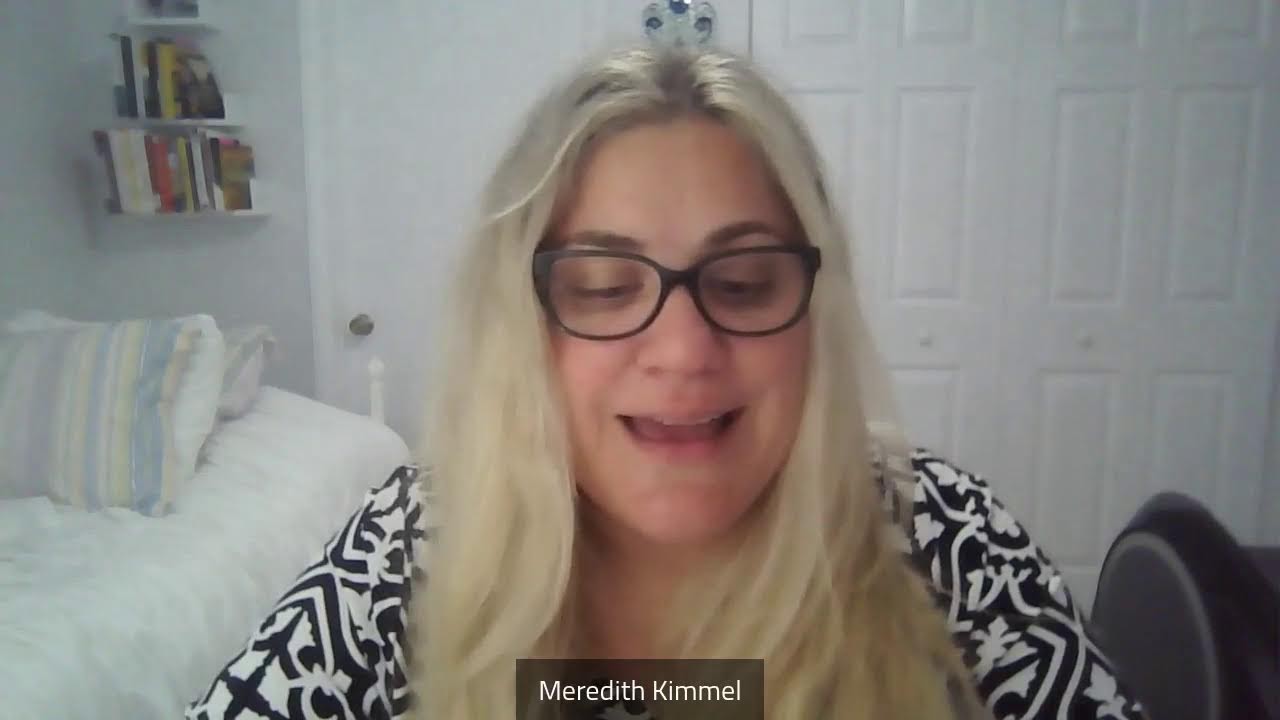
In this Business Divas Facebook Live interview, host Dotty Scott talks with Meredith Kimmel, a credentialed life‑transformational coach from Boca Raton, about her transition from a 12‑year career as a wealth‑management paralegal/accountant to self‑employment. Meredith explains why flexibility and passion drew her to coaching, outlines the common fear of losing a steady paycheck, and shares concrete risk‑mitigation tactics such as saving six months of living expenses and moving to part‑time before a full leap. She recounts a personal breaking point—losing her mother—that catalyzed her burnout and prompted the career change. Recognizing that she was generating money for others, she decided to generate it for herself. The conversation then moves to practical day‑to‑day operations: calendar blocking, color‑coding personal, client, admin, and professional‑development time; limiting email checks to three windows; balancing client sessions (4‑5 per day) with prospecting/marketing (≈3 hours). Meredith advises confidence, betting on oneself, networking, using business cards, asking for referrals, and being explicit about ideal clients. Budgeting topics include health‑insurance costs and a new car lease. She emphasizes the value of a coach, even mid‑transition, and provides her contact details (mk@meredithkimmel.com, 954‑655‑7066) for listeners seeking guidance.
Chapters
Hello everybody, welcome to the Business Divas Facebook group. Today I am so honored we get to talk to Meredith Kimmel, and Meredith is from Boca Raton, Florida. She is a credentialed coach who works with people feeling stuck or wrestling with the transitions so that they can find clarity and work through limiting beliefs. And today we're going to talk to her about her journey to being self-employed. Welcome, Meredith.
Thank you, Dotty. It's a pleasure to be here. Thank you for having me.
So let's start. With just what do you feel personally? What are the benefits of being self-employed for you?
For me, it really is flexibility. It's being able to choose who I want to work with. It's, and it's really for me, um, having that passion of helping people and really being able to to see other people succeed in what they choose to do and find, fulfill their dreams.
Great. Now for the audience, if you have any questions, go ahead and put them into the chat on Facebook in our Business Divas group, and I should see them so that we can get those questions asked to Meredith. So Meredith, what are some of the hesitations that you found that people have when they're trying to decide if they want to be self-employed or if they want to keep that steady job?
One of the big hesitation is the security of the paycheck. It's really hard to let go of the paycheck, especially since we have been in troubled times over the last few years with the pandemic and You know, there's not great news about the economy in some veins. There is good news about the economy in other veins, but it's that, it's that consistent paycheck.
And, um, but sometimes if you're really in a bad situation or in a toxic environment, or if you really, really do just one day decide, I need to pursue my passion, I need to do this, then it really is worth making that leap and taking that risk into entrepreneurship.
Do you have any methods for mitigating that risk a little bit so it's not quite so scary?
I like to say have about 6 months of savings, 6 months of what you need to survive, need to live on in savings. And so if it doesn't, if it doesn't work out the way you wanted it to work out, then there is the option of going back to work, going back to a corporate job. Or another way to do it is cut back on the corporate job, let me move to part-time and build out the business, your entrepreneurial business.
So can you share your story of how you did it? How did you make that leap?
So I made that leap because I had been working as a a wealth management paralegal/accountant.
And my, my story was the typical burnout.
I had been doing that for about 12 years. And I just, I had a traumatic incident in my life. I suddenly lost my mother. And when that happened, and I had a very hard time going into being in meetings with clients, who were talking about who dies first, who dies first, who dies first. And those meetings were, were very heavy for me. And, um, and so I, I just, I was done. I wanted to move on and I want, and I was ready to create my own business. And coaching seemed like the next, the best logical path for me because being in those meetings with the clients, figuring out what they wanted to do with their estates, what, how they wanted a tax plan, um, was essentially coaching in a different kind of way. But asking those poignant questions, the probing questions, and getting the answers, and really having the clients think about what they wanted to do for themselves, for their future, for their family, any kind of legacy they wanted to leave. So I thought that going into coaching was a nice way to make that leap from what I was already used to doing into a new area.
That sounds great. You did say something in that sentence there that said you were ready. You know, when you made that decision, you felt you were ready to jump into being self-employed. What was it that made you feel like you were ready for it?
Um, yes, and thank you for pointing that out. I was ready because it occurred to me that I was making a lot of money for other people. As the paralegal, as the quote-unquote helper, I was making a lot of money for my supervisors, my bosses. And I knew, and I know that I was very good at what I did. And why not I'm going to make that money for myself. I have the capabilities, so I should reap the rewards. And that's how I knew I was ready. It was that money.
Yeah. So, you know, a lot of people that I've talked to anyway that are thinking about making this journey, they're just, they're just so afraid to take that risk. Do you have any words of advice for them on that?
Have confidence in yourself. That would be my— it's as simple as that. Have confidence in yourself, take the risk on yourself, bet on yourself. Because somebody hired you to as their employee, you have talents, you have qualities, you have strengths, you could capitalize on those, market those. And and create a business where for yourself, for where you can excel at those strengths, and be able to help people and work with people who need what you have to offer. Everyone has a special gift, multiple gifts. So embrace it and, and, and, and take that bet on yourself. There's no better place person to bet on than yourself.
You are so true or so, so You're so correct on that. Betting on yourself is probably the safest bet you can make.
Absolutely. You know, you know yourself the best.
Yeah. So I know one of the problems that I've had, especially in the beginning, I've pretty much got it figured out now, but in the beginning it was so hard to balance work and life, especially when I work out of my home. And so everything is all right here. What advice do you have for people to really make that, that balance between work and personal life?
Yes, and I definitely struggled with that like you. I think I've had that figured out now, but that was definitely one of the, one of my, I guess, weaknesses when I started was balancing work and life because I always felt like I had to be on. When you, when you walk out the door of a corporate job at 6 o'clock and you know, what do you do until you go to bed? That's— but if I'm sitting at home and I also too work at home, I, yeah, I just feel like I always— I felt I should rephrase that. I felt like I always needed to be on. I always needed to be answering emails, but I put some practices into my, my daily schedule.
And what I started to do is I started to schedule— what I built up as I built out my calendar, I started to schedule time for me first, time for my business second, and then anything else after that. So I was making sure that I was getting my doctor's appointments, that I was getting my workout time in. So I make sure that I get my sleep time in. And originally when I started doing this, I put everything in there, like go to sleep, wake up.
And I—
but that rigidity was what I needed for myself personally. So I could, you know, live the way I live and function the way I function now, where it's not as rigid.
But I do define that time for me first and then my business.
So I'm curious, when you're doing your calendar and you're putting in your business time and your personal time, is your, you know, with the exception of like the doctor's appointments that you mentioned, is your personal time before or after like standard work hours, or are you mixing it, or how does that work for you?
I try to mix it up because sometimes, especially— so I'm on East Coast time, Eastern time, but I see clients, you know, all over the country, all over the world. So I do have some, um, after 5 or 6 PM hours on, um, for clients to accommodate a West schedule. And so when I do that, maybe the next day, the day later, I'll start— the next day I'll start a little bit later. So I, I try to accommodate that for myself. Whereas instead of starting at 9 o'clock on, like, if I'm seeing a, you know, some clients later on on a Wednesday, I maybe I won't start till noon on Thursday.
And that way I can get some rest in, get some personal time in, and then I'll see my clients, you know, 11, 12, and then stop at 5.
Okay. So on an average, like, workday, are you actually working 8 hours? Like what you would be used to working in a corporate? It just kind of moves around.
It kind of moves around.
Yeah.
Yeah.
And the other, it does move around. And then the other thing that I do that, um, this helped me tremendously was I also structured, um, certain times to look at email. So I check email when I start the day, I check email at lunch, and I check email at the end of the day, or what, my end of the day. And that way I don't get time sucked by email, which is a huge time sucker. I don't get sucked in by social media, which is another huge time sucker. But if I do some admin work, if it's admin that time that I've blocked, then that's when I'll do my social media stuff and and any emails and anything else that I would do. Email marketing, I mean, when I say email, email marketing and anything else that I would do, but that's admin time. So, and then I also delineate between paid client time, admin time, and so, and I color code.
That's the other thing I do. I color code everything on my calendar. So, so personal time is one color, Paid coaching client time is another, admin time's another, professional development's another color. And that really helps me to see where I— and to keep my calendar straight too, and to see if I'm not too heavy in one area or another.
And that also creates that work-life balance.
Okay. So one other thing about that, you just said too heavy in one area or another. How do you divide out like your your paid client time versus your marketing time and your prospecting and all of the other things you do to bring in customers?
Yeah. So that, um, so client pay, client time is usually about, um, 4 to 5 coaching sessions a day. And then, um, and then the other 3 hours would be spent with prospecting or marketing or networking, sales calls, that kind of thing.
Okay, perfect. So what other tips or suggestions do you have for someone who's deciding to leave their corporate job?
I would say make, make sure you really know what you want to do. Make sure that this is the right, the right path for you. If— talk to people, get advice, seek advice, talk to a coach, talk to somebody else, a friend of yours who might have ventured into entrepreneurship. Because there's so much that I didn't know before I went out on my own, but I just knew that I needed to. And, um, and there's, there's a lot of, um, what's the expression?
You don't know what you don't know.
And learn it along the way. And, and, you know, join networking groups, meet people. People love to give advice. People love to share the tips that they've, that, that, that they've experienced.
Nobody needs to recreate the wheel. And so just network and share and brainstorm and mastermind. And if it's really something that you want to do, then, then go for it. And like I said before, you're bet on yourself. You're your own best bet.
So I'm just curious, you are a life transformational coach, which in my mind, when we're talking about going from corporate employee to being self-employed, that's a huge transformation. So would you advise people to hire somebody like you before they ever actually make that transition, or how does that work?
They could, somebody could. But in a situation like me, for instance, when I knew that I was ready, I just kind of, I just kind of went for it and took that leap and then found all of the support that I needed. And I'm still finding support because, you know, this, it's a, it's a never-ending journey of progress. So It really would be— I think it would be beneficial if you're trying to make that change and talking to a life transformational coach, or even when you're in the midst of it, because there's— asking for help is a good thing. And a lot of us are so afraid to ask for help. And when you ask for something and you ask for help, you usually find the answers. So, um, and you put it out there and somebody pops in, pops up. I, I know that I was looking for a marketing specialist and I was talking to, um, this casual conversation with an old neighbor of mine and she's like, oh, you need to talk to this person.
And next thing I knew, she was my marketing consultant. So it just, it just pops up. And so don't be afraid to ask. If you need help, ask for it. You will find a solution.
And you never know where those referrals are going to come from.
No, no, you never, never, never, never.
So I am curious, um, when you made your switch, um, do you have small children at home or are they grown or do you not have kids?
No, I don't have kids. Um, and when I made this, this leap, um, I had the support of my father and my brother and very close friends. And midway through my journey, I am actually right before we all got locked down for the pandemic. I adopted two adorable kitty cats. So they, they, and they will sometimes drop in on a coaching call and Yeah, I know how that goes.
Yes, when I— I'll just share for our mompreneurs out there. When I made my leap from being employed to self-employed, it was scary, and my daughter was in the first grade. And one of the reasons that I really wanted to be self-employed is because I didn't want to have to ask permission to do whatever she needed me to do with her school or afterschool activities. She's a very athletic person, and I knew that even though she was just in the first grade, that moving forward, she was going to have a lot of afterschool sports, and it ended up she was in band and just had all these activities. So I was able to integrate her activities into my calendar using the same scheduling techniques that you talked about, you know, and when she had a track meet, for example, at 3 o'clock in the afternoon, I knew that day I needed to get up a little bit earlier, start a little bit earlier so that I could end earlier. So those types of things really helped me. That sched— that blocking scheduling is gold. What do you think about that, Meredith?
Oh, I agree.
It is gold.
And, and, and what you were saying about being able to be there for your daughter and her track meets and her activities, I hear that a lot. And that's a lot of a big reason why a lot of women especially want to go into entrepreneurship because they can create their own schedules. They have that freedom. It's, it's huge. I remember I was walking into— I was going to see a movie with a friend of mine, and I was getting an email right as we were going into the movie theater.
And she was like, are you okay with getting an email like 7:30 at night? And I said, yeah, I'm okay. I'd rather get an email at 7:30 at night and respond to that as I'm walking into the movies than being, you know, on somebody else's schedule, not having my own time, not having my own freedom, not having my own flexibility.
Totally agree with that. I get emails at all times of the night, and in the beginning I used to answer them just like you did. Now I have much more rigid personal time versus work time, and like after 4-ish in the evening or in the afternoon anything that comes in after that, I just deal with the next morning.
Yeah.
So you can go either way. And the fun thing about being self-employed is the only one that gets to decide that is you.
Exactly.
You have, you have all the, you have the responsibility, but you also have all the advantages.
Yes.
Yeah.
Yep. So the one thing that I have I guess sacrificed in that. I mean, that's probably not even the right word, but I know one thing that holds people back is health insurance. Do you have any advice on that at all?
I—
yeah, that is one thing that holds a lot of people back. I was raised by my family to always have good health insurance, as your health is the most important thing. And if you don't have your health, you really don't have anything else. So I was always taught to buy good health insurance, and I pay for it and I pay through the nose, but it is what it is. And I actually had some personal health issues this past year, and I'm glad I had it.
So yeah, that's a hard one, but I also put it in my budget that I have to pay for health insurance.
Agreed. Yes. And it is really just a budgeting thing. It's like if you, you know what it is and that's just what you pay out each month.
Exactly. Yeah, exactly. And, um, the other thing that I did was I've always, um, I've always owned cars. Well, this— I got a new car in July and this is the first time I've leased a car. And I, I like the idea of having a new car. So instead of, instead of driving a 13-year-old car. And so I'm thinking that maybe going forward, budgeting a monthly lease might be something I need to do as well. But it is all about budgeting.
Yep. And leasing that car means that you always have a new car, doesn't it? Because don't you just turn it in at the end of the lease and get another one?
Another one. Yeah, I think that's how—
this is my first time with leasing, but I think that's how that works.
So yeah, I've never leased. On the car thing, I used to. Drive an old car like you. And in 2016, I'm like, you know what? I'm getting a new car. And that's the first time in my life I ever bought a brand new car off the lot.
Yeah.
And I just got a loan for it and you pay each month and now it's paid off.
And that's wonderful.
Yeah. So it is. It's all about budgeting and just making sure that you have what you need. Right. And the trick of that is making sure that you're doing enough marketing to support the business that you need.
Exactly.
Any advice on that, Meredith, as far as what you've done?
What I've done is join networking groups, tell everybody that you're— what you're doing, have business cards. People might think business cards are passé, but have business cards. And just let everybody know and don't assume that people know what you're doing. I found that, I found that to be true where I've, I've talked to people who I thought were like, who I know are very good friends of mine and they're like, oh, I didn't know you were thinking you were working with somebody like this. I didn't know you were like working for nonprofit healthcare company. And yeah, I, I, so just, yeah, don't assume that you, that people know what you're doing. And if you have to tell them 7, 8, 12, 15, 100 times, tell your audience that.
And, and, um, and just don't be shy. It's your business. It's your business. It's— and it's how you feed you, yourself, and your family. So kind of, you have to put your nose to the grindstone and pound the pavement, as they say.
And just—
and yeah, don't, don't be afraid to bombard people with your— with what you're doing, because it could fall on deaf ears initially.
And I think part of that deaf ear syndrome is like, Meredith, you're a life transformational coach. So if I went— if you were meeting me in a networking meeting and you said, I'm a life transformational coach and this is what I do, and you gave me some examples, just hearing your title, it wouldn't mean anything to me. Right. Um, and you know, I'm a web designer. Well, people kind of know what web designers do if they're business people. If they're not business people, it may be, you know, completely who cares. But what I've discovered is saying not necessarily what you do, but these are the types of people I'm looking for, or this is who I'd like to work with. Have you discovered that to be true for you as well? If you describe more of who you're looking for, that it works easier?
Well, yeah. And then that goes back to that asking that I was talking about before earlier, is that when you ask, you, and, um, you know, when you ask people, you like, with the marketing consultant, I ended up with a marketing consultant. So you can ask that, um, I need this type of client.
I work with this type of client. Do you know somebody who needs my services? And yeah, I've gotten word of mouth clients that way.
There was one client, one per— a woman that I know. And we've been— we've known each other for several years, several years. And then out of the— I just got a phone call one day. Would you like to have— can you have a consultation with my son? Sure.
You know, one time I was flying back from Texas, which I can't even remember why I was in Texas, um, back to Portland, and I sat next to this gentleman on the airplane who was visiting his daughter, uh, who was going to school up here in Portland. And he happened to, um, had some sort of a business in Texas that was different from, from what he ended up hiring me for. But like 3 years later or more, somewhere around 3, he called me up and he goes, hey Dotty, I don't know if you remember me, I'm so-and-so, we flew next to each other on an airplane and I remember you saying that you build websites. I need a website, can I hire you? I was like, sure, yeah.
Yeah, you never, you never know. And always answer that phone.
Yes.
And make the phone calls too. So you meet somebody at the networking event or somewhere, follow up with them, go out to lunch with them, go have a coffee with them if they're, if they're local, obviously. But, but, you know, make that phone call. That's another thing I think that we've kind of lost with the email and the direct messaging and Everything is that, you know, pick up the phone.
Very good advice. So we're at the bottom of the hour. Is there anything that you would like to leave our audience with today, or how can they get in touch with you if they would like to?
Yeah, they can email me. My email is mk@meredithkimmel.com. Always reach me there. You can call me, uh, 954-655-7066. I answer the phone if I'm not in a session. And, um, yeah, if you're looking to go from that, make that leap from, um, corporate employee to entrepreneurship, I'd be more than happy to help and work with you. It's worth it.
And we will put all of that information in the chat or the comments under, uh, the, um, under this live broadcast in our Facebook group so that, uh, that will be there for everybody to see. So thank you, Meredith, so much. You have been a wealth of information.
Thank you, Dotty, for having me. It's been great.
Bye-bye.
Bye-bye.







