
How to Be a Better Leader in Business and in Life
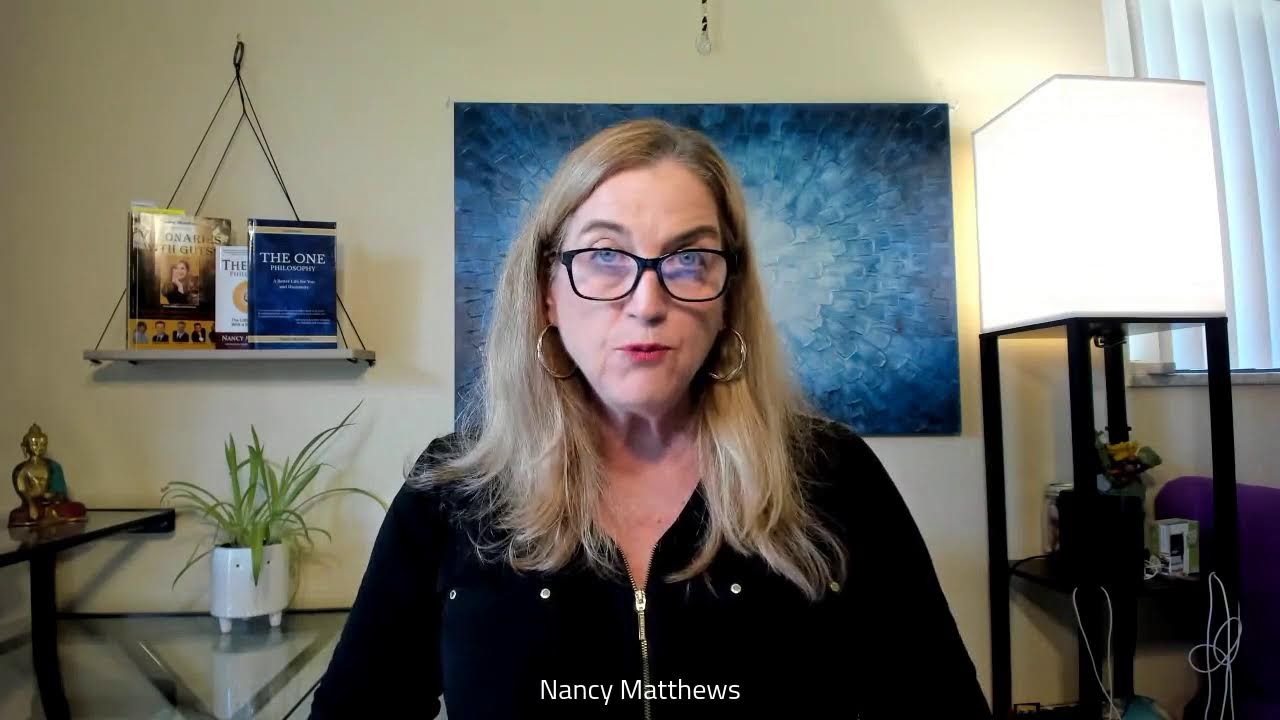
Leadership coach Nancy Matthews says leadership means being someone people respect and look up to, and that everyone leads in their own sphere. She emphasizes the ONE Philosophy: put people before profit, add value even without a sale, and refer prospects elsewhere if they're a better fit. Leaders grow through self-awareness, delegation, and mastermind groups where they can share vulnerabilities with peers.
Chapters
Welcome everybody to the Ask the Expert, and today we have a really cool expert. Her name is Nancy Matthews. I'm sure some of you know her, and we're going to be talking about leadership today. Welcome, Nancy.
Thank you for having me, Dotty. Happy to be here and love all this constant flow of good tips and information that you put out. So thank you for doing what you're doing.
Oh, you are welcome. And Nancy, I've known you for quite some time now, and I can honestly say you truly are a leader, at least in my life you are. And so I would like for you to share with everybody what is your definition of leadership?
Mm, that's a good one. I love you surprised me off the bat. So I know that actually we are all leaders, whether it's in our families, our businesses, our communities. One of the things that we all want to remember is that people are always watching, and I think that's not you know, not been more true than it is these days. So being a leader is about being a model of someone that you respect, that you want to spend time with, that you look up to and admire.
That is really well said. And if anybody in our audience would like to share their definition of leadership, feel free to put it in the chat. And we will see it here on our end. So Nancy, I know that you are an awesome leader. What I'm really dying to know, how has that affected your business?
So interesting. One of the things that I often say, and is that Leaders develop daily, and you may know of John Maxwell. I'm one of the founding members in his leadership training program. So leaders develop daily, but leadership happens in the moment. Like, it's not until a situation arises, a crisis occurs, or a challenge happens, or you've got people that are in your circle looking for direction and guidance, that's when leadership happens. And the preparation work we do beforehand will determine how it is that we show up in that moment.
Interesting.
Mm-hmm. So when—
like, how does one prepare themselves for the moment?
That's a great question. Through a consistent practice of self-awareness, self-mastery, and being committed to being of service to others. One of the things that I talk about, and I learned this from one of my mentors, is the traditional business model hierarchy. You got somebody here at the top who's the leader and then all the people underneath them, right? Your traditional hierarchy. Well, the truth of the matter is we need to flip that, and the leader is at the bottom serving everybody else on the team. So the way you prepare for when the moment happens is who are you being as the person responsible for, you know, taking your family to that next level, taking your business to that next level, honoring the people around you. As you well know, everything I do is under the veil and philosophy of my book, The ONE Philosophy, and those principles, which is all based upon valuing other people first and foremost. And leaders must do that. So when a challenge or a crisis erupts, you've got to look at how do I take care of my people first, not necessarily my profits, because if you take care of the people, the profits will take care of themselves. Whether it's the people on your team or the clients you're serving, focus on people first and profits will follow.
So can you give us some strategies on focusing on people? What does that really mean when it comes to business?
So there's a lot of different ways that we can look at it. One would be as it relates to clients or prospects. Showing up with an impact-focused mindset and agenda. I want to add value to this person whether or not they purchase my products or services. Okay.
So you're not really thinking about the sale. You're thinking about what that person needs.
Correct. And you do, I know you do this too when you're, when you're on the phone with somebody and maybe they need a website or they need the guidance that you offer through AskDottyScott.com, you ask questions first to make sure it's the right fit.
I do. And I've even sent people to other, not sent people, referred people to other, um, service providers when they're not ready or if I feel that someone else would be a better fit for them.
Yeah, absolutely. And, and if you're focused on money and selling first, you wouldn't do that. You'd take the client in no matter what. And I can tell you in my past, there have been times where I talked myself into thinking it was the right fit because maybe I needed the money at the time. Fortunately, I haven't done this for many, many years, probably over a decade. Those clients end up not happy clients, which makes my life not happy. And I only want to work with wonderful people in wonderful ways for wonderful pay. So, If it's the right fit, let's work together. If it's not the right fit, let me add value to you by referring or recommending somebody that can be the right fit. So that, that's a big way to, when it comes to dealing with prospects and clients. When we look at in business, the people on our team, so you may have people that work with you in your business. You may have people that you report to in the business that you're working in too, right? Because it goes all different ways. Uh, it's about valuing your other team members and their contribution and keeping open lines of communication where they can ask questions, where they feel valued. So when somebody turns in some work to you or delivers a project, even if they deliver it late, you want to have an open conversation about, hey, what could have— what could I, the leader, have done differently to support you in getting this to me on time?
So you're not chastising them, but you're flipping it around and you're saying, what can I do to help you make this goal next time?
Correct, correct. Now, if they say there was nothing, I just totally messed up, that's a perfectly fine answer in the moment because what this is centered around is, is taking 100% 100% responsibility. So me as the business owner, I take responsibility for everything that happens in my business. So if I've got a sales team that's not performing the way that I had hoped they would, or we talked about them doing, I need to go back to the drawing board and discuss with my team members what, what additional training did you need? Did you not have clarity? Should we have set up some milestones or objectives, you know, along the way to make it easier for you to do this.
As really, it's about having an open line of communication.
Totally, totally about having an open line of communication and to be a person that your team members know they can come to and ask questions that, as you said, they won't be chastised, they won't get in trouble. And quite frankly, we all have roots of this. I know I do, way back from when I was a kid. I didn't ever want to admit I did something wrong because I was going to get in trouble. Nobody wants to get in trouble. Correct. Right. So for some, there may be some unlearning in this process because of our backgrounds. And you as the leader, it's incumbent upon you to set that stage with your team, to let them know that this is a safe space and they will perform better when they're aligned with the vision of why they're doing what they're doing. Why is this task so important? Or how does it play into the big picture and what's their role in it? Today, with so many virtual working situations and spaces. We've got one person that's maybe working on your social media over here, and then another one that's over here in a different part of the world, and another one here. Well, how do you bring your team together so that you're all aligned and on track for that same North Star that you're heading to?
Do you have any suggestions for that? I know a lot of people are in that situation.
Yeah. So one of— yes, I do, as a matter of fact. So one of the things I recommend is to hold consistent, you know, nobody likes meetings, so maybe we'll come up with a different name of it, name for it. But bring your team together for the purpose of sharing the vision and enrolling them in the vision and asking them how they see the vision and mission applies in today's society. So definitely bring your team together on a regular basis so that it can be cohesive. With everybody knowing what the desired outcomes are. So for example, with one of my companies, Women's Prosperity Network, before we turned to an online model, we had local chapters in 20 or 30 different cities. So every single week we brought all of our chapter leaders together to listen to them and to support them and to always realign to the vision. With our internal team at Women's Prosperity Network, we do the same. With my company, the People Skills Academy, I bring my team together, get clear what's the vision, where we're headed, what's the impact we're seeking to make. Oh, great. So you're the one that does putting the lessons together through our LearnDash portal, and we want to create a great customer experience so they're really advancing their people skills. For example, how do you see that coming about? Like, let people know how their job impacts the bigger outcome.
Perfect. Um, when we were discussing about this beforehand, um, you had said something about bottlenecking in reference to leadership. Can you explain what that is?
Yes. So bottlenecking is when you as the business owner, have not learned how to delegate and actually release something so that you're not, number one, having to micromanage, which means every single person on your team doing something before it goes out the door, it has to pass through you. So there's a training process and a— that you want to go through with your team members to develop them having the responsibility as well as the authority to make independent decisions. Now that you can't do that with a brand new person on your team. You want to do that with somebody who knows the culture, who understands the, the way that you speak, even if they're typing emails for you or putting content out on social media. They need to understand the tone and the culture of the business as a whole. Does that answer your question?
Well, what I heard you say is the business owner is the bottleneck.
Oh yeah. The business owner is the bottleneck. Absolutely. I've been that way too many times.
I have too. Do you have any tools to help us business owners that feel like we have a really hard time of letting go of that control?
So it's a slippery slope until you have trusted team members in place. So one of the ways to get you on that path, like if you're sitting there looking at your to-do list and there's too many things on it, or you're getting messages from your team members, hey Nancy, when will that, you have that thing ready for me? Do you have that thing ready for me? Do you have that thing ready for me? That bottlenecking is stopping your business from moving at the pace that it could. So two things. Number one is every time you're about to do something yourself, ask the question, is this something that I can give to someone else on my team? Who else could I delegate this to or give this to who might actually be able to do it better than you? The second part of that, and it's interrelated, because I know I've run into this, is having proper planning in advance to give your team members ample time to do the tasks you need them to do. So if you've got a new class that you're doing next week and you just thought of it today, your team doesn't have ample time to create the landing pages, the email campaigns, the social media, plus get it out there, plus build out when you're going to do the marketing of it. So while impromptu, you know, and spontaneous ideas are great, you also want to take a look at the overall planning of your business, which is why you want to take time to map things out and look at where's the revenue coming from. And these are all things as the leader that you— it's up to us to do, to determine what is the direction of my business, what are some of the goals, and then allow the team members to come in. One of my favorite stories about this, and it's partly bottlenecking, but it's also about casting the vision. A client of mine years ago, an attorney, wanted to increase the law firm revenue to $40,000 a month, and she was probably at about $20,000 or $25,000 at the time. And at first, when she was thinking about it, oh, how am I going to do this? So I have this dream and this goal. Well, what she did was she went back and she shared with the other team members. There were 3 or 4 people working inside the law firm. They got excited about it. They started making phone calls to people who had come in but not booked for the services. They started looking for new ways to, to get more advertising done. And within that first month, because she enrolled her team in the vision, like, don't keep your goals a secret from your team. Let them be a part of it. Let them celebrate it with you. Let them help be responsible for bringing it about.
That story, story reminded me of the thought of when you say something and you put it out there and you don't think about it again for a while, it's like your brain works on ways to make that happen behind the scenes.
It's so exciting.
I love it when that happens.
Like, oh, I wrote that in my journal 5 years ago, and look, now it's happening. Yeah.
So a lot of people think of leadership as being lonely at the top. Can you comment on that?
Yes. So great leaders could feel lonely at the top, If they are minding the rule that when things aren't going well for you as a leader, you don't want your negative stuff to roll downhill into the people on your team or the clients that you serve.
So if we go back to the very beginning where you said that you want to flip that upside down.
Yes.
If, if you truly have flipped it, then that negative stuff's just going to fall down to nobody.
It's going to fall down to nobody. Very good. Thank you. I hadn't thought of it that way. Yes. So, so if you've got negative stuff going on and let's face it, we all do. Life is challenging. Business is challenging. People are challenging, right?
Yes, they are.
Yes. So it can feel lonely because a great leader does not spew crap out onto its team, but it needs a place to spew the crap. You can't, can't let that become a bottleneck because that'll turn into disease and all kinds of stuff. So great leaders put themselves in a space with other leaders where they can feel safe being vulnerable to work through whatever challenges they're experiencing. And that's one of the things that brings me such great joy is I do these cohorts for leaders to come together. And in that space, you can actually tell the real stuff. Because truthfully, when that team member doesn't perform and like, you know, I did everything I could, but they still didn't do it. Like, you're going to get a little ticked off, right?
Yes.
You, with a team member, I'm going to say, what could I have done better? And perhaps there was something, but sometimes, you know, people just mess up and we can get upset about it. The best way to grow through that for yourself and the team member is to have this other place where you get to talk through work through it so you can blurt out, blast through the emotional response part of it, and then come to the team and handle it in a better way.
Yes, and venting to your spouse or significant other is probably not the solution.
Probably not. Some, some people it may be a good one. But you want to be in a group of people who get you and get your challenges. And also, in a, in a safe group where they know you are a total rock star at what you do, and what we're talking about in this moment is just you're having a little mini breakdown or whatever it is. It's temporary. It's not permanent. It doesn't define your character. It's just a blip on something that you're handling. And by handling it openly and honestly in that safe space, you can deal with it much better.
And I'm also assuming that the members of this safe space have possibly done this before themselves and can give you advice on—
Correct.
They might have handled it.
Correct, correct. I, you know, I often go back to, um, the power of a true mastermind where you've got, um, equals coming together that share, and they're there to learn from each other. And, and I'm reminded of Jesus and the disciples, King Richard and the Knights of the Round Table. Like, they didn't do this stuff alone. And, you know, the, the president and the cabinet— that's how it's supposed to be. I don't think that's how it actually is in reality, but it's why it was created in that way.
Yes. So Nancy, do you have any sort of a program that people can reach out to you if they want to improve their leadership skills?
Yeah, sure, sure. So just go to my website, nancymatthews.com. I'm hosting some masterclasses on leadership if you'd like to join for one of those. And if you'd like to have a next-level conversation about working together more closely in this small group, just email Nancy at NancyMatthews.com.
Perfect. Is there any other closing things, any other tips that you would like to leave our audience with in regards to leadership?
I would. Thank you. So as it pertains to leadership, and I'm presuming most of the people tuning into your show have a mission, a vision, skills, gifts, and impact a positive difference that they're here to make. And they want to expand the number of people they share it with. Well, you are leading a movement. And yes, right?
You're—
we're leading movements. And in that space, I want to remind you that it's not so much about what you're doing as it is who you're being. And there's 3 things I want to remind you of. It's about being the one who has a big vision to lead that global brand. It's about being the one who others want to follow. So if you're not, if you're mean and nasty and you don't listen to people, they don't want to follow you. And then it's also about being the one who's continuously committed to grow themselves and raising what John Maxwell calls your leadership lid, lid, so that you can continue to serve at higher and higher levels. So get out there and be the one.
Thank you so much, Nancy. This has been very enlightening, and I am so happy that you chose to share half an hour of your afternoon with us today.
Thank you for having me. It was a great conversation being with a leader such as yourself.
Awesome. Have a great day, everybody.







