
Kathryn Yarborough
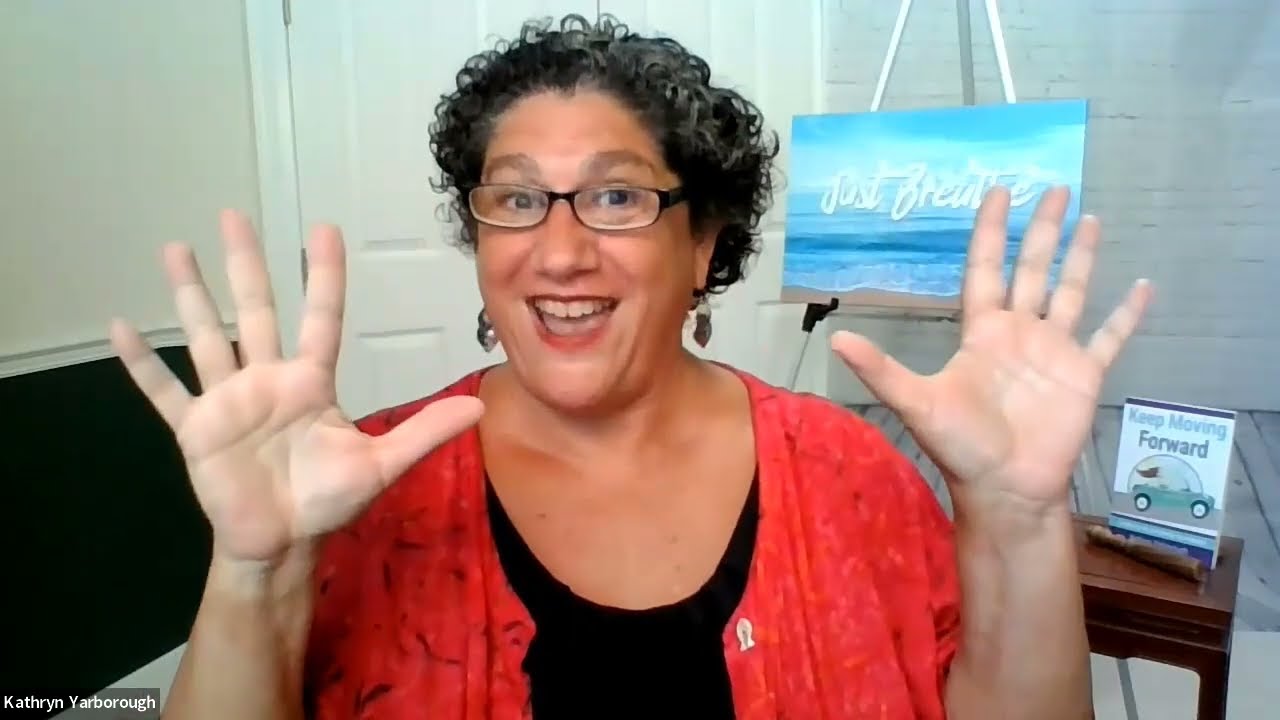
Kathryn Yarborough, a dance-movement therapist and Vibrant Speaker Coach, teaches entrepreneurs how non-verbal communication drives sales and trust. She breaks down six categories: facial expressions, gestures, body language, listening, energy, and tone of voice. Ninety-six percent of clients think businesses could improve communication.
Chapters
What inspired you to become a Vibrant Speaker Coach for Entrepreneurs?
Well, it's an interesting little story. First of all, I've just been a Vibrant Speaker Coach for Entrepreneurs since January, so it's a really recent— I'm going to say career move. I have been working with entrepreneurs since 2006. And teaching them how to manifest clients. I launched the Manifesting Clients Academy in 2017, so I've been working for a while with entrepreneurs around growing your business and manifesting clients. And boy, was I surprised in December of 2021, just this past December, when I got a download that basically made me realize that with my experience as a dance movement therapist and my experience as a speaker that I could provide training for women entrepreneurs to break free from the conditioning they had growing up or in corporate America that stifled their full expression. And here's what happened, Dotty Scott, over the last few years. We've been on Zoom calls. You've been on a lot of Zoom calls. We've all been on a lot of Zoom calls.
A ton of Zoom calls.
A ton of Zoom calls. And I would sit here and watch, especially the women entrepreneurs. I've seen men, but I just don't have as much passion for working with men as I do for working with women. I just feel like we matter and I want us to step up, to speak up, to share what we're here to do. And I would watch women entrepreneurs speak at summits, speak at networking events, And some of them would speak in a monotone voice. Some of them would not use gestures of any kind. They were all being— a lot of people were being really nice and polite and just really nice. And I would just hurt. It would hurt my heart to see this because I know there's more to all of us, that there's more expression, there's more vibrancy. And when I see that and when it— any of us see a speaker who uses her entire being, and we're gonna talk about that, nonverbal communication skills. When a speaker does that, they're more interesting. If they have good content, yeah, they are. If they have good content, wow, they're powerful speakers. So those women who were not yet using what's inside of them that's available. When I see that, my heart hurts. So in December, when I got this download and realized that from my past experience as a dance movement therapist, I have the knowledge and I have the skills to provide a training that people can use to be authentically vibrant, I created a program. I call it Speak with Your Body. And I said, all right, folks, is anybody willing to try this? And I got a few people to try it at a low cost because I had no idea if it would work.
Mm-hmm.
I wasn't ready to call myself a Vibrant Speaker Coach, but some people said yes because they'd already worked with me and they know— well, I want to say they know I'm wonderful.
You are wonderful, Katherine.
Thank you, Dotty Scott. And I've learned that this actually works. And I love to see people become aware of the ways in which they've held themselves back and that they don't have to anymore. And when I see them step up and speak out in more vibrant, expressive ways. It makes my heart sing. So yay!
So you say that there are 6 types of nonverbal communication. Well, I'm smart enough to know that nonverbal communication means everything that doesn't come out of my mouth. So can you share, um, what those— you know, what, what is your definition of nonverbal communication?
I think you've got it. It's, it's, well, it's not actually, that's slightly incorrect because what comes out of your mouth, one really verbal communication is words. So your tone of voice also comes out of your mouth and your tone of voice is one aspect of nonverbal communication. So verbal, if you think of verbal as words, verbal is the what you say, the specific words you say, and then nonverbal is everything else. Would you like to know the 6 types of nonverbal communication?
I would love to.
All right, so first is your face. Well, actually, yeah, facial expressions. And so your smile is communicating to us. You're saying, yes, Katherine, this would be fun. And when we see someone's facial expression, we often interpret them in some way or another. I really encourage people if you have an interpretation of someone's facial expression, to ask. It's really easy if you're intuitive to make an assumption of what that person's trying to say, because you might have been really saying, instead of, "Oh, I'm excited to hear," you might have been saying something like, "Well, of course I want to hear, Katherine." I mean, I don't know. But anyhow, it's important to recognize that we're communicating with our nonverbals and the other person is, and let's not assume anything is what I'm I'm trying to say. So one is your facial expression. A second type of nonverbal communication is your gestures. One way we gesture is with our hands, but we can also gesture with our head, a nod. And this is a really interesting thing for those of us who are entrepreneurs. When you're talking about selling or you're talking about share— when you're sharing about the benefits of working with you, For example, if you'd like to be the best speaker you can be and you nod, you are giving a nonverbal yes. It feels like a yes. People want to agree with that, right?
You know, they nod back.
And they'll nod back. Exactly. Exactly. So being aware of when you do this versus this was a really interesting turning point for me because I didn't know years ago, I didn't realize that I often shook my head no, especially when I was talking about something that I was surprised about. Can you believe that Dotty is doing this podcast? You know, it makes it, it's this incongruent message.
I see that a lot. Yeah, where somebody will be talking about something that they're promoting and they're shaking their head no, and right, they're not even aware of it. But it's a very common thing, and every time I see it, I think, does this person really believe what they're saying? Because it seems like they're arguing with themselves.
I love that. That is so cool that you're aware of that, Dotty, that you're noticing that. And that's one of the reasons to become aware of these 6 types of nonverbal communication, which is that your message is congruent. When we're selling, we want to come across as trustworthy. And I say selling because entrepreneurs, why do we get together? To share what we do and sell our services or products. So that's what we're doing on a regular basis, no matter No matter what you're doing, even if you're just having a conversation like this, we're letting people know about what we do. And to become aware of your nonverbal communications, it's beyond speaking. Of course, as we were— I was saying earlier, I was watching speakers not be as expressive as they can be, and it hurts my heart. But beyond that, all of us as entrepreneurs in our one-on-one conversations, when we're at a networking event and we're given a minute to talk about what we do, we are communicating nonverbally with our— here they are. Okay, we've got the facial expressions, you've got gestures, which can be hands or head. Shoulders can do a gesture. All right, then the third is your full body. And this is really important to understand if you— especially if you're a speaker. If your whole body, specifically your torso, is not involved, then you're probably not very passionate about what you're talking about. You— it can feel, especially if your torso is completely still and you're talking, it can feel like you're a talking head and you're just talking like this and you're kind of emotionless and you're not really talking about something where you have meaning. But if you talk about something that you care about and you feel like excited, or you feel like, oh, this matters, your torso will get involved. So you can pay attention when you're speaking. And you know what? I'm just gonna do a little plug right here for my Authentically Vibrant assessment because you can get this for free. We'll put the link down below, but here it is really quick. I'll say it slowly. ManifestingClientsAcademy.com/HowVibrantAmI. And it's really cool because you can watch a recording of yourself on video Speaking, and you'll track these different aspects of your nonverbals, your head movements, facial expressions, voice change, different things, and you'll be able to give yourself a score from 0 to 100 to see how vibrant you are. And in doing that, the score is kind of cool, but really you'll watch yourself and see what's going on nonverbally. So you can become aware of things like what Dotty was just saying. Okay.
Let me ask you a question on number 3, which was your torso being involved. Okay. Is it true as, as we're speaking, if we lean in, is it true that whoever we're speaking to wants to lean in and listen a little closer?
That's a really good question. When you just leaned in, I was like, I want to lean in too.
I've heard that, but I didn't know if it was real— really a thing or not.
I think it's an interesting question. I have not read a study about that. What I can tell you is that we have mirror neurons. So if you smile, it's more likely that the people around you smile. If you nod, it's more likely that people are going to nod. If you lean in, it's more likely that the people are going to lean in. If you're connected. Now, if you don't have a connection, then they're gonna feel like, ooh, she is this person, she's intruding on my space.
So, so could this also be a way to kind of measure how you are as a speaker during your talk? You can see how engaged they are.
Um, okay, my look of incredulousness is, of course, Dotty Scott. So When I'm speaking, I am looking for engagement. So—
Me too.
Yes. So one of the 6 nonverbal communication skills is listening. And we can listen nonverbally. We can listen to the nonverbals. How are people responding to you nonverbally? Are they nodding? Are they smiling? Are they agreeing with you? Are they watching you? Are they tracking anything? What are they doing nonverbally? So whether or not you lean in and they lean in, that would be interesting to see if that actually happens. But no matter what, a nonverbal communication skill is listening. Now, if they're talking because you're in one-on-one conversation, then my goodness, listen with your ears. But also listen with what you're seeing in terms of what they're doing nonverbally.
So you're saying listen with your eyes?
Yes, it— for me, it's eyes, and it's also energy. I'm feeling energy. So another nonverbal communication skill is energy, which might be emotion, But I, I experience it as energy. What is the energy you're putting out there? Like, are you, are you putting out uplifting, excited energy, which is kind of like what I'm feeling right now and sending out into the world? Or are you expressing with what you say and how you say it, I'm a serious, composed person and this is a serious topic. What is the feeling energy of what you're saying? And the other— and the people in the room, and especially if you're speaking. And I know that this is a skill that not everybody has, and I think it can be developed. You can feel the energy in the room, you can sense individuals, and you can feel the energy in the room. And I think that that's an important thing to pay attention to. But for entrepreneurs who are not necessarily speakers, Feeling or sensing what's going on with the other person can help you know, and, and watching them can help you know whether you need to keep talking or ask a question.
That makes sense. So what's the sixth one?
Tone of voice. Oh, how you say what you say, which is why it, it comes out of your mouth. So tone of voice is so important, and it aligns with energy. It aligns with the feeling, your tone of voice, and how— yeah, how you say what you say is such an important skill.
Well, I can tell you, at least on Zoom, because I've— like you said, we've had a ton of Zoom calls in the last 2 years— that when someone has a very monotone tone of voice, for whatever reason, my brain like disengages. It, it tunes out. And it's so easy because I'm on my computer to do something else that, um, which I know I shouldn't do. But if the tone of voice is more engaging, it holds my interest and I stay engaged, so to speak.
Absolutely, yes. So there are people who are monotone, and then there are people who I call duotone. It's just my term I've made up since I've become a Vibrant Speaker Coach and noticing people. Monotone is really easy to notice because it sounds like this: their speed doesn't change, their tone doesn't change, nothing changes. Duotone people can modulate a little bit But they'll— let's say that they're doing a 20-minute presentation and they change about like this throughout the 20-minute presentation. So there is some change, but there's not a lot of change. So after about 5 or 10 minutes, they start to sound— they start to sound like the same, even though there is a little variety. Both of those kind of people, I highly recommend my Speak with Your Body program. But I also love working with people who are better speakers and want to become the best speaker they can be, because the Speak With Your Body program helps people do that too. I'm not trying to just sell that, I'm just saying since we're talking about this, it's really useful.
And yeah, anyway, I've noticed with some speakers that I really enjoy listening to, they will sometimes talk fast and they will sometimes talk slow. Uh, where does that fit into this? Discussion?
That's tone of voice.
Okay.
So with tone of voice and how you speak, you can change the speed, you can change the intensity. You can speak really light like a feather or a silly person, or you can speak like what you are saying has substance. And then of course you can speak really fast, which I do really, really well. For some reason it just comes very naturally to me, and I think I just want to speak really fast all the time, and I've had to learn to slow down. Yeah.
Great example. So as entrepreneurs, solopreneurs, small business owners, um, why do we, why is this important to us? Because we're not speakers, we're service providers, we're experts at whatever it is that we do.
I did a little research and found a statistic that came from Project.co.
It's—
they said 96% of people think the businesses they deal with could improve when it comes to communication and project management.
Okay.
96% of people think businesses they deal with could improve when it comes to communication and project management. Clearly, this kind of communication where you're talking is just one part of that. There's also the emails, the texting, all the different ways in which we communicate with our clients. If we are better with our nonverbal communication skills, what we say will land in our potential client's ears as well as our current clients. If it's a potential client, if you're more interesting to listen to when you're explaining what your service or products are, they're gonna— they're more likely going to listen to you. And if you're paying attention to their nonverbals, you'll more likely stop yourself from doing a throw up on them and ask them questions. Right.
I just had an aha moment with you. So when we were talking about doing this and getting you on the show and everything, and your focus is speakers, teaching people how to speak more vibrantly. And as a service provider of technology, I mean, you can't get more boring than that. For me, it was like, well, I'm not a speaker. I'm not in front of, you know, hundreds of people on stages. I'm not, and I have zero desire to ever do that, you know? So how it's, is it really important to me? And what I just heard you say was it doesn't matter if you are a speaker, you always speak to your potential clients. Even if it's on the phone. And this is where getting better at this can help. So you don't have to be a speaker per se to take advantage of what you're teaching us.
Absolutely. Absolutely. And that being said, for the most part, we all need to be able to speak for a minute to 3 minutes. About what we do.
Of course. And we want to get better at what we do and actually survive and thrive and make money.
Exactly. So even if you don't want to be the best speaker you could possibly be, and I know there's lots of people like you, Dotty. In fact, I used to feel that way. I used to feel like, why? Here's something that used to happen to me. I I get visions that pop into my head. No, I'm not crazy. They just come into my head. And for years I got the vision of me speaking on a big stage with a few hundred people in the room. And every time for years I said, no thank you. I pushed that away because like you, I was like, I don't want to go through all that work. It takes work to be a good speaker. I don't want to do all that. Well, I subsequently decided that I was getting that vision for a reason. So I— and I— maybe it's so that I could teach this work, the Speak with Your Body process, and how to break free from the conditioning that has us not be the fullest expression of ourselves. But back to you and this. I work with entrepreneurs more than I work with speakers. And I think all entrepreneurs need to be good at speaking, and the more we can be authentically vibrant and allow our vibrancy to come through when we're talking about what we do in networking events— not, I mean, certainly on big stages, but in networking events— then people are going to pay attention more. You do Facebook Live?
One more question for you. Okay. I'm sorry, is, is maybe an out-of-the-box question, But, um, I am not an extrovert. I am an introvert. Yes, I am an introvert. Many people I know are introverts. Most of my clients are introverts, and we do not get our energy from other people. And I've watched some people, like we go into a Chamber event or, you know, a big networking event of some kind that are, that's in person. And I'll watch some people get up in front and they're, they are like over the top on their gestures and their tone of voice and everything. And I can tell that they are clearly extroverts and they thrive on this over-the-top stuff. So for, for us people that would like run from that, what advice do you have?
Well, I have a few things to say. My advice, first of all, is being authentically vibrant is not over the top. Everybody has a natural vibrancy that when it is unlocked and a person breaks free from that childhood conditioning or corporate conditioning that has them have to be nice and perfect and whatever. When we break free, a life force flows through us, and it doesn't have to be like big, like, okay everybody, here I am. Authentic vibrancy is you being you in a way that feels good to you and everybody who's around you. Okay, that's, that's what that is. That's my first response. Second response is nobody has to get up in front of the room if they don't want to. Nobody has to become a speaker that speaks to 10, 20, 30, 40, 100, 200 people. If that doesn't call to you, then by all means don't do that and keep developing your communication skills. Whether we're talking about non-verbal communication or verbal, it is at the heart of good business in my mind. Good communication matters. So start noticing what you're doing and how you're communicating and Maybe like any area of life, give yourself a challenge to grow and learn something. Third thing that I want to say, and this is the last answer response, is I am not an extrovert. And I love when I'm actually in front of the room and getting the energy back and forth that can happen. Dotty, it is amazing how cool that is. But put me in a room with hundreds of people and I just want to talk to one person at a time. And when I'm done, I need a lot of time to take care of myself and come back to sitter. So I don't— I— we're all different, we're all complicated, and may we all become the best versions of ourselves.
That's well said. So can you tell us just a little bit more about, um, where to get what you're offering and what are you offering?
Yes, so the Authentically Vibrant self-assessment is— looks like this. It's a PDF. You can go to my website, which is manifestingclientsacademy.com/howvibrantami, and you can download it if you want to hang out.
Put that link in the comments on our Facebook Live when it's done.
Yeah, and it looks like this and all that, and, and there's a few questions there just to use for your own personal observation. And if you want to hang out with me on Facebook, I have a great Facebook group called Vibrant Entrepreneurs. So just go to Vibrant Entrepreneurs and come join me there.







